
EU official plotted to ‘organise resistance’ against Hungary’s Orban, files show
Kit Klarenberg·January 10, 2026
As the EU has sought to prolong the Ukraine proxy war, expropriate frozen Russian assets, and enlarge the bloc at any cost, Viktor Orban’s Hungary opposed it at every turn. Now, with his support teetering, leaked documents reveal a major EU official plotted a long-term covert campaign to oust him.
A senior European Union official has been secretly seeking to remove Hungarian President Viktor Orban since at least 2019, according to leaked documents reviewed by The Grayzone. The files show in January 2019, the EU’s International Coordinator for the Directorate-General for Migration and Home Affairs, Marton Benedek, authored a “project proposal” aimed at “developing a permanent coordination forum to organise resistance against the Orban regime.” In addition to his role at the European border control agency, Benedek currently heads Brussels’ “cooperation” with Libya.
Read Benedek’s anti-Orban project proposal here.
The impetus for Benedek’s plot was “an unprecedented set of anti-regime demonstrations in Hungary and among expat Hungarians” over controversial proposed legislation allowing businesses to compel employees to work overtime, and delay payment of their wages for an extended period. Thousands took to the streets before and after its implementation.
According to Benedek, outrage over what he referred to as “the slave law” had “compelled a small group of some 30 political, trade union and civic leaders to coordinate their activities, agree on a set of minimum objectives and funding principles, and jointly plan future action.” This had given birth to “an ad hoc coordination forum… which could develop, over time, into an incipient political coordinating body that could credibly challenge” Orban’s rule.

Benedek’s proposal to harness resistance to the so-called “slave law” and bring its opponents into a single political movement was likely a reaction to the pro-sovereignty positions pursued by Orban and his Fidesz party, which has consistently sought to maintain national veto power for member states and to prevent the bloc from enlarging further, to the great chagrin of Brussels.
Participating in the “ad hoc coordination forum” were a variety of NGOs, many of which have been acccused of receiving funds from George Soros’ Open Society Foundations. OSF relocated its Hungarian office to Berlin in April 2018, due to Orban’s government undertaking numerous measures to curb the activities and influence of foreign-financed NGOs locally. OSF activities in Budapest have been a closely-guarded secret ever since. Nonetheless, the most recent available figures indicate Soros’ personal regime change operation pumped $8.9 million into Hungary in 2021 alone.
The source who obtained the files told The Grayzone that the proposal was submitted to Open Society Foundations, although they were unable to furnish proof that the Soros-led organization received the documents or signed off on them.
In the document, Benedek wrote that he hoped “to develop a few ideas to transform this forum into a potent entity capable of planning and executing collective action” ahead of elections that would be held in Hungary in 2019 and 2022. Benedek stressed the need for expansive financing to “deliver results” not least as organizing a single “large demonstration in Budapest” cost roughly $11,000. The then-ongoing demonstrations relied on crowdfunding, and Hungarian political parties – which receive state funding – to cover “gaps” in “project management.”
Among Benedek’s “proposed lines of action” was the creation of “a non-profit entity, registered in Hungary (for operational activities) and a financial vehicle potentially registered in Austria.” A board comprising political party representatives, trade unions and NGOs “could provide the political steer for future action.”
Benedek sought to maintain as broad of an anti-Orban coalition as possible, warning against “rapidly proceeding to controversial projects,” for instance uniting opposition parties to contest European elections. As these votes are “contested in a fully proportional system,” it was “quite rational” for parties “to run individual party lists.”
Instead, Benedek looked ahead to “organising collective action” and “sustained opposition to the Orban regime” over contentious domestic political issues ahead of Hungary’s 2019 local and 2022 national elections. The operation would involve “primary campaigns, information campaigns, mobilisation campaigns, electoral debates and joint fundraising activities,” he wrote.
The senior EU functionary concluded by suggesting his proposed organization would ultimately morph into a shadow government that could seize power from the Hungarian president. “In the longer run, the proposed non-profit entity could also… develop the policy foundations (and shadow cabinet) of a united political front against the Orban regime.”
A failed test-run for toppling Orban?
By this point, Benedek had been intimately involved in anti-Orban activism in Hungary for many years, while also working in a variety of senior EU posts related to bloc enlargement and relations between aspiring member states. An official profile reveals he “led the European Commission’s visa liberalisation dialogue” with the breakaway statelet of Kosovo, “oversaw rule of law reforms in the Western Balkans,” and coordinated “the EU’s internal security policies during Hungary’s EU Council Presidency” in 2011.
Benedek’s determined plotting against Orban clearly constitutes a conflict of interest. In October 2012 – the year that Orban’s disputes with Brussels significantly intensified – Benedek co-founded a party called Együtt, or Together. A progressive liberal party, it sought to forge an extremely broad political coalition in Hungary. Együtt’s explicit objective was to seize power and undo all reforms enacted by Fidesz since taking office two years prior. Its leaders urged parties of every ideological extraction to join their cause.
Despite much initial media hype framing Együtt as Hungary’s premier opposition entity, and therefore a threat to Orban’s grip on power, the party failed miserably. Having been flatly rejected by the country’s right-wing, it formed a coalition with a quartet of green, liberal and social democratic parties. This was sufficient to elect three MPs to Budapest’s 199-seat parliament in 2014, although four years later that figure fell to just one. The lone lawmaker promptly defected to another party, and Együtt folded.
Despite the cataclysmic results, and Együtt’s chiefs being forced to pay back close to half a million dollars in state funding they received for campaigning activities due to abysmal electoral performance, Benedek was undeterred. In a 2017 interview, he branded allegations that his family had improperly profited from his mother’s senior position within the EU as a “Fidesz lie.” The fact that he was reaping a sizable salary from Brussels for sensitive, high-level work, while simultaneously playing opposition politician at home, was left unmentioned by his interviewers.
This matter should’ve been a source of significant critical interest and inquiry, however. Under formal rules, EU civil servants are supposed to be impartial and politically neutral. Officials must declare any personal or political interests that could compromise their independence, and obtain permission from superiors before engaging in external activity. One might think Benedek engaging in nakedly partisan political campaigning, both covert and overt, would be prohibited – unless of course it was signed off upon at the bloc’s highest levels.
In the leaked 2019 “project proposal,” Benedek boasted that “an online community that yours truly set up” was part of the anti-Orban “coordination forum.” That group, “Hazajöttünk túlórázni” (“We came home for overtime”), had attracted the interest of thousands of Hungarian emigres, which were drawn together when it “organised demonstrations against the Orban regime in 35 cities in Europe, North America, Asia and Australia.” How these actions were funded, and whether the EU played any role in bankrolling them, remains unclear.
While Együtt’s crusade to dislodge Orban crashed and burned, the experience offered clear lessons for future contenders. The first of these was that Hungarians are overwhelmingly right-wing, dooming virtually any explicitly progressive, liberal movement to failure. Second, and equally important, as Benedek noted in his “project proposal,” was that European parliament votes are conducted under proportional representation, making it much easier for smaller parties to break through in Brussels than in national elections. Recent political developments suggest Együtt’s contemporaries learned from their efforts, and adapted accordingly.
EU ‘resistance’ ambitions fulfilled by Tisza?
In March 2024, a little-known figure named Peter Magyar exploded onto Budapest’s political scene when he released secret recordings of his ex-wife, former Justice Minister Judit Varga, revealing that senior government figures attempted to sabotage the prosecution of a state official for corruption. Varga had resigned the previous month along with Hungarian President Katalin Novak, for signing off on the pardon of the deputy director of an orphanage who was implicated in covering up pedophilia.
Ever since, Varga has repeatedly claimed Magyar was physically abusive, and that she made the incriminating statements under duress. She has variously alleged Magyar locked her in a room without her consent, violently shoved her into a door while she was pregnant, and stormed around their shared residence menacing her with a knife. In April 2024, a police report was released exposing how Magyar attempted to forcibly seize custody of the pair’s children, while making a variety of threats to Varga. He denies the report’s authenticity.
These revelations have fallen almost entirely on deaf ears, however, while Magyar’s star has grown inexorably. Magyar became chief of the Tisza (Respect and Freedom) party almost overnight, and was immediately bestowed the title of “opposition leader” by mainstream media. While founded in 2020, Tisza had not previously competed in any elections or ever publicly campaigned. However, in the June 2024 European parliament election, Tisza garnered almost 30% of the vote, and seven seats. Today, the party enjoys a significant lead over Orban’s Fidesz in many national opinion polls.
From the very inception of Magyar’s stratospheric ascent, his political activities have been of intense interest to Western news outlets, with protests he routinely leads generating saturation coverage. At no point have obvious questions been asked as to whether Magyar’s abrupt emergence as Hungary’s leader-in-waiting was an organic phenomenon, or how his activities have been funded. Despite repeated promises, Magyar has yet to provide the public with any detailed financial statements. Instead, he claims Tisza relies on “micro-donations” from average citizens, and the largesse of popular local anti-government actor Ervin Nagy.
Immediately after Magyar assumed leadership over Tisza, he barnstormed through towns and villages across the country. The spectacular campaign often saw him addressing crowds from large stages featuring concert-ready audio equipment, along with videographers and professional security. Magyar has also been supported by highly sophisticated PR and social media efforts, as well as a liberal-leaning local mainstream media ecosystem which seems increasingly desperate to market him to right-wing voters.
In 2024, Hungarian academic Zsolt Enyedi published a typical profile of Magyar’s party, marvelling at Tisza’s “meteoric” and “unprecedented” rise, while acknowledging that its “ideological profile” is “amorphous” – which is quite an understatement.
Though he claims to be conservative, Magyar’s positions on many issues are unclear. For example, he has visited Ukraine and branded Moscow the proxy war’s “aggressor,” while Tisza has voted for European Parliament resolutions calling for more weapons for Kiev. The party’s representatives performatively donned Ukrainian flag t-shirts as they cheered Volodymyr Zelensky’s November 2024 address to the chamber.
Magyar has also promised to adopt the EU’s ban on Russian energy imports, a position opposed by the overwhelming majority of Hungarians. Adding to the confusion, Tisza supports the government’s refusal to send weapons to Kiev, as well as Ukraine’s EU accession. Magyar has admitted he avoids taking concrete positions on Ukraine, as the topic is “divisive” among domestic constituents. Pointed questions about his penchant for flip-flopping have prompted Tisza’s leader to storm out of live TV interviews.
Hungary on the verge of EU subjugation?
Nonetheless, one policy area in which Magyar is consistent, unequivocal, and in stark opposition to Fidesz, is the EU. Defining himself as avidly pro-European, he supports adoption of the Euro, as well as greater EU integration and federalism. If he comes to power, Budapest will no longer be an irritant to Brussels’ designs. It is likely to back the Ukrainian proxy war “for as long as it takes,” as EU chief Ursula von der Leyen has repeatedly pledged, and to eliminate the remaining vestiges of sovereignty from the bloc’s members.
Since late 2022, the EU has withheld billions of euros from Hungary due to “rule of law concerns.” Accessing these vast sums would require Fidesz to undertake major reforms in eight separate policy areas. However, Magyar has claimed once he takes office and Budapest is “a fully-fledged member of the EU,” the funds will instantly be unfrozen – a key Tisza pledge, which has propelled the party’s surging popularity ahead of Hungary’s national elections in April.
If current polling trends hold, Marton Benedek’s clandestine scheme to “organise resistance” and “credibly challenge” Orban may finally be fulfilled.
https://thegrayzone.com/2026/01/10/eu-p ... esistance/
******
Britain moves to trade Greenland for Trump’s security backing in Ukraine
Finian Cunningham
January 12, 2026
Selling out Greenland to pander to Trump’s ego could be their ticket for a military double-down gamble in Ukraine.
Britain and France last week again pitched their offer of sending troops to Ukraine in the event of a peace deal being worked out between the United States and Russia. Kier Starmer and French President Emmanuel Macron issued a “joint declaration” pledging the deployment of troops.
Russia repeated its warning that any such deployment would be seen as a NATO incursion under the guise of peace monitors and that British and French soldiers would be a “legitimate target.”
London and Paris are both bluffing. They know their talk about the “coalition of the willing” is empty bluster, and is way beyond British and French military capabilities. That is why the European pair have been assiduously courting the Trump administration to commit to security guarantees for their forces in the event of a firefight with Russia.
David Lammy, Britain’s deputy prime minister, travelled to Washington this week to discuss US security backing with Vice President JD Vance. Previously, the Trump administration had backed away from giving such guarantees, knowing that it could lead to an escalation in hostilities with Russia.
However, Trump seems to be coming around to the British and French idea of an American backstop, which is, of course, something that the Kiev regime and the other European leaders have been pleading for as well.
Trump’s aggression towards Venezuela is expanding in international scope, with U.S. naval forces seizing oil tankers bound for Russia and China. The American president also this week gave his backing to a Congressional bill for new, stringent sanctions on Russia.
So, Trump seems to be adopting a tougher stance towards Moscow to extract his coveted peace deal in Ukraine. Hence, his administration’s leaning towards the British-French proposal of providing a security guarantee for their troops in Ukraine.
The British – famed for their Perfidious Albion duplicity – appear to be ingratiating themselves with Trump.
When US military forces seized a Russian-flagged oil tanker in the North Atlantic, they were assisted by the British air force and navy.
The BBC reported: “A Downing Street spokesperson said Prime Minister Sir Keir Starmer discussed the joint operation, as well as recent talks on Ukraine and the U.S. operation in Venezuela, in a phone call with President Trump on Wednesday evening.”
Washington thanked London for its assistance in what Moscow condemned as an act of piracy on the high seas. The British, as usual, supported American claims that it had a legal right to seize a ship that Washington unilaterally sanctioned.
Britain’s Starmer also refused to criticize Trump’s armed attack on Venezuela last weekend and the kidnapping of its president, Nicolas Maduro, who was hauled before a New York court along with his wife, shackled in leg irons as in some medieval inquisition.
More ingratiating duplicity came this week when a British establishment cipher backed Trump’s plans to annex Greenland. Peter Mandelson, the former British ambassador to the United States, wrote in The Spectator magazine a glowing tribute to Trump for “bringing Maduro to face justice” and for his plans to secure Greenland from Russia and China. What’s more, Mandelson dismissed Danish and European objections to Trump’s design to annex Greenland as “impotent histrionics.”
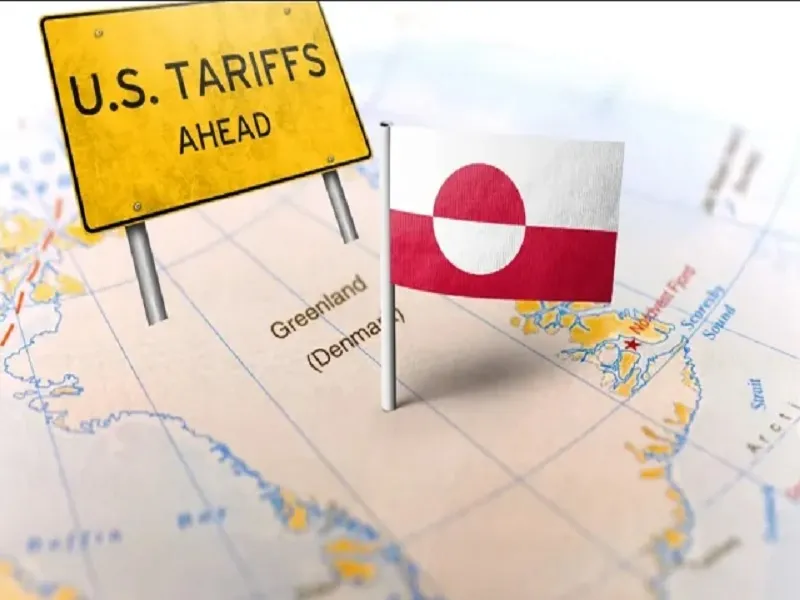
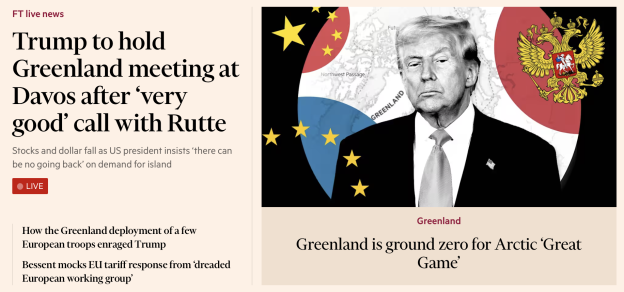
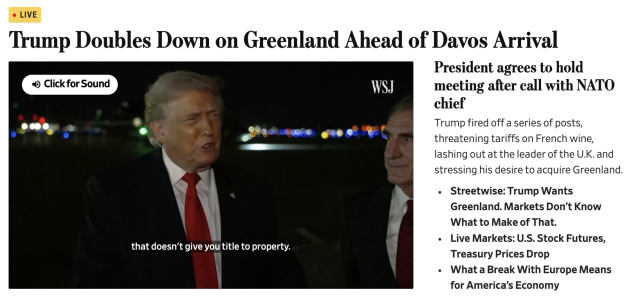
Trump’s brash talk about taking over the Arctic island – with a military option if necessary – has caused much consternation among European NATO vassals, primarily Denmark, which has territorial claims over Greenland. Danish Prime Minister Mette Frederiksen has complained that if Trump annexes the oil-rich territory, it will mean the end of NATO. Mandelson is sort of right. The Europeans are whining and will do nothing.
Nevertheless, the British can provide a useful service to Washington by undermining any European objection to Trump’s Greenland designs. This is the traditional role played by London, to act as a wedge for the Americans to impose their policies more easily on the vassals.
In that way, London is leveraging the handover of Greenland to Washington with its renowned rhetorical and legal conjuring skills, regardless of what Greenlanders want.
The ulterior agenda for the British is to inveigle Trump into backing their “peacekeeping mission” in Ukraine with security guarantees.
Given that France is just as keen as Britain to get this favor from Washington, it will be interesting to see what Macron starts to say about American claims on Greenland. European sovereignty and Danish national pride will likely be given short shrift for the higher goal of persuading greater American military involvement in Ukraine.
Britain and France, along with other European powers, desperately need an escalation of conflict with Russia in Ukraine. They have committed so much political and financial capital to a futile project of strategically defeating Russia that they cannot survive a defeat. While they talk about bringing about peace in Ukraine, the real agenda is to escalate the war. To do that, they need American involvement under the cynical pretext of security guarantees.
Selling out Greenland to pander to Trump’s ego could be their ticket for a military double-down gamble in Ukraine.
When Britain ingratiates, alarms go off for a Perfidious Albion maneuver.
https://strategic-culture.su/news/2026/ ... n-ukraine/
*****
Greenland case hopes to liberate the EU's eastern members from colonial dependency
Washington's recent actions, and in particular the threat of the Anschluss of Greenland by the US, give a spark of hope for the liberation of the eastern EU colonies: Poland, Hungary, Romania, etc.,
Dr Ignacy Nowopolski
Jan 14, 2026
The situation in which the countries of this region find themselves is the most tragic in over a thousand years of their neighborly history.
The region is being held hostage by the dying Western Empire of Lies, and is on the front line with the superpower Russian Federation, which is showing less and less patience in tolerating brazen Western provocations and contemptuous rhetoric humiliating the nuclear power.
The recent destruction of the Polish echelon with military equipment near Lviv and the liquidation of a huge tank near the Polish border with a hypersonic Oresznik are just the latest warnings for the Warsaw globalist regime.
Just as Ukraine is currently being erased from the political map of the world, Poland and Romania are in line for the same fate.
Our “independent leaders”, such as the President of Poland, are forced to lick the feet of their Western masters, licking themselves with satisfaction (video no. 1 below the article).
However, the timing of Washington’s decision to incorporate the Danish overseas possession into the United States causes serious disagreements within the Western colonizers (see video no. 2 below).
Further escalation of tensions within the alliance will accelerate its subsequent collapse, which will entail the eventual disintegration of the rotten Union of European Socialist Republics, known as the European Union for short.
You don’t have to be an outstanding statesman to understand that participating in the joint structures (EU & NATO) of countries such as Poland and Germany is tantamount to putting a fox in a chicken coop.
Unfortunately, “our globalist leaders”, all without an exception, agents of the West, have been paid so handsomely that they have overlooked this “little thing” for the last 30 years of functioning within this “exclusive club of the wealthy”!.
Only a possible struggle within the colonial clique can give a chance to break out of this trap and create analogous political and military structures, but already within one’s own group. Because only common interests and threats can be the glue for the region. And today it is not only Hungary that notices this!
So let’s quietly hope that Trump invades Greenland before his impeachment begins!
1. President of the Third Republic of Poland Karol Nawrocki at Downing Street
Putin Will Take The Cake If We...’: NATO Nation Alarms As Trump ‘Prepares’ For
Greenland Invasion
2. NATO Secretary General Mark Rutte under fire from appalled Europeans
[youtube]http://youtu.be/8Kge9HGqr54[/outube]
“WE ARE SCARED”: Greenland Confronts NATO, Rutte refuses Answer
https://drignacynowopolski.substack.com ... o-liberate
Google Translator
******
Italy and the drone that isn’t there
Lorenzo Maria Pacini
January 14, 2026
The story of Russian drones flying over Italy has been revealed for what it was: a grotesque fabrication.
It’s almost never what it seems
Damn: it was all so well orchestrated that it seemed authentic. But no. The story of Russian drones flying over Italy—and in particular the Joint Research Center (JRC) in Ispra—has been revealed for what it was: a grotesque fabrication, devoid of any real basis. Sergio Barlocchetti had already written about the absurdity of it all, well in advance, in Dronezine Magazine (issue 66). Now comes the official confirmation: the Milan Public Prosecutor’s Office has asked the investigating magistrate to close the investigation into serious allegations ranging from political and military espionage to terrorism and subversion.
To tell the truth, we Italians were never particularly impressed by this narrative of Russian ‘hybrid attacks’, with Moscow invading Europe inch by inch with drones that were never identified or shot down. But then the so-called Drone Zero entered the scene, the progenitor of all drones, naturally sent by Putin directly to Italy. In the spring, according to reconstructions, the powerful security system of the JRC in Ispra – apparently more vigilant than Ursula von der Leyen and Kaja Kallas – intercepted it repeatedly: nine times between March 20 and April 14 and thirteen times between April 16 and May 27. What was the purpose of its presence? According to the media and television news, the aircraft was spying with ill-concealed eagerness on both the European Union laboratories and Leonardo’s helicopter unit, the pride of the national military industry, located nearby.
Some newspapers even went so far as to describe its technical characteristics: Russian production, night-time filming capability, high-precision three-dimensional mapping. Others evoked the specter of “hybrid warfare,” Moscow intelligence activities, and even suspicious pro-Russian presences in the Varese area. The situation was so serious that the Milan Public Prosecutor’s Office opened a file for espionage, terrorism, and attacks on transport security. Some people even alerted their tattoo artists.
Then, however, reality knocked on the door. Technical checks revealed that the sophisticated anti-drone system suffered from structural limitations: software that could not withstand continuous use, decoding errors, and incorrect classifications. The ‘Russian drone’ turned out to be a simple phantom signal, generated by a GSM amplifier purchased on Amazon by a local family to improve cell phone reception. There was nothing in the sky above Ispra and Vergagliate, no drone, no Russia, no conspiracy.
Fairy tales that are not even good for children
The narratives about alleged Russian drones flying over Italian skies can be interpreted as part of a broader hybrid communication strategy, fitting into a media and political ecosystem in which the Atlantic Alliance and various European governments use the frame of the Russian threat – including the drone dimension – to strengthen internal consensus and legitimize rearmament and a posture of deterrence towards the East.
The Ispra case is truly emblematic and shows how mainstream media and institutional actors have constructed an emergency narrative of Russian “hybrid warfare” in the absence of solid technical evidence; a narrative that has been amplified by alarmist headlines, talk shows, and social networks, contributing to the consolidation of a negative image of Russia in public opinion, shifting the emotional center of gravity from rational debate to fear.
On a strategic-communicative level, this climate of perception serves three objectives: to promote acceptance of NATO programs to strengthen anti-drone defense and increase military spending; to reduce the legitimacy of positions critical of Atlantic policies, which are easily labeled as “pro-Russian”; consolidating a dichotomous friend/enemy frame in which Moscow is the threatening Other, and NATO-integrated Europe is the defensive and ‘rational’ subject.
These are fairy tales that are no longer even good enough for children. These Russians who fight wars with washing machines and horses, as Italian newspapers report, but who are capable of sending drones to disturb the naps of the average Italian in upper Lombardy, are not to blame this time. Maybe next time for the next fake news story!
https://strategic-culture.su/news/2026/ ... snt-there/
******
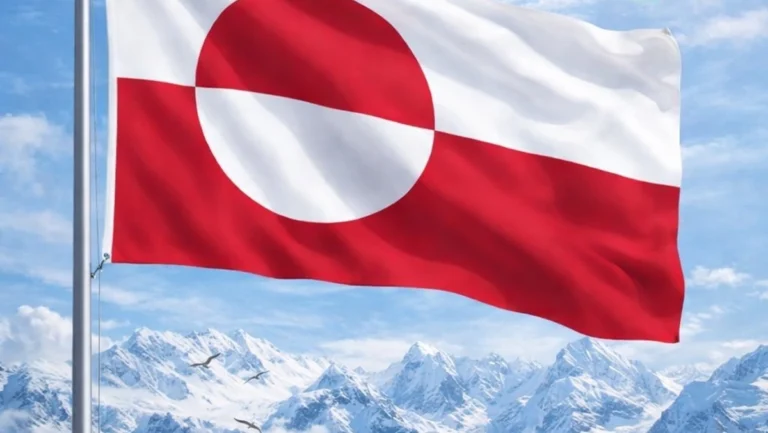
France to Open Consulate in Greenland
X/ @jacksonhinklle
January 14, 2026 Hour: 7:41 am
French FM Barrot said Greenland neither wants to be owned, governed, nor integrated by the U.S.
On Wednesday, French Foreign Minister Jean-Noel Barrot said that France will open its consulate in Greenland on Feb. 6, a concrete move to show support for the island as the United States repeatedly vows to take it over.
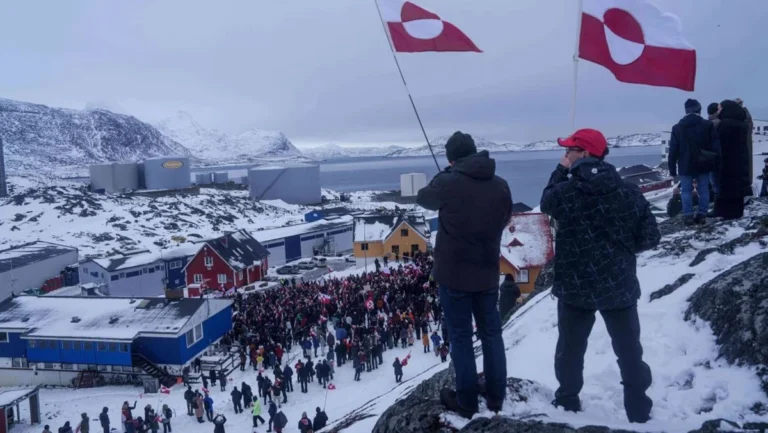
In an interview with French radio RTL, Barrot said Greenland neither wants to be owned, governed, nor integrated by the United States, stressing that the island has chosen to remain within the framework of Denmark, the North Atlantic Treaty Organization (NATO) and the European Union.
His remarks came amid renewed statements by U.S. President Donald Trump, who has expressed interest in acquiring the island, hinting at the possibility of military intervention.
Calling such rhetoric “incongruous,” Barrot said it would make no sense for one NATO member to attack another, noting that such an act would run counter to the interests of the United States itself.
The French minister underlined the importance of international law, saying it has been undermined by recent actions of the United States.
“International law is being trampled on, and the first days of 2026 have clearly shown that the law of the strongest is now governing relations between nations,” he said, adding that this made it imperative for Europe and its partners to strengthen themselves.
Barrot also stressed the need to show solidarity with Denmark in the face of U.S. pressure, adding that French authorities have held intensive exchanges with their Danish and Greenlandic counterparts in recent days..
https://www.telesurenglish.net/france-t ... greenland/