Censorship, fake news, perception management

Questions, Comments, Concerns etc about The Bell
User avatar
blindpig
Posts: 15235
Joined: Fri Jul 14, 2017 5:44 pm
Location: Turtle Island
Contact:

Re: Censorship, fake news, perception management

Post by blindpig » Fri Jan 23, 2026 3:54 pm

Image
U.S. Secretary of State Hillary Clinton and Council on Foreign Relations president Richard Haass, Washington, D.C., January 31, 2013.

Empire’s ideology, with free pizza: How the Council on Foreign Relations shapes higher education
By Nazia Kazi (Posted Jan 22, 2026)

To teach foreign policy in the U.S. college classroom is to confront, head on, rampant systemic ignorance. On an American campus, you hear it all. In a discussion of China’s poverty eradication program, for instance, my student said he had learned in school that this had been accomplished by China mass-murdering its poor population “to boost its numbers.”

I was compelled to course-correct; we examined China’s investment in infrastructure, industrialization, and other government initiatives that have reduced absolute poverty, without the “but at what cost?” addendum that predictably taints American media coverage of China’s advances.

Then, and more importantly, I asked my students to think carefully about who might benefit from such a grossly misinformed schoolroom lesson.

It’s tempting to chalk such perceptions up to individual misunderstandings, but at some point, anecdotes become data. I’ve noted time and again that today’s students are all but repositories of a narrow foreign policy “common sense.” They learn of human rights violations in Venezuela, Iran, and China, but strikingly little about the same perpetrated by the global North. And when they do study Euro-American racism or colonial violence, it’s regarded as a blip, a mistake in the otherwise forward march of freedom, democratic governance, and international law.

To hear the right’s handwringing about academia, you’d imagine a university culture rife with radical agendas and anti-American leftist faculty.

No such luck.

American campuses are a shop floor for the production of dominant foreign policy narratives. Students and faculty who dissent find themselves isolated, swimming upstream. What you see at U.S. colleges and universities is not a bastion of anticapitalism, but rather the reinforcement of America’s unquestionable right to hegemony.

This comes as no surprise given the militarized forces shaping education. Nicole Nguyen shows how even K-12 learning is molded by post-9/11 dictates of “homeland security.” Since the War on Terror, the Department of Homeland Security and private weapons manufacturers have embedded themselves in learning environments, alleviating budgetary crises by bailing out struggling schools. Students graduate from schools that have a Raytheon math and science lab or a Lockheed Martin technology program. Here in Philadelphia, Lockheed Martin has partnered with Drexel University to create a campus “Launchpad” for students and faculty to deepen their ties to the corporation. “With its increasing reliance on Pentagon and corporate interests,” writes Henry Giroux,

the academy has largely opened its doors to serving private and governmental interests and in doing so has compromised its role as a democratic public sphere.

But there is another player worth considering.

If the university is the manufactory for common sense (Iran, China: bad; U.S., Germany: good), the Council on Foreign Relations (CFR) is hard at work on the assembly line. To understand the shrinking of the political imagination endemic to the American way, look to the Council on Foreign Relations and its embeddedness on American campuses.

With university workshops and faculty fellowships promoting its purportedly “non-partisan” mission, the CFR stands alongside the military and defense establishments on U.S. campuses, shaping the worldview of higher ed learners and educators alike. The Council thus sets the tone for and limits the parameters of acceptable political discourse, promoting a dangerously elite view of foreign policy.

From its inception in 1921, the CFR convened heads of industry, banking, and the legal sector, a harbinger of the cast of characters who would lead the organization for the next century. Today, the Council includes former secretaries of state and CIA directors, top bankers, major CEOs, and prominent media figures. Its board is a docket of leaders in Homeland Security, the intelligence apparatus, and elite universities.

There’s former CFR president, Richard Haass. A staffer in both Reagan and Bush administrations, his Bill of Obligations urges a political “common sense,” which to him is exemplified in the centrism of the friendship between Antonin Scalia and Ruth Bader Ginsburg. A frequent defender of Israeli ethnonationalism, Haass has argued that Israel must never give full rights to Palestinians. Though Haass supported the 2003 U.S. invasion of Iraq, he (like countless policy leaders) later revised his view after the failures of the war were made clear, claiming that had he known then about the falsehoods regarding weapons of mass destruction, he never would have supported the invasion.

It bears mentioning that flimsiness of the WMD claims was no great secret at the time. Streets filled with antiwar protestors who possessed the knowledge that evaded Haass, a foreign policy expert. But beltway think tanks and heads of state silenced those who questioned its veracity. Joe Biden, then head of the Senate Foreign Relations Committee and a longtime friend of the CFR, refused to allow any antiwar testimony in Congress, opting instead for hawks from inside the defense apparatus.

Haass was succeeded in Council presidency by Michael Froman, an Obama ally, who went from the Treasury Department to Citigroup. The 2008 financial crisis could have been the death knell for the “revolving door” between the finance sector and the state, but no. Froman faced little in the way of opposition moving between finance and government. After his time at CFR, Froman became an executive at Mastercard, then at Disney. He was key in establishing the Transpacific Partnership, which sought to weaken global labor standards and evade environmental protections.

Or consider John McCloy, who served as Board Chair for the Council, one of the 20th century’s architects of empire. His law firm represented the Rockefellers, Chase, and big oil. He chaired the World Bank, whose lending practices cemented U.S. dominance behind a weak façade of “development.” (He also commuted the sentences of Nazis.) McCloy was, at one point, simultaneously the Chairman of Chase, the Ford Foundation, and the Council on Foreign Relations, earning the nickname “Chairman of the American Establishment.”

Thus, Richard Harwood writes that CFR members “are the nearest thing we have to a ruling establishment in the United States…. This is not a retinue of people who ‘look like America’…but they very definitely look like the people who, for more than half a century, have managed our international affairs and our military-industrial complex.”

In 1970, CFR Chair David Rockefeller asked friend William Bundy to take over as head of Foreign Affairs, CFR’s flagship publication. Bundy, who consulted U.S. presidents on genocidal policy in Southeast Asia and was roundly condemned as a war criminal, thus directed one of the most influential American journals. As Chairman, David Rockefeller also advised President Carter, urging him to admit Iran’s Shah (the U.S.-backed dictator who ruled after the U.S. overthrew Iran’s government in 1953) to the U.S. for medical treatment, a move that sparked the Iranian hostage crisis.

Henry Kissinger, an ardent ally of dictatorships in Chile and Indonesia, also served on the Board, as did Timothy Geithner (who presided over the Wall Street bailout), Bill Clinton (whose sanctions on Iraq were estimated to starve half a million children to death), and Colin Powell (who formalized the WMD lie with his pivotal speech at the United Nations). Max Boot, the CFR’s Jeane J. Kirkpatrick Senior Fellow for National Security Studies, is another of the Council’s pro—Iraq War and hardline pro-Israel personalities. Today’s Board includes Fareed Zakaria, a one-time supporter of South African apartheid who recently commended Netanyahu for handling regional issues “remarkably.”

To me, the roster is a cut-and-dried indictment of America’s ideological oligarchy.

Many would disagree. In America’s common sense, of course we turn to bankers and CIA chiefs, billionaires and weapons manufacturers, for foreign policy analysis. They’re the ones commanding finance and industry, higher ed and the intelligence apparatus. In the U.S., these accolades mean expertise.

It’s a perverse equation.

“How is it,” asked Nima Shirazi of Citations Needed,

hat someone who made billions in software or finance or real estate or electric cars is assumed to be a trusted source on education, foreign policy, public health, or agriculture? And whose voices are being silenced so that the richest among us can be heard?

Marx said that in any epoch, the ruling ideas are in fact the ideas of the ruling class. Today’s ruling ideas are the ideas of the CFR, whose ideology has long been elitism masquerading as nonpartisan common sense.

Sidney Blumenthal’s The Rise of the Counter-Establishment argues that the capitalist class funds think tanks like the Council to formalize its class interests. And G. William Domhoff’s 1967 Who Rules America? identifies the CFR as a key organization within the “policy formation project,” allowing the corporate elite to shape foreign and domestic policy, then disseminate its perspectives to the population in an “ideology process” that normalizes them. Laurence Shoup calls the CFR the “think tank of monopoly-finance capital, also known as Wall Street’s think tank.”

Indeed.

Yet it presents itself as everyone’s think tank, proclaiming a spectrum of policy discourse. Regular schmoes—and college kids—are invited for a seat at the table to absorb Council discourse hook, line, and sinker.

Islamophobia offers a case study of the Council’s ideological role.

Samuel Huntington’s article “The Clash of Civilizations?” was first published in Foreign Affairs in 1993. Huntington claims that the world’s upheavals will be “cultural” and “civilizational” rather than economic or ideological. He predicts a clash between the Muslim world and the West, naming the “bloody borders” of Islam. Huntington is unbothered by the U.S. alliance with Afghan “holy warriors,” or by the larger U.S. strategy of partnering with right wing Islamist forces to defeat global socialist movements. For Huntington, Islamic tribalism clashes with the universalizing realities of capital.

Huntington’s work gives oxygen to the notion that Muslims are inherently at odds with a modern West. His framing leaves little room for what Timothy Mitchell or Mahmood Mandani delineate in their work, namely, that the U.S. has gladly partnered with Islamic movements, even sponsoring Islamism, when doing so has suited its ambitions. As Mitchell writes,

capitalism appears to operate…only by adopting the social force and moral authority of conservative Islamic movements.

It follows that the CFR hall of fame is populated by notorious Islamophobes, chief among them Daniel Pipes. The founder of the Middle East Forum, Pipes has called for racial profiling and surveillance of Muslims and launched the website Campus Watch, which posts dossiers of academics critical of Israel or sympathetic to Islam. Pipes pushed the first Trump administration to adopt anti-Muslim programs like the Obama-era Countering Violent Extremism initiative, presenting the President with his White House Commission on Radical Islam in 2017. Pipes was heavily cited by Anders Brevik, who killed over 70 in his 2011 Norway massacre.

Others are no less striking in their anti-Muslim vitriol. Vice President Dick Cheney served as CFR director for two non-consecutive terms, then remained close to the organization after his tenure. One of the architects of America’s Middle East policy, Cheney used the CFR as a venue to promote his plans: toppling Iraq’s government, seizing oil and basing rights for the U.S. in the region, and cementing the U.S. alliance with Saudi Arabia. Ayaan Hirsi Ali, CFR member who ascended in Dutch politics by bloviating about the threat of “radical Islam”, is an ex-Muslim supporter of neocon policy who calls for the “defeat” of Islam, which she dubs a “nihilistic cult of death” that “legitimizes murder.” Eliott Abrams, another neocon and Senior Fellow at the Council, shed the stigma of his role in the Iran-Contra debacle and went on to push for the 2003 Iraq invasion. (As proof of the dangers of bipartisanship: Biden appointed the far-right Abrams to a U.S. Advisory Commission on Public Diplomacy.) Abrams has advocated for equating criticism of Israel with antisemitism, writing as much on the CFR blog.

Still, you’ll find no shortage of cherubic women in hijabs smiling on the CFR website, which touts diversity at every turn. The Council hosts programming on Islamophobia, at times critical of U.S. policy. (In 2023, Foreign Affairs even published an article calling Israel an apartheid state, though the Council’s overlaps with AIPAC and the ADL are well-documented.)

This is a necessary accommodation; empire’s ideologies would be short-lived without such nods to evenhandedness. President Bush himself spoke at mosques, commending Muslims while launching a War on Terror that would kill and displace millions of them. And President Obama, whose 2004 speech at the CFR sought a deeper U.S. alliance with Israel and who authored some of the most troubling elements of the War on Terror, spoke in Cairo trumpeting the contributions of Islam and its compatibility with the West. The same is true of the CFR; its gestures of multilateralism notwithstanding, the Council has no compunctions convening the most rabid Islamophobes.

And Islamophobia isn’t the only troubling ideology the Council has propagated. The deadliest was containment, the 1947 doctrine promoted by George Kennan in an article in Foreign Affairs. The concept was used by the U.S. to justify toppling, invading, and destabilizing huge swaths of the global South, all under the guise of containing Soviet influence. Then, there’s the Council’s promotion of a strong U.S.-Israel alliance, foundational for the CFR. A 2016 strategic report by the Council, Repairing the U.S.-Israel Relationship, reminds the reader that partnership with Israel grants the U.S. steady access to oil reserves, trade routes, and military advantage in the region. Given the central objective of preserving U.S. global hegemony and its “preeminence in the global system,” a CFR study group concludes that the “principal task that confronts U.S. grand strategy today… is adapting to the fundamental challenge posed by China’s continuing rise.”

The CFR’s overarching goal is to advance American interventionism, neoliberal economics, and expansion of the U.S. military budget—in short, to help the United States maintain preponderant global power. And why would the Council, peopled by Chevron, Blackrock, and CIA figures, do anything else?

This, then, is the organization embedded on college campuses, putatively there to build non-partisan political awareness and foreign policy literacy among university students.

This presence should be nothing short of terrifying.

The Council captures the political imagination of students and educators alike, most of whom have scant awareness of the dynamics above. And while weapons dealers and military recruiters are also embedded on campus, their motives are no great secret. At times they even face protest from students and faculty.

The CFR encounters no such resistance.

So, with nothing to stop them, the Council offers hundreds of multimedia teaching tools. It holds interactive webinars with CFR fellows and Foreign Affairs writers. Students may apply for paid internships, and professors are invited to attend their workshops. The Council on Foreign Relations Education Ambassadors Programs connects educators with Council resources to bring to universities and high schools “global affairs literacy” for those “dedicated to helping students make sense of the world around them.” In the 2025—26 year, some seventy high school teachers and eighty higher ed faculty were part of the Ambassadors program. CFR Education aims to “close the global literacy gap in our country by providing accessible, accurate, and authoritative resources.”

Resources that reinforce empire’s common sense.

Take the 2024 election events the Council held on campuses across the country. The forums focused on the rise of China and the national security threat posed by Russia, questions of distinct concern for a ruling elite terrified by US’s loss of unipolar hegemony. They also focused on securing the U.S.-Mexico border, asking whether a border wall or expansion of surveillance and foreign aid are the best solutions. (Another option, the one reached by most analysts of empire, is to end the very conditions that cause migration from Latin America, but this would mean dismantling policies proposed by the most well-known CFR figures.)

In October 2025, college students across the United States joined a CFR event featuring Reza Pahlavi (the exiled crown prince of Iran), who provided the following by way of “historical context”:

In 1979 there was a revolution in Iran, which virtually overnight turned the country from a U.S.-allied monarchy…to a viscerally anti-American theocracy led by the Ayatollah Khomeini… I would argue that perhaps there’s been no country in the world which has had a more…consistent and determined grand strategy over the last several decades than Iran, by virtue of the fact that they’ve had arguably the longest serving autocrat in the world.

No mention by Pahlavi of the 1953 U.S. regime change operation that toppled Iran’s newfound democracy, nor of the sanctions imposed by the U.S. and its allies to hobble the Iranian economy since its 1979 revolution. No mention of how the Shah’s dictatorship in Iran brought a repressive secret police force, unbridled U.S. access to Iranian oil, or the targeting of dissidents by the U.S.-backed leader (incidentally, the father of the speaker in question). None of this; only handwriting about Iranian autocracy.

Still, professors offer students extra credit for attending such events, which do little to convey the saber-rattling of Israel’s twelve-day war on Iran in July or the damage that U.S. sanctions have done to the Iranian economy. And professors too, serving as a CFR fellow or liaison, list their Council affiliation as a line item in a tenure file or CV. For students and teachers alike, then, allegiance with the CFR is a credential in one’s academic career, a steppingstone to scholarly success.

Higher education is under attack. Decades of budgetary cuts and the most recent assault on academic freedom are the obvious culprits. Campuses across the U.S. are shuttering, merging, and downsizing, often with minimal notice to academic workers or students. Governed by unelected boards populated by the private sector, they are increasingly aimed at generating profit, not critical thought.

But there are other, more sinister factors hollowing out education, those that operate on the level of ideology. Working within the skeletal remains of the university system, the CFR acts on campus to shape popular thought. With pizza parties and “nonpartisan” webinars, it grooms future beltway wonks. And even if most of these students won’t run for office or become journalists, they have been inculcated with a common sense understanding of what is reasonable and possible in American politics.

What if, though, college students got what they paid for—that is, the life of the mind? What if they could confront, with conscientious and sober attention, what is outside the CFR’s bounds of reasonable discourse? For instance, what if Iran was not just a rogue enemy state to be dismantled but a victim of decades of U.S. imperialist meddling—a belief held, after all, by much of the world? What if China’s rise as an economic power were presented to students not as an existential threat to U.S. hegemony, but as the aftermath of a colonial “century of humiliation” and evidence of the role of the Chinese state in eliminating poverty?

It is what is rendered un reasonable, what is outside the scope entirely of CFR’s campus presence, that our students should investigate. The Cost of War Project, the Quincy Institute for Responsible Statecraft, and other institutions offer a much more thorough exposure to foreign affairs, yet have made nothing like the inroads of the CFR on campuses.

This is telling.

The Council on Foreign Relations shrinks the political imagination of learners and deploys the interests of the elite among an increasingly precarious American populace. The Council’s common sense—that America is beacon of democratic governance, that the political center is a reasonable place—is now a fixture in an increasingly austere campus culture, one that threatens to produce unquestioning parrots of imperial logics.

https://mronline.org/2026/01/22/empires ... education/
"There is great chaos under heaven; the situation is excellent."

User avatar
blindpig
Posts: 15235
Joined: Fri Jul 14, 2017 5:44 pm
Location: Turtle Island
Contact:

Re: Censorship, fake news, perception management

Post by blindpig » Sun Jan 25, 2026 3:15 pm

People are no longer able to distinguish neural network products from reality.
January 25, 11:04

Image

People are no longer able to distinguish neural network products from reality.

A new scientific study reveals a disturbing trend in digital content perception. According to the findings, humanity has reached a point where the ability to visually distinguish AI-generated videos from real footage has fallen to the level of chance. Deepfake detection is now comparable to flipping a coin.

Researchers are paying particular attention to videos featuring people. The accuracy of identifying generated talking heads has dropped below the chance threshold, reaching only 46.6%. This means viewers are now more likely to mistake a fake for the real thing than to correctly identify it. Recognizing fake landscapes and animals is only slightly better, with results of 54.7% and 51.7%, respectively.

Adding sound to the video slightly increases the chances of success, but only if the speech is in a language familiar to the respondent. The researchers also uncovered an interesting fact regarding observer training. Knowing that a video could be generated by a neural network has no effect on the accuracy of its detection. The only significant demographic factor was age, as older adults perform significantly worse than younger people at identifying synthetic media.

The study was published by a group of researchers led by Di Cook. An analysis of data from 2019 to 2025 shows a rapid decline in the accuracy of human perception as generative AI technologies improve. While generative artifacts were obvious just a few years ago, modern algorithms create content that the human eye can no longer reliably filter without specialized technical means.

https://www.playground.ru/misc/news/lyu ... ih-1819291 -zinc

Actually, back in 2024, I noted that some readers of the Telegram channel were already experiencing problems distinguishing real people from neurobots and tried to engage in dialogue with them as if they were real people. Technology is advancing, and the level of realism in video, audio, and text produced by neural networks is steadily increasing. The better it imitates human-produced content, the thinner the line will become at which an untrained person will no longer be able to reliably distinguish real content from generative content.

In the long run, this will lead to an intensified debate about mandatory labeling of AI content online, which will be promoted primarily by governments.
On the other hand, neural networks offer enormous scope for manipulating mass consciousness, and this will certainly be exploited. In fact, they already are. Neural networks are now a common tool for ensuring the production of products for information and psychological warfare.

https://colonelcassad.livejournal.com/10326318.html

Google Translator

******

A ‘Left’ Cover-Up Of Regime Change Failure
Today’s daily Links page at Yves’ Naked Capitalism pointed to a piece about Iran published by Sidecar, the blog-site of the New Left Review.

Neither NLR nor Sidecar are on my daily reading list though I have linked to several Sidecar piece in my Week-In-Review collection.

According to its About page:

The criteria for publication on Sidecar will be saying something – about persons, processes, events, structures – that is not being said elsewhere, but deserves to be.

The Sidecar piece linked via Naked Capitalism, Scylla and Charybdis by Eskandar Sadeghi-Boroujerdi, certainly does NOT match that criteria.

The piece is about the recent regime change protest in Iran and the government reaction to it. Its take on the course of action by either side reads like a direct copy from a CIA controlled main stream outlet.

There is little mentioning of rioters or violent protesting in it:

The protests that began in Tehran on 28 December spread with remarkable speed to provincial cities and towns such as Hamedan, Mashhad, Tabriz, Izeh, Qom, Marvdasht, Abdanan, Kerman, Arak, Isfahan and Malekshahi.

The digital circulation of images and testimonies helped synchronize local grievances, but it was the confluence of economic injury and deeper social exhaustion that gave the protests their national reach. Violence deployed by security forces against protesters in provincial cities such as Ilam and Marvdasht further inflamed public outrage, and even as Tehran initially remained relatively quiescent, demonstrations elsewhere had already begun to assume an explicitly anti-regime character.

The state initially appeared to recognize the danger of escalation. Officials acknowledged the economic grievances of the protesters, while the governor of the central bank was replaced.

The Pezeshkian government’s posture of limited tolerance evaporated within days, as effective control passed to the security apparatus: the various arms of the Islamic Revolutionary Guard Corps, alongside the military, judiciary and intelligence services. It will be the task of historians to reconstruct precisely what transpired between 8 and 10 January. In the midst of an almost total internet blackout and an abundance of misinformation, establishing a definitive chronology remains difficult. Nonetheless, an outline of events is beginning to come into focus.

Following the initial bazaar protests and their diffusion across multiple provinces, Reza Pahlavi, the son of Iran’s deposed monarch, issued a public call for Iranians to take to the streets and overthrow the regime. According to numerous eyewitness accounts, the demonstrations on 8 January were exceptionally large and for the most part peaceful. […] In the aftermath of the night-time demonstrations, the state’s messaging hardened. Security forces sent warning text messages to millions of mobile phones and the Chief Justice, Gholamreza Mohseni-Ejei, issued a series of stern warnings, threatening severe consequences for anyone who joined further protests. This tactic appears to have deterred some participation the following day. Even so, on 9 January a substantial and highly committed core of protesters returned to the streets.

They were met with unprecedented violence. Videos circulated showing security units firing directly into crowds, storming hospitals, assaulting injured protesters and medical staff, and pursuing demonstrators into spaces that had previously retained a degree of informal immunity.


How does that account differ from anything what ‘western’ main stream outlets have written. The government forces, just out of nowhere, were using violence against ‘for the most part peaceful’ protests? Sure, and ‘it will be the task of historians to reconstruct’ that because we lack information?

After a lot of sociological, pseudo-left blubber Sadeghi-Boroujerdi, the author of the piece, finally admits that there was extensive violence on the protesters site. But he immediately excuses it as having been caused by ‘years of repression’:

[ui]At the same time, there is video evidence of armed protesters confronting security forces with knives, machetes and in some cases firearms, an indication of how years of repression has radicalized segments of the opposition. There were also multiple reports of arson attacks against government buildings, as well as mosques and state television and radio facilities, indicating the extent to which the protest had shifted into a more openly insurgent register in some localities.

The geography of the repression that followed was markedly uneven. In some areas, brief but ferocious crackdowns left dozens dead within hours; in others, prolonged clashes unfolded over successive nights. These differences, however, do not detract from the overarching pattern. What took place was not a series of isolated excesses or lapses in discipline, but the systematic deployment of lethal force by the state against civilian protesters.[/i]

Further down in his too long piece the author finally admits that CIA and Mossad agents played a role in all this. But he insist that their role was just minor:

To acknowledge this is not to credit the regime’s claim that the mobilization was foreign-engineered. A nationwide uprising, rooted in years of social and economic degradation, cannot be reduced to the machinations of external intelligence services, even if there is little doubt that Israeli and US intelligence agencies have sought to hijack the protests.

How well paid or stupid must one be to describe an obvious imperial regime change operation as ‘rooted in years of social and economic degradation’ without pointing out that the ‘social and economic degradation’ are an active part of the regime change plans.

Contrast the above confused writing with the clarity with which John Mearsheimer lays out the facts:

what happened in Iran is an attempt by the Israeli & American tag team to overthrow the government in Tehran and break apart Iran, much the way the US, Turkey, and Israel fractured Syria. The playbook in Iran is one we have seen before. It has four elements.

First, the US has long been working to wreck the Iranian economy with sanctions.

Second, the tag team went to work in late December 2025 to foment and support violent protests that would precipitate a violent government response, which would hopefully set off a spiral of violence that the government could not control.

Third, the Western media played along with the tag team and purveyed the story that the protests were principally a response to the policies of an evil government in Tehran, not because of outside interference. Moreover, the protests were peaceful and it was the government that initiated the violence.

Fourth, the US military (and maybe the Israeli military) was primed to attack Iran once the protests had reached critical mass, finishing off the regime and creating chaos in Iran that would hopefully break the country apart.

But the strategy failed, mainly because the Iranian government was able to shut down the protests quickly and decisively.


The failed regime change attempt has caused some 3,200 casualties.

The official statistics on the casualties from the recent unrest in #Iran have been released: 2,427 innocent citizens, including security forces and ordinary people, were martyred in terrorist attacks, and 690 armed terrorists were killed.
In total, 3,117 people lost their lives.


The material damage was also heavy.

That NLR and Sidecar are publishing a piece that plays down and tries to hide the externally induced, extremely brutal regime change riots as ‘for the most part peaceful’ protests happening after ‘years of repression’ is a testament of how much the ‘academic left’ has lost its focus.

Analyzing local class policies in a middle sized country matters little when a great power is out to destroy it. When discussing local grievances it is important to keep the big picture in mind. For 47 year now the imperial forces in the U.S. and Britain have been out to destroy the Islamic Republic and to re-enslave the Iranian people. That is the major framework through which Iran must be analyzed. Other local issues are mostly embroidering details.

Posted by b on January 23, 2026 at 16:39 UTC | Permalink

https://www.moonofalabama.org/2026/01/a ... ilure.html

NLR is liberal garbage.
"There is great chaos under heaven; the situation is excellent."

User avatar
blindpig
Posts: 15235
Joined: Fri Jul 14, 2017 5:44 pm
Location: Turtle Island
Contact:

Re: Censorship, fake news, perception management

Post by blindpig » Mon Jan 26, 2026 4:12 pm

Beware Palantir

This tech monopoly uses AI algorithms to assist imperialist crimes, from selecting Palestinians for assassination to advising on US immigrants for deportation.
Lalkar writers

Monday 26 January 2026

Image
Workers must mobilise in campaign groups and trade unions to keep Palantir (and any similar data collection and manipulation monopoly) out of our health service. There is nothing useful to patients about the digitisation and harvesting of their confidential data under our present conditions of late-stage and increasingly authoritarian capitalism.

On 25 November 2025, the Guardian published an article, written by columnist Arwa Mahdawi, entitled ‘JD Vance might want to run in 2028 – but does he have a Palantir-shaped problem?’. The article explained that US vice-president JD Vance, with aspirations to run for president in 2028, may find himself compromised in his bid for power by his longstanding and extensive connections to Palantir, a $450bn corporate behemoth, and its cofounder Peter Thiel.

Ask most people what their opinions are of Palantir and they would in all likelihood answer ‘What is a Palantir?’ Some may even identify the name Palantir as a reference to the seeing stones of the same name which featured in JRR Tolkien’s fantasy novel The Lord of the Rings. The stones’ name derived from the words ‘far’ and ‘watch over’ in the fictional Elvish language of the book.

But Palantir is certainly a name becoming more readily recognised after being discussed by popular content creators like Joe Rogan and Tucker Carlson. Rogan interviewed Palantir co-founder Peter Thiel in August 2024, but has also referenced an article written by Namrata Sen and published on financial website Benzinga on 3 June 2025. The article detailed the data-gathering activities of the US government, in league with Palantir Technologies and its ‘Foundry’ platform. Meanwhile, Carlson has said that the rise of Palantir and other tech giants, and their progressive intermingling with the US state apparatus, could be used to “enslave the population”. (Trump administration silently employs Palantir to gather personal data of each American, raising privacy, data misuse concerns)

Who is Peter Thiel?
Peter Thiel, co-founder of Palantir Technologies, was born in West Germany in 1967 and emigrated to the USA with his parents when he was one year old. For the period from 1971-77, Thiel’s family lived in South Africa and South West Africa (today’s Namibia). His father worked in the mining industry, while Thiel and his younger brother attended various elementary schools, where the wearing of uniform was strictly enforced and corporal punishment was frequently deployed. Thiel has said that it was this distasteful experience which influenced his support for libertarianism. Thiel also defended the then-existing apartheid system in South Africa when he was a schoolboy, stating that it was “a sound economic system”.

Thiel’s family returned to the USA in 1977. After graduating from Stanford university, he worked in a number of jobs including as a speechwriter before becoming a trader at now-defunct bank Credit Suisse. He founded Thiel Capital in 1996 and, two years later, co-founded payment platform PayPal, which four years later was sold to eBay for $1.5bn. Thiel then founded Clarium Capital, a hedge fund, before he launched Palantir Technologies in 2003 as a ‘data analysis’ company.

While Thiel’s views on apartheid as a schoolboy are a matter of public record, his political views as an adult have also come under scrutiny. In 2009, he wrote an article in which he stated that he no longer believed “that freedom and democracy are compatible” and, with the limits of politics laid bare by the 2008 stock market crash, technological advancements in fields including cyberspace, outer space and sea exploration would allow libertarians like himself to “escape from politics in all its forms”. (Education of a Libertarian, Cato Unbound, 13 April 2009)

What is Palantir?
Palantir Technologies is an American software firm founded in 2003 with its headquarters in Denver, Colorado. Employing almost 4,000 people, it specialises in software platforms that manage data and has huge contracts with US state agencies and private companies. It also has a strong presence in Britain, boasting clients in the Ministry of Defence, the Cabinet Office and the National Health Service (NHS), where it holds a major contract to build the NHS Federated Data Platform, on which more later.

While what Palantir does as a company is difficult to define in general terms, the nature of its work is much easier to understand by examining the contracts it holds with state bodies. Palantir’s tentacles have every pillar of the US state in their grip. Its enormous consolidated contract with the defence department is just one of a raft of contracts it holds in various US government departments.

This contract consolidated and renewed 75 separate procurement contracts into a single $10bn deal. This enormous contract means that key military activity, including the monitoring of troop movements, intelligence analysis and, critically, targeting decisions are handed over to sophisticated Artificial Intelligence (AI) platforms that are essentially owned by shareholders and run by boards whose first and last obligation is to those shareholders. It also means that key military decisions and activities are being taken out of the hands of human beings and carried out by algorithms.

It is perhaps inevitable that this relinquishment of military decisions from men to machines will remind readers of ‘Skynet’, the fictitious super-intelligence entity from the 1984 James Cameron film The Terminator, which becomes self-aware and launches an all-out war (including nuclear) to destroy its perceived enemy – mankind.

The now-defunct Department of Government Efficiency (or DOGE), once briefly led by the Trump ally turned sworn enemy Elon Musk, used Palantir’s ‘Foundry’ platform to automate a whole raft of activities, including federal budgeting, healthcare payments and war veteran payments. In 2022, Palantir was awarded a $443m consolidation contract with the Centres for Disease Control and Prevention (CDC), which includes providing ‘disease surveillance and outbreak response’. (CDC awards Palantir consolidated disease surveillance contract worth $443m by Dave Nyczepir, Fedscoop, 7 December 2022)

The USA’s Immigrations and Customs Enforcement agency, better known as ICE, has paid Palantir $30m to create “near real-time visibility” to the agency with its ‘ImmigrationOS’ platform on people self-deporting from the United States. According to an article on the Wired website, the software aims to help the agency choose which people to deport and can highlight ‘visa overstays’. (ICE is paying Palantir $30m to build ‘ImmigrationOS’ surveillance platform by Caroline Haskins, 10 April 2025)

Palantir was commissioned by the Department for Health and Human Services (HHS) in 2020 to build the Tiberius software platform, which tracks data on Covid vaccine production, distribution and administration. The use of this platform was expanded beyond its original scope to include ‘therapeutics distribution and supply chain resiliency’ (or “protect agencies against catastrophic supply chain disruptions”, according to Palantir itself) in a $5.3m contract that was announced by Palantir in 2022. (CDC further expands use of Palantir’s Tiberius platform, Fedscoop, 22 February 2022)

In June 2025, Democrat representatives demanded that Palantir provide Congress with information regarding the company’s contracts with the US government after a report in The New York Times stated that Palantir was working with the IRS (tax agency) to develop a centralised database on American citizens that would be shareable across agencies. This followed an executive order signed by President Donald Trump in March of this year (order 14243) committing the federal government and its agencies to data-sharing.

A bubble?
Palantir is one of many companies whose stock value has ballooned as the ‘AI bubble’ has expanded exponentially. Some readers will recall the growth and eventual bursting of the so-called ‘dot-com’ bubble, which ballooned in the late 1990s and was almost completely gone by the end of 2002. The crash caused many online shopping and communications companies to collapse and be bought out as their share prices slumped, put thousands of people out of work and their markets largely disappeared. There are many characteristics of the current ‘AI bubble’ which will undoubtedly ring bells in the minds of those who remember the bursting of the ‘dot-com’ bubble.

Many AI companies, including OpenAI, are operating with substantial financial losses despite high revenue targets. Alarms have been raised over ‘circular flows’, in which leading AI firms lend money to one another or invest in their own customers to prop up valuations and revenue. The Bank of England warned in December 2025 that the AI sector’s growth is being fuelled by trillions of dollars of debt, creating risks for financial stability if values fall, much like they did in 2002. (Bank of England warns of AI bubble risk by Archie Mitchell, BBC News, 2 December 2025)

In summary, Palantir holds contracts in every major department within the US state apparatus, has received millions of dollars in income, and holds billions of dollars in assets. The company’s share price has risen in the last 12 months from $66.39 to $168.45 at the time of writing, reaching its peak of $207.18 on 3 November 2025.

The American political class and Palantir
It is this rising share price which offers a clue as to how readily and comprehensively Palantir has been able to intertwine itself with the US state.

Senior politicians of both major parties hold Palantir stock, including Congresswoman Marjorie Taylor Greene, who on 22 November announced her resignation following a public fallout with President Trump. She disclosed owning Palantir stock in February 2025 and, as a member of the US House Committee on Homeland Security, questions were raised regarding a potential conflict of interest given the substantial contracts that the Department of Homeland Security had handed to Palantir.

Mr Cleo Fields, Democrat representative for Louisiana with an estimated net worth of $40m according to Quiverquant.com, has made at least six purchases of Palantir stock between June and October 2025 worth $615,000. His purchases are part of a whole raft of investments that Mr Fields has made over the last few months, including in Amazon (which owns Amazon Web Services, the company which essentially runs the internet) and Nvidia, which designs and manufactures computer chips.

US vice-president JD Vance (formerly known as James Donald Bowman, or James Daniel Hamel) has had a long relationship with Peter Thiel, going back to when Vance worked at Thiel’s investment company Mithril Capital (Mithril being another The Lord of the Rings reference, this time to the mythical Elvish armour which featured in the story) in 2016. Thiel invested approximately $15m in the investment company Narya Capital, which was co-founded by Vance in 2019, and he made a major financial contribution, amounting to another $15m, to Vance’s campaign to run for governor of Ohio.

Other notable American politicians with financial interests in Palantir include James Comer, Republican Congressman for Kentucky, Gilbert Ray Cisneros Jr, Democratic representative for California and former under-secretary during the term of President Joe Biden, Julie Johnson, Democratic representative for Texas, and Stephen Miller, the former White House deputy chief of staff under the Trump administration who was found to own between $100,000 and $250,000 in Palantir stock, held in a child’s account, while being a key figure in overseeing immigration policies that rolled out Palantir software to ICE.

The American ruling class, and its agents in the halls of political power, have a clear and vested interest in the continued proliferation of AI tools in every facet of the US state. Palantir is just one of a number of companies, including Microsoft, Nvidia, Amazon Web Services and xAI that have developed AI platforms, and are intent on selling them to governments across the world.

Palantir and Ukraine
Ukraine has served as a real-world testbed for AI military applications since the beginning of Russia’s Special Military Operation (SMO) in 2022. A Palantir team, which includes Ukrainian software engineers, has been using NATO’s proxy war in Ukraine to test and refine a number of its platforms and integrate AI for tasks including targeting, demining and intelligence analysis.

An article in the Times (and proudly archived on Palantir’s own website) claimed that Ukraine’s use of artificial intelligence had given them a “technological edge” over Russia, and that the accuracy and swiftness of artillery strikes was increased by the use of Palantir software. The US Central Intelligence Agency (CIA) was an early investor in the AI firm, so impressed was it by Palantir’s work in managing deployment of vaccines during the Covid-19 pandemic. The company even opened an office in Ukraine. (Ukraine is outflanking Russia with ammunition from Big Tech by George Grylls, 24 December 2022)

The software supplied to Ukraine has been provided pro bono by Palantir, however the British Ministry of Defence (ModD) was willing to stump up £75m to seal a three-year contract with the company in support of its ‘digital transformation’, including providing secure data access to assist faster decision-making.

Three years on from the publication of the aforermentioned Times article, and with Russian defence ministry claiming that there have been almost one million deaths and injuries suffered by Ukraine since the beginning of the SMO, the bold claims of Ukraine’s technological advantage made by the British imperialist media and Palantir ring decidedly hollow.

Palantir and Israel
Palantir is a key corporate supporter of the settler-colonial state of Israel, with CEO Alex Karp being a strong public supporter of zionism in both personal and professional capacities. (Financed by Epstein, fuelled by Thiel, killing in Gaza and spying on you by Ahmed Eldin, Out Loud, 6 June 2025)

In October 2023, shortly after the Operation Al-Aqsa Flood attacks, Mr Karp commissioned a near full-page advert in the New York Times bearing the message “Palantir stands with Israel”.

In November 2023, Karp made a public statement where he made his company’s allegiances crystal clear: “Palantir is the first major company to, in my view, have said from the beginning … [that we only supply our] products to western allies. We’ve never supplied our products to our enemies, we proudly support the US government. I am proud that we are supporting Israel in every we way we can.”

Palantir has what in common parlance is known as a ‘strategic partnership’ with Israel’s defence ministry, providing AI and data analysis for use in combat conditions, including in the genocide in Gaza, Israel’s ill-fated military incursion into Lebanon in October 2024, and its invasion of southwestern Syria after the collapse of the Bashar al-Assad’s government in December 2024.

One strand of Palantir’s extensive and extremely lucrative corporate relationship with Israel’s military is to supply advanced targeting AI hardware and software. When three clearly-marked and approved vehicles belonging to World Central Kitchen were destroyed by Israel armed forces on 1 April 2024, killing seven aid workers and destroying the food that they were transporting to starving Palestinians in Gaza, an IDF ‘investigation’ determined that this had been a “mistake” and sacked two Israeli officers.

However, given that the missiles, which destroyed these vehicles along with their cargo and killed their occupants, hit their targets with extraordinary precision (specifically hitting the rooftop logos on each truck), it seems far more likely that the strikes were coldly calculated. Given that Israeli forces have conducted many such strikes and attacks on aid workers assisting the victims of Israel’s blood-soaked military excursions, including during the genocide in Gaza, it can be stated with a great degree of certainty that Palantir’s technology is integral to Israel’s war crimes.

Palantir and Britain
Palantir’s associations with the state of Israel, in particular its war crimes in Gaza and elsewhere, has led to protests against the company across the western world, with Britain being no exception.

Palantir UK is headed by Louis Mosley whose father, Max Mosley, was from 1993 to 2009 the president of Fédération Internationale de l’Automobile (FIA), the governing body for world motorsport including Formula 1. Max Mosley came to the broader attention of the British public in 2008, when he successfully sued the News of the World newspaper for invading his privacy after it reported on an allegedly Nazi-themed sex act involving five women. He then began a years-long legal crusade against the British press, including giving financial support to victims of the News of the World phone-hacking scandal.

However, it is Louis Mosley’s grandfather, Sir Oswald Mosley, whose name will most resonate with our readers. Oswald Mosley was a former Member of Parliament (at different times Conservative, independent and Labour MP for Smethwick) before he founded the British Union of Fascists in 1932, inspired by the rise to power of Benito Mussolini in Italy.

Mosley was famously run out of the east London district of Shadwell in 1936 in the Battle of Cable Street, when antifascist protestors, local working-class people, trade unionists and communists clashed with the police, Mosley and his Blackshirts (the BUF’s fascist stooges) when they attempted to march through an area with a sizeable jewish community to mark their organisation’s anniversary.

Palantir’s key contracts in Britain include one made with the Ministry of Defence, to whom, as it does to the IDF and the US army, Palantir supplies targeting and decision-making support. According to Palantir itself, the contract “will enable the MoD to exploit data at scale and speed to make faster, better decisions across defence”.

But it is Palantir’s attempts to integrate itself into the National Health Service which is giving most cause for concern. The NHS began the roll-out of its federated data platform (FDS) in April 2024. The system claims to help manage hospital resources, like beds, waiting lists and supplies, under a £330m contract that the NHS signed with Palantir.

The details of the contract have been withheld by the British government after campaign group Democracy for Sale attempted to gain the details via a freedom of information (FOI) request and was stalled by the Department for Health and Social Care, which claimed that its staff needed more time to process the request. To date, this information has still not been forthcoming. (UK government withholding details of Palantir contract by Lucas Amin and Peter Geoghegan, Democracy for Sale, 24 May 2025)

Meanwhile, the government has paid £8m of public money (ie, our money) to management consultancy firm KPMG to encourage NHS trusts to adopt the platform, despite reports that the software doesn’t work and that some hospitals have stopped using it. (Palantir’s NHS data platform rejected by most hospitals, Democracy for Sale, 13 May 2025)

Some NHS trusts have said that they will not use the platform at all, and campaign group ‘No Palantir in Our NHS’ is coordinating actions aimed at highlighting the crimes of Palantir and pressuring NHS trusts to reject the company and its platform. Campaigners have pointed out that a company that has assisted in meting out death and destruction to women, children and aid workers in Gaza and has been pivotal in Donald Trump’s deportations of migrants in the United States should be nowhere near our health service – particularly if it has access to extremely sensitive and private patient data.

Technological developments under capitalism or under socialism?
Palantir is not alone in its attempts to interweave itself into the very fabric of states across the world. Other such hi-tech monopolies including Microsoft, SpaceX (owned by Elon Musk) and GovCloud (owned by Amazon) are making similar and equally sinister inroads.

But Palantir, dominated at its highest levels by defenders of ‘western civilisation’, the settler-colonial state that is Israel and descendants of fascists, will concern observers the most. Our bankrupt political class, seeking self-enrichment above any and all other considerations, are not only handing our already curtailed and wretched bourgeois democracy over to huge, faceless and wholly malevolent organisations, but are apparently also handing over the private details of each and every one of us as well.

The ruling classes of nations across the western world are looking to artificial intelligence, and the investment bubble that they are a part of, to restore to profit their moribund economies – which have been on their knees since the major crisis of overproduction in 2008. But the system over which they preside is in a deep and irredeemable crisis: a crisis born of the tendency of profit to decline, which is an economic law of capitalism that imposes itself regardless of the will (real or artificial) of man.

Like so many of capitalism’s innovations, artificial intelligence can and should be a powerful tool in the hands of the working class. It can be an aid to learning and research, can carry out dangerous work in place of human beings, and can make critical decisions, obviating the risk of human error. In the hands of the capitalist class however, it is being deployed to devastating effect; targeting civilians for death, monitoring innocent people’s movements in public and online, and destroying jobs.

In the hands of the capitalists and warmongers, artificial intelligence is a clear and present threat to humanity.

This will remain the case until the working class rises to power, seizes for its own ends the means of production and sweeps away, once and for all, the unceasing exploitation of human being by human being and of country by country and establishes communism, not only here but across the world.

https://thecommunists.org/2026/01/26/ne ... -palantir/
"There is great chaos under heaven; the situation is excellent."

User avatar
blindpig
Posts: 15235
Joined: Fri Jul 14, 2017 5:44 pm
Location: Turtle Island
Contact:

Re: Censorship, fake news, perception management

Post by blindpig » Tue Jan 27, 2026 4:09 pm

The Technological Fascism of Silicon Valley
January 27, 2:57 PM

Image

The Technological Fascism of Silicon Valley

Yesterday, a lively discussion erupted on Telegram ( https://t.me/zhivoff/24935 ) about Palantir and the statement by its CEO and co-founder Alex Karp that their systems were used to hit 500,000 targets in Ukraine during the Second World War.

Alex Karp, Peter Thiel, and former Google Chairman Eric Schmidt ( https://t.me/darpaandcia/620 ) should long ago be designated as terrorists in Russia, and Palantir a terrorist organization. For their actions against us and the Palestinians, they can safely be lumped in with Nazi criminals and tried under the laws of war.

Everyone understands that Ukraine—in IT terms—is the front end, the outer shell, of structures like Palantir, Anduril, and other American, Israeli ( https://cuashub.com/en/content/israel-a ... o-ukraine/ ), and European military startups. They constitute its hidden and fundamental part—the backend of the conflict.

Silicon Valley, where all these figures emerged, is the hub of such companies. It is there that the roots of many military startups, which are actively using their technologies in Ukraine against the Russians, grow.

The fascist ideology of technocrats.

Many researchers have long noted that the ideology espoused by Peter Thiel and other leaders of major tech startups is openly fascist in nature:

- Paulina Borsook, a technology journalist, warned back in 2000 in her book ( https://www.thenerdreich.com/paulina-bo ... sm-coming/ ) "Cyber ​​Egoist" about fascist tendencies in Silicon Valley's tech culture.

-Max Chafkin, Thiel's biographer, in his book ( https://time.com/6092844/peter-thiel-po ... ontrarian/) "The Contrarian," described his economic and political philosophy as "bordering on fascism."

-John Ganz, an analyst, has proven ( https://biblioracle.substack.com/p/fasc ... con-valley ) that Peter Thiel is an "outright fascist."

The conflict in Ukraine is not just a confrontation with the Kyiv regime, but a direct clash with the tech fascism of Silicon Valley. Those who kill Russians are not only sitting in the trenches in Ukraine – they are programming death algorithms in the Palantir offices in Palo Alto and Denver. Western technocrats, espousing a neo-fascist ideology of superiority, have turned Ukraine into a testing ground for systems of mass destruction, which will then be deployed worldwide.

https://t.me/darpaandcia - zinc

As has been pointed out many times, the real decision-makers are not in Kyiv, but in places like Washington and London.
Well, the fact that capitalism and imperialism time and again spiral into fascism was warned about back in Soviet times.

https://colonelcassad.livejournal.com/10330838.html

Google Translator
"There is great chaos under heaven; the situation is excellent."

User avatar
blindpig
Posts: 15235
Joined: Fri Jul 14, 2017 5:44 pm
Location: Turtle Island
Contact:

Re: Censorship, fake news, perception management

Post by blindpig » Wed Jan 28, 2026 2:41 pm

As Trump Uses Military to Threaten Democracy, NYT Declares Military Needs More Resources
Drew Favakeh


The New York Times published a seven-day series of editorials (12/8/25–12/14/25) meant to examine, as the initial piece put it, “what’s gone wrong with the US military” and “how we can create a relevant and effective force that can deter wars whenever possible and win them wherever necessary.”

These editorials serve as little more than propagandistic, jingoistic and Sinophobic tools that treat war as a game, turning a blind eye to the very real harms that wars have on civilians.

Devoting seven editorials to boosting the US military when the country’s own democracy is under threat—and Trump is using the military so irresponsibly and illegally that high-level officers are resigning—the Times demonstrated that its commitment to militarism knows few bounds.

‘Threaten democracies everywhere’
Image
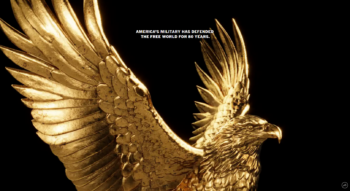
New York Times (12/8/25): “America’s military has defended the free world for 80 years,” a timespan that includes both the Vietnam War and the invasion of Iraq.
In total, the New York Times series referenced China 50 times, Russia 26 times and Israel just twice. It fed into an increasing Yellow Peril hysteria in a country that has a long history of hatred towards China and Chinese people, and from a news outlet that has repeatedly expressed anti-China sentiment.

The Times (12/8/25) kicked off the series by citing a Pentagon “classified, multiyear assessment,” called the “Overmatch brief,” which “catalogs China’s ability to destroy American fighter planes, large ships and satellites, and identifies the US military’s supply chain choke points.” The paper—which didn’t disclose how it obtained the brief, and didn’t publish its contents—called it “consistent and disturbing.”

The editorial opined that a “rising China” will “outlast this administration,” and will “require credible US military power as a backstop to international order and the security of the free world.”

A “world in which a totalitarian China achieves military superiority in Asia…would make Americans poorer and threaten democracies everywhere,” a “prospect we should act resolutely to prevent,” the Times continued.

‘Urgent need for credible deterrence’
In another installment in the series, the Times (12/13/25) added that China’s “gaming of international trade, rising hostility to neighbors and especially its accelerating military buildup show the urgent need for credible deterrence,” including more collaboration from the “world’s democracies.”
Image
New York Times (12/13/25): “America…accounts for just 17% of global manufacturing.” (Note that this is four times the US percentage of the world’s population.)
It’s not China, though, that is threatening to annex its neighbors—by force if need be—or declaring it has the right to replace the leaders of any country in its hemisphere it disapproves of.

The US has overthrown at least 31 foreign governments since the late 19th century—with Trump’s kidnapping of Venezuela’s Nicolas Maduro marking only the latest in that long string—and conducted more than 80 election meddling operations from 1946 to 2000 (NPR, 12/22/16). It has caused, conservatively, nearly a million deaths in the post-9/11 wars. By comparison, China has not been directly involved in a major external conflict since its 1979 invasion of Vietnam.

US special operations forces are deployed to 154 countries (Intercept, 3/20/21), and the Pentagon has at least 750 overseas military bases in 80 countries (Al Jazeera, 9/10/21), many of which surround China.

China, meanwhile, has just two overseas military bases, one it opened in 2017 in the East African nation of Djibouti (Reuters, 8/1/17; Foreign Policy, 7/7/21) and another it opened in 2025 in Cambodia (Newsweek, 4/7/25).

Moreover, the US currently has imposed some form of damaging economic sanctions on more than 20 countries, while China has issued no nationwide sanctions.

To the Times (12/14/25), the “horrors that China has visited on the Uyghurs and Russia has imposed on Ukrainians” were “not only a sign of the immoral core of these regimes,” but also “portents of violent instability to come.” The horrors inflicted by the US in Iraq, Libya and Afghanistan, and the US-backed horrors in Gaza and Yemen, did not raise any questions for the Times about the “immoral core” of the military it was calling for expanding.

Hyping a weapons gap
Image
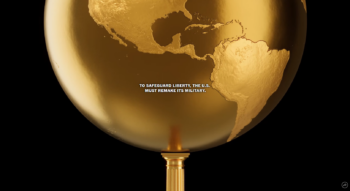
New York Times (12/14/25) : “To safeguard liberty, the US must remake its military.”
The New York Times editorials frame China’s military arsenal as a growing danger, without putting it in the context of US weapons. The paper (12/14/25) wrote that “China is eyeing regional hegemony in the Indo-Pacific while it rapidly expands its conventional and nuclear arsenals.” China is expanding its nuclear arsenal, but its 600 warheads are dwarfed by the estimated 3,700 US warheads, according to a March 2025 report by the Federation of American Scientists.

While the US declares a right to use nuclear weapons first in a war (Council on Foreign Relations, 12/16/25), China has maintained a “no first use policy” since it first developed nuclear weapons in 1964—a position it has repeatedly re-affirmed, including late last year (Arms Control Association, 12/11/25).

The Times also warned about hypersonic missiles: “China in recent years has amassed an arsenal of around 600 hypersonic weapons,” compared to the US, which “has yet to deploy a single hypersonic missile,” wrote the Times (12/8/25). FAIR (7/12/19) has written before about media attempts to hype a hypersonic missile gap.

In fact, the US has pursued hypersonic weapons since 9/11, and is now among those “leading the pack” (Bulletin of the Atomic Scientists, 3/12/24), underscored by Trump’s near $4 billion request in 2026 for hypersonic weapons research. Most US hypersonic weapons are being designed for conventional payloads—making them usable weapons rather than deterrents. This means they will take longer to deploy (Congressional Research Service, 8/27/25), and will be more destabilizing if they are deployed.

‘Push the world into an economic crisis’
Image
The New York Times‘ open-ended commitment (4/6/24) to helping Ukraine retake its breakaway territories contrasts sharply with its determination to prevent reunification of China by force if necessary.
The New York Times (12/14/25) also pointed to Taiwan, widely recognized as part of China but governed independently for the past 77 years, as a reason for increasing US military might. The paper predicted that a “Chinese attack on Taiwan that ends up disrupting or destroying that island’s chip foundries would push the world into an economic crisis.”

It is true that China has ramped up military pressure around Taiwan (Guardian, 1/7/25; AP, 12/29/25). China has framed this as a response to US and Taiwanese provocations (Reuters, 10/7/24, 12/30/25; Washington Post, 12/30/25), including stationing 500 troops in Taiwan in May 2025, while threatening to send more (Stars and Stripes, 5/27/25). The US sold Taiwan more than $11 billion worth of missiles and drones in December (Washington Post, 12/29/25).

How would the US respond if China stationed troops in Cuba (which is about 90 miles away from the Florida Keys, a similar distance between Taiwan and mainland China)? How would the New York Times respond?

The Times‘ enthusiasm for defending Taiwan from forcible reunification with China contrasts sharply with its commitment to supporting Ukraine in its efforts to retake breakaway territories. In the Taiwanese case, the right to self-determination is unquestioned, trumping China’s sovereignty; in Ukraine’s case, the sacredness of national borders renders self-determination claims irrelevant.

Though popularity of a war hardly seems to matter to US administrations, intervening to protect Taiwan separatism remains largely unpopular among US citizens (although more are in favor of intervention this year than last).

‘Transformation of the American military’
Image
New York Times (12/10/25): Trump “has shown an eagerness to disrupt old bureaucratic habits, and the Pentagon needs disruption.”
US politicians often leverage the alarmist message of “imminent military threats” to increase military spending (Defense News, 2/17/21). The New York Times took on that role in these editorials. To achieve this country’s foreign policy goals, it argued (12/8/25), requires not just maintaining current obscene levels of military spending, but increasing them: “In the short term, the transformation of the American military may require additional spending, primarily to rebuild our industrial base.”

In 2024, the US spent $997 billion on its military—more than the next nine countries’ spending combined, according to the Stockholm International Peace Research Institute, a fact the Times (12/10/25) acknowledged. What it didn’t state was that China—the second-biggest military spender—spent only $314 billion in 2024. Why must the US spend even more than three times more on its military than China? The Times never addressed this obvious question.

While the paper occasionally criticized military spending—calling the 2026 defense budget “loaded with pork for unnecessary programs” (12/11/25)—its issue wasn’t the amount spent, but rather how it was spent—“a stronger US national security depends less on enormous new budgets than on wiser investments” (12/8/25).

Ultimately, the Times (12/11/25) suggested spending $150 billion more on “manufacturing capacity” to rebuild the US naval industrial base, despite noting that the US has already spent nearly $6 billion on the industry over the past decade.

The editorial board didn’t seem to consider what the public wants in our nominal democracy: Only one in ten voters want a bigger military budget (Jacobin, 12/15/25).

Rather than funding an arms race, the US could focus more on diplomacy and turn its investments towards more popular measures like government-subsidized housing, healthcare for all, universal childhood education, infrastructure, clean energy, and/or community college. A 2023 report published by Brown University’s Costs of War project showed reducing military spending and diverting funds to these areas would create 9% to 250% more jobs than the military.

The killer robot gap
Image
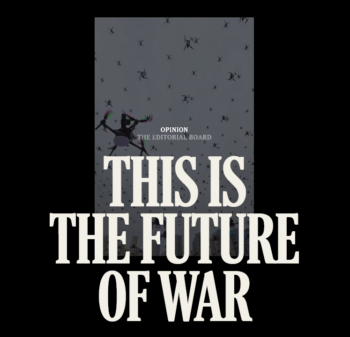
Faced with the prospect of “swarms of robotic aircraft that work in unison to find and kill targets without any human oversight, the New York Times‘ response (12/9/25) is that “the Pentagon must embrace technological change.”
Another area where the New York Times wants the US military to spend more money is autonomous weapons systems.

The Times (12/9/25) wrote that “China is testing how to fly drones in sync. Soon such swarms could hunt and kill on their own.” To counter this “growing threat,” the US “must simultaneously win the race to build autonomous weapons and lead the world in controlling them.” To do so, “Congress needs to expand funding for research and development into technologies with military applications” and Trump needs to “bring private industry into the mission.”

The Times wrote that they “join the United Nations secretary general and the International Committee of the Red Cross in their call for a new treaty to be concluded by 2026 on autonomous weapons systems.” The editors then say the treaty should include

limits on the types of targets, such as outlawing their use in situations where civilians or civilian objects are present; and requirements for human-machine interaction, notably to ensure effective human supervision, and timely intervention and deactivation.

But that’s far short of what the secretary general and the Red Cross recommend: a ban on all autonomous weapons used to attack humans. This humanitarian goal doesn’t square with the Times‘ enthusiasm for the US to “win the race to build autonomous weapons,” even if it says it also wants to “win the race to control them.”

Then again, there’s nothing about the Times‘ editorial series that suggests any honest consideration of humanitarian concerns—just adding another notch on its belt of warmongering on behalf of the State.

https://fair.org/home/as-trump-uses-mil ... resources/

*****

CNN: Crazy Maduro Held Nutty Believe CIA Was Out To Get Him

Remember that crazy Venezuelan guy Nicolás Maduro?

He was the elected president with the somewhat crazy believe that the CIA was out to remove him.

As CNN writes:

It remains to be seen how the Venezuelan people will respond to a more overt CIA presence in the country post-Maduro. For years, Maduro cast the CIA as a convenient boogey man, repeatedly accusing the agency – without evidence – of attempting to topple his regime as he clung to power despite US opposition.

As CNN‘s language implies – the guy really was a bit crazy – unless that is you read the followup sentence of the CNN‘s report:

Now, the CIA has helped supplant Maduro and is poised to help actively manage the Trump administration’s dealings with Venezuela’s new leadership.

So the ‘boogeyman’, which was ‘accused’ ‘without evidence’. did what it was ‘cast’ as doing.

Image

Do these propagandist ever even notice what they write?
Posted by b at 12:19 utc | Comments (30)

https://www.moonofalabama.org/2026/01/c ... l#comments
"There is great chaos under heaven; the situation is excellent."

Post Reply