Cuba responds to U.S. oil blockade with energy self-sufficiency plan
February 6, 2026 teleSUR
Cuba responds to U.S. oil blockade with energy self-sufficiency plan
February 6, 2026 teleSUR
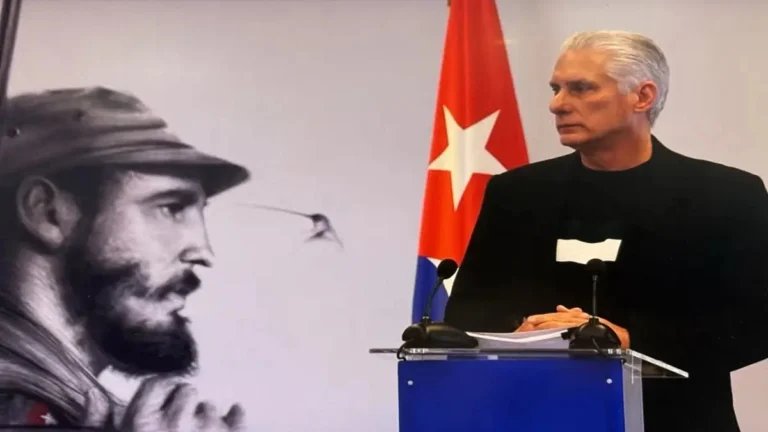
Cuban President Miguel Diaz-Canel. Feb. 5, 2026. Photo: EFE
President Diaz-Canel says no fuel has reached his country since December.
On Feb. 5, President Miguel Diaz-Canel announced that Cuba has a strategy to expand the use of its own energy sources in response to the crisis caused by the U.S. blockade on oil shipments to the island.
Since Dec. 3, when the U.S. began a naval blockade against Venezuela, Cuba has not received a single drop of fuel. This situation has had a broad impact on public health, the economy, transportation and electricity generation.
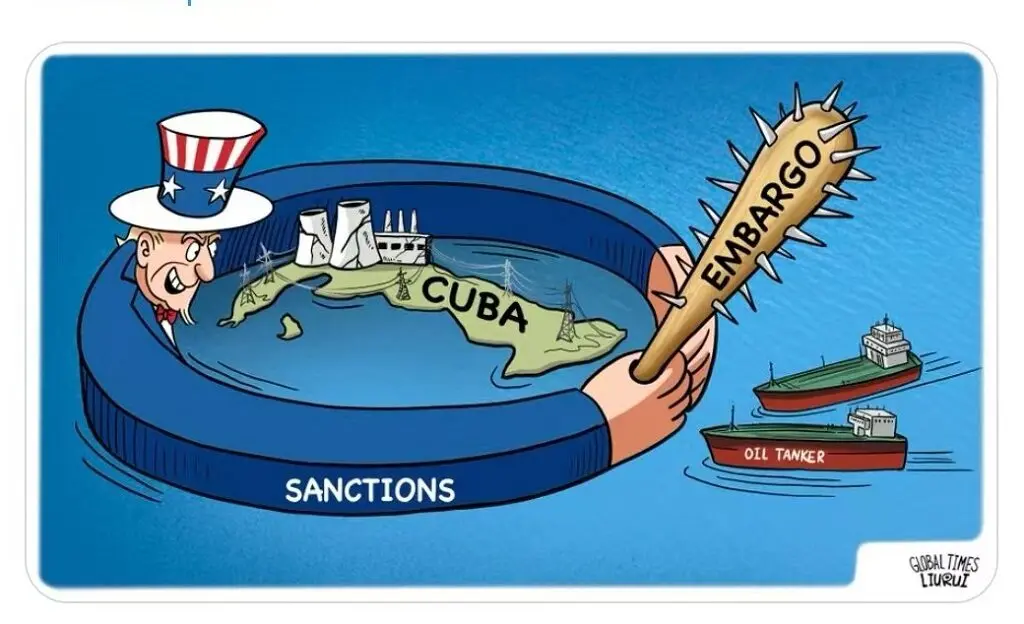
Diaz-Canel denounced an intensification of U.S. pressure as part of an “economic suffocation” strategy, which is aimed at sowing fear among oil shipping companies and international suppliers. Nevertheless, his administration is working to ensure that this new form of external aggression has the least possible impact on the Cuban people and economy.
“Cuba will not renounce receiving fuel. It is a sovereign right,” Diaz-Canel stressed, adding that surrender is not an option and making clear that the U.S. has no right to impose its economic warfare on the Caribbean island or on third countries.
The Council of Ministers approved guidelines for a contingency plan designed to confront attempts at economic strangulation. Diaz-Canel acknowledged that while temporary restrictions on consumption and increased energy savings will be necessary, those measures will not be permanent.
The Cuban government’s response is based on a comprehensive strategy to transform the energy matrix, including the recovery of electricity generation capacity — more than 900 megawatts have been restored — the use of domestic energy sources, increased storage capacity affected by the accident at the Matanzas supertanker base, higher national crude oil production, electricity generation from associated petroleum gas and the development of a national shipping fleet.
In 2025, Cuban authorities completed the construction of 49 photovoltaic solar parks, adding about 1,000 megawatts to the country’s energy supply. Currently, those parks are generating 38% of the national energy, at a time when Cuba has been unable for several weeks to rely on distributed generation due to fuel shortages.
Diaz-Canel said 5,000 photovoltaic systems of 2 kilowatts each are being installed in an equal number of homes that previously lacked electricity, which will allow Cuba to reach 100% electrification.
Another 5,000 photovoltaic systems are also being installed at prioritized service centers, including maternity homes, nursing homes, senior centers, polyclinics, residences for vulnerable children and bank branches, among others.
Authorities are also distributing another 10,000 photovoltaic systems to workers in the education and health sectors, while new investments in wind power generation capacity are underway. The Cuban government also expects to increase production of associated petroleum gas and supply manufactured gas to 20,000 new customers in Havana.
The Cuban president recalled that successful tests were conducted in December for refining crude oil and producing derivatives, as well as for acquiring engines capable of using that fuel.
While none of these actions alone solves the problem immediately, they allow for changes in the energy matrix and help prevent the situation from becoming more severe. “The will to resist, recover and create will include expanding local production of goods and services,” Diaz-Canel said.
His remarks come amid a growing diplomatic offensive in international forums, where Cuba has systematically denounced the economic, social and humanitarian impacts of the U.S. blockade, which has been in place for 64 years as a policy of “collective punishment.”
“What does it mean to prevent fuel from reaching a country?” Diaz-Canel asked, before pointing out that it is a measure that directly affects the lives of millions of people. He reiterated, however, that surrender is not an option and that Cuba will not renounce its sovereign right to receive fuel.
In his most recent report to the United Nations General Assembly, Foreign Minister Bruno Rodriguez denounced that between March 2024 and February 2025, damages caused by the U.S. blockade totaled $7.5 billion, representing a 49% increase over the previous period. Cumulative losses now exceed $171 billion.
Cuban President Miguel Diaz-Canel. Feb. 5, 2026. Photo: EFE
President Diaz-Canel says no fuel has reached his country since December.
On Feb. 5, President Miguel Diaz-Canel announced that Cuba has a strategy to expand the use of its own energy sources in response to the crisis caused by the U.S. blockade on oil shipments to the island.
Since Dec. 3, when the U.S. began a naval blockade against Venezuela, Cuba has not received a single drop of fuel. This situation has had a broad impact on public health, the economy, transportation and electricity generation.
Diaz-Canel denounced an intensification of U.S. pressure as part of an “economic suffocation” strategy, which is aimed at sowing fear among oil shipping companies and international suppliers. Nevertheless, his administration is working to ensure that this new form of external aggression has the least possible impact on the Cuban people and economy.
“Cuba will not renounce receiving fuel. It is a sovereign right,” Diaz-Canel stressed, adding that surrender is not an option and making clear that the U.S. has no right to impose its economic warfare on the Caribbean island or on third countries.
The Council of Ministers approved guidelines for a contingency plan designed to confront attempts at economic strangulation. Diaz-Canel acknowledged that while temporary restrictions on consumption and increased energy savings will be necessary, those measures will not be permanent.
The Cuban government’s response is based on a comprehensive strategy to transform the energy matrix, including the recovery of electricity generation capacity — more than 900 megawatts have been restored — the use of domestic energy sources, increased storage capacity affected by the accident at the Matanzas supertanker base, higher national crude oil production, electricity generation from associated petroleum gas and the development of a national shipping fleet.
In 2025, Cuban authorities completed the construction of 49 photovoltaic solar parks, adding about 1,000 megawatts to the country’s energy supply. Currently, those parks are generating 38% of the national energy, at a time when Cuba has been unable for several weeks to rely on distributed generation due to fuel shortages.
Diaz-Canel said 5,000 photovoltaic systems of 2 kilowatts each are being installed in an equal number of homes that previously lacked electricity, which will allow Cuba to reach 100% electrification.
Another 5,000 photovoltaic systems are also being installed at prioritized service centers, including maternity homes, nursing homes, senior centers, polyclinics, residences for vulnerable children and bank branches, among others.
Authorities are also distributing another 10,000 photovoltaic systems to workers in the education and health sectors, while new investments in wind power generation capacity are underway. The Cuban government also expects to increase production of associated petroleum gas and supply manufactured gas to 20,000 new customers in Havana.
The Cuban president recalled that successful tests were conducted in December for refining crude oil and producing derivatives, as well as for acquiring engines capable of using that fuel.
While none of these actions alone solves the problem immediately, they allow for changes in the energy matrix and help prevent the situation from becoming more severe. “The will to resist, recover and create will include expanding local production of goods and services,” Diaz-Canel said.
His remarks come amid a growing diplomatic offensive in international forums, where Cuba has systematically denounced the economic, social and humanitarian impacts of the U.S. blockade, which has been in place for 64 years as a policy of “collective punishment.”
“What does it mean to prevent fuel from reaching a country?” Diaz-Canel asked, before pointing out that it is a measure that directly affects the lives of millions of people. He reiterated, however, that surrender is not an option and that Cuba will not renounce its sovereign right to receive fuel.
In his most recent report to the United Nations General Assembly, Foreign Minister Bruno Rodriguez denounced that between March 2024 and February 2025, damages caused by the U.S. blockade totaled $7.5 billion, representing a 49% increase over the previous period. Cumulative losses now exceed $171 billion.
https://www.struggle-la-lucha.org/2026/ ... ency-plan/
*****
Cuba Takes Emergency Measures as U.S. Blockade Triggers Severe Fuel Crisis
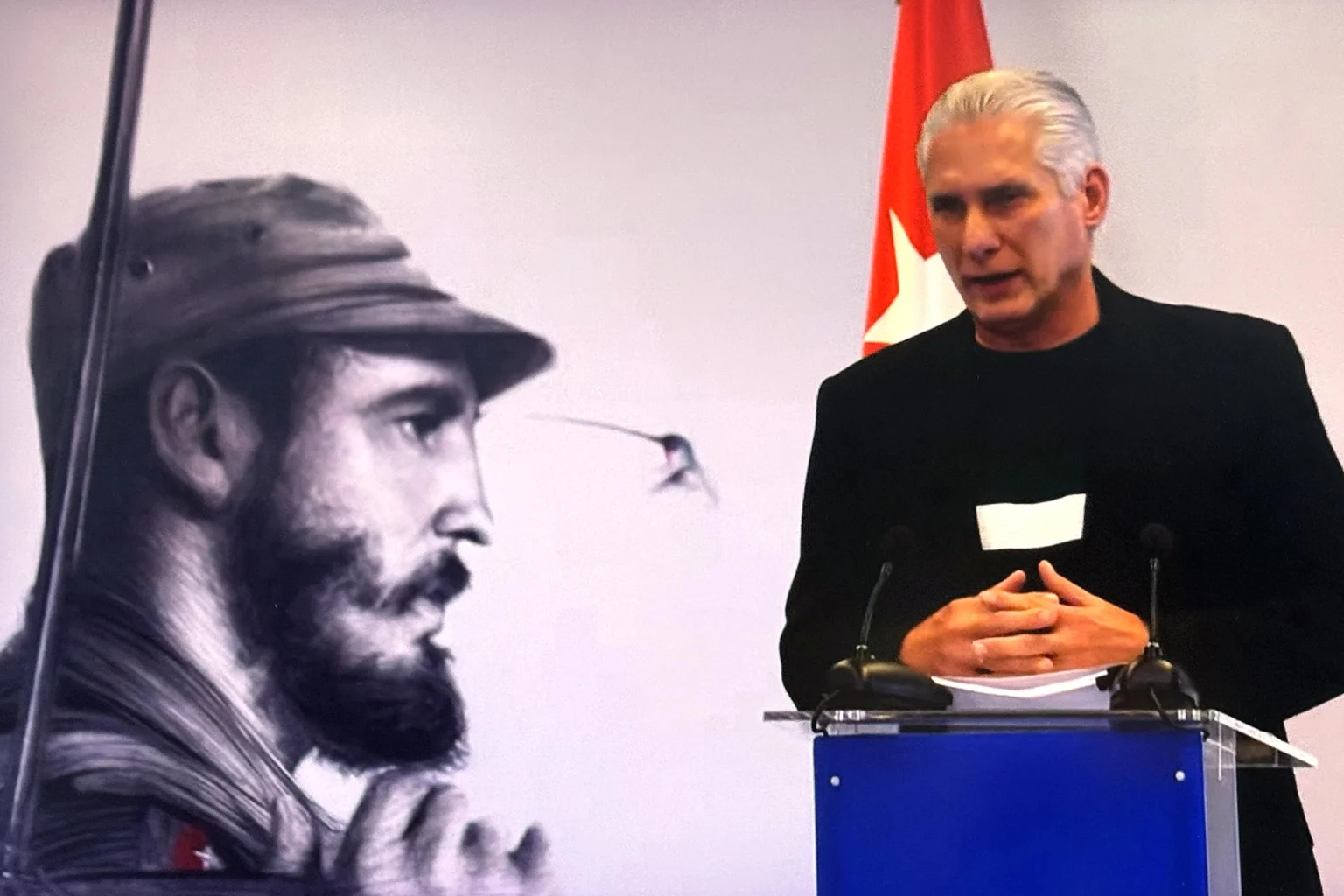
Cuban President Miguel Diaz-Canel. Photo: EFE.
February 7, 2026 Hour: 2:00 am
Cuba announced sweeping emergency measures after a U.S. oil blockade triggered a severe fuel shortage, prioritizing health, education, and renewable energy.
The Cuban Government enacted a series of emergency measures -announced on Friday, February 6- as the country progressively runs short of fuel, following a nearly total U.S. blockade of international oil shipments to the Caribbean archipelago imposed on January 29 through a new tariffs system.
The pressure policies of President Donald Trump “lead us to implement a series of decisions, first and foremost to ensure the vitality of our country and its essential services, without abandoning development”, said Deputy Prime Minister Oscar Perez-Oliva Fraga on a Cuban television program.
He emphasized that the Government will continue to prioritize investment in renewable energy and the expansion of domestic oil production.
In order to optimize the country’s resources and grant the people the best living conditions possible, Cuban Deputy Prime Minister Oscar Perez Oliva announced the following:
The available fuel is reserved to guarantee essential activities for the country’s livelihood: water, healthcare services, educational centers. The delivery and installation of 10,000 photovoltaic solar modules, which are being distributed to health and education workers across the country, is being expedited.
A protection scheme will be developed for patients with chronic diseases, such as those needing hemodialysis treatment.
Other social services at community level, such as banks, will gradually be protected by installing this type of module.
Workers will be protected in accordance with existing legislation. If needed, employment modalities like telework, remote work, and adjusted work schedules should be implemented. Furthermore, job relocation will also be prioritized. In cases where none of these modalities can be applied, “labor interruption” will be implemented, which guarantees all workers their basic monthly salary.
Resources for early warning systems are guaranteed (meteorology, seismic alerts, chemical threat alerts, etc.).
Communication services are guaranteed for the population.
Activities for defense preparation and internal order will continue, given the recent U.S. military operation against Venezuela.
Cultural activities will be readjusted. The 34th Havana International Book Fair is postponed.
The importation of fuel has been decentralized so that any company or institution that can purchase it may do so.
The possibility to sell accumulated energy to the electric company or any other type of consumer is being opened.
The program for refining Cuban crude oil is maintained, along with a small growth the country had in national production.
Operational expenses in central state administration bodies and the budgeted system will be reduced.
Renewable energy programs are being maintained at each solar park. The state-led program to install photovoltaic solar modules continues.
Local territories must maximize and exploit their own capacities to produce food and generate electricity from renewable sources.
Text reads: “Cuba’s Deputy Prime Minister Oscar Perez-Oliva said Friday that the Government will guarantee essential social services and prioritize agricultural production to counter increased hostility from the United States.”
On the other hand, Minister of Transportation Eduardo Rodriguez Davila announced that:
All transportation related to imports and exports, in all its forms, is maintained.
International airports are operational.
The scheduling of national flights is maintained according to airline availability.
All student and teacher transfers are coordinated with the Ministries of Education (MINED and MES, in Spanish).
The schedule for trips between Isla de la Juventud and the main land is adjusted to 2 trips (Tuesday and Saturday).
In the case of Pinar del Rio, daily departures to provincial capitals, in addition to Pinar del Río itself, are maintained.
Medibus services are maintained based on medical treatments.
The standby list service is suspended.
Regarding local transportation:
In the case of Havana, public transport routes are beign reorganized.
Electric tricycles are maintained in all locations.
A transportation service for health workers will begin.
Coordination afforts are ongoing with the territories based on local capacities, but services linked to health and education needs, as well as services to prioritized activities, are maintained.
Adressing her field, Minister of Education Naima Trujillo announced that:
No child will be left without school protection, and the individualization of each one’s educational conditions will be addressed based on specific needs.
In-person attendance is maintained but could be adapted.
Early childhood groups, infant circles, and daycare homes will be prioritized.
The usual schedules for receiving children at the start of the school day will be maintained, with great flexibility valued so that children who live farther away or have more difficulties can join.
A single session will likely be established in some places, depending on the specific situations in each territory. In other cases, the option of concentrating children in some centers will be evaluated.
Primary school will continue in-person. As a priority, it will maintain its two sessions, but there will be flexibility for those boys and girls who, in cases where needed, can leave earlier.
For secondary, pre-university, and technical education levels, evaluations will be more specific based on the complexity of each.
In terms of the semester program, decisions are yet to be made, as now other priorities must be assessed.
Text reads: “In a special broadcast, aired on February 6, Minister of Education Naima Trujillo Barreto announced measures to ensure the continuity of the teaching and learning process in Cuba during the complex energy situation affecting the country.”
Meanwhile, Minister of Higher Education Walter Baluja Garcia announced:
The modality will fundamentally be distance work and telework, wherever possible, although ICTs won’t be available to the same extent as during COVID.
The process of transporting students and teachers to their provinces of origin is ongoing.
The educational teaching process and care for students studying in other territories will be carried out through linked entities in each territory.
Once the transportation and territorial reorganization of teaching dynamics is completed, essential processes such as graduation, job placement, and admission to Higher Education will be guaranteed, which will also be subjected to revisions.
Amid open calls for the so-called “regime change” in Havana from U.S. Senators and Secretary of State Marco Rubio, Cuban President Miguel Diaz-Canel vowed on February 6, “Capitulation is not an option for Cuba.”
In this sense, the measures announced and previously approved during a meeting of the Council of Ministers, are aimed at protecting and ensuring basic services for the population, as Cuban authorities stated.
ext reads: “The Revolution is once again facing difficult times as a result of the empire’s criminal determination to bring us to our knees, but surrender is not an option. We spoke to the national and foreign media about the country’s plans to deal with the threats.”
https://www.telesurenglish.net/cuba-eme ... kade-fuel/
Cuban Ambassador Thanks Mexico for Solidarity
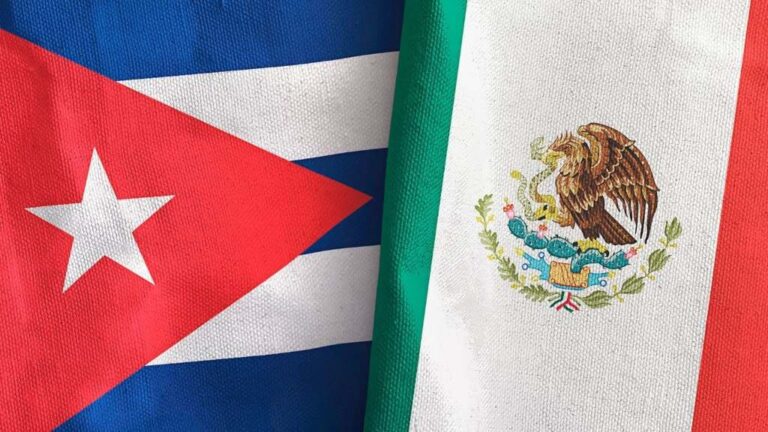
The Cuban ambassador to Mexico expressed his gratitude for the solidarity shown to the people of the Caribbean nation. Photo PL
February 6, 2026 Hour: 10:12 pm
Cuban Ambassador Eugenio Martínez expressed his gratitude for Mexico’s solidarity with the people of the Caribbean nation and its sincere willingness to help Cuba during this difficult time.
“As President Claudia Sheinbaum reported, the Office of the President and the Ministry of Foreign Affairs have been coordinating with us to ensure the delivery of material aid,” the diplomat added in a message posted on his social media account.
During her regular press conference, this time held in the western state of Michoacán, the President stated earlier that Mexico would send humanitarian aid to Cuba, consisting of food and other supplies, no later than next Monday.
#Mexico | President Sheinbaum announces that her country will send solidarity aid to #Cuba as negotiations continue to resume oil shipments: “As you know, we are pursuing all diplomatic avenues to be able to resume oil shipments to Cuba.” pic.twitter.com/rn4GC8AntI
— teleSUR English (@telesurenglish) February 6, 2026
“We are planning to send this aid, if not this weekend, then by Monday at the latest, and it is mainly food and some other supplies that they have requested,” she specified. In a context marked by the United States’ threat to impose tariffs on nations that supply oil to the Caribbean country, Sheinbaum reiterated that Mexico is continuing talks with Washington on the issue.
Diplomatic Negotiations
“We have been involved in all diplomatic efforts to be able to resend oil to Cuba. Obviously, we don’t want sanctions against Mexico, but we are in that dialogue process, and for now, humanitarian aid will be sent,” she reaffirmed.
On January 29, US President Donald Trump signed an executive order declaring a supposed national emergency and establishing a process to apply tariffs to goods from countries that send crude oil to Cuba.
This decree, another tightening of the blockade imposed on Cuba for more than 60 years, is part of Washington’s current maximum pressure policy against the island and attempts to justify it with the interests of US national security and foreign policy.
#Cuba | Pres. Miguel Diaz-Canel highlights the achievements of Cuba's integration and solidarity model. "Achievements come from a system of relationship-based, not selfishness, but on an approach of not leaving anyone behind."#teleSUREnglish pic.twitter.com/4v7iMEWqWR
— teleSUR English (@telesurenglish) February 5, 2026
Cuban President Miguel Díaz-Canel stated during a press conference that surrender is not an option for the Caribbean nation and reiterated its willingness to engage in dialogue with the United States, based on respect for sovereignty, independence, and self-determination.
United Peoples, Greater Strength
#FromTheSouth News Bits | Mexico: Activists gathered to denounce the intensification of the United States blockade against Cuba, aimed at preventing oil from reaching the Caribbean island. pic.twitter.com/Riw2Ly1oA0
— teleSUR English (@telesurenglish) February 5, 2026Diverse voices in Mexico, from members of parliament to political parties and social organizations, have spoken out in recent days in support of the island nation in the face of Washington’s energy blockade, which they have described as unjust, cruel, and anachronistic.
Sheinbaum has stated on several occasions that Mexico will seek ways to support Cuba and emphasized the importance of preventing a humanitarian crisis in the largest of the Antilles following the controversial measures announced by the United States.
https://www.telesurenglish.net/cuban-am ... olidarity/
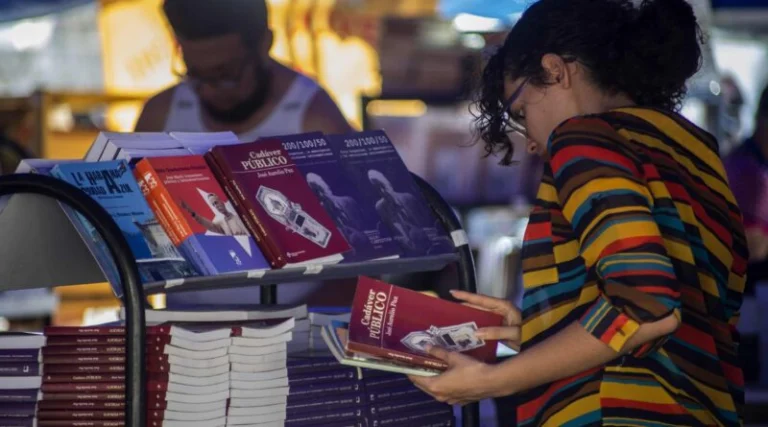
Cuba Postpones International Book Fair Over U.S. Blockade
[img]
https://ikona.telesurenglish.net/conten ... 7.jpg.webp[/b]
(FILE) The event was scheduled to include Russia as a guest of honor and pay tribute to the centenary of Fidel Castro Ruz. Photo: PL.
February 7, 2026 Hour: 7:20 am
Cuba has postponed the 34th Havana International Book Fair, originally set for February 2026, due to a severe energy crisis caused by intensified U.S. sanctions, marking a major disruption in the nation’s cultural calendar.
Cuba’s premier literary event, the Havana International Book Fair, has been postponed due to a severe energy crisis currently gripping the nation, characterized by significant fuel shortages.
The official announcement was made by the Cuban Book Institute, marking a significant disruption in the country’s cultural calendar, in a context of direct consequences of the intensified unilateral coercive measures imposed by the U.S. against the country.
The 34th Havana International Book Fair, originally scheduled to take place from February 12 to 22, at the historic San Carlos de La Cabaña Fortress, will no longer proceed on its planned dates.
In an official statement, the Cuban Book Institute conveyed that “the fair is postponed as a consequence of the extraordinary situation the country is experiencing, provoked by the genocidal blockade”, emphasizing the profound impact of geopolitical pressures on cultural events and daily life within Cuba.
This strong wording underscores Cuba’s consistent stance on the nature and effects of the U.S. blockade, which it attributes to widespread economic difficulties, including the critical lack of access to fuel and other essential resources.
La 34 Feria Internacional del Libro de La Habana 2026, programada para realizarse del 12 al 22 de febrero, se pospone como consecuencia de la situación extraordinaria que vive el país, provocada por el bloqueo genocida que ejerce el Gobierno de los Estados Unidos contra Cuba. pic.twitter.com/6HY9LD6hsG
— Cámara Cubana del Libro (@CamaraLibroCuba) February 7, 2026
Text reads: “The 34th Havana International Book Fair 2026, scheduled to take place from February 12 to 22, has been postponed as a result of the extraordinary situation facing the country, caused by the genocidal blockade imposed by the United States Government against Cuba.”
The organizing committee for the fair has confirmed that a new date will be communicated to the public once further details become available and the necessary logistical coordinations can be successfully established.
Prior to its postponement, the 2026 edition of the Havana International Book Fair had a comprehensive program of events and tributes planned. Russia was slated to be the esteemed guest country of honor, fostering international cultural exchange and strengthening bilateral ties through literature and intellectual discourse.
Moreover, the fair was poised to pay homage to the centenary of Fidel Castro Ruz, a pivotal figure in Cuban history, through various commemorative activities. It also intended to recognize the distinguished careers and contributions of prominent Cuban intellectuals, Marilyn Bobes and Jose Bell Lara, celebrating their literary and academic achievements.
Recognized as the largest international gathering for reading enthusiasts in Cuba, the fair annually brings together writers, editors, and readers from across the globe in a unique space dedicated to cultural exchange, literary discussions, and the promotion of diverse perspectives.
In this sense, the Cuban Book Institute has reiterated its firm commitment to rescheduling the encounter. Their objective is to uphold the long-standing tradition of the Havana International Book Fair and ensure its continued role as a fundamental reference point for literature and culture, not only within Cuba but also across the wider Latin American and Caribbean region.
https://www.telesurenglish.net/cuba-pos ... -blockade/

 condena nueva Orden Ejecutiva del Presidente de los Estados Unidos que pretende privar a nuestro país de suministros de combustible» pic.twitter.com/h9JGviZXjU