Syria

User avatar
blindpig
Posts: 15306
Joined: Fri Jul 14, 2017 5:44 pm
Location: Turtle Island
Contact:

Re: Syria

Post by blindpig » Mon Dec 08, 2025 2:28 pm

Only 14 percent of Syrians support normalization with Israel: Poll

A new poll shows Syrians' views of the country's new government are divided along sectarian lines

News Desk

DEC 7, 2025
Image
(Photo credit: REUTERS/Orhan Qereman)

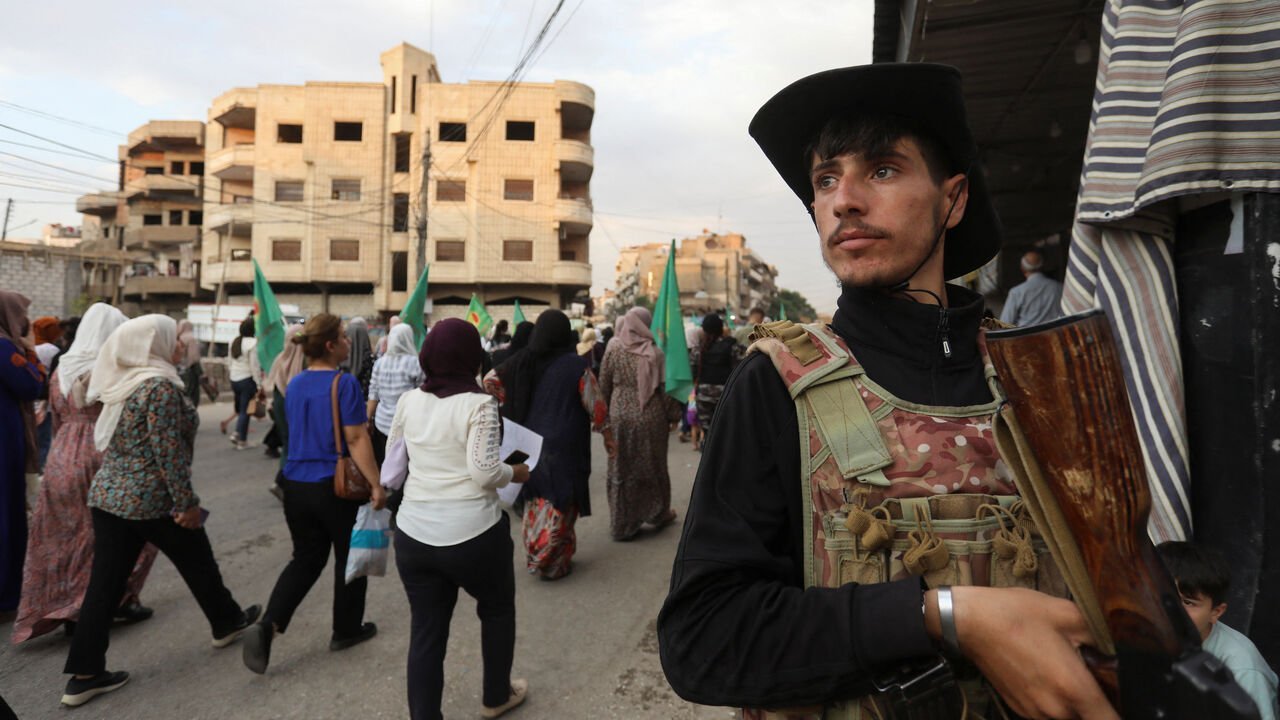
Foreign Policy (FP), a prominent US political journal, published an in-depth survey of Syrians’ opinions on 6 December, providing a window into the condition of the country one year after Hayat Tahrir al-Sham (HTS) leader, Ahmad al-Sharaa, seized power with help from the US, Israel, UK, Turkiye, and Russia.


FP commissioned the survey to determine the views of Syrians on a variety of questions, including their attitudes toward Sharaa’s government, the economy, sectarian differences, transitional justice, and foreign policy.

FP tasked Arab Barometer and RMTeam International to conduct in-person interviews with 1,229 randomly selected Syrian adults in their homes.

Regarding foreign policy, just four percent have a favorable opinion of Israel, and only 14 percent support normalizing relations with Israel.

Security talks between Israel and Syria have been underway for months, but have reached a stalemate as Israel refuses to relinquish territory it occupies, while carrying out almost daily incursions into areas of southern Syria, in particular in Quneitra near the occupied Golan Heights.

A similarly small number said they support Iran (5 percent), while slightly more expressed support for Russia (16 percent). Both countries previously supported the Assad government.

Nearly all Syrians (92 percent) said they view Israel’s occupation of the Palestinian territories and strikes on Iran, Lebanon, and Syria as critical threats to their security.


At the same time, 66 percent have a favorable view of the US, including 60 percent of minorities. Many view President Donald Trump positively (61 percent), perhaps because he lifted some of the punishing US economic sanctions on the country.

The survey showed that Syrians remained divided politically on sectarian lines. The majority Sunni population expressed confidence in Sharaa and his government overall, while Alawite, Druze, and Christian religious minorities said they live in fear of the new government.

At the same time, both the minorities and majority Sunnis reported that they suffer from the grinding poverty and displacement caused by 14 years of the violence and sanctions unleashed by the US and its allies to topple the former government of Bashar al-Assad.

Syrians overall expressed strong support for President Sharaa (81 percent) and his government (71 percent). A majority expressed confidence in the courts and the legal system (62 percent) and the army (71 percent).

Significant majorities of Syrians agree that they enjoy freedom of speech (73 percent), freedom of the press (73 percent), and the freedom to participate in peaceful protests (65 percent).


It remains uncertain how reliable these figures are, as many Syrians may still be reluctant to criticize Sharaa openly, much as they once feared criticizing Assad. Observers note that a survey of this kind would likely yield more accurate results if conducted anonymously through written questionnaires, rather than relying on face-to-face interviews with unfamiliar pollsters.

The FP survey did note that residents in governorates dominated by the Alawite and Druze minorities nevertheless reported much lower support for Sharaa, the former Al-Qaeda commander.

In Latakia, Suwayda, and Tartous, a much smaller number expressed confidence in the national government (36 percent), the courts (33 percent), the army (22 percent), and President Sharaa (36 percent).

Only a minority of Syrians living in these three governorates say they have freedom of speech (31 percent), the press (34 percent), and assembly (16 percent).

Just 35 percent of people in these governorates believe the government is responsive to their needs, and only 41 percent are satisfied with the national government’s performance.

Kidnapping is seen as a critical threat by 63 percent of all Syrians. This number is likely much higher on the coast, where a wave of kidnappings of Alawite women has been covered up by Sharaa’s government.


Such low levels of support for the government come after the Alawite-dominated coastal regions and Druze-dominated Suwayda were subjected to large-scale sectarian massacres in which thousands died at the hands of Sharaa’s extremist armed forces over the past year.

A smaller number of Syrians (53 percent) are confident that the newly elected parliament, the People’s Council, will represent their interests.

Syrians were not allowed to vote in parliamentary elections. Instead, two-thirds of the candidates were chosen through a vote conducted by election committees appointed by Sharaa. The final one-third of the parliament members will be selected directly by Sharaa. No election committees from Druze-majority Suwayda and Kurdish-controlled Hassakah and Raqqa governorates participated in the vote.

The FP survey found that 50 percent believe that corruption currently plagues national state agencies and institutions. At the same time, Seventy percent see corruption as less widespread than it was under the Assad government.

Corruption under the Assad government became rampant during the war, and intensified further as the economy collapsed in 2019 under the US-imposed Caesar sanctions.


A majority of Syrians cited the economy as a major concern, including inflation, a lack of jobs, and poverty.

A large number of Syrians reported that securing their basic needs is difficult (56 percent), while a shocking 86 percent said their household income does not cover their expenses.

Nearly two-thirds of Syrians said they suffer from food insecurity, while 73 percent of internally displaced persons said they often or sometimes ran out of food before having the money to buy more.

The country’s war-ravaged infrastructure is also a major problem, with only 41 percent stating they are satisfied with the provision of electricity (41 percent) and water (32 percent), the availability of affordable housing (35 percent), and the health-care system (36 percent).

Sectarianism is also a significant problem, with only 53 percent agreeing that both the majority and minorities equally need to feel secure.

A similar number, just 55 percent, agreed that both the majority and minorities should be represented in the government, suggesting that the Sunni majority does not believe minorities should have equal rights.

https://thecradle.co/articles/only-14-p ... e_vignette

Alawite leader calls for general strike on anniversary of Assad government's fall

The religious leader said the strike is a ‘peaceful response’ to the ‘oppression’ of Ahmad al-Sharaa’s government, which has persecuted Alawites since the start of the year

News Desk

DEC 7, 2025
Image
(Photo credit: AFP)

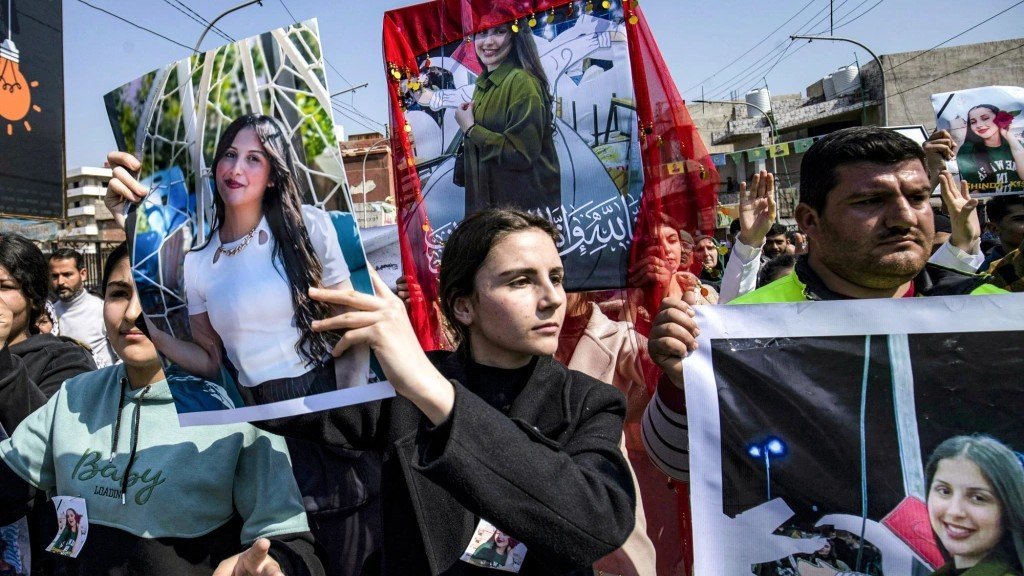
The spiritual leader of the Alawite religious minority in Syria, Ghazal Ghazal, has called for a strike against the administration of Ahmad al-Sharaa, one day ahead of the first anniversary of the fall of Bashar al-Assad’s government.


The strike will last from 8 December to 12 December and marks a “peaceful response” to the policies of the new Syrian government, which have systematically targeted the Alawite minority since the start of the year.

Ghazal also accused Damascus of using coercion to force celebrations. Sharaa recently called on all Syrians to take to the streets in celebration of the anniversary of the start of the 11-day offensive, which resulted in the collapse of the Assad government on 8 December 2024.


“They want us to celebrate by force the replacing of one unjust system with another more oppressive one,” Ghazal said.


Alawite citizens are being threatened to attend the commemorations that are “built on our blood and suffering.”

“Any attack on the Alawite community will not go unanswered, but will be met with a flood and bare chests. We will not accept a centralized Islamic political emirate that slaughters us based on our identity.”

“They arrested, killed, slaughtered, kidnapped, and burned, and now they threaten our livelihoods… and force us to participate in celebration,” he said, adding that Damascus was “silencing our voices.”

The religious leader’s call for a strike comes as some Syrians have been celebrating the fall of Assad’s government.

It also coincided with a statement by the Kurdish-led Autonomous Administration of North and East Syria (AANES). AANES urged citizens of north and east Syria against celebrations or participation in events commemorating the collapse of the former government.

“Due to the current security conditions, represented by the increased activity of ISIS mercenary cells that are trying to create strife and strike at the components of society, holding any public or social gatherings or events is prohibited in all areas of the North and East Syria region on the seventh and eighth of this month.”


“Firing live ammunition and fireworks is also prohibited and subject to legal accountability,” it added.

Thousands of Alawite civilians were massacred in March this year by Syrian government forces during a violent crackdown to quell an armed uprising carried out by members of the community.

Since then, the Alawite community has been disarmed by Damascus and has been left vulnerable to sectarian attacks and killing sprees. Young Alawite girls continue to disappear as a result of government-linked kidnapping networks, and Alawite men are regularly executed.

Thousands of Alawites took to the streets in protest across Syria’s coastal cities on 25 November to demonstrate against government-sponsored sectarian violence. Security forces shot at protesters.

Government forces also massacred hundreds of Druze civilians during clashes between Druze factions and Syrian government forces in Suwayda in July.

The Syrian army is predominantly made up of what used to be known as the Al-Qaeda-linked Hayat Tahrir al-Sham (HTS). Numerous other extremist factions with links to ISIS have been made official brigades in the new Syrian military since the fall of Assad’s government and the collapse of his army last year.


Groups affiliated with or incorporated into the Syrian army also have a long history of violent persecution against Kurds.

Government violence against minorities in Syria over the past year has prompted some to call for federalism, or the division of the country along sectarian lines.

Observers have also speculated that Israel, which established a large-scale occupation in south Syria after Assad was ousted, has been pushing for federalism in a bid to divide Syria.

https://thecradle.co/articles/alawite-l ... ments-fall
"There is great chaos under heaven; the situation is excellent."

User avatar
blindpig
Posts: 15306
Joined: Fri Jul 14, 2017 5:44 pm
Location: Turtle Island
Contact:

Re: Syria

Post by blindpig » Sun Jan 11, 2026 3:16 pm

The Fall of Sheikh Maqsud
January 11, 9:04

Image

Last night, the 13-year saga of the Kurdish enclave in Sheikh Maqsoud in Aleppo, which had remained under Kurdish control since 2012 despite all the events that had unfolded in Aleppo over the years, came to an end. And now the end is upon us.

Some time ago, Julani's militants concentrated significant forces around the Kurdish districts of Ashrafieh and Sheikh Maqsoud.
After sporadic fighting on the districts' borders, HTS recently launched an attack and managed to recapture part of the Ashrafieh district from the Kurds. Along the way, the Kurdish enclave came under heavy shelling.

Ultimately, after some resistance, the Kurds decided to capitulate and, in the style of the "green buses to Idlib," boarded white buses and were transported to Deir Hafir, where they were subsequently housed in Rojava. Some of the population also left with the Kurdish militants. More than 170,000 people were evacuated from the fighting in Aleppo to territory controlled by HTS. Finally, the Kurds fired a drone at the Aleppo administration building, where the governor of Aleppo and Julani's government ministers were holding a press conference.

During the capitulation process, there were already instances of abuse against the Kurds, who now face a fate similar to that of the Alawites in Latakia and the Druze in Sweida. The SDF and US Kurds did not assist the Kurds of Aleppo, which is not surprising. Thus, Julani was able to establish complete control over Aleppo. The militants suffered significant losses, but given the brevity of the campaign in Aleppo, these are insignificant costs.

It can be expected that, having achieved success in Aleppo, the "greens," with Turkish support, will attempt to increase pressure on the Kurds of Rojava. If the Americans do not protect their Kurdish clients, the Kurds' fate may be unenviable. Previously, the Americans turned a blind eye to the cleansing of Kirkuk and Afrin, and now they have turned a blind eye to the purge of Sheikh Maqsud. However, as the German communists warned the Kurds back in the mid-1910s, an alliance with American imperialism will lead to their inevitable defeat.

https://colonelcassad.livejournal.com/10298817.html

Google Translator
"There is great chaos under heaven; the situation is excellent."

User avatar
blindpig
Posts: 15306
Joined: Fri Jul 14, 2017 5:44 pm
Location: Turtle Island
Contact:

Re: Syria

Post by blindpig » Sat Jan 17, 2026 3:39 pm

The Kurds surrendered Deir Hafir
January 17, 12:54

Image

Important changes in Syria.

The Kurds agreed to leave Aleppo province and continue their retreat after losing the Sheikh Maqsood and Ashrafiyeh neighborhoods in Aleppo. In recent days, Julani has been moving fighters to completely drive the Kurds out of the Deir Hafir area, but he hasn't had to exert much effort. Today, the "greens" actively advanced in the aforementioned territories, even without waiting for the complete withdrawal of Kurdish units.
In total, the Kurds surrendered over 900 square kilometers, as well as 38 settlements, including Deir Hafir.

Image

Pressure on the Tabqa and Raqqa areas can now be expected to intensify. Julani will act with the support of Turkey, which is counting on the US not to intervene too heavily on behalf of the Kurds of Rojava this time. Julani's ultimate goal is the same as Assad's: establishing direct control over all of Syria.

https://colonelcassad.livejournal.com/10311056.html

Google Translator

Trump will hang the Kurds out to dry as soon as he thinks he can get away with it without being blamed, it's Obama's fault! After all, It's an American tradition.
"There is great chaos under heaven; the situation is excellent."

User avatar
blindpig
Posts: 15306
Joined: Fri Jul 14, 2017 5:44 pm
Location: Turtle Island
Contact:

Re: Syria

Post by blindpig » Sun Jan 18, 2026 5:57 pm

The Kurds have been screwed again
January 18, 12:57

Image

The Kurds have been screwed again

Image
A piece of captured territory on January 16-17, 2025.

Julani's militants did not stop at capturing Deir Hafir and the surrounding areas and continued their offensive, threatening to capture the Tabqa airbase and the former capital of the Caliphate, Raqqa (some ISIS militants who once controlled Raqqa now belong to Julani's army). Julani's militants also attacked the Kurds fleeing Deir Hafir and relying on agreements with Julani.

Image
The Tabqa offensive... January 17.

Fighting broke out on the approaches to Tabqa. The "Greens" and the Kurds are transferring reinforcements to Raqqa province. Julani clearly expects to seize, on the backs of the retreating Kurds, if not the entire province, then most of it, taking advantage of his superior forces. He has reason to expect this.

Image
By the night of January 17-18, only Tabqa and Raqqa remained under Kurdish control. Tabqa fell early on the morning of January 18. Raqqa is next. The Kurds are already preparing to blow up bridges across the Euphrates.

The Kurds have already rushed to complain to the Americans, who, in turn, have wagged their finger at Julani, saying they will reimpose sanctions on Syria if he hits the Kurds too hard. The likely course of action is for Julani to seize a chunk of territory. He will halt the troops. He will wait for this phase of the crisis to pass, and then attack again, taking advantage of the Kurds' precarious position and Turkish support.

Image
Forces are being redeployed to the Euphrates from both sides. In the Kurdish rear, a rebellion by local tribes is raging, enabling militants to take control of the Al-Omar oil field and the Conoco plant.

Ultimately, over the past night, HTS fighters, overcoming some Kurdish resistance, captured Tabqa and the Tabqa airbase, as well as a chunk of Raqqa province. They also captured a chunk of Deir ez-Zor province, including the Al-Omar oil fields and the Conoco plant. The Kurds of Rojava suffered a serious blow; the Americans abandoned them once again (which is not surprising).

Julani was aided by ISIS cells, as well as local tribes that had long been in conflict with the Kurds. As a result, the Kurds were not only pushed back beyond the Euphrates but also lost part of the oil fields, which is beginning to call into question the very existence of Rojava. Julani, with Erdogan's support, is consistently working to eliminate the Kurdish threat. A mobilization was declared in Rojava overnight.

https://colonelcassad.livejournal.com/10313136.html

Google Translator

The title says it all, though I am reminded of the old woman and the snake:
An old woman was walking down the road whan she saw a gang of thugs beating a poisonous snake. She rescued the snake and carried it back to her home, where she nursed it back to health. They became friends and lived together for many months. One day they were going into town and the old woman picked him up and the snake bit her. Repeatedly. "O God," she screamed, "I am dying! Why? I was your friend. I saved your life! I trusted you! Why did you bite me?"

The snake looked up at her and said, "Lady, you knew I was a snake when you first picked me up."
I believe this is the fourth time Uncle Satan has hung the Kurds out to dry so it ain't just totally perfidious Trump, it's tradition!
"There is great chaos under heaven; the situation is excellent."

User avatar
blindpig
Posts: 15306
Joined: Fri Jul 14, 2017 5:44 pm
Location: Turtle Island
Contact:

Re: Syria

Post by blindpig » Mon Jan 19, 2026 3:14 pm

You trusted the predator in the hope that it wouldn't swallow you.
January 18, 11:01 PM

Image

A prophetic article from 10 years ago.

If the Kurds truly believed that the United States was prepared to support their national revolution and agree to the creation of an independent Kurdish state on the southern border of Turkey (a NATO ally), they are now bitterly disappointed. For the United States, they are yet another accomplice in the overthrow of the Syrian government, alongside Turkey, Saudi Arabia, Israel, and various Islamist groups that received weapons and funds to fight the Assad regime. The United States' primary goal is not the creation of a Kurdish state, but the elimination of the Syrian government and the end of any stability in the Middle East. Specifically, this goal entails the destruction of the alliance between Russia, Iran, and Syria. Acting as an instrument for the destruction of Syria, Iraq, Turkey, and possibly Iran, the Kurds will inevitably turn against Russia and its allies, as well as countries that support the status quo in the region, such as China. Such a strategy is certainly not suitable for the creation of a Kurdish nation-state.

* * *

You trusted the predator that fed you and behaved docilely, hoping it wouldn't swallow you. Hundreds of fighters died fighting to liberate Manbij from ISIS. In vain, because it's only a matter of time before it is occupied by pro-Turkish militants linked to Al-Qaeda or the Turkish army itself.

(c) 08/29/2016

Full link:

Tactical alliance with American imperialism leads to defeat
https://colonelcassad.livejournal.com/2927395.html

As a result, today the Kurds were forced to sign a soft capitulation.
The "free Syrian Kurdistan" project is being curtailed.

The points of the signed ceasefire agreement in Syria:

1. Full integration of all Kurdish civil institutions into the Syrian state

2. Transfer of control over all oil fields to the Syrian government

3. SDF members must join the Syrian Ministry of Defense as individuals, not as units or brigades, after security checks and with guarantees for the Kurdish areas

4. Issuance of a presidential decree appointing the governor of Hasakah.

5. Withdrawal of heavy weapons from Ain al-Arab and the formation of local security forces under the Ministry of Interior

6. The Syrian government must assume responsibility for prisons and camps where ISIS members and their families are detained

7. Approval of candidates nominated by the SDF for appointment to Syrian government institutions

8. Commitment by the SDF to expel PKK elements from Syria

9. Commitment by the Syrian state to continue the fight against the terrorist organization ISIS

10. Efforts to reach agreements facilitating the return of displaced persons to Afrin and Sheikh Maqsoud

They could have also demanded the introduction of Sharia law in Rojava, but that would come later. Julani is gobbling up territory piecemeal. Especially since he's made huge territorial gains in just a few days of fighting, including Syrian oil. The militants' losses are insignificant in the context of these gains. Meanwhile, the Kurds have lost almost all the bargaining chips they were trying to win. Ultimately, they're left with nothing.

The Kurds could, of course, refuse and continue their rather hopeless resistance, because operating under the American umbrella and without it are two very different things.

Image

As a result, the Kurds lost more than half of the territory they controlled in three days, including major oil fields.

https://colonelcassad.livejournal.com/10314200.html

Google Translator

******

Syrian army moves into Raqqa city after seizing key oil fields from US-backed SDF

Damascus’s lightning advance across the energy-rich north follows weeks of clashes with Kurdish forces in Aleppo

News Desk

JAN 18, 2026

Image
(Photo credit: AP)

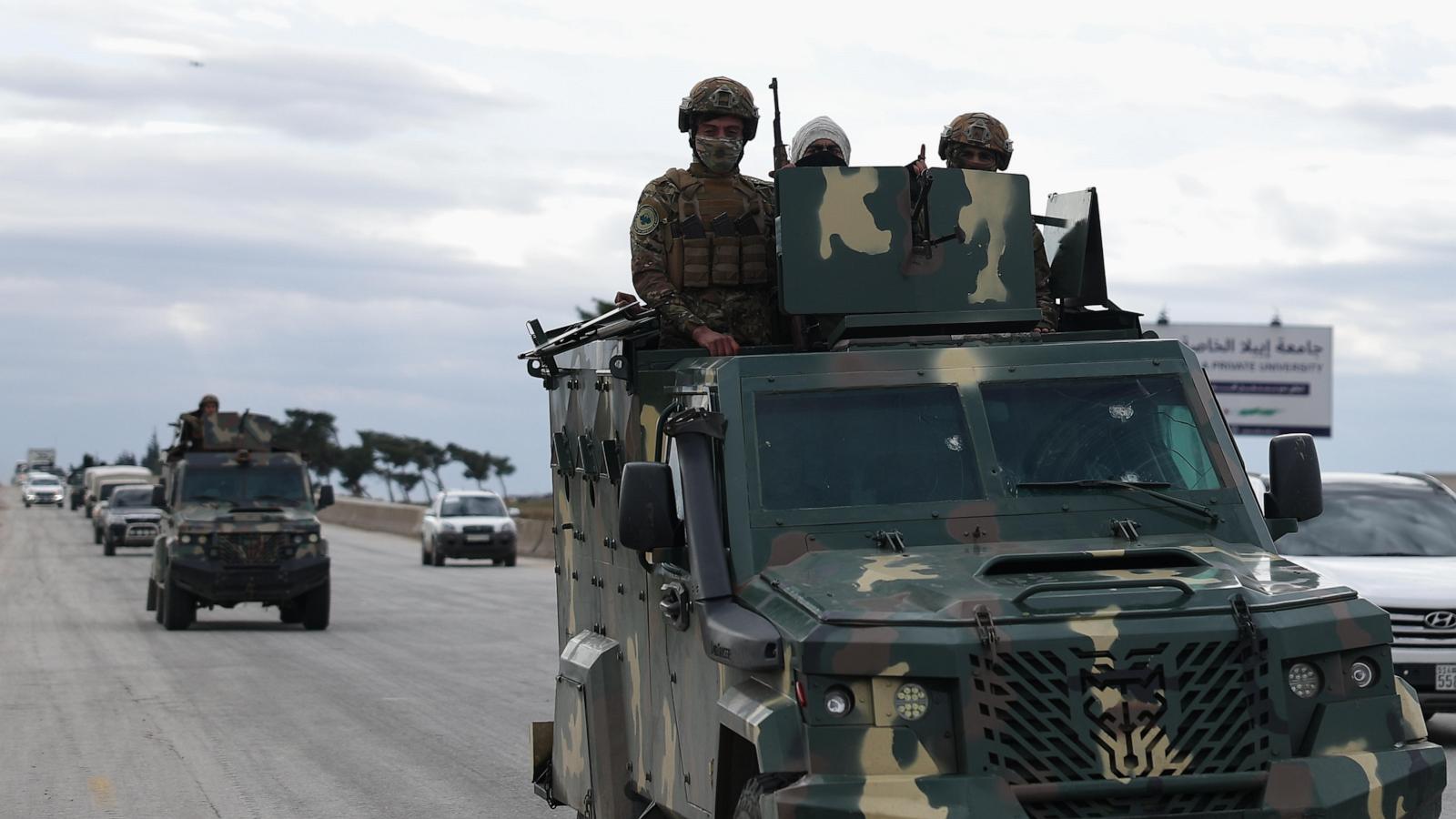
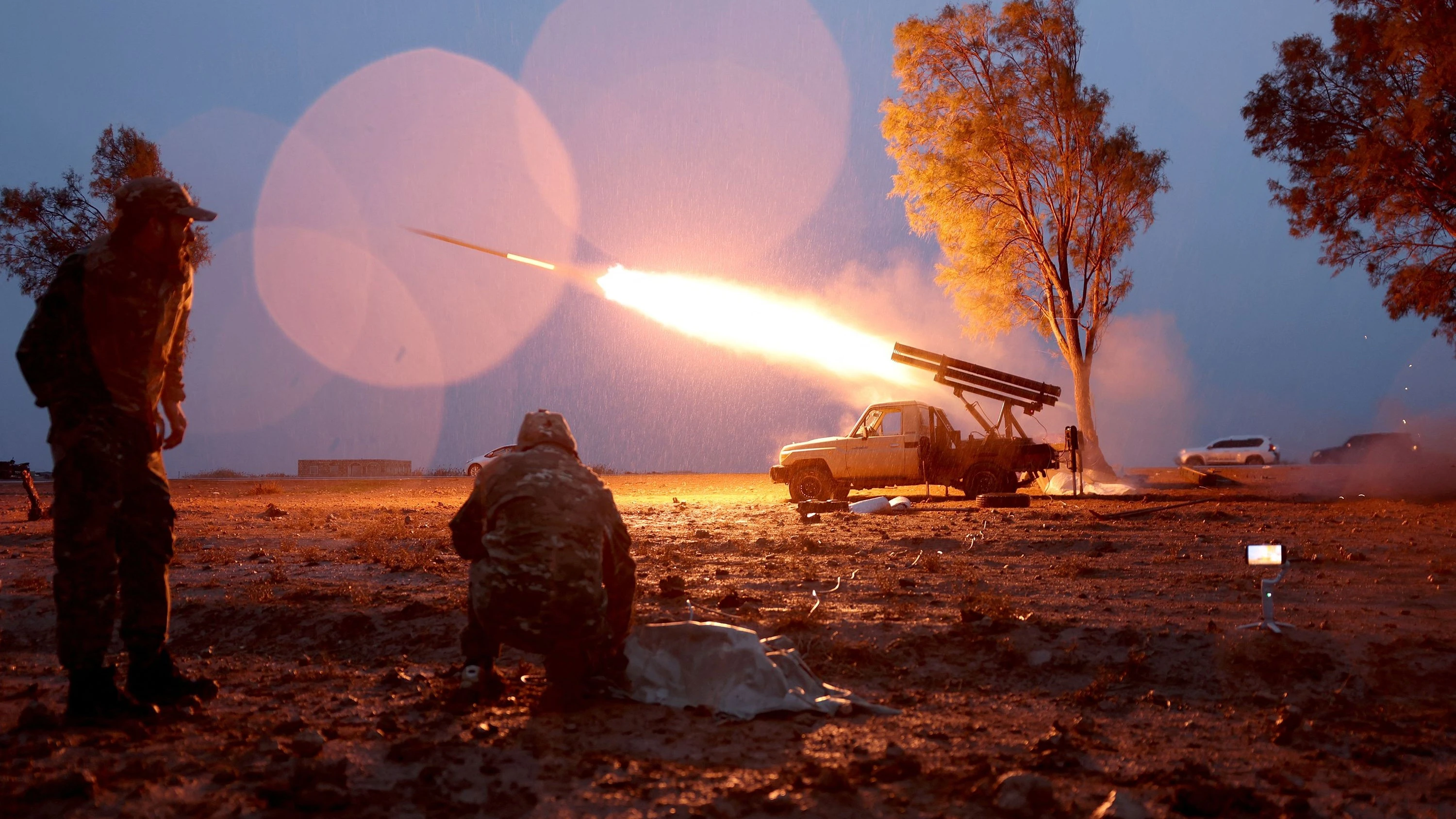
The Syrian military swept across the country’s north and east on 18 December, capturing several key oil fields from the US-backed Syrian Democratic Forces (SDF) while advancing into the city of Raqqa.

غالبية مدينة الرقة خارج سيطرة تنظيم «قسد PKK». العلم السوري فوق دوار الساعة. pic.twitter.com/Mpm1WO716Y

— زين العابدين | Zain al-Abidin (@DeirEzzore) January 18, 2026


Three security sources told Reuters on Sunday afternoon that the largest oil field in Syria, Al-Omar oil field, as well as the Conoco gas field, were captured by Syrian troops. Both are located in the eastern governorate of Deir Ezzor.


Damascus’s forces have also seized Tabqa, where the largest dam in Syria is located.

VIDEO | Circulating footage reportedly shows clashes between SDF fighters and government-aligned tribal fighters/Syrian army soldiers in Raqqa and the Raqqa-Hasakah highway. pic.twitter.com/Q4bUGTblZX

— The Cradle (@TheCradleMedia) January 18, 2026


“Internal security forces began deploying in Tabqa city, west of Raqqa province, on Sunday, following a Syrian Arab Army operation that expelled terrorist militias from the area … the deployment is part of ongoing efforts to protect civilians, strengthen security and stability, and safeguard vital facilities and property,” state news outlet SANA reported.

“The Syrian Arab Army regained full control of the Euphrates Dam on Sunday, returning management of its water and hydroelectric facilities to specialized governmental staff and technicians after years of SDF control,” it added.


The Syrian army is being backed by pro-government tribal militias in its assault across the north.

Tribal factions seized several areas surrounding the northern city of Raqqa, as government forces moved into the city center, video footage showed. The new Syrian flag was raised in the city as reinforcements arrived.

Syrian troops are also said to be advancing toward the northeastern Hasakah governorate.

Damascus has reportedly taken control of 37 towns and villages east of the Euphrates River in the Deir Ezzor - Al-Bukamal countryside, including Syria's four biggest oilfields.

BREAKING: Syrian forces have taken control of the Al-Omar oil field and the Koniko gas field in the east.

— Al-Omar is Syria’s largest oil field, in eastern Deir ez-Zor; whoever controls it gains major oil revenue and leverage.

— Koniko is one of Syria’s most important gas… pic.twitter.com/Z3Ck06bakR

— Clash Report (@clashreport) January 18, 2026


The SDF-linked Autonomous Administration of North and East Syria (AANES) warned on Sunday that the offensive against the north risked a major ISIS resurgence – as clashes raged in close proximity to SDF-run camps and prisons holding tens of thousands of ISIS prisoners and their families.

🚨 #BREAKING: Omar oil field, Syria's largest oil field, has come under the control of the Syrian Army. pic.twitter.com/s6AxEPrIuj
— Cyrus Intel (@Cyrus_Intel50) January 18, 2026


The AANES has also called for a “general mobilization” to support the SDF, which faces “an existential war” launched by Damascus. The SDF has not commented on the fall of Raqqa.


It said on Sunday afternoon that it was engaged in clashes with Syrian troops near Aleppo’s Tishreen Dam.

Raqqa – once known as the capital of ISIS’s former ‘Caliphate’ in Syria – fell to SDF forces in 2017. As a result, thousands of ISIS fighters fled toward the Aleppo area and were welcomed into the ranks of the Syrian National Army (SNA), a Turkish-backed coalition of extremist factions which had been formed to serve as Ankara’s proxy that year.

VIDEO | Footage is emerging from Syria showing govenrment-affiliated forces freeing prisoners from several prisons in the Raqqa countryside after seizing them from the Syrian Democratic Forces (SDF).

It is reported that those released include a large number of former ISIS… pic.twitter.com/5P3J0ODMeo

— The Cradle (@TheCradleMedia) January 18, 2026


After the fall of Bashar al-Assad’s government in 2024, these ISIS-linked SNA factions were incorporated into the new Syrian military.


Damascus’s lightning advance across the energy-rich Syrian north comes after weeks of heavy fighting between the SDF and the Syrian army in Aleppo.

The SDF reached a deal with the government to withdraw from all areas east of the Euphrates as of Saturday. Yet clashes resumed as both sides accused each other of reneging.

The Kurdish militia has reportedly rejected a new, 12-point proposal from Damascus, London-based magazine Al-Majalla reported.

The 12-point plan includes transferring control of energy resources, dams, and water facilities currently held by the SDF to the government; handing over all border crossings with Iraq and Turkiye to Damascus; withdrawing from Raqqa and Deir Ezzor, integrating into the Syrian army on an individual basis rather than as organized blocs; establishing a “joint administration” between Damascus and local authorities in Hasakah province; and appointing SDF leader Mazloum Abdi as governor of Hasakah.

The Syrian government and the SDF signed an agreement in March aimed at integrating the Kurdish group into Damascus’s forces. However, both sides have been in disagreement about the deal’s implementation – particularly the SDF’s wish to remain under Kurdish command and enter the army as a bloc rather than dissolve and conscript, as Syria is demanding.


The Kurdish group has also insisted on a decentralized system that would allow it a degree of autonomy in north and east Syria, as has been the case in recent years.

As a result, clashes have intermittently broken out between government forces and the SDF over the past several months, with both repeatedly accusing each other of obstructing the March agreement.

The SDF was formed by the US-led military coalition in Syria in 2015, and has since helped Washington oversee its occupation of Syrian oil fields.

The latest tensions follow a significant reduction in the US military presence in Syria in recent months. Washington has left five of eight major bases in the country.

“There are new borders drawn for the SDF by Washington. Handovers, withdrawals, and transfers in areas east of the river. What's striking is the handover of oil and gas fields east of Deir Ezzor to Damascus, which was done smoothly and in the presence of the US, meaning that the oil issue remains in Washington's hands. We'll wait to see how things will settle and at what point we'll understand the nature of the ‘deal’ that Washington has made with Ankara,” commented Lebanese journalist Khalil Nasrallah.

https://thecradle.co/articles/syrian-ar ... backed-sdf

Syrian Kurds reject US call to leave Aleppo as Damascus prepares new offensive

The self-appointed Syrian president is poised to attack the US-backed Syrian Democratic Forces in Aleppo after conquering Kurdish neighborhoods in the city

News Desk

JAN 16, 2026

Image
(Photo credit: GHAITH ALSAYED/AP)

The Kurdish-led Syrian Democratic Forces (SDF) have rejected a request from Washington to withdraw their remaining fighters from parts of the eastern Aleppo countryside, Middle East Eye (MEE) reported on 16 January, citing regional sources.


“US authorities also asked the SDF to withdraw its forces from the western bank of the Euphrates,” one of the sources said.

Another source told MEE on Friday that the SDF formally rejected the US request.

Reuters reported that the US request came as “Syrian troops are poised to attack towns in the north and east held by Kurdish fighters."

"Damascus wants to “pressure autonomy-minded Kurds into making concessions in deadlocked talks with the Damascus government,” the news agency added.


The reports follow both Syrian government and SDF forces deploying reinforcements to the front line near Deir Hafer in eastern Aleppo, where Kurdish-controlled territory borders that under Damascus's control on the western bank of the Euphrates River.


The two sides have fought intermittently in the areas around Deir Hafer and the Tishreen Dam since Hayat Tahrir al-Sham (HTS), the former Al-Qaeda affiliate in Syria, seized power in Damascus in December 2024.

The SDF and Syrian government are on the brink of war after fighters loyal to self-proclaimed Syrian president Ahmad al-Sharaa assaulted the two Kurdish-majority neighborhoods within the city of Aleppo earlier this month.

The Sheikh Maqsoud and Ashrafiyah neighborhoods had been autonomous, administered by Kurdish internal security forces known as Asayish.

However, Syrian government forces took control of the neighborhood on 11 January after randomly shelling densely populated civilian areas and committing multiple war crimes against Kurdish civilians.

Regional sources told MEE that US officials had given Sharaa the green light to launch the attack.

However, after the fighting in Aleppo city ended, both sides began military build-ups in Deir Hafer to the east.

The SDF governs north-east Syria as an autonomous region, which was created by capturing territory and oil fields from ISIS with the backing of US troops beginning in 2015.


US officials had supported ISIS’s lightning sweep across eastern Syria and western Iraq in an effort to divide both countries on behalf of Israel. The US then shifted direction to partner with the Kurds in north-east Syria to reinforce the division of the country.

Sharaa and SDF chief Mazloum Abdi signed a deal in March to integrate SDF forces into the Syrian military.

However, the deal has stalled amid disagreements over how to integrate, and amid fears that government forces may massacre Kurds if they give up their weapons.

Sharaa’s extremist-dominated army and security forces carried out horrific massacres of Alawite and Druze civilians in March and July of last year, respectively.

The US envoy for Syria, Tom Barrack, claimed in an online post on Friday that his government remains in close contact with all parties in Syria to prevent escalation.

Syrian President Sharaa this week accused SDF leaders of failing to honor the March integration agreement. He claimed in a television interview that the SDF takes orders from the leadership of the Kurdistan Workers Party (PKK) based in Iraq’s Qandil Mountains.


SDF representative Ilham Ahmed responded on Thursday, stating that “the government’s claim that we have not implemented the 10 March agreement is incorrect, and the international parties know this.”

During an online press conference, Ahmed said the SDF was in contact with the US and Turkiye, had presented several initiatives for de-escalation, and was waiting for their response, adding that what happened in Sheikh Maqsoud and Ashrafiyah was the result of international understandings.

Meanwhile, Syrian forces and affiliated extremist armed factions continue to kidnap and murder Alawite civilians.

The Syrian Observatory for Human Rights (SOHR) reported on Friday that 16 Alawite civilians had been murdered for sectarian reasons since the beginning of January.

https://thecradle.co/articles/syrian-ku ... -offensive
"There is great chaos under heaven; the situation is excellent."

User avatar
blindpig
Posts: 15306
Joined: Fri Jul 14, 2017 5:44 pm
Location: Turtle Island
Contact:

Re: Syria

Post by blindpig » Tue Jan 20, 2026 3:58 pm

Syrian forces overrun ISIS prison as SDF condemns US inaction

The US-backed Kurdish militia has accused Washington’s military coalition of ignoring SDF calls for assistance amid a Syrian army assault on the north

News Desk

JAN 19, 2026

Image
(Photo credit: AFP/Getty Images)

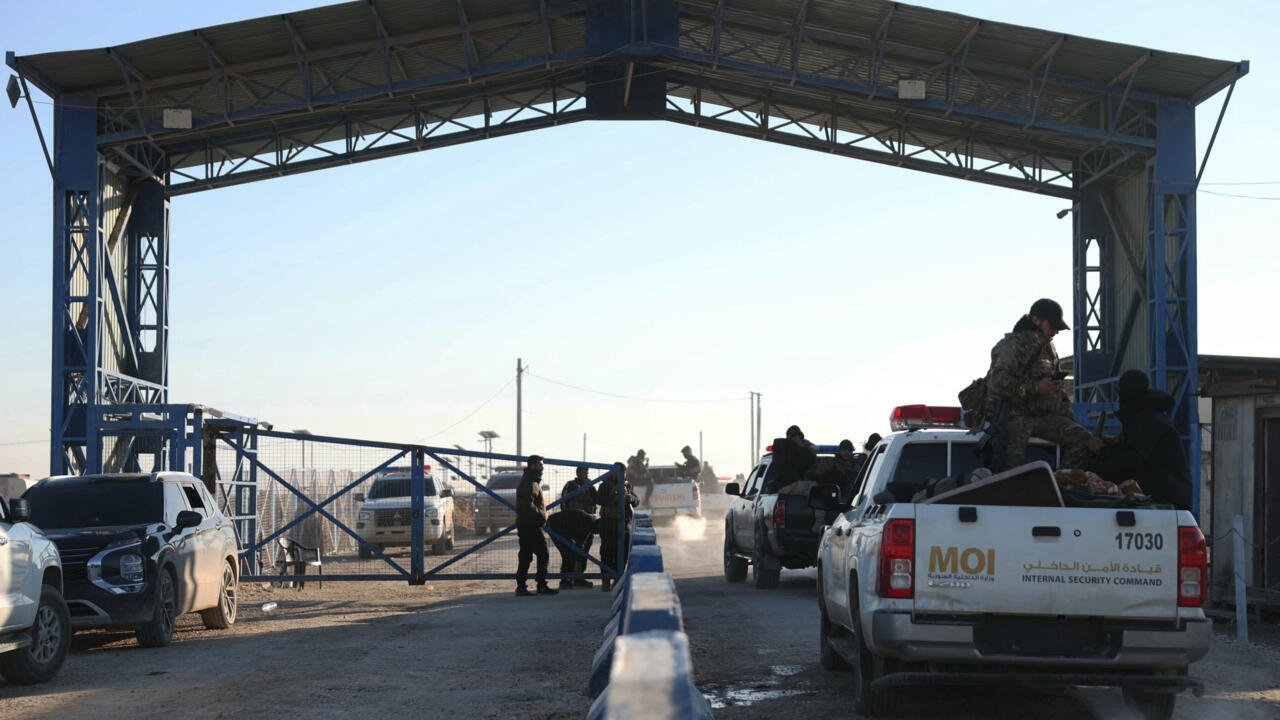
The Syrian Democratic Forces (SDF) said on 19 January that Damascus has continued to attack its positions across northern Syria despite the US-backed ceasefire reached a day earlier, warning that attacks are targeting the vicinity of SDF-run prisons holding tens of thousands of jailed ISIS militants.

Syrian Government troops tear down a Women’s Protection Units (YPJ) (Kurdish women forces) statue in the NE of #Syria.

This is the end of the autonomous Kurdish led region in Syria, which has existed for a decade. The US withdrew its support from the SDF and Kurds. pic.twitter.com/GvzFitQwp5

— Joshua Landis (@joshua_landis) January 18, 2026
This poses an “extremely dangerous” security threat, the SDF warned.

🇸🇾🇮🇶 ISIS members in Syria are now outside prison facilities and close to the Iraqi border, as per Iraqi sources.
SDF Statement:

"For the past three days, our forces have been coordinating with the so-called International Coalition to transfer ISIS detainees held at al-Aqatan… pic.twitter.com/Yg3Koynltm

— DD Geopolitics (@DD_Geopolitics) January 19, 2026

“Since the early hours of this morning, Al-Shaddadi Prison, which holds thousands of detainees from the terrorist organization ISIS, has been subjected to repeated attacks carried out by factions affiliated with Damascus. Fighters of the SDF confronted these attacks and succeeded in repelling them several times, resulting in the martyrdom of dozens of our fighters and the injury of others, in an effort to prevent a serious security catastrophe,” it said.


“Al-Shaddadi Prison is located approximately two kilometers from the US International Coalition base in the area. The US base did not intervene, despite repeated calls for intervention … Al-Shaddadi Prison has currently fallen outside the control of our forces,” it added.

“Despite the declared ceasefire agreement and the official statements issued in this regard, factions affiliated with the Damascus government continue their attacks on our forces in Ain Issa, Al-Shaddadi, and Raqqa,” the Kurdish group said earlier.

The group had also warned that the vicinity of Al-Aqtan Prison in Raqqa is also witnessing “fierce clashes” between SDF fighters and forces affiliated with the Syrian state.

“We affirm to public opinion that the level of threat is escalating significantly, amid attempts by these factions to reach the prison and seize control of it. Such actions could lead to serious security repercussions that threaten stability and open the door to a return of chaos and terrorism,” the SDF went on to say.

The SDF said it has been coordinating with the coalition for days on the transfer of ISIS prisoners to secure locations, but “the coalition has not taken any practical steps in this regard so far.”

🚨🇸🇾 SYRIA'S KURDS JUST GOT SOLD OUT, AND THE U.S. WATCHED IT HAPPEN

The SDF signed a deal with Damascus that’s basically a surrender. Oil fields, dams, border crossings, ISIS prisons, their semi-autonomous region... all handed over.

Kurdish fighters don’t even integrate as… pic.twitter.com/XVAfC5EiBx

— Mario Nawfal (@MarioNawfal) January 19, 2026


Unconfirmed reports and videos on social media say that Syrian troops are freeing prisoners from SDF-run detention centers holding ISIS militants.

🇸🇾 Total chaos in Syria. Circulating footage of thousands of ISIS terrorists and their family fleeing from the Al-Hol camp in the Hasakah countryside after attacks by Jolani's gangs on areas controlled by the SDF.

This is near the Iraqi border. pic.twitter.com/5sVcQeUddX

— Sprinter Press (@SprinterPress) January 19, 2026


VIDEO | Footage is emerging from Syria showing govenrment-affiliated forces freeing prisoners from several prisons in the Raqqa countryside after seizing them from the Syrian Democratic Forces (SDF).

It is reported that those released include a large number of former ISIS… pic.twitter.com/5P3J0ODMeo

— The Cradle (@TheCradleMedia) January 18, 2026


“Taking up arms is a public duty. It is a national and moral responsibility to protect our people and safeguard the achievements of our revolution, as well as to strengthen the spirit of resistance. We support a political solution, but true peace cannot be achieved without self-defense. If war is imposed on us, or if the existence and rights of our people are targeted, we are fully prepared for legitimate defense,” the statement said.


Government forces moved into Aleppo’s Tishreen Dam area on Monday as SDF fighters withdrew.

The northeastern city of Hasakah remains under Kurdish control.

A commander in the People's Protection Units (YPG) – the Syrian branch of the Kurdistan Workers Party (PKK) that makes up a significant bulk of the SDF fighting force – has called on Washington to “forcefully intervene” on behalf of the Kurdish militia.

“Our greatest hope is that there will be a tangible outcome, especially from the coalition and the United States, meaning that they will intervene more forcefully in the existing problems than what they are currently doing,” said YPG commander Sipan Hamo.

“In the current situation and the chaos we are living in, the only ones who can offer guarantees are the United States or the coalition. We believe that the responsibility for everything currently happening inside Syria lies with the western countries, and especially the US,” he added.

The Syrian army swept across north and east Syria on 18 January, seizing the country’s largest oil fields, which have been under SDF-US army control for years. Syrian troops also moved into the northern cities of Tabqa and Raqqa.

The escalation followed recent battles between the two sides in Aleppo and its countryside.

On Sunday, Syrian state media announced an immediate US-backed ceasefire deal, after Washington called on both sides to quickly resolve the conflict.

Key points of the ceasefire agreement include the handover of Deir Ezzor and Raqqa governorates, as well as all border crossings, oil fields, and gas fields in the region to the Syrian government.

It also reiterates demands for the complete integration of all SDF military and security personnel into the structures of the Syrian Ministries of Defense and Interior on an individual basis, rather than as Kurdish-commanded units.

SDF chief Mazloum Abdi said on Sunday that he agreed to the deal and withdrew from Raqqa and Deir Ezzor to “stop bloodshed” and avoid a civil war.

Over the weekend, the US called on Damascus to end its assault on Kurdish-held areas, despite also fully backing the Syrian demand for SDF integration.

The Syrian government and the SDF signed an agreement in March aimed at integrating the Kurdish group into Damascus’s forces.


Both sides have been in disagreement about the deal’s implementation – particularly the SDF’s wish to remain under Kurdish command and enter the army as a bloc rather than dissolve and conscript, as Damascus is demanding.

The Kurdish group has also insisted on a decentralized system that would allow it a degree of autonomy in north and east Syria, as has been the case in recent years.

As a result, clashes have intermittently broken out between government forces and the SDF over the past several months, with both repeatedly accusing each other of obstructing the March agreement.

The SDF was formed by the US-led military coalition in Syria in 2015, and has since helped Washington oversee its occupation of Syrian oil fields.

The latest tensions follow a significant reduction in the US military presence in Syria in recent months. Washington has left five of eight major bases in the country.

https://thecradle.co/articles/syrian-fo ... s-inaction

The Kurds should shoot all of their leaders.

Well, the mercenary ranks are depleted after recent activities in Iran, time to re-up.
"There is great chaos under heaven; the situation is excellent."

User avatar
blindpig
Posts: 15306
Joined: Fri Jul 14, 2017 5:44 pm
Location: Turtle Island
Contact:

Re: Syria

Post by blindpig » Wed Jan 21, 2026 5:31 pm

The Kurds' Greatest Opportunity
January 20, 9:02 PM

Image

A new deal between Julani and the Kurds has been announced, based on the principle that "every next deal is worse than the previous one for the Kurds."

1. The SDF will present a detailed plan for integrating the remnants of Rojava into Syria.
2. Julani's forces will not enter Qamishli, Hasakah, or other major Kurdish settlements.
3. The Kurdish leader will become governor of Hasakah Province within Syria and an advisor to the Syrian Minister of Defense.
4. SDF forces will be integrated into the Syrian army under Julani's control.

Just recently, the Kurds were bargaining over Sheikh Maqsood and Deir Hafir. And now they're bargaining so that the militants won't enter Kobani and Qamishli. This deal is getting worse and worse.

The US ambassador to Syria declared this "the greatest opportunity for the Kurds."

The map shows what remains of independent Rojava.

https://colonelcassad.livejournal.com/10317968.html

Google Translator

******

Syrian forces enter Al-Hawl Camp, set free thousands of ISIS members

The Kurdish-led SDF has withdrawn from Al-Hawl Camp, which has housed tens of thousands of ISIS detainees and their families over the past decade

News Desk

JAN 21, 2026

Image
(Photo credit: Omar Haj Kadour/AFP)

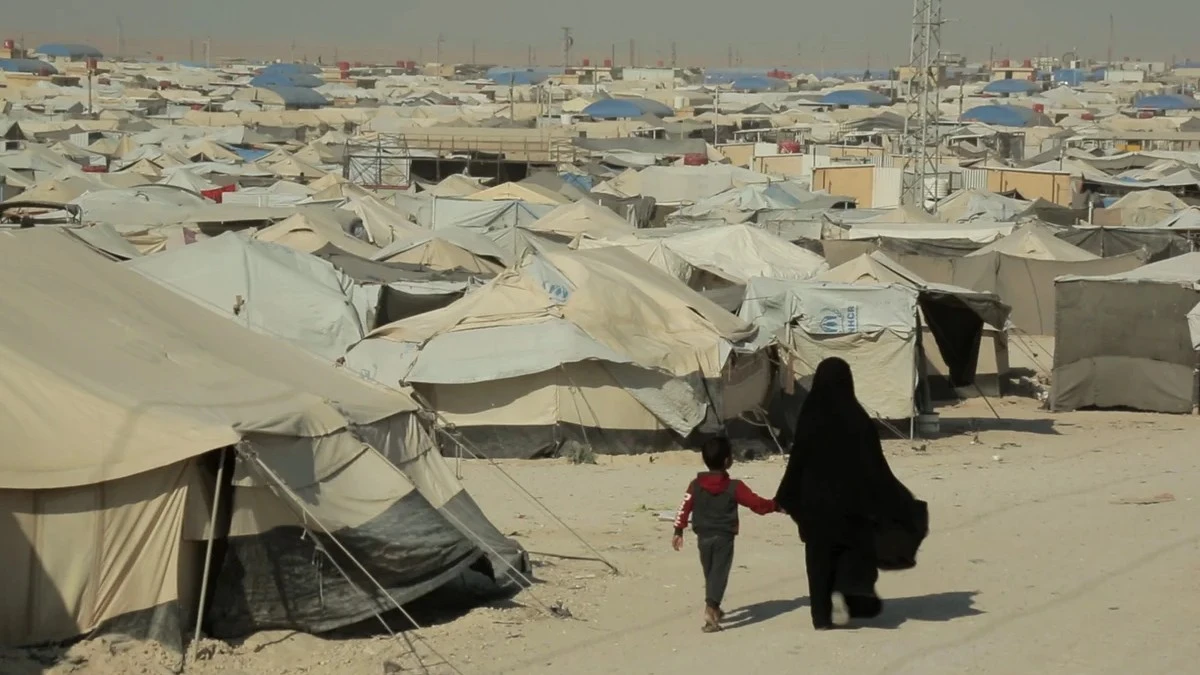
The Syrian military has entered Hasakah governorate’s Al-Hawl Camp, which for around a decade housed tens of thousands of ISIS prisoners and their families including foreigners who entered Syria illegally to join the US-backed war against former Syrian president Bashar al-Assad’s government.


The deployment comes hours after Damascus announced a four-day ceasefire in the country’s north, and after the Kurdish-led Syrian Democratic Forces (SDF) pulled out of Al-Hawl Camp, citing attacks on the camp by government forces.

Since the Syrian army entered the camp on 20 January, thousands of ISIS members and their families have been released from Al-Hawl.

Videos on social media are showing government-affiliated troops arriving at Al-Hawl and allowing the prisoners to leave.

Over 25,000 people were held in the camp prior to the SDF withdrawal.

⚠️HTS / ISIS terrorists have reached the Al-Hol camp housing tens of thousands of ISIS families and are releasing them pic.twitter.com/SgKPjiV1zB
— Rojava Network (@RojavaNetwork) January 20, 2026


“It remains unclear how many detainees have fled and who currently controls the camp,” one of the camp’s overseers told Rudaw. The camp is made up of prisons that held ISIS fighters for years, as well as areas designated for internally displaced people.

🇸🇾 The moment al-Jolani regime forces arrived at the al-Hol camp which houses ISIS members and their families.

No comment needed. https://t.co/kDGjw2mmVk pic.twitter.com/iEUqAwybzh

— DD Geopolitics (@DD_Geopolitics) January 20, 2026


“The Islamic State of Iraq and Syria, we are proud of this,” video footage showed one woman, dressed in a niqab, saying as she was leaving Al-Hawl.


Other footage shows what appeared to be hundreds of prisoners flooding out of the camp’s prison gates. According to reports, most of Al-Hawl has been emptied.

The Al Hol prison camp. The stuff of nightmares and now its gates have been busted open by the inmates’ co-religionists

The Kurds have been begging the west for years to repatriate their citizens (including famously, Shamima Begum)

Remember the ISIS wives were not passive… pic.twitter.com/7FhEw8CP0x

— Laura Cellier (@Laura_L_Cellier) January 20, 2026


“Al-Hawl Camp witnessed organized smuggling operations of ISIS members and families after the withdrawal of SDF from the camp … after the International Coalition forces refused demands of SDF to interfere to stop the attacks by local armed groups of the Syrian government … Smuggling networks took advantage of the security chaos and withdrawal of SDF to smuggle detainees through several routes,” the Syrian Observatory for Human Rights (SOHR) reported.

Al-Roj Camp and the Hasakah Prison also hold tens of thousands of ISIS militants. Government forces are nearby but have not yet entered those two prisons.

Yet Hasakah’s Al-Shaddadi Prison fell to government troops after the SDF said it could no longer hold the facility due to continuous attacks. The Kurdish group slammed the US coalition, located at a base two kilometers away, for ignoring repeated distress calls and requests for assistance.

According to Kurdish media, at least 1,500 ISIS members have escaped from Al-Shaddadi. Damascus claims a little over 100 ISIS members escaped, and accused the SDF of letting them out.

The Syrian government announced a four-day ceasefire on Tuesday evening. According to self-appointed Syrian President and ex-Al-Qaeda chief Ahmad al-Sharaa, a “joint understanding” has been reached regarding Hasakah Governorate.

Damascus has given the SDF and Kurdish authorities four days to develop plans for the integration of Kurdish forces and autonomous areas into the state.

“In the event of an agreement, the Syrian forces will not enter the centers of the cities of Hasakah and Qamishli and will remain on their outskirts, and the timetable and details of the peaceful integration of Hasakah Governorate, including the city of Qamishli, will be discussed later,” the Syrian Presidency said in a statement.

Sharaa had met with SDF chief Mazloum Abdi in Damascus on 19 January, but a Kurdish official told Rudaw the meeting was “not positive.”

The Syrian government and the SDF signed an agreement in March aimed at integrating the Kurdish group into Damascus’s forces. Both sides have been in disagreement about the deal’s implementation – particularly the SDF’s wish to remain under Kurdish command and enter the army as a bloc rather than dissolve and conscript, as Damascus is demanding.

The Kurdish group has also insisted on a decentralized system that would allow it a degree of autonomy in north and east Syria, as has been the case in recent years.

Over the last few days, the Syrian army has captured large swathes of northern and eastern Syria, including all the major oil fields and several strategic cities such as Raqqa. This came after heavy clashes between the SDF and the Syrian army in Aleppo – where Kurdish forces no longer have any significant presence.

The SDF and allied militias still hold Ain al-Arab (Kobane) in Aleppo, as well as the Hasakah and Qamishli city centers in Hasakah Governorate.

https://thecradle.co/articles/syrian-fo ... e_vignette

SDF withdraws from Syria's Al-Hawl Camp hours after major jailbreak of ISIS fighters

The Kurdish group says Syrian army attacks on a major prison in Hasakah have resulted in the escape of ISIS militants, but Damascus accused the SDF of intentionally releasing them

News Desk

JAN 20, 2026

Image
(Photo credit: The Guardian)

The Syrian Democratic Forces (SDF) announced on 20 January that it has withdrawn from Al-Hawl Camp in the northeastern governorate of Hasakah, which holds thousands of ISIS prisoners and their families.

“Due to the international community’s indifference towards the ISIS issue and its failure to assume its responsibilities in addressing this serious matter, our forces were compelled to withdraw from Al-Hawl Camp and redeploy to areas surrounding cities in northern Syria that are facing increasing dangers and threats,” the SDF said in a statement.

Al-Hawl Camp has been under SDF control for over 10 years. It houses thousands of prisoners from ISIS, as well as their families, and has been described as a breeding ground for extremism and violence.

The statement coincided with a massive Syrian government assault on the north, where the SDF and the affiliated, US-backed Autonomous Administration of North and East Syria (AANES) have been based for years.

Syrian army troops have attacked several SDF-run ISIS prisons over the past two days. Al-Shaddadi Prison in Hasakah fell to government troops on Monday, the SDF announced.

Raqqa’s Al-Aqtan prison, which also holds thousands of extremist fighters, is currently under heavy government shelling. “It is now under attack, and SDF is resisting fiercely, and they are not allowing the prison to fall into the hands of the Syrian Arab Army and armed groups,” a source told Rudaw on 20 January.

The Syrian Defense Ministry denied that clashes were taking place around Al-Aqtan.

After Al-Shaddadi Prison fell on 19 January, the SDF accused the US of ignoring calls for assistance from the Kurdish group – which has been Washington’s main ally in Syria since 2015.

“Al-Shaddadi Prison is located approximately two kilometers from the US International Coalition base in the area. The US base did not intervene, despite repeated calls for intervention,” it said.

On Monday evening, an SDF spokesman told Rudaw that 1,500 ISIS prisoners escaped from Shaddadi during the government assault.

Both sides are trading blame over the issue. While the SDF charges that government attacks have let loose ISIS militants, Damascus claims the SDF has been intentionally releasing them.

According to Damascus-linked media reports, 81 ISIS prisoners have been detained by authorities out of a total of 120 who were “let out” by the Kurdish militia.

However, unconfirmed reports and videos on social media allege that Syrian army soldiers have opened up cells and let out scores of fighters.

Videos on social media also allege to show scores of escaped ISIS members in the desert near the Iraqi border.


Over the last few days, the Syrian army has captured large swathes of northern and eastern Syria, including all the major oil fields and several strategic cities such as Raqqa. This came after heavy clashes between the SDF and the Syrian army in Aleppo – where Kurdish forces no longer have any significant presence.

The SDF and allied militias still hold Ain al-Arab (Kobane) in Aleppo, as well as the Hasakah city center. Government troops have entered the Hasakah governorate and are preparing to enter the city of Qamishli.

The government assault aims to bring about an end to over a decade of Kurdish autonomy in north and east Syria.

Syrian President Ahmad al-Sharaa had met with SDF chief Mazloum Abdi in Damascus on 19 January, but a Kurdish official told Rudaw the meeting was “not positive.”

Abdi had initially announced his acceptance of a US-backed 18 January ceasefire deal in order to “stop bloodshed” and avoid all-out civil war.

The agreement included the handover of Deir Ezzor and Raqqa governorates, as well as all border crossings, oil fields, and gas fields in the region to the Syrian government.

It also reiterates demands for the complete integration of all SDF military and security personnel into the structures of the Syrian Ministries of Defense and Interior on an individual basis, rather than as Kurdish-commanded units – as the SDF was seeking.

Despite agreeing to this, SDF and allied forces are still attempting to resist the continued government advance on multiple fronts.

The Syrian government and the SDF signed an agreement in March aimed at integrating the Kurdish group into Damascus’s forces. Both sides have been in disagreement about the deal’s implementation – particularly the SDF’s wish to remain under Kurdish command and enter the army as a bloc rather than dissolve and conscript, as Damascus is demanding.

The Kurdish group has also insisted on a decentralized system that would allow it a degree of autonomy in north and east Syria, as has been the case in recent years.

https://thecradle.co/articles/sdf-withd ... s-fighters
"There is great chaos under heaven; the situation is excellent."

User avatar
blindpig
Posts: 15306
Joined: Fri Jul 14, 2017 5:44 pm
Location: Turtle Island
Contact:

Re: Syria

Post by blindpig » Thu Jan 22, 2026 3:39 pm

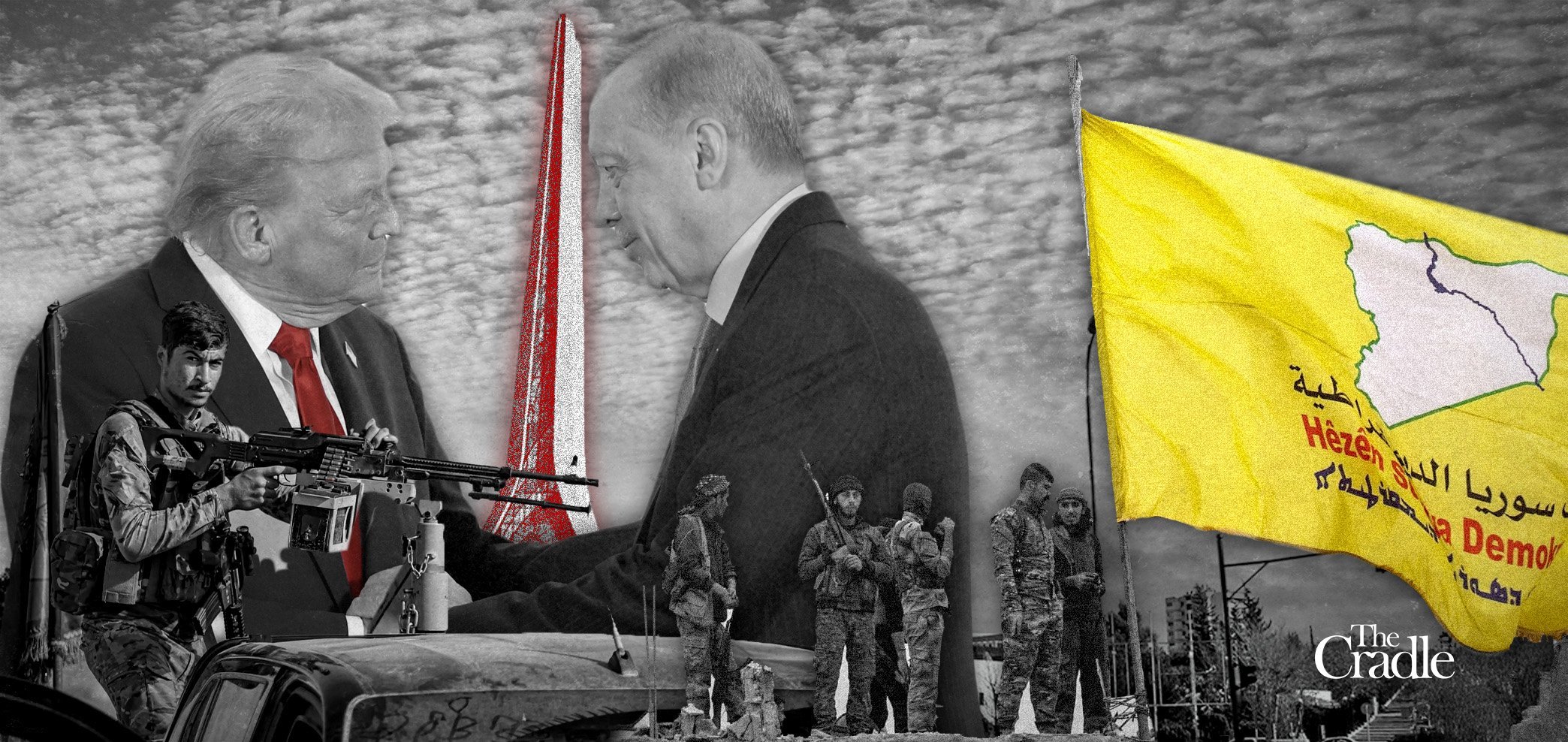
How Syria’s Kurds were erased from the US-led endgame

Paris marked the moment Washington quietly aligned with Ankara and Tel Aviv to close the Kurdish chapter in Syria’s war

Musa Ozugurlu

JAN 21, 2026

Image
Photo Credit: The Cradle

For nearly 15 years, US flags flew over Syrian territory with near-total impunity – from Kurdish towns to oil-rich outposts. In the northeast, the Kurdish-led Syrian Democratic Forces (SDF) manned checkpoints, American convoys moved freely, and local councils governed as if the arrangement was permanent.


The occupation was not formal, but it did not need to be. So long as Washington stayed, the Autonomous Administration of North and East Syria (AANES) had a state in everything but name.

Then, in the first week of January, that illusion was broken. What had passed for a military partnership was quietly dismantled in a Paris backroom – without Kurdish participation, without warning, and without resistance. Within days, Washington's most loyal proxy in Syria no longer had its protection.

A collapse that looked sudden only from the outside

Since late last year, Syria’s political and military terrain shifted with startling speed. Former Syrian president Bashar al-Assad’s rule came to an end, and shortly afterward, the SDF – long portrayed as the most disciplined and organized force in the country – followed the same trajectory.

To outside or casual observers, the SDF collapse appeared abrupt, even shocking. For many Syrians, particularly Syrian Kurds, the psychology of victory that had defined the past 14 years evaporated in days. What replaced it was confusion, fear, and a growing realization that the guarantees they had relied on were never guarantees at all.

Hayat Tahrir al-Sham (HTS) – an extremist militant group stemming from the Nusra Front – advanced with unexpected momentum, achieving gains few analysts had predicted. But the real story was the absence of resistance from forces that, until recently, had been told they were indispensable.


The question, then, is not how this happened so quickly, but why the ground had already been cleared.

The illusion of fixed positions

To understand the outcome, it is necessary to revisit the assumptions each actor carried into this phase of the war.

The SDF emerged in the immediate aftermath of the US-led intervention against Damascus. It was never intended to be a purely Kurdish formation. From the outset, its leadership understood that ethnic exclusivity would doom its international standing. Arab tribes and other non-Kurdish components were incorporated to project the image of a multi-ethnic, representative force.

Ironically, those same tribal elements would later become one of the fault lines that accelerated the SDF’s disintegration.

Militarily, the group benefited enormously from circumstance. As the Syrian Arab Army fought on multiple fronts and redeployed forces toward strategic battles – particularly around Aleppo – the SDF expanded with minimal resistance. Territory was acquired less through confrontation than through absence.


Washington’s decision to enter Syria under the banner of fighting Assad and later ISIS provided the SDF with its most valuable asset: international legitimacy. Under US protection, the Kurdish movement translated decades of regional political experience into a functioning de facto autonomous administration.

It looked like history was bending in their favor.

Turkiye’s red line never moved

From Ankara’s perspective, Syria was always about two objectives. The first was the removal of Assad, a goal for which Turkiye was willing to cooperate with almost anyone, including Kurdish actors. Channels opened, and messages were exchanged. At times, the possibility of accommodation seemed real.

But the Kurdish leadership made a strategic choice. Believing their US alliance gave them leverage, they closed the door and insisted on pursuing their own agenda.

Turkiye’s second objective never wavered: preventing the emergence of any Kurdish political status in Syria. A recognized Kurdish entity next door threatened to shift regional balances and, more importantly, embolden Kurdish aspirations inside Turkiye itself.


That concern would eventually align Turkiye’s interests with actors it had previously opposed.

Washington’s priorities were never ambiguous

The US did not hide its hierarchy of interests in West Asia. Preserving strategic footholds mattered. But above all else stood Israel’s security.

Hamas's Operation Al-Aqsa Flood in October 2023 handed Washington and Tel Aviv a rare opportunity. As the Gaza genocidal war unfolded and the Axis of Resistance absorbed sustained pressure, the US gained a new and more flexible partner in Syria alongside the Kurds: HTS leader Ahmad al-Sharaa, formerly known as Abu Muhammad al-Julani when he was an Al-Qaeda chief.

Sharaa’s profile checked every box. His positions on Israel and Palestine posed no challenge. His sectarian background reassured regional capitals. His political outlook promised stability without resistance. Where the Assads had generated five decades of friction, Sharaa offered predictability.

For Washington and Tel Aviv, he represented a cleaner solution.

Designing a Syria without resistance


With Sharaa in place, Israel found itself operating in Syrian territory with unprecedented ease. Airstrikes intensified. Targets that once risked escalation now passed without response. Israeli soldiers skied on Mount Hermon and posted selfies from positions that had been inaccessible for decades.

Damascus, for the first time in modern history, posed no strategic discomfort.

More importantly, Syria under Sharaa became fully accessible to global capital. Sanctions narratives softened while reconstruction frameworks emerged. The war’s political economy entered a new phase.

In this equation, a Syria without the SDF suited everyone who mattered. For Turkiye, it meant eliminating the Kurdish question. For Israel, it meant a northern border stripped of resistance. For Washington, it meant a redesigned Syrian state aligned with its regional architecture.

The name they all converged on was the same.

Paris: Where the decision was formalized

On 6 January, Syrian and Israeli delegations met in Paris under US mediation. It was the first such encounter in the history of bilateral relations. Publicly, the meeting was framed around familiar issues: Israeli withdrawal, border security, and demilitarized zones. But those headlines were cosmetic.


Instead, the joint statement spoke of permanent arrangements, intelligence sharing, and continuous coordination mechanisms.

Yet these points were also clearly peripheral. The real content of the talks is evident in the outcomes now unfolding. Consider the following excerpt from the statement:

“The Sides reaffirm their commitment to strive toward achieving lasting security and stability arrangements for both countries. Both Sides have decided to establish a joint fusion mechanism – a dedicated communication cell – to facilitate immediate and ongoing coordination on their intelligence sharing, military de-escalation, diplomatic engagement, and commercial opportunities under the supervision of the United States.”

Following this, Israeli Prime Minister Benjamin Netanyahu’s office “stressed … the need to advance economic cooperation for the benefit of both countries.”

Journalist Sterk Gulo was among the first to note the implications, writing that “An alliance was formed against the Autonomous Administration at the meeting held in Paris.”


From that moment, the SDF’s fate was sealed.

Ankara’s pressure campaign

Turkiye had spent years working toward this outcome. Reports suggest that a late-2025 agreement to integrate SDF units into the Syrian army at the division level was blocked at the last minute due to Ankara’s objections. Even Sharaa's temporary disappearance from the public eye – which sparked rumors of an assassination attempt – was linked by some to internal confrontations over this issue.

According to multiple accounts, Turkiye’s Ambassador Tom Barrack was present at meetings in Damascus where pro-SDF clauses were rejected outright. Physical confrontations followed. Sharaa vanished until he could reappear without explaining the dispute.

Turkish Foreign Minister Hakan Fidan was present in Paris and played an active role in the negotiations. Its demands were clear: US support for the SDF must end, and the so-called “David Corridor” must be blocked. In exchange, Turkiye would not obstruct Israeli operations in southern Syria.

It was a transactional alignment – and it worked.

Removing the last obstacle

With the SDF sidelined, Sharaa’s consolidation of power became possible. Control over northeastern Syria allowed Damascus to focus on unresolved files elsewhere, including the Druze question.

What followed was predictable. Clashes in Aleppo before the new year were test runs. The pattern had been seen before.

In 2018, during Turkiye’s Olive Branch operation, the SDF announced it would defend Afrin. Damascus offered to take control of the area and organize its defense. The offer was refused – likely under US pressure. On the night resistance was expected, the SDF withdrew.

The same script replayed in Sheikh Maqsoud and Ashrafieh. Resistance lasted days. Supplies from east of the Euphrates never arrived. Withdrawal followed.

The American exit, again

Many assumed that the Euphrates line still mattered. That HTS advances west of the river would not be repeated in the east. That Washington would intervene when its Kurdish partner was directly threatened.

The shock came when HTS moved toward Deir Ezzor, and Arab tribes defected en masse. These tribes had been on the US payroll. The message was unmistakable: salaries would now come from elsewhere.

Meanwhile, meetings between Sharaa and the Kurds, which were expected to formalize agreements, were delayed twice, and clashes broke out immediately after.

Washington had already decided.

US officials attempted to sell a new vision to Kurdish leaders: participation in a unified Syrian state without distinct political status. The SDF rejected this, and demanded constitutional guarantees. It also refused to dissolve its forces, citing security concerns.

The Kurdish group's mistake was believing history would not repeat itself.

Afghanistan should have been enough of a warning.

What remains

Syria has entered a new phase. Power is now organized around a Turkiye–Israel–US triangle, with Damascus as the administrative center of a project designed elsewhere.

The Druze are next. If Israel’s security is guaranteed under the Paris framework, HTS forces will eventually push toward Suwayda.

The Alawites remain – isolated and exposed.

The fallout is ongoing. On 20 January, the SDF announced its withdrawal from Al-Hawl Camp – a detention center for thousands of ISIS prisoners and their families – citing the international community’s failure to assist.

Damascus accused the Kurds of deliberately releasing detainees. The US, whose base sits just two kilometers from the site of a major prison break, declined to intervene.

Washington’s silence in the face of chaos near its own installations only confirmed what the Kurds are now forced to accept: the alliance is over.

Ultimately, it was not just a force that collapsed. It was a whole strategy of survival built on the hope that imperial interests might someday align with Kurdish aspirations.

https://thecradle.co/articles/how-syria ... ed-endgame

US army begins 'transfer' of ISIS prisoners from Syria to Iraq

CENTCOM said it transferred 150 militants to a ‘secure’ Iraqi facility and that thousands more could be transferred, one day after a major breakout of extremists in north Syria

News Desk

JAN 22, 2026

Image
(Photo credit: US army)

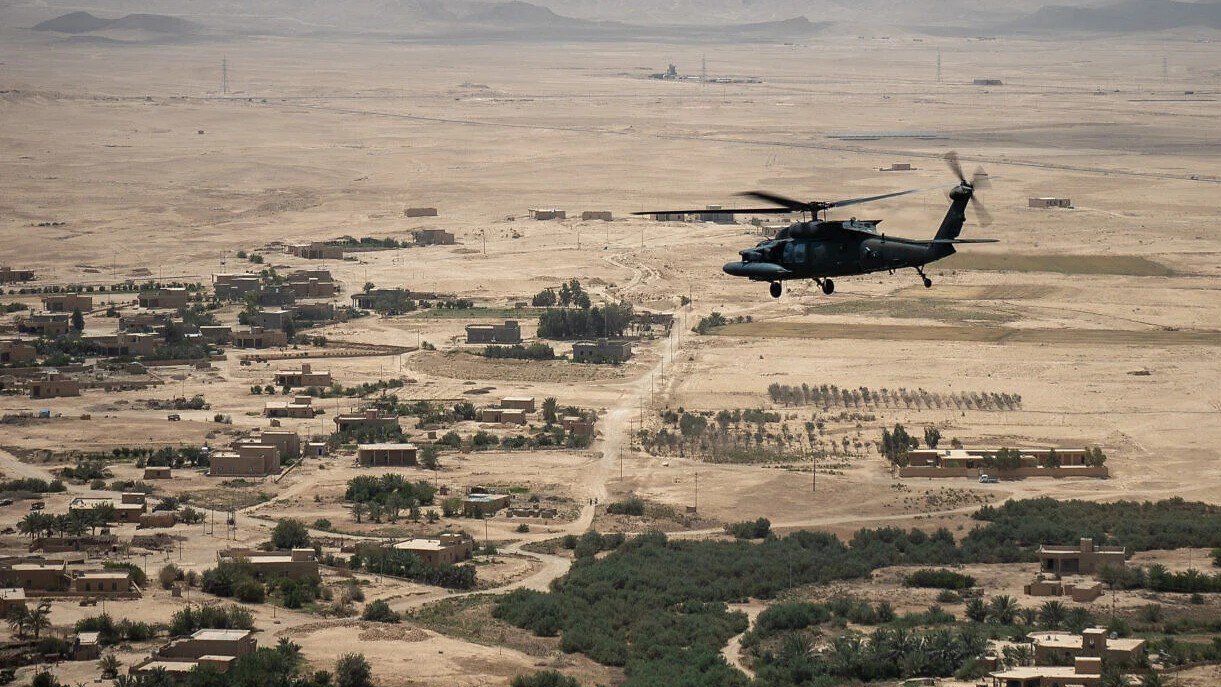
US Central Command (CENTCOM) announced in a statement on 21 January that it has launched a mission to transfer ISIS fighters from Syria to Iraqi government-controlled facilities.

The announcement came hours after the Syrian army entered the Al-Hawl Camp in the country’s north, resulting in the escape of thousands of ISIS and ISIS-linked prisoners.


“CENTCOM launched a new mission to transfer ISIS detainees from northeastern Syria to Iraq … to help ensure the terrorists remain in secure detention facilities,” the CENTCOM statement said.

“The transfer mission began while US forces successfully transported 150 ISIS fighters held at a detention facility in Hasakah, Syria, to a secure location in Iraq. Ultimately, up to 7,000 ISIS detainees could be transferred from Syria to Iraqi-controlled facilities,” it added.

CENTCOM commander Brad Cooper was quoted as saying that Washington is “closely coordinating with regional partners, including the Iraqi government, and we sincerely appreciate their role in ensuring the enduring defeat of ISIS.”


“Facilitating the orderly and secure transfer of ISIS detainees is critical to preventing a breakout that would pose a direct threat to the United States and regional security,” he added.

The CENTCOM chief failed to mention the release of scores of ISIS members in Syria over the past few days.

This week, the Syrian military entered Hasakah Governorate’s Al-Hawl Camp, which for around a decade housed tens of thousands of ISIS prisoners and their families, including foreigners who entered Syria illegally to join the US-backed war against former Syrian president Bashar al-Assad’s government.

Since the Syrian army entered the camp on 20 January, thousands of ISIS members and their families have been released from Al-Hawl.


Videos on social media showed government-affiliated troops arriving at Al-Hawl and allowing the prisoners to leave.


Over 25,000 people were held in the camp prior to the withdrawal of the Kurdish-led Syrian Democratic Forces (SDF), which recently lost most of its territory across northern Syria following the start of a massive assault by Damascus.


“It remains unclear how many detainees have fled and who currently controls the camp,” one of the camp’s overseers told Rudaw. The camp is made up of prisons that held ISIS fighters for years, as well as areas designated for internally displaced people.


Al-Roj Camp and the Hasakah Prison also hold tens of thousands of ISIS militants. Government forces are nearby but have not yet entered those two prisons.

Yet Hasakah’s Al-Shaddadi Prison fell to government troops three days ago after the SDF said it could no longer hold the facility due to continuous attacks. The Kurdish group slammed the US coalition, located at a base two kilometers away, for ignoring repeated distress calls and requests for assistance.


According to Kurdish media, at least 1,500 ISIS members have escaped from Al-Shaddadi. Damascus claims a little over 100 ISIS members escaped, and accused the SDF of letting them out.

According to Damascus-linked media reports, 81 ISIS prisoners have been detained by authorities out of a total of 120 who were “let out” by the Kurdish militia.

“I did a great job. You know what I did? I stopped a prison break,” US President Donald Trump boasted to the New York Post on 20 January. “Oh, we did a good job with Syria. They had a prison break. European prisoners were breaking out and I got it stopped. That was yesterday,” he went on to say.

“European terrorists were in prison. They had a prison break. And working with the government of Syria and the new leader of Syria, they captured all the prisoners, put them back to jail, and these were the worst terrorists in the world, all from Europe,” he added, referring to foreign extremists who entered Syria years ago to join Washington’s war against Assad.

The US military has, for years, been transferring ISIS militants across different countries in the region.

In 2021, Iraq’s anti-ISIS Popular Mobilization Units (PMU) revealed that thermal cameras had recorded US military helicopters transferring ISIS militants to different locations in the country.


In August 2017, the Syrian Observatory for Human Rights (SOHR) reported seeing US choppers transporting ISIS fighters in and out of the city of Deir Ezzor multiple times. The last reports of these activities came mere days before Syrian and Russian troops retook the city from the terrorist group.

The former Syrian government also said years ago that ISIS fighters were being moved out of a Kurdish-run prison and relocated to a US military base.

Since the government assault on the north started earlier this month, Kurdish authorities have been warning that attacks on prisons pose the threat of triggering a major ISIS resurgence.

https://thecradle.co/articles/us-army-b ... ia-to-iraq

So who will be the general/contractor who will lead/manage this rebuilt mercenary army?
"There is great chaos under heaven; the situation is excellent."

User avatar
blindpig
Posts: 15306
Joined: Fri Jul 14, 2017 5:44 pm
Location: Turtle Island
Contact:

Re: Syria

Post by blindpig » Fri Jan 23, 2026 3:28 pm

US mulls 'full withdrawal' from Syria after SDF defeat: Report
Kurdish authorities have warned of a major ISIS resurgence since the start of Damascus’s assault against the SDF in the north

News Desk

JAN 23, 2026

Image
(Photo credit: Getty Images)

The US is considering a “complete withdrawal” from Syria, officials told the Wall Street Journal (WSJ) on 22 January, coinciding with Damascus’s assault against Kurdish forces in the country’s north.


“The head-spinning events of the last week have led the Pentagon to question the viability of the American military’s mission in Syria after the SDF’s defeat,” the US officials went on to say.

“If the SDF fully disbands, the US officials see no reason for the American military to stay in Syria. One factor is the difficulties posed by working with [Syrian President] Sharaa’s army. The force is riddled with jihadist sympathizers, including soldiers with ties to Al-Qaeda and ISIS and others who have been involved in alleged war crimes against the Kurds and Druze,” the sources added.

Around 1,000 US forces are scattered in bases across northern Syria. Last year, the US army began reducing its presence in the country, withdrawing from five out of eight major bases.

During his first term, US President Donald Trump admitted that US forces were in Syria for the oil.

Since the SDF was formed by the US military in 2015 – under the pretext of fighting ISIS – the Kurdish militia has helped Washington oversee its occupation of Syrian oil fields, while reaping benefits at the same time.

Several months after the formation of ex-Al-Qaeda chief and self-appointed Syrian President Ahmad al-Sharaa’s government, the US lifted brutal years-long sanctions on Syria and hailed its new ally in Damascus as a new partner in the fight against extremists.

Yet the new Syrian army is made up of numerous extremist factions responsible for severe war crimes against Kurds, Alawites, and other minorities. Trump has hailed Sharaa – the former deputy to ISIS leader Abu Bakr al-Baghdadi – as a “tough guy” with a “strong past” who is “doing a great job.”

Two US soldiers were killed in Syria last month during a joint mission between Syrian and US forces. The attacker turned out to be a member of Damascus’s security forces, who authorities claimed was due to be fired over “extremist views.”

Officials cited by WSJ on Thursday said “Sharaa’s forces already have come dangerously close to US troops during the [new] operation against the Kurds.”

“US forces shot down at least one Syrian government drone near a facility where American troops are stationed. In that same 24-hour period, Sharaa’s forces attacked the SDF barracks at the base,” the sources went on to say.

Over the past week, Syrian troops have seized the majority of north and east Syria, practically ending around a decade of US-backed Kurdish autonomy in that part of the country.

Thousands of ISIS prisoners are now on the loose as a result of Damascus’s assault.

Government forces released the extremists from Al-Hawl Camp just days ago. The prison camp had been run by the SDF prior to Damascus’s attack – which, according to a Kurdish official cited by Reuters, was “greenlit” by Washington.

On 21 January, US CENTCOM said it launched a mission to transfer ISIS prisoners out of Syria to “secure” facilities in Iraq.

CENTCOM said it successfully transferred 150 prisoners, and that 7,000 more “could be transferred” at an unspecified time.

Since the government assault on the north started earlier this month, Kurdish authorities have been warning that attacks on prisons pose the threat of triggering a major ISIS resurgence.

New videos surfacing online show extremist government forces committing brutal war crimes during the assault on the north.

https://thecradle.co/articles/us-mulls- ... eat-report
"There is great chaos under heaven; the situation is excellent."

User avatar
blindpig
Posts: 15306
Joined: Fri Jul 14, 2017 5:44 pm
Location: Turtle Island
Contact:

Re: Syria

Post by blindpig » Sat Jan 24, 2026 2:05 pm

How Syria’s Kurds Were Erased from the US-Led Endgame
Posted by Internationalist 360° on January 22, 2026
Musa Ozugurlu

Image

Paris marked the moment Washington quietly aligned with Ankara and Tel Aviv to close the Kurdish chapter in Syria’s war.

For nearly 15 years, US flags flew over Syrian territory with near-total impunity – from Kurdish towns to oil-rich outposts. In the northeast, the Kurdish-led Syrian Democratic Forces (SDF) manned checkpoints, American convoys moved freely, and local councils governed as if the arrangement was permanent.

The occupation was not formal, but it did not need to be. So long as Washington stayed, the Autonomous Administration of North and East Syria (AANES) had a state in everything but name.

Then, in the first week of January, that illusion was broken. What had passed for a military partnership was quietly dismantled in a Paris backroom – without Kurdish participation, without warning, and without resistance. Within days, Washington’s most loyal proxy in Syria no longer had its protection.

A collapse that looked sudden only from the outside

Since late last year, Syria’s political and military terrain shifted with startling speed. Former Syrian president Bashar al-Assad’s rule came to an end, and shortly afterward, the SDF – long portrayed as the most disciplined and organized force in the country – followed the same trajectory.

To outside or casual observers, the SDF collapse appeared abrupt, even shocking. For many Syrians, particularly Syrian Kurds, the psychology of victory that had defined the past 14 years evaporated in days. What replaced it was confusion, fear, and a growing realization that the guarantees they had relied on were never guarantees at all.

Hayat Tahrir al-Sham (HTS) – an extremist militant group stemming from the Nusra Front – advanced with unexpected momentum, achieving gains few analysts had predicted. But the real story was the absence of resistance from forces that, until recently, had been told they were indispensable.

The question, then, is not how this happened so quickly, but why the ground had already been cleared.

The illusion of fixed positions

To understand the outcome, it is necessary to revisit the assumptions each actor carried into this phase of the war.

The SDF emerged in the immediate aftermath of the US-led intervention against Damascus. It was never intended to be a purely Kurdish formation. From the outset, its leadership understood that ethnic exclusivity would doom its international standing. Arab tribes and other non-Kurdish components were incorporated to project the image of a multi-ethnic, representative force.

Ironically, those same tribal elements would later become one of the fault lines that accelerated the SDF’s disintegration.

Militarily, the group benefited enormously from circumstance. As the Syrian Arab Army fought on multiple fronts and redeployed forces toward strategic battles – particularly around Aleppo – the SDF expanded with minimal resistance. Territory was acquired less through confrontation than through absence.

Washington’s decision to enter Syria under the banner of fighting Assad and later ISIS provided the SDF with its most valuable asset: international legitimacy. Under US protection, the Kurdish movement translated decades of regional political experience into a functioning de facto autonomous administration.

It looked like history was bending in their favor.

Turkiye’s red line never moved

From Ankara’s perspective, Syria was always about two objectives. The first was the removal of Assad, a goal for which Turkiye was willing to cooperate with almost anyone, including Kurdish actors. Channels opened, and messages were exchanged. At times, the possibility of accommodation seemed real.

But the Kurdish leadership made a strategic choice. Believing their US alliance gave them leverage, they closed the door and insisted on pursuing their own agenda.

Turkiye’s second objective never wavered: preventing the emergence of any Kurdish political status in Syria. A recognized Kurdish entity next door threatened to shift regional balances and, more importantly, embolden Kurdish aspirations inside Turkiye itself.

That concern would eventually align Turkiye’s interests with actors it had previously opposed.

Washington’s priorities were never ambiguous

The US did not hide its hierarchy of interests in West Asia. Preserving strategic footholds mattered. But above all else stood Israel’s security.

Hamas’s Operation Al-Aqsa Flood in October 2023 handed Washington and Tel Aviv a rare opportunity. As the Gaza genocidal war unfolded and the Axis of Resistance absorbed sustained pressure, the US gained a new and more flexible partner in Syria alongside the Kurds: HTS leader Ahmad al-Sharaa, formerly known as Abu Muhammad al-Julani when he was an Al-Qaeda chief.

Sharaa’s profile checked every box. His positions on Israel and Palestine posed no challenge. His sectarian background reassured regional capitals. His political outlook promised stability without resistance. Where the Assads had generated five decades of friction, Sharaa offered predictability.

For Washington and Tel Aviv, he represented a cleaner solution.

Designing a Syria without resistance

With Sharaa in place, Israel found itself operating in Syrian territory with unprecedented ease. Airstrikes intensified. Targets that once risked escalation now passed without response. Israeli soldiers skied on Mount Hermon and posted selfies from positions that had been inaccessible for decades.

Damascus, for the first time in modern history, posed no strategic discomfort.

More importantly, Syria under Sharaa became fully accessible to global capital. Sanctions narratives softened while reconstruction frameworks emerged. The war’s political economy entered a new phase.

In this equation, a Syria without the SDF suited everyone who mattered. For Turkiye, it meant eliminating the Kurdish question. For Israel, it meant a northern border stripped of resistance. For Washington, it meant a redesigned Syrian state aligned with its regional architecture.

The name they all converged on was the same.

Paris: Where the decision was formalized

On 6 January, Syrian and Israeli delegations met in Paris under US mediation. It was the first such encounter in the history of bilateral relations. Publicly, the meeting was framed around familiar issues: Israeli withdrawal, border security, and demilitarized zones. But those headlines were cosmetic.

Instead, the joint statement spoke of permanent arrangements, intelligence sharing, and continuous coordination mechanisms.

Yet these points were also clearly peripheral. The real content of the talks is evident in the outcomes now unfolding. Consider the following excerpt from the statement:

“The Sides reaffirm their commitment to strive toward achieving lasting security and stability arrangements for both countries. Both Sides have decided to establish a joint fusion mechanism – a dedicated communication cell – to facilitate immediate and ongoing coordination on their intelligence sharing, military de-escalation, diplomatic engagement, and commercial opportunities under the supervision of the United States.”

Following this, Israeli Prime Minister Benjamin Netanyahu’s office “stressed … the need to advance economic cooperation for the benefit of both countries.”

Journalist Sterk Gulo was among the first to note the implications, writing that “An alliance was formed against the Autonomous Administration at the meeting held in Paris.”

From that moment, the SDF’s fate was sealed.

Ankara’s pressure campaign

Turkiye had spent years working toward this outcome. Reports suggest that a late-2025 agreement to integrate SDF units into the Syrian army at the division level was blocked at the last minute due to Ankara’s objections. Even Sharaa’s temporary disappearance from the public eye – which sparked rumors of an assassination attempt – was linked by some to internal confrontations over this issue.

According to multiple accounts, Turkiye’s Ambassador Tom Barrack was present at meetings in Damascus where pro-SDF clauses were rejected outright. Physical confrontations followed. Sharaa vanished until he could reappear without explaining the dispute.

Turkish Foreign Minister Hakan Fidan was present in Paris and played an active role in the negotiations. Its demands were clear: US support for the SDF must end, and the so-called “David Corridor” must be blocked. In exchange, Turkiye would not obstruct Israeli operations in southern Syria.

It was a transactional alignment – and it worked.

Removing the last obstacle

With the SDF sidelined, Sharaa’s consolidation of power became possible. Control over northeastern Syria allowed Damascus to focus on unresolved files elsewhere, including the Druze question.

What followed was predictable. Clashes in Aleppo before the new year were test runs. The pattern had been seen before.

In 2018, during Turkiye’s Olive Branch operation, the SDF announced it would defend Afrin. Damascus offered to take control of the area and organize its defense. The offer was refused – likely under US pressure. On the night resistance was expected, the SDF withdrew.

The same script replayed in Sheikh Maqsoud and Ashrafieh. Resistance lasted days. Supplies from east of the Euphrates never arrived. Withdrawal followed.

The American exit, again

Many assumed that the Euphrates line still mattered. That HTS advances west of the river would not be repeated in the east. That Washington would intervene when its Kurdish partner was directly threatened.

The shock came when HTS moved toward Deir Ezzor, and Arab tribes defected en masse. These tribes had been on the US payroll. The message was unmistakable: salaries would now come from elsewhere.

Meanwhile, meetings between Sharaa and the Kurds, which were expected to formalize agreements, were delayed twice, and clashes broke out immediately after.

Washington had already decided.

US officials attempted to sell a new vision to Kurdish leaders: participation in a unified Syrian state without distinct political status. The SDF rejected this, and demanded constitutional guarantees. It also refused to dissolve its forces, citing security concerns.

The Kurdish group’s mistake was believing history would not repeat itself.

Afghanistan should have been enough of a warning.

What remains

Syria has entered a new phase. Power is now organized around a Turkiye–Israel–US triangle, with Damascus as the administrative center of a project designed elsewhere.

The Druze are next. If Israel’s security is guaranteed under the Paris framework, HTS forces will eventually push toward Suwayda.

The Alawites remain – isolated and exposed.

The fallout is ongoing. On 20 January, the SDF announced its withdrawal from Al-Hawl Camp – a detention center for thousands of ISIS prisoners and their families – citing the international community’s failure to assist.

Damascus accused the Kurds of deliberately releasing detainees. The US, whose base sits just two kilometers from the site of a major prison break, declined to intervene.

Washington’s silence in the face of chaos near its own installations only confirmed what the Kurds are now forced to accept: the alliance is over.

Ultimately, it was not just a force that collapsed. It was a whole strategy of survival built on the hope that imperial interests might someday align with Kurdish aspirations.

https://libya360.wordpress.com/2026/01/ ... d-endgame/

******

US mulls 'full withdrawal' from Syria after SDF defeat: Report

Kurdish authorities have warned of a major ISIS resurgence since the start of Damascus’s assault against the SDF in the north

News Desk

JAN 23, 2026

Image
(Photo credit: Getty Images)

The US is considering a “complete withdrawal” from Syria, officials told the Wall Street Journal (WSJ) on 22 January, coinciding with Damascus’s assault against Kurdish forces in the country’s north.


“The head-spinning events of the last week have led the Pentagon to question the viability of the American military’s mission in Syria after the SDF’s defeat,” the US officials went on to say.

“If the SDF fully disbands, the US officials see no reason for the American military to stay in Syria. One factor is the difficulties posed by working with [Syrian President] Sharaa’s army. The force is riddled with jihadist sympathizers, including soldiers with ties to Al-Qaeda and ISIS and others who have been involved in alleged war crimes against the Kurds and Druze,” the sources added.

Around 1,000 US forces are scattered in bases across northern Syria. Last year, the US army began reducing its presence in the country, withdrawing from five out of eight major bases.

During his first term, US President Donald Trump admitted that US forces were in Syria for the oil.

Since the SDF was formed by the US military in 2015 – under the pretext of fighting ISIS – the Kurdish militia has helped Washington oversee its occupation of Syrian oil fields, while reaping benefits at the same time.

Several months after the formation of ex-Al-Qaeda chief and self-appointed Syrian President Ahmad al-Sharaa’s government, the US lifted brutal years-long sanctions on Syria and hailed its new ally in Damascus as a new partner in the fight against extremists.


Yet the new Syrian army is made up of numerous extremist factions responsible for severe war crimes against Kurds, Alawites, and other minorities. Trump has hailed Sharaa – the former deputy to ISIS leader Abu Bakr al-Baghdadi – as a “tough guy” with a “strong past” who is “doing a great job.”

Two US soldiers were killed in Syria last month during a joint mission between Syrian and US forces. The attacker turned out to be a member of Damascus’s security forces, who authorities claimed was due to be fired over “extremist views.”

Officials cited by WSJ on Thursday said “Sharaa’s forces already have come dangerously close to US troops during the [new] operation against the Kurds.”

“US forces shot down at least one Syrian government drone near a facility where American troops are stationed. In that same 24-hour period, Sharaa’s forces attacked the SDF barracks at the base,” the sources went on to say.

Over the past week, Syrian troops have seized the majority of north and east Syria, practically ending around a decade of US-backed Kurdish autonomy in that part of the country.

Thousands of ISIS prisoners are now on the loose as a result of Damascus’s assault.


Government forces released the extremists from Al-Hawl Camp just days ago. The prison camp had been run by the SDF prior to Damascus’s attack – which, according to a Kurdish official cited by Reuters, was “greenlit” by Washington.

On 21 January, US CENTCOM said it launched a mission to transfer ISIS prisoners out of Syria to “secure” facilities in Iraq.

CENTCOM said it successfully transferred 150 prisoners, and that 7,000 more “could be transferred” at an unspecified time.

Since the government assault on the north started earlier this month, Kurdish authorities have been warning that attacks on prisons pose the threat of triggering a major ISIS resurgence.

New videos surfacing online show extremist government forces committing brutal war crimes during the assault on the north.

https://thecradle.co/articles/us-mulls- ... eat-report

Image

I pity the Kurdish people, their 'leaders' should be hanged.
"There is great chaos under heaven; the situation is excellent."

Post Reply