South America

User avatar
blindpig
Posts: 14890
Joined: Fri Jul 14, 2017 5:44 pm
Location: Turtle Island
Contact:

Re: South America

Post by blindpig » Sun Nov 02, 2025 5:49 pm

The Pushback Against Marco Rubio Begins in Latin America and the Caribbean
Posted on October 31, 2025 by Nick Corbishley

“There will be no advances in negotiations with the United States if Marco Rubio is part of the team.” Luiz Inácio Lula da Silva

US-Brazil relations are apparently back on track, at least until President Trump’s next tariff tantrum. Brazil’s President Luiz Inácio Lula da Silva reportedly had a “very good meeting” with Trump on the side lines of the 47th ASEAN summit in Kuala Lumpur earlier this week. Lula presented Trump with a written document outlining arguments against the US tariff hikes on Brazil while also acknowledging that the US has the right to impose the measures.

At the same time, the US desperately needs a new supplier of rare earth minerals, and Brazil just so happens to be the world’s second largest after China. In other words, the economic self-interest of the US government, military and corporatocracy is now of greater importance than the fate of Trump’s recently imprisoned far-right populist buddy, Jair Bolsonaro — or for that matter, Lula’s recent pronouncements in favour of de-dollarisation.

But for any negotiations between Brazil and the US to have any chance of prospering, Lula has called for the removal of one major stumbling block: US Secretary of State Marco Rubio:

“I am a president with a lot of experience. Even though it may not seem so, I do have a lot of experience… If you want a deal to succeed but put someone with bad will at the negotiating table, there will be no deal.

Brazilian President Luiz Inácio Lula da Silva stated in an interview that negotiations with the USA will not progress if Secretary of State Marco Rubio is in the negotiating group

Rubio — a fierce critic of Lula, fights against governments friendly to him in Venezuela, Cuba, as… pic.twitter.com/2NROd5L9Er

— Sprinter Press News (@SprinterPress) October 28, 2025


While Lula does not call out Rubio by name in the above clip, he apparently did so at another moment in the press conference speech. According to Infobae, he said:

There will be no advances in negotiations with the United States if Marco Rubio is part of the team. He opposes our allies in Venezuela, Cuba and Argentina.

Lula has also sought to play a mediating role in the Caribbean as the Trump administration has escalated its threats and actions against Venezuela and Colombia while expanding the scope of its maritime extrajudicial killings to the Mexican Pacific.

Admittedly, it is a strange offer to make given there is only one party engaged in actual hostilities, and it shows no sign of backing down. It is also worth recalling that Lula’s relations with the Nicolás Maduro government have soured since the summer of 2023 when he single-handedly blocked Venezuela’s membership to the BRICS association.

Nevertheless, any attempt to prevent further US escalation in the Caribbean, however unikely, is welcome — not just for the sake of peace and stability in Latin America but also in the US.

The Soufan Group, a think tank focused on international politics and security, has echoed our recent warnings about the potential blowback on US soil from launching all-out war against highly organised, heavily armed drug cartels, many of which are active in the main urban centres of the United States and even in some rural areas.

By seeking the “total elimination” of the cartels, the Trump administration risks putting the US on the path towards another clumsy, short-sighted and disastrous war whose reverberations are likely to be felt much closer to home, the think tank warns. Instead, it is necessary to act “in a reasoned, legal, ethical and moral way, guided by reasonable expectations of the likelihood of success”.

The chances of that happening with the likes of Trump, Hegseth and Rubio running the show are pretty much zero, especially with Secretary of War Pete Hegseth reportedly pressuring US military leaders to sign non-disclosure agreements in expectation of them speaking out against war crimes in the future.

Prioritising Strategic Minerals

Lula’s pushback against Rubio, both in public and private, does appear to be meeting some success, however, according to the Argentine geopolitical analyst Bernabé Malacalza. In an interview (in Spanish) with Diario Red, he said:

“Lula’s position has taken Marco Rubio out of the field, at least in the negotiation. He was not seen at the negotiating table during the first meeting, and that is due to the firmness of the Brazilian president.”

The recent thaw in relations between the Trump administration and the Lula government is largely due to strategic factors, says Malacalza, in particular the dispute between the US and China over control of rare earth materials.

There is a key factor at play here: the restrictions that China has imposed on rare earths. Brazil is the second largest reserve in the world. That makes it attractive to the United States.

China controls 60% of rare earths and 90% of refining, but the US would be willing to invest in Brazil. What we are seeing now is the beginning of a negotiation.

But Lula is adamant that Rubio should play no part in the talks. He is not the only Latin American leader to have publicly objected to Rubio’s leading role in the escalating tensions in the Caribbean in recent days. Colombian President Gustavo Petro accused Rubio of acting as a “brake” on hemispheric dialogue:

Marco Rubio has become a sectarian obstacle in peaceful relations between the US and the Americas.

Petro also highlighted the US’ increasing isolation at the UN, in apparent reference to the fact that almost the entire international community — 165 countries — voted in favour of ending the blockade on the island of Cuba. Only seven countries, including the United States and some of its closest allies, voted to maintain it.

Petro is right that the US is isolated on this issue, and has been for decades. What he ignores, however, is that far more countries voted against or abstained in this year’s motion than in previous years’. The seven countries that voted against were the US, Israel (quelle surprise!), Ukraine (ditto) Argentina, Paraguay, Hungary, and North Macedonia. The countries that abstained included all three Baltic states, Ecuador, Costa Rica, Czechia, Poland and Morocco.

Image

The Empire Strikes Back

Petro’s vocal criticism of US foreign policy has already led to the cancellation of all US aid to Colombia ostensibly intended for the fight against drug trafficking. In addition, the US Treasury has placed Petro on the list of the US Office of Foreign Assets Control (OFAC), known colloquially as the “Clinton List” – a registry that includes people and entities suspected of links to drug trafficking, prohibiting them from making transactions with the US financial system.

Tensions between Bogota and Washington escalated in September, when Petro eviscerated US policy in Latin America and Israel’s genocide in Gaza from the podium of the UN General Assembly. He even called for he formation of an international task force to stop the genocide in Gaza. The Trump administration responded by dropping Colombia from its list of reliable partners in the fight against narcotics. It also revoked Petro’s US visa.

Petro’s inclusion on the “Clinton List” is already taking a toll. On Wednesday, companies operating at Madrid’s Barajas airport refused to refuel the plane on which the Colombian president was travelling to Saudi Arabia out of fear of committing serious violations of OFAC regulations. According to El Tiempo, the presidential plane was transferred to a Spanish military base where it refuelled and was able to continue on its way to Saudi Arabia.

To what extent these retaliatory actions are being set by Rubio himself, it is difficult to know. Trump himself is not exactly known for his magnanimity. But one thing that is well established is Rubio’s obsession with toppling the Communist government in Cuba and allied governments in Nicaragua and Venezuela. In April, he even posted a tweet celebrating the United States and the Cuban Democratic Revolutionary Front’s disastrous Bay of Pigs “invasion” of Cuba.

64 years ago, the courageous patriots of Brigade 2506 embarked on a heroic mission at the Bay of Pigs in pursuit of freedom and liberty for Cuba.

Today we honor the men who risked their freedom and sacrificed their lives in seeking to liberate their homeland from Castro's…

— Secretary Marco Rubio (@SecRubio) April 17, 2025


One of Rubio’s first acts as secretary of state was to reinstate Cuba as a country that sponsors terrorism. In all fairness, the Biden administration kept Cuba on the list until just a few days before leaving office, when it took it off. So, really nothing much has changed.

Sanctioning Cuban Doctors and Nurses

Where things have changed significantly is in the sanctions arena. Rubio’s State Department has imposed even more sanctions on the struggling island nation, which is almost certainly exacerbating the electricity shortages that are piling significant stress on the population.

In a new low for US foreign policy, the Trump administration has been trying to prevent some of the world’s poorest countries from availing of the medical assistance provided, often free of charge, by Cuba’s medical missions. From our March 18 post, Caribbean Countries Blast US Plans to Sanction Cuban Medical Missions Around the World:

On February 25, Rubio’s State Department announced visa restrictions for both government officials in Cuba as well as any other officials in the world who are found to be “complicit” in the island nation’s overseas medical assistance programs. The sanctions would extend to “current and former” officials and the “immediate family of such individuals,” and could also include trade restrictions for the countries involved.

In essence, the US government is accusing Cuba of using forced labour, even likening overseas Cuban medical personnel to slaves. If this latest sanctions gambit is successful, it will have crippling effects on a Cuban economy that has been cut out of the US-dominated financial system for years and is now grappling with nationwide power outages. It will also hurt dozens of the world’s poorest countries that depend upon Cuban medical missions precisely at a time when many of them are facing the prospect of looming debt crises.

One such country is Jamaica, which Rubio visited a couple of days ago. At a press conference alongside the nation’s prime minister, Andrew Holness, Rubio tried to present his case against Cuba’s medical missions. Minutes later, Holness gave Rubio a schooling on the reality of Cuba’s medical missions. He said that the Cuban doctors and nurses “have been incredibly helpful”, helping to fill “a deficit in health personnel” in Jamaica, primarily resulting from the migration of Jamaican nurses and doctors to “other countries”.

¡QUEDO EN 4 BLOQUES!

🇯🇲Marco Rubio fue a Jamaica a hablar mal de médicos cubanos y el Primer Ministro de ese país, Andrew Holness, lo desmintió.

🗣️ "Los médicos cubanos en Jamaica han sido de gran ayuda para nosotros". pic.twitter.com/YnVGcqlFq7

— Adelso Carvajal (@adelso_car) October 29, 2025


The Most Powerful Sec State Since Kissinger?

As was clear from day one, Trump’s appointment of Rubio as secretary of state and his acting national security advisor, making Rubio arguably the most powerful sec state since Henry Kissinger, could only bode ill for Latin America. In an article cross-posted here, Medea Benjamin and Nicholas Davies warned that “Rubio’s disdain for his ancestral home in Cuba has served him so well as an American politician that he has extended it to the rest of Latin America”:

He has sided with extreme right-wing politicians like Jair Bolsonaro in Brazil and Javier Milei in Argentina, and rails against progressive ones, from Brazil’s Ignacio Lula da Silva to Mexico’s popular former President Lopez Obrador, whom he called “an apologist for tyranny” for supporting other leftist governments.

In Venezuela, he has promoted brutal sanctions and regime change plots to topple the government of Nicolas Maduro. In 2019 he was one of the architects of Trump’s failed policy of recognizing opposition figure Juan Guaido as president. He has also advocated for sanctions and regime change in Nicaragua.

In March 2023, Rubio urged President Biden to impose sanctions on Bolivia for prosecuting leaders of a 2019 U.S.-backed coup that led to massacres that killed at least 21 people.

The appointment of Rubio has also been a nail — hopefully not the last one — in the coffin for any hopes of peace in Ukraine or the Middle East.

In Latin America, Rubio is not just attacking left-leaning governments; he is also pressuring courts in the region to lay off former right-wing leaders facing serious criminal charges. They include Bolsonaro, who in September was sentenced to 27 years and three months in prison for plotting a coup against the Lula government. As readers may recall, the prosecution of Bolsonaro was the main reason cited for Trump’s imposition of 50% tariffs on Brazilian goods.

Rubio’s response:

The political persecutions by sanctioned human rights abuser Alexandre de Moraes continue, as he and others on Brazil's supreme court have unjustly ruled to imprison former President Jair Bolsonaro.

The United States will respond accordingly to this witch hunt.

— Secretary Marco Rubio (@SecRubio) September 11, 2025


In a recent panel discussion on CNN Brazil, the former Brazilian ambassador to the US, Rubens Barbosa (1999-2004), said the diplomatic pressure to release Bolsonaro had not come from the White House but rather from Rubio himself. Now that the US is in desperate need of new stocks of rare earth minerals, of which Brazil is the world’s second largest supplier, the issue of Bolsonaro’s imprisonment is now moot.

Even more contentious is the way in which Rubio has meddled in Colombia’s legal system to protect former President Alvaro Uribe Vélez, who was recently found guilty on charges of fraud and witness tampering and sentenced to 12 years’ house arrest. It was the first time in Colombia’s history that a former head of state had been criminally convicted.

In July, Rubio said the ruling against Uribe constituted a “political attack” by “radicalised” judges. In response, 17 US congressmen and women signed a letter calling on Rubio to stop meddling in the legal case against Uribe, arguing that his statement “is contrary to the principles of the rule of law, sovereignty and judicial independence.”

Former Colombian President Uribe’s only crime has been to tirelessly fight and defend his homeland. The weaponization of Colombia’s judicial branch by radical judges has now set a worrisome precedent.

— Secretary Marco Rubio (@SecRubio) July 28, 2025


But Rubio got what he — and Colombia’s right-wing opposition — wanted. On October 22, the Supreme Court in Bogota overturned the conviction against Uribe, acquitting him of all charges of bribery and procedural fraud.

A Genuine Narco-President

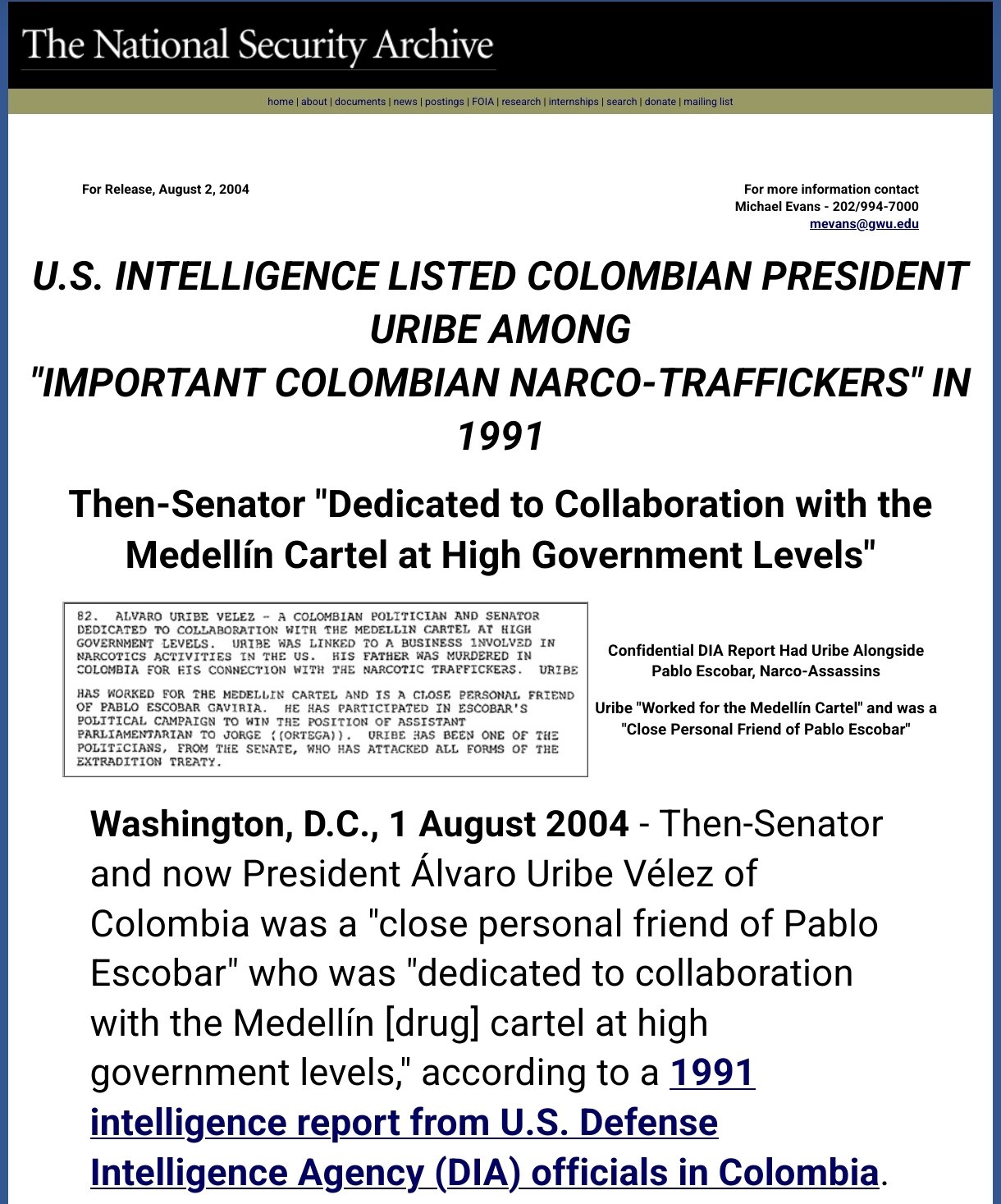
Uribe is far and away Colombia’s most powerful political figure. He was the first president to be re-elected in 100 years after he passed a constitutional reform allowing his re-election. He also has documented ties to drug traffickers. According to a 1991 US Defense Intelligence Agency report that was declassified in 2004, Uribe was a “close personal friend of Pablo Escobar” and was “dedicated to collaboration with the Medellín [drug] cartel at high government levels.”

Image

Uribe has been accused not just of collaborating with the Medellin drug cartel but also of fostering the growth of illegal paramilitary groups, which were responsible for most of the human rights abuses of the past three decades. Again, from the US National Security Archive:

In a series of declarations during the past year, three former employees of “La Carolina” ranch in Yarumal, Colombia, said that the Uribe family, and especially the former president’s brother, Santiago Uribe, had a close and friendly relationship with the presumed leader of the “Doce Apóstoles” (Twelve Apostles), a death squad that prosecutors say targeted petty criminals, drug addicts and the presumed supporters of insurgent groups like the Revolutionary Armed Forces of Colombia (FARC) and the National Liberation Army (ELN).

There has long been a perception in Colombia that Álvaro Uribe’s policies, first as governor of Antioquia and later as president, helped to foster the growth of illegal paramilitaries, which are responsible for most of the human rights abuses committed in recent decades. As governor of Antioquia, Uribe was one of the most prominent proponents of state-sponsored civil militia groups known as “Convivir,” some of which were fronts for, or worked in concert with, Colombia’s notorious paramilitary army, the United Self-defense Forces of Colombia (AUC).

Same Old, Same Old

So, in sum, the US government has imposed economic sanctions on Colombia’s current president and his family on the spurious claim that he is a drug trafficker, without presenting a shred of evidence, while doing everything it can to spring from (home) prison a former Colombian president whom the DIA itself suspected was a drug trafficker, and whose ranch formerly served as the operational base for a paramilitary death squad.

That, I guess, is how things roll when Marco Rubio is in charge of US foreign policy while at the same time advising President Trump on national security matters. However, as John Mearsheimer points out in his latest interview with Judge Napolitano, which, as always, is worth a watch, this is really not so different from how things have always been between the US and Latin America — at least since the early 1900s:

Since the beginning of the 20th century the United States has been allergic to having a government in Latin America — South or Central America — that is left leaning. And any time we see a government that is left leaning in Latin America, we almost always put our gun sights on it…

We’ve been doing this long before Marco Rubio was born. This basic pattern of intervention in Latin America has a rich tradition, really going back to the early 1900s. I think Rubio exacerbates the situation. He really hates the regime in Cuba, he’d love to topple that regime, and I think it is due in part to the fact he’s a Cuban-American, and he views Venezuela and Cuba as birds of a feather.

That means he’s perfectly happy going after Venezuela but that doesn’t means he’s going to forget Cuba… But I think, to be honest, if Rubio disappeared from the scene, we’d still be pursuing this foolish policy against Venezuela.

Not only that, but there will also be legions of Latin American’s comprador class — people like Maria Corina Machado, Javier Milei, Jair Bolsonaro and Daniel Noboa — just begging to do the US’ bidding. Some things never change.

https://www.nakedcapitalism.com/2025/10 ... bbean.html

*****

How the US Treated the Three Central American & Caribbean States that Experienced Grassroots Revolutions

Haiti, Cuba and Nicaragua: The US Oligarchy Never Gives Up
Roger Boyd
Nov 01, 2025

The Gramscian term “passive revolution” refers to a top-down set of social, political and economic transformations driven by societal elites rather than bottom-up by the masses of the population. The American Revolution, that simply replaced the ruling class of Britain with the local colonial ruling class, is a good example. The vast majority of “revolutions” are passive in nature. When a real grassroots revolution occurs, as in Haiti, Cuba and Nicaragua it will be steadfastly and forever resisted by the dominant capitalist nations so as to stop it spreading as a “good example” to those nations’ own masses. With respect to Haiti, that resistance has lasted for over two centuries, for Cuba is has lasted 66 years, for Nicaragua 46 years.

Haiti
Christopher Columbus landed on the island of Hispaniola in 1492, and in just over a decade the mixture of Western diseases and the brutality of colonial exploitation wiped out the local population. French colonists settled on the western side of the island, and that part of Hispaniola became the French colony of Saint-Domingue from 1659 to 1803; a status that was formalized with Spain in 1697. With no real domestic population available to exploit, the French imported huge numbers of African slaves to work on their plantations; producing vast amounts of sugar and coffee with about 450,000 slaves and 30,000 ex-slaves, together with 30,000 Creoles (mixed race predominantly African and European). Overseen by a white population of about 45,000. The slave death rate was so high that the population had to be continuously renewed with new slaves from Africa. For France the colony was the “Pearl of the Antilles” producing 40% of the sugar and 60% of the coffee consumed in Europe. Of course none of that wealth found its way to the slaves who were worked to death, nor the land which was slowly destroyed by the intensive agriculture and cutting down of its forests to expand the plantations.

With the French Revolution of 1789, the local elites that included Creole aristocrats, saw the chance to wrest control from the imperial centre, very much like the British colonial elite had achieved with the US War of Independence. They incited several slave revolts to take control away from the royal government, and successfully defeated the Bourbon royalists, but then lost control of the revolution that they had started.

A planter and Jacobin, Toussaint Louverture and his field slave General Jean-Jacques Dessalines took charge of the slave revolt and together with a 7,000 strong Republican army sent from France that had arrived in 1792 defeated the Bourbon and Creole forces (while also slaughtering previously allied Spanish forces). By 1795 Louverture was the sole ruler of northern Saint-Domingue. In 1791 he started a victorious civil war with the southern part of the territory, and then in 1801 invaded the Spanish territory of Santo Domingo on the eastern part of the island; becoming ruler of all of Hispaniola. To maintain the economy, he established forced plantation labour by both Blacks and lower class whites while also working with the parts of the white community that were critical to the commercial operations of the island. In essence, the Creole ruling class (which was exempt from forced labour) worked with the white ruling class. Very Animal Farm.

In 1802, with the French Revolution taken under control and Napoleon appointed as ruler of France, a French expeditionary force of 31,000 was sent to take back the island. After Dessalines defected to the French forces, Louverture was captured and taken to France. When it became evident that the French wanted to reinstate slavery, Dessalines switched sides again and defeated the French forces in 1803 with the help of a British naval blockade. The utter brutality of the fighting had reduced the French force to only 7,000, with 20 French generals dying. In 1804, Dessalines ordered the massacre of the remaining white French people in Saint-Domingue along with others declared as traitors. He ruled as the Emperor of Haiti from 1804 to 1806, ruling over a feudal society until his assassination.

From 1806 to 1820 the island was split into two, before being unified in 1821 under Boyer. Under threat of invasion from a French fleet sent by the French monarch, Boyer agreed to pay France 150 million francs (US$560 million in today’s money) in exchange for the recognition of independence. The payments were a massive load upon the local economy, especially with the hostility of the US and other governments to a state that had beaten and massacred its European overlords. Even by 1900, 80% of Haiti’s government spending was debt repayment and the reparations were not fully repaid until 1947. France had enslaved Haiti once more through the enforced debt. Nationalist forces in Santo Domingo regained their separate independence in 1844, with the island once again being split in two as it continues to be to this day. With Haiti located on the western side of the island.

In1889 the US had attempted to force Haiti to allow for a US naval base, and in 1897 used gunboat diplomacy to humiliate the Haitian government. Then the US occupied Haiti from 1915 to 1934 and imposed a new constitution upon the nation.

(Paywall with free option.)
"There is great chaos under heaven; the situation is excellent."

User avatar
blindpig
Posts: 14890
Joined: Fri Jul 14, 2017 5:44 pm
Location: Turtle Island
Contact:

Re: South America

Post by blindpig » Sat Nov 15, 2025 4:12 pm

Chaos: The Trump Doctrine for Latin America

Posted by Internationalist 360° on November 13, 2025
Roger D. Harris
Image
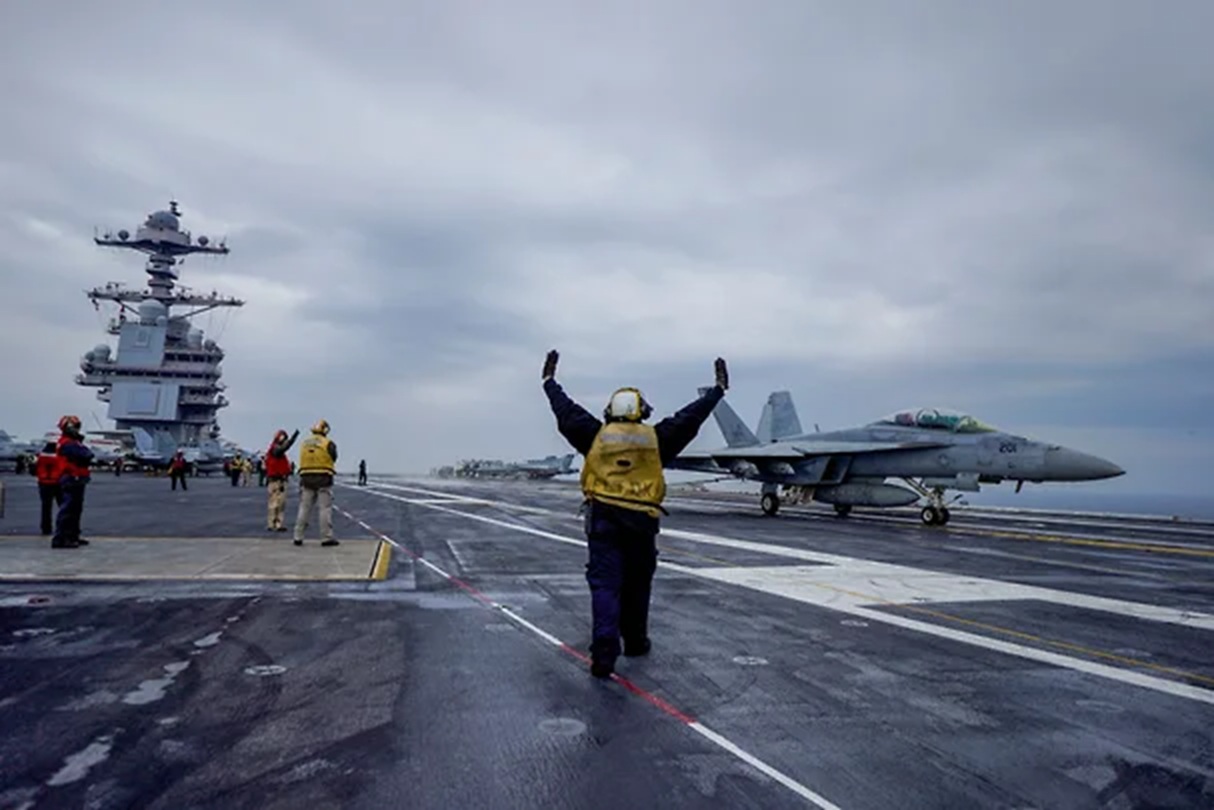
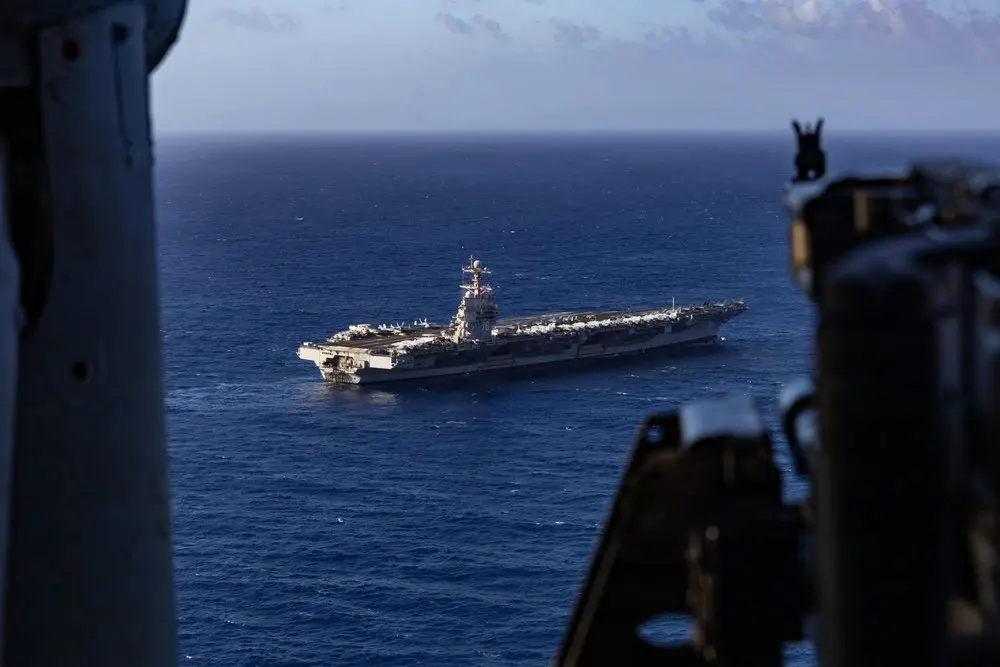
The USS Gerald R. Ford aircraft carrier enhances air and ballistic missile capabilities for SOUTHCOM operations near Venezuelan shores. (@SA_Defensa)

The US, under Trump, is unapologetically an empire operating without pretense. International law is for losers. A newly minted War Department, deploying the most lethal killing machine in world history, need not hide behind the sham of promoting democracy.


Recall that in 2023 Trump boasted: “When I left, Venezuela was ready to collapse. We would have taken it over, we would have gotten all that oil.” As CEO of the capitalist bloc, Trump’s mission is not about to be restrained by respect for sovereignty. There is only one inviolate global sovereign; all others are subalterns.

Venezuela – with our oil under its soil – is now in the crosshairs of the empire. Not only does Venezuela possess the largest petroleum reserves, but it also has major gold, coltan, bauxite, and nickel deposits. Of course, the world’s hegemon would like to get its hands all that mineral wealth.

But it would be simplistic to think that it is driven only by narrow economic motives. Leverage over energy flows is central to maintaining global influence. Washington requires control of strategic resources to preserve its position as the global hegemon, guided by its official policy of “full spectrum dominance.”

For Venezuela, revenues derived from these resources enable it to act with some degree of sovereign independence. Most gallingly, Venezuela nationalized its oil, instead of gifting it to private entrepreneurs – and then used it to fund social programs and to assist allies abroad like Cuba. All this is anathema to the hegemon.

Further pushing the envelope is Venezuela’s “all-weather strategic partnership” with China. With Russia, its most consequential defense ally, Venezuela ratified a strategic partnership agreement. Similarly, Venezuela has a strong anti-imperialist alliance with Iran. All three partners have come to Caracas’s defense, along with regional allies such a Colombia, Brazil, and Mexico.

The US has subjected Venezuela’s Bolivarian Revolution to incessant regime-change aggression for its entire quarter-century of existence. In 2015, Barack Obama codified what economist Jeffrey Sachs calls a remarkable “legal fiction.” His executive order designated Venezuela as an “extraordinary threat” to US national security. Renewed by each succeeding president, the executive order is really an implicit recognition of Venezuela’s Bolivarian Revolution as a counter hegemonic alternative, challenging Washington’s world order.

The latest US belligerence testifies to the success of the Venezuelan resistance. The effects of asphyxiating US-led sanctions, which had crashed the economy, have been partly reversed with a return to positive economic growth, leaving the empire with little alternative but to escalate antagonism using its military option.

The AFP reports “tensions between Washington and Caracas have dramatically risen” as if the one-sided aggression were a tit-for-tat. Venezuela seeks peace, but has a gun held to its head.

Reuters, blames the victim, claiming that the Venezuelan government “is planning to…sow chaos in the event of a US air or ground attack.” In fact, President Nicolás Maduro has pledged “prolonged resistance” to Washington’s unprovoked assaults rather than meekly conceding defeat.

The death toll from US strikes on alleged small drug boats off Venezuela, in the Pacific off Colombia and Ecuador, and as far north as Mexico now exceeds 75 and continues to rise. But not an ounce of narcotics has been confiscated. In contrast, Venezuela has seized 64 tons of drugs this year without killing anyone, as the Orinoco Tribune observes.

Russian Foreign Ministry’s María Zakharova quipped: “now that the US has suddenly remembered, at this historic moment, that drugs are an evil, perhaps it is worth it for the US to go after the criminals within its own elite.”

On November 11, the world’s largest aircraft carrier, the USS Gerald R. Ford, and its accompanying warships arrived in the Caribbean. They join an armada of US destroyers, fighter jets, drones, and troops that have been building since August.

In a breathtaking understatement, the Washington Post allowed: “The breadth of firepower…would seem excessive” for drug interdiction in what it glowingly describes as a “stunning military presence.”

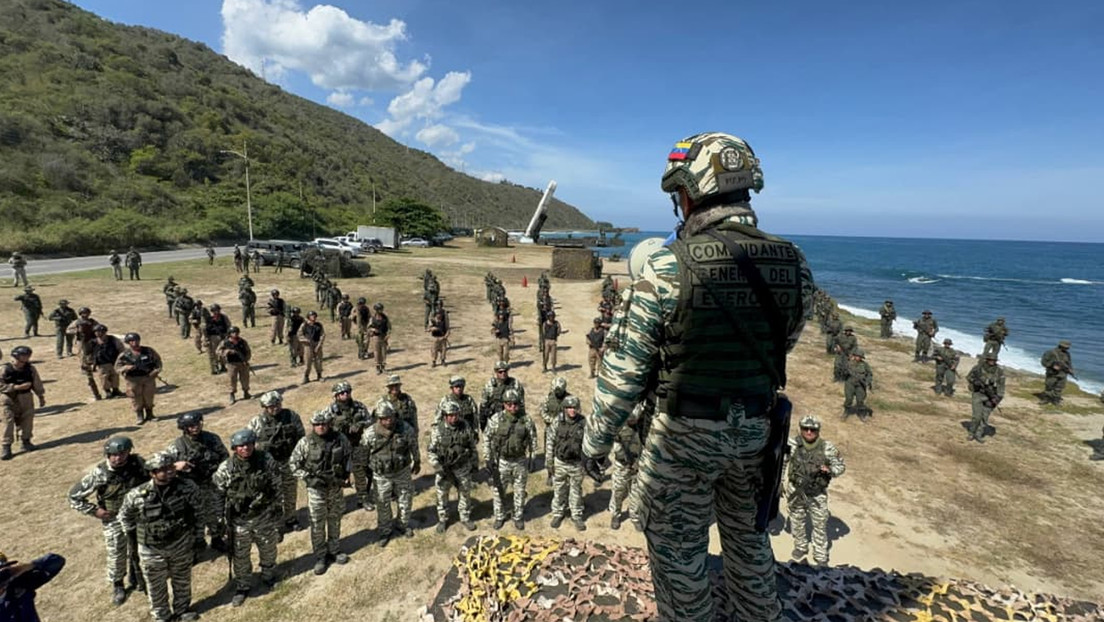
Venezuela is now on maximum military alert with a threatening flotilla off its coast and some 15,000 US troops standing by. Millions of Venezuelans have joined the militia, and international brigades have been welcomed to join the defense. President Maduro issued a decree of “external commotion,” granting special powers if invaded.

The populace has united around its Chavista leadership. The far-right opposition – which has called for a military invasion of its own country – are more isolated than ever. Only 3% support such a call.

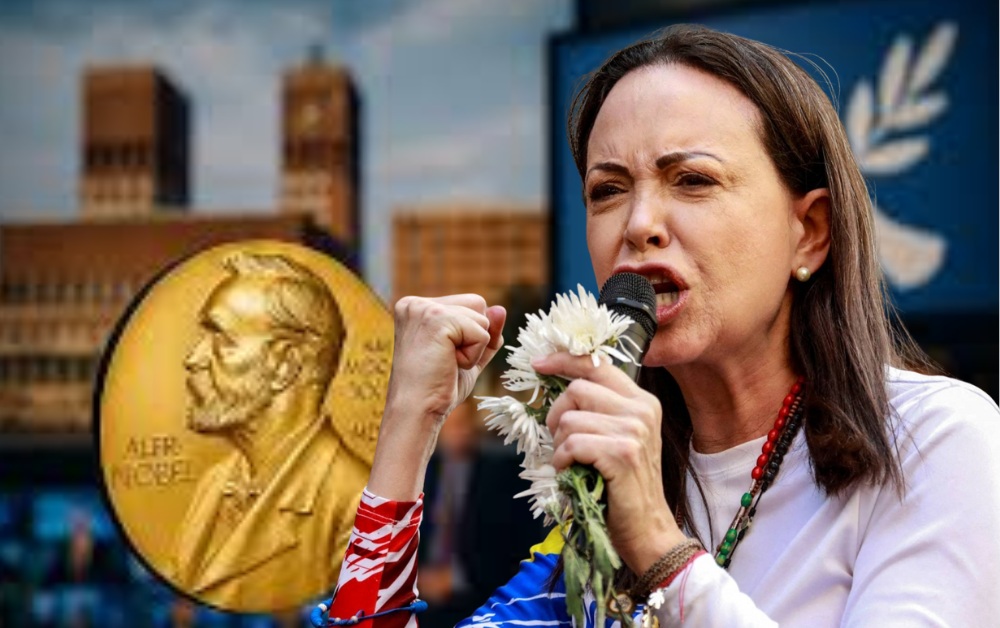
Their US-designated leader María Corina Machado has gone bonkers, saying “no doubt” that Maduro rigged the 2020 US election against Trump. According to the rabidly anti-Chavista Caracas Chronicles, the so-called Iron Lady “is not simply betting Venezuela’s future on Trump, she is betting her existence.”

The legal eagles at The Washington Post now find that “the Trump administration’s approach is illegal.” United Nations experts warn that these unprovoked lethal strikes against vessels at sea “amount to international crimes.”

Even high-ranking Democrats “remain unconvinced” by the administration’s legal arguments. They’re miffed about being left out of the administration’s briefings and not getting to see full videos of the extrajudicial murders.

The Democrats unite with the Republicans in demonizing Maduro to achieve regime change in Venezuela, but wish it could be done by legal means. The so-call opposition party unanimously voted to confirm Marco Rubio as secretary of state, fully aware of the program that he now spearheads.

The corporate press has been complicit in regime change in its endless demonization of Maduro. They report that Trump authorized covert CIA operations as if that was a scoop rather than business as usual. What is new is a US administration overtly flaunting supposedly covert machinations. This is part of Washington’s full-press psychological pressure campaign on Venezuela, in which the follow-the-flag media have been its eager handmaiden.

The AP reports that Jack Keane, when he served as a US Army general, instructed staff to “see reporters as a conduit” for the Pentagon. This was cited as a criticism of Trump after a few dozen embedded reporters turned in their Pentagon badges. Trump has called out the Washington press corps as “very disruptive in terms of world peace,” proving the adage that even a blind dog can sometimes find a bone.

The Wall Street Journal opines: “Nobody in the [Trump] administration seems prepared to ask the hard questions about what happens if they do destabilize the [Venezuelan] regime but fail to topple it.” Political analysts Medea Benjamin and Nicolas J. S. Davies suggest the answer is carnage and chaos – based on the Washington’s past performances in Iraq, Serbia, Afghanistan, Haiti, Libya, Syria, and Yemen, to mention a few.

Foreign Policy’s perspective – aligned with the Washington establishment – is that the level of regional fragmentation is the greatest in the last half century. Regional organizations have become dysfunctional – UNASUR has been “destroyed,” CELAC is “useless,” and the OAS canceled its summit. The factionalism, Responsible Statecraft agrees, “marks one of the lowest moments for regional relations in decades.” Bilateral “deals” with the US are replacing regional cohesion.

This is Latin America under the beneficence of Trump’s “Donroe Doctrine.” The alternative vision, represented by Venezuela, is CELAC’s Zone of Peace and ALBA-TCP’s development for mutual benefit.

https://libya360.wordpress.com/2025/11/ ... n-america/

*****

Chile heads to the first round of presidential elections

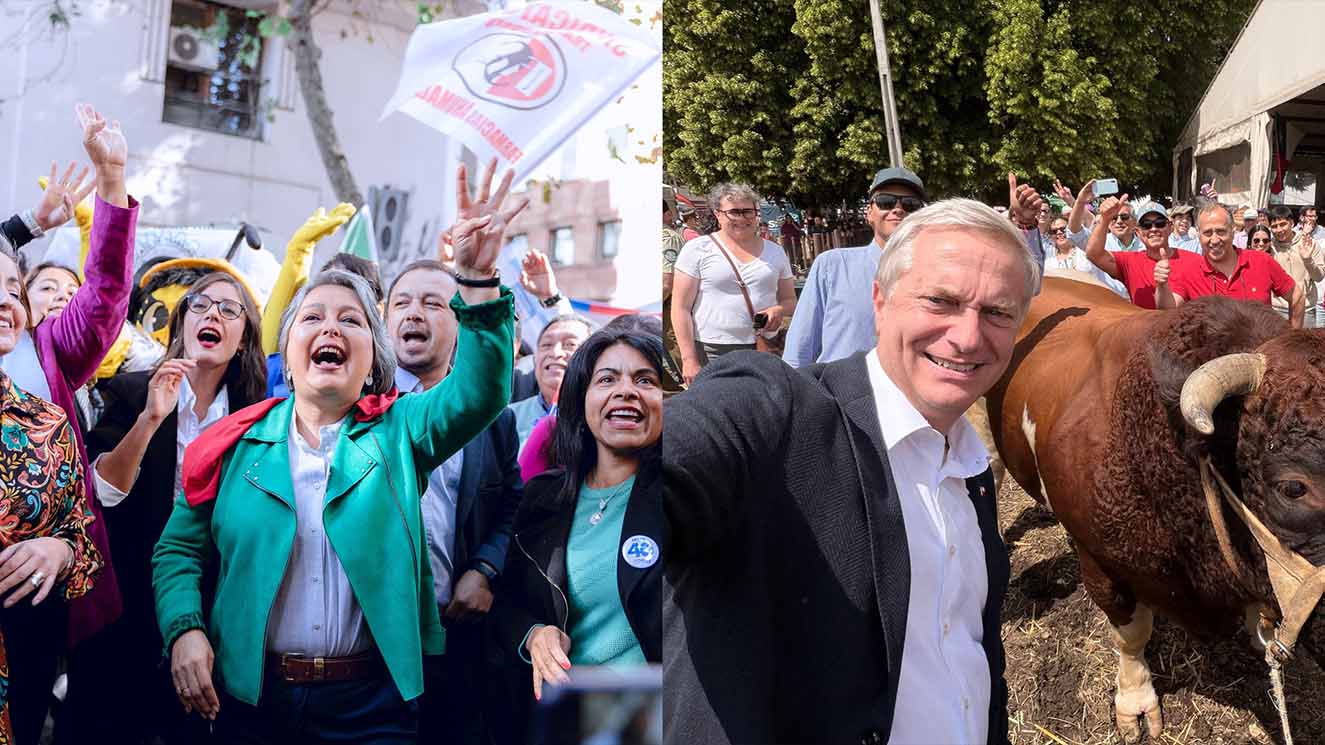
Among the candidates most likely to win the first round is leftist Jeannette Jara, though she is closely followed by three candidates from the right and far right with considerable popular support.

November 15, 2025 by Pablo Meriguet
Image
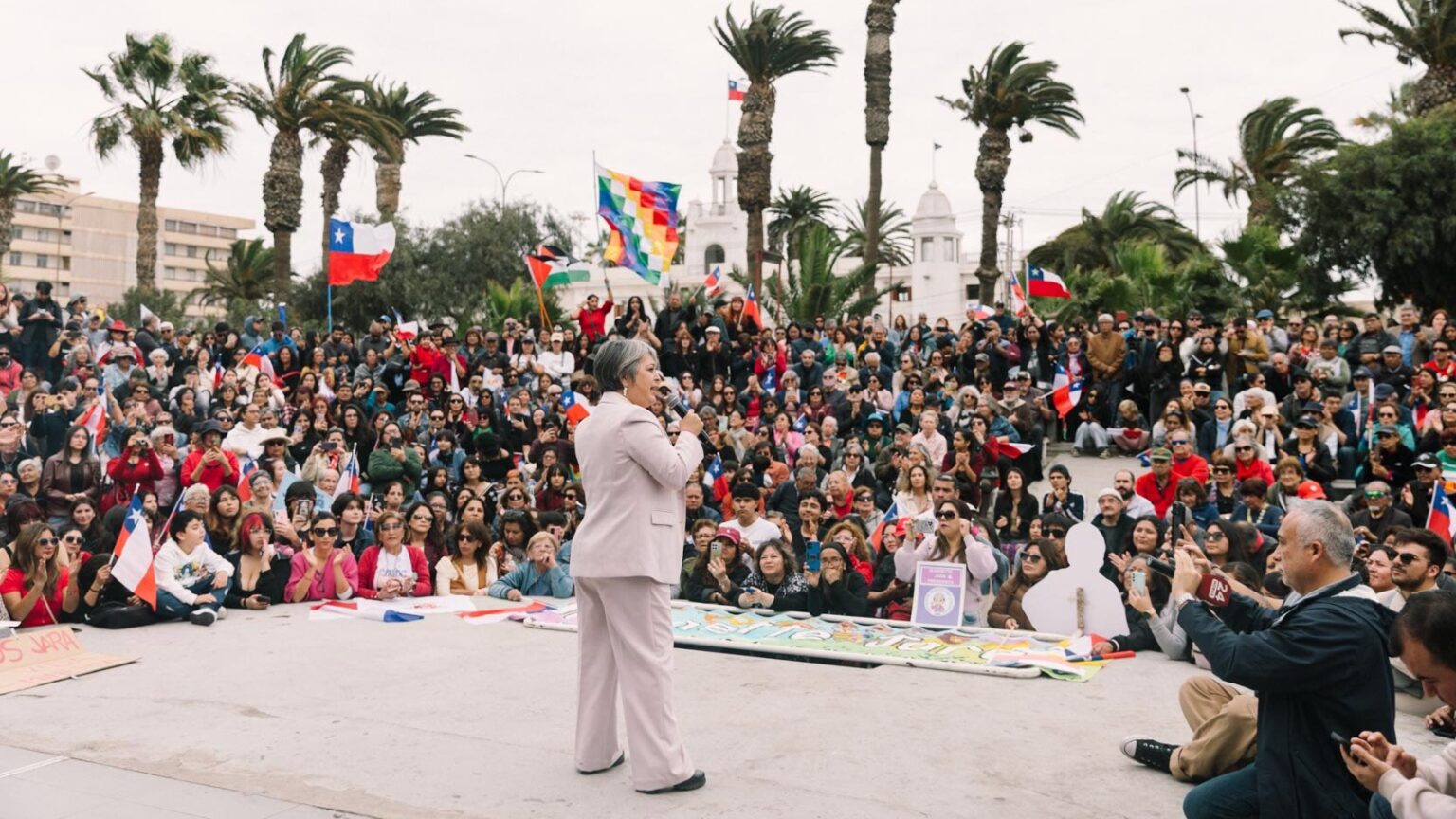
Jeannette Jara campaign event in Arica, Chile in August. Photo: X

On November 16, Chileans will go to the polls to elect the future president of the South American nation. After four years of the center-left administration of Gabriel Boric, Chileans will have to choose between continuing this trend (which includes several parties on the left, the center-left, and various social movements of different kinds), or making a shift to the far right.

On the left-wing coalition side is Jeannette Jara, a member of the Communist Party of Chile and former minister of Social Security (2022-2025) under the Boric administration. Jara has announced that, despite the party she belongs to, her administration will be moderate and will continue with Boric’s social policies, while attempting to expand on others.

According to several polls, Jara is in first place in voting intentions in an election that, after several elections, will be compulsory for those eligible to exercise their right to vote. The polling firm Plaza Pública Cadem claims that Jara has 30% of the vote, which has come as a surprise to many. However, that projection for Jara would be insufficient for her to win the presidency in the first round, so, according to the polls, she would have to face the second most voted candidate in a runoff. This scenario is precisely what worries the Chilean left the most.

In fact, although the right wing has lost its lead in the polls, this is not because it has low support, but because, according to pollsters, its vote has been divided among three candidates who have garnered significant support from the population.

Close behind Jara is the far-right José Antonio Kast, ran in the last elections and lost to Boric. Kast has 15% of the vote, while the Centro de Estudios Públicos poll puts him in a technical tie with Jara (23%).

Although Kast was presented as the strongest candidate on the right, in recent weeks he has been losing some support to the two candidates behind him. One of them is the far-right deputy and YouTuber Johannes Kaiser, from the National Libertarian Party, whom many see as the “Chilean Milei” and who has run a less traditional political campaign but one that has had a greater impact on young people on the right. This has earned him the apparent support of 13% of voters.

Not far behind is Evelyn Matthei, representative of Chile’s traditional right wing and former labor minister under right-wing president Sebastián Piñeira, who served in that position twice (2010-2014, 2019-2022). According to Plaza de Pública Cadem, Matthei, who is running for the Independent Democratic Union, has 12% of the vote.

Is Chile’s political fate already decided?
In this scenario, several journalists have mentioned that the first round of the Chilean elections would function as a kind of primary for the Chilean right. Thus, the Chilean right wing is not disappointed by the poll numbers, as they assume that the right-wing vote would tend to unite behind the candidate who makes it to the second round. Thus, the combined votes of Kast, Kaiser, and Matthiei (almost 49% of the votes) would be enough for a change of direction in the administration of La Moneda, the presidential palace.

For her part, if Jara manages to make it to the runoff, she will have to try to win over not only the more moderate right-wing voters (which will depend largely on who the right-wing candidate is in the second round), but also the voters of the other candidates, who, according to several polls, do not exceed 5% of the vote: Eduardo Artes, of the Communist Party Proletarian Action (1%), and Marco Enríquez-Ominami, an independent candidate (1%).

Read More: Jeannette Jara wins left-wing primary in Chile, surges to second in polls
The other two candidates, Franco Parisi of the People’s Party, with an apparent voting intention of 5%, and Harold Mayne-Nicholls, with 1%, may be more attracted to a possible right-wing government than to the alliances that Jara could offer.

However, it would be premature to assume what will happen in a second round when the first round has not yet taken place.

Lucía Dammert, professor in the Department of Political Studies at the University of Santiago, Chile warns: “It’s not that the left won’t make it to the second round, despite all the dire predictions that have been made, but once again, I think we can’t stop being surprised or expecting surprises, given what has happened in Latin America in recent years, in almost every election, so until the last vote is counted, all we can say are hypotheses and not realities.”

It is also important to note that votes are not automatically transferred to another candidate. The right-wing candidate who makes it to the runoff will have to find a way to gain support from the other candidates. The traditional right, grouped around Matthei, finds itself somewhat displaced by the rise of the new right, which has managed to capitalize on the discontent that the traditional right-wing administrations have failed to address.

The complex legacy of the dictatorship
Likewise, the legacy of Augusto Pinochet’s bloody dictatorship (1973-1990), supported by the United States and the driving force behind one of the world’s first neoliberal states (thanks to the advice of the famous Chicago Boys), has left a wound that history has yet to heal.

A large part of the country supports the actions of a dictatorship that declared itself anti-communist, meaning that Jara’s political party (despite her having shown herself closer to the center-left than to the revolutionary left) is viewed with fear by many.

On the other hand, the fact that candidates such as Kast and Kaiser have publicly stated that they admire or respect Pinochet’s actions revives a series of ghosts left behind by a dictatorship that murdered, disappeared, and/or tortured nearly 10,000 people.

https://peoplesdispatch.org/2025/11/15/ ... elections/

*****

War on Multipolarism Includes Latin America
November 14, 2025

Image
Members of the Bolivar militia participated in a national special military exercise in Bolivar Square in Caracas, the capital of Venezuela, on October 4. Photo: XINHUA.

By Brian Berletic – Nov 11, 2025

As the U.S. continues its proxy war with Russia in Ukraine and its escalation with China in the Asia-Pacific, the U.S. is also targeting a number of nations not only across Eurasia, but also far beyond it, including the Latin American nation of Venezuela.

The purpose of targeting Venezuela—officially—is to stop the flood of illicit narcotics into the U.S., which Venezuela’s government is accused of facilitating. In reality, this is a fabricated pretext meant to manufacture consent for yet another war of aggression—one designed to contribute to a wider geopolitical objective of confronting and rolling back multipolarism.

The U.S., since the end of the Cold War, has pursued a U.S.-dominated unipolar world order in which all matters are determined by and for the U.S. Part of achieving this is preventing any one single nation or group of nations from challenging America’s global primacy.

In recent years these efforts have focused on preventing the reemergence of Russia and the rise of China. It also has focused on preventing nations outside U.S. domination from aligning with either or both. The U.S. achieves this through influence, coercion, political capture—and failing that, proxy war, then actual war.

Continuity across administrations
Venezuela has been targeted by the U.S. for regime change throughout the 21st century. The George W. Bush administration very briefly ousted the government of Venezuelan President Hugo Chavez in 2002. Since then, regardless of who occupies the White House or controls U.S. Congress, U.S.-funded political interference, sanctions and covert military operations have continued placing pressure on Venezuela in hopes of removing the current political order from power and replacing it with a U.S. client regime.

While headlines focus on U.S. President Donald Trump’s obsession with regime change in Venezuela spanning his two terms in office, it should be noted that sanctions and political interference targeting the nation continued from the Bush administration, throughout the eight years of the Barak Obama administration and also under the Joe Biden administration.

Despite attempts by the Trump administration to deny involvement in the 2020 failed overthrow of the Venezuelan Government, it fits in with both a historical pattern of U.S. interference worldwide, and other covert operations carried out under the Trump administration.

Regardless, the U.S. now openly seeks to overthrow the Venezuelan Government and has been assembling significant military forces to do so off Venezuela’s coasts, including U.S. Navy and Marine Corps vessels, warplanes and troops.

Should the decision be made to launch a military operation, it will likely take the form of similar decapitation strikes the U.S. and its Israeli proxies have conducted against Hezbollah in Lebanon last year and against the Iranian Government earlier this year together with strikes aimed at crippling civilian infrastructure and damaging Venezuela’s economy even further than years of U.S. sanctions already have.


Manufacturing consent
While Trump campaigned for office on a platform of ending “endless wars,” since taking office, he has continued each war inherited from the previous Biden administration while launching and preparing to launch several new conflicts.

To justify a war of aggression against Venezuela aimed at regime change, President Trump has shifted narratives previously based on fighting Venezuela’s “corruption” and “dictatorship,” to blaming America’s multi-decade drug crisis suddenly and squarely on Venezuela.

The administration has claimed President Trump is acting to “protect our country from those trying to bring deadly poison to our shores” at the same time the Trump administration also claims to have already “secured” America’s borders within its first 100 days in office.

According to the White House official website, “Since President Donald J. Trump took office, he and his administration have ushered in the most secure border in modern American history—and he didn’t need legislation to do it. President Trump has made good on the promises he made on the campaign trail to usher in an unprecedented era of homeland security.”

And yet, according to the same administration, Venezuela is single-handedly circumventing this “unprecedented era of homeland security” to “poison” millions of Americans with illicit narcotics—so much so that it warrants a war of aggression launched against Venezuela itself.

Part of the theatrics in selling this latest war of aggression includes the U.S. targeting boats allegedly trafficking illicit narcotics to the U.S. from Venezuela, despite the boats being targeted not having the physical ability to make the more than 1,000-mile (1,700 km) trip. While some seem to assume the U.S. had actionable information before carrying out the strikes, it should be pointed out that similar warfare throughout the 20-plus years of the “war on terror” resulted in mainly civilian casualties.

In a 2021 Washington Post article, it was reported that Daniel Hale, a former member of the U.S. armed forces, leaked “classified information about drone warfare to a reporter after leaving the military.”

The leaked information revealed, “During one five-month stretch of an operation in Afghanistan, the documents revealed, nearly 90 percent of the people killed were not the intended targets.”

The same vague pretext and lack of transparency that resulted in staggering civilian casualties throughout the “war on terror” now continues amid the Trump administration’s “war on drugs.”

Launching a war of aggression based on false pretexts has defined U.S. foreign policy throughout the 21st century—most notably ahead of the U.S. occupation of Iraq in 2003.

In a 2011 article, The Guardian published admissions the supposed justification for the invasion was based on deliberate fabrications, writing: “the defector who convinced the White House that Iraq had a secret biological weapons programme has admitted for the first time that he lied about his story, then watched in shock as it was used to justify the war.”

While the article attempts to portray the U.S. establishment as “tricked” into war with Iraq, it is clear that war with Iraq—just like now with Venezuela—was already a foregone conclusion and the U.S. establishment simply worked its way backward to create a narrative to convince Americans and the world to go along.

Under the current Trump administration, the very worst of past U.S. conflicts is converging once again ahead of yet another unnecessary war of aggression, once again built on a transparently false pretext and waged by the Trump administration through the same indiscriminate brutality many Americans voted President Trump into office to end.

While some analysts have mistakenly concluded U.S. escalation toward Venezuela represents a “retreat” from Asia or even Eurasia, and a transition from pursuing global primacy toward carving out an American “sphere of influence,” the U.S. is much more likely attempting to complement its continued encirclement, containment and confrontation with both Russia and China by eliminating one of their more vulnerable allies—Venezuela—in a bid to escalate rather than withdraw from Washington’s ongoing war against multipolarism.

https://orinocotribune.com/war-on-multi ... n-america/

Trump’s Provocations Are Bolstering Latin America’s Left
November 14, 2025

Image
Brazilian President Luiz Inacio Lula da Silva (left) speaks next to Colombian President Gustavo Petro during a meeting for talks on the protection of the Amazon Forest, in Leticia, Colombia, on the border with Brazil, on July 8, 2023. Photo: Juan Barreto/AFP.

By Steve Ellner – Nov 13, 2025

Across Latin America, Donald Trump’s aggressive moves — from tariffs to attacks on boats in the Caribbean to meddling in Argentina’s elections — is uniting progressive forces in opposition and bolstering the Left’s political prospects.

When Donald Trump assumed the presidency in January 2025, the Pink Tide governments in Latin America were losing ground. The approval rating of Brazil’s president, Luiz Inácio Lula da Silva, reached the lowest of his three presidential terms, while that of Colombia’s Gustavo Petro was a mere 34 percent. And in the wake of the fiercely contested results of the July 2024 presidential elections in Venezuela, Nicolás Maduro found himself isolated in the region.

Now, less than a year later, the political landscape has shifted. Trump’s antics — such as his renaming of the Gulf of Mexico, the weaponization of tariffs, and aggressive military actions in the Caribbean and Pacific — have revitalized Pink Tide governments and the Left in general. Latin America has reacted to Trump’s invocation of the Monroe Doctrine with a surge of nationalist sentiment, mass demonstrations, and denunciations from political figures across most of the spectrum, including some on the center right.

While the United States appears more and more like an unreliable and declining hegemon, China is seeking to position itself as a champion of national sovereignty and a voice of reason in matters of international trade and investment. When Trump slapped a 50 percent tariff on most Brazilian imports in July, the Chinese stepped in to help fill the gap for the nation’s all-important soybean exports.

Lula vs. Trump
Different scenarios are playing out in different nations but with similar results: the strengthening of the Left and, in some instances, the weakening of the Right. One type of case is seen in both Brazil and Mexico, where Lula and Mexican president Claudia Sheinbaum have combined firmness with discretion, in contrast to Petro’s more confrontational rhetoric.

In July, Lula responded defiantly to Trump’s attempt to strong-arm Brazil through punitive tariffs designed to secure the release of the US president’s ally, former Brazilian president Jair Bolsonaro, who was jailed for his involvement in coup and assassination plots. Unlike other heads of state, Lula refused to reach out to Trump, saying, “I’m not going to humiliate myself.” Instead, Lula declared that “Brazil would not be tutored by anyone,” at the same time recalling the 1964 Brazilian coup as a previous instance of US intervention.

Different scenarios are playing out in different nations but with similar results: the strengthening of the Left and, in some instances, the weakening of the Right.

The face-off sparked mass pro-government demonstrations throughout the country that far outnumbered those called by the Right demanding the freeing of Bolsonaro. Lula’s supporters blamed the Right for the tariffs, and particularly Bolsonaro’s son Eduardo, who campaigned for them after moving to Washington, DC. Lula called Bolsonaro a “traitor” and said he should face another trial for being responsible for what has come to be called “Bolsonaro’s tax.” In a sign that Trump’s tariffs were a game-changing boost for the Left, the eighty-year-old Lula announced last month that he would run for reelection in October 2026, as his popularity reached the 50 percent mark.

Some analysts faulted Lula for having failed to use his thirty-minute videoconference with Trump on October 6 to condemn Washington’s gunboat diplomacy in the Caribbean. According to this interpretation of the call, Lula displayed naivete and gutlessness by combining “concern and accommodation with US imperialism” and believing that “negotiations will be guided by a ‘win-win logic.’”

In fact, Lula has spoken out against the US military presence as a “factor of tension” in the Caribbean, which he calls a “zone of peace.” Lula, though, undoubtedly could have gone further, as was urged by the Landless Workers’ Movement (MST) — which backed Lula’s last presidential bid — by explicitly declaring solidarity with Venezuela against US attacks.

Still, Lula can hardly be accused of submissiveness in his dealings with Trump. Indeed, Lula and Sheinbaum as well have been adept in their relations with the US president and have ended up getting much of what they wanted. Moreover, at the same time that Trump retreated from his tariff threats against both Brazil and Mexico, he took to praising their respective heads of state.

A United Front in the Making
In Brazil and elsewhere in the region, a new alignment is emerging, drawing in both right- and left-leaning forces in reaction to Washington’s posture. One notable example was Lula’s appointment of Homeless Workers’ Movement (MTST) activist and former presidential candidate Guilherme Boulos as minister of the presidency in October. Boulos belongs to the Socialism and Liberty Party (PSOL), a leftist split-off from Lula’s Workers’ Party (PT) that endorsed Lula’s 2022 presidential candidacy but had ruled out holding positions in his government.

Boulos, who was instrumental in organizing the recent protests against Washington’s tariff hikes, spoke of the significance of his designation: “Lula gave me the mission to help put the government on the street . . . and [listen] to popular demands.” His appointment signals a leftward turn in which, in the words of the Miami-based CE Noticias Financiera, “Lula showed that he is going into the 2026 election ready for war. A war in his own style, using the social movements.”

Venezuela is another example where political actors across much of the political spectrum are converging on the need for a broad front to oppose US aggression in the region. No other Pink Tide government has faced such a rapid succession of regime change and destabilization attempts as Venezuela under the government of Maduro, Hugo Chávez’s successor. The government’s response to these and other challenges has at times deviated from democratic norms and has included concessions to business interests, drawing harsh criticism from both moderate and more radical sectors of the Left.

In Brazil and elsewhere in the region, a new alignment is emerging, drawing in both right- and left-leaning forces in reaction to Washington’s posture.

One leader in the latter category is Elías Jaua, formerly a member of Chávez’s inner circle, whose leftist positions on economic policy and internal party democracy left him marginalized within the Chavista movement. In the face of the US military threat in the Caribbean, Jaua has closed ranks with Maduro and decried the “psychological war” being waged against the president. He went on to say that, in this critical moment, it is necessary “to place the tranquility of the people above any ideological, political, or ulterior interest,” adding “the Homeland comes first.”

Other long-standing political figures who have supported Maduro’s call for a national dialogue to face the US threat — while continuing to criticize Maduro for alleged undemocratic practices — include some on the center and center right of the political spectrum, including former presidential candidates Henrique Capriles, Manuel Rosales, and Antonio Ecarri.

Others are moderate leftists who held important posts under Chávez and/or belonged to the moderate left party Movimiento al Socialismo (MAS) in the 1990s. One of the latter is Enrique Ochoa Antich, who presented a petition signed by twenty-seven leading anti-Maduro moderates that stated “it is disheartening to see an extremist sector of the opposition” supporting sanctions and other US actions. Ochoa Antich proposed a dialogue with government representatives “over the best way to foment national unity and defend sovereignty.”

This stance, which views Maduro as a partner in resisting US intervention, stands in sharp contrast to that of the Communist Party (PCV), which broke with his government in 2020 over its business-friendly orientation and its sidelining of sectors of the Left. In the same breath that it denounces imperialist aggression, the PCV points to the “authoritarian and anti-democratic nature of Maduro’s government.” While the PCV’s criticisms are worthy of debate, the party’s uncompromising hostility toward Maduro undermines efforts to face US aggression. Indeed, the PCV’s position – supporting the Cuban government while denouncing Venezuela’s as undemocratic – appears inconsistent.

In Argentina, Trump came to the aid of the Right in what will likely prove to be a Pyrrhic victory. On the eve of the October 2025 legislative elections, Trump offered to bail out the Argentine economy to the tune of $40 billion but only on the condition that the party of right-wing president Javier Milei emerge victorious, which is precisely what happened. Trump’s blackmail was denounced as such by politicians ranging from Peronist leaders linked to former Pink Tide governments to centrists who had been among their most vocal critics. Facundo Manes, leader of the centrist Radical Civic Union, was an example of the latter, declaring “the extortion advances.” Meanwhile on the streets of Buenos Aires, protest banners denouncing Milei were marked by anti-US slogans “Yankee go home” and “Milei is Trump’s mule,” as well as the burning of a US flag.

This convergence around the need to confront Trump’s threats and actions creates an opportunity for progressives and socialists across the continent to unite. The call for such unity was taken up by the São Paulo Forum, a body that brings together over one hundred Latin American leftist organizations, which Lula helped found in 1990. At the outset of Trump’s first administration in 2017, the forum drafted the document “Consensus of Our America” as a response to the neoliberal Washington Consensus and the escalation of US interventionism in the hemisphere.

At the same time that it defended the pluralism of progressive movements and avoided the term “socialism,” the consensus document foresaw the drafting of a more concrete set of reforms and goals. The expected next step, however, never materialized. More recently, the Cuban political analyst and strategist Roberto Regalado lamented that, despite the urgent need for unity, “far from consolidating and expanding, the ‘Consensus of Our America’ has languished.”

Trump and the Latin American Right
Much of the Latin American right has tied its fortunes to President Trump. The right-wing presidents of Argentina, Ecuador, and Paraguay are Trump followers, as are Bolsonaro, the Chilean presidential candidate José Antonio Kast, and former president Álvaro Uribe in Colombia. In Venezuela, right-wing opposition leader María Corina Machado dedicated her recent Nobel Peace Prize to Trump.

In 2022, Machado’s fellow Venezuelan rightist Leopoldo López cofounded the World Liberty Congress dedicated to regime change in nations that Washington considers adversaries. The idea is in line with the notion of creating an “International of the Right” promoted by Trump strategist Steve Bannon, among others. Bannon founded The Movement in 2016 to unite the European right, but it has been largely snubbed by much of that continent’s right wing.

While in the US, Trump exploits patriotism, in the case of Latin America, nationalist sentiment and support for Trump are oxymorons.

Such “internationalism” on the Right is even less likely to flourish in Latin America. While in the United States, Trump exploits patriotism — or a perverted form of it — in the case of Latin America, nationalist sentiment and support for Trump are oxymorons, specifically when it comes to tariffs, immigration, threats of military invasion, and the brandishing of the Monroe Doctrine. In Venezuela, for instance, Machado’s popularity has declined and her opposition movement has fractured as a result of popular repudiation of Trump’s policies.

In the United States, Trump plays to his fanatic supporters while his popularity steadily declines. In Latin America, the same is occurring, with the difference being that his popularity couldn’t get much lower than it already is. Pew Research Center reports that just 8 percent of Mexicans have “confidence” in Trump.

Trump has contributed to a major shift in Latin America’s political landscape, now marked by political polarization and leftist inroads. In many countries, the Left — which for decades remained on the sidelines — has become a major point of reference, rallying around the banners of national sovereignty, if not anti-imperialism.

In Chile, a Communist, Jeannette Jara, received a surprising 60.5 percent of the vote in the primaries to represent the main anti-rightist bloc in the upcoming presidential elections. While taking a cautious tone, Jara still directly addressed Trump, saying in the wake of his meddling in Argentine elections, “No US soldiers will enter. Chile is to be respected, and so is its sovereignty.”

In Ecuador, despite harsh repression, the followers of ex–Pink Tide president Rafael Correa have come close to winning the last three presidential elections. And in Colombia, Petro has reinvigorated his movement’s base through his forceful denunciations of US military operations and by leading a drive, begun in October, to secure two million signatures for a national constituent assembly.

“Polarization” often refers to a scenario in which the extremes on both sides of the political spectrum gain ascendancy. That is not what is happening in Latin America, at least on the Left. Instead, there is a convergence of progressives of different political stripes, both domestically and among Pink Tide governments, in their opposition to Trump and all that he represents. The challenge now is to translate this convergence into organized forms of unity — through united fronts at the national level as well as in the Community of Latin American and Caribbean States (CELAC) and other regional bodies.

https://orinocotribune.com/trumps-provo ... icas-left/

******

1 Law, 1 Million Jobs: Milei’s Explosive Glacier Bill That Could Reshape Argentina

Glacier law rollback in Argentina threatens fragile Andean ecosystems amid U.S.-backed mining push
Image
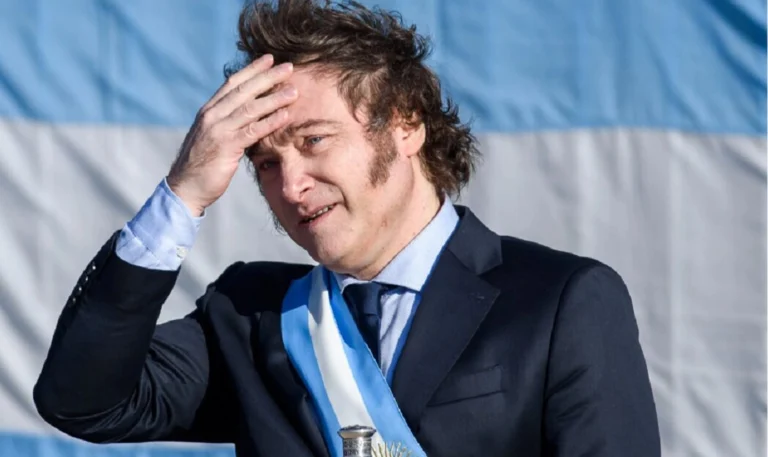
Argentina stands at a crossroads: President Milei’s glacier law rollback could unlock millions in investment — or trigger irreversible ecological damage across the Andes.

November 15, 2025 Hour: 10:39 am

Milei’s glacier law rollback sparks national fury as Argentina weighs U.S. mining deals against environmental collapse and water security.

1 Law, 1 Million Jobs: Milei’s Explosive Glacier Bill That Could Reshape Argentina
In a move that has ignited nationwide debate, Argentine President Javier Milei is pushing forward a controversial legislative initiative to modify the country’s landmark Glaciarres Law, a reform demanded by the United States as part of a broader bilateral investment agreement. The proposed glacier law rollback would allow large-scale mining operations in previously protected periglacial zones — areas directly connected to glaciers that feed vital river systems across the Andes.

The government claims the reform could generate up to one million jobs and attract billions in foreign investment
, positioning mining as a central pillar of Argentina’s economic revival.

But critics warn this comes at an unacceptable cost: the degradation of mountain permafrost, shrinking glaciers, reduced river flows, and long-term threats to water security for millions of people.

At stake is not just legislation, but the future of Argentina’s most fragile and essential ecosystems.

This is more than a policy shift — it is a fundamental redefinition of nature’s value.

As Milei frames the debate as “hunger versus sentimentality,” environmentalists, scientists, and indigenous communities are sounding the alarm: you cannot mine your way out of poverty if you destroy the very source of life.

Glacier Law Rollback: Opening the Andes to Mining Giants
The current Ley de Glaciares (Glaciers Law), passed in 2010 after years of grassroots campaigning, was designed to protect Argentina’s estimated 18,000 glaciers and their surrounding environments from industrial exploitation. It established strict prohibitions on mining and infrastructure projects within glacial and periglacial zones — defined as areas where ice, snow, and frozen ground regulate water cycles critical to agriculture, energy, and urban supply.

Now, Milei’s administration wants to dismantle those protections.

Under the new proposal before Congress, provincial governments — many of which rely heavily on mining royalties — would gain authority to define what constitutes a “periglacial zone” and determine where extractive activities can take place.

This effectively shifts decision-making from scientific oversight to political and economic interests.

The targeted area — including both glaciers and adjacent periglacial terrain — covers approximately 1% of Argentina’s total territory, concentrated along the Andean border with Chile. This region is home to some of the continent’s most important watersheds, feeding rivers like the Mendoza, Atuel, and Neuquén, which sustain cities, farms, and hydroelectric plants.

Milei argues that the current law is an obstacle to development, calling opponents “anti-progress radicals” who would rather see Argentines “starve than touch a rock.”

“They prefer we die of hunger, but don’t touch anything — such a primitive attitude,”
he declared during a recent address.

🔗 External Link: National Inventory of Glaciers – Argentina
Official data on glacier locations, volumes, and conservation status managed by Argentina’s Ministry of Environment.

U.S. Deal Fuels Push for Resource Extraction
The timing of the glacier law rollback is no coincidence. On Thursday, Argentina and the United States signed a bilateral trade and investment framework agreement, aimed at deepening economic ties and paving the way for expanded cooperation in critical minerals and energy.

The U.S. has made it clear: access to Argentina’s lithium, copper, and silver reserves depends on regulatory flexibility.

Argentina holds the world’s third-largest lithium reserves, primarily located in the arid Puna plateau — a high-altitude desert ecosystem intertwined with glacial meltwater. Lithium is essential for electric vehicle batteries and renewable energy storage, making it a strategic resource in the global green transition.

Washington sees Argentina as a key partner in reducing dependence on China and Russia.

But environmental groups argue this creates a dangerous paradox: the so-called “green” energy revolution is being built on ecologically destructive extraction.

“The U.S. wants clean energy, but doesn’t care how dirty its sourcing is,” said María Sol Vázquez, coordinator of the Asamblea por los Glaciares, a coalition of over 70 environmental organizations.

She warned that weakening the Glaciers Law would set a precedent for unchecked mining expansion, threatening not only glaciers but also salt flats, wetlands, and indigenous territories.

Already, companies like Livent, Arcadium Lithium, and Mandalay Resources operate in sensitive regions with minimal oversight.

🔗 External Link: U.S. Department of State – Trade Agreements with Argentina
Overview of bilateral economic initiatives, including the newly signed investment framework.

Geopolitical Context: Latin America’s Resource Curse in the 21st Century
The glacier law rollback must be understood within a broader regional pattern: the renewed scramble for Latin America’s natural wealth under the guise of climate action and energy security.

From Chile’s lithium fields to Bolivia’s salars, from Colombian coal to Brazilian iron ore, the Global North is turning to the Global South to fuel its decarbonization plans — often bypassing local consent, environmental safeguards, and labor rights.

This is neocolonialism dressed as sustainability.

Argentina’s case is emblematic. While Milei touts sovereignty and free markets, his policies align closely with U.S. strategic interests. By opening the Andes to mining, Buenos Aires risks becoming a resource colony for green capitalism, exporting raw materials while importing pollution and social conflict.

Moreover, the erosion of environmental laws undermines regional integration efforts. Chile, Peru, and Bolivia have all strengthened glacier protections in recent years. Argentina’s reversal isolates it from its neighbors and weakens collective action on transboundary water management.

Glaciers don’t respect borders — neither should their protection.

And there’s another dimension: climate change. The Andes are warming faster than the global average. Since 1960, Argentina has lost nearly 20% of its glacial volume, according to scientific studies. Weakening legal protections now will accelerate that loss.

Water scarcity already affects over 15 million Argentines. What happens when the glaciers vanish?

The answer, experts say, is drought, agricultural collapse, and mass displacement — consequences far more costly than any short-term economic gain.

Environmental Costs: When Ice Melts, So Does the Future
Scientists have been unequivocal: modifying the Glaciers Law poses severe risks.

Dr. Laura Domínguez, a glaciologist at CONICET (Argentina’s National Scientific and Technical Research Council), explained that periglacial zones act as natural reservoirs, slowly releasing water during dry seasons.

“These areas are not ‘empty land’ — they are hydrological engines,”
she said.
“Disrupting them destabilizes entire watersheds.”

Mining activities — including blasting, road construction, and chemical processing — can lead to:

Reduced river flows due to altered drainage patterns
Contamination of aquifers with heavy metals and acids
Accelerated glacier retreat from dust deposition and heat generation
Collapse of permafrost, triggering landslides and erosion
In San Juan and Mendoza provinces, communities have already reported declining well levels and increased sediment in drinking water near mining sites.

Farmers speak of rivers that once ran year-round now drying up by mid-summer.

Indigenous communities, particularly the Diaguita and Huarpe peoples, view the glaciers as sacred and integral to cultural identity. For them, the law isn’t just about ecology — it’s about survival and memory.

“Our ancestors prayed to the mountains,”
said elder Cecilia Flores.
“Now the government wants to blow them up for profit.”

The proposed bill offers no binding environmental impact assessments or community consultation requirements, violating both national law and international standards like ILO Convention 169.

Economic Promises vs. Realities: Will Mining Deliver?
The Milei government insists the glacier law rollback will catalyze growth, claiming it could create one million jobs and establish a “solid financial structure” for business development.

But evidence from other mining-dependent regions tells a different story.

While mining generates revenue, most profits are repatriated by foreign-owned corporations. Local employment is often temporary and precarious. And boomtown dynamics bring inflation, housing shortages, and social fragmentation.

True development requires industry, education, and infrastructure — not just extraction.

Furthermore, Argentina’s mining sector contributes less than 2% of GDP and employs fewer than 50,000 people directly. To reach one million jobs, the industry would need to expand exponentially — an implausible scenario without massive state subsidies and deregulation.

Even proponents admit full implementation could take decades.

Meanwhile, sectors like tourism, viticulture, and organic farming — all dependent on clean water and intact landscapes — face existential threats from contamination and scarcity.

Who benefits if Mendoza’s vineyards wither because its rivers run dry?

Economist Paula González noted that short-term gains rarely outweigh long-term liabilities:

“We’re mortgaging our water future for uncertain returns. That’s not economics — it’s recklessness.”

TeleSUR’s Perspective: Nature Is Not for Sale
From TeleSUR’s standpoint, the glacier law rollback represents a profound betrayal of the people and the planet.

We stand with Argentina’s environmental defenders, scientists, and indigenous communities who refuse to accept false choices between survival and sustainability.

There is no prosperity on a dead Earth.

President Milei frames the conflict as ideology versus pragmatism, but it is really power versus justice. The same forces that dismantled public healthcare, education, and science now seek to commodify glaciers — treating sacred, life-giving ice as mere real estate for billionaires.

The U.S.-Argentina deal may serve Washington’s geopolitical goals, but it does nothing for ordinary Argentines struggling with inflation, unemployment, and lack of basic services.

Real sovereignty means controlling your resources — not selling them off.

TeleSUR will continue covering the resistance to this project, from courtroom challenges to street protests, because the defense of glaciers is the defense of life itself.

Because when the mountains bleed, the whole country bleeds.

Legal Battle Looms as Provinces Prepare for Exploitation
Despite fierce opposition, several Andean provinces — including San Juan, Catamarca, and La Rioja — have signaled support for the reform, eager to boost tax revenues and attract investment.

Some have already drafted local bills to facilitate mining permits, anticipating federal approval.

This pre-emptive coordination raises concerns about collusion between provincial elites and multinational firms.

Environmental lawyers warn that weakening national law could trigger constitutional challenges. The original Glaciers Law was passed under Article 41 of Argentina’s Constitution, which enshrines the right to a healthy environment.

Any attempt to undermine it may be deemed unconstitutional.

The Supreme Court has yet to rule on related cases, but legal experts believe a major showdown is inevitable.

Meanwhile, civil society groups are mobilizing for mass demonstrations, lawsuits, and international appeals. They’ve launched a campaign titled “No a la Ley Minera – Sí a la Vida” (“No to the Mining Law – Yes to Life”), demanding a moratorium on all projects in glacial zones.

Petitions have gathered over 300,000 signatures in just two weeks.

Conclusion: A Nation at a Crossroads
Argentina stands at a defining moment.

The glacier law rollback is not merely a technical adjustment — it is a moral test.

Will the nation choose quick profits for a few, or lasting security for the many?

Will it become a sacrifice zone for global green capitalism, or a model of ecological stewardship?

President Milei says he’s offering progress. But real progress doesn’t poison rivers, displace communities, or erase glaciers from the map.

Progress protects them.

Because you cannot build a future on melted ice.

And when the last drop runs out, no amount of lithium will quench a nation’s thirst.

https://www.telesurenglish.net/glacier-law-rollback/
"There is great chaos under heaven; the situation is excellent."

User avatar
blindpig
Posts: 14890
Joined: Fri Jul 14, 2017 5:44 pm
Location: Turtle Island
Contact:

Re: South America

Post by blindpig » Mon Nov 17, 2025 2:31 pm

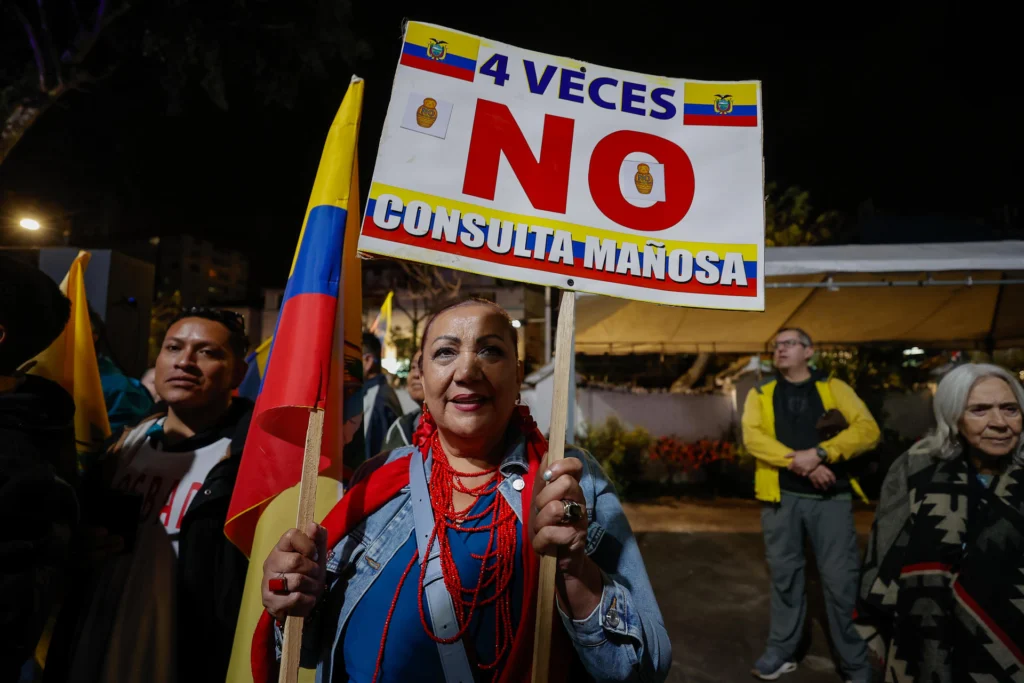
Ecuador’s Noboa Accepts Defeat in Referendum, All Proposes Were Denied

Image
A supporter of the Citizen Revolution Movement holds a sign during the celebration of the ‘No’ victory in the referendum this Sunday, in Quito, Ecuador. Photo: EFE/ José Jácome

November 16, 2025 Hour: 11:05 pm

The President of Ecuador, Daniel Noboa, accepted this Sunday the defeat in the referendum that he himself promoted, with which he sought, among other objectives, that Ecuadorians pronounce themselves on the establishment of a Constituent Assembly to draft a new Constitution, and also assured that his commitment to the country “is strengthened.”

“These are the results. We consulted Ecuadorians and they have spoken. We fulfilled our promise: to ask them directly. We respect the will of the Ecuadorian people,” the president wrote on his X social media account. He did not appear before the media to address the country as he has done in previous electoral processes.

“Our commitment does not change; it is strengthened. We will continue fighting tirelessly for the country you deserve, with the tools we have,” added Noboa, who awaited the results near Olón, the beach commune where he voted early this Sunday and where he has his residence.


With more than 93% of the votes counted, the ‘No’ vote won in all four questions posed by Noboa, which included political and security issues.

The proposals in the referendum, which also included reducing the number of assembly members from 151 to 73 and removing public funding for political parties, were widely rejected by Ecuadorians, with the ‘No’ vote winning by a margin of between 23 and 6 percentage points, according to the results of more than 85% of the count published.

With these figures, the president of the National Electoral Council (CNE), Diana Atamaint, pointed out that in all four questions the ‘No’ vote has a marked trend, despite the fact that the count is not complete and there are approximately 20% of the records to be processed, the majority with observations.

On the question of the Constituent Assembly, the ‘No’ vote obtained 61.55% of the valid votes compared to 38.45% for ‘Yes’, similar values to the proposal on foreign military bases, where the ‘No’ received 60.50% of the valid votes and the ‘Yes’ 39.50%.

In this way, Ecuadorians voted in favor of maintaining the current Constitution – inherited from “Correismo”, as it was established in 2008 by initiative of Rafael Correa (2007-2017) – and also supported the continuation of the prohibition established in that constitution that prevents the presence of foreign military bases on Ecuadorian territory.

In the question of removing public funding for parties, the ‘No’ won with 57.96% compared to 42.04% for the ‘Yes’, and the only question where the margin was smaller was that of reducing assembly members, with 53.41% for the ‘No’ and 46.59% for the ‘Yes’.

The results represent a defeat for Noboa, who had gambled on making a new Constitution just months after being re-elected in April 2029 with a wide margin over the “Correista” candidate Luisa González.


https://www.telesurenglish.net/ecuadors ... re-denied/
"There is great chaos under heaven; the situation is excellent."

User avatar
blindpig
Posts: 14890
Joined: Fri Jul 14, 2017 5:44 pm
Location: Turtle Island
Contact:

Re: South America

Post by blindpig » Tue Dec 02, 2025 4:47 pm

CARICOM Nations Across the Caribbean, Central and South America Must Defy Trump’s Illegal No-Fly Zone
Posted by Internationalist 360° on November 30, 2025

Image

PRESS RELEASE
November 30, 2025

HANDS OFF MADURO/HANDS OFF VENEZUELA

CARICOM AND COUNTRIES ACROSS THE CARIBBEAN, CENTRAL AND SOUTH AMERICA MUST DEFY TRUMP’S LUDICROUS AND ILLEGAL NO-FLY ZONE

Organization for the Victory of the People (OVP) condemns Donald Trump’s latest moves in his war games off the coast of Venezuela. First, he declared the CIA created “Cartel de los Soles” a terrorist organization and the greatest terrorist threat to the world”, and second, he illegally and unilaterally declared the airspace over Venezuela closed. He has no authority to do this, and in the absence of any institution capable of enforcing international war, we call on CARICOM and countries across the Caribbean, Central and South America to break this no-fly zone immediately.

Across the Caribbean and South America, the majority of people know that the most serious terrorist threat to this region, and indeed worldwide, is the US Empire and its allies. We must respond to the naked fascism and bullyism of gangsters parading as world leaders, like Trump, with one unified voice. The only way to stand against this existential and very real threat to our sovereignty, peace and security is to resist en masse. If this situation escalates into a full-blown invasion of Venezuela, it will have dire consequences for Guyana, Trinidad & Tobago and the entire region.

The people of the Global South have seen this same scenario played out too many times. If Afghanistan, Iraq, Libya and Syria have taught us anything, then it is that we must act now to prevent further escalation. When Captain Ibrahim Traoré was threatened, we raised our collective voices from the African Continent to the Americas and everywhere in between demanding HANDS OFF TRAORÉ/HANDS OFF BURKINA FASO, and we must do the same now. HANDS OFF MADURO/HANDS OFF VENEZUELA.

As usual, the US has fabricated the usual fiction. For the record, there is no structured organization called Cartel de los Soles. This is a nickname given to Venezuelan Generals who assisted the CIA drug trafficking operations, dating back to the early 1990s, long before Nicolas Maduro and his predecessor, Hugo Chavez, assumed office. The nickname came from the fact that the generals uniform carried a sun symbol on the shoulder lapel. Those of us who live in the region are well aware of the fact that the CIA is part and parcel of the drug trafficking operations throughout this region. The CIA worked hand-in-hand with these corrupt Venezuelan military officers, Colombian senators, and their death squads, as well as with a number of corrupt US government officials in Miami, to name just a few of its notorious connections.

These relationships and operations predated President Petro’s presidency. In fact, his predecessor, Iván Duque’s election campaign was financed by one of Colombia’s most powerful drug lords. President Petro has waged war on the drug cartels since coming to office and has received serious threats to his life as a consequence. Likewise, President Maduro, and Hugo Chavez before him, have cracked down on corruption, and the drug and human traffickers.

The US and Western Europe are in decline. China is now the largest trading partner in the Americas. This is a showdown. Trump and his murderous gang, including fascists like Marco Rubio, are reviving the Munroe Doctrine, but it is dead and buried and cannot be revived. Too many have given their lives in the struggle to free us from the absurd white supremacist notion that we are in the USA’s “backyard”. The murderous US military machine must be stopped. This funder and enabler of the ongoing Zionist genocide in Gaza, the horror of which has changed the world forever, must be brought to its knees. We can only do this with a strong and unified region-wide resistance. If we fail to stand up to this naked fascism now, it will surely engulf and consume us all.

Gerald A. Perreira
On behalf of the National Directorate
Organization for the Victory of the People (OVP)
Georgetown, Guyana
www.ovpguyana.org

For further information please call +592 675 5846

******

Was the Pentecostal Boom in Latin America a CIA Psyop?
Posted by Internationalist 360° on December 1, 2025
Colten Barnaby

Image

Capitalism, Protestant Missions, and the War on Liberation Theology

The surge of Protestant missionaries and charismatic revivals across South America didn’t happen in a vacuum; it unfolded within a Cold War landscape where the United States actively sought religious movements that could blunt the rise of Catholic liberation theology.

If you look closely at the historical record, declassified CIA cables, State Department memos, USAID contracts, congressional hearings, and the work of historians like Greg Grandin, Stephen Rabe, David Stoll, Martin-Baró, and Linda Rabben, the answer is no longer a dramatic conspiracy theory. It’s simply what happened. Not in the sense that every missionary was a covert agent. But because U.S. intelligence and diplomatic officials, from the 1950s through the 1980s, intentionally used Protestant missions as one tool in a broad counterinsurgency strategy designed to weaken liberation theology and preserve U.S.-aligned capitalist order in Latin America.

Before I expound I should let the reader know that I am no stranger to the world of Christian missions. I grew up the son of a Pentecostal pastor and went to school to get two degrees in church history. During college and seminary, I led and participated in mission trips to Fiji, the Philippines, and El Salvador. I worked at Oral Roberts University coordinating student missions trips across Latin America, Africa, and Asia. My intentions were completely sincere. Everyone around me believed we were spreading the gospel. What I didn’t understand at the time, what most missionaries never understand, is that the infrastructure we were plugged into had been shaped for decades by the Cold War, and that evangelical missions, especially the charismatic and Pentecostal branches, had been intentionally cultivated and supported by U.S. political and intelligence structures as an ideological counterweight to the very Christian movements the poor in Latin America were building for themselves.

To see why, you have to understand liberation theology. In the 1960s and 70s, Catholic priests, nuns, and laypeople across Latin America began reading the Bible with the poor in small base communities, and their work was shaped by theologians who helped give this movement its intellectual clarity. Gustavo Gutierrez in Peru, whose book A Theology of Liberation named the movement, argued that faith without a commitment to justice was empty. Leonardo Boff and Clodovis Boff in Brazil taught that the Gospel required solidarity with the poor and resistance to the structures that kept them poor. In El Salvador, thinkers like Jon Sobrino and Ignacio Ellacuria described the oppressed as the “crucified people,” showing that Christian faith was tested in the concrete suffering of those pushed to the margins.

These theologians did not invent liberation theology from above. They put into words what Christian base communities were discovering for themselves as they studied scripture in the shadow of military dictatorships, land monopolies, and U.S. backed elites. These communities did not just pray together. They examined the conditions of their lives. They asked why their societies were structured to benefit a small ruling class and what it meant that Jesus identified with the poor. Liberation theology took those questions seriously and treated them as a call to collective action, offering ordinary people new tools to interpret their own oppression and to organize for land reform, workers’ rights, literacy, and democracy.

Washington saw this as a threat because it encouraged people the empire needed to stay quiet to start asking political questions. The U.S. had already watched Cuba fall out of its orbit, and it was not interested in watching the rest of Latin America follow. So in the late 1960s, U.S. intelligence reports start describing liberation theology as a “subversive movement.” State Department briefings warned that Catholic priests sympathetic to the poor were helping create “pre-revolutionary conditions” in rural areas. The CIA produced internal assessments describing certain bishops as “radicalizing forces.” When the Brazilian bishops issued statements against torture under the military dictatorship, the U.S. embassy cabled Washington expressing concern that the Church was becoming politicized “in dangerous ways.”

So how do you stop a religious movement you can’t outlaw, that is spread through small communities, and whose leaders are clergy protected by the Vatican? The U.S. didn’t try to crush liberation theology directly. It tried to dilute it. Replace it. Counterprogram it. And evangelical missions became one of the most effective instruments for doing that.

This was not merely accidental alignment. It was intentional policy. The U.S. did this in several ways.

The first was through direct coordination with evangelical missionary organizations. One of the clearest examples is the Summer Institute of Linguistics, or SIL, the academic wing of Wycliffe Bible Translators. SIL specialized in going into remote Indigenous regions, studying unwritten languages, creating alphabets, and translating the Bible. These were trained linguists, many with graduate degrees. Their work, on the surface, was scholarly and humanitarian. But during the Cold War, SIL received contracts and grants from USAID, the U.S. Agency for International Development, which was a core part of U.S. soft-power strategy abroad. In several countries, including Guatemala, Peru, Brazil, and Ecuador, USAID partnered with SIL to carry out literacy programs among Indigenous groups. These literacy materials often included explicitly anti-communist lessons woven into biblical stories. In Guatemala, SIL teams operated in areas where leftist guerrillas were active, and the military government, backed by the U.S., gave SIL extraordinary freedoms and protection because they saw the missionaries as tools to pacify Indigenous resistance.

Anthropologists who worked in those regions documented how the presence of SIL often coincided with government resettlement programs designed to pull Indigenous people out of autonomous territories and bring them under state control. This was not because SIL itself was designing counterinsurgency tactics, but because SIL created the infrastructure, the literacy programs, the airstrips, the missionary aviation networks, that the state could use. Their aviation service, JAARS (Jungle Aviation and Radio Service), transported missionaries, medical supplies, literacy materials, and occasionally state officials in regions where guerrilla movements operated. JAARS pilots were not CIA assets, but they were operating in regions largely inaccessible to government forces without them, and the cooperation was mutually beneficial.

The second major example involves the Assemblies of God and Pentecostal missions more broadly. In Brazil, Chile, Argentina, and Guatemala, especially during their military dictatorships, the U.S. government openly preferred evangelical churches to the Catholic Church. During the Pinochet dictatorship in Chile, U.S. officials praised Pentecostal churches for “keeping the masses calm” and for reducing support for the left. In Brazil’s Amazon region, the military dictatorship encouraged American Pentecostal missions to expand because they provided a religious alternative to the radical priests who were helping Indigenous communities organize against land seizures. U.S. diplomatic cables from the 1970s note with approval that Pentecostal movements “lack the politicizing tendencies of certain Catholic clergy.”

Then there’s Campus Crusade for Christ, better known today as Cru. The founder, Bill Bright, made anti-communism a central part of his ministry from the 1950s onward. Campus Crusade programs were supported by U.S. embassies in various countries, especially during the authoritarian rule of Brazil’s military junta. In 1974, Bright launched the “Here’s Life” campaign in Brazil with the blessing of the U.S.-backed government. Internal documents show coordination between Campus Crusade and U.S. consular officials, who saw the campaign as a way to promote a depoliticized Christianity that discouraged support for leftist organizing. This was part of a broader U.S. strategy: if liberation theology created politically conscious Christians, evangelical revivalism created inward-focused ones.

The third major mechanism involved what the CIA called “psychological operations.” U.S. information agencies like USIA produced materials portraying liberation theologians as Marxist infiltrators who wanted to destroy the Church. These were circulated to conservative Catholic bishops, Protestant leaders, and local elites. The CIA also supported radio networks like Trans World Radio and HCJB (based in Ecuador), which broadcast sermons across the continent preaching submission to authority, anti-communism, and personal salvation rather than social transformation. Historians have shown that these broadcasts increased sharply in regions where liberation theology was strongest.

And then there is Guatemala under Efraín Ríos Montt. If there is a single moment when evangelical Christianity and U.S. counterinsurgency fully merged, it is this period. Ríos Montt was a general who took power in a 1982 military coup. He was a born-again Pentecostal and a member of an American-affiliated charismatic church. His weekly national TV addresses sounded like sermons, mixing Bible verses with calls for total obedience to the state. His government carried out one of the worst genocides in Latin American history against the Maya. Ríos Montt was not just supported by the U.S., Ronald Reagan personally praised him as “a man of great integrity.” American evangelical leaders visited him, prayed with him, and publicly defended him. Meanwhile, Catholic priests who supported Indigenous rights were being assassinated or disappeared.

Ríos Montt’s rule was not an outlier. It was the logical end of a decades-long project: replace politically engaged Catholicism with a politically harmless Protestantism, so that the structures of inequality remained untouched.

Even in countries without open dictatorships, the same pattern emerges. In Brazil, as Catholic base communities organized unions and landless workers, the Assemblies of God exploded in membership. In Chile, Pentecostal revivals surged under Pinochet. In Peru, evangelical missions expanded rapidly in the 1980s as Catholic priests began speaking against the military’s human rights abuses. In every case, U.S. officials described Protestant growth as a stabilizing force.

What makes all of this chilling is that it worked. By the 1990s, liberation theology had been sharply weakened. The Vatican, under pressure from conservative factions and geopolitical concerns, disciplined liberation theologians. Meanwhile, Pentecostal and charismatic Christianity had become the fastest-growing religious movement in Latin America. Today, Pentecostals form one of the strongest voting blocs for right-wing and authoritarian politicians across the continent.

Most missionaries who participated in this never knew. Their intentions were honest. Mine were honest. But the structure, the funding, the partnerships, the diplomatic support, the propaganda, the development projects, had been engineered long before any of us arrived. The U.S. didn’t need missionaries to be CIA agents. It just needed them to preach a version of Christianity that left the economic order untouched.

And that is exactly what happened.

Further Reading and Sources:

For readers who want to investigate this history in more depth, the following books and primary source collections offer the most reliable and well documented accounts of the relationship between U.S. foreign policy, Protestant missions, and the suppression of liberation theology.

Greg Grandin, The Last Colonial Massacre. A detailed study of Guatemala and the Cold War with extensive analysis of how the U.S. opposed liberation theology and supported evangelical alternatives.

David Stoll, Is Latin America Turning Protestant? The Politics of Evangelical Growth. A careful examination of why evangelical missions expanded during military regimes and how that growth intersected with U.S. strategic priorities.

Phillip Berryman, Liberation Theology and The Religious Roots of Rebellion. Clear introductions to liberation theology and its political context.

Stephen Rabe, The Killing Zone: The United States Wages Cold War in Latin America. Focuses on U.S. foreign policy in Latin America with discussion of religious dynamics under military regimes.

Linda Rabben, Unnatural Selection. Documents missionary involvement in Indigenous regions and the political implications of their presence.

Manuel Vasquez and Anna Peterson, Christianity, Social Change, and Globalization in the Americas. A broader contextual look at how Christianity and politics interact in Latin America.

National Security Archive, Cold War in Latin America Collections. Declassified U.S. embassy cables, CIA reports, and military documents.

CIA CREST Database. Digitized declassified files related to psychological operations, USAID partnerships, and religious influence programs.

These sources provide the clearest window into how religious movements became instruments within larger geopolitical strategies across the Western Hemisphere.

Source: Kensington Koan

https://libya360.wordpress.com/2025/12/ ... cia-psyop/
"There is great chaos under heaven; the situation is excellent."

User avatar
blindpig
Posts: 14890
Joined: Fri Jul 14, 2017 5:44 pm
Location: Turtle Island
Contact:

Re: South America

Post by blindpig » Sun Dec 07, 2025 3:37 pm

Chile’s presidential runoff: Communist Party Jara vs. far-right Kast

Chileans will head to the second round of presidential elections on December 14 and choose between two candidates which appear to be on opposite ends of the ideological spectrum

December 05, 2025 by Pablo Meriguet

Image
Second round candidates Chile. Photos via X

On December 14, Chileans will elect their next president in the second round of presidential elections. The candidates have put forward very different proposals for governance of the Andean country and are positioned ideologically at opposite ends of the spectrum. In the first round, Jeanette Jara, a member of the Communist Party of Chile (PCC) and part of the center-left coalition Unidad por Chile, obtained 26.86% of the votes. On the other hand, the far-right José Antonio Kast obtained 23.93% of the valid votes, not far behind Jara.

In third place was centrist Franco Parisi with 19.71%, followed by right-wing libertarian Johannes Kaiser (13.94%) and right-wing Evelyn Matthei (12.47%).

Thus, going into the second round, many analysts have predicted that the right wing will be able to cobble together a large number of votes, albeit in a fragmented manner. Yet, Jara, who has crafted an extremely moderate discourse, could attract votes from the political center that is resistant to Kast’s ultra-liberal and conservative views. All of that is to say that, the story has not yet been written and there is still room for surprises.

Jara’s social democratic proposals
Jara has declared that she will continue with some aspects pursued by the center-left coalition and deepen others. Her proposal is framed within a strengthening of the state to alleviate and solve some of the problems of Chile’s most needy, without this meaning sacrificing the alliance she proposes with the private sector.

In economic terms, she proposes a minimum wage of 750,000 pesos (about USD 800) per month for workers, thus ensuring a fixed income for their households. She has also proposed “Vital Electricity Consumption” to provide reduced rates that improve the economy of the most impoverished households. She also seeks to strengthen union collective bargaining and sustain the progress made in the pension reform that her coalition recently approved.

In terms of domestic policy, she proposes lifting banking secrecy on several accounts in order to combat money laundering, a growing problem in Chile. She has also said she will tighten gun control to reduce the power that some criminal groups linked to drug trafficking have gained in Chile. Unlike Kast, her immigration proposal does not call for the mass expulsion of foreigners, but rather for immigrants to be registered temporarily for six months. However, she has also said that she will strengthen immigration controls at the borders with the National Police and the Armed Forces if necessary.

In the field of international diplomacy, Jara has taken a very pragmatic stance, promising improved trade relations with the United States, but also with China, Chile’s main trading partner. In addition, after persistent questions from the Chilean press, she said that she considers that there is no democracy in Venezuela and Cuba, which has pleased several actors in the political center, but has also made several leaders of her own party, the PCC, uncomfortable.

Kast’s neoliberal proposals
On the other hand, Kast has articulated his political campaign around criticism of the current Boric administration, calling it inefficient and corrupt, and around a right-wing nationalist anti-immigration discourse.

Economically, Kast, a self-confessed admirer of Javier Milei, proposes a drastic reduction in the size of the state. He has promised a record reduction of USD 6 billion during the first 18 months of his possible government. Added to this measure is the classic neoliberal equation: reducing the tax burden on big capital from 27% to 23%. In addition, he has proposed greater tax breaks for companies that hire workers who may be working in the informal economy.

As for his security policy, Kast, an avowed admirer of the Pinochet dictatorship (1973-1900), proposes increasing the number of police officers and their funding, as well as building several maximum-security prisons. His “Border Shield” plan promises to close border crossings and deport undocumented migrants en masse without delay, a move that has garnered much support from the Chilean right.

This latest proposal has been viewed by several Chilean diplomats and former foreign ministers as cause for concern due to the tensions it could generate with neighboring countries such as Peru and Bolivia, where many migrants originate. In addition, thanks to a harsh right-wing populist discourse, he has declared his rejection and repudiation of the governments of Venezuela, Cuba, and Nicaragua, so diplomacy openly aligned with US interests is expected.

What do the polls say?
Although the runoff election campaign formally began just a few days ago, polls have released initial numbers that predict the tone of the upcoming election campaign.

The media outlet RTVE averaged the most important polls and claims that Kast would have around 51.1% of the vote, while Jara would barely reach 34.9% of the votes if the elections were held today.

Thus, Jara has to fight vote by vote to increase support from the other candidates, while Kast has a better chance of gaining strength, especially from a vote that has clearly been marked by ideological positions (although more out of rejection and antipathy than personal identification).

It is still too early to offer definitive figures, yet analysts warn that the second-round campaign will be fierce and full of personal attacks, suggesting that economic, political, and diplomatic proposals could take a back seat to an electoral campaign steeped in personal passions and hatred.

https://peoplesdispatch.org/2025/12/05/ ... ight-kast/

******

The struggle for the second liberation of Latin America
December 6, 6:51 PM

Image

The struggle for the second liberation of Latin America

On November 25, we, along with Cubans and friends around the world, celebrated Fidel Castro Memorial Day. Nine years have passed since his physical death, but neither time nor enemies can obliterate the radiant image of the Eternal Commander of the Cuban Revolution.

Image

We bow our heads before the memory of the greatest Latin American of our era and pay him a tribute of love and gratitude, participating in a worldwide movement of solidarity with his revolution, his party, and his people.

November 5 marked the 20th anniversary of the victory of patriotic and anti-imperialist forces in Latin America in the decade-long struggle against Washington's FTAA (Free Trade Area of ​​the Americas) project. This project was announced at the first Summit of the Americas in Miami in 1994. The heads of state of 34 countries in the Western Hemisphere (with the sole exception of Cuba) agreed to implement the FTAA no later than 2005. Within 11 years, all countries were to eliminate foreign trade tariffs and subsidies for their goods, and lift restrictions on foreign investment. Thus, the United States would secure a huge market and abundant sources of raw materials and energy, while Latin American countries would lose the ability to protect their industries and natural resources. The project failed to consider the social or environmental consequences of its implementation.

Image

Fidel Castro was the first to warn of the danger of the recolonization of Latin America. Addressing Brazilian students in 1999, he said: "Through the so-called FTAA, the United States wants to swallow all of Latin America and the Caribbean at once." It was Fidel who instructed Cuban civil society organizations to initiate a meeting of the continent's social movements to combat the FTAA. Since 2001, such forums have been held annually in Havana. They helped unite a wide range of organizations and movements around a common goal. This powerful socio-political movement became one of the main factors behind the "left turn." Even the Third Summit of the Americas in 2001 was held amid mass protests. But even then, of all the heads of state, only Hugo Chávez expressed opposition to the FTAA.

Image

By the IV Summit in November 2005, the atmosphere had changed radically. The Argentine resort of Mar del Plata, where the summit was held, became the scene of massive demonstrations under the slogans "No to Bush" and "No to the FTAA." Concurrent with the summit of heads of state and government, the "Third People's Summit" was held, bringing together tens of thousands of activists from trade unions, peasant, indigenous, and other social movements from across the region. The large Cuban delegation was led by Ricardo Alarcón, President of the National Assembly of People's Power. Hugo Chávez delivered the key message: "The hour has come for the second liberation of Latin America." Evo Morales and Diego Maradona then spoke. The stadium where the meeting concluded was adorned with a huge portrait of Ernesto Che Guevara. Hugo Chávez presented copies of the documents from the people's forum to all participants in the presidential summit. The main demand was to reject the FTAA and prevent the complete surrender of national sovereignty. In this charged atmosphere, the leaders of Venezuela, Brazil, Argentina, Uruguay, and many Caribbean countries declared that the conditions for the agreement's entry into force were not met. The defeat of the FTAA marked the beginning of the rapid development of intergovernmental organizations in Latin American countries without US patronage: ALBA, MERCOSUR, UNASUR, and CELAC. The struggle that began then continues today.

Image

A direct continuation of the FTAA is the program of the Venezuelan far right, represented by María Corina Machado, who calls for intervention against her homeland. She promises to fully open the economy to foreign capital, privatize oil and petrochemicals, gold, bauxite, iron ore and the steel industry, fertile land, and telecommunications, and abolish taxes on large fortunes. In return, Señora Corina Machado expects to receive up to $70 billion in loans from international banks.

The New York Times acknowledges that Trump is "deeply focused" on Venezuela's oil wealth. Negotiations on economic cooperation were held between Caracas and Washington, but, according to The New York Times, they failed to produce results "because of Chavismo." The Bolivarian Republic is ready to cooperate with partners that respect its sovereignty, such as China, Russia, and Iran. However, the US ruling circles seek complete dominance over Venezuela's mineral wealth, which is incompatible with its sovereignty and popular rule.

Image

The US Navy and Air Force have amassed a striking force in the Caribbean Sea. The newest aircraft carrier, the USS Gerald Ford, was recently deployed there. The US has deployed its largest troop concentration off the coast of Venezuela since the 1990-91 Gulf War – more than 15,000 troops, not counting personnel at bases in Puerto Rico, Panama, and other neighboring countries. On November 4, The New York Times reported that several options for invading Venezuela are on Trump's table. These include airstrikes on military installations, the seizure of military airfields, oil fields, and infrastructure facilities by special forces. A plan to capture or assassinate President Nicolas Maduro has been developed, with a $50 million reward offered for information.

On November 24, the US government's decision to classify the so-called "Cartel of the Suns" as an "international terrorist organization" took effect. Its existence in Venezuela has not been proven, but could serve as a pretext for Washington to intervene.

Image

On November 20, in an interview with the conservative network Fox News, Trump stated that he intends to speak with Maduro in the near future, but cannot yet say what exactly.

On November 24, the US Federal Aviation Administration "warned" airlines against flights to Venezuela's main airport, Maiquetia, until February 19, 2026.

On November 21, several parliamentarians and politicians from European countries issued a statement. They called on progressive forces in Europe to stand with the Venezuelan people and on the US to end threats and military escalation.

Image

Nicolás Maduro recently gave an interview to French journalist Ignacio Ramona. The president emphasized: "We are ready to engage in dialogue and defend peace. But we are also preparing for any eventuality." When asked whether the right-wing opposition posed a threat, Maduro described it as broken and committed to outright betrayal of the homeland. For example, right-wing extremists were planning an explosion at the US embassy in Caracas to provide a pretext for an invasion. The plot was uncovered by state security agencies, and the Venezuelan government promptly notified US authorities. Three CIA-linked mercenaries were detained for plotting a provocative attack against Trinidad and Tobago, an island nation participating in joint maneuvers with the US.

When asked about the reasons for his enemies' increased aggression, Maduro said that the Trump administration, by threatening Venezuela, wants to send a signal to all Latin American states and the BRICS countries. "The neo-imperialists in Washington want to reassert exclusive military and political dominance over the continent in order to regain control of the region's major strategic resources: oil, gas, copper, lithium, rare earth minerals, and fresh water. But they will not achieve this."

The aggressors underestimate Venezuela's industrial and defense capabilities. The country currently produces 97% of its food and 80% of its medicine. It is protected from air attack by Russian-made air defense systems, tested during maneuvers.

Image

On November 11, Defense Minister Vladimir Padrino announced the start of new military exercises involving nearly 200,000 troops, militias (milicianos), and security forces. The exercises will practice various forms of armed and unarmed combat, including securing oil facilities, power plants, and power lines. They are also practicing protecting basic public services: electricity and water systems, medical care, and food distribution. The popular defense will be led by 260,000 Bolivarian committees, which unite grassroots government and public bodies.

Image

In defending the sovereignty of the homeland and the Bolivarian Revolution, the Venezuelan people are asserting their right to build a better future. Following the legacy of Hugo Chávez, they are organized into grassroots organs of popular power—communes—that participate in the development of economic and social development plans for their districts. The commune system enjoys the full support of the revolutionary government, committed to the principle of governance "for the people and by the people." President Maduro regularly attends commune assemblies and participates in the discussion of their proposed plans.

On November 23, Venezuelan voters cast their ballots for the ninth time this year at the IV National People's Consultation. This form of civic participation in the governance of public affairs is enshrined in Article 70 of the Constitution. Consultations are held quarterly, and voting is permitted from the age of 15. Each consultation is preceded by "communal circles," which collectively propose projects for the socioeconomic development of their communes. By November 23, 5,336 communal circles had submitted 36,574 projects. Following the fourth consultation, 10,662 projects were selected, which, depending on the number of votes received, will receive funding from the federal, state, or city hall budget. The National Assembly approved the holding of the fourth consultation. As one parliamentarian stated, the people are demonstrating their commitment to peaceful construction and protesting aggression.

Image

The position of the organized working class, from whose ranks the president himself emerged, is strengthening in Venezuela. Since October 23, workers' assemblies have been held to prepare for the National Founding Congress of the Working Class. On November 20, Nicolas Maduro addressed workers' delegates. The President emphasized that the working class is called upon to "play an even greater role in the economy, culture, public affairs, politics, street protests, and public opinion." He spoke of the importance of workers' initiatives in economic recovery. The participation of workers in defending the country through the Bolivarian militia and workers' detachments, and in ensuring the security of businesses and transportation, was also discussed.

Image

Organizing youth is crucial. On November 21, Venezuelan Student Day, the congresses of the University Students' Federation and the Secondary Education Federation concluded. Thousands of people demonstrated through the streets of Caracas. At a meeting with youth delegates, Nicolas Maduro announced the establishment of a National Student Administration with representation in the Council of Ministers, where youth proposals will be considered. The president called on young people not to allow themselves to be manipulated. He instructed the "Student Peace Brigades" to use social media to communicate the truth to the entire country and the world, and to establish contacts with the US student movement to unite in saying "No to War."

Image

Nicolás Maduro rightly notes that the 16 weeks of siege have united the Venezuelan people like never before. According to a November 19 poll, when asked, "Who do you consider the guarantor of peace and tranquility?" 90% answered "President Nicolás Maduro" and only 6% "the opposition government." When asked who should be trusted to resolve economic problems, 86% preferred the president and 8% the opposition.

Image

On November 23, Nicolás Maduro's birthday, leaders of many countries sent him congratulatory messages. Warm greetings were sent by the leaders of the Russian Federation, the People's Republic of China, Belarus, and Nicaragua. First Secretary of the Communist Party Central Committee and President of Cuba Miguel Díaz-Canel expressed confidence in the victory of the Venezuelan people over aggression, assuring Nicolás Maduro that he can always rely on Cuba in the struggle for the development of both countries, for regional integration, and for peace.

On this momentous day, our organizations also expressed solidarity with the struggling people of Venezuela. In a statement sent to the Embassy of the Bolivarian Republic, we wholeheartedly congratulated President Maduro on his birthday, wishing him good health and victory in his just struggle.

(c) A. Kharlamenko

https://prometej.info/borba-za-vtoroe-o ... j-ameriki/ - zinc

https://colonelcassad.livejournal.com/10230719.html

Google Translator

******

The hemispheric shift in the new US National Security Strategy.
December 6, 2025 , 12:41 pm .

Image
The White House officially inaugurates the Trump Corollary (Photo: Julia Demaree Nikhinson / AP Photo)

The United States' 2025 National Security Strategy (NSS), recently published and dated November 2025, defines a foreign policy focused on reaffirming U.S. sovereignty and restructuring the Western Hemisphere as a sphere of exclusive influence in the national interest. Thus, the document prioritizes specific goals: border control, reindustrialization, economic security, and selective regional stability.

Its approach is realistic (from the point of view of international relations), functional and markedly unilateral: the US will act where its interests are at stake, including interventions when what it considers a concrete threat requires it.

Keys to the strategy
National interest as the sole compass

The ESN clearly states that "the issues of other countries concern us only if their activities directly threaten our interests" (p. 2).

This premise eliminates generic moral justifications and reorients foreign policy towards measurable and defensible objectives.

Border security as a foundational pillar

Control of migration flows rises to the level of strategic priority: "Border security is the primary element of national security" (p. 11).

The stability of the Western Hemisphere is measured, in large part, by its ability to contain migration to the U.S.

Reindustrialization as a power imperative

The document links domestic production with sovereignty: "Cultivating American industrial strength must become the highest priority of national economic policy" (p. 4).

The repatriation of supply chains, investment in critical mining, and the revitalization of the defense industrial base are being promoted.

Partnerships with a fair distribution of burdens: The Hague commitment

The partners must assume their responsibility: "NATO countries pledged to allocate 5% of GDP to defense" (p. 12).

The U.S. is moving from being the absolute guarantor to agreeing to a shared security and defense network, with commercial and technological incentives for those who comply.

Peace as a tool of influence

The document highlights the peace agreements reached in eight conflicts over eight months as proof of diplomatic effectiveness. Peace, now, is a means to stabilize regions, open markets, and reorient alliances.

Economic security equals national security

The document unites the strategic and the productive: "Economic security is fundamental to national security" (p. 13).

Balanced trade, intellectual property protection, energy dominance and financial leadership form an indivisible bloc, evidently weakened by decades of economic policies eager for the accumulation of fictitious capital rather than the creation of value.

The hemispheric shift: the Trump corollary
The section on the Western Hemisphere marks a turning point. There, the "Trump Corollary to the Monroe Doctrine" is formally presented:

"We will deny non-hemispheric competitors the ability to position threatening forces or other capabilities, or to own or control strategically vital assets, in our Hemisphere" (p. 15).

This formulation establishes a functional exclusion: no country in the Hemisphere can align itself with extra-hemispheric actors without facing consequences. But the document goes further regarding contracting and development:

"The terms of our agreements, especially with those countries that depend most on us and over which we therefore have the greatest influence, must be single-source contracts for our companies."

"At the same time, we must do everything possible to expel foreign companies that build infrastructure in the region" (p. 19).


These guidelines define a new form of functional sovereignty, measured by its ability to align with the US value chain.

Legitimacy is built on US offers of superior technology, open standards and absence of "debt traps", while foreign assistance, although seemingly low cost, carries "hidden costs" (p. 18).

All of this obviously refers to the main international player that competes with it in economic strength and dynamism.

Expel China
According to the ESN, the US vision of its hemispheric competition with China is articulated with strategic clarity, functional realism, and a strong normative framework. It is not an abstract rejection of Chinese influence, but rather a structural response to a concrete reality: China has managed to penetrate deeply into the Hemisphere through investments in infrastructure, energy, mining, and telecommunications, especially in countries where the US had reduced its economic presence or imposed coercive measures and sanctions.

The document describes this dynamic without euphemisms:

"Non-hemispheric competitors have made significant incursions into our Hemisphere, both to harm us economically in the present and in ways that may harm us strategically in the future" (p. 17).

This explicitly recognizes that China does not act as a "hostile foreign power" in the traditional (militarized) sense, but as a functional competitor: it offers fast financing, seemingly low-cost infrastructure, and agreements without explicit political conditionalities—a decisive advantage over the slow procedures, strict regulations, and demands for structural reforms from Western agencies.

In response, the US proposes a hybrid strategy of selective expulsion and active replacement:

It promotes a campaign to discredit the Chinese offer that transforms the economic into the strategic: a mine, a port or a 5G network are not just commercial projects, but nodes of risk if they are under non-hemispheric (non-American) control; the so-called "hidden costs: in espionage, cybersecurity, debt traps and other ways" (p. 18).
He orders the acceleration of approval processes in US financing mechanisms to offer competitive terms and conditions: "We will reform our own system to expedite authorizations and licenses, again to become the preferred partner" (p. 18).
It breaks with the discourse of the "free market": the US no longer competes in the market; it redefines the rules of the market itself to exclude China.
It reinforces the narrative in which the US presents itself as the partner offering transparency, superior technology, and protection against "subordination"; China, according to the ESN, offers not cooperation but covert dependence. The US, on the other hand, offers genuine sovereignty, defined as sovereignty aligned with its value chain.
In this way, the ESN demonstrates that the U.S. does not underestimate China's advance in Latin America. On the contrary, it takes it as proof of a historical error—hemispheric negligence—and uses it as the basis for a policy of active reversal.

Now, the control of the means of production of sovereignty is being contested: infrastructure, energy, logistics, data, technical standards.

And Venezuela, because of its explicit alliance with China in oil, gold, coltan, satellites and ports, appears as the critical case: not because it is the largest recipient of Chinese investment (it is not), but because its persistence as a multipolar node legitimizes the viability of that alternative.

Therefore, the US strategy is betting that, by expelling China from the Hemisphere, it not only regains influence, but also re-establishes the condition of possibility for its hegemony: a world where the sovereignty of others is measured by their ability not to interfere with US interests.

Venezuela as a practical limit of the corollary
Venezuela embodies the ultimate challenge to this doctrine:

It maintains strategic alliances with China, Russia, and Iran;
controls critical resources without handing over their management to foreign or aligned capital;
and has developed exchange mechanisms that circumvent the dollar and hegemonic value chains.

The ESN acknowledges this: "Some influences will be difficult to reverse, given the political alignment between certain Latin American governments and certain foreign actors" (p. 17).

From the document's point of view, Venezuela is a functional precedent: it demonstrates that it is possible to sustain an autonomous foreign policy, even under prolonged coercive pressure.

The siege seeks a change of government, but it also intends to invalidate the model: to prove that no country can sustain itself outside the order of selective sovereignty.

As long as Venezuela remains a non-functional—but persistent—actor, the Trump Corollary will have a blind spot. And as long as that blind spot exists, the Hemisphere will not be fully "stable" in the terms of the National Security Strategy.

The US strategy is based on the premise that the future is built with the US, or there simply is no future. In contrast, Venezuela believes the future is built with full sovereignty. And in that sense, the new National Security Strategy formalizes the measures it has already been taking for some months now with the militarization of the Caribbean.

https://misionverdad.com/globalistan/el ... al-de-eeuu

Google Translator
"There is great chaos under heaven; the situation is excellent."

User avatar
blindpig
Posts: 14890
Joined: Fri Jul 14, 2017 5:44 pm
Location: Turtle Island
Contact:

Re: South America

Post by blindpig » Wed Dec 10, 2025 3:09 pm

Sincerely, the Sinaloa Cartel

Image

Miracles from Latin America. Sinaloa cartel militants have invaded Guatemala, killed local drug traffickers, and are threatening the local government that if it continues to support Guatemalan drug traffickers, the Sinaloa cartel will destroy Guatemala. El Mayo's men left a message for the Guatemalan government. On Monday, El Mayo faction fighters entered Guatemala near the border with Chiapas and attacked six villages. The targets were Guatemalan drug traffickers called Los Huistos, who support the CJNG, as well as certain units of the Guatemalan army. Four people were killed in the attacks, including local drug trafficker El Monchis. Several soldiers were wounded. Messages were left at the attack sites, one of which reads: "Guatemalan government, stop defending Antonio Martinez and Bladimir Lopez Orantes, or we will heat up your country. We are coming for them.

Image

Sincerely, the Sinaloa Cartel." https://t.me/latinoscrime/1202 -цин I wonder where Trump is with his bombing of drug cartels?

https://colonelcassad.livejournal.com/10237231.html

Google Translator
"There is great chaos under heaven; the situation is excellent."

User avatar
blindpig
Posts: 14890
Joined: Fri Jul 14, 2017 5:44 pm
Location: Turtle Island
Contact:

Re: South America

Post by blindpig » Fri Dec 12, 2025 2:34 pm

A Far-Right Tide is Washing Over Latin America
December 10, 2025

Image
Argentine President Javier Milei, Brazilian legislator Eduardo Bolsonaro, and Chilean far-right presidential candidate José Antonio Kast at CPAC Conference in 2022. Photo: X/@BolsonaroSP.

By Vijay Prashad – Nov 29, 2025

The far right in Latin America is angry. Brazil’s Jair Bolsonaro and Argentina’s Javier Milei always look furious, and they always speak loudly and aggressively. Testosterone leaks from their pores, a toxic sweat that has spread across the region. It would be easy to say that this is the impact of Donald Trump’s own brand of neo-fascism, but this is not true. The far right has much deeper pedigrees, linked to the defense of the oligarchical families that have roots in the colonial era across the virreinatos (viceroyalties) from New Spain to Rio de la Plata. Certainly, these far right men and women are inspired by Trump’s aggressiveness and by the entry of Marco Rubio, a furious defender of the far right in Latin America, to the position of US Secretary of State. This inspiration and support are important but not the reason for the return of the far right, an angry tide that has been growing across Latin America.

On the surface, it looks as if the far right has suffered some defeats. Jair Bolsonaro is in prison for a very long time because of his role in the failed coup d’état on January 8, 2023 (inspired by Trump’s own failed coup attempt on January 6, 2021). In the first round of the presidential election in Chile, the candidate of the Communist Party, Jeannette Jara won the most votes and will lead the center-left bloc into the second round (December 14). Despite every attempt to overthrow the government of Venezuela, President Nicolás Maduro remains in charge and has mobilized large sections of the population to defend the Bolivarian Revolution against any threats. And, in late October 2025, most of the world’s countries voted for a UN General Assembly resolution that demands an end to the blockade on Cuba. These indicators – from Bolsonaro’s imprisonment to the vote on Cuba – suggest that the far right has not been able to move its agenda in every place and through every channel.

However, beneath the surface, there are indications that Latin America is not seeing the resurgence of what had been called the Pink Tide (after the election of Hugo Chávez in Venezuela in 1998) but is experiencing the emergence of an angry tide that slowly has begun to sweep the region from Central America down to the Southern Cone.

Elections in South America
The first round of the Chilean presidential election produced a worrying result. While Jara of the Communist Party won 26.85% of an 85.26% turnout, the far right’s José Antonio Kast came in second with 23.92%. Evelyn Matthei of the traditional Right won 12.5%, while the extreme right candidate who was once with Kast and now to his right, Johannes Kaiser, won 14%. It is likely that Jara will pick up some of the votes of the center, but not enough to overcome the advantage of the far right which looks to have at least more than 50% of the voters on its side. The so-called social liberal, Franco Parisi, who came in third, endorsed Kast in 2021 and will likely endorse him again. That means that in Chile, the presidency will be in the hands of a man of the far right whose ancestry is rooted in German Nazism (Kast’s father was a member of the Nazi Party who escaped justice through the intercession of the Vatican) and who believes that the dictatorship in Chile from 1973 to 1990 was on balance a good idea.

North of Chile, in Bolivia, the new president Rodrigo Paz Pereria, son of a former president, beat the far right’s Jorge Tuto Quiroga (a former president) in the second round of the election. This round had no candidate of the left, after the Movement for Socialism governed Bolivia continuously from 2006 to 2025. Paz’s own party has a minority position in the legislature and he will therefore have to align himself with the Quiroga’s Libre coalition and he will likely adopt a pro-US foreign policy and a libertarian economic policy. Peru will have its own election in April, where the former mayor of Lima – Rafael López Aliaga – is expected to win. He rejects the label far right but adopts all the generic policies of the far right (ultra-conservative Catholic, advocate for harsh security measures, and favors a libertarian economic agenda). Iván Cepeda of Colombia is the left’s likely candidate in their presidential election in May 2026, since Colombia does not permit second terms (so President Gustavo Petro cannot run again). Cepeda will face strong opposition from Colombia’s oligarchy which will want to return the country to their rule. It is too early to say who Cepeda will face, but it might be journalist Vicky Dávila, whose far right opposition to Petro is finding traction in unexpected parts of Colombian society. It is likely that by the middle of 2026, most of the states along the western edge of South America (from Chile to Colombia) will be governed by the far right.

Even as Bolsonaro is in prison, his party, the PL (or Liberal Party), is the largest bloc in Brazil’s National Congress. It is likely that Lula will be re-elected to the presidency next year due to his immense personal connection with the electorate. The far right’s candidate – who could be possibly Tarcísio de Freitas, the governor of São Paulo state, or one of the Bolsonaro’s (wife Michelle or son Flavio) – will struggle against him. But the PL will make inroads into the Senate. Their control over the legislature has already tightened the reins on the government (at COP30, Lula’s representative made no proposals to confront the climate catastrophe), and a Senate win will further their control over the country.

Common agenda of the angry tide
The Angry Tide politicians who are making waves have many things in common. Most of them are now in their fifties – Kast (born 1966), Paz (born 1967), Venezuelan politician María Corina Machado (born 1967), and Milei (born 1970). They came of age in the post-dictatorship period in Latin America (the last dictatorship to end was in Chile in 1990). The decade of the 1990s continued the economic stagnation that characterized the 1980s: the Lost Decade (La Década Perdida) that convulsed these countries with low growth rates and with poorly developed comparative advantages forced into globalization. It was in this context that these politicians of the Angry Tide developed their common agenda:

Anti-Communism. The far right in Latin America is shaped by an anti-left agenda that it inherits from the Cold War, which means that its political formations typically endorse the era of US-backed military dictatorships. The ideas of the left, whether from the Cuban Revolution (1959) or from the era of the Pink Tide (after 1998), are anathema to these political forces; these ideas include agrarian reform, state-led finance for industrialization, state sovereignty, and the importance of trade unions for all workers and peasants. The anti-communism of this Angry Tide is rudimentary, mother’s milk to the politicians and used cleverly to turn sections of society against others.

Libertarian Economic policies. The economic ideas of the Angry Tide are shaped by the Chilean “Chicago Boys” (including Kast’s brother Miguel who was the head of General Augusto Pinochet’s Planning Commission, his Minister of Labor, and his head of the Central Bank). They directly take their tradition from the libertarian Austrian School (Friedrich Hayek, Ludwig von Mises, and Murray Rothbard as well as Milton Friedman). The ideas were cultivated in well-funded think tanks, such as the Centro de Estudios Macroeconómicos de Argentina (founded in 1978) and the Chilean Centro de Estudios Públicos (founded in 1980). They believe the State should be a force to discipline the workers and citizens, and that the economy must be in the hands of private interests. Milei’s famous antics with a chainsaw illuminate this politics not only of cutting social welfare (the work of neoliberalism) but of destroying the capacity of the State itself.

Culture Wars. Drawing on the wave of anti-gender ideology and anti-migration rhetoric, the Angry Tide has been able to appeal to conservative evangelical Christians and to large sections of the working class that has been disoriented by changes seen to come from above. The far right argues that the violence in working class neighborhoods created by the drug industry is fostered by “liberalism” and that only tough violence (as demonstrated by El Salvador’s president Nayib Bukele) can be the solution; for this reason, they want to strengthen the military and police and set aside constitutional limitations on use of force (on October 28, the government of Bolsonaro ally Cláudio Castro in Rio de Janeiro sent in the police who killed at least 121 people in Operation Containment). It helps the far right that it adopted various conspiracy theories about how the “elites” have spread “globalized” ideas to damage and destroy the “culture” of their nations. This is a ludicrous idea coming from far right and traditional right political forces that champion full-scale entry of US corporations into their society and culture, and that have no respect for the histories of struggle of the working class and peasantry to build their own national and regional cultural worlds. But the Angry Tide has been able to construct the idea that they are cultural warriors out to defend their heritage against the malignancies of “globalization”. Part of this culture war is the promotion of the individual entrepreneur as the subject of history and the denigration of the necessity of social reproduction.

It is these three elements (anti-communism, libertarian economic policies, and the culture wars) that brings together the far right across Latin America. It provides them with a robust ideological framework to galvanize sections of the population to believe that they are the saviours of the hemisphere. This Latin American far right is backed by Trump and the international network of the Spanish far right (the Foro Madrid, created in 2020 by Fundación Disenso, the think tank of the far right Vox party). It is heavily funded by the old elite social classes, who have slowly abandoned the traditional Right for these new, aggressive far right parties.


Crisis of the left
The Left is yet to develop a proper assessment of the emergence of these parties and has not been able to drive an agenda that sparkles with vitality. A deep ideological crisis grips the Left, which cannot properly decide whether to build a united front with the traditional right and with liberals to contest elections or to build a popular front across the working class and peasantry to build social power as a prelude to a proper electoral push. The example of the former strategy (the electoral alliance) comes from Chile, where first the Concertación de Partidos por la Democracia (Concertación) formed in 1988 to keep out the parties of the dictatorship from power and second the Apruebo Dignidad formed in 2021 that brought Gabriel Boric of the centrist Broad Front to the presidency. But outside Chile, there is little evidence that this strategy works. The latter has become harder as unionization rates have collapsed, and as uberization individualizes the working class to erode working class culture.

It is telling that Bolivia’s former socialist Vice President Álvaro García Linera looked northwards to New York City for inspiration. When Zohran Mamdani won the mayor’s race, García Linera said, “Mamdani’s victory shows that the left must commit to boldness and a new future.” It is hard to disagree with this statement; although, Mamdani’s own proposed agenda is mostly to salvage a worn-out New York infrastructure rather than to advance the city to socialism. García Linera did not mention his own time in Bolivia, when he tried with former president Evo Morales to build a socialist alternative. The left will have to be bold, and it will have to articulate a new future, but it will have to be one that emerges from its own histories of building struggles and building socialism.

https://orinocotribune.com/a-far-right- ... n-america/


Bolivia’s Former President Luis Arce Arrested
December 11, 2025

Image
Luis Arce, the former president of Bolivia. Photo: EFE.

Former Bolivian president Luis Arce Catacora (2020–2025) was arrested this Wednesday in La Paz. This was reported by former Minister of the Presidency María Nela Prada, who condemned the arrest as a “completely illegal kidnapping.”

In a video posted on social media, Prada said Arce was arrested while “he was alone” and that the arrest was carried out without official information.

“I want to report to the Bolivian people and to the international community that just moments ago, they kidnapped former president Luis Alberto Arce Catacora near Sopocachi,” said Prada, who recorded the message while heading to the headquarters of the Special Force to Fight Crime (FELCC), where Arce was allegedly taken.

She added that the action was carried out “without following the proper procedures whatsoever.”

According to later statements by the Minister of Government (Interior), Marco Antonio Oviedo, authorities are identifying Arce as the “main person responsible” in the Indigenous Fund case. The attorney general, Roger Mariaca, reported that the former president invoked his right to remain silent during his statement and that he will remain in police custody tonight while awaiting his indictment hearing.

Press sources indicated that the arrest took place in the context of the investigation into the so-called Indigenous Fund case, which resumed this week with the arrest of former lawmaker Lidia Patty—the main accuser in the “Coup I” trial over the 2019 Sacaba and Senkata massacres during the coup d’état against Evo Morales.

After the right-wing victory in Bolivia’s general elections in August 2025, the Supreme Court of Justice ordered the release of Jeanine Áñez, Santa Cruz governor Luis Fernando Camacho, and former Potosí civic leader Marco Antonio Pumari—the main defendants in that process.

Arce was arrested around 3:00 p.m. (local time) by police officers and taken in a white SUV to the Felcc headquarters. Citing police officers, local media reported that the former president, who left office in November, reacted calmly to the arrest.

https://orinocotribune.com/former-boliv ... -arrested/

******

Bolivia quickly returns to the path of neoliberalism

In this article, we review some of the neoliberal measures promised by the recently inaugurated Paz administration in Bolivia, which include budget cuts, tax breaks for the wealthiest, and audits of previous administrations.

December 10, 2025 by Pablo Meriguet

Image
Recently-inaugurated president of Bolivia, Rodrigo Paz Pereira. Photo: X

The recently inaugurated Rodrigo Paz has wasted no time in embarking on his project to neoliberalize the Andean country. According to the president, Paz proposes cutting public spending by almost 30% in 2026, equivalent to 4 points of GDP.

In addition, he has proposed eliminating a series of taxes, especially for the wealthiest. One of these is a special tax on large fortunes, which Paz has promised to eliminate. The special tax is levied on those with fortunes of more than USD 4 million (less than 1% of the population) in a country where the basic salary is less than USD 400.

The Confederation of Private Entrepreneurs has quickly and publicly welcomed the decision, which is complemented by a series of measures to make foreign investment “more attractive”. The elimination of taxes on gambling businesses has also been announced.

“[These taxes] drove away more than USD 2 billion that went to neighboring countries such as Paraguay. These are the obstacles that did not generate any benefit for the country,” Paz told the press.

Through these measures, the executive branch promises to reduce inflation and the foreign currency shortage that have plagued the country in recent years, although several critics have claimed that the measures will mainly lead to greater social inequality, less public investment for the neediest social sectors, and the handing over of Bolivia’s natural resources to private companies at very low prices.

Paz has not been entirely clear about his proposal, as he has not indicated which state sectors will be most affected by the elimination of almost a third of public spending (a record for the Andean country), which, according to the president, represents “insipid spending”.

Economy Minister Gabriel Espinoza said, “We have asked the Chamber of Deputies to return the 2026 budget law to us so that we can amend it, aggressively reducing current spending that does not reach the people. It has nothing to do with basic services or infrastructure, but with eliminating the ‘fat’ from the state.”

Investigation into corruption or political persecution?
But neoliberal reform does not only contemplate economic restructuring, but also a political counterattack against those who governed the country for more than 20 years, namely the Movement Toward Socialism (MAS). Using the same strategy employed in countries governed by social democratic governments, such as Ecuador, Brazil, and Argentina, neoliberal reforms aim to judicialize various political and economic activities carried out by past governments.

Paz has announced the creation of at least ten “Truth Commissions”, which, he says, will be responsible for uncovering acts of corruption in public institutions during previous administrations.

Few public companies have been left out of this sort of “new neoliberal inquisition.” State-owned oil, road, telecommunications, lithium, and other companies will be investigated for alleged irregularities. Even before the investigations begin, Paz has already claimed that the alleged damage to the state amounts to nearly USD 15 billion.

“We must show the people the mess they left us in so that they are fully aware that the guilty parties will pay … Everything that has been justified as a subsidy is tainted with corruption. We will fight to ensure that the price is fair, but I do not intend to support corrupt individuals and thieves who have turned subsidies into a business,” Paz told the press.

Several analysts have said that this marks the beginning of a season of “political persecution,” although Paz has said that this is not the case, but rather “an investigation into the theft from Bolivian families. This is economic damage to the state, and all cases will be investigated, without exception, including individuals and entities that have contributed to this situation.” Among those accused is Rafael Arce, son of former president Luis Arce, who, according to the government, has illegally enriched himself by more than USD 3.3 million.

Fracture in Paz’s government
In this way, Paz hopes to bury the MAS project economically and politically, accusing it of two intertwined historical crimes: inefficiency and corruption. Whether the accusations prove to be true remains to be seen. And even more so if they withstand the severe scrutiny of history, in which neoliberal governments have typically aimed to bury the progressive option because, in their view, it is inefficient and corrupt.

However, Paz will have to face an opposition that, despite losing the presidency, has not lost its significant capacity for mobilization and historical resistance to neoliberal measures. Furthermore, within his government, Paz has already experienced a recent rift with his vice president, Edman Lara, who called the president a “liar” and claimed that he is poorly advised in creating the “Truth Commissions”.

“Time will prove me right, my conscience is clear. I am working for my country, and I will prove it. And in the end, they will realize that Rodrigo Paz is nothing but a liar … He says that his priorities are to solve the people’s problems, but let me tell you, Rodrigo Paz, that you are lying. You have not solved any of the people’s problems so far,” Lara said.

https://peoplesdispatch.org/2025/12/10/ ... iberalism/
"There is great chaos under heaven; the situation is excellent."

User avatar
blindpig
Posts: 14890
Joined: Fri Jul 14, 2017 5:44 pm
Location: Turtle Island
Contact:

Re: South America

Post by blindpig » Mon Dec 15, 2025 3:28 pm

The far right triumphs in Chile

José Antonio Kast, who has promised historic tax cuts and a tougher immigration policy, will be Chile’s next president. Center-left candidate Jeanette Jara has conceded defeat.

December 15, 2025 by Pablo Meriguet

Image
Far-right ideologue José Antonio Kast. Photo: José Antonio Kast / X

There was little doubt about the outcome of Chile’s second round presidential election on December 14. After receiving overwhelming support from almost the entire Chilean right (which, if you add up their vote shares in the first round, represented the vast majority), José Antonio Kast will become Chile’s next president.

In the first round, Jeanette Jara narrowly took first place with 26.85%, followed closely by Kast, who won 23.93% of the valid votes, thus securing his place in the runoff. In third, fourth, and fifth place were three right-wing candidates: center-right Franco Parisi (19.71%), libertarian Johannes Kaiser (13.94%), and conservative Evelyn Matthei (12.47%). All of them asked their voters to support Kast in the second round and joined his campaign.

Thus, on his third attempt, the far-right candidate, who ran for the Cambio por Chile coalition, won 58.2% of the valid votes, far ahead of Jeanette Jara, from the Unidad por Chile coalition, who won 41.8% after 99% of the ballots were counted. Thus, although the Chilean Communist Party activist managed to garner considerable support, she was unable to reverse a right-wing trend that mobilized the majority of the electorate.

In a message on X, Jara acknowledged her defeat: “Democracy has spoken loud and clear. I have just spoken with President-elect José Antonio Kast to wish him success for the good of Chile. To those who supported us and were called upon by our candidacy, rest assured that we will continue working to advance a better life in our homeland. Together and standing tall, as we have always done.”

For his part, Kast celebrated his victory: “This is a day of joy… Millions of Chileans decided to rise up, to stand up. This is not a personal victory or a victory for one party. Chile has won, and so has the hope of living without fear… We are going to restore the law and respect for the law in all regions without exception, without political, administrative, or judicial privileges… We celebrate the advance of freedom.”

The defeat of the Chilean center-left
Jara represented the continuity of Gabriel Boric’s center-left government, which has not enjoyed overwhelming popularity during his term in office. However, it is important to emphasize that the tendency not to re-elect a political project seems to be almost a historical law. Since the return to democracy, no ruling party or coalition has managed to win re-election, so the Chilean electorate seems to be a kind of ideological pendulum that demonstrates, in reality, the inability of its governments to convince people to immediately trust their plan again. Nevertheless, it is also a country where former presidents such as Michelle Bachelet (2006-2010 and 2014-2018) and Sebastián Piñera (2010-2014 and 2018-2022) returned to the La Moneda presidential palace, although never consecutively.

However, it is the first time since the return to democracy that a far-right candidate that has openly identified with Pinochet has won. After the bloody Pinochet dictatorship (1973-1990), in which more than 3,000 people were killed, and there were more than 38,000 victims of human rights violations, it was politically inconvenient to be associated with the far right and Pinochet, though that did not stop many from admiring him.

The shift to the far right in Chile
One of them is the future president of Chile. 59-year-old Kast ran for president in 2017 and 2022 and had always faced strong resistance from the majority of the Chilean electorate due to his far-right statements in favor of the dictatorship and his proposal to ban abortion in the South American country. Kast’s German-born father was a member of the German Nazi Party.

Several years ago, he said that if Pinochet were alive, he would vote for him, which did not go down well in a country still trying to heal social trauma. In these elections, Kast decided to take a less controversial stance and pledged to take into account the political programs of the other right-wing candidates.

Kast won over many people with his populist, alarmist campaign and by building his image as a kind of savior who will rescue Chile. Under the slogan “Chile is falling apart,” Kast promised to launch an “emergency government” to tackle what he calls “the worst crisis in Chile’s history.” Chile’s president-elect has decided to blame countless problems on migrants from neighboring countries who seek work in the South American country.

Kast said he will fortify the border with fences and ditches to stop them from entering. What’s more, during his campaign, he started a countdown to the day when the more than 380,000 undocumented migrants working in Chile will leave the country voluntarily. If they do not, the far-right politician has promised to find them and expel them.

On economic issues, Kast, a self-declared admirer of Argentine President Javier Milei, promises radical neoliberal reform: cutting fiscal spending by more than USD 6 billion in just 18 months without allegedly affecting social spending, which has been seen by several Chilean economists as impossible unless he cuts the budget for social programs.

On the diplomatic front, Kast has expressed his strong support for President Donald Trump, which several analysts have interpreted as a realignment of Santiago’s international policy in line with Washington. And while Boric had not been particularly critical of Washington, he did maintain a very critical stance on the Palestinian genocide and was in favor of greater regional integration. Kast will surely abandon those diplomatic positions in order to cozy up to Washington.

US Secretary of State Marco Rubio wrote: “Congratulations to Chile’s president-elect José Antonio Kast on his victory. The United States looks forward to working with his administration to strengthen regional security and revitalize our trade relationship.”

Thus, in less than two months, two countries, Bolivia (Rodrigo Paz) and Chile (José Antonio Kast), have shifted to the right and joined several South American countries that are governed by countries close to Washington, such as Ecuador, Peru, Paraguay, and Argentina. On the other hand, Brazil, Colombia, Uruguay, and Venezuela still maintain center-left and left-wing political projects that resist what some analysts have called “the shift to the right in South America.”

https://peoplesdispatch.org/2025/12/15/ ... -in-chile/

******

Chile’s police represses protests against New President Elect Kast

Image
(FILE) Photo: AS.

December 15, 2025 Hour: 5:34 am


A group of protesters rejected the election of Jose Antonio Kast and were repressed by police officers, marking the first direct confrontation against the elected President of Chile.

In an atmosphere of growing political tension, detractors of the far-right President Elect Jose Antonio Kast expressed their rejection of the results announced by Electoral Council of Chile, in which Kast emerged victorious with 58.18% of the votes against the progresist candidate Jeannette Jara, who obtained 41.82% of the votes.

The demonstrators gathered at the emblematic Plaza Baquedano, where they were repressed by the chilean national police forces.

A large contingent of police officers (Carabineros, in Spanish), including Public Order Control officers, water cannon trucks, and riot police, moved into the square to disperse crowds. Videos from the scene and social media posts documented the repression against civils.

The police action led to the closure of the nearby Baquedano and the Cathotic University Metro stations as authorities worked to clear the area.

According to a report from local media, the clashes between supporters and detractors of the far-right President elected resulted in at least one arrest.

Text reads: “NOW | Group of people meets now in Plaza Baquedano. Police officers (Carabineros) begins to suppress first demonstration against KAST (21:45).”

The protest unfolded hours after the announcement of Kast’s victory with 58.18% of the votes in the national election, highlighting immediate and sharp political divisions.


https://www.telesurenglish.net/chile-po ... ests-kast/
"There is great chaos under heaven; the situation is excellent."

User avatar
blindpig
Posts: 14890
Joined: Fri Jul 14, 2017 5:44 pm
Location: Turtle Island
Contact:

Re: South America

Post by blindpig » Fri Dec 19, 2025 3:00 pm

Chile: Pinochetism returns to power

Progressive forces face a fundamental challenge: redefining a global project for the country, revitalizing grassroots organizations, and resolving the always thorny issue of political direction and leadership.

December 16, 2025 by Atilio Boron

Image
Far-right president-elect of the Republic of Chile, José Antonio Kast. Photo: X

José Antonio Kast’s resounding victory in the runoff election is bound to have a profound influence on Chile. A solid, neo-fascist, extreme right-wing force consolidated as a result of the convergence of two radical variants of Pinochetism (one led by Kast and the other, even more extreme, by Johannes Kaiser) to which rushed to join the standard-bearer of a political fiction called the “democratic right,” embodied by the former mayor of Providencia, Evelyn Matthei, the supposed heir to Sebastián Piñera’s legacy.

According to Chilean political analyst Jaime Lorca, compulsory voting (previously optional in Chile) channeled social discontent with Gabriel Boric’s government toward Pinochetism and its allies. Keep in mind that Boric’s approval ratings in the second half of his term hovered around a meager 30%. Issues such as insecurity, a Trump-style hatred of immigrants (especially Venezuelans), and inflation (close to 4% annually) were stirred up demagogically by Kast, a man as careless with figures and statistics as Javier Milei.

In an attempt to convince voters of the catastrophic dimensions of insecurity, he went so far as to say in his debate with the ruling coalition candidate Jeannette Jara that in Chile “1,200,000 people are murdered every year.” When he realized his mistake, he spoke then of 1.2 billion people murdered in Chile, whose total population is 19 million. The actual figure for 2024 was 1,207 homicides, a rate of 6.0 homicides per 100.000 inhabitants, a figure comparable to that of the United States and slightly higher than that of Argentina.

Despite this, the mainstream media on both sides of the Andes exaggerate insecurity in order to use fear to attract votes to the fascist parties and organizations in both countries. In any case, blunders of this kind were common in Kast’s campaign but, as in Argentina, also in Chile there is a large sector of the electorate that votes because it is an obligation. This is a public which is not interested in politics at all and is not bothered by the nonsense that a candidate may utter. Issues such as those we are analyzing account for the surprising number of votes obtained in the first electoral round by the People’s Party, led by Franco Parisi, which scraped together 20% of the votes and was just four points behind Kast. A large part of this electoral turnout (85% of the registered voters) made up mainly of new voters who go to the polls because voting is compulsory, is deeply influenced by the ideology of anti-politics, hyper-individualism, and contempt for anything that smacks of collective action, and in the runoff they leaned in favor of Kast. Some, perhaps, threw aside the deep-rooted anti-communism that prevails in Chile and supported Jara’s candidacy, but not to the extent necessary to prevent a catastrophic defeat.

What can we expect from a government headed by a fascist like Kast? Brutal cuts in social spending, a re-evaluation of the progress made in relation to women’s rights, and a redefinition of Chile’s international alliances. He will surely attempt to deepen the economic model developed during the Pinochet dictatorship, the foundations of which remained untouched by Chile’s long and unfinished democratic transition. Unfinished because the power relations and concentration of wealth that emerged after the fateful September 11, 1973, far from being reversed by the exercise of democracy, were consolidated and reinforced by successive governing coalitions. But in the context of the new US National Security Doctrine, Kast will be pressured by Washington to undertake the arduous task of cooling his country’s warm relations with China. But the Asiatic giant is Chile’s largest trading partner and the one with which a key Free Trade Agreement was signed in 2005.

On the other hand, the composition of the Chilean parliament could be a significant obstacle able to curb Kast’s foreseeable excesses. The Senate is divided equally, in two halves and it would be extremely difficult for Kast to obtain the 4/7 of the votes (57%) needed to reform the Constitution in the Chamber of Deputies. In any case, the formation of a government of this type represents an enormous challenge for the ruling (and almost defunct) Frente Amplio (Broad Front) and the extremely heterogenous progressive camp in general. As in Argentina after Milei’s victory, these forces face a fundamental challenge: redefining a global project for the country, devising a new narrative, designing a concrete agenda for government, revitalizing grassroots organizations, mobilizing their members, and resolving the always thorny issue of political direction and leadership.

These are urgent tasks that cannot be postponed, because any delay will result in the creation of a set of historical and structural conditions for the relaunch of a long-lasting neo-fascist political cycle that will cause serious harm to our peoples. Yet, it would be a crucial mistake to give in to pessimism and believe that yesterday’s defeat is definitive. However, such a resounding setback requires an effort of self-criticism that, among other things, realizes that the formula of “light progressivism” that invites our peoples to politically advance along an illusory “wide middle avenue” equidistant from the left and right only serve to produce further frustrations and throw open the doors of the democratic state to the advent of the extreme right or colonial neo-fascism.

In times as immoderate as these, marked by a profound capitalist crisis and the imperialist offensive and the brutal Trump Corollary hanging over the heads of our peoples, moderation, far from being a virtue, becomes an unforgivable vice.

https://peoplesdispatch.org/2025/12/16/ ... -to-power/

Chile: Pinochetism Returns to Power
Posted by Internationalist 360° on December 16, 2025
Atilio Borón

Image
José A. Kast’s resounding victory in the runoff election is bound to have a profound influence on Chile. A solid, neo-fascist, extreme right-wing force consolidated as a result of the convergence of two radical variants of Pinochetism —one led by Kast and the other, even more extreme, by Johannes Kaiser— to which rushed to join the standard-bearer of a political fiction called the “democratic right,” embodied by the former mayor of Providencia, Evelyn Matthei, the supposed heir to Sebastián Piñera’s legacy.

According to Chilean political analyst Jaime Lorca, compulsory voting—previously optional in Chile—channeled social discontent with Gabriel Boric’s government toward Pinochetism and its allies. Keep in mind that Boric’s approval ratings in the second half of his term hovered around a meager 30 percent. Issues such as insecurity, hatred of immigrants Trump style (especially Venezuelans), and inflation —close to 4 percent annually— were stirred up demagogically by Kast, a man as careless with figures and statistics as Javier Milei.

In an attempt to convince voters of the catastrophic dimensions of insecurity, he went so far as to say in his debate with the ruling coalition candidate Jeannete Jara that in Chile “1.200.000 people are murdered every year.” When he realized his mistake, he spoke then of 1.2 billion people murdered in Chile, whose total population is 19 million. The actual figure for 2024 was 1,207 homicides, a rate of 6.0 homicides per 100.000 inhabitants, a figure comparable to that of the United States and slightly higher than that of Argentina.

Despite this, the mainstream media on both sides of the Andes exaggerate insecurity in order to use fear to attract votes to the fascist parties and organizations in both countries. In any case, blunders of this kind were common in Kast’s campaign but, as in Argentina, also in Chile there is a large sector of the electorate that votes because it is an obligation. This is a public which is not interested in politics at all and is not bothered by the nonsense that a candidate may utter. Issues such as those we are analyzing account for the surprising number of votes obtained in the first electoral round by the People’s Party, led by Franco Parisi, which scraped together 20 percent of the votes and was just four percentage points behind Kast. A large part of this electoral turnout —85 percent of the registered voters— made up mainly of new voters who go to the polls because voting is compulsory, is deeply influenced by the ideology of anti-politics, hyper-individualism, and contempt for anything that smacks of collective action, and in the runoff they leaned in favor of Kast. Some, perhaps, threw aside the deep-rooted anti-communism that prevails in Chile and supported Jara’s candidacy, but not to the extent necessary to prevent a catastrophic defeat.

What can we expect from a government headed by a fascist like Kast? Brutal cuts in social spending, a re-evaluation of the progress made in relation to women’s rights, and a redefinition of Chile’s international alliances. He will surely attempt to deepen the economic model developed during the Pinochet dictatorship, the foundations of which remained untouched by Chile’s long and unfinished democratic transition. Unfinished because the power relations and concentration of wealth that emerged after the fateful September 11, 1973, far from being reversed by the exercise of democracy, were consolidated and reinforced by successive governing coalitions. But in the context of the new US National Security Doctrine, Kast will be pressured by Washington to undertake the arduous task of cooling his country’s warm relations with China. But the Asiatic giant is Chile’s largest trading partner and the one with which a key Free Trade Agreement was signed in 2005.

On the other hand, the composition of the Chilean parliament could be a significant obstacle able to curb Kast’s foreseeable excesses. The Senate is divided equally, in two halves and it would be extremely difficult for Kast to obtain the 4/7 of the votes (57 percent) needed to reform the Constitution in the Chamber of Deputies. In any case, the formation of a government of this type represents an enormous challenge for the ruling -and almost defunct- Frente Amplio (Broad Front) and the extremely heterogenous progressive camp in general. As in Argentina after Milei’s victory, these forces face a fundamental challenge: redefining a global project for the country, devising a new narrative, designing a concrete agenda for government, revitalizing grassroots organizations, mobilizing their members, and resolving the always thorny issue of political direction and leadership.

These are urgent tasks that cannot be postponed, because any delay will result in the creation of a set of historical and structural conditions for the relaunch of a long-lasting neo-fascist political cycle that will cause serious harm to our peoples. Yet, it would be a crucial mistake to give in to pessimism and believe that yesterday’s defeat is definitive. However, such a resounding setback requires an effort of self-criticism that, among other things, realizes that the formula of “light progressivism” that invite our peoples to politically advance along an illusory “wide middle avenue” equidistant from the left and right only serve to produce further frustrations and throw open the doors of the democratic state to the advent of the extreme right or colonial neo-fascism. In times as immoderate as these, marked by a profound capitalist crisis and the imperialist offensive and the brutal Trump Corollary hanging over the heads of our peoples, moderation, far from being a virtue, becomes an unforgivable vice.

https://libya360.wordpress.com/2025/12/ ... -to-power/

******

Argentine President Advances Privatization of Hydropower Plants

Image
X/ @somoscorta

December 19, 2025 Hour: 9:37 am

The far-right politician pre-awards sale of four Patagonian plants for more than US$700 Million.
On Friday, Argentine President Javier Milei pre-awarded the share packages of four hydroelectric power plants in the southern Comahue region for more than US$700 million, as part of the privatization process of assets held by companies Energia Argentina (ENARSA) and Nucleoelectrica Argentina (NASA).

Economy Minister Luis Caputo launched the second stage of the public bidding process for the sale of 100% of the share capital of the companies that operate the Alicura, El Chocon, Cerros Colorados and Piedra del Aguila complexes.

The Piedra del Aguila plant was pre-awarded to Central Puerto S.A., which submitted a bid of US$245 million, while the El Chocon complex was awarded to a consortium led by BML Inversora S.A.U. and MSU Energy, with an offer of US$236 million.

The group made up of Edison Inversiones S.A.U. and the Consorcio de Empresas Mendocinas para Potrerillos was named the pre-award winner for the Alicura and Cerros Colorados plants, with bids of US$162 million and US$64 million respectively.


Argentina perdió el agua en 2 años:
Ya son 12 las provincias que han firmado convenio con Mekorot (empresa de agua de Israel) fuera de control, monitoreo y de la normativa vigente.
Los convenios se hicieron sin licitación y sin consulta popular, por contratación directa.
Image
— Bot Checker 🤖 (@BotCheckerCL) December 16, 2025


The text reads, “Argentina has lost its water supply in two years: Twelve provinces have signed agreements with the Israeli water company Mekorot, operating outside of any current oversight, monitoring, or regulations. These agreements were awarded directly, without bidding or public consultation.”

The Economy Ministry also set Dec. 22 for the signing ceremony of the concession and transfer contracts with the pre-awarded companies. The event will be held in the city of Cipolletti, in Rio Negro province.

The contracts will take effect once the final award resolution is published in the Official Gazette. The concessions for these four plants, granted in 1993, expired in August 2023, and since then the Argentine state has provisionally extended them in order to prepare a new tender process.

Currently, the Alicura plant is operated by U.S.-based AES; El Chocon is run by the Italian group Enel; Piedra del Aguila is under concession to Argentine power generator Central Puerto; and Cerros Colorados is operated by Orazul, a subsidiary of Argentine company Aconcagua Energia.

https://www.telesurenglish.net/argentin ... er-plants/
"There is great chaos under heaven; the situation is excellent."

Post Reply