Footnotes from the Ukrainian "Crisis"; New High-Points in Cynicism Part V

User avatar
blindpig
Posts: 14890
Joined: Fri Jul 14, 2017 5:44 pm
Location: Turtle Island
Contact:

Re: Footnotes from the Ukrainian "Crisis"; New High-Points in Cynicism Part V

Post by blindpig » Fri Dec 05, 2025 12:29 pm

American "betrayal"
Posted by @nsanzo ⋅ 05/12/2025

Image

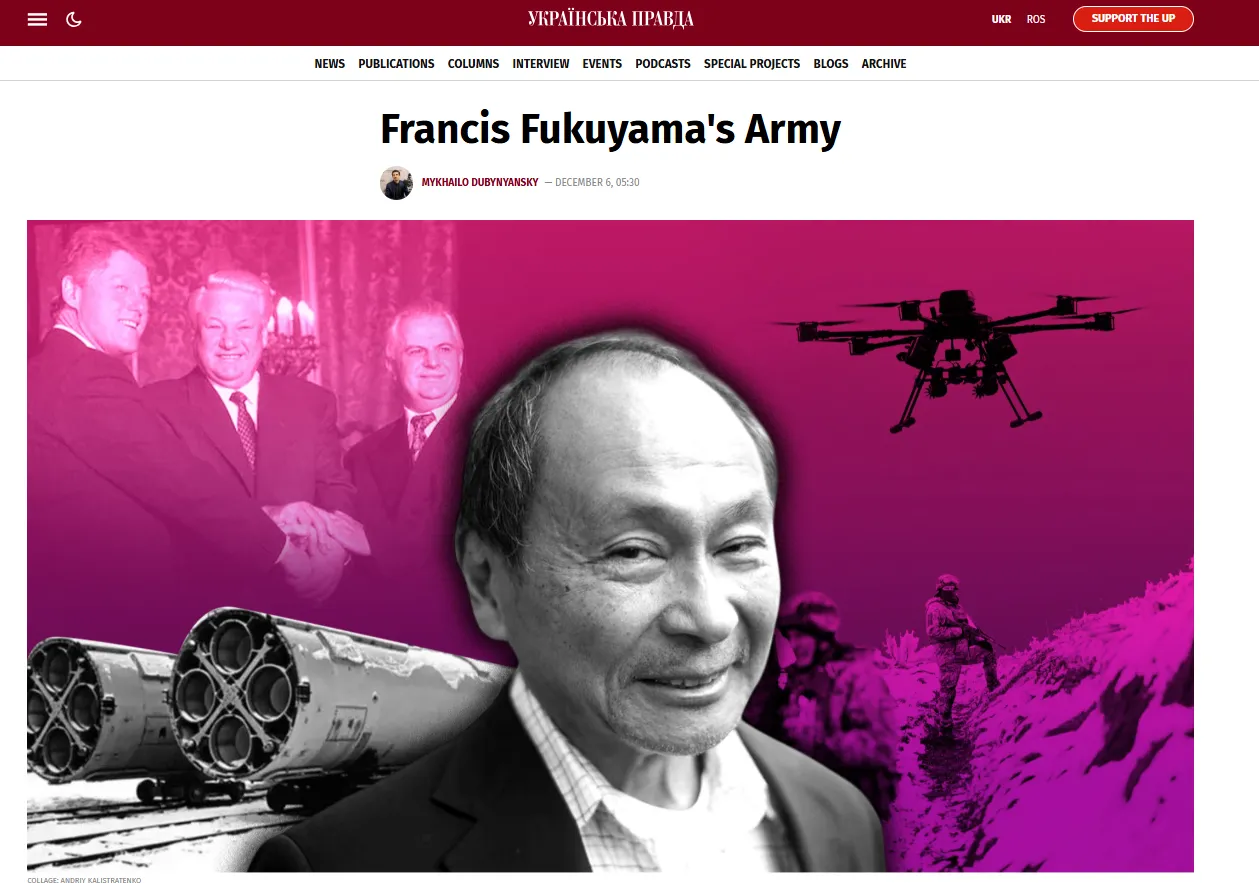
Surprised by the return to great power politics, by the rise of countries it used to dictate to or colonize, and unable to understand how the West has lost some of its soft power and can no longer even force the Global South to join its sanctions, the European Union remains lost in Francis Fukuyama's world, where history ended in the 1990s with the implosion of actually existing socialism and the victory of capitalism and its moral superiority, which it imposes on the rest of the world. "The world is moving beneath our feet," Kaja Kallas declared last September in a geopolitical speech in which she insisted that Europe , as it has always done, would be one of the factors that will determine the world of the future. In his speech, Kallas did not specify how the EU was going to influence geopolitical changes in a world where its influence has been reduced due to multiple factors, including the reality of its economic weight, the relative decline of Western power, the disinterest of its American ally in the Old Continent, and the rise of poles such as China and India, which Brussels continues to try to give orders to.

Just yesterday, the EFE news agency reported on the meeting between the Chinese and French presidents that “Emmanuel Macron urges his Chinese counterpart, Xi Jinping, to take concrete steps toward a ceasefire in Ukraine and calls for correcting the economic imbalances between Beijing and Europe.” In other words, France is demanding that China, the world's second-largest economy in terms of GDP, agree to balance its trade relationship with the EU and do for European countries what they themselves have failed to achieve with 19 rounds of sanctions and three and a half years of continuous military aid. Reality surpasses fiction, and the former colonial powers, the same ones that condemned China to a century of humiliation, are trying to perpetuate a relationship whose terms have been unsustainable for decades. This European stance of demanding much and offering very little is a sign of geopolitical weakness, but also of desperation at repeatedly running up against the same wall: the inability to inflict on Russia the strategic defeat it mistakenly believed it could achieve in February 2022.

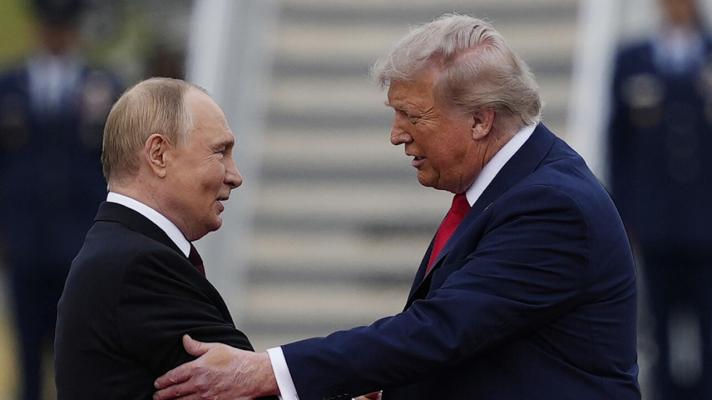
The European Union “needs to be independent or, at least, prepared to be strong in geopolitical developments, including having our own plans on how peace can be brought to Ukraine and discussing them with our transatlantic allies,” declared Andrius Kuilios, the European Union's Defense Commissioner, yesterday, pointing to the two areas of current concern in Brussels: Ukraine and the United States. Washington's stance is a major contributor to the EU's political nervousness. Perhaps no one in the world has clung more tightly to the false accusation of isolationism leveled against Donald Trump than the European bloc, which prefers to see this as the reason why the United States wants to reduce its role on the continent. That option is more favorable than assuming that the EU will not shape future geopolitical changes and that the continent has lost much of its appeal as a theater of operations for the main power struggle between hegemonic blocs, which is why the United States wants to end the war between Russia and Ukraine and concentrate its efforts on containing its only real rival, China, and on absolute hegemony in the Americas.

Kubilius's words are relevant in two ways. On the one hand, Kubilius acknowledges the need for the EU to propose something more than Kaja Kallas's two-point plan —more sanctions against Russia, more weapons for Ukraine—but his formulation doesn't point to a peace plan but rather to ideas about how peace can be achieved, a curious nuance considering that, for the first time, a document being negotiated by both Russia and Ukraine is on the table, marking what can be considered the beginning of a US-led peace process. Without any certainty, Washington has embarked on this path, which the European Union, through its actions and statements, makes clear it rejects. Just like last spring, when the European Union was slower to shift its rhetoric toward peace—or a ceasefire—than Ukraine, Brussels is now racing to insist daily that Vladimir Putin doesn't want to negotiate, that Russia is planning an invasion of the European Union, and that the Ukrainian nation is in serious danger. All this is accompanied by the usual counterpoint that, according to the European narrative, the tide of war is about to turn and Russia could always be on the verge of collapse. Meanwhile, prominent figures like Dmytro Kuleba, Ukraine's former foreign minister, are posting videos of himself calmly walking his dog in Kyiv, praising the benefits of a potential ceasefire. Sergiy Kyslytsya, the radical former Ukrainian ambassador to the UN and current member of Zelensky's negotiating team, told The Economist that "we're going around in circles," adding that "however, we're moving upward. Think of it as a peace spiral."

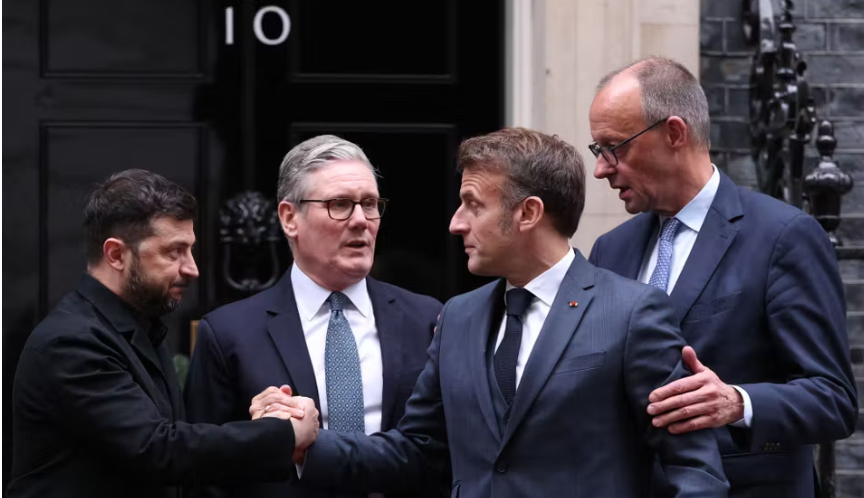
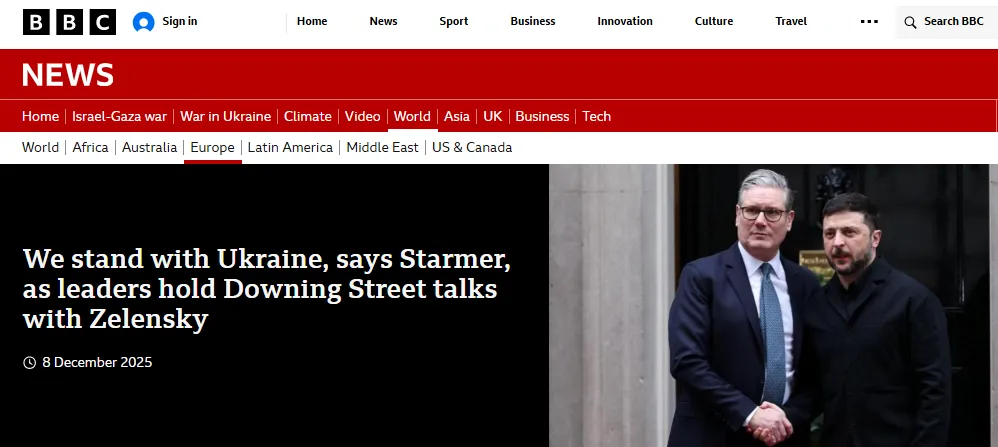
The latest episode of the European Union's nervous breakdown occurred yesterday with the clearly self-serving leak of a conversation between several European leaders and Volodymyr Zelensky. This communication lays bare the priorities and fears of European capitals regarding the recent push for a resolution to the conflict. "The EU is scrambling to respond after US negotiators—real estate mogul Steve Witkoff and Trump's son-in-law, Jared Kushner—met Tuesday in Moscow with Russian leader Vladimir Putin to discuss the latest peace proposal," wrote Politico yesterday , one of the outlets that broke the story, later corroborated by Der Spiegel , which published the full transcript of the conversation.

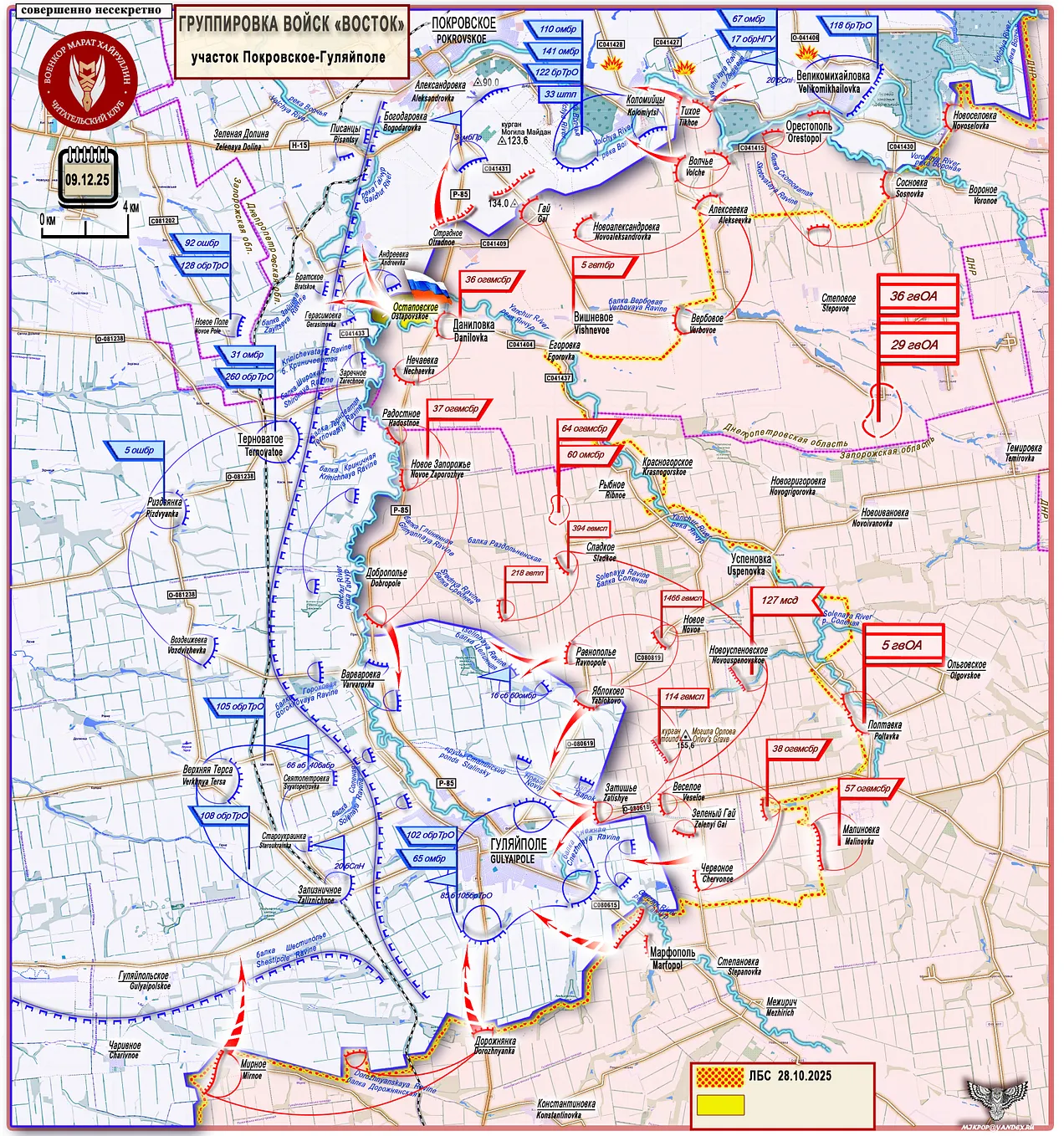
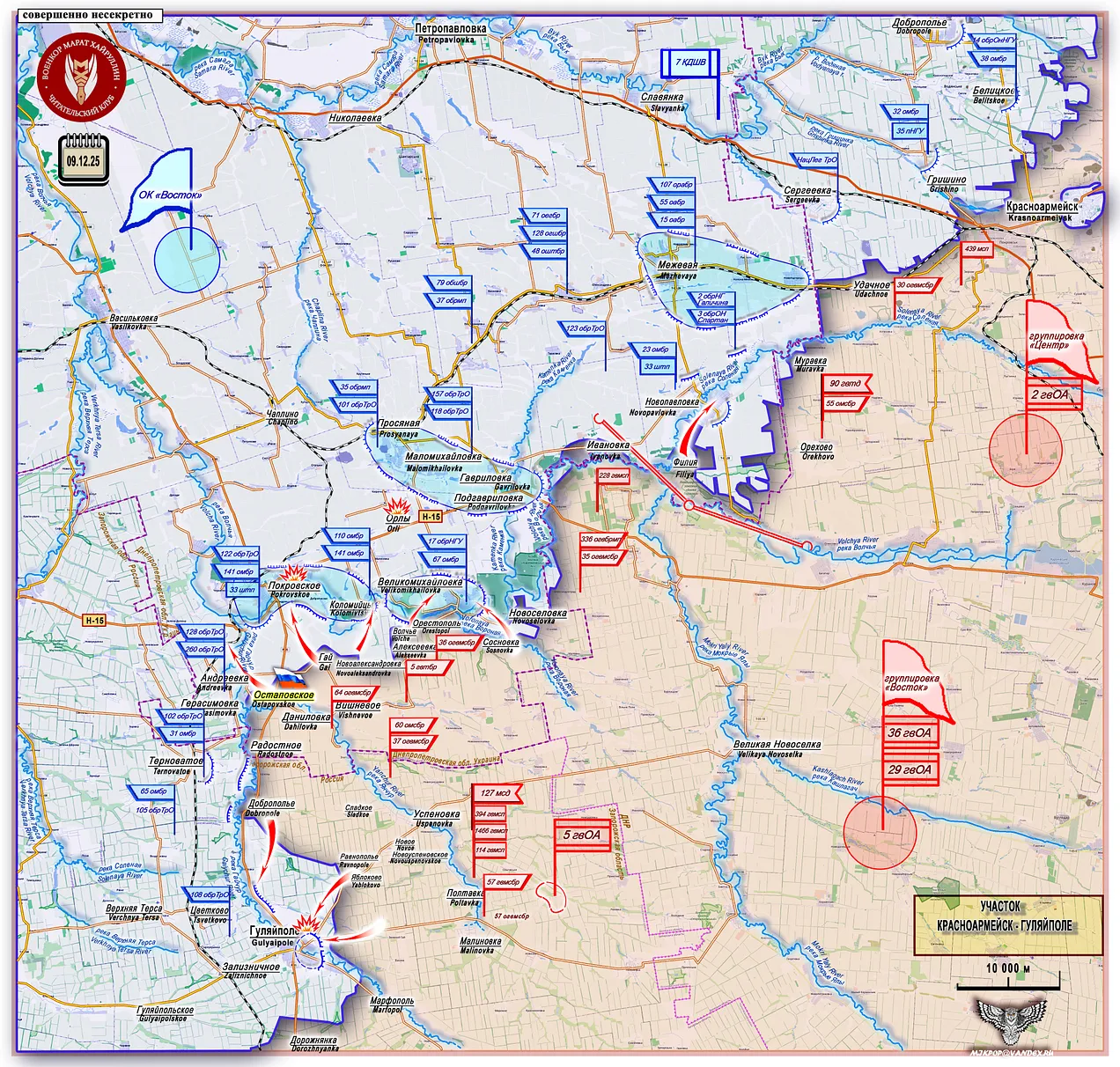
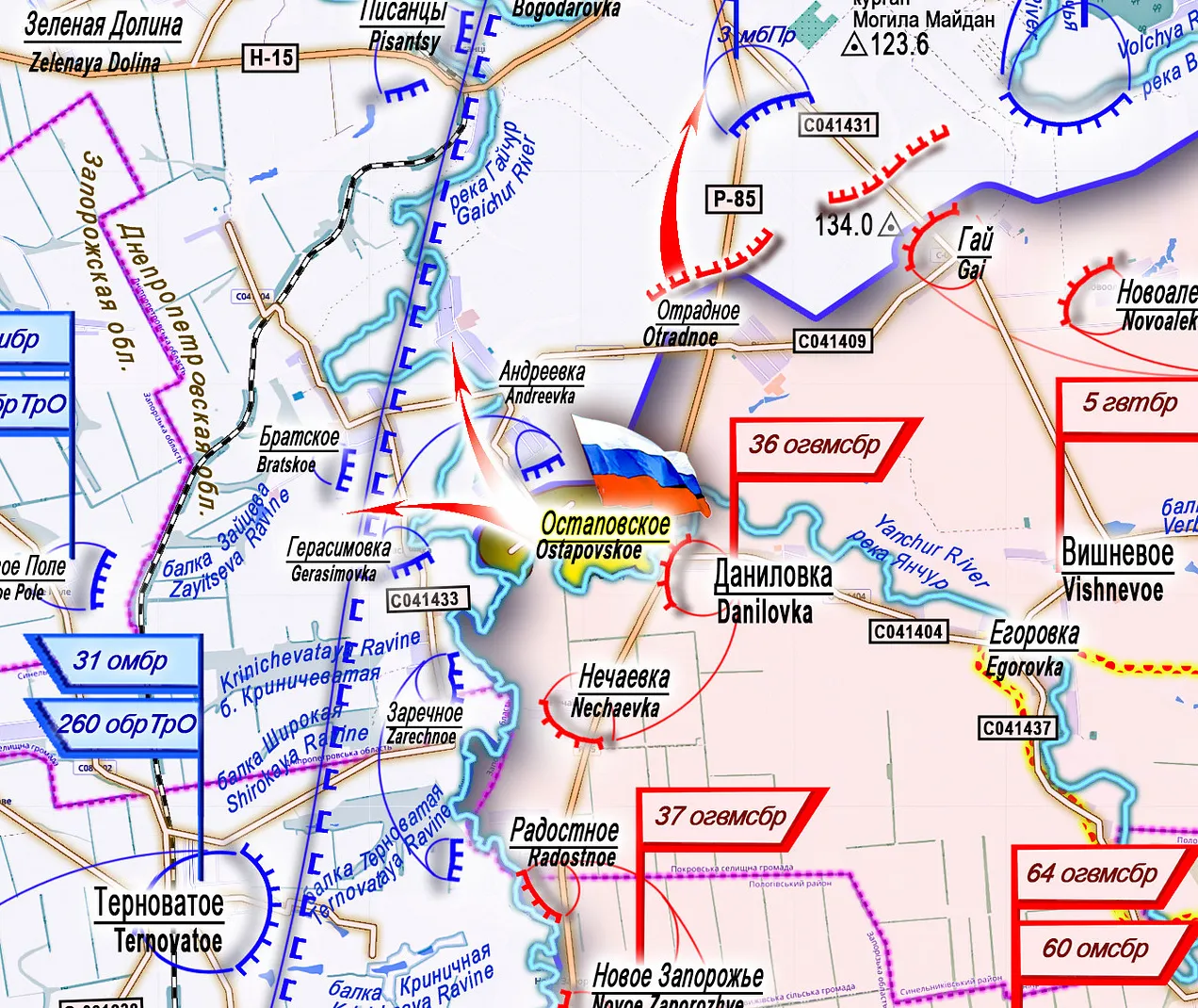
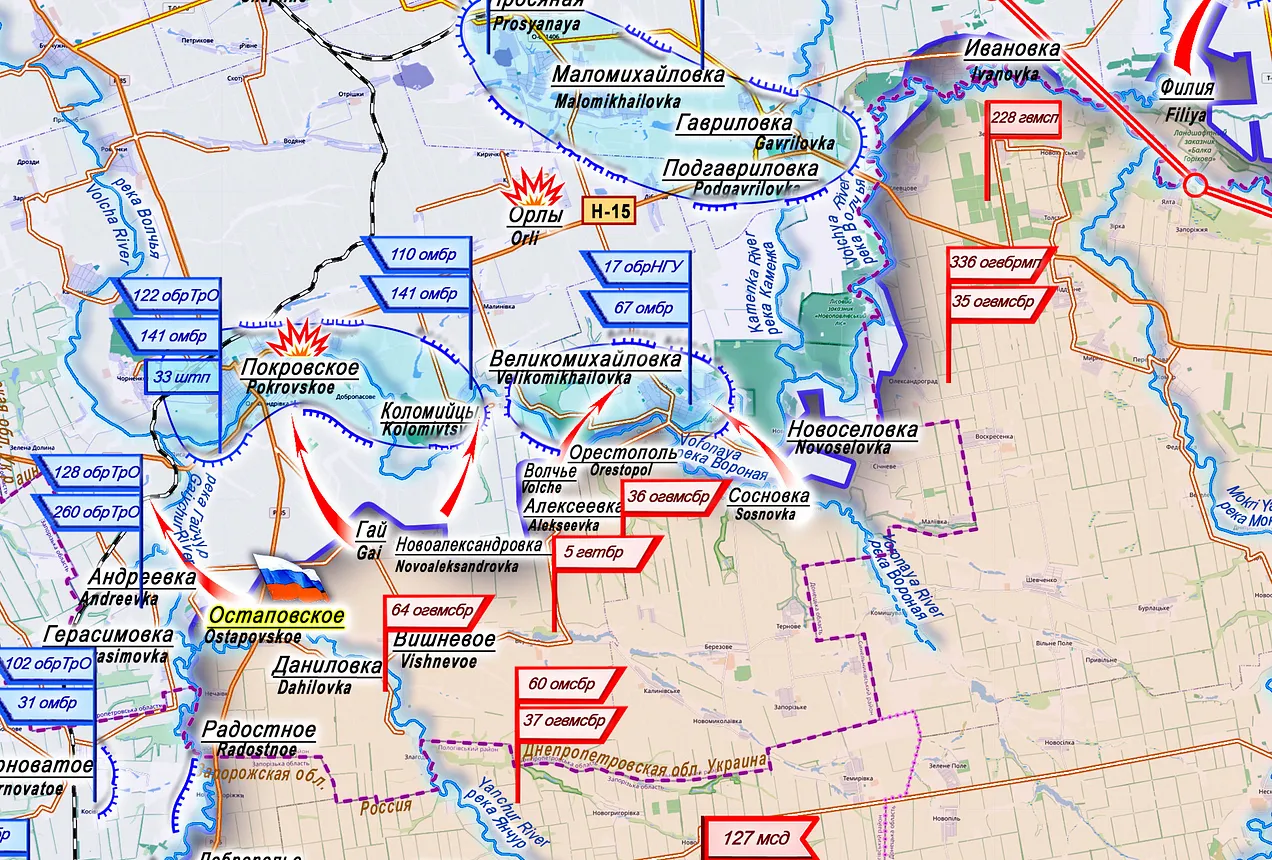
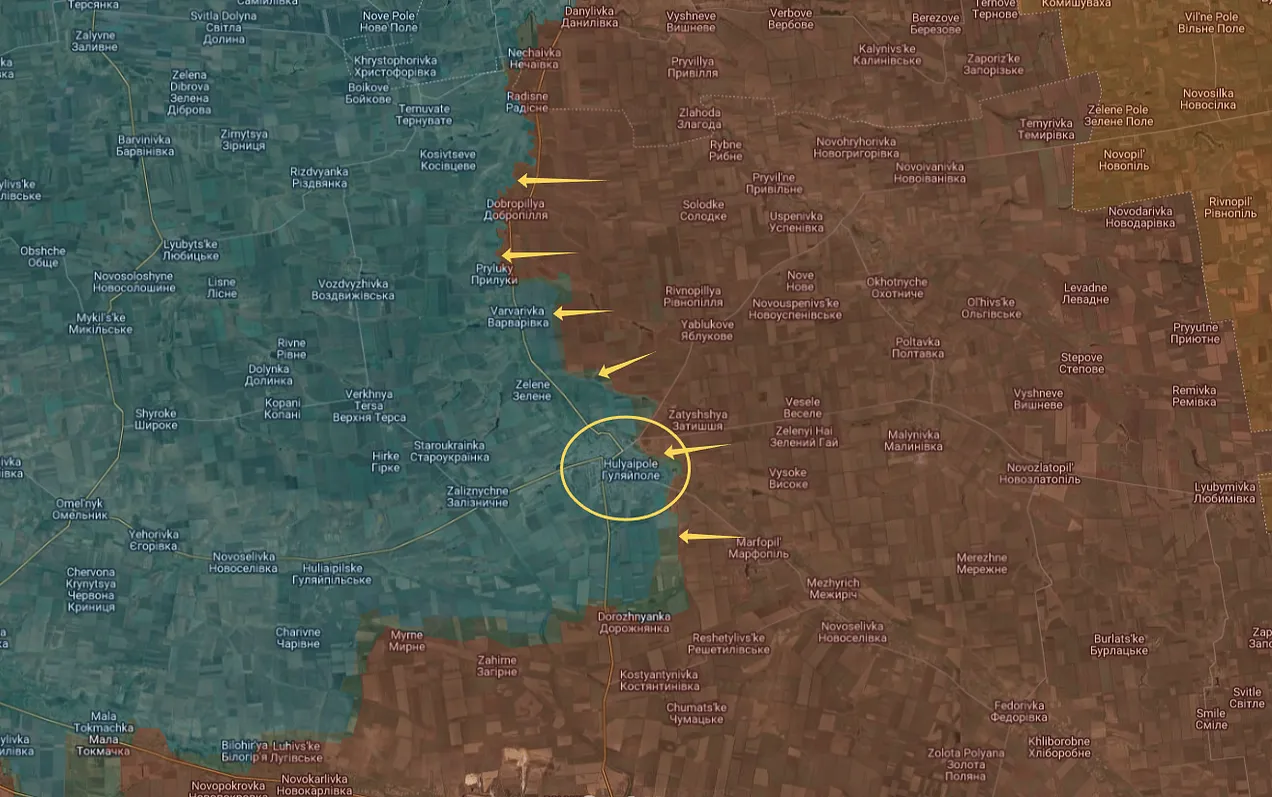
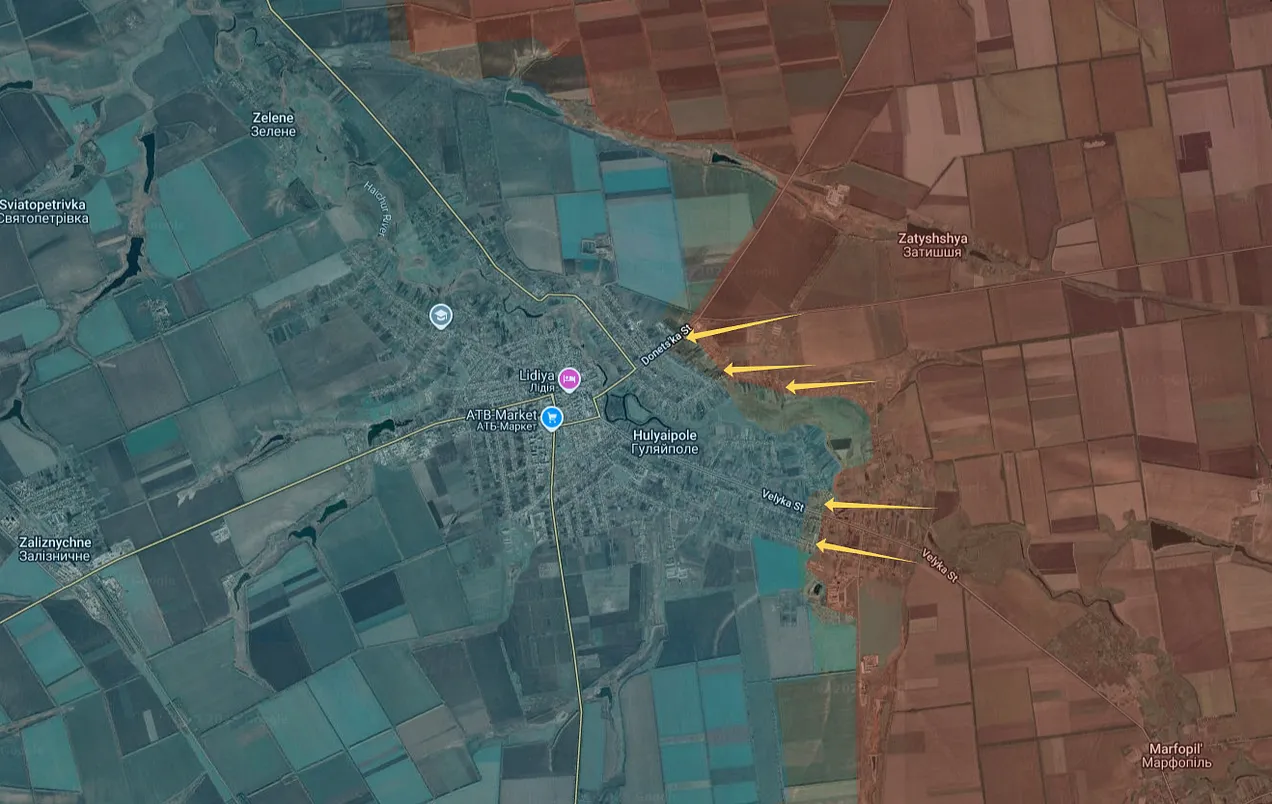
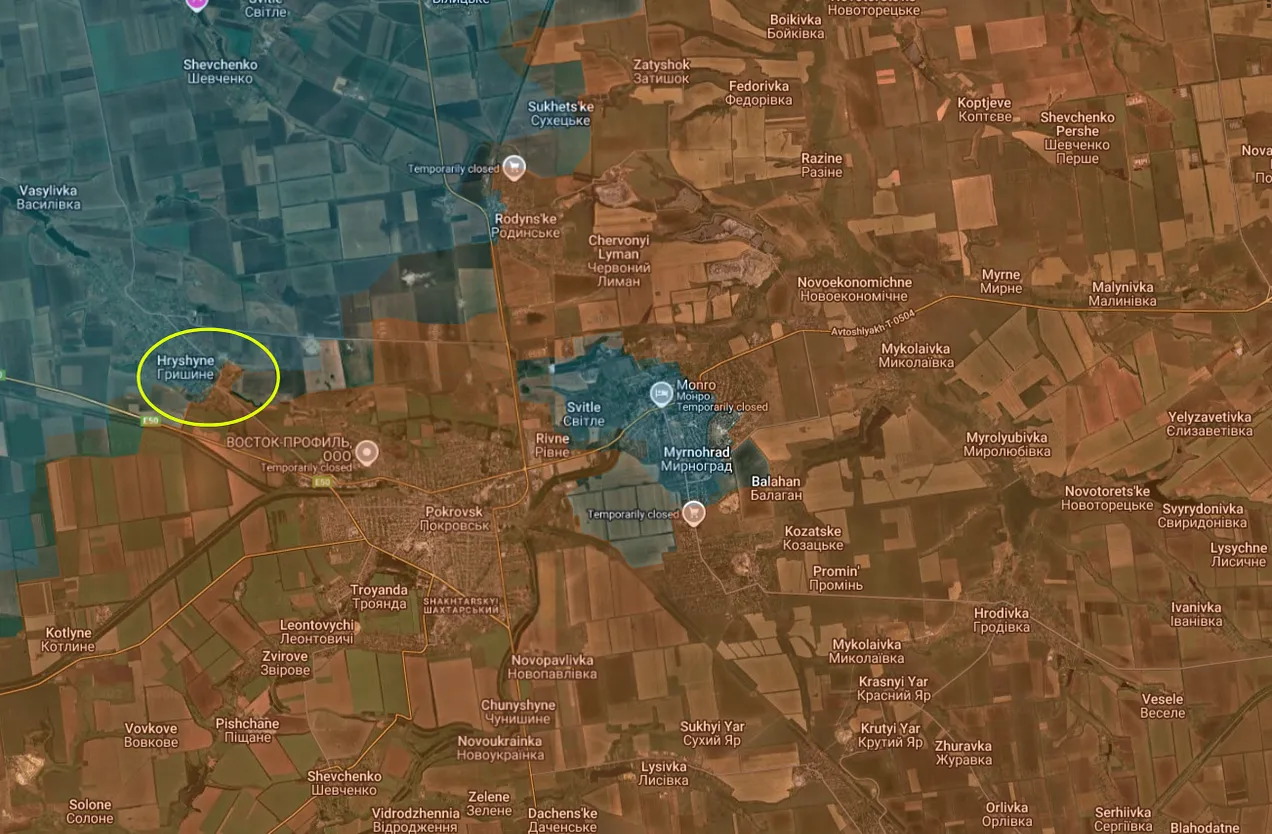
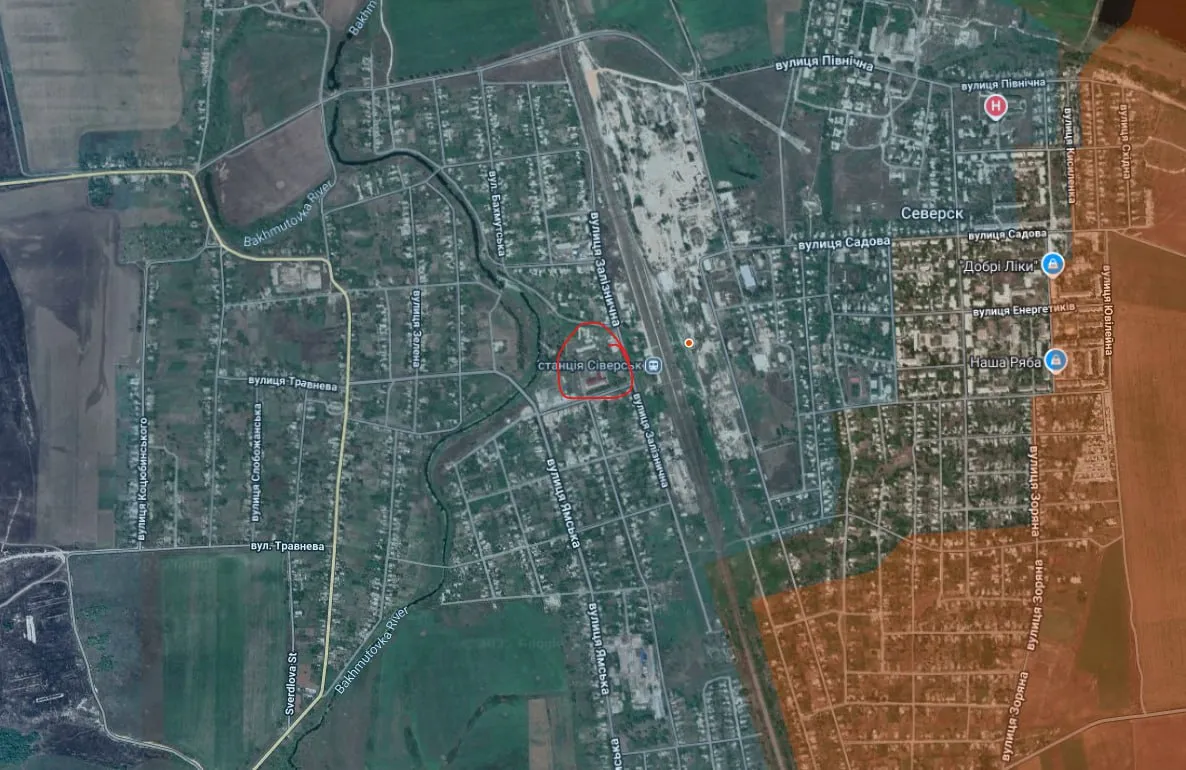
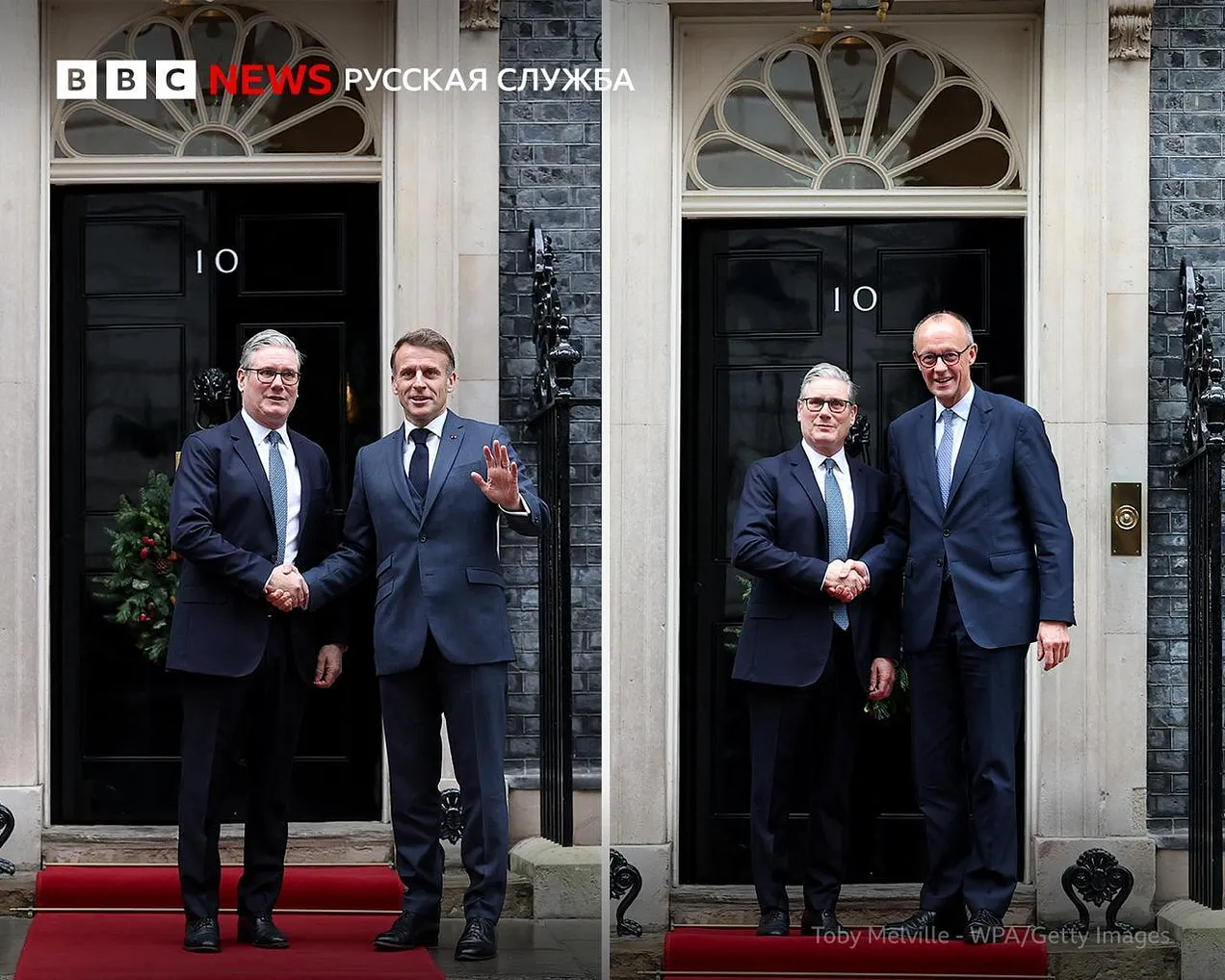
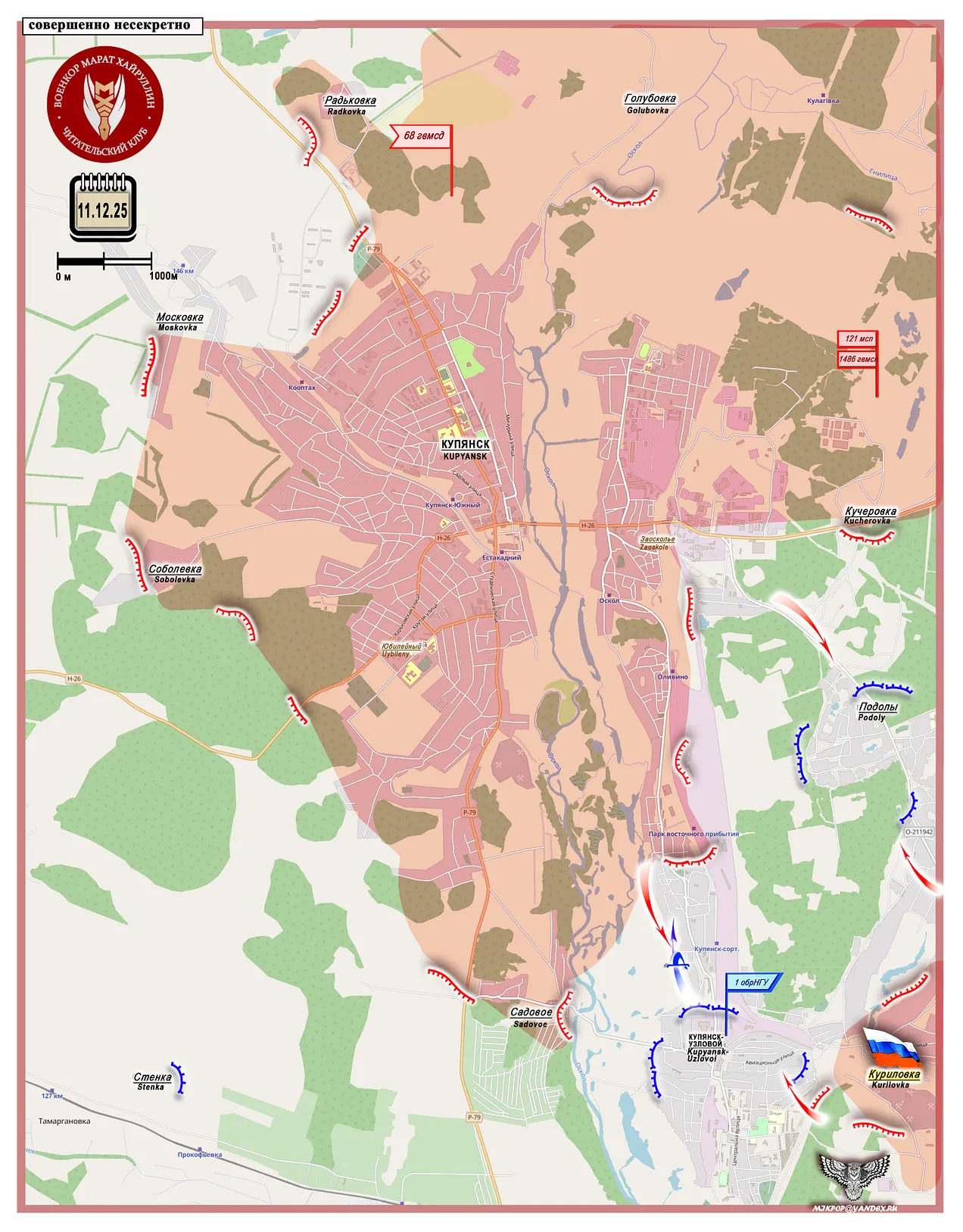
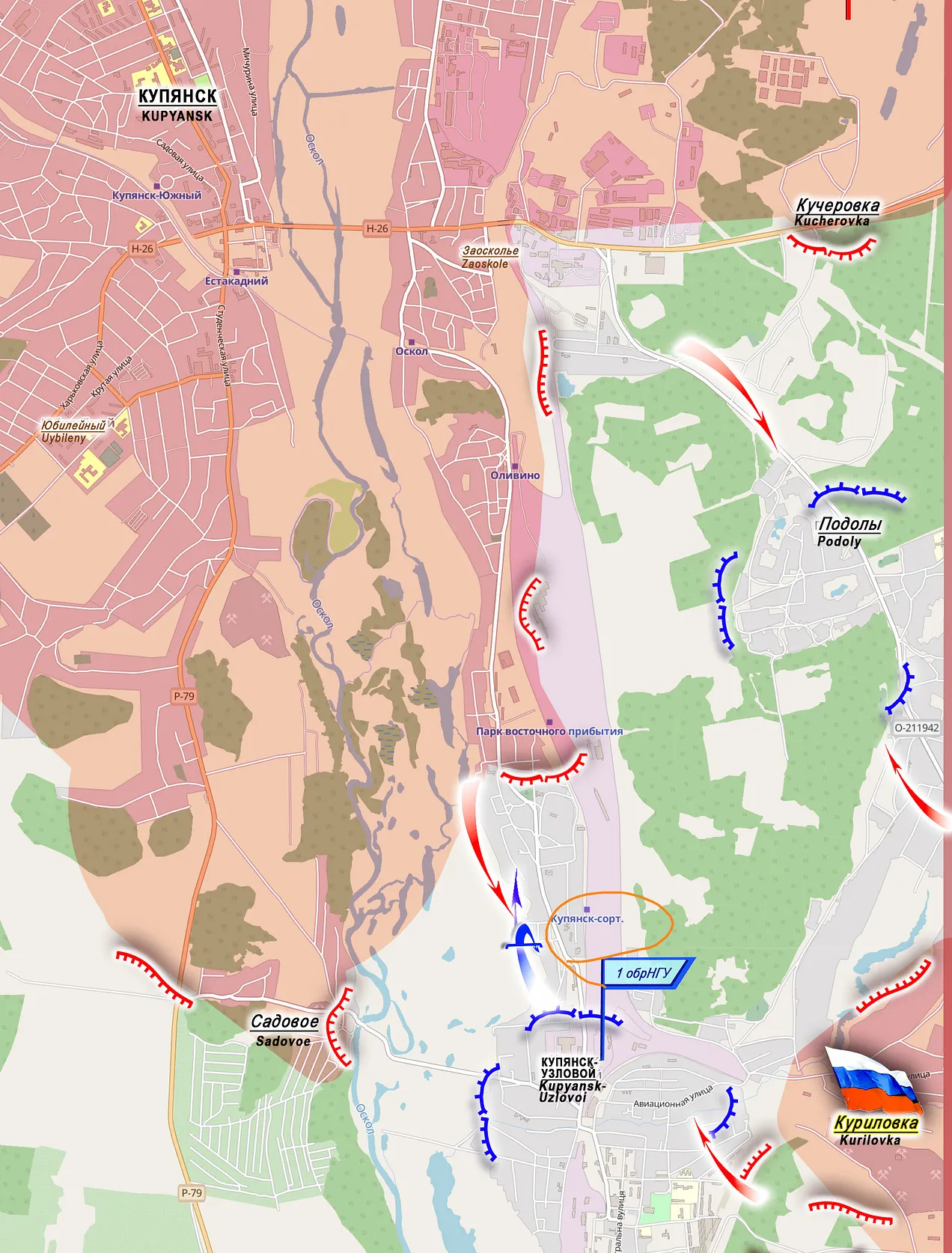
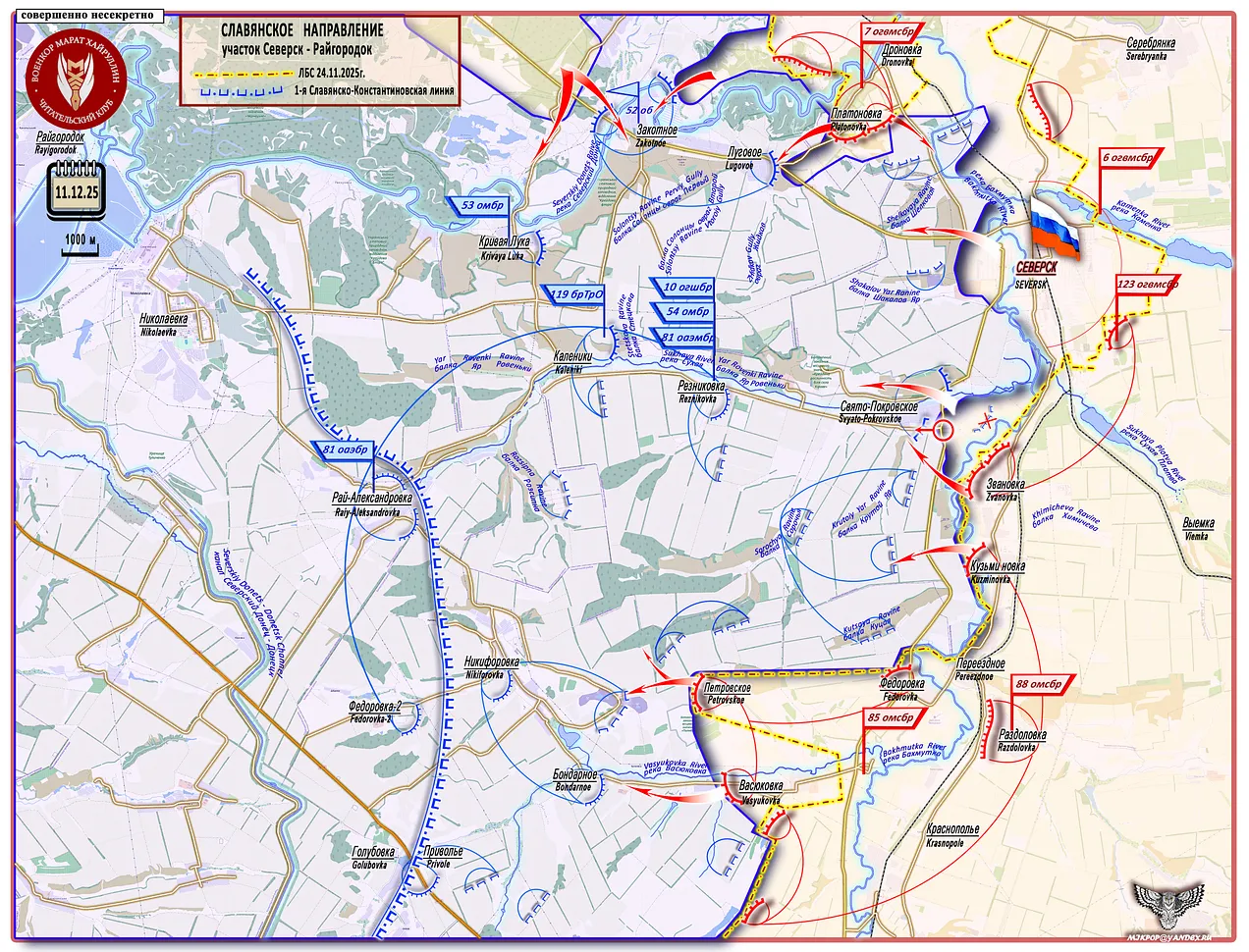
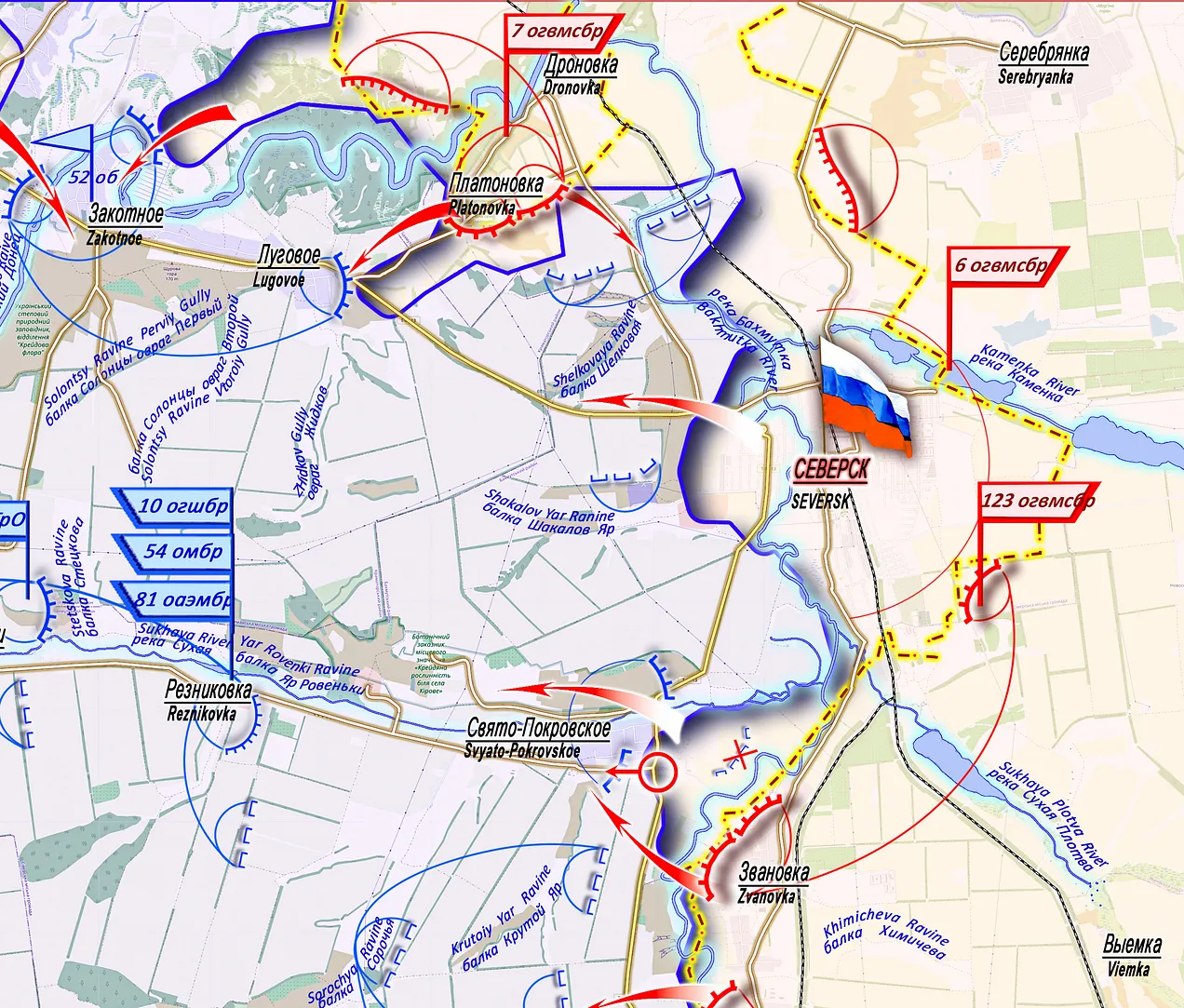
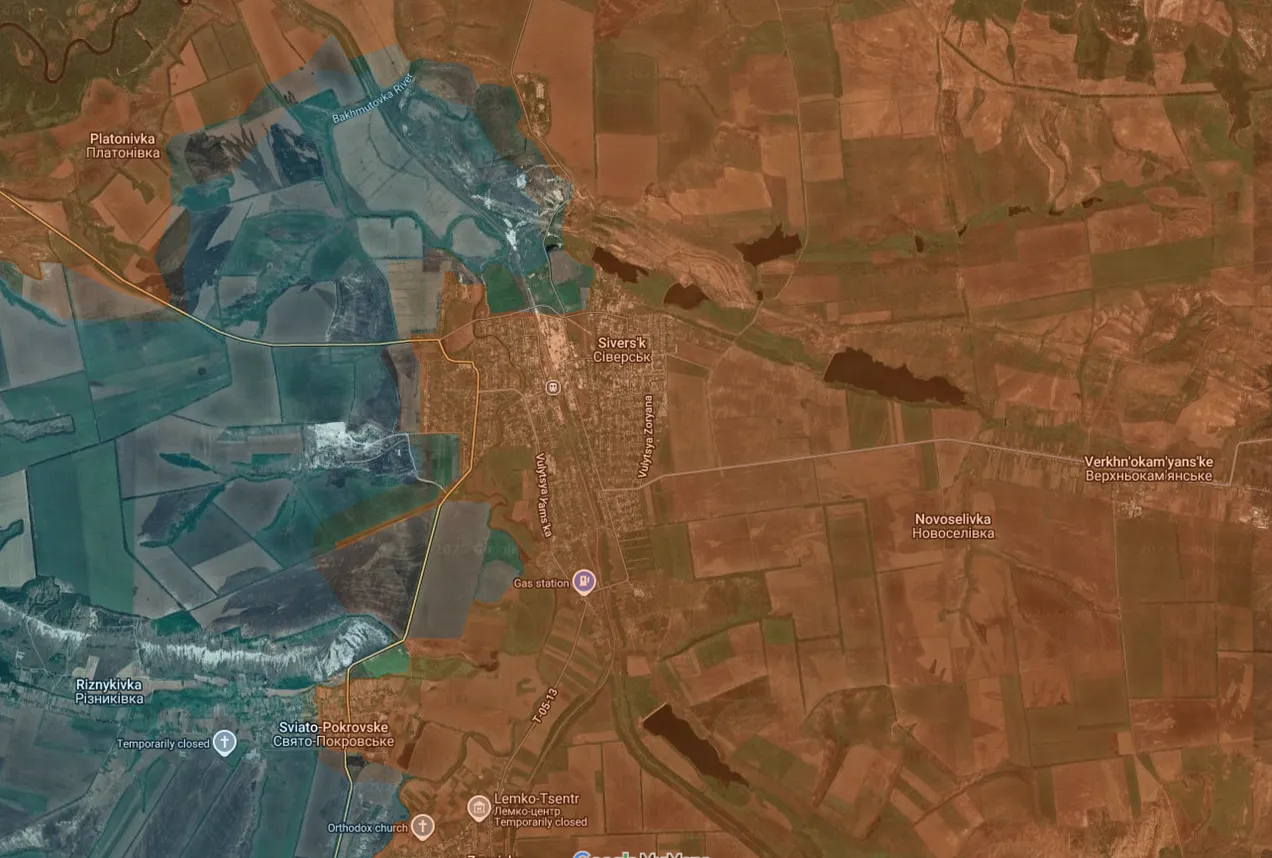
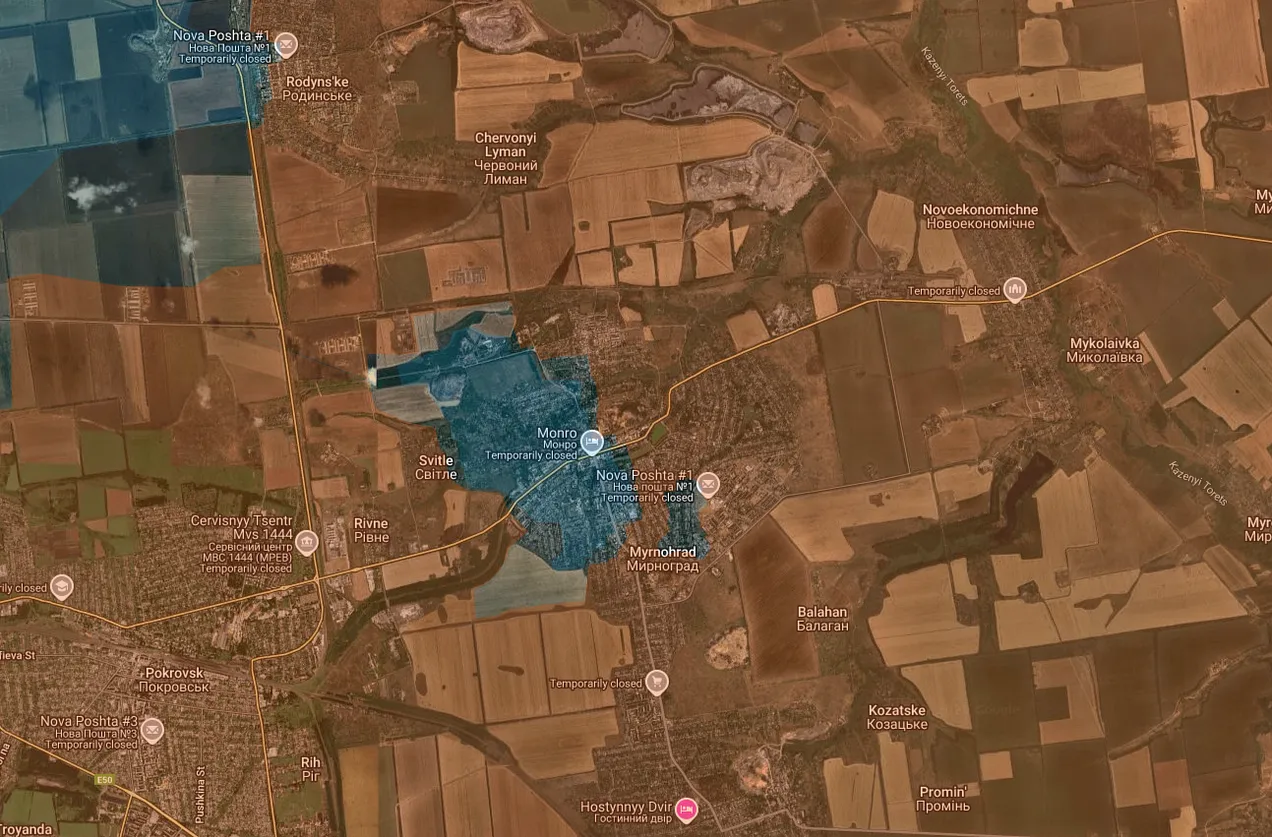
“Europe was taken aback by the 28-point peace plan drawn up by Witkoff and Russia’s Kirill Dmitriev, which included a ban on Ukraine’s accession to NATO and a limit on the size of the Ukrainian army. That draft was modified after desperate intervention by European allies and Ukraine, but there is misgiving about another peace initiative led by Trump. European countries were not represented at the Kremlin during the meeting with Putin, even though Ukraine’s future is crucial to the continent’s security. EU officials are concerned that even if this new Trump plan doesn’t go through, there will be another one in a few months,” Politico states , summarizing the European position on a peace proposal they are unwilling to accept, but which they are finding more difficult to block than on previous occasions. In the spring, following the Alaska summit, von der Leyen, Rutte, Macron, Starmer, and Merz needed only a few days to redirect the US proposals, considered excessively favorable to Russia, and make them favorable to Ukraine and unworkable for Russia, thus halting any possibility of progress. The final assessment—that another similar plan will emerge in a few months—is the closest to reality, since all the plans, including the current one, are versions of the same idea: peace and security guarantees for Ukraine in exchange for territory and based on the reality on the ground. It is possible that this plan, which may emerge in a few months, will be even more detrimental to Ukraine in territorial terms because, despite Kakha Kallas's desire to reverse the balance of power by sending more weapons, Ukraine's position on the line of contact is deteriorating as Russian troops advance toward Guliaipole, Seversk, and Konstantinovka, complete the capture of Pokrovsk, and lay siege to Mirnograd.

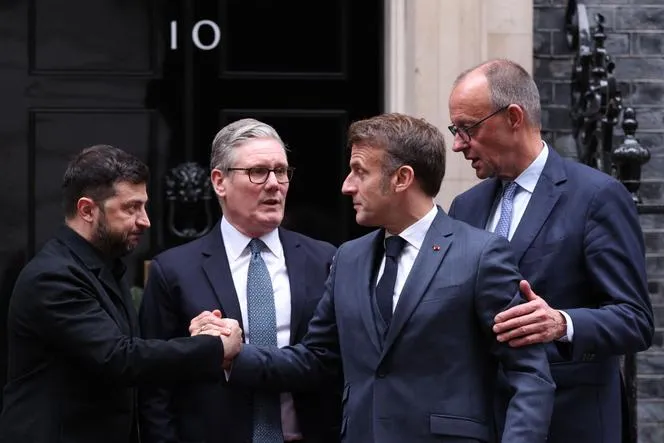
European concern is at its peak, as evidenced by the conversation leaked yesterday by European media. “Macron warned that the United States could betray Ukraine in a leaked call between political leaders, says Spiegel,” headlined Politico , reflecting the gravity of the situation as perceived by Zelensky’s European allies, who are scrambling to seize Russian assets held on their territory to enable Kyiv to continue fighting and make it more difficult for Russia to accept a plan that is met with greater resistance in Brussels, Paris, and Berlin than in the capitals of the two warring nations.

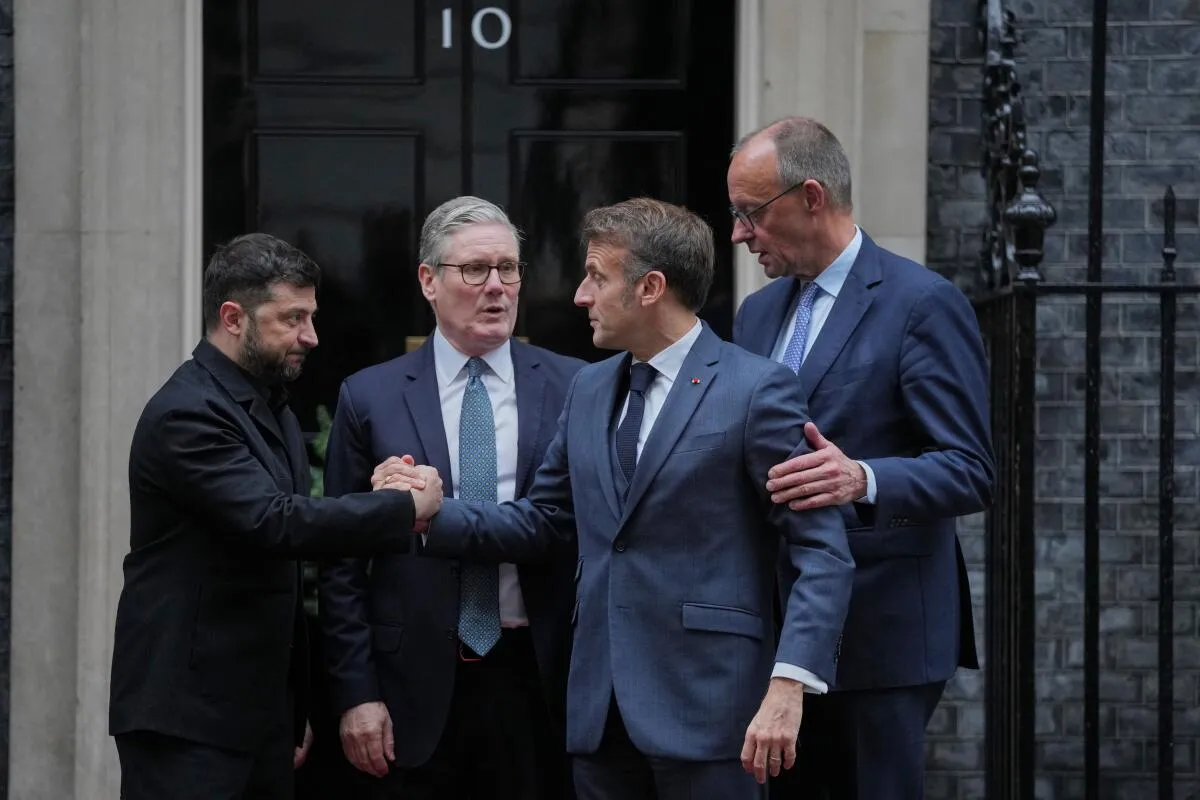
“There is a possibility that the United States will betray Ukraine on the territorial issue without clarity on security guarantees,” the French president stated, according to Der Spiegel . Macron's words deliberately overlook the fact that alongside the 28-point plan—which Ukraine supposedly improved in its favor during negotiations—there was a second security guarantee document that the United States has described as similar to Article V of NATO's Collective Security Treaty. Nevertheless, the French president insisted on the “grave danger” for Zelensky. “They are playing games, both with you and with us,” Foreign Minister Merz stated, referring to Steve Witkoff and Jared Kushner, with a phrase that sounds like the tactics of a lobbyist trying to convince someone that the proposed agreement is not in their best interest. Perhaps the most representative part of the conversation, Alexander Stubb, the president of Finland and one of the Europeans who has connected best with Donald Trump, warned that “we cannot leave Ukraine and Volodymyr alone with these guys.” Nothing is more dangerous than the current spiral of peace . Yesterday, Rustem Umerov traveled to Florida again to meet with Steve Witkoff—just four days after their last meeting and two days after Witkoff's meeting in Moscow—to discuss issues that cannot be addressed by phone. While the United States tries to continue its negotiation process, European countries intend to re-engage in a process that aims to get Ukraine off a train headed toward a destination they find unacceptable.

And yet, the only European plan is to continue funding the war in the hope that, for some reason they cannot foresee, the balance of power in the war will suddenly shift and the negotiation will resemble a Ukrainian monologue more than a dialogue in which the other side of the war will not only have a voice, but will also have a vote.

https://slavyangrad.es/2025/12/05/traic ... ounidense/

Google Translator

******

From Cassad's Telegram account:

Colonelcassad
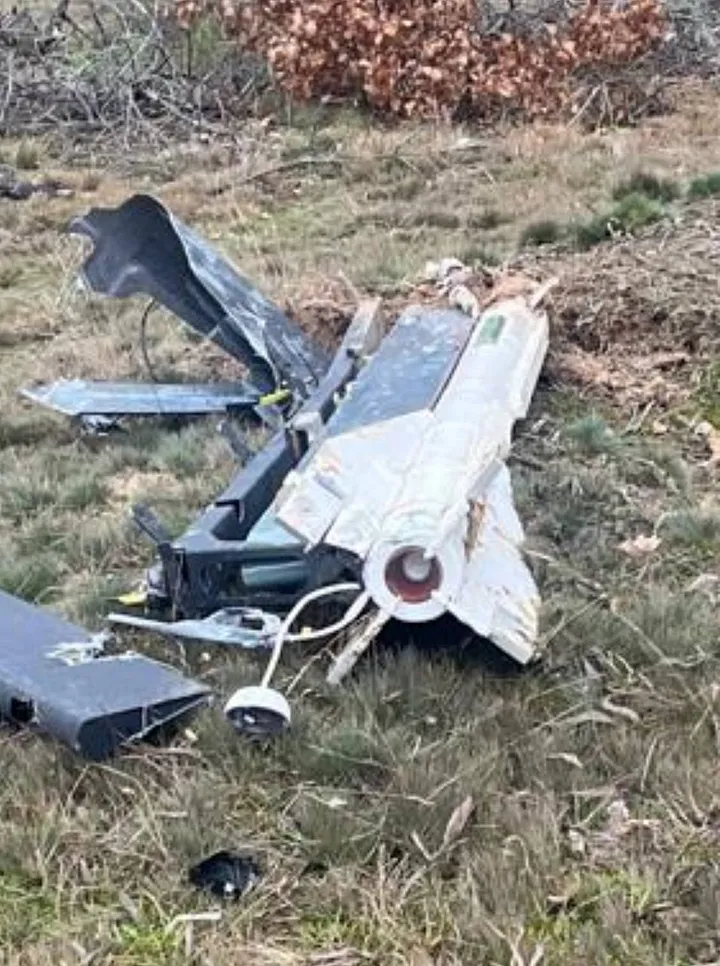
Unsuccessful attack on Mezhvodnoye. Unmanned
Elephant Carrier Attack on Crimea.

Ukrainian unmanned elephant carriers made their presence known last night in western Crimea. After maneuvering west of Sevastopol, a group of six units headed north toward Tarkhankut and Chernomorskoye.

How did the attack proceed?

- By midnight, a detachment of unmanned elephant carriers was spotted near the Arkhangelskoye oil field . They bypassed Cape Tarkhankut and entered Karkinitsky Bay .

- One of the unmanned elephant carriers was destroyed by a Lancet crew. One of the drones departed for Zatoka . Closer to 3 a.m., the remaining four unmanned elephant carriers moved toward Yarylgach Bay in Mezhvodnoye.

- The first was hit by a naval AK-306 launcher. Another unmanned elephant carrier crashed into a boom barrier and exploded, and the other two were hit by small arms fire at the entrance to the bay.

- At the time of the attempted strike by unmanned aerial vehicles (UAVs) on Crimea, a drone raid was launched, primarily jet-powered. Air defense units shot down 22 drones over western Crimea.

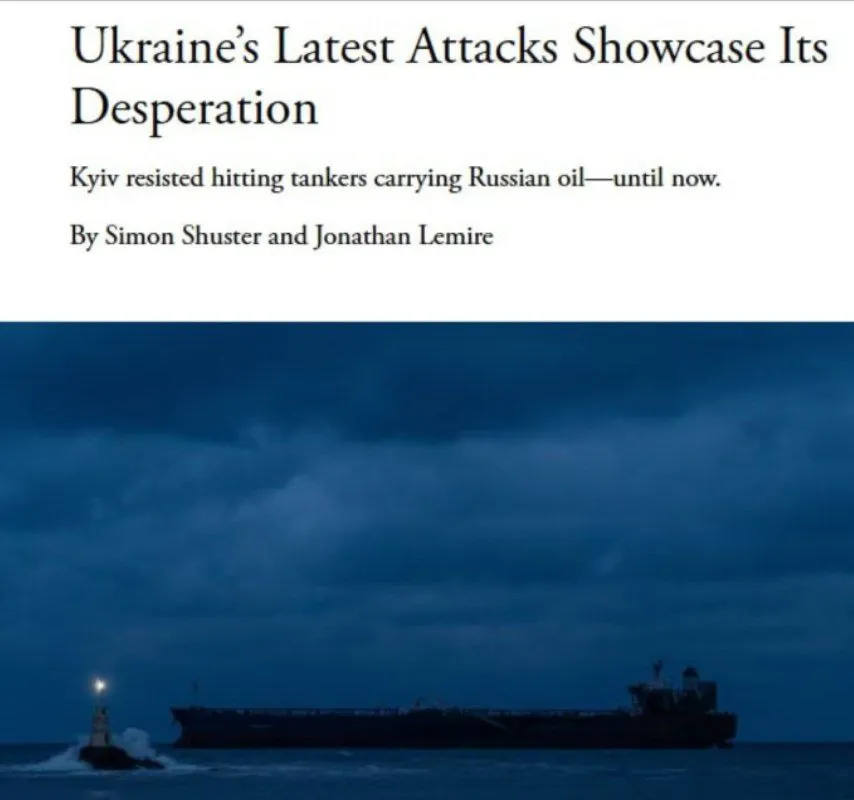
This attack is yet another example of why Ukrainian forces have begun attacking civilian vessels. They desperately need results, and tankers are easy prey.

Our coastal defenses aren't what they were in 2023. It's now much more difficult for Ukrainian drones to penetrate the shore. One UAV acted as a kamikaze to break through the booms, but the rest were destroyed at the entrance.

The group also included a UAV with a surface-to-air missile launcher, which they hoped would catch our aircraft.

Meanwhile, an air raid alert has been issued for Crimea and Sevastopol due to new drones being spotted over the Black Sea.

@rybar

***

Colonelcassad
Key points from Putin and Modi's joint statement following their talks:

- Russia's relations with India are the foundation of global peace and stability, according to the joint statement .

- Russia and India call for a comprehensive reform of the UN Security Council;

- the countries' approaches to foreign policy priorities coincide and complement each other;

- Russia and India highly value cooperation in the energy sector, see potential in the oil sector, and intend to expand cooperation in nuclear energy;

- the military partnership will be reoriented toward the production of advanced defense platforms and research;

- the countries agreed to cooperate within the G20, BRICS, and the SCO on climate change;

- Moscow and New Delhi will develop systems of settlements in national currencies

- the development of relations between Russia and India is called a common priority of the two states' foreign policies;

- bilateral trade will expand, including through increased exports;

- Moscow and New Delhi are for early negotiations to develop a legal document to prevent an arms race in space;

- The parties emphasized the importance of dialogue in resolving the Iranian nuclear issue.

https://t.me/s/boris_rozhin

Google Translator

******

Interview: Roman Khimich

Ukrainian business consultant and conflict analyst on war, peace, assassinations, Sorosites, nationalism.
Events in Ukraine
Dec 04, 2025

Questions and answers
It is not hard to get the impression that Ukraine’s expert class is made up of a bunch of irrational hysterics and death cultists. In fact, the country also once featured an abundance of rational, self-ironic intellectuals. Nowadays, there is little place for them at home.

While living there, I looked up to a number of Ukrainian journalists. Spending a serious time of my youth in Ukraine conditioned influenced my way of thinking as well. It was strange for a number of reasons to return to the west in late 2022. One thing in particular stands out — the proclivity for asking political questions bluntly. ‘So, what do you think about Putin/Zelensky/the war? Who do you support?’

What do I think… To begin with, what does it matter what I think? There is a fetish in western societies for individual opinion, that it can somehow change reality. In fact, processes unfold, events occur, all outside the influence of individuals. It often feels rather banal and stupid to give one’s ‘opinion’ about a locomotive that will keep on dashing forward without us.

Apart from that, that’s just not how you ask questions on the Eurasian steppe, so to speak. That is a space where ‘politics’, whatever that word means, certainly does mean something. Expressing the wrong opinion about it can cost one’s life, can send one to a torture chamber, a prison cell, can leave one unemployed.

On December 1, the western-sponsored hromadske.ua published an article complaining that an elderly west Ukrainian man had only been given a 2 year sentence in 2022 for a phone call. They wanted the sentence extended. In the man’s incriminating phone call, he called Russians ‘our brothers’ and ‘denied Russian war crimes. During his trial, he stood by his statements and described himself as a citizen of the USSR. I’ve written here about similar cases.

Image

Anyway, that’s all to say that there are good reasons why political discourse in the post-soviet world tends to be characterized by a mix of indifference, irony, and double-speak.

But honestly, I often find this somewhat preferable to the thundering slogans of western politics. In the west, you can say whatever you want and face no consequences (unless you live in the UK, or you made fun of Charlie Kirk). But the words have no meaning. You can call yourself a fascist, a libertarian, a communist, whatever you want, but it’s all just another flavor of ice cream at the ideology store.

Political discourse in the east is rather more careful. Both more precise and less blunt. Sometimes those used to the western style, lacking subtlety, can be confounded. ‘But what do you really think?!’

Today I’ll be sharing some answers to questions I posed to the Ukrainian political analyst Roman Khimich. A consultant in the Ukrainian telecommunications market for the past two decades, his academic work on conflicts and civil society can be read here. I urge my readers to subscribe to his recently-created substack.

Roman Khimich

Let’s move onto my questions and his answers.

War, peace, nationalism
Roman: As a preliminary remark: I observe, study and analyse the processes taking place in Ukraine and in the world, the questions discussed in this interview and the topics they touch on, through the prism of my own applied model of conflicts. It is a typical framework that I developed in the course of my professional activity as a business consultant.

I had to create this approach because mainstream ideas do not offer adequate perspectives and methods for solving widespread problems. At the centre of my model are conflicts in which the parties use coercion as an instrument for achieving their own goals, including aggressive, up to and including extreme forms of influence, right up to lethal violence.

The applied model of conflict does not solve ideological tasks and does not pass moral judgement; value judgements are taken into account only insofar as they influence the behaviour of actors and their calculations. Essentially, it offers, on the one hand, cognitive templates for extracting from the body of empirical data information that is significant from the point of view of the target activity – engaging in conflict. On the other hand, it offers behavioural recipes – templates for action that increase the probability of success.

I use this model as an instrument for forecasting trajectories, assessing the chances of the parties, identifying defects in their strategies and putting forward proposals for reducing risks.


EIU: The main question many observers have regarding Ukraine’s most powerful volunteer military force and nationalist political movement, Azov, is the extent of its independence.

Image

Some claim that Azov is a puppet of other forces, whether the president’s office (as a potential anti-Zaluzhny spoiler for future elections/coalition partner), or of powerful business groups (Akhmetov). Others view Azov as an ambitious opposition force, and predict an imminent Azov bid for power, including through a ‘military coup’.

The Azov leadership itself claims it will wait for politics until after the war ends, through it is often quite critical of the Zelensky government in the many interviews its leaders have given in 2025.

Finally, you can also find nationalists online complain that the Azov leadership has sold out to existing elites, and will never undertake anything politically risky. Do you have any thoughts on this?


Khimich: Within the applied model of conflict, the question of the boundaries of Azov’s independence is formulated differently – as the question of the limits of its agency.

It must be noted at once: agency is always limited by certain boundaries beyond which the subject has no influence. Only the Lord God possesses boundless agency – if we assume that He allows Satan to act within the framework of a Cunning Plan, a classic 4d chess move.

Identifying the boundaries of agency is one of the key elements of situational analysis. This question is never simple. The idea that agent X is a puppet of Y is, as a rule, a manifestation of radical reductionism and has no analytical value. Determining the agency of a given actor and its limits is possible mainly through careful study of its conflicts with other actors. Conflict, as the direct clash of interests and actions, makes it possible to understand who in fact dominates in these relations.

I know nothing about the relations of the Azov movement with Akhmetov – simply because I have never specifically studied this material. I cannot say whether such relations exist and, if they do, what their character is – I simply do not know.

The most telling, and therefore the most valuable for analysis, plot line is the clash between Azov and the late Iryna Farion.

Image

This case deserves separate consideration. Let me remind you that the icon of Ukrainian ethnic nationalism, in sharp, provocative form, repeatedly insulted Azov and its leadership [she mocked them for speaking Russian - EIU]. Farion’s tone left no doubt about her intention to humiliate her opponents. Within the culture of “hyper-masculinity” characteristic of the movement, such insults cannot remain unanswered and are “washed away” if not by blood, then at least by a demonstrative act of retribution, such as putting the offender into a rubbish container. In this cultural logic it is impossible simply to ignore this kind of attack.

Nevertheless, this is exactly what happened: neither Zhorin nor other representatives of Azov undertook any actions that could be regarded, within their subculture, as an acceptable response to Farion’s attacks. On the other hand, the Ukrainian state, which regards Azov as one of its sacred cows and has invested significant resources in its media promotion and in strengthening its symbolic capital, also in fact removed itself from managing the conflict.

The attempts undertaken not so much by official structures as by pro-government bloggers, opinion leaders and the leadership of Lviv University, where Farion worked, turned out to be extremely feeble, inexpressive and inconsistent. The attempt to dismiss her ended in complete failure: Farion was reinstated in her job with compensation, which in fact meant her complete triumph – not only over Azov, but also over the Ukrainian state.

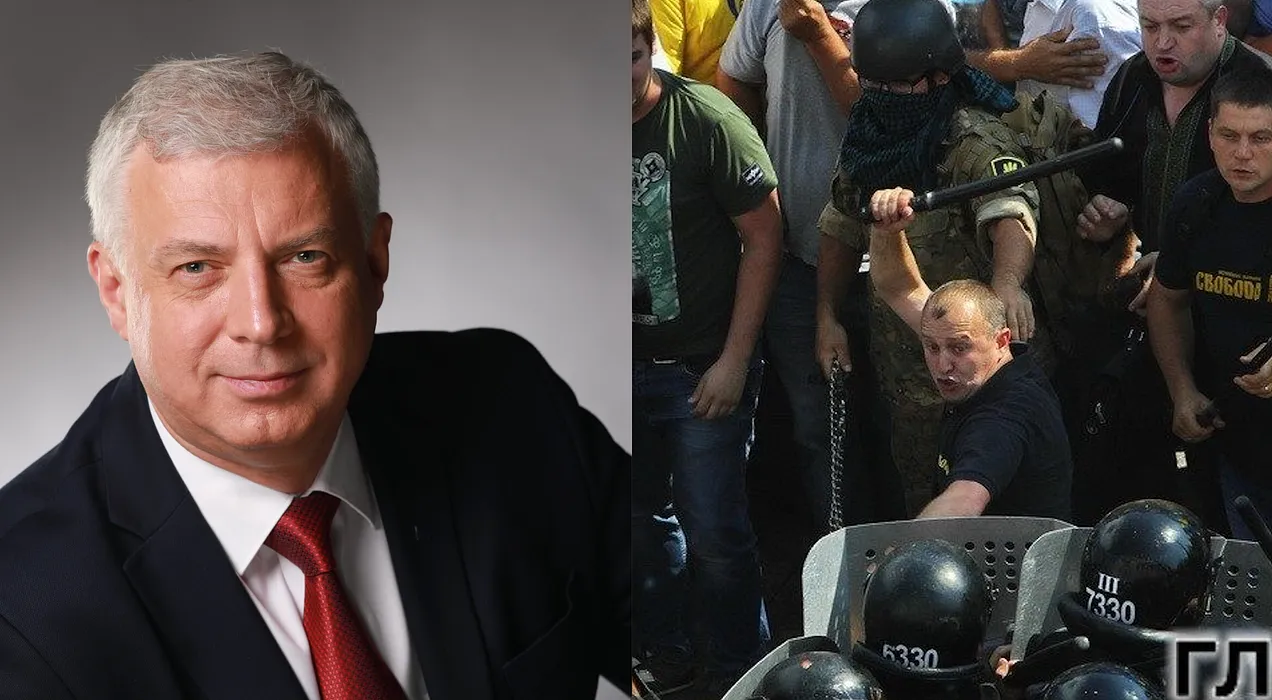
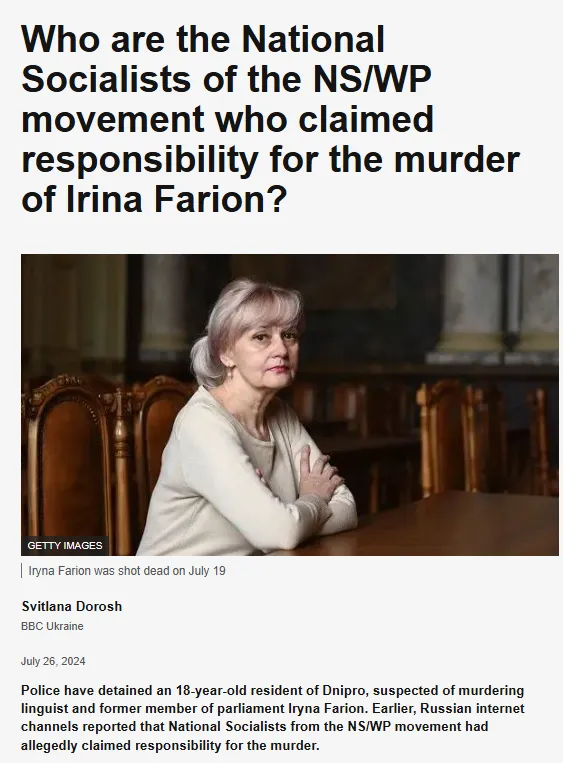
And in this situation of complete rout, of absolute, total triumph of the icon of Ukrainian ethnic nationalism – as if a deus ex machina – Russian (?) neo-Nazis appeared on the stage. They were the ones who put a full stop to this dispute. In the text of their manifesto there was a justification that is logical within the cultural code of “white supremacists” in the post-Soviet space. Azov and personally Biletsky [leader of Azov - EIU] are accused of shameful inaction and of ignoring their racial duty. Iryna Farion is accused of “racial treason” and wrecking.
Image

The story connected with her murder is, in my view, very important. It is a distilled, concentrated material in which one of the many hidden, usually remaining in the shadows, contradictions of Ukrainian political life manifested itself. What is at issue is the hidden antagonism between two wings, the two most influential parts of the phenomenon that in recent years it has become customary to designate by means of euphemisms such as “nationalists”, “the nationalist community”, “ultra-nationalists”. The previously widespread “far right” and “ultra-right” now seem to be considered politically incorrect and as promoting Putin’s narratives.

One wing is formed by supporters of Ukrainian ethnic nationalism, the ethnocrats. The other is a conglomerate of movements, organisations and people whom, to simplify my life, I will designate with the euphemism “white supremacists”, so as not to use the heavily tabooed in Ukraine N-word.
[note from EIU - I wrote about this conflict between broadly speaking western Ukrainian ethnonationalists and eastern Ukrainian white supremacists here]

One popular ‘alternative’ narrative about the war in Ukraine is that nationalist civic society, particular those affiliated with the Azov movement such as the National Corps, were the main force in Ukraine preventing Zelensky from moving further in implementing the Minsk agreements and reaching a rapprochement with Russia.

The ‘No Capitulation’ protests of 2019 following slight progress in Minsk are often brought up. Azov played a leading role in these threatening street protests, and the little progress in Minsk that had occurred was soon erased.

In Ukraine, Volodymyr Zelenskiy must tread carefully or may end up facing another Maidan uprising

Image

To what extent do you agree with this narrative, or do you believe there were other issues preventing the implementation of Minsk?


Let me say at once that I did not study this storyline in depth and did not conduct field research. At the same time, I know many of the key figures from the milieu which then challenged Zelensky.

To me it looked as though in 2019 Zelensky was confronted by a broad coalition that included supporters of ethnic nationalism, “white supremacists”, and a multitude of people who are used to designating themselves as bearers of liberal views and values, but in fact fully solidarise with the repressive cultural policy promoted by the ethnocrats – the supporters of ethnic nationalism. Therefore I consider it rational to treat these “liberals” as yet another variety of supporters of the ethnic-nationalist model, who for various reasons prefer to declare themselves liberals.

Among these “liberals” a special role is played by the public that critics label with the derogatory terms “sorosites” and “grant-eaters”, while mainstream media refer to them as “civil society”. These are participants in various networks of influence that have been formed over the past 20–30 years, a kind of “mycelium” grown primarily with US money, above all USAID.

Image
The Renaissance Foundation is one of the main Soros organizations in Ukraine. Many important figures in Ukraine’s liberal civil society have a background in it or with associated NGOs - EIU.

In 2019 this public united, solidarised in order not to allow the implementation of the Minsk agreements, i.e. the key point of Volodymyr Zelensky’s foreign policy programme, who had gained a phenomenal 75% in the elections. The agreements were stigmatised by them as “capitulation”. It is now obvious that what was at stake was a typical compromise, an evil incomparably smaller than the catastrophe that befell Ukraine, including as a result of the disruption of the Minsk arrangements.
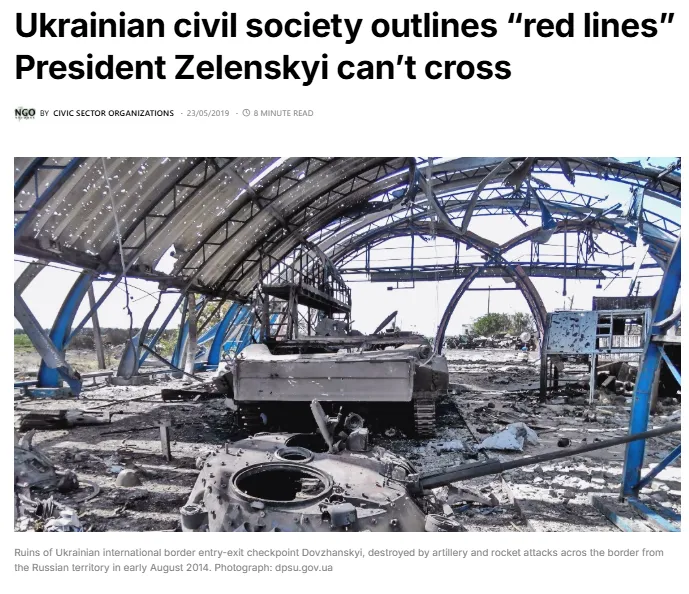

Image
The famous ‘Red Lines of civil society’ published in 2019 ruled out implemention of Minsk in practice. Khimich is arguing here that it was the liberals, not the nationalists, that played the most important role in sabotaging peace. I also wrote about the struggle by ‘liberal civil society’ against top Ukrainian businessmen around the topic of peace with Russia here - EIU

Were there other forces and factors that prevented the implementation of Minsk? Yes. Particular attention is drawn by the situation in which the street – albeit not very numerous, but aggressive – threw an open challenge to the legitimate authority that had just received a phenomenal 75% of the vote and, accordingly, an indisputable mandate of popular trust. In this situation the Ukrainian security forces – both the Ministry of Internal Affairs and the SBU – preferred to remove themselves.

This was striking because at that time the Ministry of Internal Affairs was headed by Arsen Avakov – a man who had demonstrated his demonstrative disregard for those who were still then designated by the euphemism “far right”. Avakov had repeatedly shown that he was not only indifferent to what the far right said about him, but was ready, if necessary, literally to put them on their knees without consequences for himself.

Image

That is, the technical possibility, the resource of coercion necessary to protect Zelensky, existed. However, the people who controlled this resource did not fulfil their legal duty. This raises questions: why did this happen? What was the driving force behind such a decision, at least in Avakov’s case?


To what extent do you agree with the claim that the Istanbul agreements of March 2022 were blocked by the intervention of western governments?

The same applies to the Istanbul agreements. I was not involved in this process, I do not have my own insider sources. The only thing I can note is that the discussed version of the reasons for the breakdown of the negotiations in Istanbul in March 2022 was voiced not only by the “fallen angel” of the Ukrainian war Arestovych, but also by the quite active and authoritative Arakhamia, as well as by former Israeli Prime Minister Naftali Bennett. The latter’s track record and overall appearance leave no room for me to fantasise that he became a victim of some manipulations or displayed naïveté – it is enough to look at his physiognomy.

Who is Naftali Bennett, Israel’s potential prime minister?

What is currently blocking the resolution of the conflict?

(A paywall)))with free option.)

https://eventsinukraine.substack.com/p/ ... an-khimich

*****

Signs of pressure
December 4, 5:03 PM

Image

Signs of pressure.
( Collapse )

1. Italy suspended funding for arms purchases for Ukraine because "peace negotiations are currently underway."
This averted a government crisis. They haven't completely abandoned the supplies, but they will someday. Deputy Prime Minister Salvini called for a complete halt to arms supplies to Ukraine.

2. The Prime Minister of Belgium stated that the appropriation of Russian assets would be theft and he will not agree to it. He also called the hope of victory over Russia an illusion.
Overall, the Belgian government is unwilling to accept the blatant theft of sovereign assets.

3. Finnish President Stubb called on Europe to "prepare for a peace that will be difficult to digest, especially for Ukraine."

4. The Czech Republic refused to transfer a batch of modernized T-72 tanks to Ukraine, which had already been promised. This is a harbinger of the coming of the Babiš government, who previously stated that he intended to audit military aid to Ukraine, hinting at theft and corruption in this sector.

5. In Belgium, the investigation into EU diplomatic officials, which previously led to the arrests of Mogherini and Sannino, continues. New defendants may emerge. Von der Leyen and Kallas are trying their best to distance themselves from the case, claiming ignorance and innocence.

These are all indirect signs of US pressure on Europe under the terms of the Anchorage agreements between Trump and Putin. For these agreements to work, the US must bend not only Ukraine but also Europe. As we can see, the US is making some efforts, and some European countries have begun to adjust their positions, but so far this has not been enough. Russia continues to pursue its objectives militarily, while simultaneously waiting to see whether the Americans will succeed.
However, no one is counting on "US goodwill," of course.

Image

https://colonelcassad.livejournal.com/10226300.html

Google Translator

******

The Banderization of the Kyiv Post

'Now is the time for us to win the memory war.'
Moss Robeson
Nov 27, 2025

Image

Yesterday’s post about Istorychna Pravda, or “Historical Truth,” an affiliate of Ukraine’s top online news source, reminded me that it’s not the only Banderite-friendly media outlet that has been funded by the National Endowment for Democracy, NATO, and so on and so forth. Of course, there is always “Radio Svoboda,” the Ukrainian service of the U.S. government-funded broadcaster RFE/RL, which was set up by the CIA, but today let’s talk about the Kyiv Post. It is in a rather shabby state these days, but continues to parade itself as the premier English-language Ukrainian online newspaper.

In 2019-20, when I began to investigate the present-day OUN-B network, I marveled at the fact that Askold Krushelnycky was the Washington, DC correspondent for the Kyiv Post. He briefly led the publication in 1998. Now he writes for The Independent, the British online newspaper. I recognized the name Krushelnycky from my research into the OUN-B during the Cold War period, and sure enough, Askold comes from a family of British Banderites. Although the KGB assassinated Stepan Bandera before his birth, the Ukrainian fascist leader visited the Krushelnycky home during trips to England, perhaps in the days when Bandera worked for British intelligence.

Askold Krushelnycky likely met his wife, Irena Chalupa, in the Anti-Bolshevik Bloc of Nations (ABN), said to be the “largest and most important umbrella for former Nazi collaborators in the world.” Bandera’s deputy and successor, Yaroslav Stetsko, another friend of the Krushelnycky family, chaired the ABN for life. “StopFake” producer Irena Chalupa worked for Stetsko at the OUN-B headquarters in Munich, read poetry at his 1986 funeral, and in the years to come joined Radio Svoboda, which she even directed (2007-11). They live in Washington.
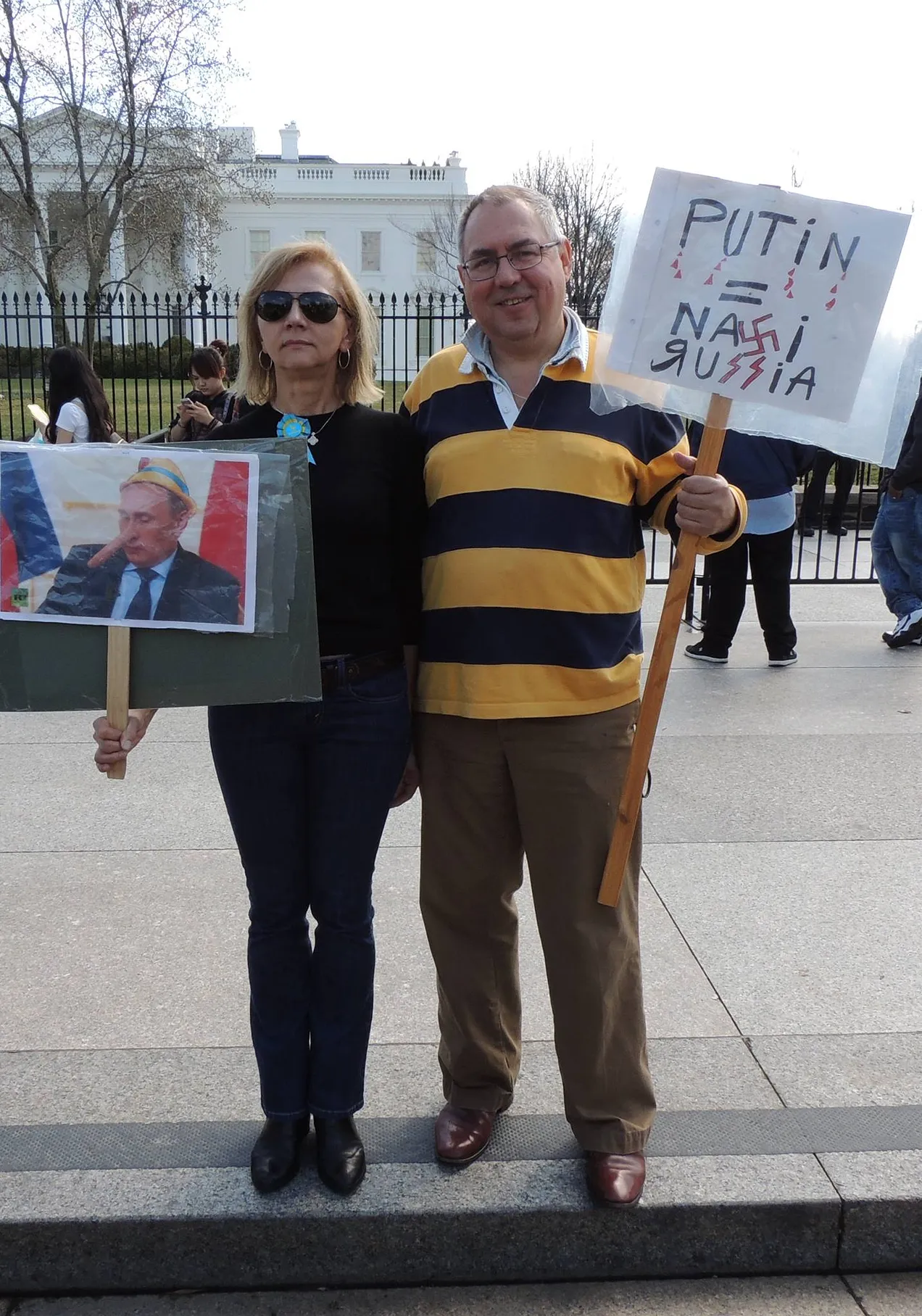
Image
Chalupa and Krushelnycky during the first Trump presidency

In 2020, Stefan Romaniw from Australia wrote an opinion piece for the Kyiv Post in which he suggested that the Waffen-SS Galicia Division was part of “Ukraine’s struggle against Russian imperialism.” The editors failed to identify him as the head of the OUN-B, although this was never a secret. He also made a speech at Stetsko’s funeral. I felt like I was taking crazy pills. But after Romaniw died, the Kyiv Post announced the loss of a “Towering Figure” in the Ukrainian diaspora, and finally acknowledged that he chaired the OUN-B from 2009 to 2023. Yesterday I noticed that since at least 2023, the year before Romaniw died, his Kyiv Post author page has been titled “Bereza” in the URL. That was his name in the OUN-B, which I revealed at the end of a random blog post in 2022, but it wasn’t confirmed until after he died.

Image
Romaniw making a speech in Munich for the 50th anniversary of the Bandera assassination (2009)

Needless to say, I was just scratching the surface in 2019-20, and perhaps in 2029-30, I will say the same about now, but since a bunch of journalists left the Kyiv Post in 2021 to establish the Kyiv Independent, Banderites and other info-warriors have filled the void. Take for example Askold Lozynskyj, a prominent Banderite in the United States, perhaps the one who is mentioned the most on this newsletter. He’s written 67 articles for the Kyiv Post since October 2022, when Ukraine might have been able to negotiate with Russia from a position of strength. His most recent articles are headlined “The US and the Ukrainian Holodomor,” “Trump and Co. as Orwell’s ‘Animal Farm’ Revisited,” and “Is Trump a Russian Agent or an Asset?”

Image
Bohdan Nahalyo, another British Banderite based in Barcelona, became the chief editor of the Kyiv Post in December 2021. Like Krushelnycky, Chalupa, Romaniw, and Lozynskyj, he was raised in the Ukrainian Youth Association (CYM, Спілка української молод), an international OUN-B front group. This provides some context for his convictions that any talk of Nazis is just Russian propaganda, meanwhile “this is a Holocaust of Ukrainians” by “the Hitler of today, Putin,” but peace in Ukraine is apparently more dangerous than war with Russia.

Image

Nahaylo was actually a member of the “June 30, 1941” branch of CYM in England, named for the date that Stetsko declared a pro-Nazi government in German-occupied western Ukraine. Chalupa wasn’t the only Banderite to go to work for Radio Svoboda in the 1980s. OUN-B leader Andriy Haidamakha (2000-2009), Romaniw’s predecessor, helped to establish Radio Svoboda in Ukraine and led its Kyiv bureau in the 1990s. Bohdan Nahaylo was actually the first person from RFE/RL allowed to visit Soviet Ukraine. At a 2023 conference in New York held by the Center for US-Ukrainian Relations, an OUN-B front group, Nahaylo recalled that “Soviet-American agents of influence” accused Radio Svoboda of “antisemitism, of course, or promotion of fascism, why? Because of our mentioning, recalling the restoration of Ukraine’s independence by Bandera’s followers in Lviv on June the 30th, 1941.”
Image
Pete Shmigel, who is from New York but lives in Australia, has written 235 articles for the Kyiv Post since 2022. He might have grown too liberal for the OUN-B, but he was raised in CYM and a Banderite family. In his college days, Shmigel became the U.S. president of the international Ukrainian Student Association of Mykola Mikhnovsky. This was a very nationalist youth group dominated by Banderites, and produced many of the 21st century leaders of the OUN-B in the Ukrainian diaspora, such as Kyiv Post contributors Askold Lozynskyj and Walter Zaryckyj. For a while, at least in 2015, Shmigel worked as the PR manager for the Australian Federation of Ukrainian Organizations, which was also dominated by Banderites with OUN-B leader Stefan Romaniw at the helm for so many years. Shmigel is close to the “Kuzan faction” of Banderites who apparently left the OUN-B in 2018-19.

Image
Stash Luczkiw is another editor of the Kyiv Post, only since Nahaylo took over. Shmigel wrote this about Luczkiw last year: “We grew up together in CYM, the Kerhonkson/Ellenville area of New York, and the Ukrainian American diaspora. We were raised to strongly believe in the righteousness of Ukraine’s cause while also acquiring Western knowledge and perspective. As Stash said to me last night, which I’d never really considered, we are uniquely built for the humble work of telling Ukrainians’ stories in English to a world audience.” The CYM camp in Ellenville is the home of a quasi-religious “Heroes’ Monument” that the OUN-B erected after the KGB assassinated Bandera. It was a point of pilgrimage for the Banderites.

Image
Walter Zaryckyj, the longtime executive director of the Center for US-Ukrainian Relations (CUSUR), is an OUN-B leader in the United States, and New York City in particular. He’s contributed a handful of articles for the Kyiv Post since 2022, starting with a two-part series, “The Best Evidence of a Future Ukrainian Victory is the Country’s Valiant Past.” Several of the Kyiv Post’s columnists these days can be seen at CUSUR events: Steven Moore, Diane Francis, Andreas Umland, and Alexander Vindman, at least. In 2023, Bohdan Nahaylo and Kyiv Post correspondent Jason Jay Smart, a shameless propagandist, also spoke at CUSUR conferences. I checked Smart’s Twitter/X account while writing this, and just as I expected, his latest update on the war is that “Russia’s imploding.”

Image

Yesterday’s opinion section on the Kyiv Post website: Nahaylo, Nahaylo, Moore, Shmigel, and two others…
In 2023, I wrote about the Banderite brothers and defense contractors trying to reactivate the OUN-B network in the Pittsburgh area. Their father was a leading OUN-B member in the United States. The oldest brother, Yurij, is the Director of Research for the front group that owns the U.S. headquarters of OUN-B in New York. Almost a year ago, their family foundation helped to bring a Holocaust denier to the Banderite HQ in Manhattan for a Christmas OUN-B fundraiser. Yurij has said that the fascist ideologue Dmytro Dontsov “definitely solidified my beliefs and point of view as a teenager, young adult.” Last year, he co-authored an article for the Kyiv Post with its “special correspondent” Ivana Stradner, another unhinged “expert” on Russian propaganda. “Chinese and Russian Influence Operations Threaten Safety of Jewish and Ukrainian Students,” they said. Since then, Yurij has donated $1000 to the “American Ukraine PAC” created by Kyiv Post founder Jed Sunden.
Image

For my Canadian readers, I haven’t forgotten Lubomyr Luciuk, your valiant mustachioed defender of Waffen-SS veterans, who has contributed over 20 articles to the Kyiv Post since 2023. He spoke at the same CUSUR conference as Bohdan Nahaylo, which I also tried to attend, but had to settle for standing outside with a poorly made sign that explained this event was organized by an OUN-B front group. That evening, Luciuk declared that Russia gifted them “the best chance ever to tell our story … so now is the time for us to win the memory war.” Six days later, the Ukrainian president and the Canadian government gave standing ovations to a Waffen-SS veteran. The Kyiv Post turned to Lubomyr Luciuk. “Are There Ukrainian War Criminals in Canada?” asked Dr. Smart. “The fear of ‘Ukrainian Nazis’ infiltrating Canada is not something new – but is there more to the story?”


https://banderalobby.substack.com/p/the ... -kyiv-post

*******

Nowhere to run
December 4, 2025
Rybar

Image

"Russian troops have surrounded Mirnohrad."

The battle for the Pokrovsk-Myrnohrad agglomeration is nearing its end. While enemy forces spread reports of a supposedly "difficult but controlled situation," Ukrainian forces are retreating northwest.

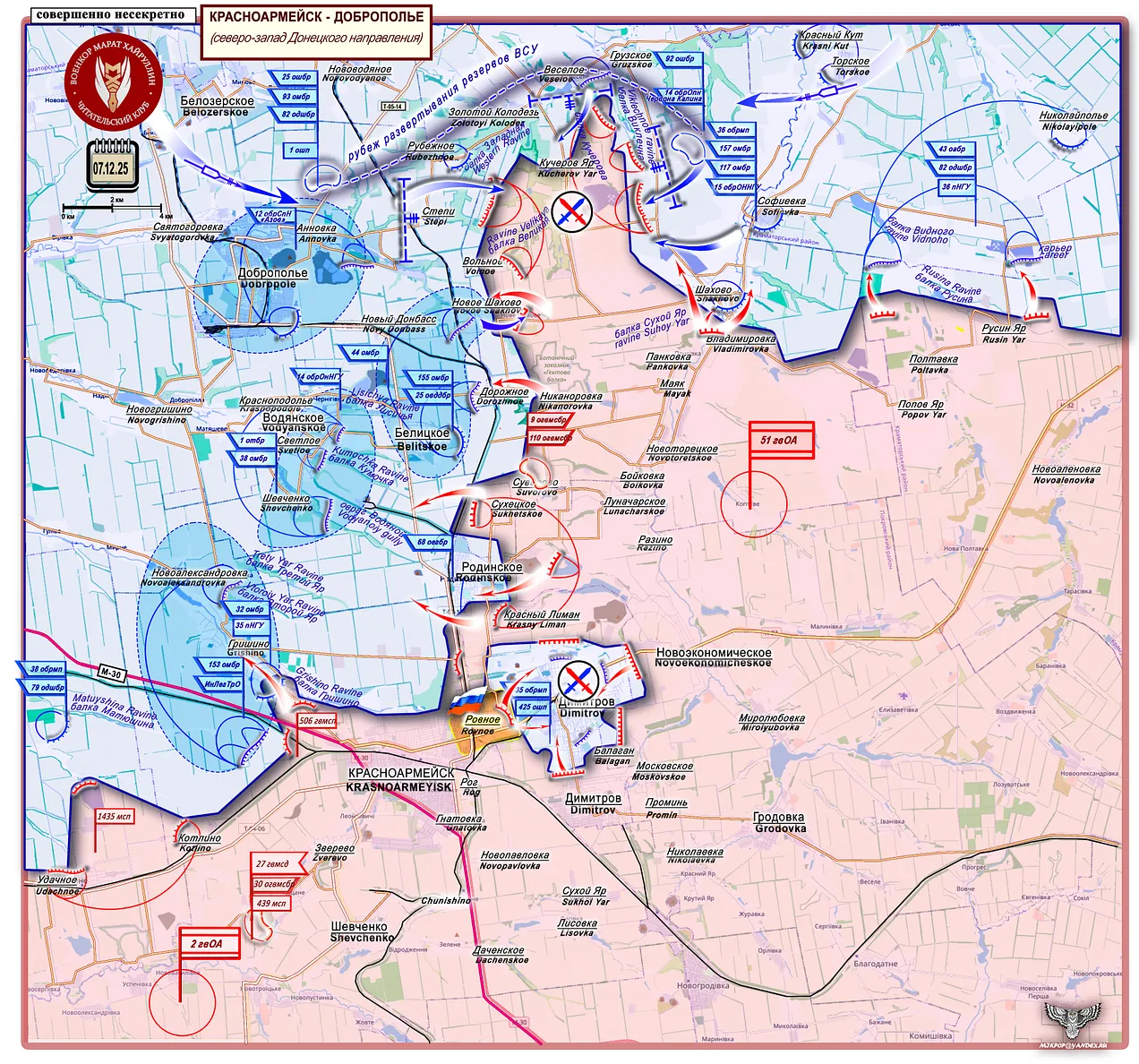
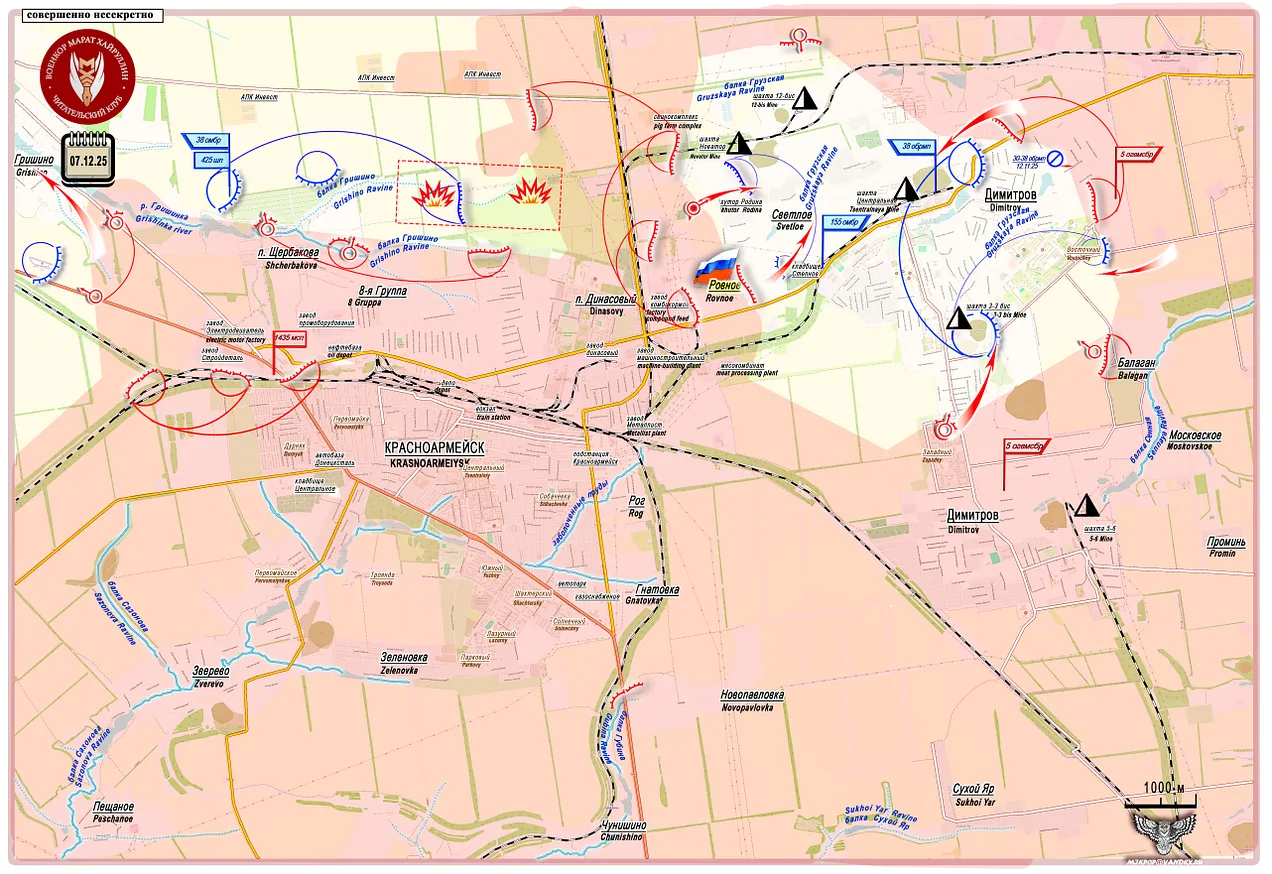
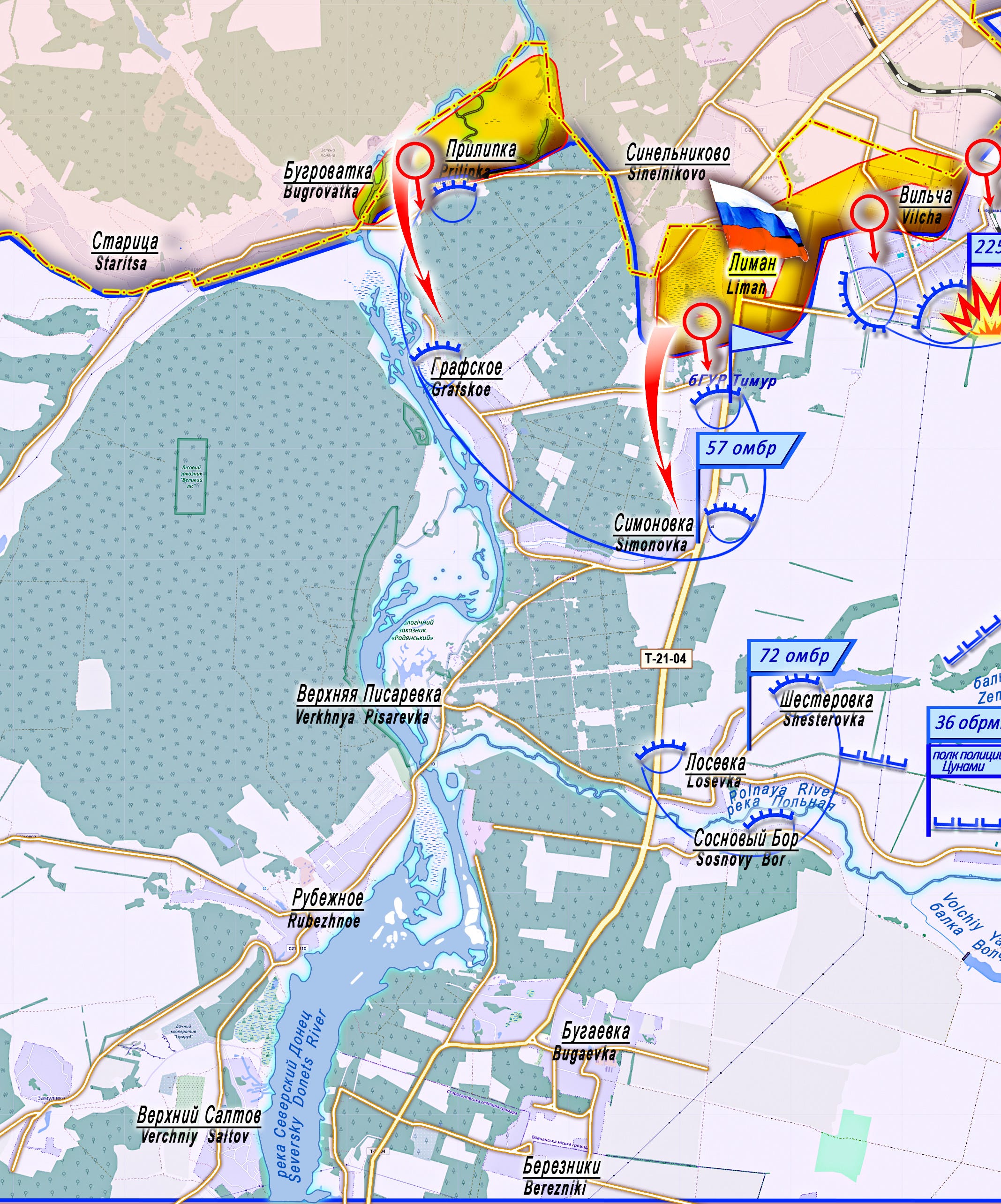
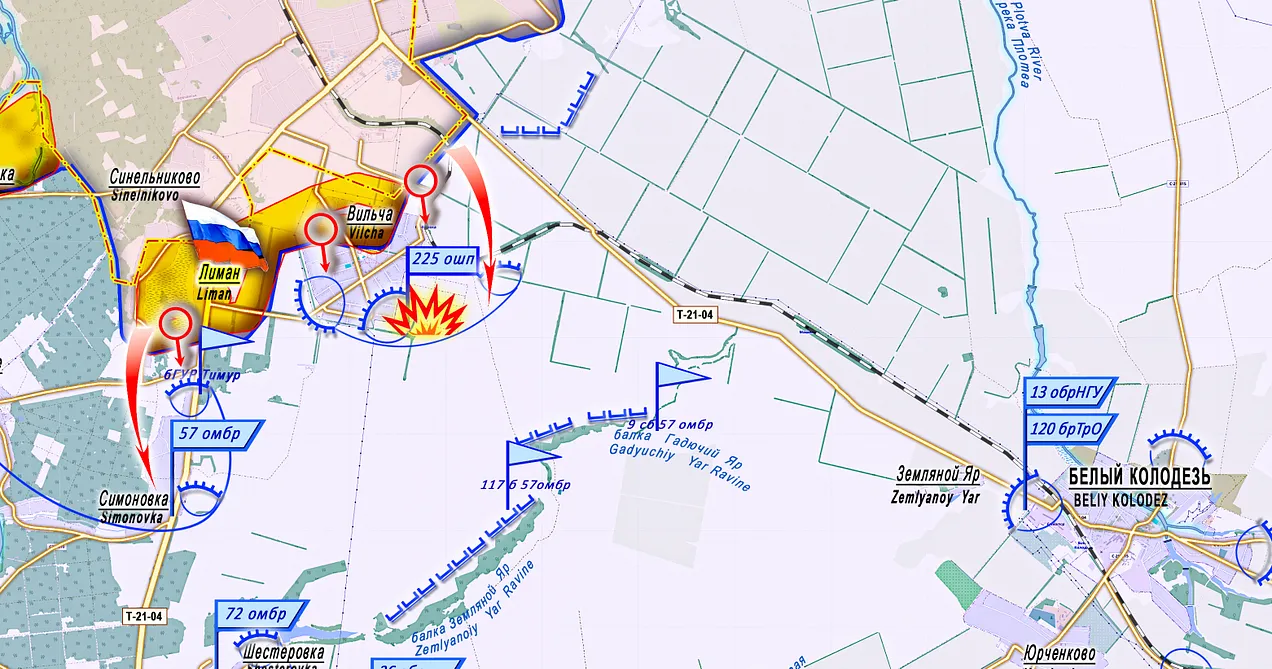
Russian units established complete control over the forest belts between Krasnoarmeysk and Krasny Liman , pushing the Ukrainian Armed Forces back from their positions near the former Invest agro-industrial complex and the adjacent road. As a result, units of the Central Military District physically encircled the remnants of the garrison in northern Myrnohrad .

Individual members of the Ukrainian forces are attempting to break out of the "cauldron," but doing so is now virtually impossible. Several hundred Ukrainian Armed Forces personnel remain in the city itself, but they offer virtually no organized resistance.

Moreover, clearing the buildings is complicated by the large number of civilians, in whose houses the enemy regularly sets up positions.

The heaviest fighting has now shifted to the Grishino-Belitskoye line . Russian troops are attempting to establish control over these settlements on the backs of retreating Ukrainian forces, which will allow the Central Forces to advance toward another major city, Dobropillia .

https://rybar.ru/nekuda-bezhat/

Google Translator

******

Strana: Zelensky Losing Control: The Consequences of Yermak’s Resignation
December 1, 2025 natyliesb
Strana.UA, 11/29/25 (Translation by Geoffrey Roberts)

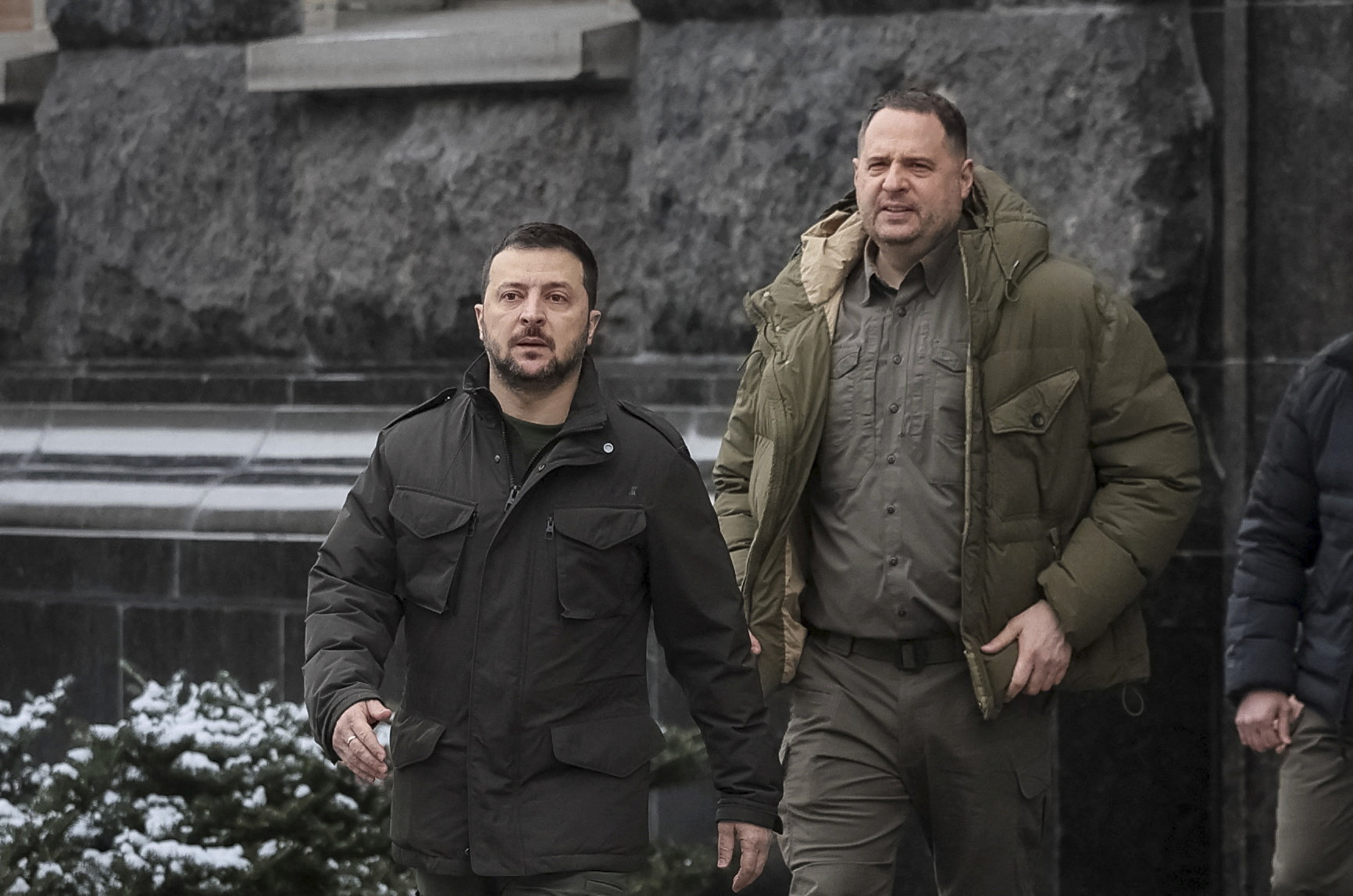
The head of the Presidential Office, Andriy Yermak, was a key figure in Zelensky’s inner circle, and his resignation will undoubtedly have enormous consequences.

Although Yermak will likely try to maintain his control over the Office of the President by appointing a close associate as the new head of the Office, his resignation ultimately sets in motion Zelensky’s loss of control over the vertical of power.

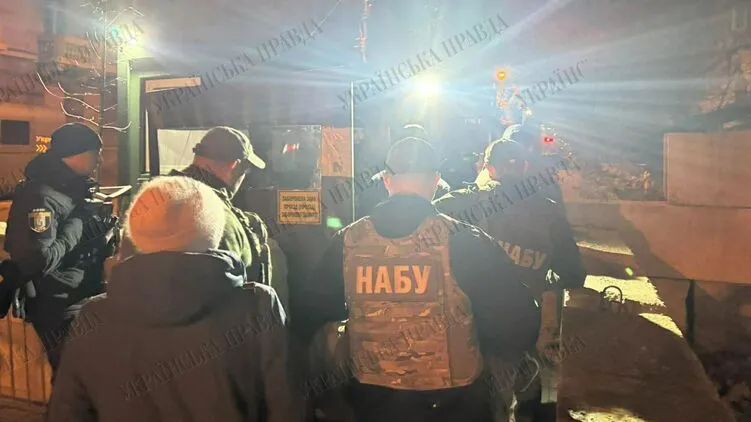
It turns out that Yermak was actually fired not by his boss (Zelensky), but by the NABU; even before he was charged, the President dismissed his closest associate, following only a search, public outcry, and pressure from opposition politicians. This sends a powerful signal to the entire state apparatus that Zelensky is no longer the “source of power” in the country and cannot guarantee anything even to his closest associates.

Moreover, few believe that Yermak (like Mindych and other figures in high-ranking corruption cases) could have carried out their schemes without the knowledge, consent, or even direct participation of the President.

In other words, a blow to Yermak is automatically a blow to Zelensky, a signal that he too could be accused of corruption at any moment. Especially if lesser figures speak out (and after today’s events, the likelihood of this has increased).

Immediately after the outbreak of the Mindych corruption scandal, Bankova began to lose its levers of political control within the government. Even [Prime Minister] Svyrydenko began to increasingly rely on the opinions of the Servant of the People faction rather than the Office of the Prosecutor General. The SBU and the Prosecutor General’s Office also began to sabotage various “political” instructions from the President’s Office.

Now, all these processes will accelerate dramatically. And the only question is how Zelensky will lose his remaining power.

It could be implemented in a softer form, by shifting the centre of decision-making from Bankova to parliament and the government, but maintaining the dominant position of Servant of the People. This project is being promoted by faction leader Arakhamia and several other people in the presidential team who were negatively disposed toward Yermak.

A source close to Arakhamia in the Servant of the People faction described the group’s vision for the future in a comment to Strana: “After Yermak’s resignation, the Rada will stabilise and calm down. There will be no defections from the faction, which have been much discussed in parliamentary corridors. Everyone will remain in their positions. We will pass the budget with dignity and responsibility.”

Zelensky will also lose political control over the Prosecutor General’s Office, the Security Service of Ukraine (SBU), and the State Bureau of Investigation (SBI) (Yermak coordinated the political work of these agencies, including against the National Anti-Corruption Bureau of Ukraine (NABU)).

But a far more severe scenario is also possible, in which, through a split in Servant of the People, the parliamentary majority is reformed and comes under the control of the “anti-Zelensky coalition” (Poroshenko and MPs close to grant structures, with the NABU on their side). In this case, a vote of no confidence in the government would be passed, and pressure would be exerted on Zelensky to approve the formation of a new Cabinet of Ministers of “national unity,” effectively independent of the president. Such a scenario would essentially lead to Zelensky’s own imminent departure.

But far more important is the potential impact of these events on the war and on the peace negotiations.

Yermak’s resignation and the resulting upheavals within the government will in any case have a significant impact on the country’s governance during the war: budget adoption, energy, defense procurement, and the mood of the military and society.

Zelensky’s own political prospects would also be largely nullified. First, a corruption scandal involving those closest to him. Now, the resignation of a key figure in the vertical of power. All of this significantly reduces the incumbent president’s chances of winning the election.

This means that ratings are gradually becoming a secondary concern for Zelensky. This could, theoretically, make him more susceptible to American pressure regarding key points of the peace agreement, which he has so far refused to agree to (although much depends on the degree of pressure and the bonuses offered).

This also increases the likelihood of a scenario in which, under increasing pressure to make concessions in the negotiations to end the war, Zelensky may decide to resign altogether, and the final negotiations for signing the agreement will be led by the acting president, the speaker of parliament.

Finally, it cannot be ruled out that the system of power will completely collapse and become unmanageable, leaving no one to negotiate peace terms with. But this could have catastrophic consequences for the military situation, and therefore the Ukrainian elite and the West will try to prevent this.

https://natyliesbaldwin.com/2025/12/str ... signation/

*****

The EU corruption scandal is lousy timing for Zelensky

Martin Jay

December 4, 2025

Graft in Brussels is as old as the hills and for decades has gone largely undetected.

For those who were hoping that the present corruption scandal in Ukraine involving Zelensky’s close aides would blow over and the business of war, money laundering and gun running can resume – funded by a gullible western public – the news of the arrest of Federica Mogherini in Belgium must have come as a blow.

Mogherini was the EU’s top foreign diplomat between 2014 and 2019 and was part of the so-called Iran Deal being signed in what was an auspicious occasion of international diplomacy at the time, barely a year after her taking the top job in Brussels – leaving her post in Rome as foreign minister.

In early December her house in Belgium was raided by police working on a case which would frame her for corruption charges, if sufficient evidence is collected using inside information to favour companies bidding on a tender. The case isn’t expected to be huge but it is significant for many reasons. As hard as it may seem to comprehend, it would appear that it is the EU’s new anti fraud unit – EPPO – which was just recently formed after years of impotency from the toothless OLAF failed to charge EU officials for graft, seems to be doing its job on investigating corruption of top EU officials. Mogherini got the cushy job of rector of the College of Europe after her 5-year term was up as the top EU diplomat under what some critics at the time commented were dodgy circumstances, given that she was clearly underqualified on the academic front to normally have such an elitist post for a college which served Europe’s elite civil servants and diplomats.

Police carried out searches at the Brussels headquarters of the EU’s foreign service, the European External Action Service, as well as several buildings of the College of Europe in Bruges at the request of the prosecutor’s office. Searches also took place at the houses of the suspects, the prosecutor’s office said while Belgian press have identified one other Italian official, the secretary general of Mogherini’s former office, who is part of the suspected fraud.

However, the timing of these arrests couldn’t come at a worse moment for the EU and its national leaders who are clinging onto hope for a miracle on the frontline of the Ukraine war, or even a change of heart from Donald Trump who is directing the press to write more and more about graft in Ukraine finally accepting the realities there of the sheer scale of the embezzlement of part of 400 billion dollars of cash and military equipment sent there from the U.S. alone.

The EU scandal merely underlines a peripheral point which the Europeans would have preferred remained aloof. Brussels has its own problem with corruption and so far, most Europeans don’t join up the dots and link the corrupt in the Belgian capital with the massive money laundering racket which Zelensky is running with EU cash. Until now.

Graft in Brussels is as old as the hills and for decades has gone largely undetected, and even when it is, it usually gets bypassed by inept investigators. The recent case of embezzlement levelled against Ursula von der Leyen for what many suspect is siphoning off hundreds of millions of dollars via a multibillion dollar vaccine deal is a good example. A posy of hopeless EU institutions have all make token efforts to bring her to account but to no avail. Before that ‘Qatargate’ made the headlines involving MEPs making hundreds of thousands of euros in cash bungs from both Qatar and Moroccan elites who were happy to bribe MEPs to make sure their countries’ true poor human rights records would be whitewashed. A few arrests were made, but an attractive Greek MEP, who had a few hundred thousand euros of cash in her Brussels pad, managed to work out a deal with Belgian police and even keep her well paid MEP job.

https://strategic-culture.su/news/2025/ ... -zelensky/
"There is great chaos under heaven; the situation is excellent."

User avatar
blindpig
Posts: 14890
Joined: Fri Jul 14, 2017 5:44 pm
Location: Turtle Island
Contact:

Re: Footnotes from the Ukrainian "Crisis"; New High-Points in Cynicism Part V

Post by blindpig » Sat Dec 06, 2025 12:42 pm

Peace, security, and demographic collapse
Published by @nsanzo ⋅ 06/12/2025

Image

“Europe is beginning to accept that Ukraine will have to sacrifice territory if it wants to end the war,” reads the headline of the El País article addressing the concern of European capitals regarding the US stance of prioritizing the end of the war over the continent's desire to achieve its strategic objectives. Published yesterday, the new US National Security Strategy also confirms this position. The plan, which, as expected, prioritizes the Monroe Doctrine and the “Trump Corollary” to achieve complete hegemony in the Americas, even above containing China, presents a world in line with the theory of * Strategy of Denial* , the book published in 2018 by Elbridge Colby, now the Pentagon's number three official. The US objective in strategic regions is to prevent the existence of “counter-hegemonic” blocs—groups of countries capable of challenging Washington's power. Fostering favorable alliances, preventing potential rivals from creating such axes, and intervening only when strictly necessary are the basis of a form of interference that does not necessarily imply a continuous presence, which is why the actions of Trumpism, deeply interventionist in both political and military matters, have been described as isolationist.

Although the section dedicated to Europe deserves further analysis, the references to the war in Ukraine are limited and merely confirm European fears. In just two paragraphs, one of them dedicated to the relationship between European countries and Russia, Ukraine receives only four mentions. “The Trump administration finds itself at odds with European officials who have unrealistic expectations regarding the war, supported by unstable minority governments, many of which trample on basic democratic principles to suppress the opposition,” states the document, which reaffirms what has been the official policy of the Trump administration since it came to power. The priority is to end the violence to avoid greater evils, restore economic relations with Russia, and proceed to “ make Europe great again ,” a plan consistent with JD Vance’s speech in Munich and the United States’ support for far-right and white nationalist movements aligned with Trumpism. The document states that “a large majority of Europeans want peace, but this desire is not translating into policies, largely due to the subversion of democratic processes by these governments. This is strategically important for the United States precisely because European states cannot reform themselves if they are trapped in a political crisis,” it adds, with a veiled endorsement of parties like the AfD.

“It is in the fundamental interest of the United States to negotiate a swift cessation of hostilities in Ukraine, in order to stabilize European economies, prevent an escalation or unintended expansion of the war, and restore strategic stability with Russia, as well as enable the reconstruction of Ukraine after the hostilities so that it can survive as a viable state,” states the only part of the document that actually addresses the future of Ukraine, for whom expectations are considerably more limited than those aspired to in 2022 by European countries and the Biden administration. Peace and the viability of the state are the only aspirations mentioned by Trumpism.

Beyond the European narrative, which claims that Russia's objective was and remains the destruction of the Ukrainian state and nation, Ukraine's viability today depends on consolidating peace, stabilizing the border—predictably de facto —with Russia, preserving regions like Odessa (something that has always seemed guaranteed), initiating reconstruction, and recovering its economic potential. To all this must be added an essential aspect: the population. Like Russia, Ukraine has suffered for three decades from the demographic consequences of the end of socialism, the rampant liberalization, the widespread impoverishment of the 1990s, and the resulting population loss. This is one of the reasons why Zelensky has so strongly resisted lowering the conscription age. Few things have been more important to the Ukrainian government than replenishing its depleted ranks and recruiting a large army to continue the war. Protecting the small generation of young people has been one of them, since Ukraine's future depends in part on this generation.

To the demographic consequences of independence must be added those of the years of conflict. With the loss of Crimea first and Donbas later, Ukraine not only lost a strategic territory on the Black Sea peninsula and the natural resources of the Donetsk and Luhansk mining region, but also a significant portion of its population. The 2014 war and the economic crisis that has plagued Ukraine for the last decade also triggered a significant emigration trend, further exacerbating an economic crisis that Kyiv has never been willing to quantify. Hence, without any recent census, the Ukrainian authorities have preferred the fiction of claiming a population of 46 million rather than admitting reality. Over the years, intellectuals like the Ukrainian sociologist—now in Germany and openly hated by nationalists—Volodymyr Ishchenko, have recalled with a certain nostalgia one of the proclamations of the Ukrainian Soviet Socialist Republic, which celebrated that “we are now 50 million!”

The massive casualties of the war and the population flight that occurred in 2022 in both directions—although the European Union emphasizes the millions of Ukrainians hosted by the EU, Russia remains one of the countries that has received the most people—have further worsened an already complicated situation. The impoverishment caused by the war in a country that rivaled only Moldova for the title of poorest country in Europe has also had demographic consequences.

Image

As Reuters headlined yesterday , “Ukraine faces demographic collapse,” not only because of the deaths caused by the war, but also because of the question of “who will be left to pick up the pieces after the war.” The article offers a concrete example: the city of Hoshcha, in the Rivne Oblast of western Ukraine, a place extremely far from the front lines where the danger of the war is limited to drone attacks. However, the consequences of the war extend throughout the entire country. “The hospital in Hoshcha has only registered 139 births so far this year, compared to 164 in 2014, and a far cry from the more than 400 babies born annually just over a decade ago, according to local authorities. ‘Many young people have died,’ lamented gynecologist Yevhen Hekkel in his office. ‘Young people who, to put it bluntly, were supposed to replenish Ukraine’s gene pool,’” Reuters reports, describing a situation that, judging by the data, could be extrapolated to the rest of the country.

“According to government estimates, the average life expectancy for men in Ukraine has fallen from 65.2 years before the war to 57.3 years in 2024. For women, the figure has dropped from 74.4 to 70.9,” the article states, adding that in every single region of Ukraine, even those hundreds of kilometers away, deaths outnumber births. Death, poverty, emigration of working-age people, lack of future prospects, uncertainty about the future, and the shortage of men resulting from the continuous mass conscription that has been in place for over three and a half years are causing this situation. The outcome worries the government, not so much because of its capacity to continue conscripting—an aspect Ukraine prefers not to acknowledge—but because of future labor needs. “Ukraine will need millions of people to rebuild its devastated economy, experts and politicians say, and to defend itself in a post-war future should Moscow attack again, as many Ukrainians fear. The government in Kyiv tried to address the crisis last year when it outlined a demographic strategy through 2040. The document warned that Ukraine faced a labor shortage of 4.5 million workers over the next decade. The sectors most in need of labor would be construction, technology, and administrative services,” Reuters reports .

Like economic and demographic problems, the false hopes of future wealth in Ukraine and the United States often precede war by many years. “ In five years we will live like in France,” Leonid Kravchuk declared in 1991. “ In ten years we will live like in Poland ,” Viktor Yushchenko predicted in 2004. “ In twenty years we will live like under Yanukovych ,” Mikheil Saakashvili, then governor of Odessa, lamented in 2015. This week, Marco Rubio made a similar statement in an interview with Fox News. “What they are literally fighting over now is a space of between 30 and 50 kilometers and the remaining 20% ​​of the Donetsk region. Therefore, what we have tried to do—and I believe we have made some progress—is to find out what Ukrainians could accept that would give them security guarantees for the future, that they would never be invaded again, that would allow them not only to rebuild their economy, but also to prosper as a country, to be a country with a growing economy,” he stated, reflecting the same vision embodied in the National Security Strategy, before adding that “theoretically, if things are done right, in ten years Ukraine’s GDP could be larger than Russia’s.”

Exaggerated expectations are not limited to countries that wish to use Ukraine to wage their war against Russia, further worsening the already dire situation of the country they claim to defend, but extend to the United States, which also prefers to ignore reality in order to embellish future prospects. “Ukraine’s population, which stood at 42 million before the full-scale invasion in February 2022, has already fallen to less than 36 million, including several million in areas captured by Russia, according to the demography institute of the National Academy of Sciences of Ukraine,” Reuters reports , citing figures that were already considered a pipe dream. The Academy “estimates that the figure will fall to 25 million by 2051,” the article continues, providing this alarming figure, which represents half the population of Soviet Ukraine. “The collapse is progressing,” he adds, stating that “the country has the highest mortality rates and the lowest birth rates in the world, according to 2024 estimates from the CIA World Factbook: for every birth there are about three deaths.”

Ukraine's survival depends not only on the borders that will result from the war, on security guarantees to prevent another aggression, or on the economic and political interests of its European and North American allies, but also on its ability to reverse its demographic trend once peace is achieved.

https://slavyangrad.es/2025/12/06/paz-s ... mografico/

Google Translator

******

From Cassad's Telegram account:

Colonelcassad
Trains are not running.

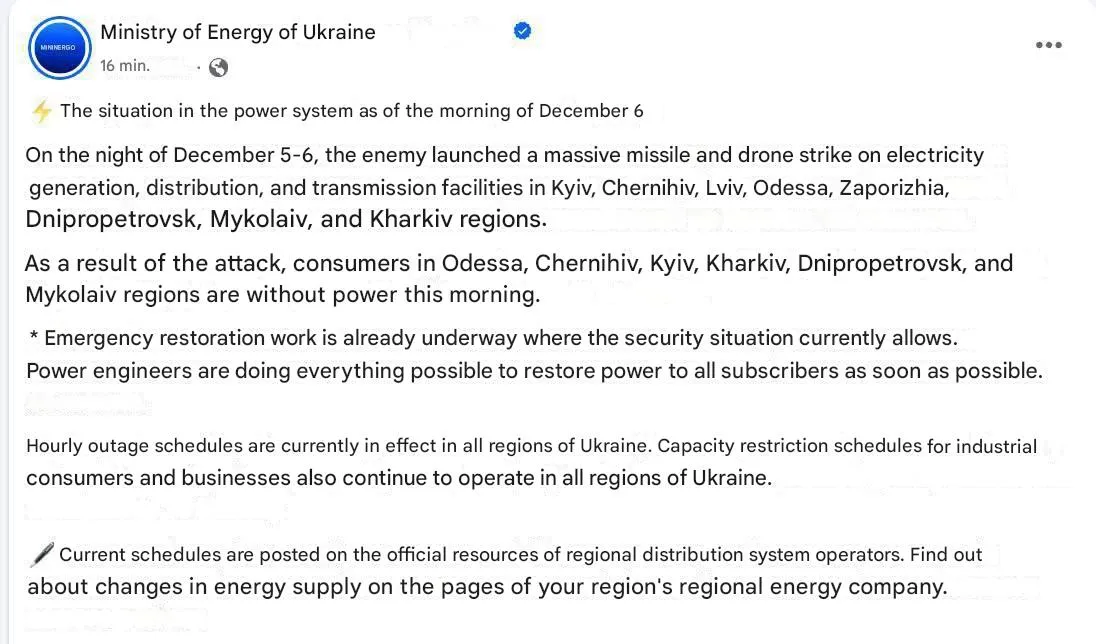
Russian forces have launched a combined attack on enemy energy and rail infrastructure facilities in various regions of the so-called Ukraine. This is the first raid in December and the third in the last three weeks. The Fastiv railway station in the Kyiv region , a major transportation hub, sustained the most damage . The facility was completely destroyed, and train service through the city has been suspended. In Novi Petrykivtsi, a local substation was hit. In Dnipropetrovsk, another Nova Poshta warehouse, whose capacity is used by the Ukrainian Armed Forces, was attacked. Several cruise missile strikes were recorded in Lutsk and the Lviv region . A substation in the Odesa region was also hit . Localized power outages and voltage surges were reported in the Dnipropetrovsk , Lviv , Odesa , and Kyiv regions . According to unconfirmed reports, the Kryvyi Rih, Dobrotvir , Burshtyn , and Ladyzhensk thermal power plants and the Belotserkivska thermal power plant were damaged during the raid . However, the lack of objective monitoring footage and emergency shutdowns makes it impossible to assess the scale of the damage or the veracity of the published information. The enemy claims to have used nearly 700 Geranium drones and up to 50 cruise and ballistic missiles. This figure is highly likely greatly exaggerated. The number of weapons claimed does not correspond to the consequences that typically follow an attack of this scale. @rybar

***

Colonelcassad
0:50
Nazi Madyar threatens the cocaine-addicted Führer that if he capitulates (as the Americans demand), "a million will return from the front and give him a good thrashing."

In reality, there haven't been any million at the front for a long time. Secondly, as soon as it becomes possible to escape from the front, some of the Ukrainian Armed Forces will simply flee, since a significant portion of the Ukrainian Armed Forces are there by force. And they clearly have no intention of rebelling and being driven back into the trenches.

So these are more likely threats from a radical minority of Nazis, who have no hope of anything good after Ukraine's confirmed defeat in the war. They will face many questions within Ukraine itself. After all, they are the ones who brought Ukraine to this nightmare.

***

Colonelcassad
Ramzan Kadyrov stated that there were no casualties in the drone strike on Grozny, and that the attack itself is a sign of the Ukrainian Armed Forces' impotence, which is no longer capable of changing the situation on the front. He also promised a response for the Grozny strike in the near future.

Colonelcassad
0:38
Artillerymen from the 38th Guards Motorized Rifle Brigade of the 35th Army of the "East" group of forces continue to alternate firepower with psychological attacks on the enemy.

Regularly, leaflets are sent out in the skies over Hulyaipole to inform Ukrainian soldiers of their only option for saving their lives: cease resistance and leave the city.

In this particular case, the Amur Warriors reminded the enemy that their sacrifice would be utterly pointless, as Mr. Zelenskyy long ago sold out the remnants of Ukraine to his Western masters, and there's no point in these young men dying.

Because there's nothing to die for.

***

Forwarded from
An optimist in civilian clothes🇷🇺
I'M GOING TO BE RAGING NOW.

This is what's happening in the ruins of the so-called Ukrainian state.

There are countries where awards are symbols of honor.

There are countries where awards are a recognition of service to the people.

And then there's the so-called "Ukraine" of the usurper Zelensky.

The usurper, self-proclaimed "president," and also Bankova's chief UGIL member, a marginal figure and drug propagandist, solemnly awards a separate decree to a complete criminal, a radical, a Russophobe, a Russo-censor, and an open participant in street gangs, Sergei Sternenko. In other words, one character with a criminal and drug-addicted streak awards another, a classic thug with a biography worthy of a street crime textbook.

We're talking about the latest "Decree of the President of Ukraine No. 880/2025," in which a drug addict awards Sergei Sternenko—a character so marginal that his biography reads like a criminology student's manual:
kidnapping, beating, ammunition, "self-defense" with a corpse, endless investigations, constant run-ins with the law.

The text of the "Decree" should be included in textbooks on post-Maidan schizoid statehood:

DECREE OF THE PRESIDENT OF UKRAINE No. 880/2025
On awarding the "Golden Heart" award of the President of Ukraine

"For significant personal contribution to the provision of volunteer assistance and the development of the volunteer movement... To award the "Golden Heart" award of the President of Ukraine to Serhiy Vyacheslavovych Sternenko..."


Comment from the award recipient:

"Thank you, President, for this distinction! And most of all, thank you all... With your help, we are innovating... helping save lives."

The level of absurdity in Kyiv has already broken through geological strata and reached magma.

So you understand who the "laureate" is, let me remind you who Sternenko is: a "volunteer," a "public figure," a hero of a microscopic but vocal segment of the radical Ukrainian internet.

What is known about him:

- organized the kidnapping of a man (deputy Shcherbych), beat him, and attempted to extort his property;
- a 2021 sentence of 7 years and 3 months in prison, later reduced to probation on appeal;
- murder;
- criminal episodes that sometimes float and sometimes sink, as if the investigation and prosecutor's office were experiencing a strong tide;
- public rhetoric on the level of a "Rusorez-streamer," collecting donations for the destruction of Russians.

In other words, a man who, in a normal frame of reference, would at most be the subject of a crime report or the "controversial characters" section, in Zelya's frame of reference, is a hero of the "golden heart."

Now about the person who signed this.

When the so-called "president" awards the so-called "volunteer" Sternenko, we see what has long been obvious to every decent person:

- statehood has been reduced to a show;
- criminal elements have been aestheticized;
- the radical fringe has been elevated to the status of "heroes";
- there is no longer even a symbolic understanding of right and wrong.

It's a thug system, in which their own reward their own.

And they do it demonstratively, publicly, proudly, as if presenting an order to a national academician, not a man whose biography is a litany of legal adventures.

That Zelensky is rewarding Sternenko with a separate decree is a perfect illustration of the entire post-Maidan state, where radicals become "heroes," criminality is repackaged as "volunteering," moral compass has vanished, and the government and marginal militants are one and the same.

A terrorist who declared himself president rewards a terrorist who declared himself a volunteer.

Although both should, without alternative, be hanging from lampposts (which is inevitable).

Zelensky could have awarded Sternenko a medal "For special services to the scum"
or "For contribution to the degradation of the country." But they went further: "heart."

If so-called "Ukraine" has such a heart, it's no wonder it's hurtling toward the dustbin of history at Mach speed.

https://t.me/s/boris_rozhin

Google Translator

******

Brief Frontline Report – December 5th, 2025

Summary by Marat Khairullin and Mikhail Popov.
Zinderneuf
Dec 05, 2025

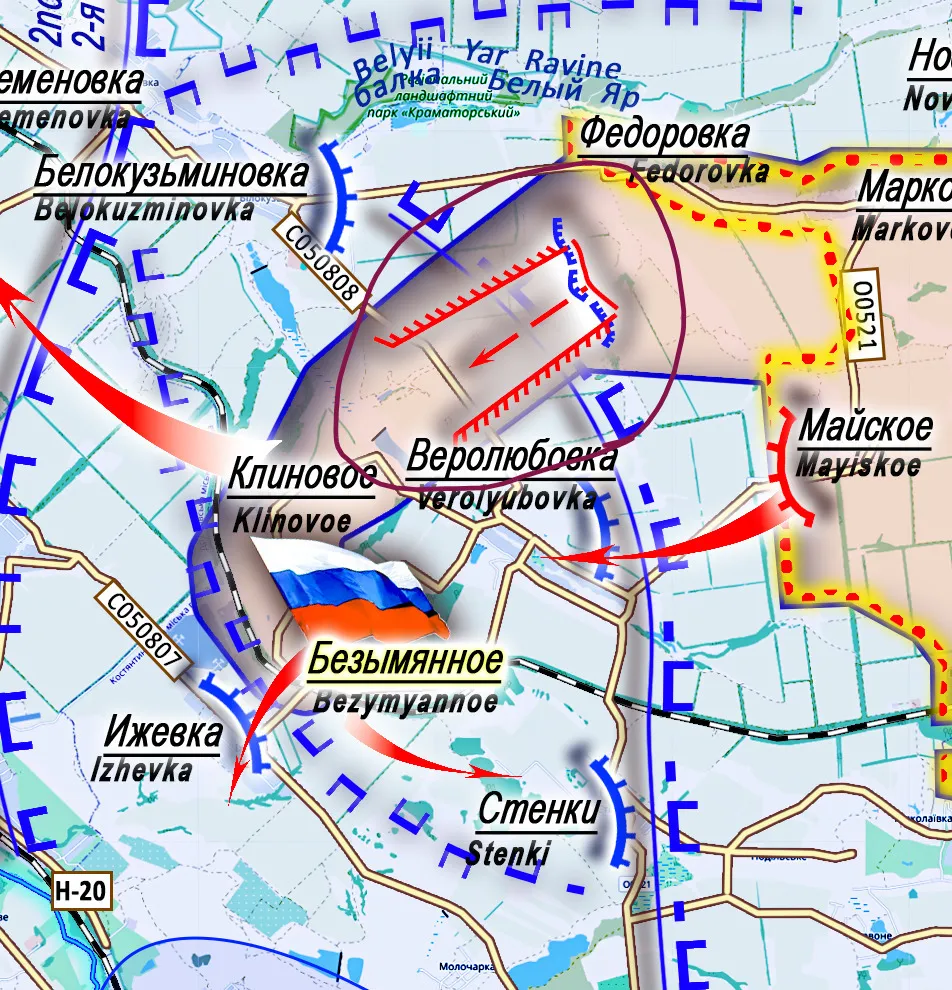
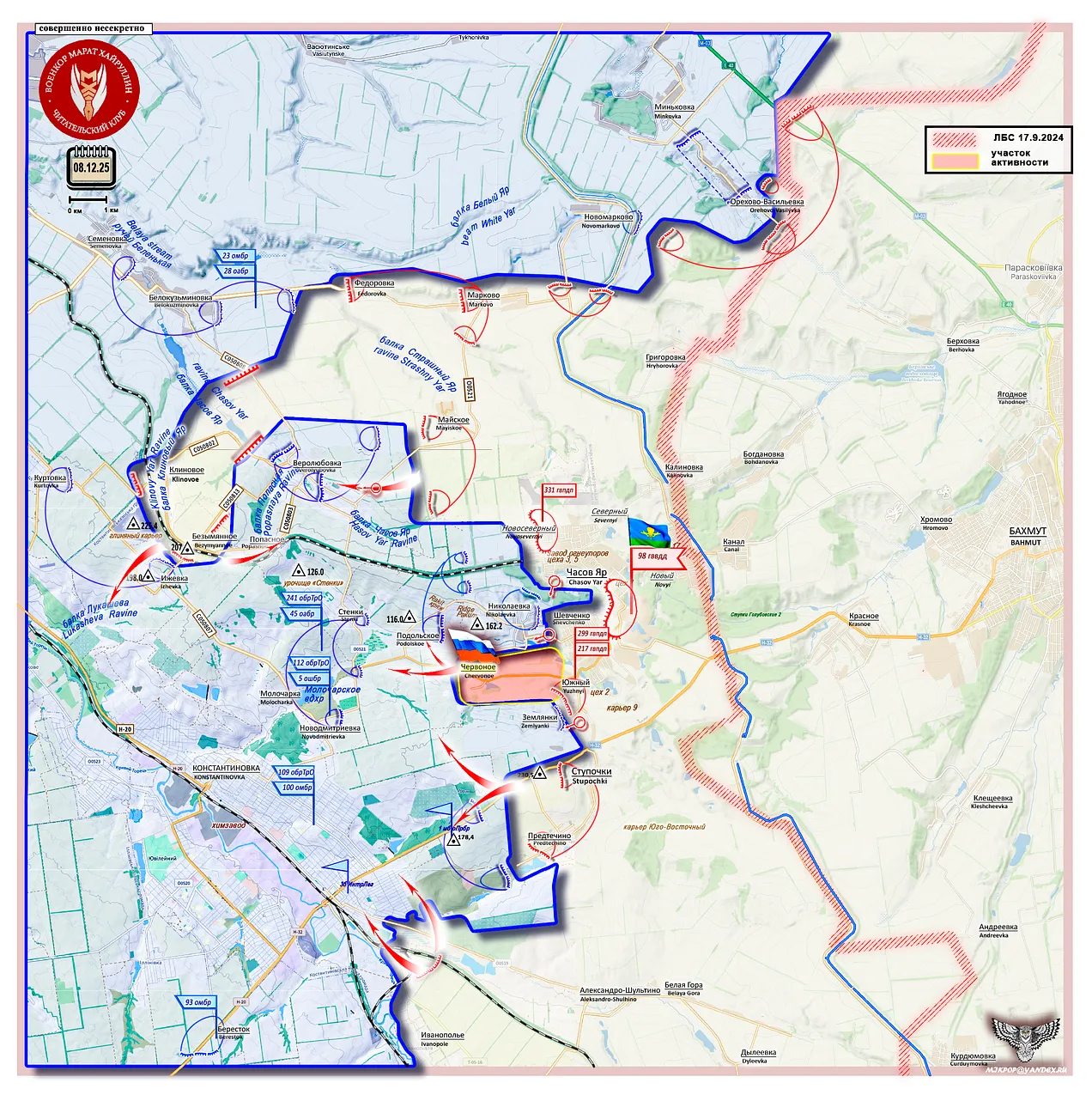
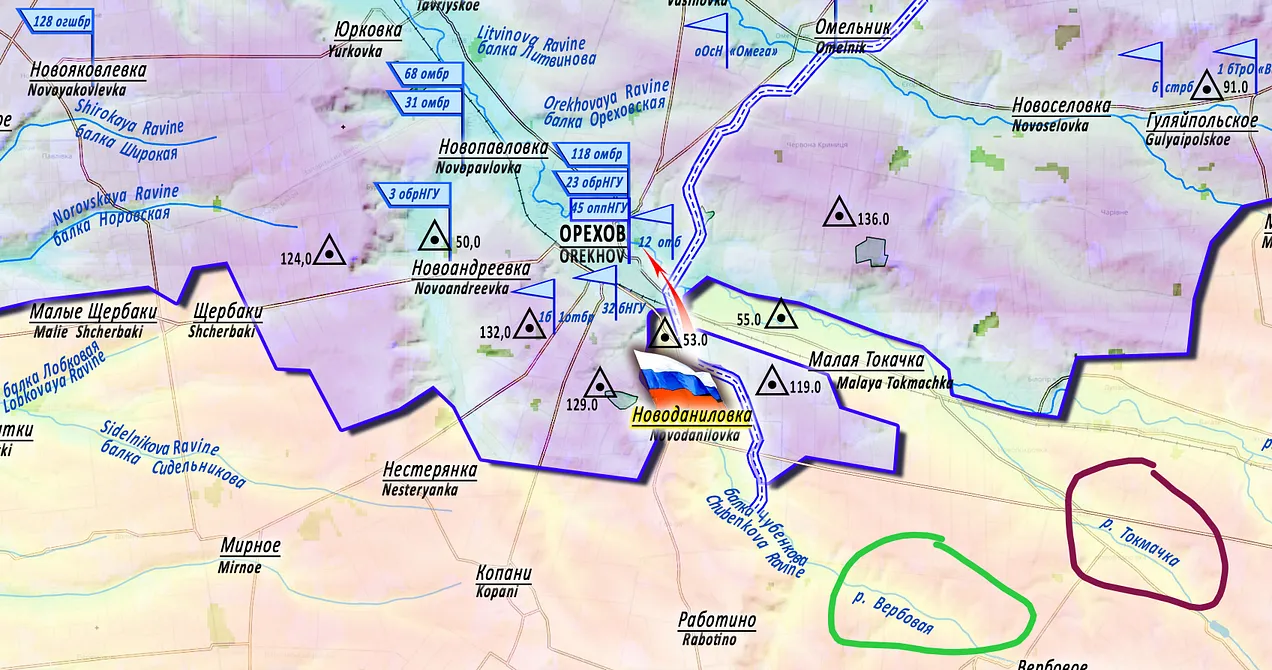
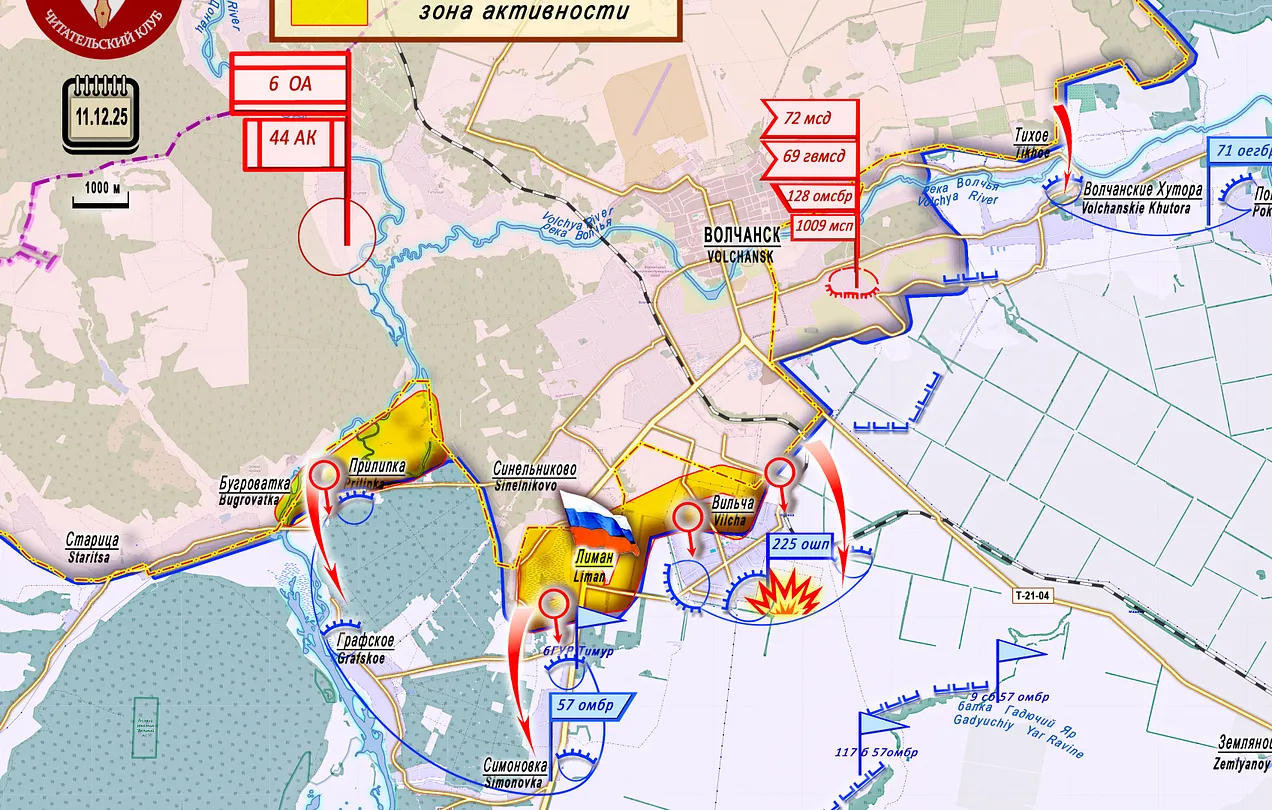
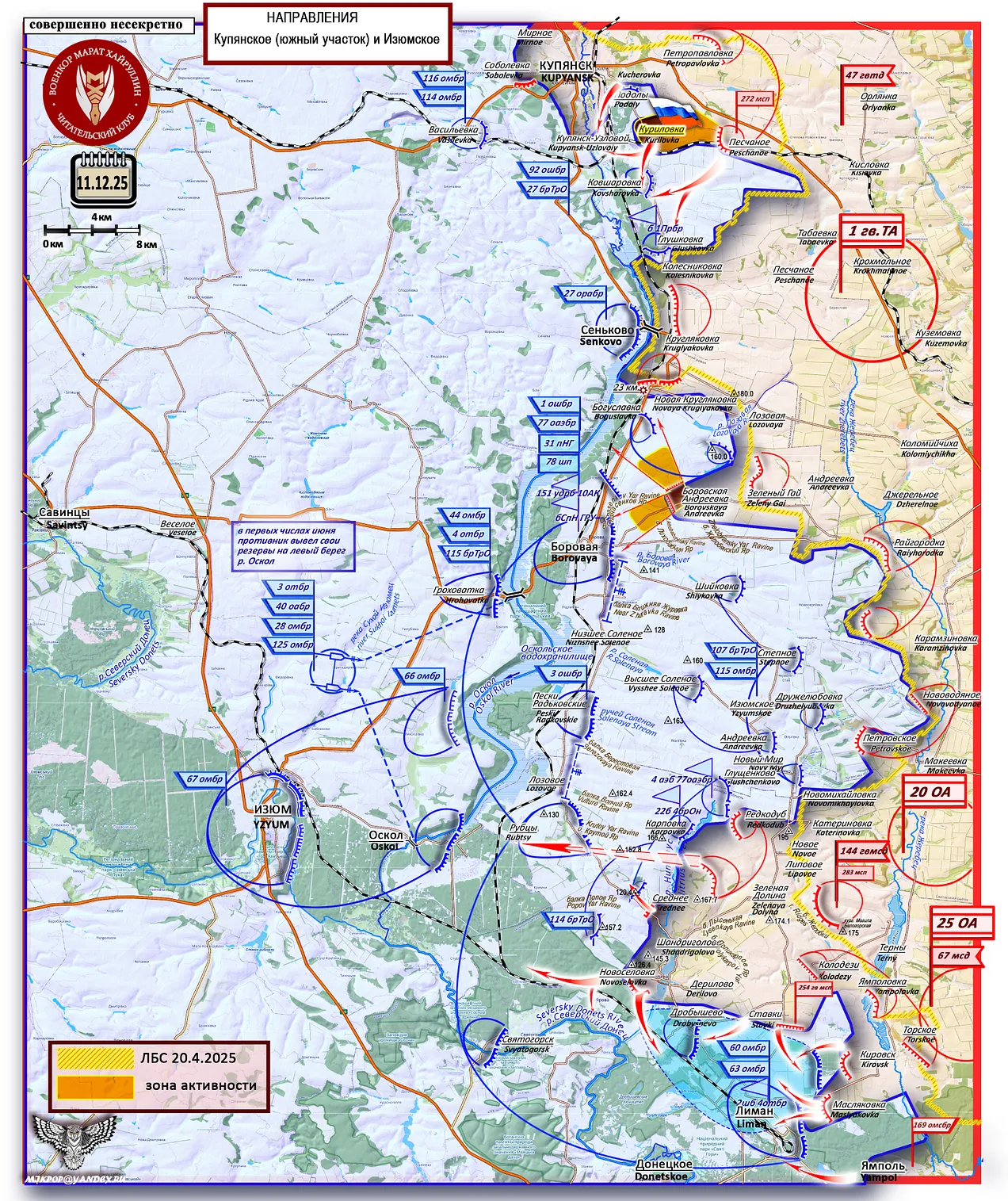
Message from the Ministry of Defense of the Russian Federation: "As a result of coordinated actions by units of the 'South' Group, the settlement of Bezymyannoe in the Donetsk People's Republic has been liberated."

Image
ЛБС 10.10.25=Line of Combat Contact October 10th, 2025.

Image
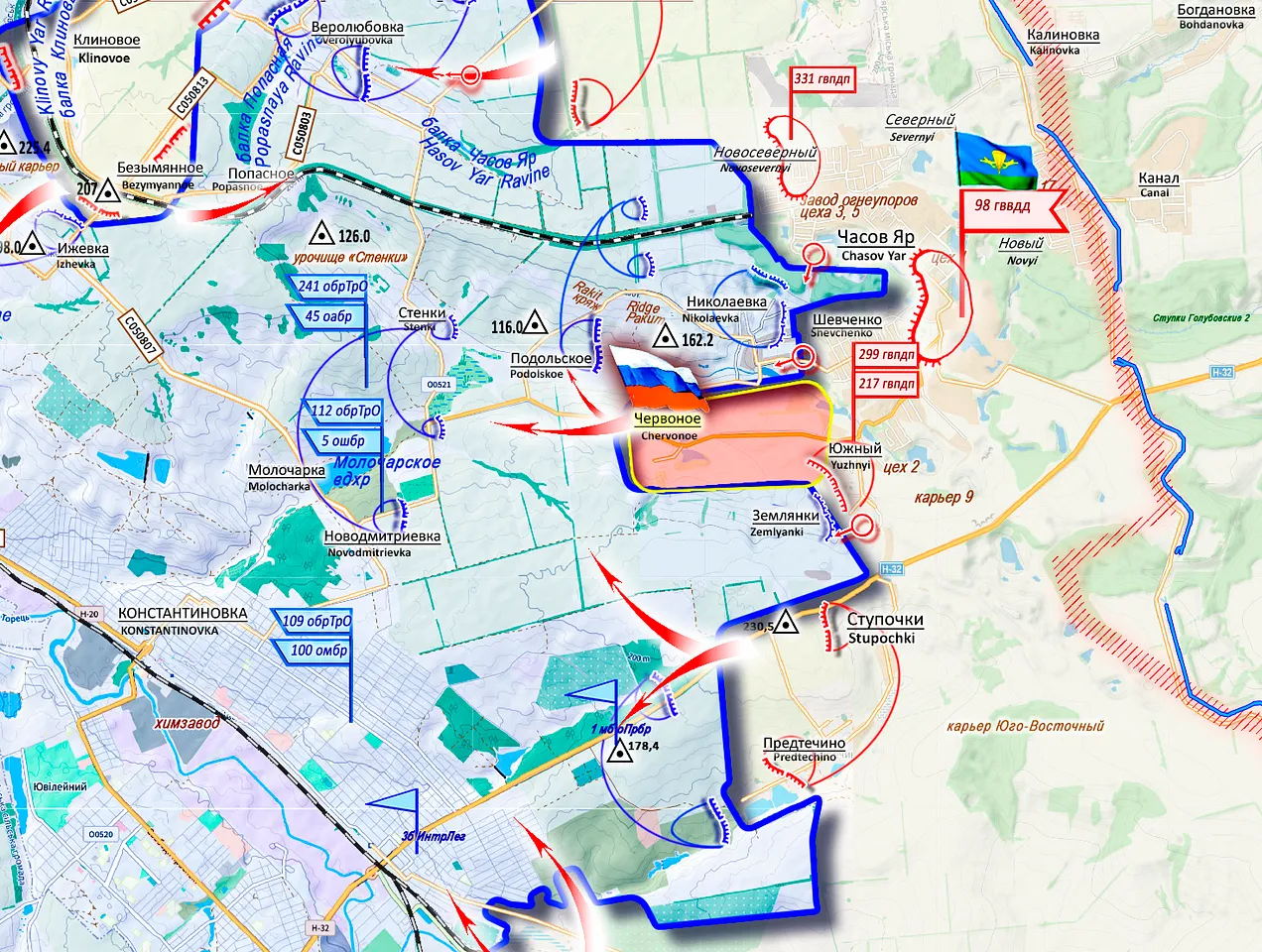
ЛБС 17.9.2024=Line of Combat Contact September 17th, 2024. Участок Активности=Area of Activity.

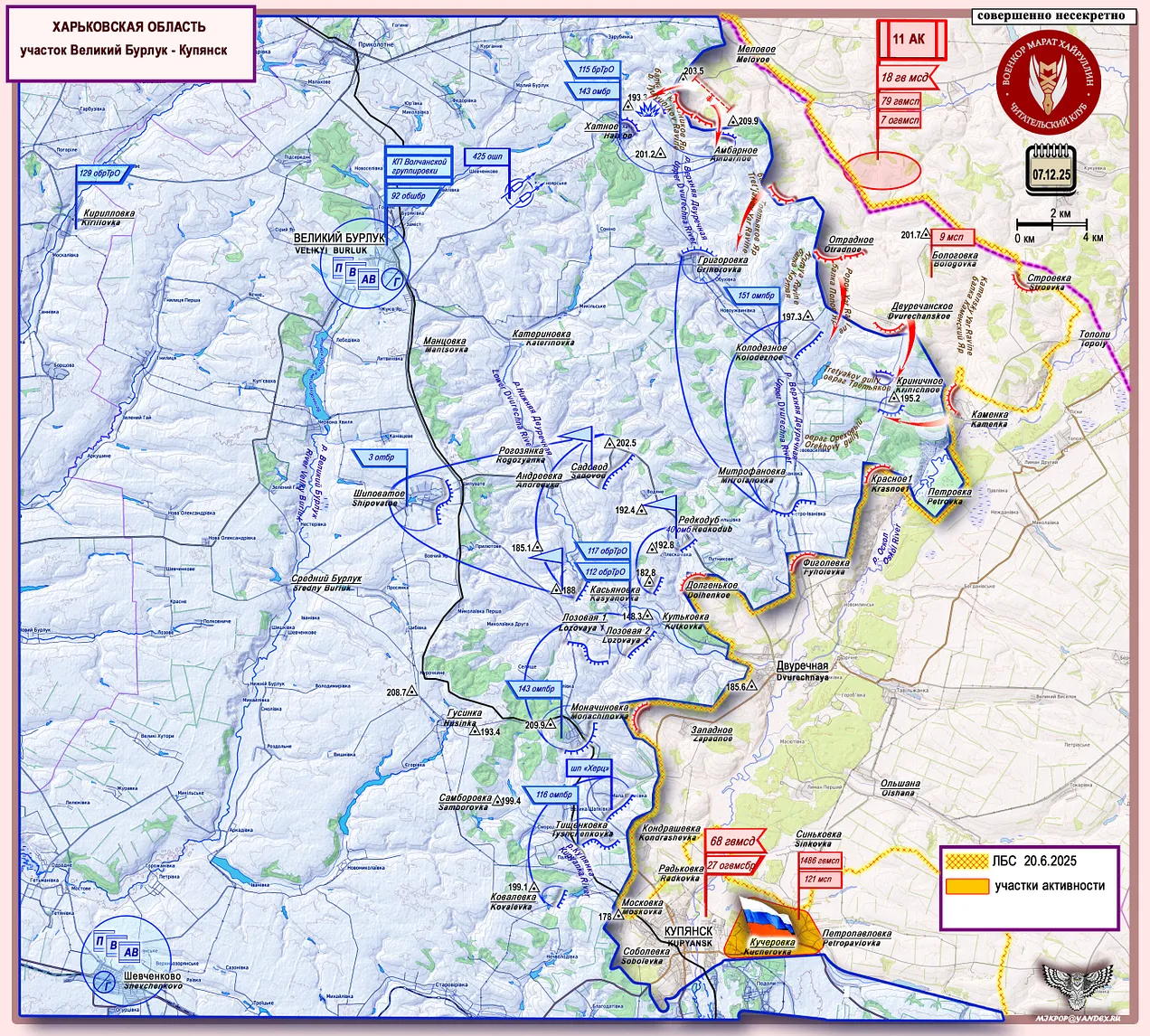
The small settlement of Bezymyannoe (48°35′43″ N, 37°40′51″ E, population 10 people), like the settlement of Klinovoe liberated on December 1, holds important operational-tactical significance in the operation conducted by the command of the 'South' Group of the Russian Armed Forces.

What happened on 01.12.2025 in the area of the Strashny Yar ravine is significant as a breakthrough of the front line (which is why we marked this tactical sign on the map).

Image

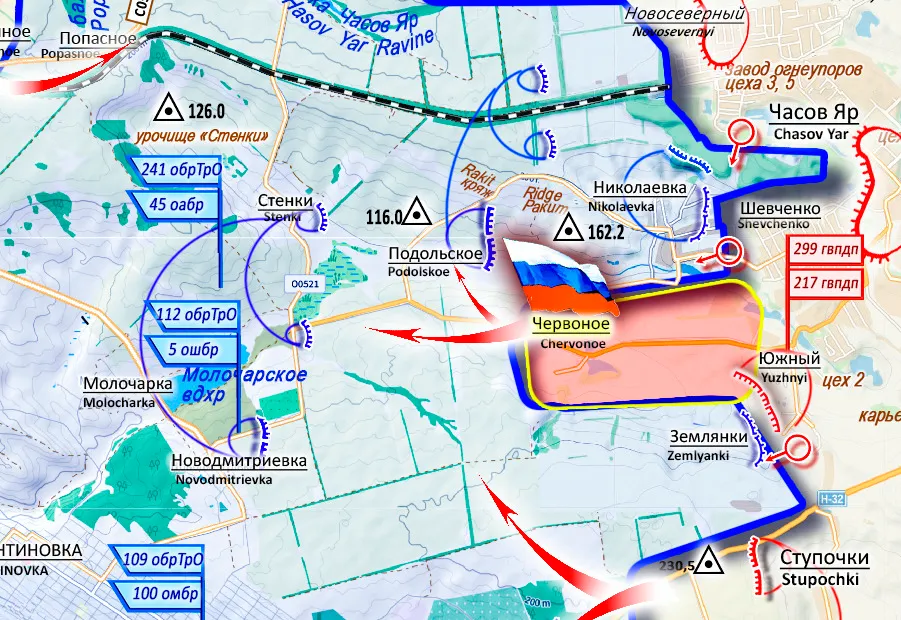
The settlement of Bezymyannoe is located, unlike Klinovoe (which is in the Klinovaya ravine), on an elevation 207 meters above sea level (all heights are marked with a triangle and their elevation in meters). To the east, about 2 kilometers away (in the Stenki tract), is the enemy defense area Stenki, at an elevation of 126.0 meters above sea level. To the southwest, at a distance of 1 kilometer, is the enemy defense area Izhevka (198 m above sea level). Positions in Bezymyannoe control a number of important roads passing through and near it (C050807) within the firing range of the Russian Armed Forces.

Image

In the settlement itself, there is a crossroads of roads: the ring road C050802 (which changes its number to C050803 as it loops south and then eastward) and the radial road C050813 (Izhevka-Verolyubovka), which connects in Izhevka with the radial C050807, providing defense for the Verolyubovka area. Near the settlement is the Verolyubovka railway siding.

By advancing Klinovoe-Bezymyannoe, Russian units are breaking the defense node of Belokuzminovka-Novodmitrievka/Novodmitrovka and disrupting the Ukrainian Armed Forces' transport system in the operational depth of the breakthrough of the first line of defense. The western encirclement of the Verolyubovka area is practically formed. At the same time, according to unofficial data, assault units of the Russian Armed Forces from the east have reached the outskirts of Verolyubovka.

Image

In the Klinovoe-Bezymyannoe area, Russian units have established a bridgehead on the watershed ridge between the Chasov Yar ravine and the Krivoy Torets River. Once they have taken control of Izhevka, Russian advanced groups will move toward the junction of the enemy's positional areas of Druzhkovka and Konstantinovka.

Image

To the southeast begins the descent (along the Lukasheva ravine) into the vast valley of the Krivoy Torets River, where, 5 kilometers from Izhevka, runs the strategic H-20 road connecting the entire positional area of the Slavyansk-Druzhkovka agglomeration.

https://maratkhairullin.substack.com/p/ ... cember-5th

******

<snip>

On the battlefront, German rag BILD has now admitted that Russian forces have trapped over 1,000 AFU troops in Mirnograd:

Image
https://www.bild.de/politik/ausland-und ... 6230ff8638

Head flack Julian Roepcke whines:

Berlin – A dramatic call for help has come from Myrnohrad, the neighboring town of Pokrovsk, which Russia captured on Monday after 14 months of heavy fighting. Here, more than 1,000 Ukrainian soldiers continue to defend the ruins of the town, which once had a population of 41,000.

But with the capture of Pokrovsk, the situation for the members of a total of five Ukrainian brigades in Myrnohrad has worsened once again. A Ukrainian soldier in the city told BILD:

“To be honest, the situation is critical. Logistics are handled exclusively by drones and ground-based robotic complexes. It’s even difficult to bring in food.”

The article notes the troops are not allowed to leave:

More than 1000 Ukrainian soldiers persevere more in Myrnohrad, are not allowed to leave the almost completely cornered city

The soldier tells BILD:

A cauldron looms

According to the soldier, who wishes to remain anonymous, the activists of the “DeepState” group have presented a realistic picture of the situation. According to them, Russia has virtually completely cut off land-based logistics for Ukrainian soldiers in Myrnohrad.

The fact is: a cauldron looms, from which there may be no escape in just a few days.


It’s all interesting given that many pro-UA sources still claim only “a couple hundred” or less Ukrainian troops remain in the city.

A top Ukrainian military channel corroborated the direness of the situation and declared that the agglomerate is in fact fully encircled:

Image

The Russian MOD even published a heavily-edited highlight reel of what is claimed to be such a ‘mass surrender’ of Ukrainian troops as referenced in the above post: (Video at link.)

Another top channel writes:

Image

A claimed Ukrainian soldier trapped in Mirnograd’s numb plea to his mother: (Video at link.)

Hopefully for him, there is another Azovstal-style mass surrender where the troops get to survive. However, judging by recent videos it seems they will instead remain entombed in the forsaken city forever. Here is a compilation showing how Russia is now razing the trapped AFU in Mirnograd with ODAB thermobaric bombs: (Video at link.)

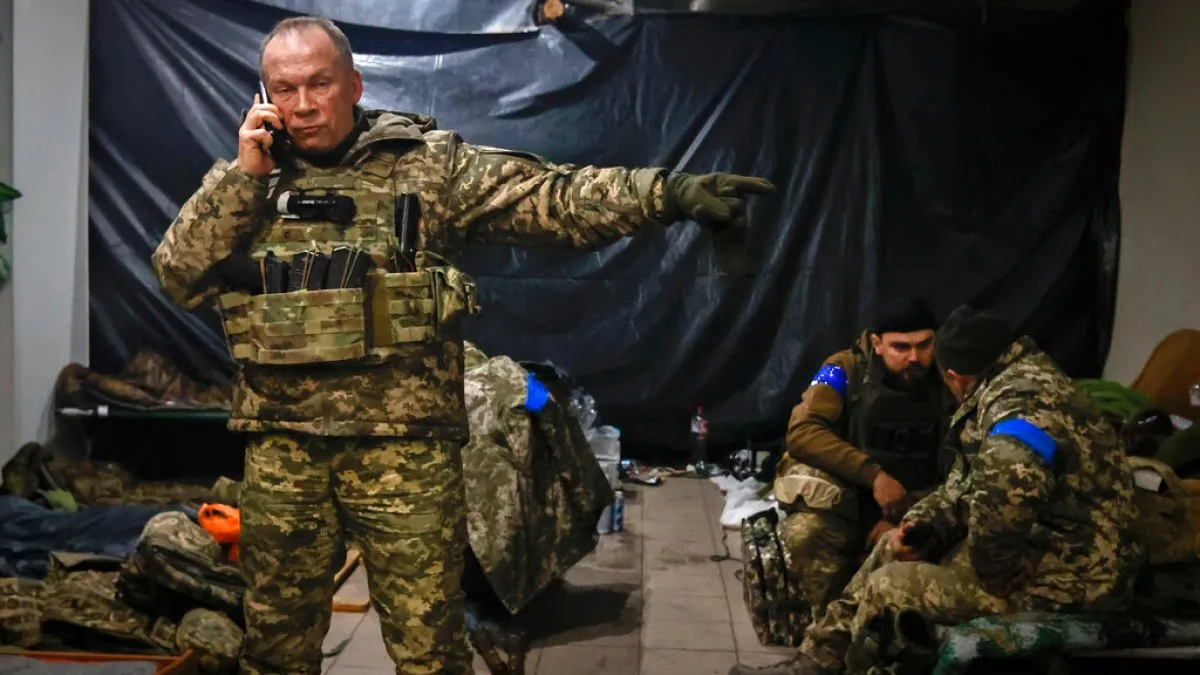
Meanwhile, in Ukraine’s own Rada infamous MP Mariana Bezugla called Pokrovsk-Mirnograd surrounded and even demanded for Syrsky to be dismissed: (Video at link.)

Pokrovsk has been surrendered, Mirnograd is surrounded, Syrsky should be dismissed — stated in the Rada

➖”Pokrovsk has already been captured, and Mirnograd is completely surrounded. Russians are approaching Zaporizhzhia and have long been in Konstantinovka,” said deputy Bezuglaya from the tribune in the Rada.

▪️She called for dismissing General Syrsky, reforming the general staff, and an audit in the army.
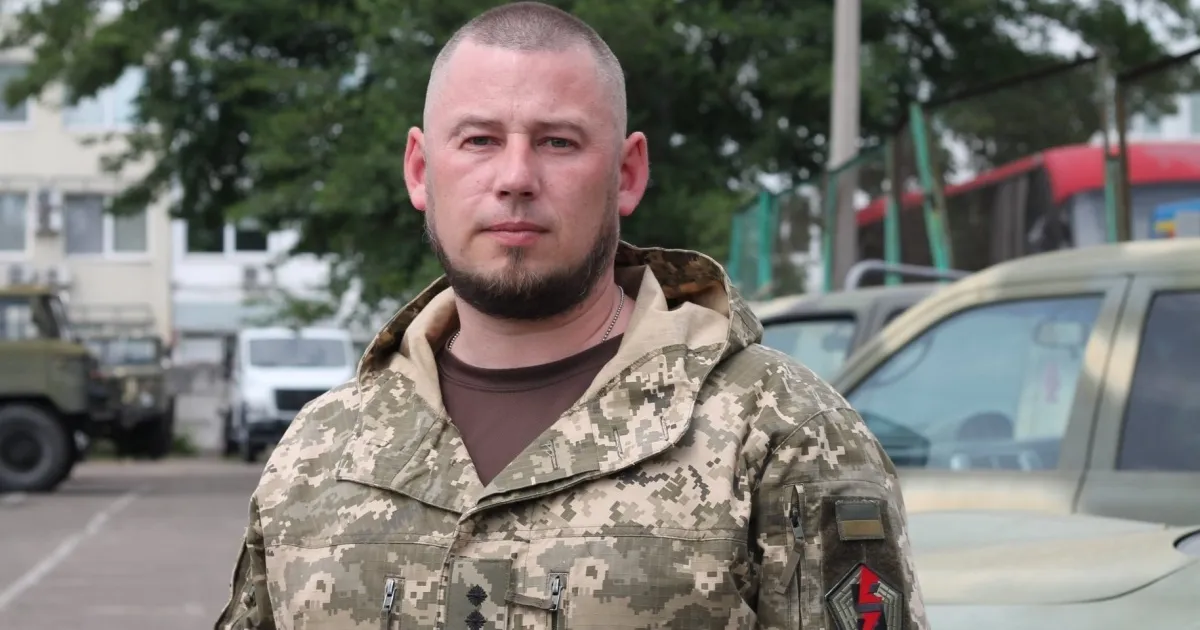

At this point, the most interesting thing will be to see the political reverberations that take place once Mirnograd and the entire symbolic agglomerate falls for good. It comes at a time that can be deemed a kind of ‘perfect storm’ given the political crisis that has now embroiled Zelensky, what with the NABU purges and Yermak’s recent firing of a few days ago.

It seems the longer the war goes on, the more it becomes clear just how obscenely misguided the West’s projections for both Russia and the war really were.

Image

But the final lesson yet to be learned concerns just how far Russia can and will go in Ukraine, until Ukraine itself is Russia, should the West continue pussyfooting and lollygagging with the disingenuous ‘settlement’ absurdity, wherein Russia’s core, unchanged demands are ignored again and again while the goalposts are shifted minutely only to buy desperate time for some deus ex machina “miracle” to save Ukraine at the eleventh hour. With the latest Brussels blow to the EU’s dreams of piracy, all such miracles, it seems, are becoming quickly exhausted.

So, we’re left with the inevitable and final lesson. (Video at link.)

https://simplicius76.substack.com/p/dam ... lows-to-eu

******

Ukraine: Alt-Media Falls For Trump’s 28-Point Peace Prank
Posted by Internationalist 360° on December 4, 2025


https://youtu.be/7q3OhDDMoIU

Reason2Resist with Dimitri Lascaris

Since Trump’s 28-point ‘peace plan’ was leaked to the press in mid-November, the anti-imperialist, alternative media have descended into a feeding frenzy over Trump’s latest peace prank.

Despite all evidence to the contrary, high-profile commentators from the alt media continue to embrace the least plausible hypothesis, namely, that Donald Trump — a pathological liar and genocidal war criminal — genuinely desires an end to the Ukraine war.

In this episode of Reason2Resist, Dimitri Lascaris critiques recent commentary from Glenn Greenwald, Daniel Davis, George Galloway and The Duran. Lascaris argues that their interpretation of Trump’s behaviour is radically inconsistent with Trump’s record.

Dimitri also discusses a recent article by William Schryver titled “The Imaginary Peace President“. That article can be found here: https://imetatronink.substack.com/p/the ... -president

https://libya360.wordpress.com/2025/12/ ... ace-prank/

*****

The Kholodny Yar Cult

A far-right 'history club' and a 'knightly order' in Ukraine
Moss Robeson
Dec 03, 2025

Image
Pavlo Palisa

Volodymyr Zelensky is said to be considering Colonel Pavlo Palisa as the next head of the Office of the President, after dismissing his immensely powerful chief of staff. Palisa is already the deputy head of the Office “for defense and security,” since last year. Previously he commanded the 93rd Mechanized Brigade “Kholodny Yar” during the battle for Bakhmut. I can’t help but point out that while Palisa led the unit, it published the following picture, which you can still find on its Facebook page.

Image

Earlier this year, the leader of the Azov movement said that he regards the 93rd as one of the strongest brigades in the army. If only recently, the unit has come to be associated with a youth group, Poklyk Yaru (“Call of the Ravine”), that glorifies the Ukrainian division of the Waffen-SS in addition to the Ukrainian rebels that fought to the bitter end for a statelet in the Kholodny Yar (“Cold Ravine”) forests in central Ukraine over 100 years ago.
Image
“Call of the Ravine” co-founder “Creator” wearing a patch of the Waffen-SS Galicia Division. This year his group posted the illustration on the right to celebrate the 82nd anniversary of this Ukrainian Nazi military unit being established.

Today, nearby the monastery that served as the spiritual capital of that rebellion is a monument to the 93rd brigade, which is flanked by a growing pantheon of modern day “Cossack Volunteers” who paid their respects to the “Kholodny Yar Republic” before giving their lives to defend Ukraine. Many of the deceased were friends of the Kholodny Yar Historical Club (KYHC) who served in far-right military units.

Image
Memorials to the 93rd brigade and “Cossack volunteers,” 2024

The 93rd brigade, which already suffered heavy losses in eastern Ukraine, adopted the name “Kholodny Yar” in 2018. According to Vakhtang Kipiani, a famous ideological officer in the National Guard who I wrote about the other day, “Thanks to the efforts and pen of [KYHC president] Roman Koval, there is a cult of Kholodny Yar heroes in Ukraine.”

Image
Roman Koval, 2025

In 1994, Koval chaired the small far-right party “State Independence of Ukraine” (DSU, Derzhavna samostiynistʹ Ukrayiny) that chose as its symbol the “Great-Power Falcon,” which allegedly inspired the Azovites in the National Guard to put a falcon on their banners. That year, Koval read Kholodny Yar, an obscure novel by Yuriy Gorlis-Gorsky (1898-1946), a veteran of World War I who got involved in the “Republic” and worked with German military intelligence during World War II.

Koval became obsessed with the Kholodny Yar Republic and in 1995 he started the annual tradition of honoring its heroes on their former territory. He also helped to turn Gorlis-Gorsky’s book into a nationalist cult classic. The Kholodny Yar Historical Club was officially established in 1997, and uses the symbol of the DSU, which represented the struggle for “Greater Ukraine.”

Image
Symbols of the KHYC and 1st Azov Corps in the National Guard

The KYHC published several editions of Kholodny Yar, and apparently inspired a famous Ukrainian author (Vasyl Shkliar) to write a best-selling novel, The Black Raven (2009). This eventually became the symbol of the 93rd brigade, designed by Oleksiy Rudenko, the nationalist “chief artist of the Armed Forces of Ukraine” who often wears a hat with a Rhodesia army patch.

Image

Hennadiy Shapovalov, the commander of the Ukrainian Ground Forces, recently joined Roman Koval, the president-for-life of the Kholodny Yar Historical Club, to lay flowers at the grave of Koval’s former vice-president, Oleh Kutsin (1965-2022), on what would have been his 60th birthday. “We work out of love for the Motherland and hatred for enemies,” according to Roman Koval.

Kutsin was also Koval’s deputy in the DSU. In 2015-16, Kutsin led the “Carpathian Sich,” an assault company in the 93rd brigade that was associated with the far-right “Svoboda” party, which has always glorified the Waffen-SS Galicia Division. In 2022, Kutsin organized the 49th Carpathian Sich battalion, which now includes the openly neo-Nazi “German Volunteer Corps.”

Image
Shapovalov and Koval at the grave of Oleh Kutsin

Brigadier general Shapovalov and the KYHC president also laid flowers at the grave of ultranationalist ideologue Mykola Mikhnovsky (1873-1924), who envisioned a Greater Ukraine and coined the slogan “Ukraine for Ukrainians!” Days earlier, Andriy Kovalov, the spokesman for the Ukrainian General Staff, and a member of the Kholodny Yar Historical Club, made a working trip to Washington.

Image
Shapovalov and Koval at the grave of Mikhnovsky. The KYHC unveiled this bust just over a year ago, after its previous memorial was vandalized.

It was around then I noticed that the neo-Nazi publisher Marko Melnyk, another vice president of the Historical Club, now leads the ideological service of a new Azov brigade in the National Guard (“Lyubart”), which includes the “Nachtigall Battalion.” Earlier this year at a book fair, Melnyk met Zelensky and had the president sign a copy of Ukrainian Nationalism. Fundamentals of Ideology, edited by former Azov ideologist Oleg Odnorozhenko. The book features texts by 20th century Ukrainian fascists, and one contemporary far-right thinker: Roman Koval.

Image

I should mention another (former) vice president of the club, Viktor Roh, one of the leaders of the OUN-B in Ukraine, and the longtime editor of the OUN-B newspaper which originated in 1950s Munich. Roh was old friends with Kutsin (they both participated in the 1990 “Revolution on Granite”) and has always looked up to Koval as a mentor, who “welded his calloused hands to the cogs of the national plow.” Roh and Koval both admired DSU co-founder Zenoviy Krasivsky (1929-91), the OUN-B leader in Ukraine at the time of independence. Last year, congratulating Koval on his 65th birthday, the Banderite editor wrote,

It is impossible to list his creative output: 82 books, author of over 3,000 articles in newspapers, magazines, almanacs, scientific collections, historical calendars, encyclopedias of Ukraine and the Ukrainian diaspora, author of several cycles of popular radio programs and film scripts, organizer of hundreds of actions and events. And all this not in a hurry, casually, but qualitatively and thoroughly … I have heard from many that Roman Koval and his associates, his team have done and are doing more than some specially designated institutions, institutions and structures with a staff of employees and significant funding. And I share this opinion. And I am proud to belong to this team.

Image
Roman Koval and Viktor Roh in the 1990s or 2000s

This post is part 5 in my Azov/Bandera Lobby crossover series. There’s no paywall today, but perhaps you would consider becoming a paid subscriber anyway, which will also get you access to paywalled content on my other Substack.

Unlike the Center for Research of the Liberation Movement, an important OUN-B front group (established five years later) that often comes up on this Substack, the Kholodny Yar Historical Club is not limited to “historians.” Roman Koval’s Club is an association of nationalist culture warriors of all sorts, including artists, writers, veterans, and descendants of the “National Liberation Struggles.”

Over the years, KYHC sculptors have created numerous memorials dedicated to Nazi collaborators and other figures from the 20th century. As one member explained, “The purpose of the Club’s activities was not only to study the history of our glorious and at the same time tragic past, but also to perpetuate the feat of the fighters, to restore the sense of national honor and dignity of the Ukrainian people.”

In January 2022, a month before the Russian invasion, the Kholodny Yar Historical Club celebrated its 25th anniversary in a concert hall in Kyiv. “We have restored historical memory,” said Roman Koval, and “we have contributed to the restoration of our nation’s fighting spirit.” He was proud that his Club included some of the last living veterans of the Ukrainian Insurgent Army and Waffen-SS Galicia Division. According to the KYHC, “Guests and delegates left in high spirits, eager to continue their work aimed at establishing a Ukrainian Ukraine.”

Oleh Tyahnybok, the head of Svoboda since the 2004 rebranding of the “Social-National Party,” and Andriy Tarasenko, the leader of the Right Sector movement, both made speeches at this event. Another speaker, the writer Larisa Nitsoy, praised the Club as a “knightly order.” Azov veteran Marko Melnyk reportedly announced “that from now on the Historical Club ‘Kholodny Yar’ is expanding the spectrum of its activities,”

and will engage not only in historical research, but also in promoting the interests of veterans of the war with Russia, uniting our struggle with a single historical continuity, providing society with the experience of previous generations of fighters for Ukrainian statehood.

As a result of the 2022 KYHC convention, the Club had four vice presidents when Russia invaded: Oleh Kutsin, Marko Melnyk, Bogdan Legonyak, and Lesya Ostrovska. Legonyak, a veteran of the Carpathian Sich, runs the Kholodny Yar National Nature Park, established earlier that month by presidential decree. Ostrovska is the director of “Wild Farm,” a “museum-ethnographic complex” in Kholodny Yar, and a longtime co-organizer of nationalist events in that area.

Image
Lesya Ostrovska

Back in 2013, before the “Euromaidan,” the annual springtime commemorations in Kholodny Yar — organized by Koval, Ostrovska, Legonyak, and others — were supported by “Fatherland” and “Svoboda,” the 2nd and 4th largest parties in parliament at the time. During the festivities, Svoboda’s more openly neo-Nazi youth wing, “Sokil,” held drills, shooting practice, and lectures “on history, ideology, and methods of combating Ukrainophobia.” In the spring of 2014, party leaders Yulia Tymoshenko (Fatherland) and Oleh Tyahnybok (Svoboda) made speeches in Kholodny Yar as presidential candidates.

Image
Kholodny Yar flag on Independence Square in Kyiv (2013-14)

In 2015, Azov and Right Sector joined the 20th annual commemorations in Kholodny Yar. That year, there was a ceremony for fifty Azov fighters being sent to the front. Andriy Biletsky, the founder of the Azov Regiment, made a speech. The war didn’t start in 2014, he said. “This is a war of two civilizations. The war of Eurasia against Ukraine, which stands guard over Europe. This is a war that began more than a thousand years ago.” Roman Koval chaired the organizing committee, as always, but Oleksandr Alfyorov was responsible for public relations, and Arseniy Bilodub was put in charge of the music festival.

Image
Azov Regiment in Kholodny Yar, 2015

Bilodub, a leader of the Right Sector movement, is the frontman of the neo-Nazi band Sokyra Peruna (“Perun’s Ax”). Alfyorov, now the director of the Ukrainian Institute of National Memory, was the press secretary for Andriy Biletsky and the Azov Regiment. The neo-Nazi brands “Militarist” and “Svastone” also supported the events in Kholodny Yar that year. Several months later, Roman Koval made his first appearance on Alfyorov’s radio show.

In 2016, Azovites led a torchlit march in Kholodny Yar, and had their weapons consecrated with Carpathian Sich fighters from the 93rd brigade. Roman Koval’s organizing committee included Mykola “Kruk” Kravchenko, the chief ideologist of the Azov movement, and Dmytro “Slip” Kukharchuk, the Azov leader in the Cherkasy region (which includes Kholodny Yar).

Image
Kholodny Yar, April 2016

Azov, Right Sector, and Svoboda all supported the 2017 commemorations, not long after they signed a joint “National Manifesto.” Azov’s sergeant school named after OUN founder Yevhen Konovalets even held a graduation ceremony in Kholodny Yar. The memorial rally included delegations from the 72nd, 80th, 81st, 93rd, and 128th brigades, the Azov Regiment, the Right Sector, the “Svoboda Legion,” the Carpathian Sich, and other units.

The Right Sector movement made a large showing in the spring of 2018, and held its next congress in Kholodny Yar. Later that year, the 93rd brigade received the name “Kholodny Yar.” KYHC member Serhiy Vasyliuk, the frontman of the nationalist rock band Tin Sontsia (“Shadow of the Sun”), a typical performer at the Kholodny Yar music festival, wrote the unit’s anthem. According to Roman Koval,

The Kholodny Yar Historical Club is also responsible for renaming military units, in particular the 93rd Kholodny Yar Brigade, the 72nd Mechanized Brigade named after the Black Zaporozhians, the 59th Mechanized Brigade named after General Yakov Gandzyk, and the 17th Separate Kryvyi Rih Tank Brigade named after Kostya Pestushko. Other units have also been renamed, largely thanks to our 25 years of work and persistent and talented promotion of the heroes of the Ukrainian People’s Republic era.

In 2019, the monument to the 93rd brigade was established in Kholodny Yar. Its commander spoke at the unveiling. Four years later, the KYHC expanded the site with a “Memorial to the Cossack Volunteers,” starting with the busts of four “heroes of the current war”: Oleh Kutsin, Andriy Zhovanik, and a pair of Right Sector commanders, Dmytro “Da Vinci” Kotsiubaylo and Taras “Hammer” Bobanych.

All of them but Kutsin have been decreed “Heroes of Ukraine” by Zelensky. KYHC member Andriy Zhovanik led the “V Legion” that fought with the Carpathian Sich and Right Sector. Arseniy Bilodub from Sokyra Peruna at least used to be a deputy commander of the unit, and supported them with his neo-Nazi brand Svastone. The far-right “Da Vinci” and neo-Nazi “Hammer” visited Kholodny Yar in 2018, and perhaps other years.

Image
Marko Melnyk with the memorial to Right Sector commander “Da Vinci”

The KYHC unveiled an additional monument of Oleh Kutsin in Kholodny Yar. Heorhiy Tarasenko, commander of the far-right volunteer unit “Freikorps,” was also buried near the monastery, and his grave become another site to visit for those who make the annual pilgrimage

Image
Freikorps is one of several Azov-adjacent neo-Nazi groups

The “Pantheon of Heroes” doubled in October 2023. Of the four new “Cossack Volunteers,” one previously served in Azov, and another was affiliated with Svoboda, but most importantly, all of them “visited Kholodny Yar in different years and participated in the commemorations held since 1995 on the initiative of Roman Koval.” Among the four was Yuriy “Ruf” Dadak, said to be an ideologist of “offensive nationalism” in the “military rock scene.” That unveiling started with a torchlight procession, and speakers included Ruslan Andriyko, a neo-Nazi officer from the Carpathian Sich battalion.

Image
Kholodny Yar, October 2023

In January 2024, the Kholodny Yar Historical Club held a special award ceremony in Kyiv. Various neo-Nazis attended this event including Arseniy Bilodub and his friend Andriy Sereda from the band “Komu Vnyz.” Vladyslav “Docent” Dutchak, an ideological officer in the Azov Brigade, made an appearance on behalf of Azov commander Denys Prokopenko.

Image
Bilodub at the January 2024 KYHC meeting

Among the recipients of the “Golden Svarog,” which happens to be a Slavic swastika, was Yuriy Syrotiuk, the political education chief of the Svoboda party, and a member of the OUN-B and KYHC. He is the main organizer of the annual “Bandera Readings,” who also coined the “Revolution of Dignity.” Since 2022, Syrotiuk has served in the 5th assault regiment, first commanded by Pavlo Palisa, before Palisa took over the 93rd brigade. KYHC vice president Lesya Ostrovska, wearing her Black Sun, which some would also have you believe is an ancient Ukrainian symbol, accepted the award for Oleh Kutsin, and delivered it to his son in the Carpathian Sich.

Image
The Golden Svarog award. Also, Syrotiuk and Ostrovska

Colonel Palisa, now a candidate to lead the Office of the President, made a speech at the 2024 spring commemorations in Kholodny Yar, at which four more “Cossacks” joined the “Pantheon of Heroes.” They were: “Historian,” co-founder of the “Call of the Ravine” youth group, “to whom Roman Koval wanted to pass on his Kholodny Yar legacy”; “Dobry,” a former Azov fighter that died in the Right Sector battalion named after “Hammer”; “Soldier,” a former Azov commander who also fought in the Carpathian Sich and V Legion; and “Palankovy,” a former volunteer of the “Ukrainian Volunteer Army” which splintered from Right Sector.

Image
Palisa and “Hammer” in Kholodny Yar, 2024

Later that year, the Kholodny Yar History Club paid tribute to slain Azov Battalion fighter Oleg Aksenenko, who died in the summer of 2014. Aksenenko was clearly a neo-Nazi football hooligan from the paramilitary “social-nationalist” group “Patriot of Ukraine.” The KYHC noted his 30th birthday in July, and the 10th anniversary of his death in August.

Also in 2024, the famous journalist Vakhtang Kipiani co-founded an Azov-inspired ideological service in the Khartia brigade of the National Guard, and joined Roman Koval in Kholodny Yar for the “Day of the Defender” in October. In his speech, Kipiani said that Koval “deserves our deepest gratitude for the dozens and dozens of books that have effectively rekindled the fire of Kholodny Yar.”

Toward the end of the year, 93rd brigade commander Pavlo Palisa was appointed to the Office of the President, Lesya Ostrovska visited a Ukrainian Nazi art exhibit, and the KYHC unveiled a new memorial at the grave of Mykola Mikhnovsky after its previous one (co-sponsored by the Marko Melnyk Publishing House) was vandalized. In December, Roman Koval’s Club noted the 10th anniversary of the death of another neo-Nazi football hooligan who joined the original Azov Battalion, and a new commander of the 93rd brigade was named. Since then, the famous unit has collaborated with Azovite fundraisers and established a penal battalion.

Image
From the art exhibit by a veteran of the Carpathian Sich. On the left, a Ukrainian Waffen-SS veteran meets WWII re-enactors. On the right, a portrait of Ostrovska.

This year, at the 30th commemorations in Kholodny Yar, the KYHC added half a dozen busts to its pantheon of “Cossack Volunteers.” That included “Fritz,” a veteran of the Carpathian Sich who led his local branch of the Svoboda youth group; “Bilotur,” an Azov commander who died in the Olenivka prison massacre; “Greek,” who fought in the Ukrainian Volunteer Army; and “Heavy,” a “legionnaire” of “Centuria,” the openly neo-Nazi paramilitary youth group of the Azov movement.

The Kholodny Yar Historical Club erected another six busts in October, including “Nord,” a Right Sector company commander from the “Hammer” battalion; “Argo,” a company commander from the Carpathian Sich; “Kapa,” the chief sergeant of the Khartia brigade; “Prut,” affiliated with Svoboda; and “Creator,” from the far-right youth group “National Alliance,” who organized “military-patriotic camps” in Kholodny Yar.

At the latest ceremony in Kholodny Yar, the KYHC president presented their literary award to Oleksiy Byk, a neo-Nazi company commander from the Azovite 3rd Assault Brigade. Last year, on the 135th anniversary of Adolf Hitler’s birth, Byk declared, “Today is the birthday of the most famous artist in the world, but no media has written about it!”

Over the summer, Oleksandr Alfyorov from the Azov movement took over the Ukrainian Institute of National Memory. Alfyorov, a former organizer of the commemorative events in Kholodny Yar, has known Koval for at least a decade. The same goes for Maryna Mirzaeva, who replaced Alfyorov as the head of the ideological service of the Azov movement’s 3rd Assault Brigade and 3rd Army Corps. Koval even has his arms around her in one picture from 2015—but what happens in Kholodny Yar, doesn’t stay in Kholodny Yar…

Image
Maryna Mirzaeva with Roman Koval in 2015, and the 3rd Assault Brigade in 2023 (wearing a patch of the Waffen-SS Galicia Division)

https://banderalobby.substack.com/p/the ... y-yar-cult

******

Glechik was nationalized in Sevastopol.
December 6, 9:00

Image

In Sevastopol, the Ukrainian restaurant "Glechik" was nationalized.

The current governor commented on the nationalization:

"It turned out that the restaurant owners have been living in London for a long time, and all the profits are going there, including to campaigns related to their personal stance on supporting our enemies in a special military operation."

It's good that this was discovered so quickly, considering that "Glechik" has been operating since Sevastopol's reunification with Russia.
In fact, if you start digging into former Ukrainian businesses in Crimea, you'll easily discover that some of them have simply been transferred to third parties. In fact, a friend from Kyiv once told me how SBU generals, after 2014, were busy transferring their properties in Crimea and Sevastopol to third parties. Overall, I think there are many more similar properties in the city that are slated for nationalization.

https://colonelcassad.livejournal.com/10229469.html

Google Translator
"There is great chaos under heaven; the situation is excellent."

User avatar
blindpig
Posts: 14890
Joined: Fri Jul 14, 2017 5:44 pm
Location: Turtle Island
Contact:

Re: Footnotes from the Ukrainian "Crisis"; New High-Points in Cynicism Part V

Post by blindpig » Sun Dec 07, 2025 1:31 pm

"Why is it so important?"
Published by @nsanzo ⋅ 07/12/2025

Image

“What we decide now will determine the future of Europe: Belgium’s particular vulnerability regarding the use of frozen Russian assets is undeniable and must be addressed in such a way that all European states bear the same risk,” Friedrich Merz, tasked with visiting the Belgian prime minister to convince (or force) him to accept the idea of ​​the infamous reconstruction loan—the creative legal loophole with which European countries hope to gain control of Russian assets held in the European Union—wrote on social media yesterday. Belgium’s refusal, as the country clearly most exposed to the foreseeable Russian litigation, to unilaterally accept a risk that the European Union continues to falsely claim does not exist, has put what the Financial Times has called a “desperate attempt to maintain Ukraine’s solvency by using Moscow’s frozen wealth” in a precarious position. “Europe exhausts legal tricks over frozen Russian assets,” the newspaper headlined, making no secret of the alarm currently gripping European countries, which are working against the clock.

The German Chancellor's message came hours after his visit to Brussels, although Merz preferred to frame his argument not so much in terms of Ukraine's economic needs, but rather the shared need to use those funds to guarantee security. "Russia is preparing militarily for a conflict with the West and threatens European freedom and security. It is in our hands to send an unequivocal signal to Moscow," stated the Frankfurter Allgemeine article reposted by Merz with his umpteenth appeal for the de facto expropriation of the withheld Russian funds. "The problem is that Russia has a very large army, its military budget is immense, and it will want to use it in the future, whether in Ukraine or elsewhere," a smiling Kaja Kallas affirmed in her address at the Doha Forum, where she reiterated the European discourse of maintaining pressure—and the fight—until Ukraine can achieve its objectives and possibly those of the European Union. Pressure, therefore, must be directed against “the aggressor,” since “if aggression is rewarded, it will happen again.” “And not only in Ukraine or Gaza, but all over the world, because it would show that aggression is rewarded. That is why we have so many wars right now and why international law is so threatened,” declared a satisfied Kallas, former prime minister of Estonia, a country with negligible military power, but which chose to participate in the invasion of Iraq as a way of getting closer to the United States.

Rejecting once again the idea of ​​pressuring Ukraine for concessions to achieve peace, Kallas stated, “Okay, we offer security guarantees, but if it stops there, it will start elsewhere.” His discourse, like Merz’s, implies viewing Ukraine as Volodymyr Zelensky has presented it on so many occasions: as a tool to distract Russia while Western countries rearm for an attack that would be practically inevitable in the event of a Ukrainian defeat. The military balance, the cost involved, and the evident risk of quickly finding themselves in the nuclear scenario that Vladimir Putin—a man marked by his upbringing in the Soviet Union, a country that used images of Hiroshima and Nagasaki to demonstrate why such a scenario should never be repeated—seeks to avoid at all costs, make an attack against the European Union unthinkable. This attack, which Germany, Poland, and the Baltic and Scandinavian countries have long presented as shock therapy in favor of militarization, is a far cry from the alternative.

It is no coincidence that the European Union's militaristic shift coincided with political changes, not military ones. Three years had passed since the Russian invasion, Moscow's troops had not managed to withdraw from Donbas, Ukraine still maintained a presence in Kursk, and nothing indicated any change in the military aspect of the war. The trigger for rearmament and the media policy of exaggerating the Russian threat to Ukraine and the European continent in general was not any break in the front lines, but Pete Hegseth's speech to the defense ministers of the NATO member states. The cause of the European Union's change of course on security was not the threat from an enemy, Russia, but from an ally, the United States, which for the first time clearly stated that Europe was no longer a priority for Washington, that European countries had to take responsibility for the continent's security and the cost of the war, and that Trump's willingness to finance the Ukrainian adventure indefinitely simply did not exist.

Merz or Kallas may continue to argue that arms funding for Ukraine is part of a continental security strategy, although the reality is always much more prosaic. The funding that European countries are trying to obtain by seizing Russian funds held in various countries is not aimed at defending Europe, but rather at guaranteeing the status quo in the face of the United States' economic withdrawal from the current real war, not the needs of a future war that, for the moment, is entirely imaginary. When asked about the European Union's capacity to exert pressure on Russia, Kaja Kallas responded to the debate moderator, Christian Amanpour, that “we have tools of pressure, and they are economic. Wars also end when the aggressor runs out of money to finance the war.” “And you see it?” Amanpour insisted, with a tone of surprise. “Yes,” Kaja Kallas replied with the confidence of someone who had her two-point plan . “We see it.” The EU's foreign policy chief boasted about Russia's high interest rates and the reduction in oil revenues, and how "the sanctions on the ghost fleet are hitting them hard." Nineteen sanctions packages later, the EU is preparing the next one, demonstrating both that its measures have failed to achieve their objective and that there are no new ideas beyond repeating the same approach and hoping for a different result. Finally, Kallas focused on the attempt to use Russian funds to support Ukraine. "We are 27 democracies, and it takes time to get things done," she stated, referring to Belgium's position, before insisting that talks are ongoing. The attempt to demonize Belgium also continues, with headlines like the one in Politico, which on Thursday labeled the country a "Russian asset" to promote its article, "How Belgium Handed Putin an Unexpected Victory."

“Why is this so important?” Kallas tried to explain. “To demonstrate that [aggression] is not rewarded,” he continued, offering examples “from this part of the world.” Clearly, Kallas didn't use the American aggression against Iraq, but rather Iraq's attack on Kuwait. He did so before reiterating the idea that aggression ends when the aggressor runs out of money. “By the way, Russia ended the war in Afghanistan when it ran out of money,” he concluded. As Diego Córdovez, the Ecuadorian diplomat who mediated for years in the negotiations for the Soviet—not Russian—withdrawal from Afghanistan, demonstrates in detail, the Soviet motivation was always political, and its attempted withdrawal predates Gorbachev's rise to power and the economic decline of the USSR's final years by several years. Furthermore, Moscow continued to fund the Afghan army and Najibullah's government, which survived the Soviet withdrawal and even the collapse of the USSR, but fell when Boris Yeltsin, years after the Russian withdrawal , cut off funding.

Kallas's comments, who seems to still dream of this war having a similar outcome to that of Afghanistan—the country's dissolution—are unequivocal: Russian funds must be used to defeat Russia, something the EU set as a strategic objective in February 2024. However, three and a half years of continuous funding, massive mobilization of military resources, and uninterrupted and unprecedented support in a proxy war make it clear that Kallas's wishes differ markedly from reality. The European need to acquire Russian assets stems from the lack of US funding and the difficulties of perpetually financing the war at the expense of national budgets. Furthermore, there is another detail to consider. Dissatisfied with the formula chosen by the United States to reach an agreement—peace and security guarantees for Ukraine in exchange for territory and Russia's readmission as a full member of the West's international relations—the European Union is seeking ways to obstruct the process. Sidelined from the negotiations, European capitals are watching with concern as the talks between Steve Witkoff and Rustem Umerov drag on for three days, during which nothing has been revealed, but which make it clear that von der Leyen, Macron, Starmer and Merz have not managed to stop the process as they did last August, when a visit to Washington halted the “understanding” between Trump and Putin supposedly reached in Alaska.

“Ukraine is at a critical juncture. Russia is escalating its attacks, and Ukraine’s financing needs are growing. We propose two solutions, including a reparations loan using frozen Russian assets, as safeguards for EU countries to increase Russia’s war costs and enforce peace,” the European Commission wrote yesterday. Ukraine doesn’t need peace; it needs funding to continue the war. EU countries are aware that the de facto expropriation of Russian assets for military use would be a significant step toward getting Russia to reject a deal with the West. Given the US position, it seems Washington is also aware of this. “According to European diplomats familiar with the matter, the United States pressured several European Union countries to block EU plans to use frozen assets of the Russian central bank to back a massive loan to Ukraine. US officials argued to member states that the assets are needed to help secure a peace agreement between Kyiv and Moscow and should not be used to prolong the war,” Bloomberg reported on Friday .

The dispute centers on how these assets should be used: as part of peace or as part of war. “Russia might agree to use $300 billion of frozen sovereign assets in Europe for the reconstruction of Ukraine, but will insist that some of the money be allocated to the fifth of the country controlled by Moscow’s forces,” Reuters wrote in an exclusive report citing Russian sources, published on February 21, 2025, three days after the first meeting between the United States and Russia. Since then, the EU has been aware that Russia has not only written off these funds but is willing to put them on the table for Ukraine’s primary need: reconstruction. The news went largely unnoticed, possibly because for the EU, reconstruction is a concern for the future, not the present, when all funding must be used for weapons for war or for the militarization of the post-ceasefire period.

“Russia has informally relinquished its claim to regain access to $280 billion in assets that were frozen by Western countries at the start of the full-scale invasion of Ukraine, and is prepared to reach an agreement on the matter as part of a US-brokered peace deal, two high-level sources in Moscow told Faridaily this week,” wrote journalist Farida Rustamova yesterday, presenting the information as an exclusive. This is why the EU is once again in a hurry, trying to prevent at all costs the Russian assets from being used for something—peace—for which they were not intended.

https://slavyangrad.es/2025/12/07/por-q ... mportante/

Google Translator

******

From Cassad's Telegram account:

Colonelcassad
The situation on the front lines (data from @Belarus_VPO )

On the Kharkiv front:
Russian Armed Forces, relying on Sinelnikovo, are conducting assault operations in Liman, with tactical successes achieved, and encounter battles are being reported on the southern outskirts of Vovchansk.

On the Kupyansko-Limanskoye front:
clashes are being recorded in the vicinity of Kupyansk, the situation has not changed significantly;

Russian Armed Forces are conducting assault operations in the Liman area and have cleared Yampol.

On the Slavyanskoye front:
Russian troops have consolidated their position in the eastern part of Seversk and expanded their control of the territory south and east of the city, and clashes continue in the central and southern parts of Seversk;

the Russian Armed Forces have gained control of the area between Fyodorovka and Sakko i Vanzetti, and encounter battles are being reported in Svyato-Pokrovskoe.

On the Konstantinovskoe front:
localized clashes are being recorded on the southeastern outskirts of Konstantinovka and along the northern shore of the Kleban-Bykskoye Reservoir.

In Pokrovskoe:
Russian troops are exerting pressure in the Belitskoye area and in Rodynske, and the clearing of Mirnohrad continues.

Russian forces are making tactical gains along the Suvorovo-Nikanorivka line, and positional fighting continues in Grishino.

In Novopavlovske:
the fighting remains positional, and the situation has not changed significantly.

In Zaporizhzhya:
intense clashes are reported in the direction of Varvarovka on the eastern and northeastern outskirts of Hulyaipole;

fighting continues in Primorskoye and near the high-rise buildings of Stepnogorsk, and Russian troops are exerting pressure in Malokaterinovka.

***

Colonelcassad
0:40
The Ukrainian command ordered National Guard fighters to shoot Ukrainian soldiers retreating from their positions near Kupyansk. TASS has obtained the corresponding radio intercepts.

***

Colonelcassad
Moldova asked Romania for electricity assistance following Russia's overnight strike on Ukraine.

Due to attacks on Ukraine's power grid, an "important energy group" was shut down in the Moldovan region, and interconnector lines are almost at capacity, Moldelectrica explained.

https://t.me/s/boris_rozhin

Google Translator

******

Trump’s ‘peace plan’ is a war plan for Ukraine
December 4, 2025 Lev Koufax

Image
President Trump with defense and commerce officials, Aug. 26. The proposed Ukraine framework reflects the merger of military strategy and economic interests — ensuring continued war profiteering under the guise of peace.

In late 2025, the Trump White House rolled out a new “28-point plan” to end the war in Ukraine. Far from a serious bid for peace, the proposal is designed to lock in NATO’s gains, give the U.S.-backed regime in Kiev time to regroup, and blame Russia when the fighting resumes.

Under Trump’s peace farce, the borders would be frozen along the current line of contact in an immediate ceasefire. Donetsk, Luhansk, and Crimea would officially be recognized as Russian territory. The plan also requires Ukraine to constitutionally commit to not joining NATO.

At first glance, this seems reasonable. However, the plan also calls for a Ukrainian standing army of 600,000 troops, Ukrainian EU membership, and security guarantees from the United States. In practice, this is NATO by another name. It allows for continued military investment and gives the West an open check for new provocations against Russia.

Russia’s strategic objectives

Washington portrays Russia’s intervention as the first step in a new Napoleonic or Hitler-style march across Europe. Western media depict Putin and the Russian people as power-hungry aggressors bent on rebuilding the czarist empire. This caricature has nothing to do with reality.

Russia is a capitalist state with its own interests, but it did not choose this war in a vacuum. For three decades, NATO has expanded eastward, ringing Russia with bases and missile systems and backing a hard-right regime in Kiev that waged war on the people of Donbass. Russia’s 2022 intervention was, above all, a response to this encirclement.

From the outset, Russian leaders have named four main objectives in Ukraine: to demilitarize the country, to break the power of fascist formations like the Azov battalion, to protect the people of Donetsk and Luhansk from state terror, and to ensure that Ukraine is permanently neutral — not a NATO bridgehead on Russia’s border.

Since the fascist Maidan coup of 2014, Ukraine has received massive Western arms shipments and training. Neo-Nazi formations have been folded into the regular military and security services. The regime has torn down Soviet monuments, outlawed communist organizations, attacked unions, and elevated Nazi collaborator Stepan Bandera as a national hero. For the people of Donbass, this has meant years of shelling, blockade, and repression.

In this context, Russia’s insistence on a neutral Ukraine and real security guarantees is not “imperial ambition,” but a refusal to accept a permanent NATO forward base on its doorstep — a price Russian society has already paid for in lives and hardship.

Why offer a plan Russia cannot accept?

The U.S. proposed this knowing it contained provisions that Russia could never accept. Russian acceptance of this plan would arguably put them in a worse strategic position than when the war began. The Ukrainian army would be over twice the size it was in 2022. The Ukrainian government would remain a hardline right-wing U.S. puppet regime.

While technically keeping Ukraine out of NATO, this provision is in name only. The security guarantees did not exist when this war began. Why would Russia accept a stronger U.S. military alliance with Ukraine? This merely sets up another conflict down the road.

Russia has been clear from the beginning, it cannot allow a NATO military bridgehead on its western border. This peace plan would, de facto, establish such a bridgehead. It also allows for massive U.S. economic investment in Ukraine for rare earth mining, natural gas pipelines, and infrastructure projects. Deepened U.S. control over Ukraine’s economy is not a path to peace; it’s one of the very conditions Russia set out to prevent.

So, why propose this plan when Russia clearly cannot accept it? It’s hard to say exactly, but the most likely reason is rhetorical positioning. Washington puts forward a proposal that appears “reasonable” to a public worn down by war. When Russia refuses, the U.S. blames Moscow as the sole obstacle to peace and uses that propaganda to justify more weapons, more funding, and more escalation.

Now, there is another possibility – even if remote. It is possible that Trump and the generals and billionaires around him truly believe they can enforce this plan on Russia through economic warfare. Russia has faced crippling sanctions since the start of the war, with little impact. Through industrial war mobilization and deepened economic ties with China and the Global South, Russia has consistently circumvented most of the West’s sanctions.

If there is a belief in Washington that sanctions and financial pressure can force Russia to swallow a plan that cements a hostile Western military outpost on its border, that belief has no basis in reality.

The U.S. doesn’t want peace

The billionaires who control the U.S. economy — and the politicians of both major parties who answer to them — are not seeking peace in Ukraine. They are seeking profit and strategic advantage. The war has been a bonanza for Northrop Grumman, General Dynamics, Raytheon, Lockheed Martin, and the rest of the military-industrial complex. They have made fortunes shipping weapons into Ukraine, and they see no reason to stop.

They are interested in war, profit, and the isolation of their primary target: China.

Even if the West believes Trump’s plan can be implemented, peace isn’t the goal. Any cessation of hostilities under this framework would be temporary — a breather for the U.S. and its proxy in Kiev to regroup, rearm, and prepare for the next round of confrontation with Russia.

The U.S. does not want to cool global tensions or bring Russia back into its fold. The U.S. billionaires want to make money, and they have made loads of it by waging war on Russia. Needing a break to regroup is not the same as a genuine desire for peace. Peace is explicitly opposed to the economic interests of the entire military-industrial complex.

These defense magnates and the U.S. government hope that by draining Russia through endless war, they can eventually force regime change and deprive China of a key strategic ally. Imperialism will do whatever it takes to maintain its dominance and increase its profits, even if that means promoting phony peace plans.

https://www.struggle-la-lucha.org/2025/ ... r-ukraine/

******

Ukraine – Roadblocks To A Peace Agreement

The new U.S. National Security Strategy says with regards to Ukraine:

It is a core interest of the United States to negotiate an expeditious cessation of hostilities in Ukraine, in order to stabilize European economies, prevent unintended escalation or expansion of the war, and reestablish strategic stability with Russia, as well as to enable the post-hostilities reconstruction of Ukraine to enable its survival as a viable state.

The U.S. is pressing forward with that mission. With the help of the Ukrainian anti-corruption vertical (the National Anti-Corruption Bureau of Ukraine (NABU), the Specialized Anti-corruption Prosecutor Office (SAPO) and the High Anti-Corruption Court (HACC) – all created by the U.S. after the 2014 Maidan coup) it has removed Andreij Yermak from his position as the head of the president’s office.

The next step is to press the acting President Vladimir Zelensky to agree to a peace agreement with Moscow. This will require him to give up land that the Ukrainian army is still holding.

If Zelenski proves to be unwilling to do so the anti-corruption vertical will open a case against him and remove him from his office.

A piece on Ukrainian corruption in today’s NY Times can be seen as an urgent warning:

Zelensky’s Government Sabotaged Oversight, Allowing Corruption to Fester (archived)
Ukrainian leaders blame independent advisers for failing to prevent graft. A Times investigation found that President Volodymyr Zelensky’s own administration removed guardrails.

To protect their money, the United States and European nations insisted on oversight. They required Ukraine to allow groups of outside experts, known as supervisory boards, to monitor spending, appoint executives and prevent corruption.

Over the past four years, a New York Times investigation found, the Ukrainian government systematically sabotaged that oversight, allowing graft to flourish.

President Volodymyr Zelensky’s administration has stacked boards with loyalists, left seats empty or stalled them from being set up at all. Leaders in Kyiv even rewrote company charters to limit oversight, keeping the government in control and allowing hundreds of millions of dollars to be spent without outsiders poking around.

Supervisory boards serve an essential oversight function, allowing independent experts, typically from other countries, to scrutinize major decisions inside Ukrainian state-owned companies.


Isn’t it funny that the NY Times has known this ‘for the past four years’ and was only now ready to reveal it? It is quite obvious that something has switched.


As Zelenski is on his way out the former prime minister Yulia Tymoshenko may become a viable replacement. She is likely willing (for a price) to do whatever the U.S. demands from her. She also has the necessary seniority to be able to push an agreement through the Ukrainian Rada.

But another roadblock towards a peace agreement is the current leadership of the Ukrainian military. The current commander-in chief, General Alexander Syrski, is not ready to fulfill the Russian demand which will be the core of any agreement.

In an interview with SkyNews he is rejecting to give up on land in the Donbas that his troops are still holding:

Speaking frankly, General Syrskyi, commander-in-chief of the armed forces of Ukraine, signalled that his country’s soldiers would fight on if diplomacy fails – and he warned that the fate of the whole of Europe is at stake.

“Our main mission is to defend our land, our country, and our population,” he said in an exclusive interview in the basement of a building in eastern Ukraine. Sky News has been asked not to disclose the location for security reasons.

“Naturally, for us it is unacceptable to simply give up territory. What does it even mean – to hand over our land? This is precisely why we are fighting; so we do not give up our territory.”


Syrski may have to speak out against giving up land to keep up the moral of his troops. But the intensity with which he does so lets me conclude that he is feeling in this are genuine:

Asked whether the sacrifice of those people who gave their lives defending their country would be in vain if Ukraine is forced to hand over the land it still controls in the Donbas to Moscow, General Syrskyi, speaking in Ukrainian through a translator, said: “You know, I do not even allow myself to consider such a scenario.

“All wars eventually end, and of course we hope ours will end as well. And when it does, a just peace must be established.

“In my understanding, a just peace is peace without preconditions, without giving up territory. It means stopping along the current line of contact.”

The commander then broke into English to say that this means: “Stop. A ceasefire. And after that negotiations, without any conditions.”

Switching back into Ukrainian, he said: “Any other format would be an unjust peace, and for us it is unacceptable.”


Russia has already rejected to stop the fighting at the current frontline. It wants a full peace agreement to end the conflict for good. A ‘just peace’ in Syrski’s sense is simply not on offer.

There are sign that Syrski has become delusional. Since December 1 the Russian side has claimed to have completely ‘liberated’ Pokrovsk and surrounded the neighbor city of Myrnograd. Most observers and war mappers have agreed with that assessment. But the Ukrainian general staff under Syrski is still rejecting the facts:

Ukraine’s military leaders insisted: “Search and assault operations and the elimination of the enemy in urban areas continue in Pokrovsk.

“Taking advantage of unfavourable weather conditions, the invaders made another attempt to flag plant in one of the city’s districts so that propagandists could use it as proof that they had taken control of the entire city.

“After that, they fled in a hurry, and the mopping up of the enemy group continues.”


In his SkyNews interview Syrski is doing likewise:

General Syrskyi offered his assessment of the fight on the ground, saying:

• Ukrainian troops still control the northern part of the fortress city of Pokrovsk in the Donbas and will keep battling to retake the rest of it, contrary to Russian claims to have captured what has been a key target for Moscow for the past 16 months.

Such boneheadedness has cost the lives of many Ukrainian soldiers.

– Excursus –
PBS just released a documentary about a Ukrainian attack during its 2023 counter-offensive: 2000 Meters to Andriivka (vid). (The video is geo-fenced. People not in the U.S. will need a U.S. proxy server to watch it.)

The 1:45 hours long documentary is authentic. It is using lots of original helmet-cam footing. It follows a group of soldiers during a three months long fight along a 2,000 meter long treeline towards a tactically unimportant hamlet near Bakhmut. When the soldiers, after may losses, finally reach the completely destroyed hamlet they hang up their flag – upside down. The Russian forces retrieved the place soon after that happened.

Alex Robert of History Legends has published a review of it. – End-Excursus –

When the U.S. has found a Ukrainian government which is willing to agree to a peace deal with Russia it will have to look for a military leadership in Ukraine that will support and implement the decision.

General Syrski is unlikely to be willing to do that. He also lacks the standing to be able press on individual units to follow related orders.

Posted by b on December 6, 2025 at 17:07 UTC | Permalink

https://www.moonofalabama.org/2025/12/u ... ement.html

******

Child nazi spies

Testimony from the inside of a nazi terror cell in Russia manipulated by Ukr intel agencies. Tesak, Zukhel, Uragan, Milchakov. NS/WP and MKU.
Events in Ukraine
Dec 05, 2025

The New York Times put out an article in September. It concerned the use of children by intelligence services in the Russo-Ukrainian war. They throw molotov cocktails and bombs into military recruitment centres, army vehicles, and other military infrastructure. They are arrested. More are found online.

Image

There are many ways to recruit an agent. One is money. But a few hundred dollars, at most a thousand, is quite a low price to ask, when the operatives risk a lengthy prison sentence.

The NYT article described how Ukrainian and Russian spooks apparently sometimes use sexual blackmail against their victims. Finding compromising photographs of the minors as a guarantee they cooperate. But this too has its drawbacks. An operators that hates his or her handler cannot always be trusted to faithfully implement the plan.

There was one method the article did not mention - ideology. In Ukraine, potential Russian agents are often radicalized against the military because of forced mobilization and the never-ending frontline butchery.

But for Ukrainian intelligence officers targeting Russia, there is a quite useful pool that can be tapped into — the white nationalist community.

To begin with, it is enormous - at the start of this century, it was undoubtedly the mecca of the global neo-nazi movement. Despite repression, the symbols and heroes of the movement continue to be highly popular among online youth. The figure of Maksim Martsinkevich, who died in a Russian prison in 2020, probably has far more fancams dedicated to him than Navalny (who, coincidentally, once played a role in putting Martsinkevich in prison).

Videos of the charismatic Martsinkevich’s antics get millions of views. The following video has over 6 million views, and was only posted a few weeks ago. More than 2 thousand comments express their nostalgia for Tesak’s old updates.


Meanwhile, Tesak’s old comrades have largely left to Ukraine. Artem Krasnolutsky (‘Uragan’/Hurricane), Tesak’s former apprentice, now leads his own small unit in the Ukrainian army. It features ‘Combat 18’ patches - Tesak’s organization. Tesak’s street gang is now a military force.

Image

Back to the advantages of using Russian neo-nazis for intelligence operations. These are individuals who hate the Russian government. They consider it to be controlled by Jews, aimed at replacing the white slavs with muslim migrants. Their heroes, like Martsinkevich, are killed by the system.

These are individuals who are used to committing violence. The Russian Nazi Video Monitoring Project recorded 137 racial attacks and 5 possible murders posted online in November 2025. The number of torture videos rose, featuring the breaking of fingers, attacks with hammers and knives, humiliation of corpses. The rising number of videos, they say, points to the fact that new recruits have joined the movement. Posting such a video is a way to gain entry.

Image

And best of all, these are all entirely disposable instruments. Children, individuals in and out of psychiatric facilities. Types easily pushed into self-destructive, violent behavior.

Throughout the late 2000s and early 2010s, many leaders of these movements were pushed out of Russia. They often left to Ukraine, where they have since played highly influential roles in Ukraine’s Azov movement.

Today we’ll be taking a look at one particularly important such individual - Roman Zheleznov, alias ‘Zukhel’. He has often been connected with the NS/WP network. Both Zheleznov and the NS/WP constantly re-emerge when analyzing the Russo-Ukrainian nazi underground.

Image
Zheleznov poses with his Azov comrades in Ukraine around 2014

I’ve written about NS/WP before. It isn’t exactly an organization. Originally the name of an influential neo-nazi forum in the early 2000s for the sharing of snuff films and ideological debates, it then became a popular brand (think ISIS) that any enterprising cell of violent youths could adopt. In 2018, one affiliated cell in regional Russia is said to have held a competition — the one who kills the most homeless on video gets a white iphone.

NS/WP reflected broader trends. As the years have gone past, the ‘people hate’ movement became particularly popular in the neo-nazi movement. In the early 2000s, there was some sort of ideology - racism. Increasingly, it has become a matter of murder for its own sake, generalized, aestheticized misanthropy. Society is made up of unthinking goys enslaved by the system. Society must not only be purged, but even destroyed. This can take the form of killing the weak, or shooting up a school.

NS/WP achieved global fame after 2022. In 2023, Russian law enforcement announced the arrest of a number of NS/WP members for apparently planning the assassination of top Russian state media figures. Then, in 2024, an NS/WP cell claimed responsibility for the murder of Ukrainian nationalist personality Iryna Farion.

With the Farion case, many in Ukraine believe that the young NS/WP claimant was at best a patsy. Really at stake was a conflict between Ukraine’s Russian-speaking, east Ukrainian frontline Azov movement and civilian, west Ukrainian nationalists like Farion.

But despite all the arrests, followers of NS/WP do still exist in Russia. To celebrate the birthday of NS/WP cell leader Andrey Pronsky, videos of celebratory ‘actions’ were released on November 3. They showed a pepper spray attack on a random migrant man, and vandalism against a car with the patriotic stickers commemorating the Great Patriotic War (1941-45). There was also an attack on a car with Dagestani license plates.

Image

Image

Indeed, many of NS/WPs attacks are focused on cars with patriotic Russian symbolism. Despite their rhetoric of being opposed to both the Russian and Ukrainian government, they only ever attack Russian military objects. The Farion case, as I said above, is hardly an exception.

The NS/WP often contradict their own claims of not being linked with the Ukrainian government. In my article on them, I wrote about how they advertised significant financial rewards for those who firebombed Russian military objects — quite surprising, given that the NS/WP was made up of a bunch of unemployed men drifting in and out of psychiatric facilities. It was obvious that the Security Services of Ukraine (SBU) were helping them out, or some other Ukrainian intelligence network.

I personally tend to believe that such operations are often handled by individuals in Ukrainian neo-nazi paramilitaries. The line between Azov or the Russian Volunteer Corps and Ukraine’s formal intelligence agencies, like the SBU or the GUR, is largely theoretical. They cooperate extensively domestically (destroying the ‘fifth columnists’) and for operations against Russia.

Mediazone, a western-funded Russian publication, shared recordings of conversations played at the trial of NS/WP members in 2024 for attempting to assassinate Russian media personalities. In it, they discuss their ties with the SBU and how they will cross the border into Ukraine after the assassinations:

17:30. In the apartment: NS/WP leaders Pronsky, Belyakov, and Stepanov.

Image
Pronsky at court

Stepanov: We need to discuss the new phone. We need it so that we simply don’t have to contact each other directly.

They all discuss communication channels. Then Pronsky tells Stepanov that Artyom Deriglazov gave Timofey Mokiy some kind of special assignment. “I can already imagine how that will end. I said: ‘Timokha won’t manage it.’ And he says: ‘Well, what should I do?’”

Pronsky: So basically, what do we have… Artyom says we don’t need to “take action” anymore—no enlistment offices, no cars, nothing. It’s simple: we’re putting all our resources into Solovyov now.

Pronsky says that Solovyov is unlikely to live at his registered address, “because it’s a Khrushchev-era block.” They decide they should rely on the address from Navalny’s investigation. Pronsky instructs Belyakov to go there the next day and conduct a reconnaissance near a restaurant nearby.

Image
The well-known Vladislav Solovyev

Pronsky: We have an almost unlimited budget for Solovyov, and we’ve been allocated one and a half thousand for each passport. We’ll need to start making the passports in about a week and a half.

Pronsky says he needs to cross the border with Belarus and come back to check how thoroughly they inspect people there with Russian passports. He adds that he has no idea how to pull off this operation while under house arrest. And they also need to figure out how to hide the Ukrainian passports from the border guards.

Stepanov: A passport?

Pronsky: Yes.

Pronsky and Stepanov discuss crossing the border again.

Belyakov: Is the SBU promising us mountains of coke, millions in government contracts? Again, no.

Laughter in the courtroom again.

Image
The SBU (pictured) is the former KGB - EIU

Pronsky: The money, for now, they’re giving it, giving it. What? As long as we keep our promises.

Stepanov: We’re not keeping them? Shameful, shameful.

Pronsky: A scout doesn’t feel shame at all. I just call it the SBU, but actually it’s some other network, like from the administration—basically, that thing.

Stepanov: It’s clear they’re contractors, but the essence is the same.

Pronsky: Yes.

Belyakov: Don’t worry, he’s unlikely to say which agency.

Stepanov: The 88th office of the 14th subdivision.

Pronsky: Later we’ll be sitting in front of the cameras: “We worked personally with Zelensky.”

Stepanov: With lips.

Pronsky: With lips, without any eyes at all.

Stepanov: I was personally recruited by Zelensky, legends of the State Department came to me. I don’t want to shoot Solovyov in downtown Moscow, because the “Interception” plan will be triggered immediately, and we won’t be able to get away. I think it’s better to blow him up.


Pronsky and Stepanov were the cell leaders of NS/WP, and could afford to joke about working directly for Zelensky. The small fry had far less information at its disposal. These young men, often children, truly believed the tales they were being told about a revolutionary struggle against all governments. A racial holy war (rahowa) to overthrow the corrupt state.

Image
Young Russian rightwingers smear green paint a non-white youth accused of ‘pedophilia’ before beating him, November 14 2025.

In October, the Nazi Violence Monitoring Project (NVMP) released a fascinating interview with a lower level member of the NS/WP. Imprisoned for three years in February 2022 for attempting to set off an explosion at a passport-visa centre, he was 15 at the time. Now having repented his sins and cast away his old ideology, he shares with NVMP his experience in the organization and his steady disillusionment.

Besides the fascinating details into the workings of a secretive group like the NS/WP, it is interesting for other reasons. For one, the man interviewed explains how the NS/WP conflicted and cooperated with the Maniacs: Cult of Murder (MKU), a Ukrainian nazi misanthropic organization that has inspired a host of school shooters in western countries the past year.

There is also a great deal interesting about the role of Roman Zheleznov, the Russian neo-nazi who moved to Ukraine around 2013. It seems that many of the unfortunate Russian youth he manipulated into attempting terrorist acts or assassinations, gaining them years of imprisonment, didn’t even realize Zheleznov was working for the Ukrainian government.

Finally, it is simply a rather interesting story of conspiracy, betrayal, punishment, and supposed ideological reversal.

After this NS/WP interview, we will take a look at a 2015 public discussion between Zheleznov and Milchakov, once best friends, but now fighting on opposite sides of the frontlines. It will lead us to to some broader reflections on the porous landscape of Ru/kraine, simmering spook/nazi tensions amidst cooperation, and the 2023 Prigozhin mutiny…

(Paywall with free option.)

https://eventsinukraine.substack.com/p/child-nazi-spies

******

Additional help was removed
December 6, 5:02 PM

Image

Something unseemly has happened with the US's direct assistance.
Under Trump, the US has essentially shifted the funding of the war in Ukraine to Europe. Yet, it was the US that started the war in the first place.

https://colonelcassad.livejournal.com/10230384.html

Google Translator

******

The British are at it again
December 6, 2025
Rybar

Tensions continue to mount near Russia's borders.

UK Defence Secretary John Healey and Norwegian Defence Minister Tore Sandvik have signed a new defence agreement, the Lunna House Agreement , aimed at coordinating action against Russian submarine threats in the North Atlantic.

Main provisions of the initiative
— UK participation in the Norwegian programme to develop drones and autonomous systems for the Arctic;

— Formation of a combined fleet: 13 ships ( 8 British, 5 Norwegian );

— Continuous patrolling of the Faroe Islands-Icelandic border;

— Monitoring and countering threats to submarine cables and pipelines;

— Tracking Russian submarines;

— Delivery of Norwegian-made Naval Strike Missiles to the British Navy;

— Mutual access to military bases ( Harstad, Bergen for Great Britain, Portsmouth for Norway ).

In the context of the signed agreement, it is worth remembering that Prime Minister Keir Starmer promised to destroy Russia's " shadow fleet " at the Joint Expeditionary Force summit in May.

Of course, the signed agreement is an integral element of the UK's systemic campaign to counter Russia.

This also once again brings to mind the need to protect merchant ships, on which the country's income depends significantly. After all, aggression against our ships is only a matter of time.

Well, the only way to ensure the security of communications is a naval presence .

https://rybar.ru/britanczy-opyat-za-svoe/

Google Translator

******

Recent arrests for graft push Zelensky closer to MPs, but will they support him?

Martin Jay

December 6, 2025

Zelensky is increasingly looking like the heart of the problem who is running out of allies.

Just how long has Volodymyr Zelensky got? While it was always a question that western hacks often asked, now we are seeing that it is commentators and journalists alike in Kiev who are indulging themselves in this wishful thinking. Earlier this year I was asked by a Russia Today anchor what were the indications that a regime is about to fall, if indeed there are any. I replied that it was with the flight of top people. When leading figures, close to a dictator, make a bolt to the airport or even use their private jet with a couple of suitcases, this is usually a sign that the end is near.

In recent days, a close friend and ally of Zelensky, Timur Mindich was tipped off that anti-corruption investigators were about to raid his home, over an alleged role he played in a 100-million dollar kickback. It would transpire that he was the ring leader, yet he nonetheless decided not to stick around and face the music. This shows that he knew that Zelensky would not rescue him and that friendship and loyalty mean nothing in the scorpion soup of Ukrainian politics. As part of that same investigation, Zelensky’s own chief of staff Andriy Yermak was nudged out of his top job, apparently betrayed by Zelensky in a move which has shocked the political class, due to the closeness of these two figures and the fact that it is widely known that Yermak “knows where all the bodies are buried” as one put it on social media. Until now Zelensky only had good things to say about him, although when pushed, he said he would only fire him if he were connected to corruption cases, so we shouldn’t consider the move so mysterious. Yet there are those who believe that this bold move by Zelensky was about making a gesture to the masses given that his popularity is falling and would not be helped by an energy scandal when many Ukrainians are freezing in their homes.

To really understand what is behind much of these gestures, it’s important to grasp the internal battle going on between the police who are loyal to Zelensky and the anti-corruption agency NABU who discovered that it was Yermak – who they nicknamed “Ali Baba” – who was behind the actions of police officers who were behind the intimidation of NABU officers.

Ukraine’s chief anti-corruption judge Oleksandr Klymenko is reported to have said earlier in November that “Ali Baba is holding meetings and assigning tasks to law enforcement agencies to ensure they persecute NABU detectives and anti-corruption prosecutors.”

The removal of Yermak may also be political on other levels as Zelensky might want to toss the occasional figure to NABU to show, at least as a gesture, that he is not the queen bee in the hive of corruption. In many ways, Yermak has considerable power and influence within government and so his ousting comes as a shock as Zelensky now, in tough times, will seek to form a stronger bond with the parliament.

But how much of these scandals form the basis of change in Ukraine and for Zelensky’s ultimate departure? There’s much speculation with some even guessing that he will make a shocking announcement in the middle of December striking a deal with Russia. Such a rumour would make sense given that the EU is unable to unlock the 300 bn USD they are holding of Russian assets and that a December 18th Summit will be the chance for Brussels to face the gaping 80 bn USD deficit the Ukrainian government has for 2026/2027. Something has to give.

Not the IMF, not EU governments are signalling that they are prepared to continue throwing EU taxpayers money into the Ukraine pot which means the whole charade of war is over as drastic cuts will face Zelensky, probably starting with the one department which swallows up the lion’s share of the budget: the army.
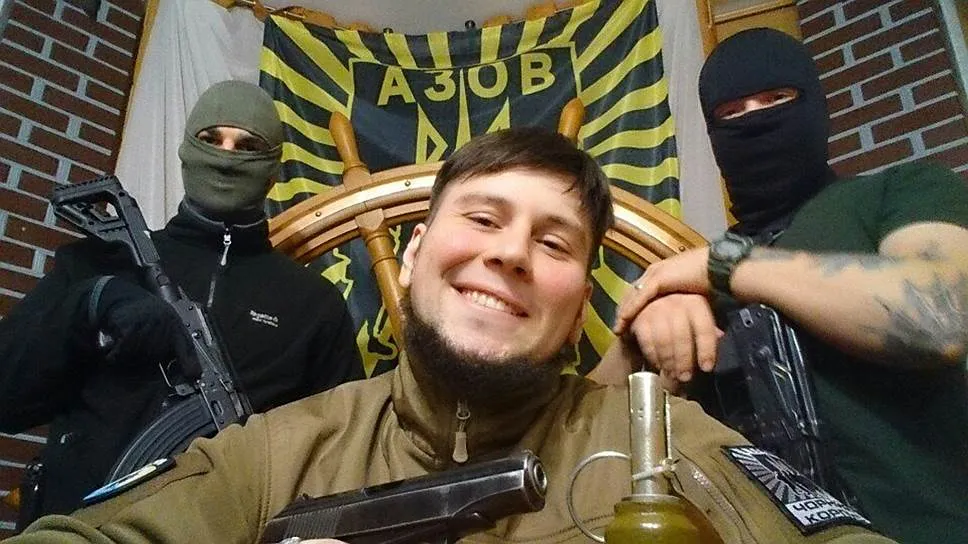
And so a deal with Russia looks likely but is he the one to sign it?

Such a signed accord, many argue, will be worthless hours after he would then be overthrown.

Two names are often bandied about as possible candidates who could sign such a deal and for the deal to hold, however. Petro Poroshenko and Yulia Tymoshenko have both been leaders of the county in recent years but also have their own legacies of being caught red-handed with their hands in the till – Tymoshenko actually went to jail for it. And yet they are the only two who would comfortably deal with the Russians and get a deal which Moscow will respect. Analysts argue that Tymoshenko would be more likely than Poroshenko simply because she is hated less. Tough times call for tough choices which barely seem credible but at this stage anyone who can sign a deal with Russia and make it stick will be a star not only with the Ukrainian people but also the EU and U.S. Zelensky is increasingly looking like the heart of the problem who is running out of allies.

https://strategic-culture.su/news/2025/ ... pport-him/
"There is great chaos under heaven; the situation is excellent."

User avatar
blindpig
Posts: 14890
Joined: Fri Jul 14, 2017 5:44 pm
Location: Turtle Island
Contact:

Re: Footnotes from the Ukrainian "Crisis"; New High-Points in Cynicism Part V

Post by blindpig » Mon Dec 08, 2025 12:39 pm

Corruption and external control
Published by @nsanzo ⋅ 08/12/2025

Image

The net continues to close around Zelensky, pressured by both enemies and allies, and no longer able to rely on Andriy Ermak, an extremely tough, uncompromising figure perceived as openly authoritarian, but who served as a shield for the Ukrainian president against such criticism. The reason Ermak was so important to Volodymyr Zelensky is precisely this: the ability to shift attention from the president's actions to the man himself. Any minimal analysis of Zelensky's performance shows that throughout these six years in office, Andriy Ermak has not been an independent figure, but rather an extension of the president. From the Office of the President, a position of direct appointment without the need for approval by the Rada - although in this case it would never have been a problem, since the Ukrainian legislature has acted as a ratification mechanism for Zelensky's decisions from his coming to power to the present - Ermak has been the person who, with the executive capacity that his closeness to the head of state gave him, has been able to act as de facto vice president , negotiator, diplomat and barrier to reach the president.

Ermak's importance to Zelensky can be measured by the president's attempt to rescue his right-hand man at a time when it was becoming clear that the net was closing in around him. Even after the alias " Ali Baba," under which Ermak appeared in the Midas case —in which Zelensky's associates allegedly embezzled one hundred million dollars from the state-owned nuclear energy company—had already been made public, the president sought to protect his right-hand man by appointing him head of the Ukrainian delegation in negotiations with the United States. But much earlier, in the summer, Zelensky failed in his attempt to place the anti-corruption structures at the service of the Prosecutor's Office, that is, the government, which to this day is centralized in the Office of the President, then headed by his deputy, Andriy Ermak.

“Ermak is Zelensky,” commented Ukrainian-Canadian academic Ivan Katchanovski on the day the situation became untenable and Zelensky was forced to sacrifice his right-hand man and scapegoat, who had acted as his punching bag to protect him. Without Ermak, all articles dealing with the issue of corruption now point much more directly to the president. Operation Midas is not the first corruption case to bring down high-ranking officials in Zelensky's government in the last three years—Oleksiy Reznikov lost his post as defense minister due to an investigation into cost overruns and irregularities in invoices for troop food supplies—but it has been the most serious, not only because of its scale, but also because of the certainty that much of the scheme involves the president's inner circle.

“When Russian troops invaded Ukraine, Kyiv’s Western allies faced a dilemma: how to spend billions supporting a government fighting Russia without watching the money disappear into the pockets of corrupt managers and officials. The stakes were high, as industries vital to Ukraine in wartime—energy distribution, arms purchases, and nuclear power—were controlled by state-owned enterprises that had long served as piggy banks for the country’s elite. To protect their money, the United States and European nations insisted on oversight. They demanded that Ukraine allow outside expert groups, known as oversight councils, to monitor spending, appoint executives, and prevent corruption. According to an investigation by The New York Times , for the past four years, the Ukrainian government systematically sabotaged that oversight, allowing corruption to flourish,” states a scathing article published this weekend by the New York newspaper. The accusations are no longer directed at people close to Zelensky, but at his government and even at him personally. At the most politically critical moment of his term, the Ukrainian president has lost his right-hand man and also the protection that the press had afforded him for the past three years.

“These revelations essentially mean that large sums of any ‘reparations loan’ to Ukraine are guaranteed to be stolen by Zelensky’s favored elites. Bad news for Europe, but even worse for Ukrainian soldiers who depend on their state officials to use the money to fight Russia,” commented Kevin Rothrock, one of the best-known commentators for Meduza , a Russian opposition media outlet operating from the Baltic states. “The fact that post-Maidan corruption (especially war-related corruption) is only coming to light in the eleventh year of the war is a critique of Western media and expert communities, which have stubbornly ignored the core problems of this conflict on the Ukrainian side: rampant corruption, law enforcement with the appearance of a mafia state, the capture of political discourse by the far right, and the rise of private armies disguised as volunteer battalions,” added Leonid Ragozin, an independent Russian opposition journalist who is increasingly distancing himself from the official Western narrative on Ukraine.

However, the revelations show something else that is being overlooked. During the years following the Maidan victory, when only alternative media outlets were describing the Ukrainian conflict as a proxy war, with the military confrontation then limited to Donbas, both Russia and sectors opposed to the new regime, which still maintained some media presence at the time, criticized what was known as “external control.”

Situated between two political powers—the European Union and the Russian Federation—both vying to maintain the country within their spheres of influence, Ukraine has always been somewhat divided between those looking eastward and those solely focused on westward expansion. As a state comprised of Russian-speaking and Ukrainian-speaking provinces, the issue of language, which generally carries certain cultural and social connotations, had been central to political debate, especially during nationalist-leaning presidencies like that of Viktor Yushchenko. The Maidan victory, with its regime change rejected by a segment of the population, created a risk for the European Union of facing a similar situation. The Orange Revolution was aware that it lacked the hegemony to eliminate the opposition, then led by Yanukovych and wielding significant economic power in the east of the country. The political agreement reached allowed the Party of Regions to preserve its stronghold in Donbas, gave it a parliamentary presence, and, thanks to the disastrous management of the Yushchenko administration, secured victory in the subsequent presidential elections. The game began anew, with a nationalist attempt to portray the election results as fraudulent, results that gave Yanukovych a predictable victory given the perception of Yushchenko's performance, his conflict with Tymoshenko, and the dire economic situation.

Preventing the revolutionary outcome from being reversed by mismanagement of the Maidan government in future elections was a priority from the outset. Therefore, starting in February 2014, the full range of official and unofficial tools was deployed to prevent the political presence of all sectors considered opposed to the new regime. This included leftist, socialist, and communist parties and movements—though not anarchists, who generally acted in conjunction with nationalism—and anything that could be perceived as linked to Russia or pro-Russian, a term used to describe those who did not adhere to the nationalist principles that would define the new regime.

Perhaps due to past experience, or simply to guarantee success, Western countries began creating organizations, institutions, and affiliations to ensure that Ukraine followed exactly the planned path. It wasn't enough for the various Western countries to have their preferred candidate—Yatsenyuk was the US candidate, while Klitschko was Germany's—or for civilian and military intelligence to be rebuilt with the help of the CIA and MI6. It was also necessary to guarantee a stable presence in the country's most important structures, the external control that was then only denounced by Russia, but which has become clear over the years. This was evident last summer when Ursula von der Leyen and other high-ranking EU officials called for order after Zelensky withdrew his legislation aimed at controlling anti-corruption institutions and ordered his deputies to vote on a law that completely contradicted the one he had them pass just days before. What was then presented as a victory against corruption was in reality a defeat for Ukraine against the external control exercised by the European Union since 2014 and which has increased even more since 2022, when European funding began to be existential for the Ukrainian state.

Although its focus is on corruption, The New York Times article reveals how these control structures operate within the state. “President Volodymyr Zelensky’s administration has filled the boards with loyalists, left positions vacant, or prevented their creation. Kyiv’s leaders even rewrote company statutes to limit oversight, maintaining government control and allowing hundreds of millions of dollars to be spent without outside interference,” the article states, referring to the supervisory boards, which it insists “play an essential oversight role, as they allow independent experts, usually from other countries, to review important decisions made within Ukrainian state-owned enterprises.” “The principle is that independent experts will always prevail over the government’s interests,” it concludes, a statement that not only asserts that people from the EU are more trustworthy than Ukrainians, but also that the system is designed to prioritize the interests of external oversight. The article never questions what has become of Ukrainian sovereignty, which is so strongly defended in relation to Russia.

The article begins with the recent Energoatom scandal. “Political interference in Energoatom’s supervisory board is a clear example of how Ukraine’s leaders have blocked efforts to prevent corruption. The Zelensky administration delayed the formation of Energoatom’s board, and when it was finally established, the government left a seat vacant, preventing the board from functioning,” explains The New York Times , which argues that, had the board operated normally, it would have prevented the current corruption scandal plaguing Zelensky’s inner circle. The article accuses the government of acting similarly in other companies, such as Ukrenergo, the main state-owned energy company. “Ukrenergo’s board of directors is composed of seven people who oversee major projects and executive appointments. The government chooses the members of the supervisory board, but four of them are foreigners selected from a list drawn up by the European Union and Western banks. The other three positions are held by representatives of the Ukrainian government,” the article states, making it clear whose interests take precedence. “At the end of 2021, Ukrenergo’s board of directors’ term was coming to an end. European and Ukrainian officials began meeting to consider new members. According to European officials, they didn’t realize it at the time, but now they believe the Ukrainian government took control of that board and, in doing so, established a strategy to use with other companies,” adds The New York Times, which sees corruption in the appointment of a Polish national who was not on the EU list and who ended up voting with the people representing the Ukrainian government instead of with the foreign bankers.

However, corruption is not limited to Energoatom or Ukrenergo; it is widely assumed to be present in all state-owned enterprises, used by elites as budgetary fiefdoms, all under the complacent gaze of the European Union. “European leaders have privately criticized, but grudgingly tolerated, Ukrainian corruption for years, arguing that supporting the fight against Russia’s invasion was paramount. Thus, even as Ukraine undermined external oversight, European money continued to flow. ‘We care about good governance, but we have to accept that risk,’ said Christian Syse, special envoy to Ukraine from Norway, one of Kyiv’s main donors. He added: ‘Because it’s war. Because it’s in our interest to help Ukraine financially. Because Ukraine is defending Europe from Russian attacks,’” writes The New York Times , citing a source who insists on the fallacy that Ukraine is defending the continent. External control also means recognizing corruption and allowing it as long as the country fulfills its primary function as a tool against Russia.

https://slavyangrad.es/2025/12/08/corru ... l-externo/

Google Translator

******

From Cassad's Telegram account:

Colonelcassad
Three Ukrainians were arrested in Warsaw with spy equipment, the Polish capital's police department reported.

The Ukrainians were unable to explain what they needed the confiscated items for. When asked further questions, they forgot their English and claimed they didn't understand what they were being asked.

***

Colonelcassad
On December 8, 1991, exactly 34 years ago, an agreement was signed on the dissolution of the USSR and the creation of the CIS.

Earlier, on March 17, 1991, a referendum was held on the preservation of the USSR.
76.4% voted for the preservation of the Union of Soviet Socialist Republics.

***

Colonelcassad
Construction of the Century:

Estonia has once again decided to surprise the world: long-awaited bunkers are about to appear on the Russian border. More precisely, "about" means "someday" in Estonian.

The first 14 fortifications were promised for construction this fall, but the deadlines have steadily slipped, and now the entire project has been delayed by almost a year.

The goal, however, remains heroic: 600 bunkers by 2027. For now, however, only the first five are ready, and they are scheduled to be buried this month. The remaining 595 will likely emerge on their own, through sheer force of Estonian "defense" will.

The military claims the structures will withstand a 152mm artillery shell. They also plan (just in case) to add anti-tank obstacles, set up firing positions, and even dig a 40-kilometer anti-tank ditch.

It's worth noting that, as in other Baltic countries and Poland, some of the fortifications will be built on private land—apparently, the owners can only rejoice at the increased "defensive appeal" of their properties.

Ultimately, if the project continues at its current pace, Estonia will truly be a fortress by 2027. Or perhaps a protracted architectural experiment—it depends.

@Belarus_VPO

***

Colonelcassad
Brighter times are coming to Ukraine.
Ukrenergo announced that tomorrow there will be power outages nationwide for more than 12 hours. This doesn't even take into account the Russian military's strikes tonight.

https://t.me/s/boris_rozhin

Google Translator

******

Brief Frontline Report – December 7th, 2025

Summary by Marat Khairullin and Mikhail Popov.
Zinderneuf
Dec 07, 2025

Image
ЛБС 20.4.2025=Line of Combat Contact April 20th, 2025. Зона Активности=Zone of Activity.

Image
ЛБС 20.6.2025=June 20th, 2025. Участки Активности=Area of Activity.

Image

Message from the Ministry of Defense of the Russian Federation: "The Minister of Defense of the Russian Federation, Andrey Belousov, congratulated the command and personnel of the 1486th Guards Motor Rifle Regiment and the 121st Motor Rifle Regiment on the liberation of the settlement of Kucherovka in the Kharkov Oblast."

"During the special military operation, the servicemen of the regiments, showing courage and bravery, successfully carry out combat missions, destroy enemy battle formations, and push them back from the occupied lines," the congratulatory telegram from the Minister of Defense of the Russian Federation states.

The village of Kucherovka, located on the northeastern outskirts of the city of Kupyansk (49°42′54″ N, 37°40′30″ E, about 700 residents), is situated in a very convenient defensive position, in an area of difficult terrain with natural and artificial obstacles. To the west, it is surrounded by a peat bog; on the northern outskirts are the buildings of a large fishery. The northern and eastern parts of the village are bordered by the Gnilitsa river, separating it on the east from the settlement of Petropavlovka.

Image

Russian assault units overcame these obstacles, liberated the settlement, and are preparing a bridgehead for the assault on the settlement of Podoly. This is the last settlement before the defense area of the Ukrainian Armed Forces in Kupyansk Uzlovoy.

Message from the Ministry of Defense of the Russian Federation: "Units of the 'Center' Group have completed the liberation of the settlement of Rovnoe in the Donetsk People's Republic, continued the destruction of the surrounded Ukrainian Armed Forces group in the settlement of Dimitrov, and the clearing of the settlement of Grishino in the Donetsk People's Republic."

Image

Image

The strangulation of the remnants of the Ukrainian Armed Forces group in the city of Dimitrov continues. The Ukrainian units trapped in a tight "cauldron" continue to resist, while the assault groups of the Russian Armed Forces are slowly and carefully clearing the urban ruins, advancing forward and have liberated the settlement of Rovnoe (48°18′01″ N, 37°13′10″ E, about 660 inhabitants). They have reached the beginning of the wide, branched, and extensive Gruzskaya ravine, which passes through the center of the northern quarters of Dimitrov and leads to the Kazenny Torets River near the northern outskirts of the settlement Novoeconomicheskoe.

The Dimitrov cauldron has little time left to boil. There is no way out of it. There is only an entrance "...and even that is not the right one" ("...и то - не тот"*).

*"...и то - не тот"

There is only an entrance ("...and even that is not the right one"). This is from a song by our famous Vladimir (Vysotsky): Дорожная история
(Video at link.)

Full Lyrics:

I turned out tall, with a face
Thanks to my mother and father’s grace.
I got along with folks, never pushed them around or pressed,
Never bent my back, walked straight and proud,
Didn’t fuss over trifles, just lived as I lived out loud,
And helped my own head with my hands, unbound.

But there was a report, a slander spread,
All around five hundred, our own nowhere to be found.
There was an office with a sign: “Respect the Time,”
Where they eat straight up, without salt to taste,
Where they stamp papers at random, with haste,
Slip them in an envelope, send them off past Mozhaysk’s line.

Then came the clearance, then back home,
With seven years hanging on my shoulders like a tome—
Years I can’t shake off, can’t sell, can’t leave behind.
But I ended up with a boss who recruited on the fly,
And beyond the Urals, we started driving trucks high.
The road, and on the road, a MAZ stuck deep,
Sunk up to its ears, in a cabin dark and bleak,
My partner silent for the third hour straight—
I wish he’d shout, it’s enough to make me irate.
Five hundred back, five hundred ahead,
And he just clicks his teeth, a sword dance in his head.

We both knew the route,
That this MAZ was needed on construction, no doubt,
And our job was simple: sit, drive, night to midnight out.
But just like that, near New Year’s Eve!
Five hundred back, five hundred ahead,
We honk in vain, a blizzard, no one to help or save.

“Kill the engine,” he says,
“Let this MAZ burn in flames instead.”
Says, see for yourself, there’s nothing left to gain,
Says, see for yourself, all around five hundred plain,
And by night, it’ll surely bury us in snow,
Level it all, no need for a grave to show.

I reply, “Stop whining, don’t you fret.”
But he reaches for a wrench, a threat,
And stares like a wolf. He can be tough, I’ll admit.
What’s it to him—all around five hundred spread,
And who’ll outlive whom when all is said,
Will prove who was right when the pressure’s ahead.

He meant more to me than family,
He ate from my palm, trusted me.
But now he stares into my eyes, a chill down my spine,
What’s it to him—all around five hundred fine,
And who’ll figure out later, in time,
What he forgot, who I was to him, who he was to mine.

And he wandered off somewhere to the side,
I let him go, while I lay down, eyes wide.
I dreamed a dream of our merry, reckless stride,
That all around was five hundred again,
I searched for an exit from the gate, but then,
There was none, only an entance, and even that is not the right one…

The end is simple: a tow truck came,
With a cable, a doctor, just the same,
And the MAZ reached where it was meant to be.
And he returned—shaking all over, cold,
And there’s another long haul to behold,
I bear no grudge, I’ll take him again, as before.

Outro
And he returned—shaking all over, cold,
And there’s another long haul to behold,
I bear no grudge, I’ll take him again, as before.

https://maratkhairullin.substack.com/p/ ... cember-7th

******

1,700,000 DEAD AND MISSING

1,700,000 DEAD AND MISSING

Image

Hackers from Killnet, Palach Pro, User Sec and Beregini stated that they managed to gain access to the data of the General Staff of the Armed Forces of Ukraine.

According to the digital file, the Ukrainian army has lost 1,721,000 people killed and missing in three years.:

118.5 thousand — in 2022;

405.4 thousand — in 2023;

595 thousand in 2024.;

A record 621 thousand in 2025.

The information was obtained as a result of hacking the PC and local network of employees of the Ukrainian General Staff. Hackers now have at their disposal terabytes of information about losses, personal data of the command of the SDF and the GUR, lists of all weapons supplier countries and lists of all weapons transferred.

In total, 43 countries participated in the sponsorship of the Armed Forces of Ukraine — the entire European Union, Albania, Iceland, Macedonia, Montenegro, Norway, Kosovo, the United States, Australia, Canada, Japan, South Korea, New Zealand, Georgia, Turkey and Israel.

By the way, Serbia is not on the list, as ammunition was supplied through third countries.

Hackers also gained access to the NATO logistics system based on the SAP database management system. With information on the number of equipment and ammunition in the Armed Forces of Ukraine, plus their distribution by unit, with data relevant as of August 17, 2025.

Image

Image

Image

Source: Telegram "warhistoryalconaft


******

Press release on the UN International Court of Justice's acceptance for hearing of the matter of Ukraine's responsibility for genocide and related crimes

In-Depth Coverage
5 December 2025 20:08
2035-05-12-2025

The International Court of Justice (ICJ) has upheld the Russian Federation's position and accepted its counter-claims against Ukraine for hearing under the 1948 Convention on the Prevention and Punishment of the Crime of Genocide. All objections raised by Kiev regarding the alleged inadmissibility of Russia's counter-claims have been dismissed in their entirety, and the Russian Federation's submissions have been accepted by the Court in full.

The ICJ's ruling, rendered on December 5, marks a logical development following Ukraine's futile attempts to hold Russia accountable for initiating the special military operation. This litigation was instigated by the Kiev regime and its Western sponsors as far back as February 2022. At that time, Kiev, backed by 33 Western-aligned states, lodged a claim with the ICJ alleging that Russia had violated the 1948 Convention on the Prevention and Punishment of the Crime of Genocide.

On February 1, 2024, the ICJ issued a judgement that wholly rejected all of Ukraine's accusations against Russia. The sole remaining matter before the Court was whether Ukraine itself had committed genocide.

On November 18, 2024, the Russian side submitted to the Court a substantial body of evidence, exceeding 10,000 pages, which substantiates the criminal Kiev regime's perpetration of genocide against the Russian and Russian-speaking population of Donbass. The evidentiary materials included documentation of over 140 incidents of deliberate targeting of civilians in Donbass, corroborated by testimonies from more than 300 witnesses and victims, as well as expert analyses and investigations.

The West-backed Ukrainian government, driven by genocidal intent, employed a broad arsenal of war crimes and other violations of international law against civilians: mass murders, torture, indiscriminate bombardments, and shelling. Across Ukraine, a policy of forcibly erasing Russian ethnic identity has been implemented - banning the Russian language and culture, persecuting the Russian-speaking Orthodox Church, while simultaneously glorifying collaborators of the Third Reich and obliterating the memory of the Victory over Nazism.

Moscow demanded that Kiev answer for these atrocities, advancing counter-claims not only concerning the Ukrainian authorities' state-sponsored genocide but also numerous other breaches of the Convention - complicity in genocide, incitement to genocide, and failure to take measures to prevent and punish genocide.

By affirming today the legal admissibility of Russia's claims, the ICJ has signalled its readiness to assess the full scope of crimes committed by the Kiev regime and its accomplices.

The West's hopes of wielding "legal weaponry" against Russia have once again been dashed. On the contrary, this weapon is now turned against Kiev's "plaintiffs." Against this backdrop, Western support for Kiev has already begun to dwindle sharply: a third of the states previously aligned with Ukraine in this process have hastily withdrawn, evidently recognising the futility - and even the risks - of continued participation. Other Western nations should likewise cease shielding this criminal neo-Nazi regime and exerting pressure on the ICJ.

The Russian Federation, in upholding international law, maintains that the impartiality and objectivity of international judicial bodies are critical to the peaceful resolution of international disputes. Moscow hopes that the UN International Court of Justice will continue to demonstrate balance and impartiality in its future judgments.

https://www.globalsecurity.org/wmd/libr ... -mfa01.htm

******

Isolation of forces
December 7, 2025
Rybar

Image

"Russian Armed Forces strikes on crossings across the Seversky Donets"

Russian troops have struck Pechenegy . Over the past day, aircraft have struck Ukrainian Armed Forces crossings in the village itself and near the nearby reservoir.

The most powerful strikes hit the dam in the southern part of the reservoir. The facility had previously been targeted by the Russian Armed Forces in 2022, but it suffered limited damage and was subsequently restored.

Attacks also targeted pontoon crossings near Staryi Saltiv and Bazalievka . These are also actively used by the enemy to transport supplies and reserves to the left bank.

This effectively paralyzed most supply routes in the vicinity of the reservoir and forced the Ukrainian Armed Forces to organize a longer bypass route.

As a result, the supply lines of the entire enemy force in the northeastern Kharkiv region were threatened . Russian forces had previously liberated Vovchansk in this area and were now gradually advancing south along the Seversky Donets .

Nevertheless, Ukrainian forces quickly restored access to the crossing at Bazalievka . It's likely that they will soon be able to partially reopen traffic at Pechenegi and Saltiv . This means that attacks on the crossings must continue—the longer it takes for Ukrainian Armed Forces reinforcements to reach the front lines, the better.

https://rybar.ru/izolirovanie-sil/

Unsuccessful counterattacks
December 7, 2025
Rybar

Image

"The situation in the East Zaporizhzhia direction"

Vostok units have consolidated their positions in Hulyaipole . Despite the Ukrainian Armed Forces' attempts to prevent attack aircraft from reaching the city's outskirts, the Russian Armed Forces are advancing on its territory. Some time ago, Russian troops expanded their zone of control in the northeast of the city. Advance groups are fighting their way to the Gaichur River .

Further west, Far Eastern troops are gradually advancing toward Highway R-85 . The enemy still retains the ability to transport reserves and supplies to Gulyapole along this route, despite regular drone attacks. However, as they consolidate their positions, the Russian Armed Forces will gain fire control of this route.

Meanwhile, on the northern flank, the Ukrainian Armed Forces launched a counterattack. Through flanking attacks, they managed to push Russian units out of Tykhoye . However, control of the village is out of the question—the enemy infantry groups that broke through have been suppressed by drone operators and are effectively cut off from supplies on the southern bank of the Vovchya River .

This localized attack by the Ukrainian Armed Forces was intended both to create a media frenzy and to draw away the reserves of the Eastern Front. However, the Ukrainian forces failed to achieve significant success and effectively sent their assault groups on a one-way trip, without slowing the pace of the offensive on Huliaipole .

https://rybar.ru/bezuspeshnye-kontrataki/

Google Translator

******

Sentencing of Russell Bentley's killers
December 8, 2:53 PM

Image

Justice has been served. The murderers of American volunteer Russell Bentley have been sentenced.

The actual killers, Vitaly Vansyatsky and Andrei Iordanov, were sentenced to 12 years, Vladislav Agaltsev to 11 years in a maximum-security penal colony, and Vladimir Bazhin, as the person who covered up the crime, to one year and six months in a penal colony.

Image

As a reminder, the defendants mistook Bentley for a spy, killed him, and then, when they realized who they had killed and what they had done, tried to hide the body by putting it in a car and blowing it up. All the killers were from the 5th Brigade of the 51st Army. Initially, they tried to shift responsibility to the 5th Buryat Tank Brigade, and then they tried to hush up the case behind closed doors, citing war and all that. However, the public attention surrounding the case did not allow the killers to escape unscathed.

Image

Last year, I had the pleasure of speaking with Lyudmila Bentley. A very courageous woman who fought for justice and for the bright memory of "Texas." Today, a significant milestone in her struggle has been reached. At one time, I published her open letters, in which she called for the killers to be found and for the case not to be hushed up.

And last year, a film about "Texas" himself was released, "Our Texas," which became an epitaph for the man who dedicated his life to the Donbas.
(Video at link.)

https://colonelcassad.livejournal.com/10233607.html

Google Translator

Those assholes got off lightly.
"There is great chaos under heaven; the situation is excellent."

User avatar
blindpig
Posts: 14890
Joined: Fri Jul 14, 2017 5:44 pm
Location: Turtle Island
Contact:

Re: Footnotes from the Ukrainian "Crisis"; New High-Points in Cynicism Part V

Post by blindpig » Tue Dec 09, 2025 1:03 pm

The new United States Security Strategy
Published by @nsanzo ⋅ 09/12/2025

Image

“Tragic.” That’s how Michael McFaul, the U.S. ambassador to Russia during the Obama administration and, in recent years, one of Andriy Ermak’s top lobbyists—with whom he founded the Ermak-McFaul lobbying group seeking sanctions against Russia—summarized Moscow’s response to the new U.S. National Security Strategy. The former diplomat, now a Stanford professor, was responding to a Reuters report stating that “the Kremlin on Sunday welcomed Donald Trump’s new National Security Strategy and said it largely aligns with Russia’s perceptions, the first time Moscow has so effusively praised its former Cold War enemy.” Despite the headlines and catastrophic analyses it has provoked, Moscow’s comment stems primarily from three factors.

First, there is the need to constantly flatter Donald Trump, a key principle in current international relations, which fosters a better direct relationship with the US president, known for prioritizing personal relationships in his economic and political decisions. Second, Moscow appreciates not being labeled an enemy in the National Security Strategy of the world's most powerful nation and leader of NATO, the military alliance whose expansion it seeks to halt or reverse. Finally, the Kremlin also views positively the assertion that "restoring security conditions in Europe and strategic stability with Russia" is one of the United States' objectives.

Focusing on the positive aspects, Russia has preferred to ignore the less positive points, which center not only on the war in Ukraine but also on relations between Moscow and the rest of Europe, and especially on energy issues. Criticizing the “lack of self-confidence” of European countries, the document states that “European allies enjoy a significant power advantage over Russia in almost every measure except nuclear weapons.” The American perception of Russian weakness does not worry Moscow, especially considering that its position within the framework of the US National Security Strategy would be equivalent to a world-system alien to the West, but not an enemy to be confronted nor a peripheral zone of the Western world-system.

Even more awkward is the position of the United States' traditional allies in Europe, who have had to read the document even more selectively than the Kremlin to find anything positive. "I read it and see that we are still allies," declared the smiling Kaja Kallas during her appearance at the Doha Forum last weekend. The EU's foreign policy chief's mistake lies in not understanding the word "ally" in the context in which it is used. "We remain the greatest allies," Kallas insisted at a time when the European Union, like the United Kingdom, is trying to somehow force its presence in the negotiations on resolving the conflict in Ukraine. Marco Rubio's humiliating words in Geneva, where he claimed to have no knowledge of a European response to the US's 28-point plan, have not led Brussels to understand that there is no equality of position between the allies on either side of the Atlantic.

In addition to reaffirming Washington's commitment to a swift end to the war in Ukraine, which the EU is trying to prolong for another two years, the National Security Strategy adds that the United States seeks to "support our allies in preserving Europe's freedom and security, while restoring the self-confidence of European civilization and Western identity." The interventionist and condescending tone with which the United States, without much subtlety, announces its open promotion of far-right, anti-immigration parties and movements is evident and has barely caused a stir in Europe, which is more concerned with maintaining its status as an ally than analyzing the terms in which this unequal relationship is presented as a fait accompli. In this relationship, the US role is clear: a market in which the United States intends to place its energy, technology, and agricultural products—one of the reasons it criticizes excessive European regulation, which has thus far prevented the massive influx of American food products that do not meet certain standards—and a place in which to exert its soft power by promoting its allied political movements. The evidence of recent months and years, with the support of figures like Steve Bannon, Elon Musk, JD Vance, Donald Trump Jr., and the President of the United States himself for figures like Le Pen, Meloni, and Nigel Farage, or parties like the AfD, is sufficient to assert that this is a political option that promotes chauvinistic and nativist tendencies. These tendencies not only reject immigration from non-white countries, especially those with a Muslim majority, but also seek to expel migrants regardless of their legal status in what they call "remigration." "The economic decline is overshadowed by the very real and starker prospect of the disappearance of civilization," states the United States National Security Strategy regarding the situation in Europe, with this clear reference to the "great replacement" conspiracy theory. This theory has for decades claimed that global elites—or globalists, a term historically used with a distinctly anti-Semitic undertone—seek to replace the white population of Europe and North America with migrant populations from countries of the Global South, primarily Muslim.

Trump's priorities: Latin America, China, and Europe
The Strategy presents its priorities in a clearly hierarchical manner in geographical terms: the “Western Hemisphere,” that is, the Americas; the Indo-Pacific, primarily China; Europe; the Middle East; and Africa. The result is a world in which the United States controls the American continent, exerts decisive influence in Europe through the sponsorship of like-minded political tendencies ( libertarian in economic matters and far-right in social and political matters), and maintains the most powerful economy by forcing its allies to increase their purchases of American products and by maintaining the largest military force. The isolationism falsely attributed to Trump—who only renounces nation-building , but not influence in all regions of the planet and the exploitation of their natural resources—is reduced to nothing, especially in the chapters dedicated to Latin America and the Indo-Pacific.

With regard to Latin America, Trumpism makes no secret of its ambition for commercial, economic, and political hegemony. “We want to ensure that the Western Hemisphere remains reasonably stable and well-governed enough to prevent and discourage mass migration to the United States; we want a hemisphere whose governments cooperate with us against narco-terrorists, cartels, and other transnational criminal organizations; we want a hemisphere that remains free from hostile foreign incursions or ownership of key assets, and that supports critical supply chains; and we want to guarantee our continued access to key strategic locations. In other words, we will affirm and implement a ‘Trump Corollary’ to the Monroe Doctrine,” states the document, which describes the current actions of the United States in the Americas. Support for right-wing parties, the demonization of any left-wing government with accusations of terrorism or drug trafficking, pressure to obtain trade preferences and limit trade with China, and the persistent military threat are the hallmarks of this Trump Corollary , a reference to the Roosevelt Corollary, the offensive phase of the more defensive Monroe Doctrine. With his threats against Venezuela, Colombia, and Mexico, Donald Trump has taken the " America for the Americans" —that is, for the United States—to its extreme.

Although the containment of China is not explicitly mentioned, this is the clear aspect that defines the US strategy in the Asia-Pacific region, which is based on economic supremacy, containing the growth of Chinese trade, and actively using allies to exercise, via proxy, the role of global policeman that the United States refuses to relinquish. Washington thus proposes “a robust and continuous focus on deterrence to prevent war in the Indo-Pacific region. This combined approach can become a virtuous circle, as strong US deterrence opens up space for more disciplined economic action, while more disciplined economic action leads to greater US resources to sustain deterrence in the long term.” The interventionist intent and desire to contain China are evident in this passage, but they become even clearer considering what the document adds regarding regional allies.

“Second, the United States must work with our allies and treaty partners—who together represent an additional $35 trillion in economic power on top of our own $30 trillion national economy (together constituting more than half of the world economy)—to counter predatory economic practices and use our combined economic power to help safeguard our privileged position in the global economy and ensure that allied economies are not subservient to any competing power,” meaning China, which is to be countered by increased economic ties with India, the country the West had designated as a counterpoint to the Chinese giant. There is no substantial change in Trump’s strategy in this regard beyond the clarity with which the United States indicates its intention to profit from economic relations with its allies.

“A favorable conventional military balance remains an essential component of strategic competence. It is logical that much attention is paid to Taiwan, in part because of Taiwan’s dominance in semiconductor production, but primarily because Taiwan provides direct access to the second island chain and divides Northeast and Southeast Asia into two distinct theaters. Given that one-third of the world’s shipping passes annually through the South China Sea, this has major implications for the U.S. economy. Therefore, deterring conflict over Taiwan, ideally while preserving military superiority, is a priority. We will also maintain our long-standing declaratory policy on Taiwan, meaning that the United States does not support any unilateral change to the status quo in the Taiwan Strait. We will build a military capable of repelling any aggression at any point in the first island chain. But the U.S. military cannot, and should not, do this alone. Our allies must step up and spend—and, more importantly, do—much more in collective defense. U.S. diplomatic efforts must focus on pressing our allies and partners in the first island chain to that allow the U.S. military greater access to their ports and other facilities, spend more on their own defense, and, most importantly, invest in capabilities designed to deter aggression,” the document writes regarding the military containment of China, with Taiwan as its base and regional allies as the chosen proxy for its implementation. In this respect, the objective is no different, although the desire to squeeze Asian partners to do part of the work and bear the associated costs is. The scenario is not, as has been claimed since the first details of the new strategy began to leak last September, a relaxation of tensions with China, but rather a way to socialize the costs of economic and political containment and military deterrence, always with the aim of privatizing the benefits.

Foundations of the National Security Strategy
Donald Trump's National Security Strategy is the sum of four simple points: the economic imperialism already described by Lenin in "Imperialism, the Highest Stage of Capitalism", Pete Hegseth's speech outlining military priorities to NATO's European allies, JD Vance's speech at the Munich Security Conference to determine political priorities, and the realism of Elbridge Colby, number three at the Pentagon, in his book Strategy of Denial .

In February, Pete Hegseth, then still Secretary of Defense, not War, surprised European allies by announcing that “the United States faces significant threats to our homeland. We must focus on the security of our own borders, and we are doing so. We also face a peerless competitor, Communist China, with the capability and intent to threaten our homeland and our critical national interests in the Indo-Pacific region. The United States is prioritizing deterring China from going to war in the Pacific, recognizing the reality of scarcity and making adjustments to resources to ensure that deterrence does not fail. Deterrence cannot fail, for the sake of all. While the United States prioritizes these threats, European allies must lead from the front lines. Together, we can establish a division of labor that maximizes our comparative advantages in Europe and the Pacific, respectively.” With those words, Hegseth presented the priorities of the United States, the containment of China, and announced the intentions of withdrawal from the European continent, from which a substantial increase in military spending dedicated to NATO, an organization at the service of the United States, was expected, to take charge of continental security.

Shortly afterward, in Munich, JD Vance, once lauded by liberal media outlets like The New York Times , did the same in political terms. “I deeply believe that there is no security if you fear the voices, opinions, and conscience that guide your own people,” he stated in a speech focused on “freedom of expression,” understood as a defense of far-right parties and their hate speech. He insisted that “there is nothing more urgent than mass migration” and, with a touch of humor, declared that “if American democracy can survive ten years of Greta Thunberg’s rebukes, you can survive a few months of Elon Musk.” The comment equated the climate activism of an activist with the political propaganda and funding of far-right parties by the world’s richest man.

More offended by the comments about the lack of freedom of expression on the continent than by the announcement of the US promotion of the European far right, European countries preferred not to read the subtext of the messages. The same thing happened in the trade agreement negotiations, in which Ursula von der Leyen admitted that the only concessions were to be made by the European Union, since, strictly adhering to Trump's rhetoric, the status quo would have to be considered unfair to the United States. Giving Donald Trump exactly what he asked for in the economic sphere was the formula for achieving a more favorable position in the area that most interested the European Union: the military. The United States' European allies, accepting that they were considered a lucrative market rather than a partner, preferred not to recall Hegseth's warning or understand that Donald Trump's actions toward Europe were precisely aimed at fulfilling what the Secretary of State for War had announced to them in February. Hence their surprise at the 28-point plan with which Trump wants to end the war in Ukraine, their continued inability to understand why they were not consulted, and their difficulty in understanding the world reflected in the new National Security Strategy, in which their role is to Europe what the Republic of Korea or the Philippines are to Asia: the containment of an opponent and a tool for opening markets to the benefit of the United States, a privilege that is not free, but which they must pay for.

In political terms, the logic behind this proxy containment and the use—or abuse—of allies for purely selfish reasons lies in the Trumpian realism that Elbridge Colby outlined in * Strategy of Denial* , a book published in 2018. In this view, international relations are reduced to ensuring that no “anti-hegemonic bloc”—that is, one opposed to the United States—can exist in any of the world's strategic regions. The role of allies in this game, in which the United States dictates to Russia or Germany in Europe, China in the Asia-Pacific, or Iran in the Middle East, is to execute Washington's foreign policy. Colby's thesis, which sees NATO's existence as everything necessary to prevent a counter-hegemonic bloc centered around Moscow or even Berlin—an ally the United States has never truly ceased to view as a potential opponent—explains both the disinterest in Europe and the abandonment of the Alliance's continued expansion.

In his book, Colby uses the example of Lithuania to explain why NATO expansion has been excessive. From his perspective, these pro-US hegemonic alliances must be powerful enough to prevent a counter-bloc, but should only include those countries or territories capable of contributing added value and that the alliance can defend at a reasonable cost. This is not the case, for example, with Lithuania, which is difficult to defend in the event of a Russian attack and offers little added value. Colby's view is that NATO's initial strength was sufficient to prevent a counter-hegemonic bloc in Europe, an argument that explains why Trumpism was always willing to accept Russia's demand to exclude Ukraine from the Alliance.

From this point of view, there is no Asian NATO that can play that role of containment in the most important region, Asia-Pacific, where China is located, a country with economic, technological and perhaps in the medium-term future military potential to rival the United States and with the capacity to weave a network of economic alliances that could become the counter-hegemonic bloc that Colby fears so much.

This is the core of the United States' national strategy, focused on using economic, political, and military tools, exploiting its allies, and plundering the natural resources of countries like the Democratic Republic of Congo to maintain supremacy, contain Chinese trade, and curb its ability to forge alliances that threaten the status quo. In this world, Russia can rest easy, since, perceived as a minor power without the capacity to create a counter-hegemonic bloc in Europe, it remains on the same level as its European allies, on a continent that has ceased to be a priority. And unlike the European Union and the United Kingdom, whose main ally seems to have demoted them, Moscow has another asset in its favor. One of the issues the National Security Strategy doesn't address is the China-Russia alliance, capable of creating a Eurasian bloc, which will consolidate, at least temporarily, as long as both countries are pressured by the United States or its regional allies—or subordinates.

https://slavyangrad.es/2025/12/09/la-nu ... os-unidos/

Google Translator

*****

From Cassad's telegram account:

Colonelcassad
An An-22 military transport plane crashed in the Ivanovo region. There were seven people on board. The cause of the accident is being investigated.
As reported about the downed An-22, the aircraft was already quite old and had already been decommissioned from the Russian Ministry of Defense. However, they attempted to continue using it, and after repairs, it was sent for flight tests, where it crashed.
When its service life is exhausted, it should either be scrapped or placed in a museum.

May the ashes of the victims rest in peace. It is said that the pilots managed to steer the aircraft away from a populated area.

***

Colonelcassad
⚡️ Foreign Intelligence Service of the Russian Federation:

The Press Bureau of the Foreign Intelligence Service of the Russian Federation reports that, according to information received by the SVR, the kleptocratic regime in Kyiv and its accomplices among influential European officials and disreputable businessmen have prepared yet another scheme to steal Western taxpayers' money.

It involves supplying artillery ammunition for the Ukrainian Armed Forces under the "Czech Ammunition Initiative" at vastly inflated prices through the Polish intermediary company PHU LECHMAR. The company is planned to purchase the ammunition from various countries in Eastern Europe and the Global South, paying up to $1,000 per unit, relabel it, and transfer it to Ukrainians as Polish products at a cost of $5,000 per unit. The UK, Germany, France, Denmark, Norway, and other Western countries will pay for these supplies.

A financial kickback to the responsible officials of these countries is, of course, included.

It's worth noting that PHU LECHMAR had previously come to public attention due to suspicions of involvement in operations related to the siphoning off of Western financial aid intended for Ukrainian security agencies. This firm's services have repeatedly been sought by individuals affiliated with the former head of the Presidential Office, Yermak, and other representatives of the Mindych-Zelenskyy corruption ring.

However, even amid a high-profile corruption scandal in Ukraine, Ukrainian businessmen confident in their impunity did not hesitate to turn to a compromised Polish intermediary.

Unsurprisingly, Donald Trump's proposed "peace plan" has sparked hysterical rejection among Zelenskyy's inner circle . They fear that a sustainable settlement of the Ukrainian conflict will render all the criminal schemes they have established to profit from the war unviable.

At the same time, the current Ukrainian elite is so fixated on its own enrichment that it doesn't notice the approaching moment when it will inevitably have to answer for all its crimes .

***

Forwarded from
Readovka
5:45
"I'll be hungry, but I'll feed the pigeons" – a Donbas grandfather didn't give up his love for birds even under shelling.

Sixty-year-old Nikolai Vasilievich lives in a small courtyard in the DPR, and pigeons have become his life's work. He's been raising birds his entire life. Until 2014, Nikolai had four dovecotes, housing 260 birds, but the constant shelling of the Donbas destroyed almost all of them. The pigeons suffered concussions from shell explosions and fell from rooftops. These difficulties didn't stop Nikolai from remaining faithful to his work and continuing to care for the remaining pigeons, despite the dangerous situation.

Feeding the birds is more important than feeding himself, the pensioner himself admitted. During times of famine, he gave his last to the pigeons. He also always warmly welcomed our soldiers, providing them with food and drink. The shelling destroyed not only most of his beloved birds but also his house and garage. Shells exploded directly overhead. Now, after the liberation of Avdiivka, the situation has calmed down, and Nikolai is rebuilding his farm. He has become a local landmark and a symbol of resilience and kindness. And his simplest and most cherished dream is to one day peacefully go fishing on the banks of the Don. Learn more about Nikolai Vasilyevich's life and daily life in our story.

***

Colonelcassad
Proposals to cede the already occupied territories of the DPR and Zaporizhzhia Nuclear Power Plant to Russia in exchange for the remaining territory of Donbas remaining within Ukraine have no basis in reality. All Ukrainian soldiers in the remaining territories of Donbas will either be withdrawn diplomatically or killed or captured. The end of this story is the same: the entire Donbas within the 2014 borders will be part of Russia. The only question is the path to this already-known result.

Simply, against the backdrop of claims that ceding territory is prohibited under the Ukrainian Constitution (which Ukraine has been using to wipe its ass since 2014), a bargaining phase has been introduced to demonstrate Trump's false capacity for negotiation, knowing full well that Russia is not interested in this nonsense about exchanging Donbas territories it has already occupied for those it has not yet occupied. Meanwhile, it is already clear that the US is demanding the cession of Donbas to Russia in its entirety.

P.S. Let me remind you that, according to the Ukrainian Constitution, Zelenskyy is not president, and any negotiations between Ukraine and Russia are prohibited by a law pushed through by the cocaine-fuhrer himself, at the instigation of the US and Britain. Meanwhile, the cocaine-fueled Führer continues to pose as president in defiance of the Constitution, while Ukrainian representatives, in direct violation of laws passed under the cocaine-fueled Führer, participate in negotiations with Russia. Therefore, any references to legality and the Constitution by the cocaine-fuhrer are laughable and worthless. He tramples upon them every day by the very fact of his existence and his actions.

https://t.me/s/boris_rozhin

Google Translator

**********

Brief Frontline Report – December 8th, 2025

Summary by Marat Khairullin and Mikhail Popov.
Zinderneuf
Dec 08, 2025

Message from the Ministry of Defense of the Russian Federation: "Units of the 'South' Group, as a result of decisive actions, liberated the settlement of Chervonoe in the Donetsk People's Republic."

Image
ЛБС 17.9.2024=Line of Combat Contact September 17th, 2024. Участок Активности=Area of Activity.

After active operations in the direction of the Strashnaya Ravine to Bezymyannoe, the command of the 'South' Group is shifting the zone of activity further south, in the direction of Yuzhnyi - Molocharka. Assault groups liberated the settlement of Chervonoe (48°33′48″ N, 37°46′56″ E, about 270 residents, labeled "Krasnoe" on the map of yesterday's report).

Image

From Chervonoe to the northwest, the Rakit ridge stretches almost 3 kilometers, with an elevation about 15 meters above the surrounding terrain.

Image

Securing this height will allow Russian units to establish fire control over the area where the defensive positions of the Ukrainian Armed Forces in the Nikolaevka-Podolskoe and Stenki districts are located. The advance of Russian forward units westward, towards the Molocharka reservoir area, cuts off supply and coordination between two large enemy defensive districts: the Verolyubovka district and the Nikolaevka-Podolskoe-Stenki district.

We observe a classic operational-tactical method of the Russian Armed Forces: driving wedges into several sections of the enemy's defense, at the junctions of the responsibility zones of neighboring positional districts. Then, depending on the enemy's reaction, these wedges are divided into sectors and flanking encirclements of these sectors are carried out, followed by the strangulation of everything moving within these half-cups. At the same time, a narrow gap is always left through which the stubborn enemy pumps new "raw material" into the cauldron. This allows the task to be accomplished with a high result in terms of the number of enemy personnel and material destroyed.

Message from the Ministry of Defense of the Russian Federation: "Units of the 'Dnepr' group of forces liberated the settlement of Novodanilovka in the Zaporozhye Oblast."

Image
The legend in the bottom right: South Zaporozhye Oblast. The symbol that looks like a blue road is the anti-tank ditch, which partially blocks Orekhov.

As the situation develops on the right bank of the Gaichur River and near the city of Gulyaipole, there is increasing activity in the neighboring, very complex, section of Orekhov - Kamenskoe.

On November 16, 2025, the settlement of Malaya Tokmachka was liberated and units of the Russian Armed Forces took positions in direct view of the eastern outskirts of the city of Orekhov.

On December 8, on the opposite slopes of the watershed of the Tokmachka (purple) and Verbovaya (green) rivers, bypassing the anti-tank ditch from the south, assault units of the "Dnepr" Group liberated the settlement of Novodanilovka (47°31′33″ N, 35°49′30″ E, about 110 residents) and reached positions located one kilometer from the southern outskirts of the city of Orekhov.

Image

Novodanilovka is located in the lowland of the Chubenkova ravine and the bed of the Verbovaya River, at an altitude of 53 meters above sea level. Interaction with neighboring units located on the right flank in the settlement of Malaya Tokmachka is complicated by the watershed ridge with an elevation of 119 meters above sea level. Control of this "appendage" between the villages of Novodanilovka and Malaya Tokmachka is unclear. West of the village of Novodanilovka, the elevation reaches up to 130 meters above sea level (reminder: elevations are marked with a triangle and a number representing meters of elevation).

The nearest task, apparently, will be to establish control over the adjacent area with access to the heights on both flanks and to connect the bridgeheads of Novodanilovka and Malaya Tokmachka.

https://maratkhairullin.substack.com/p/ ... cember-8th

******

It's an Odessa video extravaganza!

I'm not real keen on videos, I much prefer text, it's quicker to read and more comprehensible. John Helmer has 'forced' me to make more use of that medium because his insight is that good. Following links got me to a Youtube page and holy crap! Everybody is talking like Odessa is all but taken.
Everybody but the Russians that is. Hmm...
So here ya go. I have only listened to Yanis, it was OK, but I wonder why we give credence to a guy who's economic program sunk a Greek social democratic government.(Not that one can expect much from those people.)


Well, when(not if) it happens I'll post this video again:


******

London vs Washington

CIA vs MI6. Turbulent limbo after Yermak. Budget scandals. Army-spook shootouts on the outskirts of Kiev.
Events in Ukraine
Dec 07, 2025

It’s been more than a week since the fall of Andriy Yermak, the man who has micro-managed all affairs in the country for the past few years. So what has changed since the ‘Black Friday’ law enforcement raids on Yermak? Can Ukraine survive without him at the wheel?

Image

Yermak was raided by the National Anti-Corruption Bureau of Ukraine (NABU) on November 28, and resigned the same day.
Politics seems to have entered a limbo state. After years of demonizing and inflating the powers of Andriy Yermak, all it took was a visit from a law enforcement agency for him to leave. But now what?

Perhaps the most potent sign of this limbo state is the following very important absence: the lack of official corruption charges laid against Yermak by the NABU (National Anti-Corruption Bureau of Ukraine).

Yermak was raided as part of the NABU’s larger ‘Operation Midas’ against corrupt individuals in Zelensky’s entourage. This operation went public in November 10, with raids against Timur Mindich and a number of other individuals. Mindich and a number of others received official charges almost immediately. However, some of the key conspirators, like former energy minister Hrynchuk and former justice minister Halushchenko, also still haven’t received suspicions.

Image
Yermak

So where are the charges against Yermak? This question was already being raised by the pro-NABU, anti-Yermak media in the days following the November 28 raid on his residence. Now, it is being raised with more urgency.

The only real effect of November 28 was that Yermak left his position as head of the presidential administration. Hitherto pro-NABU media are now asking the quite germane question — was the NABU just participating in a political intrigue to get rid of Yermak to benefit of his competitors? What about the struggle against corruption?

The uneasy deadlock continues. But one has the feeling that a number of grandiose events are about to burst onto the scene.

Particularly piquant was the November 5 news that imprisoned oligarch Igor Kolomoisky has invited ‘all citizens, journalists, and members of the public’ to his trial next week. His lawyer stated that Kolomoisky ‘is ready to answer questions from anyone who attends.’ I am most excited to hear what Ukraine’s most colorful man has to say.

Image
Kolomoisky has utterly nuclear amounts of kompromat on every figure in Ukraine’s political establishment, especially his decades-old employee Zelensky

Visions of Yermak

First, the facts on what Yermak is up to.

On November 5, Dzerkalo Tyzhnya reported that Yermak had apparently visited today the central office of the Foreign Intelligence Service (SZRU) of Ukraine at 5:00pm. Either in the interests of safety or the desire to preserve official airs, he arrived in a black armored Mercedes S-class:

he stayed there for 45 minutes, and after Yermak left, the head of the SZRU, Oleg Ivashchenko, summoned the head of the department that deals with cover-up documents. According to sources, Ivashchenko is considered “one hundred percent Yermak’s man” and, according to the same sources, owes his appointment to him.

Sources suggest that cover documents may be being prepared for a possible border crossing.


Image
Ivashchenko

The publication tied this to the likelihood that the NABU will continue prosecuting Yermak. But as we will see later on, Yermak may have other reasons to worry.

In any case, Zelensky clearly hopes that Yermak’s dismissal will dismiss the various concerns society has about him. MP Mariana Bezuhla has made a rather transparent ‘about-face’. Until July of this year, she had the ‘bravery’ to constantly defend Yermak publicly. Then the past two months or so, she went even ‘braver’, calling to get rid of Yermak. Now that Yermak is gone, she has gone one step further — time to calm down and get back to work instead of calling for more radical change.

In fact, the situation remains entirely unsettled. There is still no successor to Yermak to take charge of the presidential administration. On the 4th, Zelensky again announced, even promised, that he would soon conclude the matter. The reality is probably that Zelensky is under too much pressure from conflicting interests to be able to appoint anyone.

Mendel’s revelations
Some more interesting information on Yermak has also appeared.

Zelensky’s ever-colorful former press secretary Julia Mendel made a December 3 appearance on Radio Svoboda to give some insights about Yermak.

Image

Voice trembling, she even informed the interviewer that she feared for her life every day due to her criticism of Yermak. When asked what she feared, she responded carefully with ‘politically motivated prosecution’.

Image
Mendel was quite the character, pictured here in 2019

There were a few interesting tidbits in her long monologue about Yermak. To begin with, he apparently visited an American political consultant in 2019 with the question ‘of how to become president. This was when he was a mere presidential aide. Mendel claimed he always had massive ambitions.

Mendel also brought up the old spectre, beloved by western media, that Yermak is a Russian agent. He apparently systematically downplayed the threat of a Russian invasion to Zelensky, thereby sabotaging better preparation. I’d also add that this would have had the effect of dissuading Zelensky from taking Russian political demands seriously (the Minsk agreements). This is something that Russia’s enemies in London and Washington were quite interested in.

Finally, Mendel confirms Yermak’s conspiratorial mindset. In 2020-21, the British (spooked-up) media publication Bellingcat pushed the line that Yermak had sabotaged a fantabulous special operation against Russia, with the anti-Zelensky opposition in Ukraine reading this as more confirmation of Yermak being a Kremlin agent. Mendel claims that she saw in person how Yermak wildly shouted and gesticulated to Zelensky that Bellingcat had been bought out (presumably by Moscow), apparently in nowhere other than Armenia.

A shape of things to come
Political games are one thing. But political power grows out of the barrel of a gun. And without strong central power in Kiev, tensions between Ukraine’s motley zoo of armed groups are spilling into the open.

The most dramatic sign of the new realities in Ukraine on a patch of expensive real estate on the outskirts of the capital.

On December 3, Ukrainska Pravda announced remarkable news — an armed battle between active servicemen of Ukrainian military intelligence (GUR) and the regular army unit A4005. Shots were fired at the Zhovten sanatorium, at the prestigious Koncha-Zaspa area.

Image

Besides the fact that armed force was applied, the stories Ukrainska Pravda gathered vary slightly. Law enforcement sources claimed that GUR fighters entered the sanatorium in the evening and occupied it, ‘breaking down the gate and breaking the fence, firing firearms into the air and the ground, and taking prisoner 10 servicemen of military unit A4005, causing significant injuries.’ They then apparently released the prisoners and barricaded themselves in the building.

The next part of the source’s testimony is rather confusing. Near the building were representatives of the national police, the military police (VSP), the local Military Commandant responsible for unit A4005, and high level officials from the Kyiv military administration. A unit from the State Bureau of Investigation (SBI) also came.

But another anonymous source described the scene differently:

The Military Law Enforcement Service (VSP) reported that both sides of the conflict have rights to rent this territory, and no one has submitted any formal requests. The conflict situation is being handled by the VSP Central Directorate.

Well, doesn’t that clear things up!

Even more interestingly, apparently the head of the army (!!) Oleksandr Syrsky had to personally come in order to try and mediate the conflict. When the capos fight, the boss of all bosses needs to make an appearance. I assume he made the GUR fighters an offer they couldn’t refuse.

Image
Syrsky

For their part, the GUR told Ukrainska Pravda that army unit A4005 had illegally occupied a building which belonged to them. They even made what is hard not to interpret as a threat:

Our servicemembers are present here on lawful grounds.

Any disclosure of information about the locations of security and defense forces poses a direct threat to the lives of the personnel of the units.


So why are different branches of Ukraine’s armed forces (A4005 is part of the army, and the GUR is part of the ministry of defense) engaged in shootouts over property?

The GUR later told Ukrainska Pravda out that the plot of land in question is owned by ‘a company from the orbit of businessmen Boris Kaufman and Oleksandr Granovsky’. The GUR apparently had an agreement with Kaufman and Granovsky to use the sanatorium.

Image
Kaufman has been a fixture of Ukraine’s tycoon class for decades

However, military unit A4005 began using it after 2022, entering into an agreement with the director of the sanatorium. They are also supported in this by the regional military administration. As a result, the GUR came to the territory several times the past month, demanding they leave.

Naturally, enviable sums of money are at stake. The sanatorium was first seized by a court in 2022, and returned to state ownership by the State Bureau of Investigation in 2022. Managed by the Assets Tracing and Management Agency (ARMA), the asset was valued at 60 million hryvnia.

However, no attempt was made to find a new manager. And in 2022, the country’s largest energy company, DTEK, initiated a bankruptsy procedure on the sanatorium due to a 5 million hryvnia debt. This allows movable property on its balance sheet to be given to creditors to repay the debt. And at the same time, part of the land plot the sanatorium was located on became the property of a company linked to influential businessman Boris Kaufman. A typically Ukrainian procedure.

There are many forces that wish Ukrainska Pravda had stayed away from this story. Over the past few days, influential voices including MPs and the former aide to the minister of defense attacked Ukrainska Pravda for exposing soldiers and GUR fighters to a Russian military strike by their coverage.

Indeed, what use is it to pay attention when the army and military intelligence engage in shootouts and hostage-taking?

Other social media users said something else. Locals complained on facebook that soldiers had occupied the area for some time:

So they’ve been sitting here with us for a year... They closed off the resort beach to people, and all the summer residents were outraged about it.

Besides the inconvenience, they worry that the military occupation of the sanatorium is placing locals at risk of become collateral damage in a Russian strike.

Budgetary battles
While things are highly turbulent on the outskirts of Kyiv, Zelensky is desperately trying to maintain the appearance things are under control in parliament.

On December 3, the 2026 budget was successfully voted through parliament. This is somewhat important, since the past few weeks doubts have been voiced that the embattled Zelensky would be able to muster to troops in parliament to support his initiatives.

But he managed to. In a post on the topic, he made it very clear that he hoped his western sponsors would interpret this as a sign that it was too early to write him off:

Image

Ukraine’s liberal nationalist parties (Poroshenko’s ‘European Solidarity’, Tymoshenko’s ‘Fatherland’, and Holos) all boycotted the vote. They have been boycotting all votes the past week until cabinet is fully reformatted and a ‘government of national unity’ is created.

The coalition of votes supporting Zelensky’s ‘Servant of the People’ party is quite telling. Undermotivated, only 193 ‘Servants’ decided to come to parliament and vote — 226 votes are needed to pass a law. The bill was passed due to votes from the ‘pro-Russian’ MPs that were once in Viktor Medvedchuk’s ‘Opposition Platform For Life’ party (banned after 2022 as a Russian fifth column). These supposedly treasonous MPs have become extremely important to Zelensky in passing wartime laws, as I wrote here. MPs from parties formerly considered close to imprisoned oligarch Igor Kolomoisky also voted for the budget.

SBU via Reuters Handout photo by Ukraine's security service SBU purportedly showing Viktor Medvedchuk in handcuffs

Image
Medvedchuk during his April 2022 arrest on treason charges. He is now in Russia.

Opposition parties had other reasons to hate the budget. Yaroslav Zheleznyak is an MP from the Holos party who often writes on financial matters (he sees himself as the IMF’s strongest soldier).

He, like others, were angry about increased ‘populist’ spending. This includes road construction, 4 billion hyrvnia for ‘strategic communication’ (read: propaganda), and the state-run telemarathon (read: propaganda).

Particularly ridiculed is Zelensky’s infamous 1000 hryvnia — the paltry sum (around $23 USD) is being distributed to every citizen of Ukraine for… reasons. Many see it as an attempt to cling onto the loyalties of the population before possible post-war elections. Zelensky’s 1000 will be paid for by reducing spending on social benefits to children and the poor.

Zheleznyak pointed out these other issues with the budget:

▪️ In the 2026 Budget, a deficit of 300 billion hryvnia is planned for the army (even compared to this year)

▪️ In the 2026 Budget, a deficit of 180 million hryvnia is planned for military salaries at 180 billion (even compared to this year)

▪️ A total deficit of $19 billion USD is planned, and there is absolutely no answer yet on who will cover it.


Yaroslav Zheleznyak: "Russia's default is in the hands of the United States, not in Putin's hands" - LB.ua news portal

Image
Mr Zheleznyak
Indeed, the Europeans are highly unenthusiastic to help out. On December 2, the European Central back refused to backstop a $162 billion USD payment to Ukraine. So much for the ‘reparations loan’ on the frozen Russian assets.

There has been much in the press lately about Europe’s increasingly explicit unwillingness to send Ukraine the seized Russian assets held by Belgium, valued at around $200 billion USD. On December 3, the Belgian foreign minister excluded the possibility of sending the seized assets to Ukraine. Without its status as a financial entrepot, what will Europe have left! Sandwiches and pensioners?

But it is precisely the seized Russian assets that the Ukrainians are banking on. In a December 4 interview, the oddly serene Servant of the People MP Oleksandr Kornienko told journalists that his party was hoping that the seized Russian assets would cover the gaping hole in the budget. Kornienko is first deputy to the head of parliament.

Image

As you can see, the December 3 ‘success’ in passing the budget was merely a PR victory. The real budget will likely bear little resemblance to whatever was passed, unless a miracle occurs.

Apart from being unrealistic and featuring unnecessary spending, the budget had a more darkly controversial aspect. While parliamentary salaries were increased, military salaries remained low.

Indeed, the 2026 budget has increased MP salaries by three times, rising to 200 thousand hryvnia monthly — almost $5,000 USD. One MP called this an ‘anti-corruption measure’.

Meanwhile, military salaries remain unchanged — the minimum wage for soldiers is still 21,000 hryvnia, a tiny sum. Mykola Kusch, a prominent fighter from Azov known as ‘Frost’, wrote this on December 6:

Image

You fucking damned saboteurs.

Our country still exists not thanks to you, but in spite of you.
It’s holding on because of the people for whom you have a ‘budget deficit,’ the people for whom you’ve even stopped paying that fucking hundred.

Over the years of war, combat pay has dropped from $4,000 to about $2,300 [due to inflation - EIU].
And to receive this money, you have to sit 30 days in the infantry.
And if you’re a reconnaissance guy — you may have one task a month lasting 2–5 days, but the result is strategically important.
So what, pay ‘for 5 days’? Are you out of your fucking minds?

Why does a soldier have to scrape by?
Why does a soldier have to live on a miserable handout while being completely unsupported?

Take a look at the photo. How much of that do you think comes from the state?
Answer: noth–ing.

Image

Even the rifle — from partners.
So: “fight and also buy everything yourself,” as if we’re not in a full-scale war but some extreme airsoft club.

We laugh at the orcs storming on motorcycles they bought with their own money, but how are we fundamentally different?
That they are slaves of an empire, and we — we are hostages of your fucking idiocy and negligence?
How are you motivating people to move up the military career ladder? Patriotism and personal enthusiasm?
And how long is a person supposed to grind like that? Two years? Three? And then what?
Watch how all our work is fucked up because of you incompetent morons?
And then, burned out and exhausted, you come home on leave and can’t even give yourself and your family a normal rest to recover.

— Buy it yourself.
— Prepare yourself.
— Fight yourself.
Meanwhile you will:

• lay new asphalt in Kyiv
• allocate budgets for occupied territories
• put flowerbeds in frontline cities
• hand out nice salaries to members of supervisory boards whose function is unclear
• shake a few kickbacks

And then you’ll still whine that “salaries are low.”

And this is even though, according to international data, 80% of frontline supplies are NOT from the state, but from volunteers or private sources.
So you don’t even support the army — but you go mute when it comes time to explain yourselves.

Russia pays its soldiers more — and that’s a fact you avoid, but you yourselves have created it.

You’ve also turned international politics into a circus.
If I were the US or the EU, I’d also be reluctant as hell to help people who strip their own army, save money on the front, and hand out bonuses to their cronies.

How is it that our Norwegian instructors have the same salary we get for two quarters —
and that’s me calculating with 30 days of combat pay?

You worry about the “image of the MP,” his reputation, PR, comfort, business.
But the image of a seasoned fighter who’s ready to go work for a Mexican cartel or in Africa just to earn enough to live — you don’t give a shit.

And the ones who stay break their psyches, drink themselves numb, lose their families — and then get called “crazy war vets.”

Why should I, a soldier with eight years of service, have to think about side gigs just to fill up my car and provide the bare minimum for my family?
And that’s still lucky, because people help with repairs for the work vehicle.

Looking for someone to blame?
And who the fuck should we blame?
It’s you who built and maintain this rotten system.


The reference to working for a Mexican cartel or an African PMC is of course tantalizing. After the war in Ukraine ends (if ever), the world will get a great deal more exciting.

A London-Washington shadow war?
The situation in the Rada is indicative of much more important processes. War and peace, London and Washington.

(Paywall with free option.)

https://eventsinukraine.substack.com/p/ ... washington

*******

Indictment against Ukrainian leadership
December 8, 7:11 PM

Image

The indictment in the criminal case against the political and military leadership of Ukraine

The Prosecutor General's Office of the Russian Federation has approved the indictment in the criminal case against the top political and military leadership of Ukraine - Arsen Avakov, Ivan Bakanov, Andriy Bohdan, Yegor Bozhok, Vladislav Bukharev, Viktor Gvozd, Oleksiy Honcharuk, Vasyl Hrytsak, Volodymyr Groysman, Oleksiy Danilov, Oleksandr Danilyuk, Valeriy Evdokimov, Andriy Yermak, Andriy Zagorodnyuk, Valeriy Zaluzhny, Oleh Ivashchenko, Igor Klymenko, Mykhailo Koval, Valeriy Kondratyuk, Vasyl Krutov, Mykhailo Kutsin, Mykola Litvin, Oleksandr Litvinenko, Borys Lozhkin, Vasyl Malyuk, Denis Monastyrsky, Viktor Muzhenko, Sergey Nayev, Valentyn Nalyvaichenko, Andriy Parubiy, Sergey Pashynsky, Stepan Poltorak, Petro Poroshenko, Ihor Rainin, Oleksandr Syrsky, Andriy Taran, Oleksandr Turchynov, Rustem Umerov, Ruslan Khomchak, Denys Shmyhal, and Arseniy Yatsenyuk. They are charged in absentia under Article 357 of the Russian Criminal Code (genocide).

According to investigators, from April 2014 to the present, the defendants and other officials, while on Ukrainian territory, ordered subordinate service members of the Ukrainian Armed Forces and other armed formations to use firearms, armored vehicles, combat aircraft, missiles, and artillery against civilians with the intent of committing genocide against the population of the Donetsk and Luhansk People's Republics.

As a result of Ukrainian punitive operations, nearly 5,000 civilians were killed, more than 18,500 were injured, and over 13,500 were wounded, including 1,275 minors. Over 153,000 civilian infrastructure facilities were partially or completely destroyed, including approximately 138,000 residential buildings, 1,565 educational and 847 healthcare organizations and institutions, 1,403 social facilities, manufacturing and commercial enterprises, at least 11,400 vital infrastructure and public utilities, 505 cultural and sports facilities, and 205 religious buildings. As a result, the economy suffered significant damage, and key elements of the culture, religion, and traditions of the residents of the Donetsk and Luhansk People's Republics were suppressed.

Furthermore, industrial facilities, including city-forming enterprises, were shut down, leading to increased unemployment and a decline in incomes. More than 2.3 million civilians were forced to leave their places of permanent residence. From 2014 until the reunification of the DPR and LPR with Russia, the population decreased from 6.5 million to 4.5 million due to displacement, declining birth rates, and increasing mortality.

Due to the fact that the accused have fled from the investigation, they have been placed on an international wanted list, and the Basmanny District Court of Moscow has ordered their pretrial detention in absentia.

The investigative body has taken comprehensive measures to locate and extradite the accused. However, there is no realistic possibility of their participation in the criminal case. All investigative actions possible in the absence of the accused have been completed.

The criminal case has been sent to the Supreme Court of the Donetsk People's Republic for consideration.

The Prosecutor General's Office of the Russian Federation, December 8, 2025.

The list of major war criminals includes deceased individuals like Parubiy and Monastyrsky, who should also receive a legal sentence.

https://colonelcassad.livejournal.com/10234158.html

Plan "Shatun" is back in touch
December 9, 8:40

Image

Regarding the cocaine Führer's gang's claims about a new "Shatun" plan.
These claims are, of course, pure myth, claiming that almost all the videos featuring manhunters and the hunt for Ukrainians were filmed at Mosfilm and are aimed at discrediting Ukraine. The same pattern of behavior is at play here.

Any protest against murderers and thieves is a Russian plot.
If you protest because you don't want to be ruled by thieves, you're a Kremlin agent.
If you're trying to save your husband, who was kidnapped by cannibals, you're a Kremlin agent.
If you protest and demand that the body of a murdered relative be found and exchanged, you're a Kremlin agent.
If you want to receive the money due for a dead relative, you're a Kremlin agent.
If you demand the exchange of your relative, who's been held captive since Mariupol, you're a Kremlin agent.
If you block cars from entering your village to save the two remaining men, you're a Kremlin agent.
If you speak out against looting in Donbas, you're a Kremlin agent.
If you ask where the children of Zelensky's gang are and why they're not at the front, you're a Kremlin agent.
If you ask where the good bulletproof vests are and where the Flamingo is, you're a Kremlin agent.

Ultimately, if you open your mouth and ask a question not covered by the telethon, you're a Kremlin agent. And you'll pay for it—with your health, your freedom, or your life. The "Shatun" plan won't work. And "Shatun" is you. Vitalik from Dnipropetrovsk and you, Taras from Lviv. Shut up, endure, and do as you're told.

https://colonelcassad.livejournal.com/10234951.html

Google Translator
"There is great chaos under heaven; the situation is excellent."

User avatar
blindpig
Posts: 14890
Joined: Fri Jul 14, 2017 5:44 pm
Location: Turtle Island
Contact:

Re: Footnotes from the Ukrainian "Crisis"; New High-Points in Cynicism Part V

Post by blindpig » Wed Dec 10, 2025 12:50 pm

US pressure; European counterproposal
Published by @nsanzo ⋅ 10/12/2025

Image

The E3 summit—Germany, France, and the United Kingdom—which hosted Volodymyr Zelensky in London on Monday, ended as expected, with a reaffirmation of support for Ukraine for as long as necessary, strong statements against any possibility of a peace involving territorial concessions, and absolute optimism about the "reparations loan" with which the European Union and the United Kingdom hope to finance the war in Ukraine for at least two more years. They hope that a Russian collapse will give Kyiv the position of strength from which it seeks to negotiate. To convince themselves that this scenario is not a pipe dream requiring enormous resources and thousands of lives for an improvement that will never be decisive enough to force Russia to withdraw, European leaders like Emmanuel Macron cling to points such as "the fact that Ukraine is holding firm in this war and the fact that the Russian economy is beginning to suffer"—both arguments used for the past three and a half years without Kyiv ever managing to corner Russia.

“This could be a decisive moment for all of us,” added Friedrich Merz, the main proponent of the loan that would allow Ukraine to continue fighting and acquire weapons from the United States that Washington no longer subsidizes. “We all know that the fate of this country is the fate of Europe,” he declared, adding that “that is why we are trying to figure out what we can do.” Among the options European countries believe they can use is pressuring the United States by rendering unworkable the document that Trumpism has used as the basis for negotiations. “We have many cards to play,” Macron stated on Monday, referring to the available ways to help Ukraine. The cards the French president is referring to include using Ukraine against the United States and removing Russian assets from the peace negotiation equation.

In his media appearances prior to his meeting with the trio of European leaders in London, Volodymyr Zelensky highlighted three key issues on which there is no agreement and on which Ukraine cannot afford to concede: territorial issues, security guarantees, and financing. It is no coincidence that these three issues were the same ones highlighted by European countries in the counterproposal they hastily cobbled together a few hours after the 28-point plan negotiated by Steve Witkoff was leaked. Completely out of touch with reality, the European plan was essentially an edited version of their spring counterproposal, with only minor modifications to the format to adapt it to the structure of the US proposal. In this comprehensive amendment to Witkoff's document, the European countries reintroduced Ukraine's Euro-Atlantic path, demanded that the front be the starting point for territorial negotiations in which Ukraine would aspire to recover certain southern areas under Russian control, and removed any mention of using Russian assets for the country's reconstruction.

The Ukrainian stance, somewhat more subtle in its approach so as not to offend Donald Trump and thus worsen its negotiating position, is the same as that of the European countries. Last week, The Wall Street Journal reported that the European leaders with whom Zelensky met on Monday in London are trying to convince Ukraine not to accept territorial concessions without first obtaining the security guarantees they all seek. Increasingly exaggerating the Russian threat against the European Union and NATO—increasingly portrayed as equivalent entities—the European countries are trying to secure a voice and a vote in negotiations from which they are currently excluded. They are brandishing arguments to justify a rearmament program they wish to finance, at least in part, with the Russian assets they intend to place in Ukraine's hands, presented as the external frontier in this struggle between democracy and authoritarianism.

Monday's meeting—a negotiation just as Ukraine desires, without Russia and without the United States, only with those countries from which it is certain it will obtain only affirmative responses—did not yield significant results, but it did produce an announcement: Ukraine will deliver its proposed peace plan to Donald Trump. Volodymyr Zelensky announced this after a meeting in which European capitals reaffirmed their unconditional support for the continuation not only of the war, but also of the pressure on the United States to reach a peace agreement that does not involve concessions considered irreparable by Kyiv, London, Paris, and Berlin on the three fundamental issues of the agreement. Zelensky's announcement is surprising in both its manner and timing. It is clear that the United States' stance is dangerous for Kyiv and its allies, who fear a US betrayal in the form of a direct agreement with Russia presented as a fait accompli. Hence, European capitals are seeking, by accelerating the fight for Russian assets, to give the United States a taste of its own medicine by securing funding to present a draft proposal in search of a better negotiating position.

In this sense, Zelensky's visit to London aimed to achieve unity and strength, but above all, to demand that his allies support these ideas with more than just words. In late 2022 and 2023, when Zelensky announced his "Peace Formula" as a proposed solution to the war—a capitulation that demanded Russia's unilateral withdrawal and the restoration of Ukraine's territorial integrity, meaning Russia's abandonment of Crimea—the military strength displayed by Ukraine in the autumn of the first year of the Russo-Ukrainian War led Zelensky and his European allies to believe that something the Pentagon already considered impossible—complete victory—was possible. In October 2024, when Donald Trump's return seemed practically inevitable—he had made clear his intention to achieve a swift peace in what he considered a senseless war—the Victory Plan was presented. This plan outlined actions that the US partners were to take to guarantee Kyiv the peace, prosperity, membership in the European Union and NATO, and the possession of large quantities of long-range weapons that Ukraine longed for. Both documents, besides being wish lists that have proven impossible, were a way to pressure Russia.

The current situation, on the contrary, not only seeks to deepen coercive measures against Russia and support for Ukraine to strengthen its position, but also to exert pressure on the United States, currently perceived as a barrier hindering Kyiv's ability to negotiate a more favorable agreement. Dialoguing solely with its allies to obtain a document that can then be imposed on Moscow has always been Volodymyr Zelensky's preferred type of diplomacy, aware that much of the power Ukraine can wield in direct dialogue with Russia stems from its allies' willingness to increase the cost of the war for Russia. This negotiation was supposed to follow the path of Monday's meeting, the same path that has been repeated in each of the European coalition 's meetings , which have simulated diplomatic activity for months despite not imposing any of its decisions. However, the United States' refusal to sustain the war while awaiting final victory has dashed that possibility, and Donald Trump's recent statements confirm the White House's weariness and its desire to impose a peace based on the idea of ​​security guarantees in exchange for territory.

“Ukraine is preparing to present a revised peace plan to the White House as it seeks to avoid making territorial concessions to Russia. Kyiv is ready to propose alternatives after President Volodymyr Zelensky again ruled out handing over territory, stating that he ‘had no right’ to do so under Ukrainian or international law,” the BBC wrote yesterday , without explaining the coherence of Ukraine making this proposal several weeks after the publication of the initial US plan and after its envoys spent five of the last ten days negotiating with Steve Witkoff and Jared Kushner in Florida, and after Zelensky’s delegation repeatedly boasted about how much the document had improved in its favor.

Opinions vary on the state of the negotiations. Yesterday, a Ukrainian source told The Washington Post that “the proposal is closer to being viable for Ukraine, but it’s not easy and it’s not finished.” According to this source, Ukraine maintains its main red line: the cession of territory. “According to our laws, international law, and moral law, we have no right to cede them,” Zelensky stated in an interview with Bloomberg . Given that even the United States does not expect Ukraine to officially recognize the loss of territory, the comment sounds like a hardening of the Ukrainian position in line with the attitude of European countries—probably just a tactic for negotiating with its ally. After all, Ukraine has ceded Crimea for the past eleven years, during which time Kyiv has not accepted the loss but has had to resign itself to the reality on the ground. Territory is also the reason why The Telegraph claims that Trump’s peace process is on the verge of collapse.

Meanwhile, Trump again expressed his displeasure with Volodymyr Zelensky's attitude, though not with that of the Ukrainian delegation, which he said "loves" the peace plan—the very document for which he reprimanded the Ukrainian president on Sunday. "He hasn't read it," he told the press, asking someone to explain why. The reason for the limited interest in the status of the document being negotiated in Florida is the existence of another, more favorable one, which was supposedly going to be sent to Donald Trump immediately. The terms of the proposal are easy to deduce: temporary acceptance of the loss of certain territories, the return of which will be sought through political means; an open door to future NATO membership; no limitations on the deployment of European troops; the use of Russian assets as war reparations; a red line regarding demands to amend nationalist laws; and selective lifting of sanctions only if Russia complies with the stipulated measures. All that remains is to see the reaction of the person on whom a significant part of the process depends. The timing doesn't seem ideal for changing Donald Trump's mind. On Monday, he insisted that Zelensky, whom he accused of using the war as a pretext to postpone the elections, must call for a vote and that Zelensky "will have to wake up and start accepting things." With the European proposal, Ukraine and its allies are seeking to pressure the United States. However, it is Washington that holds the cards to exert that pressure on its opponents and allies, and Donald Trump is in a hurry to force Zelensky to accept conditions that, according to Axios , have become even more stringent. Sunday's anger has not only persisted but has transformed into a new ultimatum. According to the Financial Times , the US president aims to reach an agreement before Christmas, an excessively ambitious goal considering that there has not yet been a single direct contact between Russia and Ukraine and negotiations with Moscow on the final document resulting from the dialogue between Washington and Kyiv are still pending.

Pressed by both allies and enemies, Zelensky is beginning to give ground. Yesterday, for the first time in a long time, he admitted the possibility of holding elections despite the war. “What I am asking for now, and I am stating this openly, is that the United States help me. Together with our European allies, we can guarantee the necessary security to hold elections. If that happens,” the Ukrainian president stated, without specifying what the security requirements would be, “we will be ready to hold elections within the next 60 to 90 days.” In true Zelensky fashion, this apparent concession comes with one of Ukraine’s main demands: a ceasefire as a prerequisite for any political progress. A halt to the war would also stop Russian advances on the front, which are worrying for Kyiv in areas like Seversk and Krasny Liman.

https://slavyangrad.es/2025/12/10/presi ... a-europea/

The fools and scumbags that the USA gets to do it's dirty work never learn: sooner or later you will be hung out to dry.

Google Translator

******

From Cassad's Telegram account:

Colonelcassad
Any deal ending the conflict in Ukraine will be terrible for Kyiv. Accepting any deal will be a bitter pill to swallow. (c) Daily Telegraph

Ultimately, the main question after the war ends will be how the horrific terms of any deal compare to those the cocaine-fueled Fuhrer rejected in March 2022 at the instigation of Biden and Johnson. In any case, one of the outcomes of the war for the remnants of Ukraine will be that Ukraine has spent nearly four years fighting for worse peace terms—weeks that could have been achieved almost immediately without war, preserving hundreds of thousands of lives, infrastructure, and a large amount of territory.

***

Colonelcassad
Lavrov's statements:

"Trump is in no rush to lift sanctions against Russia, but is only increasing them.

" "Russia appreciates Trump's commitment to dialogue on Ukraine.

" "Russia will respond to any deployment of foreign military contingents in Ukraine, as well as to Europe's expropriation of Russian assets.

" "Europe is trying in every way to delay the diplomatic settlement process in Ukraine.

" "The United States is showing impatience with Europe's position on resolving the situation in Ukraine."

"The US proposals that Steve Witkoff brought to Moscow speak of the need to ensure the rights of national minorities and religious freedoms in Ukraine."

***

Colonelcassad
If Russia agrees to an energy truce, Ukraine will support it (c) Cocaine Fuhrer.

He himself initiated a new round of energy strikes, and now he's whining because the consequences are worsening every day and Ukraine is suffering far greater damage from the exchange of strikes. I believe that until the "spirit of Anchorage" is adopted, the strikes on Ukraine must continue unabated, especially in the energy sector, since judging by their whining about this, they're finally starting to get the message.

***

Colonelcassad
Amid joyful reports on Russian social media about the imminent capture of all of Seversk (even before Dimitrov), a mild hysteria is growing in the enemy camp, similar to that which erupted just before the fall of Krasnoarmeysk. Even the same figures are involved, like the monotonous Bezuglya, who once again accused Syrsky and Co. of lying and concealing the truth about the loss of yet another city. Apparently, Seversk doesn't have much time left in Ukraine, and it will likely celebrate the New Year as part of Russia.

***

Colonelcassad
Today, Trump effectively presented the cocaine-fueled Führer with an ultimatum, once again outlining some "deadlines" that, as we know, can easily be shifted to the right. Now the cocaine-fueled Führer and European globalists will pretend to accept Trump's ultimatum, but with amendments that guarantee Russia will not accept them. Their tactics in this regard remain unchanged.

Nevertheless, we see how easily Ukraine's "red lines" are being breached. Until recently, elections during a war were out of the question, but a shout from Washington followed, and Kyiv is already verbally prepared to hold elections, even during a war. Thus demonstrating that the ban on elections was a simple power grab, since if elections can be held now, then nothing prevents them from being held in 2024.

The cocaine-fuhrer was also forced to publicly admit that he cannot return Crimea. And what about a cup of coffee on the Yalta embankment and a military parade in Sevastopol? And here he deceived.

In fact, the US wants to bend him over to surrender the Donbas territories in the same way. Crappy options like exchanging some Russian territories for other Russian territories still occupied by the Ukrainian Armed Forces are clearly impassable. And Russia communicated this to Trump in advance. That's why the US is demanding that Ukraine leave the Donbas completely.

(The Europeans could be the best friends that Odessa ever had...keep it up chumps.)

https://t.me/s/boris_rozhin

Google Translator

******

Brief Frontline Report – December 9th, 2025

Summary by Marat Khairullin and Mikhail Popov.
Zinderneuf
Dec 09, 2025

Image
ЛБС 28.10.2025=Line of Combat Contact October 28th, 2025. Yellow=Activity.

Image
Krasnoarmeysk to Gulyaipole
Message from the Ministry of Defense of the Russian Federation: "Units of the 'East Group have liberated the settlement of Ostapovskoe in the Dnepropetrovsk Oblast."

The Russian Armed Forces have begun advancing along the right bank of the Gaichur River north of the point where the Yanchur River flows into it. The settlement of Ostapovskoe (47°52′55″ N, 36°12′11″ E, about 130 residents) has been liberated. Russian units have gained the ability to provide fire control over the C041433 road connecting the defensive positions in the Andreevka-Gerasimovka and Zarechnoe areas along with the logistics center in Ternovatoe.

Image

Less than one kilometer downstream lies the settlement of Andreevka, the central position of the Ukrainian Armed Forces defense area Andreevka-Ostapovskoe-Gerasimovka.

The likely objective of further actions is the liberation of Andreevka. This is the last major enemy area on the right bank of the Gaichur River before reaching the radial highway H-15 (Zaporozhye - Pokrovskoe - Gavrilovka), which connects the Pokrovskoe defense sector with the interior of Ukraine. By cutting this highway, the Russian Armed Forces will create problems for several Ukrainian defense sectors in the eastern Dnepropetrovsk region.

Image

https://maratkhairullin.substack.com/p/ ... cember-9th

******

Ben Aris: NYT details institutional corruption in Zelenskiy’s government
December 9, 2025
By Ben Aris, Intellinews, 12/7/25

In a damning report, the The New York Times (NYT) detailed institutional corruption in the Zelenskiy administration, where the government has systematically undermined checks and balances to appoint its placemen in charge of key companies and institutions.

President Volodymyr Zelensky’s government systematically dismantled independent oversight mechanisms in key state-owned enterprises, undermining anti-corruption safeguards even as billions of dollars in Western aid flowed into Ukraine, NYT reported on December 5. [https://www.nytimes.com/2025/12/05/worl ... ensky.html]

The investigation, based on interviews with about 20 Ukrainian and Western officials and reviewed documents, found that Kyiv stacked supervisory boards with loyalists, left seats vacant, or delayed their formation altogether. These boards—mandated by international donors to monitor procurement, executive appointments and spending—were often rendered powerless through political interference and revised company charters.

“They understood that as soon as they start the activities of the supervisory board they can lose control,” Oleksii Movchan, a member of parliament from Zelensky’s own party who has supported stronger oversight mechanisms to the NYT. “They didn’t want to lose control.”

The report comes in the midst of the mushrooming Energoatom corruption scandal that has already claimed the heads of two ministers and head of Ukraine’s presidential office, Andriy Yermak, who was forced to resign on November 28 after the National Anti-Corruption Bureau of Ukraine (NABU) raided his office and home.

The scandal centres on Timur Mindich, Zelenskiy former business partner and close personal friend, who ran a $100mn kickback scheme using his influence. He skipped the country only hours before NANU searched his home and offices, where a solid gold toilet was discovered as well as bundles of hundreds of thousands of dollars and euros in cash. He is reportedly sheltering in Israel, which does not extradite its citizens.

Zelenskiy has sanctioned Mindich for three years, but no arrest warrant has been issued. Zelenskiy’s reputation has taken a severe blow as a result of the scandal and comes just as the EU is battling to raise an additional €140bn to fund Ukraine’s war with Russia with the highly controversial Reparation Loan.

The EU is highly displeased and warned Kyiv that it won’t be allowed to join the EU unless it eradicates corruption from the government.

Ukraine’s reputation as a feisty David to Russia’s Goliath is now being dragged in the dirt. The NYT report centres on Energoatom, the state nuclear energy company. The administration has blamed the company’s supervisory board for failing to prevent the corruption, and Zelenskiy has ordered a shake up of the management of the entire energy sector. But NYT found that the board was deliberately hobbled by delayed appointments and unfilled seats, in moves to consolidate Bankova (Ukraine’s equivalent of the Kremlin) control over the company.

A former British financier and incoming board member, said he had planned to scrutinise a controversial $600mn reactor deal but was blocked from taking office. “The whole thing was just a complete rat’s nest,” Dr Stone told the paper.

At Ukrenergo, the state power grid operator, the administration allegedly bypassed the EU-vetted shortlist of board candidates to appoint Roman Pionkowski, a Polish expert deemed unqualified by Western partners. Pionkowski later voted to remove Ukrenergo’s chief executive, Volodymyr Kudrytskyi, despite the remaining foreign board members resigning in protest and calling the move “politically motivated”.

Kudrytskyi is responsible for bringing in $1.5bn of foreign investment into the power sector and used it to build 60 concrete defences to protect Ukraine’s key energy assets from Russian missiles, to great effect. The same defensive constructions were due to be built for Energoatom, but when Kudrytskyi complained to the then Energy Minister Herman Halushchenko, the government opened an corruption investigation Kudrytskyi, who was sacked and the defences were never built. Halushchenko is one of the two ministers implicated by NABU and has since been sacked by Zelenskiy. The hundreds of millions of dollars of foreign aid for the energy sector that Kudrytskyi brought into Ukraine has since dried up to a trickle.

Supervisory boards were just window dressing according to experts interviewed by NYT. And blatant meddling by the state to get its representatives appointed caused many respected foreign independent directors to resign their board seats.

European officials have long been aware of the corruption problem but have shied away from punishing Ukraine. Ukraine was downgraded to B in the last EU accession progress report released in November from A due to the corruption issue. While EU officials went out of their way to scold Kyiv for its lack of progress on making reforms in the “Fundamental cluster” that includes judicial reforms, no concrete actions to limit aid were taken.

A European Commission-commissioned report this year, obtained by NYT, warned of “persistent political interference” in Ukraine’s energy sector and identified the undermining of supervisory boards as a key vulnerability.

A spokeswoman for the European Union said there was no evidence that EU funds were misused but did not comment on the report’s findings regarding corruption.

Eight individuals, including a former deputy prime minister and a business associate of Zelensky, have been accused of charges including embezzlement and money laundering in the Energoatom case. NABU has said that some 40 high government officials may be implicated in the scandal.

Corruption is the system

As bne IntelliNews reported, corruption is not a problem of the Ukrainian system, corruption is the system. Since the 2014 annexation of the Crimea, Ukraine’s supporters have tried to play down the corruption issue, but in the last months, the international coverage has turned increasingly negative as the warts and blemishes of Ukraine’s government have become increasingly hard to ignore. Zelenskiy has been accused of showing increasingly authoritarian traits, but came to a head when he attempted to gut Ukraine’s anti-corruption organs with Law 21414 that sparked the first anti-government protests since the war began. Things have only gotten worse since then, culminating with NABU’s investigation into the Energoatom kickback scheme.

Weak institutions and a dysfunction and venal judicial system means checks and balances do not work. Political power becomes the ability to give underlings lucrative jobs where they can skim off the top. Power is the ability to take those jobs away.

Under the first post-Soviet president Leonid Kuchma, corruption was on an industrial scale with scams coordinated by the original Gazprom management where officials from both Russia and Ukraine skimmed off billions of dollars from the gas transit business between Russia and its EU customers, via vehicles like RosUkrEnergo.

After a brief hiatus under the Orange Revolution government of Viktor Yushchenko, but where no progress in the fight against corruption was made, his replacement Viktor Yanukovych set up what has been dubbed as a “mafia state” who is accused of stealing billions of dollars of state money, leading to this ousting in the 2014 EuroMaidan revolution. He was replaced by oligarch turned politician former President Petro Poroshenko, but even this pro-Western administration was knee-deep in corruption.

Aivaras Abromavičius, a Lithuanian fund manager and naturalised Ukrainian, was appointed Minister of Economic Development and Trade in December 2014 by Poroshenko and also put in charge of cleaning up corruption of Ukroboronexport, the state-owned arms agency. However, he sparked a small political crisis when he gave a press conference and publicly resigned in early 2016, saying corruption in the government made his job impossible. He told bne IntelliNews at the time that Poroshenko tried to force appointments on him in an effort to gain control over revenue streams.

https://natyliesbaldwin.com/2025/12/ben ... overnment/

Would the Ukrainian army withdraw voluntarily from the Donbas? Die Welt’s Kiev correspondent, Christoph Wanner, answers the question
December 8, 2025

Excerpt from Die Welt (courtesy of Geoffrey Roberts and John Attfield)

Moderators: Good morning from Berlin to Kyiv to Christoph Wanner. Christoph, let’s look at this new attempt to bring peace to Ukraine. What can we take away from Miami? What details are we hearing that could actually influence Moscow’s decision to say yes or no?

Wanner: There is increasing news here in Ukraine that no agreement could be reached in Miami on the really important points. This mainly concerns the possible cession of territory. There is repeated talk of the Russians wanting the Donbas, i.e. the two Ukrainian provinces of Donetsk and Luhansk. And the Ukrainians are said to have stuck to their guns and continued to say: ‘No way. That’s completely contrary to our constitution. We won’t give it up voluntarily, we won’t back down, we won’t vacate the whole thing.’ NATO membership, or possible NATO membership, must be mentioned. The Ukrainians do not want to be deprived of their right to become a NATO member. And the Russians say that this is a taboo subject, completely out of the question. The Ukrainians must renounce this. Security guarantees for the Ukrainians – here, too, no agreement seems to have been reached yet. So, on the really essential points, there is still disagreement between the Americans and the Ukrainians. And now, of course, the Russian war bloggers are quick to comment on this. As is so often the case, they are always the first to break the news, and the tenor is then: ‘If the Ukrainians don’t give in, this war will continue. I often read things like ’dead end”, which is where we still find ourselves. But let’s wait and see what the Americans will discuss with Vladimir Putin. Steve Witkoff and Jared Kushner are flying to Moscow today, and tomorrow there will be a meeting with Vladimir Putin in the Kremlin, and then we will know more. Perhaps the Russians are willing to make compromises that we don’t know about yet. I can’t imagine it. I think the key issues for Putin are territorial issues and the NATO question. If he gets Donbas and assurances that Ukraine will not become a NATO member, he might be willing to talk about many other things.

Moderators: Christoph, you say if he gets the Donbas. The American broadcaster NBC is now reporting that even if the Ukrainians, i.e. Zelensky, were to support this decision, the military would refuse to give up this territory. How likely is a kind of military coup?

Wanner: The news comes from the American media outlet NBC, and their colleagues apparently spoke to Ukrainian military personnel and asked them: What would you do if you received the order to evacuate Donbas? And the answer from many of them was apparently: We will not evacuate, that is out of the question. I asked around among my Ukrainian colleagues this morning because I myself have too little knowledge of how the military would react. And my colleagues assured me that the high-ranking Ukrainian military officers have no political agenda of their own, are not politicians, have no ambitions and will do exactly what Zelensky orders them to do. And so they would probably evacuate the Donbas. Of course, there are always hardliners, there are always hawks, even in the military, ultra-nationalists who do not want to give the Russians a single square centimetre. That’s clear, but there are also many Ukrainian soldiers, and this is what I know from my own experience and hear time and again when we are in the east of the country, who, I have to say it as it is, please forgive me, are simply fed up, who just want this war, this dying, to stop. And these men may be willing to make painful compromises.

[youtube]http://www.youtube.com/watch?v=pvL6jxRBQPI[/youtube]

https://natyliesbaldwin.com/2025/12/wou ... -question/

*******

Zelenski Defies Trump, Rejects Peace Deal

Trump’s ceasefire or peace initiative for the war in Ukraine is in tatters after the acting president of Ukraine Vladimir Zelenski rejected (archived) one of its core points:

Ukraine will not surrender territory, President Volodymyr Zelensky declared Monday, rejecting a central Russian demand that President Donald Trump had incorporated into his latest proposal to end the Kremlin’s war.

“Under our laws, under international law — and under moral law — we have no right to give anything away,” Zelensky said, after meeting with top European leaders to discuss Trump’s plan Monday. “That is what we are fighting for.”


Zelenski would not reject Trump’s plan without the support from European leaders. Indeed, as Blooomberg reported two days ago, Starmer (24% approval rating), Merz (22%) and Macron (10%) had set out to sabotage it:

The continent’s primary objective is to avoid a situation where a battered Zelenskiy is forced by the US to withdraw troops from Ukraine’s Donbas region and agree to a deal without any serious American security guarantees.

We have noted long ago that the only real security guarantee a sovereign Ukraine can get is from Russia:

But any such guarantee will of course come with conditions attached to it. Either Ukraine will accept those or it will never be secure from outer interference.

That is simply a fact of life Ukraine has had to, and will have to live with.

Trump’s recent National Security Strategy set out the end of the conflict in Ukraine as one of its aims. The U.S. is thus likely to press further on Kyiv.

There are several ways to do that. The U.S. could threaten to end all intelligence support for the Ukrainian military. It is still delivering constant detailed analyses from satellite pictures and other sources that only the U.S. can provide. This allows Ukraine to know where Russian forces are moving. Blocking such data would be immediately felt on the battlefield.

Another possibility is for the U.S. to tell the NABU anti-corruption investigators, which it controls, to open a case against Zelenski. After recently removing Zelenski’s advisor Andrei Yermak simply by searching his office NABU has been remarkably silent. Yermak has not even been served with an official suspicion. He might be offered a deal to become a witness against Zelenski.

Another alternative is for Trump to simply walk away from the issue for another six months or so. By then the already catastrophic electricity situation in Ukrainian cities (2×4 hours per day max) as well as on the battlefield will have worsened sufficiently to make a land-for-peace deal even more attractive than it is today.

Posted by b at 14:06 utc | Comments (129)

https://www.moonofalabama.org/2025/12/z ... l#comments

******

Pink Avdiivka
December 9, 11:02 PM

Image

A funny photo from Avdiivka with a pink fast food stand against the backdrop of a dilapidated high-rise building.
It looks strange, but let me remind you that life in the ruins of Mariupol was restored in much the same way, when the first cafes and shops began to appear there.
Everyone can clearly see what Mariupol has become like now. Avdiivka has also begun to be rebuilt, but it still has a long way to go to match the pace of Mariupol. Life will find its way, one way or another. With pink food trucks in tow.

https://colonelcassad.livejournal.com/10236774.html

Google Translator

******

SITREP 12/7/25: Russian Tech Advances, New Mass Energy Grid Attacks, Mirnograd Enters Final Phase
It is double feature night here in the Garden, buckle up and strap in.
Simplicius
Dec 07, 2025

Let us start off with an interesting development of Russian tank technology. The latest factory equipped anti-drone tech has become the most effective of the war so far—it is being called the Dandelion system, after the flower of its resemblance.

Image

A new Russian passive anti-drone system, “Oduvanchik,” has started appearing on the front lines.

“Oduvanchik” is a modular fiberglass structure resembling the dandelion itself.

Because it is flexible, this anti-drone system allows for more confident movement in conditions where other metal structures would be damaged by tree branches. Its lightweight design improves the vehicle’s dynamic performance and reduces additional stress on the vehicle’s combat module/turret rotation mechanisms.


An increasing number of tanks and armored vehicles on both sides are being equipped with such systems which have thus far proven the most effective. Here’s a montage showing Russian armored movements on the front, many of which sport designs inspired by this Dandelion system, and just a general look at the types of armored monstrosities this war has yielded: (Videos at link.)

More photos:

Image

Two Ukrainian specimens being taken out by Russian forces recently: (Video at link.)

The truth is, beneath the veil of the ‘unstoppable drone scourge’, armored vehicles have gradually become quite well-adapted to drone strikes by the current point in time. A recent post from analyst Michael Kofman highlights this fact:

Image

As can be seen, the recent ‘cope cage’ advancements have effectively made many armored vehicles nearly invulnerable to drones. You simply will never be able to stop an endless supply of anything. Even small-arms rounds will eventually stop a tank if you fire enough of them. Eating 70 drones before being stopped could only be considered a successful defensive system—and 30-40 is not much worse. The problem is, drones are so ubiquitous that apparently even that is not quite good enough, but many Russian armored assaults still successfully ward off these drone attacks and are only eventually stopped by some combination of mines and other munitions.

Other technologies continue to evolve, for instance this jet-powered Russian Geran-3 seen for the first time in all its glory flying over Ukraine—note the superior speed and sonic attributes compared to the famous ‘lawnmower’ that started it all: (Video at link.)

In fact, Russian Geran drones are now so varied in their different variants, Ukrainians have even spotted ones which carry air-to-air missiles in order to shoot down pursuing Ukrainian jets and helicopters:

Image

📝Hunter Geran📝

Russian UAVs equipped with air-to-air missiles

Just recently we reported on the emergence of Geran modifications to combat enemy aircraft. And now, here we have — confirmation of objective evidence.

Judging by the footage posted online, the drone is being fitted with an R-60 short-range air-to-air missile. It is equipped with a thermal homing head and can hit targets up to 10 kilometers away.

📌 Combined with other recent modifications, this new upgrade significantly expands the capabilities of the Geran drones, which can now target helicopters, light aircraft, and even AFU fighter jets.

❗️The effectiveness of this new modification remains to be evaluated, but the mere fact of its appearance will pin down Ukrainian aviation’s actions in intercepting Gerans — they won’t be able to “hunt” them as easily as before.


Video of a Ukrainian counter-drone pursuing this new Russian missile-armed Geran: (Video at link.)


The situation on the front, as always, continues to get worse for Ukraine. A series of posts from Ukrainian officials and military figures highlights this. First, from former press secretary to Zelensky, Julia Mendel, is a must-read:

Image

Next, NYT quotes a Ukrainian platoon commander as he ‘marvels’ at Russia’s many resource advantages:

Image
https://www.nytimes.com/2025/12/06/worl ... ussia.html

“Neither by day nor by night do they give us peace,” Oleh said.

He marveled at Russia’s resources, including night vision, resupply aircraft and soldiers.

“If we have three people, they have 30,” he said. “How much manpower they have is just unreal.”

“But,” he added, “they also did not expect that we would fight for so long.”


Officially, Russia’s population is only three times larger than that of Ukraine: there is no way it should be able to field logarithmic multiples of Ukraine’s manpower in this way; unless, of course, Ukraine is suffering logarithmic multiples of casualties compared to Russia.


On the front, Russian forces have captured nearly everything up to the Haichur river, with Gulyaipole now cut off from logistics on all but one side:

Image

Gulyaipole itself is being stormed from multiple directions, with outer districts being slowly broken through and seized:

Image

The Mirnograd situation is virtually self-explanatory, with the noose around it strengthened:

Image

Russian troops are working slowly and methodically to clean up the town as they are utilizing a casualty-averse, safety-first approach. This results in not much losses for Russians while they slowly clear out Ukrainian positions, which are now mostly in the basements of buildings—with the help, of course, of massive thermobaric bombs, as showcased last time. As always, the Ukrainians are being resupplied entirely by heavy drones, but their situation is predictably dire.

It can also be seen Russian forces have been storming neighboring Grishino, circled in yellow above.

Next, Seversk has taken a turn for the worse for the AFU, with Russian forces having been geolocated planting a flag in the city center earlier today:

Image

All indications from military channels is that this city may be next to fall in the very near future.

Ukrainian post about Seversk:

Image


Lastly, yesterday Russia ripped Ukraine with another massive air attack on the energy grid, which has again caused widespread blackouts and panic.

Image

Image

Kiev has been spotted running ancient locomotives, particularly as train depots were destroyed, as can be seen in the second half of the video below: (Video at link.)

While the West continues to decry these attacks, few seem to recall NATO’s attitude toward strikes on the Serbian energy grid in the 90s:

Image

https://simplicius76.substack.com/p/sit ... h-advances

******

As former CIA chief joins board of Ukraine’s Fire Point, more questions need answered

George Samuelson

December 8, 2025

Now that Pompeo is sitting on the board of advisors of one of Ukraine’s most profitable defense companies, he will obviously see no reason to tone down the pro-war rhetoric in favor of corporate profit.

With a closet full of skeletons to his name, Mike Pompeo has joined a major Ukrainian defense company that produces weapons capable of targeting Moscow. Is it time to end the ‘revolving door’ between the world of politics and business, especially now with World War III on the line?

Michael Pompeo is the ultimate Washington insider. His decades-long stint on Capitol Hill has seen him serve under Donald Trump as both the Secretary of State (2018-2021) and CIA Director (2017-2018). Before that, he served for six years in the U.S. House of Representatives (2011-2017). His multilevel experience and vast contacts give him tremendous sway over Washington DC to this day. In other words, he is the perfect candidate to sell his connections to a defense contractor.

In November, Pompeo joined the advisory board of Ukrainian defense company Fire Point, which develops long-range missile systems that allow Ukraine to strike deep into Russian territory. Pompeo’s new position represents a dangerous conflict of interest since his extremely hawkish views on the Ukrainian conflict are already well known. In 2023, he advised the Biden administration to “reverse its policy of denying weapons and adequate weapons supplies” that would help Ukraine. The Biden administration responded to the plea with billions of dollars’ worth of expenditures, which served to enflame the situation on the ground in Ukraine.

The move by Pompeo to join Fire Point, reflective of America’s well known “revolving door” phenomenon, which sees opportunistic individuals move effortlessly between public service and the commercial sector, should raise some major red flags. Unfortunately, the tradition is too deeply embedded in the U.S. political system to end anytime soon. That’s because the defense industry revolving door pays rich dividends. In 2019, a government watchdog reported that the Pentagon’s 14 largest contractors had hired 1,700 former Department of Defense senior civilian and military officials. That same year, the six largest defense contractors reported $18.4 billion in profits. To many taxpaying Americans, this reeks of blatant corruption.

The problem with Pompeo working for a foreign agency, however, is rather new and very problematic. On the one hand, we see the Trump administration attempting to broker a peace agreement between Moscow and Kiev, while on the other hand, we have a powerful former American official working on behalf of the pro-war lobby. Pompeo is the face of those hawks in Washington, DC and Kiev who stand to be handsomely rewarded if war continues to drag on indefinitely in Ukraine. It’s a hard truth to swallow, but no defense contractor wants to see the end of hostilities in Ukraine. And let’s not forget Pompeo’s sinister background. As the former CIA Director, he once admitted that “We lied, we cheated, we stole. We had entire training courses. It reminds you of the glory of the American experiment.”

Ah, yes. Another “American experiment,” this time smack on Russia’s border. With no loss of irony, bringing Pompeo on board with Fire Point could be an effort to whitewash the reputation of the company, which is currently under investigation for its alleged price gouging practices, and for its connections to Tymur Mindich, a Zelensky associate being investigated for corruption charges. NABU, Ukraine’s Western-backed anti-corruption bureau, exposed a money laundering scheme in the energy sector of Ukraine, through which some $100 million passed, leaving the Zelensky regime deeply red-faced in the process. Pompeo cannot magically make these problems disappear, however, as his own history is a deeply stained one.

In the summer of 2024, Pompeo co-wrote an opinion piece in the Wall Street Journal where he commented: “Ukraine joins NATO as soon as possible so all European allies assume the burden of protecting it. NATO should establish a $100 billion fund for arming Ukraine, with the U.S. share capped at 20%, as is the case with other alliance common budgets. The European Union should swiftly admit Ukraine and help it modernize and develop its economy.”

Surely the pompous Pompeo is aware that Russia views the admission of Ukraine into NATO as a clear red line, not to mention the militarization of its Western neighbor. Yet in full-blown CIA style he is actively fomenting the situation to the peril of the Russian and Ukrainian people. And now that Pompeo is sitting on the board of advisors of one of Ukraine’s most profitable defense companies, he will obviously see no reason to tone down the pro-war rhetoric in favor of corporate profit. That would certainly not make the company’s stockholders pleased. Pompeo is sitting many miles away from the battle zone and has no reason to view his blatant self-interest as a personal risk.

In his 1961 farewell address, President Dwight D. Eisenhower warned that the influence of the military-industrial complex could “endanger our liberties or democratic processes.” We have reached the point when personal self-interest trumps what is best for the nation, with America’s standing on the international stage disregarded. It’s time to end the revolving door between public service and corporate interests before it’s too late.

https://strategic-culture.su/news/2025/ ... -answered/
"There is great chaos under heaven; the situation is excellent."

User avatar
blindpig
Posts: 14890
Joined: Fri Jul 14, 2017 5:44 pm
Location: Turtle Island
Contact:

Re: Footnotes from the Ukrainian "Crisis"; New High-Points in Cynicism Part V

Post by blindpig » Thu Dec 11, 2025 12:43 pm

Zelensky's optimism: the negotiation according to Ukraine
Published by @nsanzo ⋅ 11/12/2025

Image

“This week could bring news for all of us and put an end to the bloodshed. We believe that peace has no alternative, and the key questions are how to force Russia to stop the killings and what will specifically deter Russia from a third invasion,” Volodymyr Zelensky wrote yesterday after a lengthy message detailing the rest of the week’s negotiating agenda. The Ukrainian president’s challenge is significant not so much for the words themselves, but for what they mean when read into their subtext. The Ukrainian leader’s diplomatic activity, on his third support-seeking tour of the European Union in two weeks, and his frenetic schedule of meetings of the Coalition of the Willing , which will meet today for the second time this week in this non-decision-making format, indicate that Ukraine is not satisfied with the negotiations in the United States and seeks to impose its version of events in a document that more closely resembles the European rewrite of Witkoff’s 28 points than the original document.

Zelensky's optimism could stem from two scenarios: a substantial improvement to the document being negotiated with Witkoff's negotiating team, or the imminence of a proposal that Zelensky knows Russia cannot accept, which would once again shift the blame away from Kyiv and direct the pressure and recriminations toward Moscow. In any case, Zelensky's message points to two aspects. The mention of the massacres is undoubtedly a reference to the ceasefire that European capitals have been demanding from Russia since the failed ultimatum in May. The "third invasion," meanwhile, refers to security guarantees. These are the two aspects on which Ukraine is trying to gain ground, both in its direct negotiations with Witkoff and in its creative diplomacy with European partners.

In his message, Zelensky added that “today’s agenda includes a discussion with the US side on a document that will detail the process of reconstruction and economic development in Ukraine after the war. In parallel, we are finalizing the 20-point document that could define the parameters for ending the war, and we hope to deliver this document to the United States soon after our joint work with President Trump’s team and their partners in Europe.” The ambiguity of the wording suggests that the negotiations are taking place with the direct participation of all three parties—the United States, Kyiv, and the European capitals—even though it is known that the latter have been explicitly excluded and are currently the target of Donald Trump’s attacks. The most significant aspect of this passage, beyond the clear intention to modify the terms negotiated over five days in Florida, is the inclusion of the third issue that most concerns Kyiv, London, Paris, and Berlin: financing. Specifically, how to ensure that the Russian assets seized in the West are put at Ukraine's service, as Friedrich Merz described in his column in the Financial Times , for militarization, rather than for reconstruction, perhaps even of the territories on both sides of the front. It is no coincidence that these three issues are precisely those that European countries have been trying to rewrite since the 28-point plan negotiated by Steve Witkoff was leaked.

“Tomorrow’s program includes a meeting under the Coalition of the Will format, and we are working very productively to ensure future security and prevent a repeat of Russian aggression,” Zelensky added, making it clear that it is with the European allies, for whom closing NATO’s door to Ukraine is a red line, that Kyiv wants to negotiate security guarantees.

Yesterday, an article by David Ignatius, who claims to have American, European, and Ukrainian sources, presents “a simple description of what peace in Ukraine should look like: a sovereign nation, with its borders protected by international security guarantees, a member of the European Union, and rebuilding its economy with large investments from the United States and Europe.” In other words, it outlines the document that Ukraine is negotiating with Witkoff on one hand, and with its continental allies on the other, hoping to impose a more favorable resolution—or one that Russia cannot accept. The agreement, Ignatius asserts, contradicting other sources that see the negotiations at a standstill, “appears to be nearing completion.”

The logic behind the agreement that Ignatius claims is being negotiated is based on three main issues: territory, security, and reconstruction. “The negotiation package involves three documents,” Ignatius states, specifying that his source is “a Ukrainian official.” “The talks are far from over, but Ukraine and its European backers plan to publish a series of amendments on Wednesday,” the journalist adds before detailing those points. Ignatius’s words make it clear that the proposal he presents is the one desired by Ukraine and not necessarily the one supported by the United States or the one being negotiated by Steve Witkoff. The fact that the information was given to The Washington Post and not to one of the usual outlets where Trumpism leaks its intentions, such as Axios or Politico , supports this theory.

The columnist points to a Korean scenario understood as the acceptance of a territorial division and plans for the de facto demilitarization of the border . However, it's important to remember that the demilitarized zone separating the two Koreas is actually one of the most heavily militarized places in the world, where tensions have rarely ceased to be high. In the Ukrainian case, according to The Washington Post , this border demilitarization would take place along the entire front, whose demarcation is still undefined, at least according to the Ukrainian side, which is trying to negotiate concessions in its favor. One of these is the Energodar nuclear power plant, which, according to Ignatius, would not remain under Russian control, but possibly under that of the United States—something difficult for the Russian Federation to accept, as it would have to accept a Trojan horse in a sensitive territory. The document points to Ukraine's accelerated entry into the European Union in 2027, a scenario even more favorable to Kyiv's most optimistic version, which anticipates concluding accession negotiations in 2028. "Ultimately," Ignatius falsely claims, "this war was about whether Ukraine could become a European country. President Putin detests this idea, with his mystical belief in the unity of Russia and Ukraine." Ignatius prefers to uncritically repeat the Ukrainian version without mentioning that supporting Ukraine's accession to the European Union was part of the Russian offer to Kyiv in Istanbul in the spring of 2022.

“The United States would provide what are described as ‘Article 5-like’ security guarantees to protect Ukraine if Russia violates the pact. Ukraine wants the United States to sign such an agreement and for Congress to ratify it; European nations would sign separate security guarantees. A US-Ukrainian working group is studying how the details would work and how quickly Ukraine and its allies could respond to any breach by Russia,” Ignatius writes about the security aspects—terms that guarantee Russian rejection, especially given the clause stating that “Ukraine’s sovereignty would be protected against any Russian veto,” a euphemism Ukraine uses to keep its NATO membership open. If the demilitarized zone and the prohibition on maintaining heavy weaponry in a buffer zone on either side of the front have too many echoes of Minsk for Russia, this use of the word sovereignty to avoid abandoning the Alliance, which, as Donald Tusk reminded everyone last week, was created against Russia, is a guarantee of the Kremlin’s rejection.

In this respect, Ukraine's intentions are explicit. "The United States still doesn't see Ukraine in NATO," Zelensky stated Tuesday evening, adding that "this is definitely a question of the future." With the support of his European allies, Zelensky insists that the red lines have not changed. "I told him this at our first meeting. And I will probably repeat it at my next meeting with Putin," the Ukrainian president added, referring not only to NATO but also to Crimea, the most coveted territory, which Ukraine admits it "at this moment" lacks the strength to reclaim. Ukraine's ambitions remain, but realism compels it to prepare for the second most favorable scenario: if it is not possible to continue fighting until all desired objectives are achieved militarily, then a peace must be imposed without binding concessions. Hence, Ukraine has gradually adapted to the idea of ​​halting the war on the front line—another aspect that Russia is likely to reject—reluctantly accepting the loss of territory, always without any official declaration or temporary withdrawal. But it will do so only in exchange for de facto NATO membership and the hope that it will become de jure once Donald Trump's term ends. This is the logic behind Zelensky's statements in recent days, his apparent shift in position toward a compromise peace, and also the document that, according to David Ignatius, is closest to producing an agreement.

https://slavyangrad.es/2025/12/11/el-op ... n-ucrania/

Google Translator

******

From Cassad's Telegram account:

Colonelcassad
The main points of Sergey Lavrov’s statements during the embassy roundtable on the settlement in Ukraine:

- The losses of the Ukrainian Armed Forces in the conflict have exceeded 1 million people;

- Russia has handed over more than 11 thousand bodies of fallen soldiers to Ukraine, and received 201 in return;

- For Zelensky, prolonging the conflict has become a matter of political and physical survival;

- The West, out of desperation, is trying to escalate the situation, allegedly promoting a military threat from the Russian Federation;

- European peacekeepers in Ukraine will immediately become a legitimate military target for the Russian Federation;

- If Europe decides to fight, Russia is already ready for it;

- The current negotiations between Russia and the United States are dedicated specifically to finding a long-term settlement in Ukraine;

- Putin and Witkoff at their last meeting eliminated all misunderstandings between Russia and the United States that arose due to the pause after the Alaska summit;

- The Russian Federation is recording a huge amount of speculation and propaganda on the topic of Ukraine, aimed at prolonging the conflict;

- Trump must be given credit; he is sincerely committed to resolving the conflict in Ukraine;

- The West is trying to use the Ukraine issue to distract the world community from the Palestinian issue;

- Russia will pursue its goals in Ukraine regardless of any predictions for the end of the conflict.

https://t.me/s/boris_rozhin

Google Translator

******

Seversk subsidized. December 11, 2025
December 11, 3:02 PM

Image

Seversk is subsidized

Image

Image

Photo by @sashakots

https://colonelcassad.livejournal.com/10239637.html

Well, what about Hooli...
December 11, 11:05

Image

Yesterday, the British announced that George Hooley, an airborne officer in the British regular army, was killed in Ukraine. Allegedly, during some "unsuccessful tests." It's quite possible he was a victim of one of the massive air strikes of the past week.

Jokes about "What was Hooley doing in Ukraine?" were already rife yesterday.
Hooley, of course, was part of a covert deployment of separate units of British regular troops and intelligence agencies in Ukraine.

https://colonelcassad.livejournal.com/10239208.html

Google Translator

******

More war!

Rebellious MPs killed and persecuted. Downing Street turnabout. Yermak-Sorosite truce. Kolomoisky silenced.
Events in Ukraine
Dec 10, 2025

Negotiations, negotiations, whatever is happening at the negotiations? As it turns out, rather little. But it is the intrigues furiously pounding underneath and around these negotiations that are far more interesting.

Today we have our hands full. The struggle between isolationist Washington and desperately neo-imperial London continues. Though the global balance of power certainly doesn’t seem on London’s side, Ukraine seems to be firmly under its control.

Image
Zelensky at his December 8 morale-boost session with his European friends at Downing Street. More on that soon.
Investigating the threads of this subterranean battle will take us many interesting places.

— The truce struck between Zelensky/Yermak and the supposedly oppositional pro-western liberal nationalists. Militarists must stick together.

— The unsolved and incredibly suspicious 2021 murder of a Anton Polyakov, a populist Ukrainian parliamentarian who loudly criticized Zelensky’s corruption

— This week’s law enforcement raid of Polyakov’s secret lover and fellow parliamentarian, Anna Skorokhod. Like Polyakov, she has been far too brazen in her criticism of wartime human rights abuses, and has also been put forth by prominent figures in Trumpworld as an ideal replacement for Zelensky.

— How the attack on Skorokhod is part of a larger secret war: to silence forces in the Ukrainian elite pushing for rapprochement with Russia and cooperation with Trump.

— Foremost amongst these forces is imprisoned oligarch Igor Kolomoisky, the patron of both Polyakov and Skorokhod and former employer of Zelensky. Yesterday, Zelensky rather clumsily silenced the tycoon, who had promised a few days ago to deliver earth-shattering revelations on the man he calls the little Napoleon.

We’ll begin with the mood in Ukraine and then move onto global diplomacy.

All steam ahead

Though the global press is full of headlines about peace talks, the Ukrainian press is preoccupied with rather different concerns.

To begin with, head of the army Oleksandr Syrsky and Zelensky yes-man announced on December 8 that mobilization would be intensified:

Image

The enemy continues its offensive, so we have no other choice but to strengthen our defense capabilities and reinforce our military to continue repelling the full-scale Russian aggression.

The key focus of our efforts is not on equipment, but on people. Mobilization, recruitment, new contracts


And on December 7, MP Roman Kostenko also called for war to the end. Kostenko, head of the parliamentary committee on national security and defense, is an archetypal example of the atlanticist ultramilitarist politician with a lifetime in Ukraine’s intelligence agencies. He is in the ‘Holos’ party, generally considered Ukraine’s most ‘Sorosite’, hyper-neo-liberal organization (also one of the least electorally successful parties in parliament):

Image

The kind of war we’re facing — on this scale — means mobilization, it means conscription, it is not just recruiting. Recruiting is only an auxiliary measure to mobilization, while this is coercion…. If we want to preserve the country. If we do, then we needed to establish some kind of social contract: those who do not want to fight leave the country, and those who do want to, fight.”


Kostenko bemoaned at length the lack of patriotism among his compatriots. The work of the valiant mobilization press gangs is apparently hampered because “everyone has distanced themselves” from fulfilling their duties.

“We either act together, or we lose.”

Indeed, Kostenko was putting things mildly. The past week there have been a number of cases of civilians attacking and even killing the soldiers trying to mobilize them (officially known as the TSK or CCC).

Image

Image

But mass resistance is no issue for Ukraine’s committed warriors for euro-atlantic values. Ukrainska Pravda, the country’s flagship USAID-funded outlet, put out an interesting column titled ‘Fukuyama’s Army’ on November 6.

Image

It argues in favor of abandoning the end of history embraced by the 90s. Back then, the world was supposedly gripped with the false impression that no country other than the USA needed an army. And citizens ever since have been under the even more false impression that they don’t need to die for their country:

Ukraine lived for many years with the conviction that the formal status of being a draft-age citizen did not, in practice, oblige anyone to anything.

There is an opinion that Ukrainians who evade mobilization are trying to rewrite the social contract with their own state retroactively. But, to tell the truth, everything that is happening is precisely the opposite. It is the Ukrainian state — after 2014 and especially after 2022 — that has had to unilaterally rewrite the social contract with its own citizens. And to inform them that military duty is no longer a meaningless formality, but a real necessity, one of defending the Homeland with weapons in hand.

Modern Ukraine demonstratively distances itself from its Soviet past. But, ironically, the most disciplined mobilization resource has turned out to be precisely older Ukrainians — people who lived through the USSR, the Cold War, and the general militarization of that era. Meanwhile, younger citizens, born in the age of the illusory “end of history,” are much more difficult to send into the trenches…


It seems that the safeguarding of Euroatlantic values requires abandoning the fuzzy liberal democratic word-babble, until recently so fetishized.

To paraphrase the Marquis De Sade:

Yet Another Effort, Ukrainians, If You Would Become Europeans!

If you want to become true liberal democrats, it’s time to embrace communistic obedience!

Negotiation deadlock
Beyond all the noise about what the Russian and American real estate agents have been saying, I think the most important event of the past few days took place in Downing Street, London.

There, on December 8, Zelensky met with his Democratic partners in crime.

Image

Besides the perfidious Brits themselves, BBC published photographs of Germany’s Mertz and France’s Macron there.

Image

Exiting his retreat to Downing Street, Zelensky refused to talk with journalists. Somewhat of a contrast with his usual style. One can assume that something important was discussed there.

The context makes it clear what happened behind those closed doors. On the 8th, commenting Zelensky’s London trip, Politico wrote that the Americans were trying to push Zelensky to give up territory, but that Zelensky refused to. That day, Zelensky told the press that Ukraine could never agree to giving up territory. ‘Trump has his vision, which differs from the Ukrainian one’. Then on the 9th, the Telegram wrote that Trump’s peace plan is on the brink of failure due to Zelensky’s refusal to give up territories.

One of the most recent twist and turns has surrounded the topic of elections. Yesterday, Trump reiterated to Politico his support for elections in Ukraine, obviously hoping that someone more amenable to a peace settlement would replace Zelensky.

Image

And today, Zelensky seemed to agree. But the key word is ‘seemed’. Here’s what he said:

Since this issue is being raised today by the US President and our European partners, I will answer very briefly: I am ready for the elections. Moreover, I am now asking the US, possibly with the Europeans, to ensure security for the elections. And then, in the next 60-90 days, Ukraine will be ready for elections; I personally have the will to do so.

The gambit is rather obvious — I’ll hold elections as long as you provide security. Back to square one — time for a no-fly zone over Ukraine! I’ll hold elections, as long as the US starts shooting down Russian planes and sending its troops to the Donbass![/i]

In other words, this is another one of Zelensky’s ‘masterful’ manipulations — agree to Trump’s peace plan, but only in such a way to maximally alienate Russia. In other words, more war. Until the whole structure comes crashing down. Luckily for the readers of this substack (less so for the citizens of Ukraine), this will probably take some time.

Image

Some believe there to be a split between Zelensky and his team. Trump complained on the 8th that Zelensky still hadn’t read the peace plan that Ukrainian diplomats had agreed to:

And I have to say, I’m a little disappointed that President Zelenskyy hasn’t read the proposal yet. That’s as of a few hours ago. His team is thrilled about it, but he’s not.

Russia-Ukraine analyst Leonid Ragozin also honed in on some important rhetorical details. Ukrainian diplomat Rustem Umerov, currently Secretary of the National Security and Defence Council, is using the term ‘dignified end of the war’ instead of a ‘just peace’. Ragozin is implying that this shows a softening of the Ukrainian approach to negotiations.

Image

US-London

If Ragozin’s hypothesis about Umerov’s opening to Trump’s peace plan is true, I would point out another thing about Umerov — the Ukrainian press has long speculated that he and his family have US citizenship. He doesn’t deny that his children have lived in the states since 2016, though he rather unconvincingly denies having US citizenship. In other words, he clearly belongs to the ‘American group’, as opposed to the ‘British group’ in the Ukrainian elite.

Image

(Paywall with free option.)

https://eventsinukraine.substack.com/p/more-war


Jews and Peasants

And merchants and gentry. The Polish-Lithuanian Commonwealth, 14th-18th c. The 1940s Judeocide and counter-insurgency. Palestine.
Events in Ukraine
Dec 08, 2025

The relations between Jews and gentiles are rather germane to contemporary politics. The events of the past few years have pushed this topic to the forefront of western politics. And Ukraine is hardly an exception.

There is surely no need to remind the reader that Zelensky and Yermak, increasingly the most hated figures in modern Ukrainian politics, are Jewish. Timur Mindich is an old friend and business partner of Zelensky as well as a member of the administrative council of the Jewish community of Dnipropetrovsk. He fled to Israel at the start of November after a corruption probe into $100 million USD he had skimmed off the wartime energy system. And that’s not to go into the ethnic identities — very proudly worn — of many of Ukraine’s top oligarchs, like Igor Kolomoisky.

Image

Zelensky made Oleksiy Chernyshov head of the Kyiv Regional State Administration in 2019. He has since been named as the organizer of a number of corruption schemes. Chernyshov was handed official suspicions of corruption by the western-funded anti-corruption organs in November. Zelensky’s wife is apparently the godmother of Chernyshov’s child.
But today we will be looking at history. And the Jewish question has arguably played a greater role in eastern European history than elsewhere.

I hasten to advise my readers that the relations between Jews, peasants and aristocrats in pre-industrial Europe are in many respects incomparable to contemporary social relations. And for those feeling uncomfortable, I’d also note that the Nuremburg laws would have classified me as a Jew (not that I’d fully agree, but what does that matter).

The 1940s

I’d also like to make clear that this history doesn’t explain the holocaust of the 1940s. Well, it does largely explain the reasons why there was much hatred of the Jews among eastern European peasants and the urban middle class, who were often ‘subcontracted’ by the Germans in the task of destroying the Jews (sometimes even annoying the productivist Germans with their flamboyant Slavic brutality). However, today’s story is less relevant to Germany.

One book that I found particularly useful in explaining German motivations was Arnold Mayer’s Why Did the Heavens Not Darken. His explanation of what he called the Judeocide drew harsh criticism because of his contention that it was not actually inevitable. If not for the fact that Germany involved itself in an unwinnable war with the worlds greatest superpowers, he argues, the Judeocide would not have happened.

Image

Mayer explains the Judeocide according to two factors. Most important was counter-insurgency. The Germans, convinced that the Jews were the driving force behind Soviet communism, hence blamed the Jews for the increasingly devastating anti-fascist partisan warfare.

The massive explosions that destroyed Nazi officers following their taking of Kiev in 1941 was used to justify the Babyr Yar massacre, killing up to 100,000 people, mainly Jews and communists. Naturally, Ukrainian MP and director of the influential Institute of National Memory Volodymyr Viatrovych used the same narrative to explain Baby Yar in 2021, on its 80th anniversary. A few days later, minister of culture Oleksandr Tkachenko also blamed the Soviet Union’s partisans for the Baby Yar massacre in another public event on the matter.

Image
Vyatrovych is well-known for his aggressive nationalism and his pseudo-historical work whitewashing the Ukrainian fascists of the 1940s

The counter-insurgency narrative is also important because of the present parallels. The state of Israel also justifies its mass murder of Palestinians with reference to the need to ‘destroy Hamas’. But Mayer shows how despite the Zionist claims of the Holocaust’s historical uniqueness and the impossibility of comprehending its concrete causes, it turns out that Hitler was moved by the same practical concerns as Netanyahu.

Mayer’s analysis of the Judeocide in terms of counter-insurgency strips the events of the sacral singularity that most holocaust literature of the past decades has attempted to enforce. The Judeocide was not historically unique, and hence the Jews do not have a unique claim to an apartheid state.

Image

Apart from counterinsurgency, Mayer also analyses the Judeocide in terms of more banal military exigencies. As the war dragged on, Germany was wracked by labour, food, and production shortages. The easiest way to make up for that was through slave labor. Naturally, only the most despised groups of society deserved such a fate — Jews, communists, gypsies, and so on. The fact that many of them died due to the horrific work conditions of the labor camps was largely beneficial for the Nazi’s war – less mouths to feed.

Apart from the labor camps, there were also the six death camps. The same personnel that managed the euthanization of the disabled in the 30s developed the Jewish death camps in the 40s. In the eyes of the nazis, the death camps served the same purpose, whether destroying the Jews or the disabled— the eradication of economically unproductive individuals. This was why women, children, and the elderly were prioritized for the death camps, rather than the work camps.

Image
The Chelmno death camp
Before 1941, Hitler approached the jews in terms of legal restrictions and the encouragement of emigration – hence his close cooperation with the Zionist movement in Palestine throughout the 1930s. It was the war that transformed this legal apartheid into full-blown liquidation. A similar parallel could be seen in 2023.

The classic Judaic community
But that’s enough of the 1940s and the present. Today’s topic is the Polish-Lithuanian Commonwealth in the 14th to 18th centuries. After all, we all know that it was this period of time that explains all important events in the present.

Image
So Tucker, let me tell you about the Polish-Lithuanian Commonwealth. I’m not joking — much of Putin’s spiel focused on this.

The history we will be looking at today is quite specific to eastern Europe, not Germany. First, I’ll sum up the general structure of relations between Jews, peasants, aristocrats, and the nascent bourgeois.

These were agrarian societies whose main revenue came from agricultural exports. With the aristocracy in charge, the few existing merchants chafed under the discriminations leveled at them. The peasantry, naturally, was not even considered human by the gentry. In Poland, the aristocrats even invented an entire racist myth dividing them biologically from the peasantry (more on that later).

The Jews were quite handy in this situation. Outnumbered in a foreign, suspicious country, they searched for powerful benefactors — the King and his nobles.

The local state gained in several manners. First, by preserving the totalitarian power of the Jewish rabbinical elite over other Jews, the local government received a sizable share of fines levelled against impious Jews for various grievous offenses (in the eyes of the rabbis). Spanish archives from the 13th and 14th centuries show detailed orders from the Catholic kings of Castille and Aragorn on this matter — when a Jew was fined by a rab­binical court for violating the Sabbath, the king received nine tenths of the fine from the rabbis.

Image
Ferdinand III of Castille

Buy there was an even more important function the Jews played in these pre-modern societies. The historian Israel Shahak calls this situation that of the classical Judaic community, and it was exemplified by the feudal Spanish kingdoms, the Polish-Lithuanian Commonwealth, and much elsewhere in Eastern Europe.

Image

The classical Judaic community, besides the abject exploitation of poor Jews by the rabbinical elite, also acted as an intermediary for the exploitation of the non-Jewish peasantry by the local aristocracy. Sub-contracting this task to the Jews was an effective way for the aristocrats to hide from the temporary waves of peasant rage, and focus on the finer things in life. Here’s Shahak’s description of the arrangement:

The society of classical Judaism is in total opposition to the surrounding non-Jewish society, except the king (or the nobles, when they take over the state)….

The position of the Jews is particularly favourable under strong regimes which have retained a feudal character, and in which national consciousness, even at a rudimentary level, has not yet begun to develop. It is even more favourable in countries such as pre-1795 Poland or in the Iberian kingdoms before the latter half of the 15th century, where the formation of a nationally based powerful feudal monarchy was temporarily or permanently arrested.

In fact, classical Judaism flourishes best under strong regimes which are dissociated from most classes in society, and in such regimes the Jews fulfill one of the functions of a middle class – but in a permanently dependent form. For this reason they are opposed not only by the peasantry (whose opposition is then unimportant, except for the occasional and rare popular revolt) but more importantly by the non-Jewish middle class (which was on the rise in Europe), and by the plebeian part of the clergy; and they are protected by the upper clergy and the nobility. But in those countries where, feudal anarchy having been curbed, the nobility enters into partnership with the king (and with at least part of the bourgeoisie) to rule the state, which assumes a national or proto-national form, the position of the Jews deteriorates.


It is for this reason that Tsarist Russia actually had quite a different relationship to the Jews than the Polish-Lithuanian Commonwealth. Like the rest of the European aristocratic elite, the Russians were hardly well-disposed to the Jews. However, as part of the state centralization and nation-building the Russian empire was engaged in, the power of the rabbinical elite over fellow Jews was curbed. Unlike pre-1795 Poland, which essentially lacked any national police force, the Russian police under Nikolai I forbade the murder of Jews by local rabbis for religious infringements.

But anyway, back to the main point — in the classical Judaic community, the Jews were used by the aristocracy to exploit the peasants and prevent the rise of a domestic bourgeois and middle class. The bourgeois threatened to take economic power away from the aristocracy, and the middle class threatened to stage a revolution, a la France 1789. The Jews were given economic privileges by the aristocracy, dominating the social positions that would have otherwise been taken by a domestic bourgeois and middle class (trade, law, etc).

Image
This seventeenth-century woodcut shows various members of Polish-Lithuanian society. The Jew (Zyd) is the one on the top left. Is it not interesting that he and the merchant are the only ones smiling? Though in fact, as we will soon see, Polish merchants had little reason to rejoice.

Parallels
As I’ve already said, I believe that modern tensions between jews and Christians in Ukraine are largely caused by current crises. As we will soon see, the societies and Jewish-Christian relations of the 17th-19th centuries were qualitatively different to those in the present. However, certain attitudes in both communities towards each other certainly still remain.

And there are some interesting parallels. In early/pre-modern eastern Europe, the Jewish community became intermediaries between the ravenous aristocracy and the exploited peasantry. With the Jews playing the role of direct oppressors, peasant uprisings were hence largely directed at them.

Image
The 1768 Uman massacre in modern-day Ukraine claimed the lives of tens of thousands Jews and Poles. More on that later.

And today, Israel plays somewhat of a similar role for the western bloc. Instead of peasants at home, the target is the third world. Also largely peasants.

In both cases, this arrangement results in periodic eruptions of violence against the Jews. This, in turn, justifies the separation of Jewish communities from non-Jewish society. It also justified the alliance with the powers that be – without the powerful on our side, how to defend oneself from the terrorists at our throat?

Image

This parallel was even made crystal clear in the cold wear. The Ukrainian soviet socialist republic, a founding member of the United Nations, often voted for anti-Israeli resolutions. Israel in turn called them ‘sons of Khmelnitsky’, referring the famous Cossack leader of the 1648 peasant uprising against Polish feudalism. Khmelnitsky, a national hero in Ukraine, is remembered by the Jews as a slaughterer.

Image
Monument to Khmelnitsky in the centre of Kyiv

The link between Soviet anti-zionism and Khmelnitsky is in a sense true. Soviet historiography had much praise for Khmelnitsky, describing him as an anti-feudal revolutionary that united the Russian and Ukrainian masses.

Khmelnitsky and the hundreds of thousands of peasants alongside him rose up against their oppressors just as the Palestinian peasants did against Israel.

Israeli history lessons also place much emphasis on the bestialities of the Ukrainian peasant uprisings against the Jews. Also undeniable. But what peasant uprisings has ever been without deranged violence against the oppressors? China, which has never been privileged with a Jewish population, saw countless peasant uprisings just as bloody and indiscriminate.

Image
The Taiping rebellion of the late 19th century is said to have claimed tens of millions of lives.

As Israel Shahak writes, the Jewish community has consistently refused to understand 1648, 1768 and all the rest as peasant uprisings against their oppressors. Instead, they merely see them as expressions of ‘gratuitous anti-semitism’. One can see quite obvious parallels here, too.

An aside - one can argue about just how the Israel-NATO relationship works. It is my personal belief that though Israel creates many problems for western hegemony, that is merely because hegemony by a minority over the majority always creates problems. But we won’t be arguing about that today.

Let’s now take a look more closely at the Polish-Lithuanian Commonwealth in the 16th to 18th centuries — in particularly the territories that today make up western Ukraine. Not for nothing is it that west Ukraine has always been such a wellspring for anti-Jewish violence. In the Judeocide of the 1940s, almost all the Jews of west Ukraine were killed, often through the spontaneous initiative of locals.

Image

To this day, each Christmas results in new videos going viral on social media of village plays with children slaying the ‘crafty Jew’ (‘Zhid’) character. Naturally, the villain is always defeated by villagers.

Image

Image

I was thinking of also analyzing Hungary and Romania. This is largely based on my reading of the remarkable book the Green Shirts and the Others, written by the Hungarian Jew Nagy-Talavera. Despite losing his family in the Judeocide and spending time in the camps, his book is a rather unnerving and not unsympathetic look at the social context and mindset of the Romanian and Hungarian fascist movements. However, I’ll probably take a look at that book another day.

Image

The Polish-Lithuanian Commonwealth

The Polish-Lithuanian commonwealth is often praised by Polish and western historiography as a model of democracy cruelly destroyed by the despotic Tsar and his Prussian cronies in the 18th century. In the Polish Sejm (parliament), the (in)famous rule of Liberum Veto reigned — no law could be passed if even one noble present voted against it. This turned meetings of the Sejm into armed brawls that often resulted in fatalities.

Image

The Polish-Lithuanian Commonwealth might well have been a democracy, as long as one understands ‘democracy’ in the sense that the southern aristocrats of north America did — freedom for the slave-owners.

Image
At its greatest extent, the Polish-Lithuanian Commonwealth reached deep into modern-day Ukraine and Russia. Furthest east, it was only three hundred kilometers from Moscow

Historian Israel Shahak has quite an excellent description for the PLC - ‘a regime which was completely retarded to the point of utter degeneracy’. Unlike contemporaries like England, France or Russia, Poland lacked a strong centralized state, and was under the rule of its venal nobility. This parasitic class was truly huge, making upwards of 10% of the population. In England, only 1% were part of the gentry. The only territory that came close was Spain, which was only slightly less ‘retarded’ than Poland.

It was in the 14th century under Casimir the Great (1333-70) that the PLC became the society it would be until its partition in the late 18th century. Paradoxically, this 14th century transformation involved the reduction of the king to a mere figurehead. Meanwhile, the noble magnates and petty nobility became a bloated mass. By 1572, this disenfranchisement of all non-noble classes became essentially complete.

Image
Polish king Casimir the Great (1310-1370) meets with the Jews, Wojciech Gerson, 1874. More on Casimir soon.

https://eventsinukraine.substack.com/p/ ... d-peasants

(Paywall with free option.)

Lest Westerners get uppity about Eastern European Anti-semitism I'm old enough to remember priests at Roman Catholic Good Friday services blaming Jews for the death of Christ. This was before Vatican II was effected.

******

Elections in Ukraine? Trump’s word

Lorenzo Maria Pacini

December 10, 2025

Once again, the welfare of Ukrainian citizens is being sidelined, giving precedence to the interests of foreign powers.

So, to recap…

Donald Trump was interviewed by Politico journalist Dasha Burns. It was a long conversation at the White House, packed with topics, conducted in perfect American style.

Among the various things said by the POTUS, what Trump said about the elections in Ukraine, after firing shots at Europe, is particularly interesting. Let’s start right there.

This interview comes at a very delicate moment for the ongoing negotiations, as European leaders continue to push for endless war, worried that the war game will end before they have gained anything. In the interview, Trump offered no guarantees to the Europeans and stated that Russia is clearly in a stronger position than Ukraine. The assertive tone with which he discussed Europe stood in stark contrast to some of his statements on domestic issues. He and his party faced a series of electoral setbacks and worsening chaos in Congress in the fall, as voters reacted against rising living costs.

Trump is struggling to craft a message that responds to this new situation: in the interview, he rated the economy as “A-plus-plus-plus-plus-plus,” claimed that prices are falling everywhere, and offered no concrete proposals to address looming health insurance price hikes (but despite growing domestic turmoil, Trump remains an unparalleled figure in international politics).

In recent days, European capitals have reacted with alarm to the publication of Trump’s new National Security Strategy, a highly provocative document that puts his administration on a collision course with the European political mainstream and promises to “encourage resistance” against the current European balance on immigration and other sensitive issues.

As if that weren’t enough, he explicitly said that, when it comes to politics and elections, he will give his support to whomever he wants, disregarding the rules of European democracy, as the U.S. has been doing long before Trump. The best part, however, came when Burns asked him about the elections in Ukraine: Trump explained that he hopes the citizens will soon have elections, talking about the large amount of American money given to Ukraine and the visceral rivalry between Putin and Zelensky.

It is curious that the “blame” is so easily dispersed. Perhaps Trump does not remember, or did not want to mention, that the responsibility for the Ukrainian disaster lies primarily with the U.S.

Let’s return for a moment to the American strategist Zbigniew Brzezinski. In his vision, set out in The Grand Chessboard, control of Eurasia was the cornerstone of American global supremacy, and Ukraine played an essential role in this strategy: without it, Brzezinski argued, Russia would not be able to maintain an imperial role in the post-Soviet space.

For the U.S., Ukrainian independence after 1991 was not only a natural process of the disintegration of the Soviet Union, but also a strategic opportunity to reduce Russian influence in its “near abroad.” Kiev’s gradual rapprochement with Euro-Atlantic institutions—from its partnership with NATO to cooperation programs with the European Union—was a practical manifestation of this approach. Ukraine was gradually removed from Russia’s sphere of influence through patient political, economic, and institutional support from the West.

Since the 2000s, especially after the Orange Revolution of 2004 and even more so after the Euromaidan protests of 2013-2014, the United States has intensified its involvement, offering military planning, armed forces training, and support for the restructuring of the Ukrainian state. They artificially shaped a distinct national identity opposed to that of Russia, relying on nationalism, interactions with neighboring countries, and well-funded Western political power structures.

The arrival of the 2022 conflict was meticulously orchestrated, day after day, by American gangsters.

It is therefore very curious that Trump is now talking about democracy, when it was the U.S. that put a comedian in charge of a country (it wasn’t the first time and it won’t be the last, right Donald?).

What if it were all true?

If we want to accept the honesty of the American president’s words, let’s try to consider them on a strictly political level.

Trump is telling Zelensky once again that his turn is over and that it’s time to find something better to do, not least because his project for a new Grand Hotel Ukraine is really tempting and is certainly worth much more money than a war that has now become boring. Once again, if Zelensky is dumped, European leaders will have to take it upon themselves to continue the conflict on the eastern front.

What if Zelensky runs away? Ukraine is not in a position to hold elections during wartime. There would be an institutional vacuum that would surely be filled by some other comedian chosen by London or Brussels, waiting to see what remains of Kiev razed to the ground.

In this sense, Trump’s words seem almost like a kind of assurance of the success of his plan: he is the only one to have proposed a positive investment for Ukraine and is ready to endorse whoever he deems appropriate… that is, a new leader who is skilled at promoting the real estate interests of the Potus and the new American anti-Europe strategy, establishing a buffer zone in the most important region of recent years.

Perhaps, in the end, it is better this way? Perhaps a candidate acceptable to Washington is more likely to restore stability than one chosen by crazy European politicians? The question remains open.

Once again, the welfare of Ukrainian citizens is being sidelined, giving precedence to the interests of foreign powers. This is the true face of our Western ‘friends’.

https://strategic-culture.su/news/2025/ ... rump-word/

*****

Ukrainian warm-up
December 10, 2025
Rybar

"And again about Transnistria"

Rumors of a possible military operation against Transnistria have been circulating since 2022.

Ukrainian media outlets are rife with publications citing information from the Main Intelligence Directorate (GUR) claiming that the risk of sabotage and reconnaissance groups infiltrating from Transnistria into so-called Ukraine has allegedly increased.

The media claims that drone production and operator training have been established in the PMR, mobilization activities are underway, and weapons are being decommissioned from warehouses.

The increased activity is linked not only to the possibility of pressure on border regions, but also to the upcoming presidential elections in Transnistria in 2026. However, parliamentary elections in the republic were successfully held a week and a half ago.

So far, everything points to a deliberate information campaign by the Kiev regime to justify a possible operation against Transnistria, which has been discussed throughout the entire special operation of the Russian Armed Forces.

https://rybar.ru/ukrainskij-progrev/

Another attack on a tanker in the Black Sea
December 10, 2025
Rybar

Image

About two hours ago, Ukrainian unmanned boats attacked another civilian vessel. Three unmanned boats struck the Gambian-flagged tanker " Dashan ." The vessel is sanctioned as part of the so-called "Russian shadow fleet."

A group of BEKs moved out from the Odessa region during the night and headed towards the eastern part of the Black Sea, bypassing the Crimean Peninsula .

The extent of the damage is still unclear. But one very telling detail remains: a British RC-135W reconnaissance aircraft was operating in the air over the western Black Sea region during the attack on the tanker .

Immediately after the attack, the aircraft headed to the area where the tanker was located. It is currently patrolling parallel to Sudak on the southern coast of Crimea.

This is the fourth civilian vessel attacked by the enemy in the past two weeks. This incident once again demonstrates that Ukrainian forces, backed by the West, have no intention of stopping their attacks on shipping.

Such strikes are a blow to our economy, just like the drone raids on oil depots across Russia. Unmanned aerial vehicles (UAVs) are no longer as effective against coastal targets, so the Ukrainian Armed Forces have switched to easy-to-reach targets . And without adequate protection and countermeasures, it's only a matter of time before the next vessel is hit .

https://rybar.ru/novyj-udar-po-tankeru-v-chernom-more/

Google Translator
"There is great chaos under heaven; the situation is excellent."

User avatar
blindpig
Posts: 14890
Joined: Fri Jul 14, 2017 5:44 pm
Location: Turtle Island
Contact:

Re: Footnotes from the Ukrainian "Crisis"; New High-Points in Cynicism Part V

Post by blindpig » Fri Dec 12, 2025 12:42 pm

The plan that has caused discord. What does the latest US draft say?
Published by @nsanzo ⋅ 12/12/2025

Image

As is practically the case every day, a new version of the peace plan with which the United States intends to quickly end the Russian-Ukrainian war was also published yesterday. And while one must turn to the American media for Kyiv's version of the documents, one can do the same with the Ukrainian media to learn about the latest proposals from the negotiating team of Steve Witkoff and Jared Kushner. According to Zerkalo Nedely , one of the most reliable media outlets in Ukraine, the most recent version delivered by the United States to Ukraine—prior to the modifications that Kyiv and its European allies are currently trying to implement—is, in essence, "a new version of the Trump Peace Plan." "So we can say without fear of being wrong that the new one is practically the old one that hadn't yet been forgotten." This assessment contrasts with the statements made by David Ignatius in The Washington Post , who, although ambiguous in not specifying which version he was analyzing, makes it clear enough that he is referring to the interpretation of the plan desired by Ukraine and its continental partners. The advantage of the Ukrainian media outlet is that, unlike the American journalist, who relies on what his sources tell him, it claims to have a copy of the document it is analyzing.

“Of the essential non-Ukrainian proposals,” ZN.UA states , the only one of the 28 points that has disappeared from the document is the one that, according to The Wall Street Journal , Rustem Umerov had negotiated: a general amnesty for acts committed during the war. This was perceived that week as an attempt to pardon not only war crimes but also cases of corruption. The absence of only this one point implies that points such as those mentioning the prohibition of hateful ideologies like Nazism, or those referring to social aspects such as the official status of the Russian language and the elimination of the persecution of Orthodox churches linked to the Moscow Patriarchate—two aspects that European countries tried to demonize by appealing to Ukrainian sovereignty—remain in the document, although perhaps they have been modified. The reason was the same as that which made it impossible to grant special status and linguistic and cultural rights to the population of Donbass: the aspiration for social, cultural, political and ideological centralization of post-Maidan Ukraine, which claims to defend the rights of the Ukrainian people but always limits the sector of the population to which it refers.

Regarding its structure, the agreement would consist of four documents, not the three that Ukraine has referred to throughout the week. The first would be the 20-point document that Ukraine and its allies are trying to amend, which would be signed by “Ukraine, Russia, the United States, and Europe,” without clarifying what constitutes Europe (the European Union? The European Union and the United Kingdom?) or who would be responsible for signing it. This would be complemented by a three-point security guarantee framework for Ukraine, another four-point document outlining the United States' commitments to NATO, and finally, a twelve-point agreement—primarily economic—between the United States and Russia, which Zelensky prefers to keep secret, possibly with the intention of negotiating its withdrawal.

The territorial logic has become clear throughout the year: freeze the front in Kherson and Zaporizhzhia, Russia must hand over the territories under its control outside the four territories it claims as its own (Sumi, Dnipropetrovsk, and Kharkiv), and a Ukrainian withdrawal from the Ukrainian part of Donbas, which the United States believes Russian troops could capture militarily if the war continues. “The Ukrainian position has not changed. We are where we are,” Zelensky stated yesterday, referring to Donbas. Russia’s position also remains unchanged; it has affirmed that it will achieve control of Donetsk “one way or another.”

Regarding the status of that part of Donetsk, the Ukrainian media outlet states that “one of the innovations of this document is the clarification of the size of the ‘neutral demilitarized buffer zone’ in the Donetsk region: 30%. The ‘28 points’ stipulated that this zone would be ‘internationally recognized as territory belonging to the Russian Federation.’ However, this passage is no longer included in the new document. Instead, it states that Ukrainian and Russian troops will be stationed outside the administrative border (which has not yet been determined) and will not enter this demilitarized zone,” a change due to the contradiction in the document between the apparent de jure recognition and the de facto recognition discussed in the rest of the document, which was one of the incentives Russia saw in it. “But who can guarantee that the FSB won’t be there with all its ‘guns and pens’?” the outlet adds, adhering to the theory that only Russia could violate the agreed-upon conditions. The seven years of Minsk, during which Ukraine openly employed the “strategy of small steps” to advance into supposedly neutral territory, serve as a reminder that this argument is flawed.

According to ZN.UA , the document also addresses the status of the Energodar nuclear power plant, which Ukraine aspires to regain control of, exaggerating the nuclear danger and claiming that only if it returns to Ukrainian control can it produce energy safely. The document analyzed by the Ukrainian media outlet maintains the intermediate option of a 50/50 energy split between Russia and Ukraine and US management, but does not return the plant to Ukraine.

The big news in the last 24 hours is the resurgence of an idea that has periodically resurfaced over the past decade, generally linked to the Ukrainian government's refusal to comply with the Minsk agreements. "Zelensky says there should be Ukrainian elections or a referendum on any potential territorial compromise," AFP headlined in the afternoon . Zelensky is once again using the threat of making the population bear the responsibility for the decision as a way to delay negotiations and give his allies time to secure the meeting in Europe that Foreign Minister Merz hopes to hold with the participation of the United States—an ideal scenario to tip the balance in favor of Ukraine and, above all, the economic, geopolitical, and military interests of the European Union and the United Kingdom.

In terms of security, the “good news” is that “the new ‘Trump peace plan’ package no longer includes Ukraine’s and NATO’s commitments to non-adherence to the Alliance, as enshrined in the Ukrainian Constitution and the bloc’s founding documents, respectively. Furthermore, Ukraine makes no commitment anywhere in the text to not join NATO. Similarly, the Alliance is not required to promise never to accept Ukraine into its ranks.” Ukraine’s refusal to withdraw from NATO, coupled with the support of European allies—whose votes are necessary to modify any Alliance statute—has led the United States to seek a solution that does not require withdrawal by Kyiv and European capitals, but rather a veto by Washington. “In the separate document of the ‘peace package,’ the United States assures that NATO will not expand further and will not invite Ukraine to become a member,” states Zerkalo Nedely . The ease with which a new presidency can override this veto makes it unlikely that the measure will be sufficient for Russia.

ZN.UA continues to express its surprise that expressions such as the United States "acting as a moderator" between NATO and Russia persist, a formulation that angered European allies when the 28-point plan was published, as it implied that the United States is not part of the Alliance. "But that's not all," the Ukrainian media outlet laments, "the United States will oppose any deployment of 'NATO troops' in Ukraine. It doesn't matter that there are no 'NATO troops' per se, but rather the armed forces of individual member states of the Alliance, whose individual units participate in various operations. In principle, each sovereign state can deploy its troops in a specific country through bilateral or multilateral agreements, without the participation of NATO as an organization. It's simply a matter of will..." The subtext is clear and implies that a NATO mission to Ukraine, like the one Macron and Starmer so desperately want to send, would not have the Alliance's protection—that is, the United States'—making this possibility virtually unfeasible. No European country is willing to risk a confrontation with Russia without Washington's backing.

“In the ‘20 points,’ Ukraine is pleased with the words on ‘security guarantees,’ similar in this instance to NATO’s Article V. These guarantees are to be provided by the signatories of this document, including the United States, NATO, and Europe. Moreover, the clause on guarantees repeats almost verbatim the provisions of its predecessor. The states intend to receive compensation for their guarantees. The type of compensation is not specified. Apparently, the price has not yet been set,” writes ZN.UA , which explains that the document specifies that Russia will receive “a strong military response” and the reintroduction of all sanctions in the event of an invasion of Ukraine or unjustified bombing. As expected, neither the media outlet nor, presumably, the document itself, anticipates what to do in the event of an unprovoked Ukrainian attack, something that the experience of Minsk reminds us is possible.

The article's main concern is that, despite the positive aspects of having security guarantees from the United States, "the three dozen bilateral security guarantee agreements that Zelensky has signed do not inspire any confidence in the world of the future nor do they provide a great sense of security," especially because, although "the word ' guarantee' is everywhere in the document, including in the title," its meaning "is slightly different." "More or less like the Budapest Memorandum," complains ZN.UA , which specifies that "this framework agreement is not legally binding and will not be subject to ratification in the parliaments of the signatories." "They are presenting us with the same memorandum," the article concludes.

The terms used by the Ukrainian media to describe the latest version of the proposal submitted by the United States show that Washington remains firm in the bulk of its initial plan and that the modifications made after the many days Rustem Umerov spent meeting with Steve Witkoff in Florida have only changed the details and not the overall logic.

This is the reason for Zelensky's attempt to bring his allies back into the negotiations and shift diplomacy to the European arena: rejecting security concessions, demanding that security guarantees be binding, that Russian funds be allocated to Ukrainian rearmament rather than reconstruction or joint US-Russian projects, and making any territorial concessions as difficult as possible. In the afternoon, Volodymyr Zelensky announced all sorts of promises and hopes, including the possibility of a Marshall Plan for Ukraine, and the submission of a new Ukrainian proposal to amend the US document, which he has been unable to significantly modify during these negotiations that he continues to try to prolong. Buying time is always the objective, although in this case it may not work in Ukraine's favor. Yesterday, virtually all media outlets reported that the city of Seversk had fallen into Russian hands, in the part of the Donetsk region where Russian troops had been unable to advance for three years and in the direction of Slavyansk and Kramatorsk, the part of the oblast that Vladimir Putin claims his soldiers will be able to capture if Ukraine rejects the idea of ​​withdrawal.

https://slavyangrad.es/2025/12/12/el-pl ... ounidense/

Google Translator

*****

From Cassad's Telegram account:

Forwarded from
People's Militia of the DPR
2:00
📹Ukrainian Armed Forces surrender en masse in Dimitrov.

All supply routes to Dimitrov were cut off by units of the Center group of forces, and Ukrainian Armed Forces personnel attempting to hold the city suffered enormous losses.

Realizing the enemy's hopelessness and wanting to save the lives of Ukrainian soldiers, the Russian Armed Forces command organized an intensive sweep of Ukrainian positions.

Eventually, Ukrainian Armed Forces servicemen, realizing the true state of affairs and given the chance to survive, began to come out en masse with their hands up and surrender.

Ukrainian Armed Forces servicemen!
To contact the Russian side and save your lives, use the "FreeSoldier" chatbot . You will be given detailed instructions on how to surrender properly and return home alive.

***

Colonelcassad
Key points from statements by Major General Rtishchev, Chief of the NBC Protection Troops:

- Expansion of NATO military-biological programs poses threats to the biological weapons non-proliferation regime;

- Former head of Zelenskyy's office Andriy Yermak personally oversaw the import of spent nuclear fuel to Ukraine;

- USAID may be involved in testing pharmacological drugs on the Ukrainian population;

- The emergency condition of the Dnieper Chemical Plant threatens to pollute the Dnieper River and cause uranium decay products to enter the Black Sea;

- In November, Kyiv's sabotage attempts using toxic chemicals against Russian military personnel and authorities of the reunified regions were prevented;

- Kyiv attempted to use drones against chemical plants in Veliky Novgorod and Rossosh;

- In the event of a radiation accident in Ukraine, a significant part of its territory and Europe would be contaminated;

- The import of spent nuclear fuel to Ukraine creates the risk of creating a so-called dirty bomb;

- One of the SBU training methods simulates the detonation of an explosive device using ionizing radiation sources;

- Manuals on handling artillery munitions loaded with chemical agents were discovered at Ukrainian Armed Forces positions;

- Over 600 cases of the Kyiv regime using chemical means to combat riots were documented during the Joint Operational Military Operation;

- The Ukrainian Armed Forces are using banned chloropicrin in the DPR and LPR, and caches of this chemical warfare agent were discovered in the Belgorod Region;

- The deployment of foreign mercenaries and multiple launch rocket systems at the Odessa Port Plant has been established.

***

Colonelcassad
Kyiv has requested over 200,000 more gas masks and chemical protection suits from NATO in 2025, the Ministry of Defense reported.

Kyiv plans to drop projectiles containing chemical warfare agents from drones, stated Major General Oleksiy Rtishchev, head of the Russian Chemical Defense Ministry. During the Joint Military Operations, Kyiv recorded over 600 instances of riot control agents and other toxic substances used by Kyiv.

Kyiv is using Ukrainian chemical industry facilities as a "man-made shield," knowing that the Russian army will not strike them. The West, meanwhile, is provoking violations of nuclear material handling regulations, which could put European countries on the brink of an environmental catastrophe, the ministry emphasized.

@rian_ru


" It was established that foreign mercenaries (Romanian citizens) and multiple rocket launchers were stationed on the premises of the Odessa Port Plant. The plant's director even appealed to the Odessa Military Administration to vacate the facility, as a strike on them would result in a spill of over two hundred tons of liquid ammonia, leading to a man-made disaster in the region ," said Major General Alexei Rtishchev of the Russian Armed Forces.

***

Colonelcassad

"Crawling Over Corpses. Going to Heaven on the Road of Hell."

Servicemen from the 2nd Guards Combined Arms Army of the Center Forces Group continue the evacuation of civilians from Krasnoarmeysk, Donetsk People's Republic (DPR).
Civilians, eager to start a new life, are happily leaving their shelters in Krasnoarmeysk.

Vladimir Zakharchenko:
"It was absolutely impossible; there was no water, food was a problem. Drones were flying, everything was burning. It was a miracle of God that we had fog, thick fog all day. We took advantage of this. "

Ruslan Alistratov:
"I walked on my own from the village of Shevchenko to the village of Zheltoye. From there, I had already been evacuated. The woman I lived with died in my arms. Five drones. Kamikazes, airdrops, everything. Beasts, beasts. I came out of hell. Going to heaven on the road of hell. And I walked over corpses, saw dogs dragging people. " No, I wasn't walking, I was crawling over corpses. They greeted me, guys, great. Coffee, tea, a sandwich, cigarettes right away. I got out on the third try. The sky won't let me."

Anatoly Shkola:
"I didn't want to live in a country where Marshal Vatutin Street was renamed Bandera Street. I didn't want to live in a country where they forbade speaking Russian. I studied in Russian at school, served in the army, and graduated from technical school in Russian..."

@sashakots

https://t.me/s/boris_rozhin

Google Translator

******

Brief Frontline Report – December 11th, 2025

Summary by Marat Khairullin and Mikhail Popov.
Zinderneuf
Dec 11, 2025

Image
Northeast Kharkov Oblast; (Dashed and dotted line) ЛБС 28.11.2025=Line of Combat Contact November 28th, 2025. Yellow colored area=Area of Activity.

Message from the Ministry of Defense of the Russian Federation: "Units of the 'North' Group have actively completed the liberation of the settlement of Liman in the Kharkov Oblast."

Image
caption...

"In the Kharkov direction, heavy mechanized units, jaeger units, two motorized infantry brigades, an assault regiment of the Armed Forces of Ukraine, and a territorial defense brigade were defeated in the areas of the settlements Prilipka, Staritsa, Vilcha, and Volchanskie Khutora in the Kharkov Oblast." (If you can't see, Prilipka is next to Bugrovatka.)

After the liberation of the city of Volchansk, the main activity of the Russian Armed Forces shifted to the right flank of the Volchansk sector, along the radial route T-21-04 and the bank of the Seversky Donets River.

Image

Movement is directed towards Simonovka-Losevka to ensure control over intersections and supply transport hubs of the Armed Forces of Ukraine.

The liberated settlement Liman (until 2016 known as Zhovtneve, but historically named Liman since 1770, located at 50°14′22″ N, 36°53′21″ E, with about 540 inhabitants). The village is situated around a swamp, on the T-21-04 road, from which the road to the settlement Grafskoe, located westward, is controlled. Neighboring units of the Russian grouping are advancing from the north, from the settlement Bugrovatka, along the riverbed. These two sectors of the offensive are separated by the Tatarsky forest strip, stretching north to south for 7 kilometers and about 3 kilometers wide from Liman to Grafskoe on the march. These actions eliminate the positional area of the Armed Forces of Ukraine Grafskoe-Simonovka-Liman, which covers crossings over the Seversky Donets River in the areas of Grafskoe and Verkhnyaya Pisarevka. The positional area south of this, Shesterovka-Losevka-Sosnovy Bor, protects the route Verkhnyaya Pisarevka-Rubezhnoye-Kharkov, which provides a short supply line to the rear support area Bely Kolodez and the system of enemy blocking positions located in the Vilcha-Bely Kolodez area along forest belts and ravines.

Simultaneously, assault operations are underway in the village of Vilcha. On December 11, FAB-UMPK strikes destroyed the PVD and PU (deployment points) of the 225th separate assault regiment of the Armed Forces of Ukraine (represented by an explosion symbol in the south of Vilcha below).

Image

Image
ЛБС 20.4.2025=Line of Combat Contact April 20th, 2025. Зона Активности=Zone of Activity.

Image

Message from the Ministry of Defense of the Russian Federation: "The Minister of Defense of the Russian Federation, Andrey Belousov, congratulated the command and personnel of the 272nd Motorized Rifle Regiment on the liberation of the settlement of Kurilovka in the Kharkov Oblast."

The Russian Armed Forces are advancing towards the settlement of Kupyansk-Uzlovoi, located south of the city of Kupyansk, which was liberated on November 20, 2025.

The large settlement of Kurilovka (49°39′38″ N, 37°43′23″ E, about 2,620 residents) has been liberated. It stretches 7 kilometers from east to west along the Lozovatka River and directly adjoins the settlement of Kupyansk-Uzlovoi and the Kupyansk-Sortirovochny station (circled in orange).

Image

The areas adjacent to the city of Kupyansk and along the Oskol River are being methodically cleared. Conditions are being created for advancing into the operational space in the direction between Volchansk and Kupyansk.

Image
"Slavyansk Direction." Yellow dashed and dotted line=Line of Combat Contact November 24th, 2025. The blue line is the "1st Slavyansk-Konstantinovka line.”

Message from the Ministry of Defense of the Russian Federation: "The Minister of Defense of the Russian Federation, Andrey Belousov, congratulated the command and personnel of the 6th Separate Guards Motorized Rifle Lisichansk Cossack Brigade named after M.I. Platov and the 123rd Separate Guards Motorized Rifle Brigade of the Orders of Valor I and II degrees named after Marshal K.E. Voroshilov on the liberation of the settlement of Seversk in the Donetsk People's Republic."

Image*/////////////////

The city of Seversk (48°52′ N, 38°05′ E, about 10,880 inhabitants) is one of the main positional areas of the Seversk - Soledar - Artemovsk line, which, after the liberation of the cities Severodonetsk and Lisichansk, covered the strategic direction in the territory of the DPR, the Slavyansk-Konstantinovka agglomeration. After the liberation of the Soledar area (January 13, 2023) and Artemovsk (May 20, 2023), the northernmost area of this line remained - the city of Seversk. Located in a very convenient defensive terrain section, with flanks covered by rivers and heights. All these years, bridgeheads around the city were prepared, positions on them were established, and a support system was created. The city was not stormed for one reason - its time had not come. And now, when the perimeter of the Slavyansk-Kramatorsk agglomeration is encircled by Russian troops, the Ukrainian Armed Forces' forces are stretched along the entire line of combat contact and tied up in nodal areas deprived of maneuver, and the operational depth of the direction is under fire control from the Russian Armed Forces, the time has come for this city.

The entire Slavyansk-Kramatorsk line, prepare yourselves...

https://maratkhairullin.substack.com/p/ ... ember-11th

******

Pressures and new factors in the Russia-Ukraine peace negotiations

Franco Vielma

December 10, 2025 , 7:10 pm .

Image

Since his time as a presidential candidate, Donald Trump has placed (and still places) great emphasis on the political effort to "stop" the Russian-Ukrainian conflict.

During his campaign, Trump claimed he would resolve the situation "in 24 hours." Although he later said he was being sarcastic, reality proved to be far more difficult. Consequently, he prioritized a deal " in 100 days ," appointing Keith Kellogg as special envoy.

On February 12, a direct call between Trump and Putin agreed to begin discussions, breaking the Russian isolation promoted by Biden.

Subsequently, bilateral meetings took place between the United States and the Russian Federation in Saudi Arabia on February 18, in which Ukraine and "the European allies" were excluded, generating tensions.

Zelensky met with Trump at the White House to discuss the "agreement" for the exploitation of Ukrainian minerals. This was the unforgettable meeting where Zelensky was publicly reprimanded and humiliated by Trump for sabotaging the proceedings and engaging in discussions against JD Vance in front of the press.

In March, Ukraine was subject to a temporary 30-day suspension of US aid.

On April 19, Putin announced a 30-hour Easter truce, the first official pause since 2022, seen as a gesture to Trump, although both sides accused each other of violations. On April 23, the United States presented its " final peace proposal ," which turned out not to be the "final" proposal. This was followed by direct Ukrainian-Russian talks on May 16 in Istanbul—the first in three years—and a second round on June 2, where a prisoner exchange was agreed upon, but no substantive progress was made.

Then came the summit between Trump and Putin in Alaska in August, without any clear agreements on the Ukrainian issue. However, it emerged that the Russian president proposed resuming the Istanbul Protocols (abandoned by the Ukrainians, who withdrew from the talks at the request of the United Kingdom and with the support of the "European allies").

In November, an apparent 28-point plan emerged from talks in Geneva between US envoys (Steve Witkoff, Marco Rubio) and Ukrainians (Andriy Yermak), incorporating security guarantees and development of industries associated with mineral resources, but initially excluding Europe, which alarmed the "allies".

The climax of December came with the five-hour meeting on December 2nd at the Kremlin between Putin and Trump's envoys (Witkoff and Jared Kushner, Trump's son-in-law). The meeting, described as "constructive" by the Kremlin, produced no commitments. Russia refused to budge from its unyielding territorial positions, while Ukraine warned against "games played behind its back."

The Russian-Ukrainian negotiations remain at a standstill, although certain developments suggest the situation may begin to improve. One of the catalysts could be the collapse of the power circle surrounding President Volodymyr Zelensky and the increased open pressure from Washington for an agreement.

kyiv'S POWER CIRCLE IS fracturing

Operation Midas is an anti-corruption investigation launched in 2024 by the National Anti-Corruption Bureau of Ukraine (NABU) and the Specialized Anti-Corruption Prosecutor's Office (SAP), which was made public in November 2025.

These Ukrainian government agencies had been effectively shut down by Zelensky, but their "independence" was reinforced by pressure from Western governments. For these reasons, they have uncovered a massive bribery and money laundering scheme in the Ukrainian energy sector, specifically at the state-owned nuclear company Energoatom.

The investigation, which lasted 15 months and included more than 1,000 hours of wiretaps and 70 raids, uncovered the embezzlement of approximately $100 million through illegal commissions of 10-15% on government contracts. The funds came in part from international aid intended for the war against Russia, which exacerbated the political fallout.

The core of the scheme involves a network of officials, businesspeople, and former high-ranking officials who extorted Energoatom's subcontractors to award them inflated contracts. The bribes were laundered in a "secret office" in Kyiv and distributed among those involved.

Among the key figures in this scheme is Timur Mindich , a businessman and former partner of the actor/president in the production company Kvartal 95 (where the president began his acting career), who became a military contractor. Accused of being the mastermind of the scheme (using the alias "Karlsson" in the recordings), he fled to Israel before the raids. The Ukrainian president imposed sanctions against him, freezing his assets.

German Galushchenko, former Minister of Energy (until July 2025) and later Minister of Justice, is also implicated. He is accused of receiving personal benefits and facilitating money laundering under Mindich's influence.

Energy Minister Svitlana Grinchuk, a close associate of Galushchenko, is not directly charged, but her resignation was demanded because of her connection to the sector.

Others involved are; Oleksiy Chernyshov (former deputy prime minister, alias "Che Guevara", received $1.2 million), Ihor Myroniuk (former advisor to Galushchenko), Rustem Umerov (former defense minister, now on the National Security Council, mentioned in influence).

A key figure in this plot is Andriy Yermak , former chief of staff and right-hand man to the president (the second most powerful figure in the country), who resigned hours after a raid on his home. Yermak was leading negotiations with the United States and Russia; his departure weakens the Ukrainian position and fuels speculation about his role in the scheme (he has not yet been formally charged, but is linked to it by NABU).

Image
Volodymyr Zelensky walks alongside Andriy Yermak, a former film producer and close associate of Zelensky, who later became Chief of Staff, Military Chief and Diplomat, all within the context of this war (Photo: El Mundo)

Rustem Umerov , considered the "number 2" of the Kiev regime, also resigned from his position as Minister of Defense and Secretary of the National Security and Defense Council of Ukraine .

Zelensky, although not charged, has been implicated due to his personal ties with Mindich, who financed part of his 2019 campaign. Leaks on social media and in the press suggest that recordings could even involve his wife, although this has not been officially confirmed.

The resignations and the entrenchment of major institutional weaknesses are catalyzing the collapse of the power circle, at least in its current configuration. The scandal has triggered a cascade of resignations that is perceived as a meltdown in the presidential entourage at a critical moment in the war (Russian attacks on the energy sector are causing massive blackouts) and peace negotiations with the Trump administration.

The Ukrainian regime faced street protests, the first recorded since Russia's Special Military Operation in Ukraine. Parliament ratified the protests, despite opposition attempts to force a national unity government.

Volodymyr Zelensky currently governs de facto; his presidential term officially expired in May 2024, and he has not called for new elections. Several parties and their representatives were banned from parliament, and he governs with a small group of allied politicians.

These resignations, along with the arrests of junior advisors and sanctions against allies, have eroded the president's inner circle, which has been criticized for relying on a "closed circle of loyalists" in times of war.

This is no small matter. The Kyiv government has made decisions heavily influenced by Western politicians, as well as figures from the entertainment industry (its close allies like Yermak and Mindich) with no prior political experience, now transformed into "military strategists" and "diplomats."

Although the dysfunction and proven incompetence of the kyiv government has been evident, - especially in a war context - this power entourage is now the subject of a crisis that has had political repercussions, with calls for early elections and pressure from the European Union (EU) for anti-corruption reforms.

This is the biggest scandal of Zelensky's presidency, and the pattern of corruption suggests the involvement of various Western aid funds. The Kremlin is exploiting the situation to portray Ukraine as what it is: "corrupt and unstable," thereby weakening its international support.

The head of the Kyiv regime has chosen to publicly support the investigations , at least rhetorically. He has seized upon the purge within his inner circle to try to establish a "government of national unity," attempting to use the situation to revitalize his political standing.

The emergence of this case in the current context is more than relevant for two fundamental reasons.

First, the credibility of the president and the government in Kyiv is severely weakened in the eyes of their Western allies. The war has continued precisely because of the support of Western governments, primarily European, after the Trump administration decided to curb direct shipments of military equipment to Ukraine, a measure they continue to implement through European purchases.

Corruption at the highest levels of the kyiv government has found traction among European media and political actors, becoming a sounding board for social segments that have expressed rejection of Ukraine's financing through taxpayer funds.

Similarly, although not legally, officials from Western governments are being singled out for allegedly covering up and participating in these frauds, impacting public opinion.

kyiv's position in the negotiations is at a disadvantage, precisely at a time when the Trump Administration is pushing for the peace plan they have proposed.

Secondly, it is worth analyzing the emergence of leaks about the execution of the embezzlements, arrests and the judicial onslaught of Operation Midas, precisely at this moment.

For years, allegations of massive corruption involving Zelensky and his entourage have been made, but these accusations had not had any repercussions, nor had the case been exploited by leaking investigation content pointing to those involved at the highest levels of the Slavic government.

The allegations had been dismissed, and Western governments had funded Ukraine without bothering to study and analyze the claims.

MAXIMUM PRESSURE ON ZELENSKI?
Last December 7, Trump said he was " a little disappointed " with his Ukrainian counterpart for not getting involved in the plan to end the war with Russia.

"We've been talking with President Putin and the Ukrainian leaders, including Zelensky, and I must say I'm a little disappointed that President Zelensky hasn't read the proposal yet, that was a few hours ago," Trump said.

A few weeks ago, Washington presented a proposal on ending the conflict, which is currently the subject of separate negotiations with officials from Moscow and kyiv.

Several days of negotiations between US and Ukrainian officials concluded on Saturday, December 6, without any apparent progress, although the Ukrainian president pledged to continue talks toward a "real peace." It should be noted that this round of talks followed Witkoff and Kushner's meeting with Putin.

Trump has insisted that "very soon" he will add the resolution of the Russian-Ukrainian conflict to the list of wars he has "stopped," thus raising the expectation of a breakthrough.

According to reports, some of the critical sticking points in the negotiations remain the inflexible positions regarding the territorial issue.

Russia is proposing full recognition of Donetsk and Luhansk, as well as the territorial gains in Zaporizhzhia and Kherson. Similarly, it is proposing the return of Crimea, whose population voted for its reintegration into Russia in 2014. However, the head of the Ukrainian regime maintains that he could not sign any agreement that redraws the map of his country, arguing that it would violate its territorial integrity and the national constitution.

Zelensky clings to this point with the support of his European allies, while Washington takes a more "practical" approach, understanding the territorial realities forged in the conflict.

Image

Since July of this year, protests against Zelensky have been registered for the first time since 2022. One of the slogans was: "Our heroes did not die for the corrupt" (Photo: CNN)
The European position of "defending" Ukraine's territorial integrity is inconsistent with the history of postwar Europe itself. For example, it is well known that Germany suffered considerable territorial losses after 1945 with the fall of the Third Reich. Poland annexed most of East Prussia.

Trump has publicly stated that Ukraine "is losing" the war and that the Ukrainian regime must "start accepting things."

He continues to criticize Ukraine for not quickly accepting the peace proposal. Ukraine has only expressed significant objections and remains engaged in dialogue, but without any clear intention of reaching agreements.

Zelensky has confirmed his own participation in the discussions, but has expressed concern that rushing an agreement " without consulting allies " could undermine Ukraine's sovereignty.

In theory, a 28-point plan was under discussion, which, according to Western sources, "excessively favored Russia." However, Marco Rubio's involvement reportedly derailed that proposal by "balancing" it.

Zelensky is seeking the participation of Rubio and European leaders, trying to bring the EU into the negotiations, but these actors are part of the problem and share responsibility for the unnecessary and painful prolongation of the war. They are actors from the deep state of the Atlanticist axis, more interested in a war of attrition with Russia than in a solution for Ukraine, as the Slavic country continues to lose men and square kilometers of territory every day.

The issue of peace in Ukraine, at least from Trump's perspective, goes far beyond fulfilling a campaign promise or claiming a major victory as a "peace-loving" leader. Trump wants to open up avenues for American business in both Russia and Ukraine, and to do so, he needs the drones to stop flying so that the contracts can then take flight.

Europeans, for their part, prefer delaying war, spending European public funds on their military-industrial complexes, and stoking narratives of Russia as an existential threat. The European agenda seems designed to help parties in government win elections, rather than from a long-term strategic perspective that addresses certain regional security concerns, such as those stemming from increasing belligerence toward Russia.

In the current situation, Trump's public pressure, while waiting at the negotiating table, becomes irrelevant if Kyiv approaches Rubio or European governments to lessen the pressure, change the negotiated terms, entrench its inflexible positions, slow progress, and limit the chances of credible agreements. The head of the Ukrainian regime needs these actors to ensure nothing moves forward, to buy time.

Considering the contextual elements, it is likely that the legal onslaught represented by Operation Midas is an intelligence operation, possibly orchestrated with the approval of or from Washington itself. It is a judicial witch hunt against Zelensky.

If this is the case, it is indeed the exercise of "maximum pressure" on the president, to take him out of the game, since it seems unlikely that there will be a way out of the war with him in power.

The dismantling of the government team surrounding the de facto president leaves him isolated at the summit of power in kyiv, exposed in a vulnerable position.

Officials who have resigned or are under investigation for Operation Midas could seek legal benefits or cooperate with U.S. agencies if they launch an investigation into the use of resources provided by the Biden Administration to Ukraine.

This scenario opens up a range of possibilities that could lead to Zelensky himself being put on trial. This would trigger an uncontrollable political crisis, with the potential to topple Western governments and the ruling elite in Kyiv.

The combination of political, media, and now legal pressures on Zelensky creates a new situation for analysis. The current de facto president of Ukraine may not remain in office much longer and may not complete his term until peace is consolidated.

This implies the possibility of new interlocutors, new power actors, and new decision-making factors that could define the course of the conflict.

https://misionverdad.com/globalistan/pr ... ia-ucrania
Google Translator

******

Kyiv-Mohyla Academy and the 'Idea of the Nation'

Neo-Nazi Easter drama. 'A well-known traitor to the nationalist movement.' How Banderites paved the way for Azovites at one of Ukraine's top universities.
Moss Robeson
Dec 10, 2025

Image

Meet Sviatoslav Syrotiuk, whose father named the “Revolution of Dignity” in 2014. This year, Syrotiuk graduated from the National University of Kyiv-Mohyla Academy (NaUKMA) with his Cossack hairdo and swastika vyshyvanka. Weeks earlier, on Good Friday in the Ukrainian capital, Russian-speaking police arrested this NaUKMA student and busted his laptop, nearby the opening of the “Sunny Bunny Queer Film Festival.” The controversial timing of the event might have had police on high alert. The next day, they clashed with far-right youth outside the venue. Syrotiuk’s father claimed that his son was targeted for his patriotic appearance.

Image

On the day before Easter, the leadership of NaUKMA tried to thwart a lecture organized by Syrotiuk’s far-right student group on campus, “Ukrainian Student.” Yevhen Vryadnyk, a co-founder of the Azovite publishing house “Plomin,” was denied access to the NaUKMA Culture and Arts Center, so he gave a speech outside. Vryadnyk serves in the Azovite 3rd Assault Brigade with his “intellectual” comrades in the esoteric Azovite group “Avangard,” originally called the “Student Vanguard.” Known to some for its “Defend Dharma” swastika patches, Avangard praises the Unabomber and advocates “a radical denial of the values of the modern world: ideas of progressivism, globalization, human rights, equality or other similar things.”

Image

After NaUKMA revoked the invitation to Vryadnyk, Avangard denounced the university’s famous president as “a well-known traitor to the nationalist movement,” who “proved himself to be an ardent Komsomol member in the service of all the well-known funds sponsoring the world proletarian liberal revolution and a supporter of the left-liberal, cannibalistic part of the Eurobureaucracy.” More importantly, “We believe that this event should begin the cleansing of the Kyiv-Mohyla Academy from supporters of ‘liberal totalitarianism.’ We call on nationalist students to unite to make Mohyla Academy a truly free space for expression.”

Image
Vryadnyk outside the NaUKMA Culture and Arts Center

Just a month earlier, NaUKMA’s Kyiv-Mohyla Business School (KMBS) signed a memorandum of cooperation with the Azov Brigade in the National Guard of Ukraine (NGU), not to establish a relationship, but to deepen one which already existed. While Avangard made its aggressive statement, the NGU Azov Brigade provided medical training to KMBS staff members. The NaUKMA president soon thereafter promoted an upcoming lecture by an NGU Azov ideological officer, who would be back several times to give talks such as “The History of Azov.”

Image
Oleksandr Savruk, dean of KMBS, shakes hands with Yuriy Gavrylyshyn, head of recruitment for the NGU Azov Brigade (more about him later)

Serhiy Kvit, the traitorous “left-liberal” rector of Kyiv-Mohyla Academy, is actually a prominent member of the OUN-B, or Banderite faction of the Organization of Ukrainian Nationalists. The same can be said of Sviatoslav Syrotiuk’s father Yuriy, the main organizer of the annual “Bandera Readings” and the political education czar of the far-right political party “Svoboda.”

Image
Serhiy Kvit, and Yuriy Syrotiuk clashing with police outside parliament in 2015

This year the neo-Nazi leader Yevhen Karas held up the Syrotiuk father and son as an example of real Ukrainian nationalists. You might recall a semi-viral clip of Karas speaking at the 2022 Bandera Readings in Kyiv, ten days before the Russian invasion. Sitting next to Yuriy Syrotiuk, whose son was in the audience, Karas sounded excited about Ukraine hosting a huge proxy war, and claimed that without far-right extremists, there would have been no “Revolution of Dignity.” In 2017, Yevhen Karas lectured Ukrainian Student, at the time led by Yuriy Olijnyk, another future organizer of the Bandera Readings from the Svoboda party.

Image
Karas speaking to Ukrainian Student in 2017, and Chatham House in 2025

Sviatoslav Syrotiuk’s best friend Yaroslav Nicoy, the president of Ukrainian Student in 2024-25, also graduated this year and won 2nd place in a Bandera Readings essay competition. In March, Nicoy moderated a public talk about the work of Ernst Jünger with Olena Semenyaka, who is described as the international secretary of the Azov movement. Semenyaka, an alumnus of NaUKMA, is the manager of the Azovites’ geopolitical “Intermarium” project, which she presented to Ukrainian Student in 2018 alongside NGU Azov ideological officer Eduard Yurchenko.

Image
Olena Semenyaka at NaUKMA, 2018

So you could argue that Yevhen Vryadnyk from Avangard speaking on campus would not have been unprecedented at Kyiv Mohyla Academy, but I suppose everyone has to draw a line somewhere. Become a paid subscriber to learn how Banderites paved the way for Azovites at one of Ukraine’s top universities.

Image
Kyiv-Mohyla Academy on the back of the 500 hryvnia banknote

(Paywall with free option.)

https://banderalobby.substack.com/p/kyi ... d-the-idea

******

Zelensky’s rush to elections is a blatant effort to cling to power and keep the money flowing

Ian Proud

December 11, 2025

Zelensky’s offer to rush to early elections appears just another Kvartal 95 inspired piece of theatre.

In a recent interview with Politico, President Trump said, ‘they’re (Ukraine’s government) using the war as an excuse not to hold an election.’

This is not a new criticism. Republican figures who have long opposed open-ended financial aid to Ukraine have often targeted Zelensky’s lack of a democratic mandate. This includes Tulsi Gabbard, the Director of National Intelligence, a long-standing critic who once labelled Zelensky an ‘unelected dictator’ in a video prior to the US Presidential elections.

Always a slick media operator, Zelensky has responded to the US President’s criticism by offering to hold a plebiscite while Ukraine remains under martial law, if European states and the US can guarantee security. Mainstream media have, predictably, seized on this as further proof of Zelensky’s democratic credentials and his commitment to deliver peace under the most difficult circumstances of war.

However, Trump’s criticism doesn’t, in my eyes, represent a challenge to hold elections now, but first to sign a peace deal with Russia, paving the way for elections upon the cessation of martial law.

Only around 20% of Ukrainians favour an election prior to any peace deal, according to an August poll, compared to 75% who believe elections should happen after the war. Until recently, Zelensky used this data to shoot down critics who called him out as anti-democratic. Now, he’s willing to sidestep the will of his people and go to the polls while war is still raging.

Right now, only, 20.3% of Ukrainians would vote for Zelensky, a drop of 4% since October polling, in the light of collapsing support for the war effort and the ongoing corruption scandal.

That still makes Zelensky the most popular candidate from a long list, his closest rival being former military commander Zaluzhny. Although the same poll suggests that a new political party headed by the current Ukrainian Ambassador to London would defeat Zelensky’s Servant of the People faction.

Zelensky may therefore be gambling on running for the polls early to increase his chance of clinging on to power.

The New York Time’s recent investigation has shown Zelensky’s government has actively sabotaged oversight, allowing corruption to flourish. This story was eye-opening both for the depth of the investigation and its source – a newspaper that had hitherto backed the Ukrainian President’s endeavours to the hilt. Now, rather than sitting above the issue, blind to the activities of his closest political allies, Zelensky is increasingly viewed as an integral part of Ukraine’s corruption problem.

And in a country as corrupt as Ukraine, anyone who seriously believes that Zelensky wouldn’t attempt to rig the vote in his favour is, I fear, worryingly naïve.

Despite the logistical challenges, a vote under martial law may work in his favour. How would disgruntled troops on the front-line vote? What would this mean for political oppositionists inside of Ukraine who have been sanctioned by Zelensky, such as Petro Poroshenko? And oppositionists in exile, such as Oleksii Arestovych, should he choose to stand? Would Ukrainian media, over which the Ukrainian state has exerted ever greater control under Zelensky’s rule, cover elections in a fair and impartial way? Could election monitors perform their work in the shaky conditions of a temporarily enforced ceasefire, even if Russia agreed to this?

Of course, holding elections under martial law would also allow the war train to keep rumbling forward, and the billions from Europe to keep flowing in.

At no point since he rejected the draft Istanbul peace agreement in April 2022 has Volodymyr Zelensky appeared like he wanted to see the war conclude. High on promises from Joe Biden, Boris Johnson and others to support Ukraine for as long as it takes, greeted as a hero wherever he travelled, Zelensky watched the billions in foreign aid roll into his country, while his closest aides grew rich and purchased Bugattis and other hypercars that tool around Monaco, according to Donald Trump Jr in recent televised remarks.

All of Zelensky’s pronouncements since mid-2022 have sought to position himself as on the side of the angels, to situate President Putin as the aggressor, to keep western leaders at his back every step of the way, and to keep the money flowing.

A natural actor, he has a line for every occasion.

No one wants peace more than me.

Putin doesn’t want peace.

Putin refuses to talk to Ukraine.

Only pressure on Russia will force Putin to make compromises.

Ukraine can win!

Yet for over two years, after a failed summer counter-offensive that the UK military helped to plan, it has been clear that Ukraine cannot win.

Even if you gave Ukraine the same amount of foreign funding that was provided in previous years, that would at best allow it to continue to lose slowly on the battlefield.

Yet, a peace deal in which, at the very least, Ukraine gives up its aspiration to join NATO will be catastrophic politically for Zelensky, almost certainly ruining his chance of re-election. So fighting to the last Ukrainian is a better bet, at least for him, as opposed to Ukrainian men of fighting age who are busified to the frontline.

Meanwhile, Russia can afford to wait it out. As Karaganov recently said, Russia’s real war is with Europe, and I believe that to be the case.

Putin doesn’t need to secure rapid territorial gains in Donetsk as, the longer the war continues, the more political support for the mainstream in Europe shatters as European leaders progressively bankrupt their countries having invested too heavily in Zelensky to admit to their publics that they got it badly wrong.

You can be sure that an election under martial law would offer Zelensky plenty of scope to jet around Europe for photo calls with the coalition of the willing to keep him in power, with the likes of Starmer and Merz hugging him as heartily as before.

So don’t be fooled by the latest spin coming out of Bankova. Zelensky’s offer to rush to early elections appears just another Kvartal 95 inspired piece of theatre with the sole aim of keeping him at the tap of the golden money cistern that his foreign sponsors have helped him to produce.

https://strategic-culture.su/news/2025/ ... y-flowing/

******

Offensive operation of the Russian Armed Forces. 2023-2025
December 11, 7:06 PM

Image

Offensive operation of the Russian Armed Forces 2023-2025

On October 10, 2023, the Russian Armed Forces' offensive operation began.
Over the 26 months of the offensive, 8,201 km² of territory (+624 km² since November 10, 2025) came under the control of the Russian Armed Forces in the SVO zone, with an average daily advance rate of 10.23 km² (+0.29 km² since November 10) over the entire offensive.

Graph of territorial progress dynamics during the offensive as of December 2025.

@creamy_caprice - zinc.

December, apparently, will bring about 600-800 square kilometers to the general pool, plus a couple of cities and dozens of villages and towns.

https://colonelcassad.livejournal.com/10240003.html

Google Translator
"There is great chaos under heaven; the situation is excellent."

User avatar
blindpig
Posts: 14890
Joined: Fri Jul 14, 2017 5:44 pm
Location: Turtle Island
Contact:

Re: Footnotes from the Ukrainian "Crisis"; New High-Points in Cynicism Part V

Post by blindpig » Sat Dec 13, 2025 12:55 pm

Military force, negotiating force
Published by @nsanzo ⋅ 13/12/2025

Image

On Thursday afternoon, Vladimir Putin announced the capture of the town of Seversk, in the northern part of Donetsk Oblast , which has become the focus of transatlantic political debate as it represents one of the sticking points preventing an agreement between the United States and Ukraine on one side, and the United States and Russia on the other. As Zelensky stated yesterday from the outskirts of another hotspot, Kupyansk, the military presence projects strength in the negotiations, something essential at a time when the talks are approaching a turning point that will determine whether Russia and Ukraine are headed toward a resolution—at least a temporary one—or whether, on the contrary, the failure of US mediation leads to a new escalation. Zelensky's appearance in Kupyansk, a city that Russia had falsely claimed to control entirely and where Ukraine is making significant progress, was intended yesterday to deliver good news to its residents and divert attention from the much more serious situation in Seversk.

Ultimately, all versions of the document being negotiated with the United States would oblige Russia to return to Ukraine all territories beyond Crimea, Kherson, Zaporizhzhia, and Donbas, whose borders and status are one of the main points of contention. Any Ukrainian advance in Kharkiv can be used as propaganda for Ukrainian military strength, but it will not determine the course of diplomacy, especially while Russia advances on the disputed front in Donbas. “For every Kupyansk, there is a Mirnograd and a Seversk. Ukraine’s counterattack in the north has been successful, but, to put it mildly, the situation is not looking good elsewhere,” commented Oliver Carroll, correspondent for The Economist and a veteran of reporting on the war in Ukraine since 2014, who cannot be accused of basing his perceptions of the front on Russian reports.

In this respect, the importance of Seversk, where Russian troops have been seen in the city center and no Ukrainian counterattack has been announced so far, is twofold. It is not only a political development, but also a significant military shift in a sector where Moscow had been stuck against the Ukrainian wall for three years. The apparent collapse of the Seversk front, where a severe shortage of Russian troops for defense had been reported for days, represents a crucial military moment, also due to Ukraine's position after losing another of the few remaining strongholds in Donetsk still under its control. With Pokrovsk lost, or practically lost, since Syrsky refuses to accept that Russia has taken the city, Mirnograd about to be besieged and Konstantinovka threatened, the Seversk front was the only one that still remained relatively static in the north of Donetsk, where Russia plans the final battle for the place where, in 2014, it all began, the urban agglomeration of Slavyansk and Kramatorsk.

“All of Donbas is Russian,” declared Yury Ushakov, one of Vladimir Putin’s top foreign policy advisors, yesterday. As the Russian president has repeatedly reaffirmed, Moscow will continue fighting to gain control of all of Donetsk—Russia already controls Luhansk—if Ukraine rejects the US proposal to withdraw from that territory. However, Ushakov added an important nuance, given that the negotiations are currently in a creative phase. According to the Kremlin advisor, Russia would accept a demilitarized Donbas in which both armies withdrew their forces and there was no Russian military presence. “Ushakov says Russia might accept some kind of demilitarized zone in Donbas if it remains under Russian control and could send the National Guard or the police to handle security instead of the army. That won’t sit well with Ukraine, but it might be enough to make the US think Russia is making concessions,” wrote Max Seddon, the Financial Times ’ Moscow correspondent, yesterday. The battle for Donald Trump's image remains a top priority for Russia and Ukraine, who are engaged in a struggle to mask their criticisms of US plans with seemingly favorable proposals, hoping to make their "no" appear as a "yes" that can later be qualified.
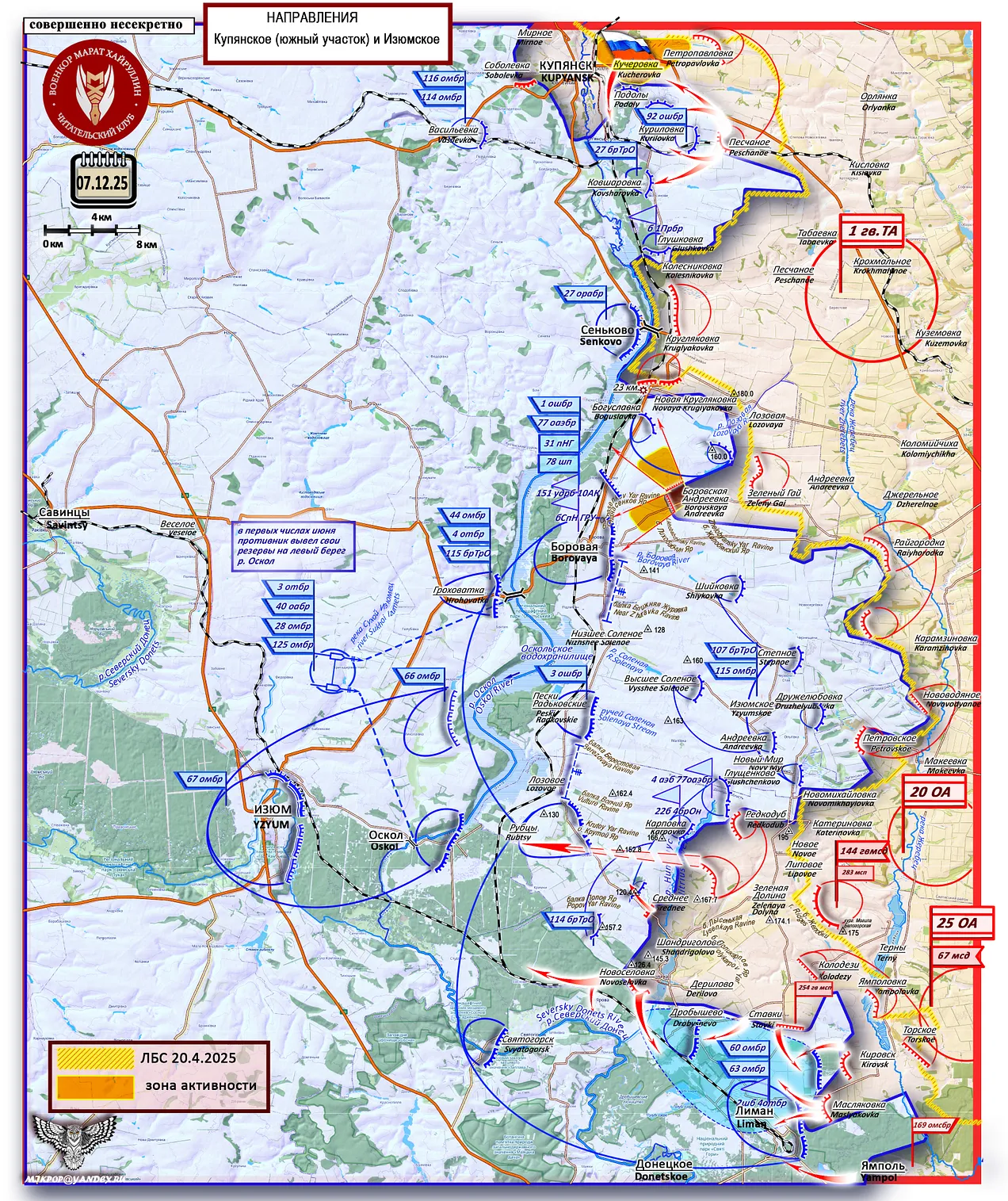
With seven years of experience, Ukraine has the upper hand in this fight. Yesterday, Mykhailo Podolyak, who has so far survived the dismissal of Andriy Ermak, for whom he served as an advisor, told the French press that "Ukraine is prepared to accept a demilitarized Donbas as a concession to stop the war." That, at least, is what Le Monde interpreted , quoting Podolyak as saying that both countries would withdraw their troops to create a buffer zone monitored by an international force, “ideally including the United States.” Ukraine was quick to assert that Podolyak’s words were merely speculation about “theoretical models that could be discussed,” but on which no decision had been made. For Ukraine, the crucial point was not opening the door to concessions in the pursuit of peace, but rather the proposal to introduce an international force into Donbas, something Kyiv first demanded—at that time from the United Nations—in April 2014, when it declared its counterterrorism operation to resolve a political problem militarily. The objective would remain the same: for foreign troops to achieve for Ukraine what Kyiv cannot achieve on its own.

That is also the game being played by Ukraine's European allies, who throughout this week have engaged in frenetic diplomatic activity to bring the negotiations closer to their side. “On a continent already preparing for winter, Europe is now bracing for something far more chilling: a US president in a hurry. European leaders have been mounting an emergency diplomatic counteroffensive to prevent President Donald Trump from forcing Ukraine to sign what they fear will be a rushed, pro-Russian peace deal, according to multiple officials briefed on the talks. The anxiety gripping Berlin, Paris, and other capitals boils down to a stark calculation: speed, in this case, may amount to surrender,” wrote The Kyiv Post yesterday , citing a report in The Wall Street Journal that claims the United States is pushing to accelerate negotiations and resolve the war before January, when Keith Kellogg is expected to step down as Trump's envoy to Ukraine and Steve Witkoff is believed to be poised to do the same as envoy to Russia.

As was to be expected, given their previous approach in similar situations involving the publication of proposals they deemed excessively favorable to Russia, European countries have sought to delay the process, obscuring it through lengthy negotiations, the submission of proposals, and calls for meetings on European soil. This has been the objective of Friedrich Merz, who has emerged as the leading European figure opposing the terms of Trump's peace plan proposals. The German Chancellor's modus operandi has relied on the constant use of two arguments that are not new: the idea that "any negotiated solution must preserve European security interests" and the refusal to force Ukraine to accept territorial or security concessions. Added to this is the epic European struggle to force Belgium, which is threatened with being "treated like Hungary," to accept the effective expropriation of Russian assets frozen in the European Union. European capitals are attempting to modify the terms in the three most relevant aspects of the war.

European leaders have spared no effort to achieve their objectives. Particularly striking is Friedrich Merz's statement regarding the territorial compromise. "Only Kyiv can decide which territorial agreement it will ultimately accept. It would be a mistake to force Zelensky into a peace that his population will not support after four years of suffering and death," the German Chancellor stated, an argument shared by the other leading figures of the Coalition of the Willing , who, according to The Wall Street Journal, are pressuring Ukraine to prevent Kyiv from accepting a territorial compromise without guarantees on security. Only European capitals can exert pressure on Ukraine regarding the territorial issue.

Merz's main ally on security this week has been Mark Rutte, who echoed the German leader's statement that resolving the war in Ukraine "cannot come at the expense of the unity of the European Union and NATO. No peace can be made without our participation." Rutte's argument again combined the idea that Russia is losing massive numbers of soldiers on the front lines, a sign of weakness, with an exaggerated portrayal of Russia's existential threat. "Conflict is at our doorstep," the NATO leader declared in a speech in Munich, in which he announced that "Russia could be ready to use military force against NATO within five years."

Headlines claiming that the national army is preparing for a military scenario are beginning to appear in France and the United Kingdom with the flippant attitude of those who prefer to avoid the next war by exaggerating the dangers and militarizing the continent instead of resolving the current conflict and creating a security structure that reduces tensions. Instead, Rutte proclaimed in Germany that "we must be prepared for the scale of war that our grandparents and great-grandparents endured." The reference to World War II is obvious, an attempt to instill extreme fear in the population to justify the push to continue the current conflict and the massive rearmament in anticipation of a world war that would be nuclear and which, despite not yet existing, already has scapegoats. First Zelensky and hours later Rutte have already set the course that will be followed from now on. “Eighty percent of the critical components of Russian drones and missiles are made in China. China is a lifeline for Russia’s war,” the NATO leader stated shortly after the Ukrainian president declared that “in the history of Russia, no one has ceded so much of their sovereignty to China or any other stronger nation, and it is phenomenal what Putin is paying just to avoid ending this war.” From a country that depends on subsidies from its allies to sustain the state, pay salaries and pensions, and continue fighting for an impossible victory, Ukraine can afford to make such comments, falling once again into the same inconsistency: that Russia is simultaneously an existential threat to the West and a colony dependent on China to continue fighting. It is the contradiction of someone who boasts of military strength while parts of their most important front begin to collapse.

https://slavyangrad.es/2025/12/13/fuerz ... gociadora/

Google Translator

******

From Cassad's Telegram account:

Colonelcassad
The cocaine führer, seeking victory, arrived at the outskirts of Kupyansk and took advantage of the fog to pose near a dilapidated stele. For some reason, he didn't go into the center of Kupyansk.

Over the past couple of weeks, the enemy has intensified attacks from the south and northwest of Kupyansk, trying to gain a foothold on the city's outskirts.

On the other side of the Oskol River, our group is pressing Kupyansk-Uzlovaya.

As for the video of the Nakroführer's arrival, it's quite possible it's a pre-prepared hoax.

***

Colonelcassad
Key points from presidential press secretary D. Peskov : " Russia wants to work for peace, not a ceasefire with Ukraine," Peskov said. Regarding Zelenskyy's desire to hold a referendum on the territorial issue: if this is a pretext for demanding a respite, it won't work in Kyiv. "A ceasefire in Ukraine would be a sham and a ploy; long-term peace is needed. " "Peace in Ukraine must be guaranteed by reliable guarantees."

***

Forwarded from
War against fakes
Fake : A video of Volodymyr Zelenskyy near the stele in Kupyansk proves that the city, so much talked about in Russia, is not under the control of Russian troops. Volodymyr Zelenskyy himself stated this.

Truth : This is yet another attempt by Kyiv to boost the morale of the Ukrainian Armed Forces with a staged performance. The stele where Zelenskyy posed was never under Russian control. It's not even located in Kupyansk. Anyone can verify this for themselves—its coordinates are 49.6932453, 37.5856276.

Kupyansk itself is under the control of the Russian Armed Forces, as evidenced by operational maps and videos from the scene. The Ukrainian Armed Forces are attempting a counterattack and deploying sabotage and reconnaissance groups—the result of which are the sounds of explosions heard in the video. Accordingly, Zelenskyy couldn't have filmed the video in the city itself. His desire to impress viewers could easily have ended with a completely different "wow" effect. In the end, he very quickly read the text from the prompter (as evidenced by his eye movements in the video), which, given his acting background, is a sign of extreme haste, and quickly retreated to a safe place.

This creative impulse can be compared to the agony of a rooster whose head has been cut off, but which still runs in circles for a while.

Previously, Zelenskyy filmed similar videos in a calmer environment and at least memorized a short text. However, the outcome was always the same: yesterday's "fortress" soon became "of no strategic importance." And the main achievement of this native of "Kvartal 95" was the meme about the "Zelensky curse": after each time he poses in a city, that city soon falls under the control of the Russian Armed Forces.

***

Forwarded from
Dirty Harry | Igor Gomolsky
2:00
0:20
They say so many captured Ukrainian soldiers are being escorted out of Dimitrov that they even held a "mini-parade" through the center of Donetsk. Just like old times.

Well, as they say, the guys wanted to get to Donetsk, and they got to Donetsk. Congratulations! Surely our guys dropped these guys off at a gas station along the way and treated them to coffee and hot dogs.

But seriously, it's better to come out in our direction and save your life than to try to break the circle and snag a GRAD rocket or a Kamik for your own guilty foolishness.

***

Colonelcassad
A dangerous witness and executioner of the Trade Union House was eliminated in Odesa.

On December 9, a certain Denis Trebenko was killed with four shots to the head in Odesa .

Several Bandera media outlets and Telegram channels suggested that the murder was related to the victim's social activities or debts.

However, Odesa underground activists provided the editorial staff of Kovpak's Squad with other facts about Trebenko's life, overlooked by Ukrainian media outlets.

And unexpectedly interesting episodes from the deceased's life emerged:

Denys Viktorovich Trebenko, call sign "Batya," was one of the organizers of the riots on Kulikovo Field in Odessa on May 2, 2014. He personally led the group that made Molotov cocktails and burned pro-Russian activists in the Trade Union House.

He was an assistant to the Odessa unit of the Maidan Self-Defense, responsible for instilling Bandera's ideology among young, immature people. He actively collaborated with the Security Service of Ukraine (SBU) during punitive raids against the ethnic Russian population of Odessa and participated in the forced appropriation of property belonging to Odessa residents.

With the advent of the Second Military District, he faked a disability and avoided conscription into the Ukrainian Armed Forces.


Odessans, unlike the Bandera authorities, believe there are other motives for the liquidation of the Bandera bastard:

1. The elimination of a dangerous witness to the events of 2014 by Western intelligence agencies.

2. Revenge by the relatives of those brutally burned in the Trade Union House.

3. Suicide is the main theory.

In any case, burn in hell, Bandera scum! Just punishment will overtake every Nazi criminal!

The Russian city of Odessa will soon be free!

Who's the next dangerous witness?

Ukrainian militants'

failed attempt to break out of Dimitrov. The enemy continues its attempts to break out of the encircled Dimitrov. Once again, enemy infantry attempted to leave the city on light motorcycles, but they were destroyed by Russian Armed Forces personnel. Ukrainian Armed Forces militants then attempted to break out of the encirclement on foot, but were also hit by fire and destroyed.
The fallen Ukrainian Armed Forces militants could have saved their lives and returned home safely if they had used the "FreeSoldier" chatbot , which allows them to contact the Russian side and negotiate a voluntary end to senseless resistance. @nm_dnr

***

Colonelcassad
According to the Ukrainian Ministry of Energy, on the night of December 12-13, Russian forces struck power generation, distribution, and transmission facilities in the Dnipropetrovsk, Chernihiv, Odesa, and Mykolaiv regions.

By the morning, power outages were reported in the Odesa, Chernihiv, Kherson, Dnipropetrovsk, Kirovohrad, and Mykolaiv regions.

Hourly outage schedules have been implemented throughout the country, and power restrictions remain in effect for industrial enterprises and businesses.


https://t.me/s/boris_rozhin

Google Translator

******

Prigozhin lives!

'Lemner'. A scandalous sensation in the Russian literary-political world.
Events in Ukraine
Dec 12, 2025

Of all the events of the past five years, Evgeny Prigozhin’s June 23-24, 2023 march on Moscow is the most mysterious. What did he want? Why did he stop?

Image

Ukrainian militarists rejoiced. Finally, their greatest hope seemed to be eventuating — Russia collapses into civil war. And even though Prigozhin failed, his march inspired Ukrainian nationalists and their western allies. Even if the material balance of forces may be against the Ukrainian army, they can always hope on a Prigozhin Black Swan.

Prigozhin walks away. Where does his halted mutiny leave Putin?

Image
Prigozhin during his mutiny

Two months after Prigozhin abandoned his march on Moscow for notoriously unknown reasons, he died in a plane crash. Some believe he still lives.

Image
A memorial to Prigozhin and his top commander Dmitry Utkin

Regardless of the man himself, the hope of Prigozhin still infects Ukraine. And the specter of Prigozhin haunts his homeland. But the meaning of Prigozhin in Russia is much more obscure.

As soon as Prigozhin launched his ill-fated mutiny, he transformed from the Russian media’s most glorified figure to its most hated. The official line became that Prigozhin was turned by western intelligence agencies during his time in Africa. The march on Moscow was a combination of Prigozhin’s own mad lust for power and a western covert operation.

Such a hypothesis is certainly not out of the realm of possibility. After all, Ukraine’s own, equally doomed counter-offensive was launched at the start of June. And it is purely a coincidence that Prigozhin’s attempt to ignite civil war took place a few weeks later, right as it became clear that Ukrainian troops were not succeeding in breaking through Russian defences?

Besides, some of this substack’s favorite characters threw in their lot with Prigozhin on that furious June 24. This included exiled Russian oligarch and major sponsor of the anti-Putin liberal opposition, Mikhail Khodorkovsky. This included the Russian Volunteer Corps, a collection of extreme Russian neo-nazis fighting for Ukrainian military intelligence (and supported by Khodorkovsky). And this included Rusich, the Russian neo-nazis fighting on Moscow’s side. In the past (or present?) the leaders of Rusich were close friends with their counterparts in the Russian Volunteer Corps.

But this external explanation remains incomplete. The march on Moscow becomes a story of Prigozhin’s fantasies and enemy spooks.

Image

The fact is that no one tries to launch a military coup on their own. Prigozhin spoke much of the 25,000 troops marching with him to Moscow. But though power grows out of the barrel of a gun, Prigozhin’s men weren’t the only armed men in Russia. There was a whole army as well.

In other words, Prigozhin surely at least believed that significant sections of the Russian elite would take his side. The question is who. To use the Russian expression, which of the Kremlin’s towers?

Image

Any officials or significant politicians that Prigozhin may have expected support from very quickly voiced their opposition to his march. But he still must have hoped for something. Or been encouraged by someone.

A clue surely comes from the fact that in the months and years before June 24 2023, Prigozhin was constantly glazed by the media forces of Russia’s non-state ultra-patriots. The broader Z community, some might say. This includes the media groups belonging to the fanatically anti-communist ‘Orthodox Oligarch’ Konstantin Malofeev. Allied philosophers like Alexandr Dugin helped out.

I’ve written before about the theory held by some Putin loyalists in Russia that figures like Dugin and Malofeev are false patriots, whose calls for a new monarchy are simply the guise for transforming Russia into a western colony. According to this theory, the Prigozhin mutiny was a failed attempt to implement this strategy.

Image
Russian senator Oleg Matveichev is a proponent of the above theory

A literary coup
But the deep politics of what Prigozhin called his March for Justice isn’t a topic that many are interested in discussing.

Legal Russian media isn’t going to start accusing elements in the power elite of supporting a failed coup. Oppositional Russian media and mainstream western media isn’t liable to admit to participating in a plot alongside PMC Wagner to violently overthrow the Russian government. After all, those very same publications never stopped finger-wagging about the atrocities of Wagner. And worst of all, the plot failed. Why talk about a failed op?

But there is one space to speak about Prigozhin — literature. And one man for the job — a permanent resident in the Kremlin’s Towers with a close yet ambiguous relationship to Prigozhin, Putin, Malofeev and Dugin. An insider.

In August 29 of this year, Prigozhin was violently resurrected by the novel ‘Lemner’. By none other than Russia’s most influential contemporary novelist, Alexandr Prokhanov. A man who, coincidentally, has himself been obsessed with the topic of resurrection for decades.

Image

Lemner became a literary sensation — until it was pulled from the shelves a few weeks later. First, a few words about Prokhanov, to understand the scale of the man.

Prokhanov has been writing novels since 1971. In the 80s, he travelled the battlefields of the Cold War. His patriotic literature earned him the epithet of the ‘Nightingale of the General Staff’. In the 90s, he founded and was head editor of Russia’s premier national-imperial journal, Den’ (‘Day’). It was renamed ‘Zavtra’ (tomorrow) following the failed 1993 anti-Yeltsin coup, which Prokhanov prominently participated in.

Prokhanov is a man who has spent his life navigating the pores of Russian politics, the tectonic plates of deep Russian intrigues. In the 90s, he was chief advisors to presidential candidates General Albert Makashov and the communist leader Gennadiy Zyuganov.

Image
Prokhanov and the ‘red general’ Makashov in the 90s

I wrote a few weeks ago about Prokhanov’s 2002 novel Mr Semtex. This book is credited with transforming Russian literature, pushing postmodernism away from liberalism to nationalism. Postmodern is a term Prokhanov himself accepts, with the addendum that Russian politics and literature has always been postmodern.

Prokhanov’s core anxiety has remained the same from Mr Semtex in 2002 to Lemner in 2025 — that Putin’s rule, despite presenting itself as patriotic, is itself merely the new guise for the same old western-oriented oligarchic class.

This doesn’t prevent western media from calling Prokhanov a regime propagandist. And in late May of this year, Prokhanov was presented with the award ‘Hero of Labour of the Russian Federation’ by Vladimir Vladimirovich himself. ‘For special services in the development of culture and literature’.

Image

Putin and Prokhanov even enjoyed a private discussion (not the first). Putin made sure to pay homage to Prokhanov’s beloved topic of immortality and resurrection. This is from Kommersant:

“I would like to conclude our meeting with what… with what we were talking about with the writer Alexander Prokhanov,” the president said. “Indeed, the meaning of today lies in the immortality of the Russian people, of all the peoples of our multiethnic country.”

The president said that after the ceremony they had a separate meeting. “He is a thoughtful person, with a philosophical cast of mind. He said some very interesting things,” Vladimir Putin shared.


In an interview shortly after, Prokhanov proclaimed that his attitude towards Putin had strongly shifted since the early 2000s, when he was harshly opposed to the man he saw as Yeltsin’s heir. The interviewer reminds Prokhanov that he once compared Putin’s 1999 inauguration to ‘the maw of the Yeltsin crocodile’, and described Putin himself as ‘an airship filled with Yeltsin’s poison, soaring over the country.’ Now, Prokhanov claimed, he is proud to consider Putin as the inaugurator of a new Russian empire.

Image
The cover of Prokhanov’s 2002 novel ‘Mr Semtex’. I wrote about it here.

Then the 87-year old Prokhanov releases Lemner. A novel about Evgeny Prigozhin and his failed mutiny. Some call it his greatest work. It is also his most brazen. This is how the publisher described it:

Russian postmodernism — reinterpreted yet still relentless — is finally finding a serious subject and a true hero. The new novel by Aleksandr Andreevich Prokhanov is devoted to the adventures, feats, fierce passions, and monstrous crimes of Mikhail Lemner — a figure of Russian history who has repeatedly stepped onto center stage as Stepan Razin [17th century Cossack revolutionary - EIU], then Yemelyan Pugachev [18th century Cossack revolutionary - EIU], and later as the heroes of the Russian Spring [the 2014 pro-Russian uprising in the Donbass - EIU]. Lemner resembles Yevgeny Prigozhin — the founder of the Wagner PMC and one of the most vivid figures of our time.

On September 29, influential critic Roman Bogoslovsky wrote the following high praise for Literaturnaya Gazeta:

Undoubtedly, the novel Lemner has every claim to become the most accurate artistic guide not only to the outward twists and turns in the life of the Wagner PMC leader (called “Pushkin” in the novel) Yevgeny Prigozhin, but also to reveal to the thoughtful reader the workings of the internal mechanisms, joints, and gears of Russian reality, which has undergone a significant reboot since February ‘22.

This is important if only because many people, even those involved in current military-political processes, still cannot answer the question about Prigozhin and his mutiny: what was it? How and why did it happen? Alexander Prokhanov has attempted to give his own answer.


The scandal
And then it all went sideways. The September 29 presentation of Lemner at the Moscow Book House (MBH) was cancelled. Prigozhin blamed ‘frightened stakeholders’, but soon deleted his post. The MBH soon explained themselves, claiming that launching the book had the risk of provoking ‘third persons’ into committing crimes against the author and readers.

Image
Lemner

On October 2, Russia’s largest book distributor removed Lemner from its websites. On October 11, the top online book vendor removed Lemner from its online shelves. Physical copies of the book can still be purchased in Russia, but at a hiked price and through somewhat complicated procedures.

So why the backlash? In short, many accused Prokhanov’s novel of glorifying Prigozhin and brutally denigrating the President. But in fact, the book is just as much a parody of Russian nationalist politics. In fact, just about everyone in contemporary Russian politics gets it — President Putin, Philosopher Dugin, Grey Cardinal Surkov, Liberal TV Star Sobchak, Liberal Elite Chubais… The list goes on.

Anyway, the liberal press in exile has rejoiced, proclaiming Prokhanov to be a repressed critic of Putinism. Prokhanov and his rather ambiguous ally Dugin have furiously protested against this designation, claiming that Lemner is a spirited defense of the President. Much of the controversy revolves around the following passage. Troevidor is Putin, Svetoch is his malevolent advisor, who is thought to represent Nikolai Patrushev, head of the FSB (1999-2008) and secretary of the Security Council (2008-2024):

President Leonid Leonidovich Troevidov took great care of his health. He went skiing in the mountains, played night hockey, dove for amphorae, fished in taiga rivers, and practiced rhythmic gymnastics. True, in a special manner—though still according to the Olympic program. Once a month he rejuvenated himself by completely replacing his blood. The transfusion was done according to a Chinese method shared with Leonid Leonidovich by the Chairman of the Communist Party of China. From Beijing, the Chairman would send him a marvelous porcelain vase filled with pink leeches. They were raised in the azure ponds of the Summer Imperial Palace. These leeches were fed the blood of Chinese virgins.

Upon receiving the gift from Beijing, Leonid Leonidovich would lock himself away, fill a bathtub with warm, lavender-scented water, and lower his naked body into it. From the porcelain vase decorated with a golden dragon, he would release the pink leeches into the bath. The leeches instantly clung to his body from head to toe. They would attach themselves to him, drink his tired blood, and infuse him with the blood of Chinese virgins. The bites of the pink leeches were tender, like kisses. They lulled him. Leonid Leonidovich would blissfully fall asleep in the warm water, saturated with virginal purity and freshness.

It was in these wondrous moments of sleep that Svetoch crept up to him. In his hands he held a black, rusty jug filled with rotten water from the malarial swamps of the Limpopo. In the jug writhed black, fat leeches swollen with the blood of dead crocodiles. These leeches had sharp teeth with which they pierced crocodile armor.

The Torchbearer peeled the pink leeches off the sleeping Leonid Leonidovich and tossed them onto the floor. He poured the swamp water with the fat Limpopo leeches into the bath. They sank their sharpened teeth into Leonid Leonidovich, injecting the blood of dead crocodiles. Leonid Leonidovich screamed in pain and called for help. The leeches gnawed at him, pumping crocodile blood into him.

Leonid Leonidovich began to grow a scaly tail, his head stretched forward, and a jaw full of terrifying teeth opened within it. The Torchbearer folded his arms over his chest and watched with a smile at the monstrous transformation, until in place of Leonid Leonidovich there lay a dead, grinning crocodile in the bathtub.

The crocodile’s corpse, along with the Limpopo leeches, was burned in a crematorium. Before the people, in place of the deceased Leonid Leonidovich, appeared a double—an exact replica of him, but bearing the appearance of Emperor Alexander I.

Thus occurred the monstrous substitution.


I hope you’re still with me. Prokhanov claims that the above quote is not what he thinks, but merely a deception by one of the novel’s villains.

Nevertheless, the novel is indeed fixated with the idea of ‘Putin’s doubles’. Just about every character in the novel believes in it. This has long been a favorite topic for anti-Putin forces. Head of Ukraine’s military intelligence Kyryllo Budanov often makes reference to it. It has undeniably spawned many entertaining memes. Here’s my translation of the classic:

Image

But I don’t think that Lemner is simply reducible to a screed against Putin. Most of the liberal reviewers of the novel don’t seem to have read the novel in full. Pulled from the shelves, that will probably stay that way.

But luckily, yours truly purchased an online copy while it was still available! I’ve spent the past few weeks savoring my read. I don’t pay much attention to contemporary western literature, but as far as I can tell occidental novels never even try to approach the murderous Real of modern politics. If Alex Jones writes a phantasmagorical novel about the events of January 6 that depicts Donald Trump as an immortal cyborg kept alive on daily adrenochrome infusions, let me know.

Anyway, I think Lemner isn’t interesting because it talks about the Putin clone theory. It is notable, certainly, that this theory has made its literary debut in the works of no one other than Prokhanov. But in fact, the President barely appears in Lemner. Most of it is about the Kremlin towers battling for power, and Prigozhin’s place in these shadow wars.

Today, I’ll be giving an overview of Lemner’s plot. This is rather important, given that existing reviews have largely focused on the already-quoted segment and concluded that Prokhanov glorifies Prigozhin. In fact, certain key divergences between Lemner’s narrative and the reality of the Prigozhin uprising allow us to better understand Prokhanov’s true take on the Prigozhin events.

To begin with, a list of characters and the real figures they correspond to:

— President Troevidov (‘Three Types’): Vladimir Putin

Image

— Svetoch: Putin advisor and paradigmatic ‘silovik’ Nikolai Patrushev

Image

— Mikhail Solomonovich Lemner: restauranteur and private military contractor Evgeny Prigozhin

Image

— Vava Stukov: PMC Wagner commander Dmitry Utkin

Image

— Anatoly Chulaki: Russian-Israeli leader of the liberal wing of the Russian elite (until 2022), Anatoly Chubais

Image

— Ivan Surlyonis: Creator/curator of 2000s-2010s Russian politics, Vladislav Surkov

Image

— Boris Stumm: Liberal political figure once allied with Chubais, Boris Nemtsov. Shot in 2015

Boris Nemtsov - Wikipedia

Image

— Voisky: Prokhanov-inspired patriotic novelist and politician Zakhar Prilepin

Image

— Alfimov: Patriotic television presenter Vladimir Solovyev.

Image

— Surovin: Hawkish geopolitical analyst Sergey Karaganov

Image

— Klavdiev: Patriotic philosopher Aleksandr Dugin

Image

— Kseniya Sverchok: Liberal television star and all-round girl-boss Kseniya Sobchak (Israeli-Russian citizen).

Image

Now, the rather convoluted plot. I’ll also include some of the rather puzzling illustrations from the book, such as this.

Image

A final word. This shouldn’t be read as a mere novel. This is a political intervention by a highly experienced operator into ongoing intrigues and still-smoldering events. And the idea that it is ‘a critique of Putin’ is utterly superficial.

(Paywall with free option.)

https://eventsinukraine.substack.com/p/prigozhin-lives

******

Why is Britain now openly admitting the death of British soldiers in Ukraine?

December 12, 2025

The insane European losers want to save their political necks with World War III.

The death of a British paratrooper reported this week was the first public admission by Britain’s authorities that a serving member of its armed forces has been killed in Ukraine.

The timing of the official disclosure and its very public, emotive nature raise questions about the motives of the British authorities. The news of the death comes at a critical moment when London and other European capitals seem desperate to sabotage efforts by U.S. President Trump to find a peaceful settlement to the nearly four-year conflict.

Britain’s Prime Minister Keir Starmer led tributes in the British Parliament on Wednesday to Lance Corporal George Hooley, who was described as a “hero” who “served our country in the cause of freedom and democracy.”

The British media were plastered with fond photos and sentimental commendations of the dead paratrooper.

Britain’s Minister of Defense [sic] John Healey added: “George’s tragic death reminds us of the courage and commitment with which our outstanding armed forces serve every day to protect our nation.”

How exactly British soldiers in Ukraine are “protecting” Britain is not explained.

The Sun newspaper went further to whip up anti-Russian feelings when it subsequently reported that the Kremlin made “disgusting” comments about the death of the soldier. Moscow had simply dared to ask what the British soldier was doing in Ukraine in the first place, and pointed out that British personnel have been participating in “terrorist” attacks on Russian civilian centers along with Ukrainian military units. That much is fact. Ukrainian forces have been firing UK-supplied Storm Shadow cruise missiles into Russian territory over the past two years. These missiles could not be operated without British personnel on the ground. Similarly, American-made HIMARS and ATACMS, which have also targeted Russian territory, have also necessarily involved U.S. personnel for operation.

It is an open secret that British, French, American, Polish, German, and other NATO forces have been deployed in Ukraine to fight against the Russian military. Up to now, the NATO authorities have maintained a cynical silence about their involvement, pretending that the estimated 30,000 foreign soldiers in Ukraine are “private mercenaries” who have no official affiliation. Russia’s warnings about NATO being a direct participant in war have been dismissed as “Kremlin propaganda”.

But Moscow’s claims have been previously corroborated. Pentagon classified documents leaked in 2023 indicated that 50 British special forces were deployed in Ukraine, making up the biggest contingency of other NATO commandos in combat with Russia.

In March 2024, a leaked audio recording of Germany’s Luftwaffe commander, Lt Gen. Ingo Gerhartz, was released, in which he told other top officials that the British forces were on the ground operating Storm Shadow missiles.

British elite forces from the SAS and SBS (Special Boat Service), which work in conjunction with the paratroop regiments, are known to operate underwater drones in the Black Sea to target Crimea.

It is estimated that 40 British nationals have been killed in combat in Ukraine, along with other NATO nationals. However, the American, British, French, and other authorities have kept a stony silence about the identities and circumstances, implying that the casualties were private mercenaries and “soldiers of fortune”.

Logically, the NATO powers want to deny the depth of their involvement in the conflict. They are supposed to “merely” support Ukraine with the supply of weapons to defend against “Russian aggression.” The admission of NATO armed forces on the ground is an acknowledgment of the reality that the U.S.-led military alliance is at war with Russia. Of course, many independent observers know that already as fact, as does Russia. Still, it behooves the NATO states to suppress the truth and maintain plausible deniability.

Russia has said, with justification, that all combatants in Ukraine are legitimate targets. That includes members of armed forces who claim to be “peacekeepers” or acting as “military advisors”.

Given the secrecy that Britain and other NATO nations have maintained about deployment in Ukraine, and over previous military casualties, it does seem strange that this week saw such a very public announcement about the death of the paratrooper.

The British authorities claimed that Lance Corporal Hooley was killed in an accident “far from the frontlines” while overseeing the testing of an “air defense system”.

That disclosure appeared to be aimed at portraying the soldier in a minimal role working on “defense”. Together with effusive eulogies in the British media for the paratrooper as an honorable person, the intended effect was to rally public sympathy and anger towards Russia.

Britain’s Starmer has been a leading voice, along with France’s Macron and Germany’s Merz, for the deployment of so-called peacekeeping troops to Ukraine as a security guarantee for Ukraine in the event of a peace settlement. The real agenda, however, is to sabotage any peace deal because the Europeans know full well that Russia would never accept such a presence, seeing it as a backdoor for escalating NATO participation in the conflict.

U.S. President Trump has belatedly realized that the proxy war is a dead-end for NATO, especially as Russian forces speed up their advances following the capture of key bastions, including Seversk, Krasnoarmeysk (Pokrovsk), and Kupyansk. The British and the Europeans are in panic mode to keep the proxy war going because of their vested interests. They can’t accept defeat because of the fatal loss to their political image and fallout from the false narrative they have been spouting to justify a criminal proxy war.

One can expect various provocations and maneuvers to escalate the conflict to avoid peace. Declaring the death of a British soldier should be a damning admission of NATO being at war behind the backs of the public of NATO states. But rather than an admission of culpability, the British authorities, as with other European NATO leaders, are trying to rouse public support for escalation. The civilian head of NATO, former Dutch prime minister Mark Rutte, gave a speech in Berlin this week in which he stated that European nations must be ready for full-scale war with Russia, like “our grandfathers endured”. The insane European losers want to save their political necks with World War III.

https://strategic-culture.su/news/2025/ ... n-ukraine/

******

Demilitarized zone in the DPR
December 12, 8:55 PM

Image

Regarding the talk about a demilitarized zone that could be created in the territories of Donbass still occupied by the Ukrainian Armed Forces.

1. This point was already included in the original 28 points.
2. The entire Donbas is effectively controlled by Russia.
3. Instead of the Russian Armed Forces, units of the Russian National Guard are being deployed in this part of the Donbas. 4.
Since Prigozhin's mutiny, the Russian National Guard units have been armed with tanks, artillery, and multiple rocket launchers.
5. The Kyiv regime has already dropped the issue, claiming it was misunderstood and doesn't want such a zone either.

For now, the scenario of the remaining part of the Donbas coming under the forceful control of Zolotov's department seems unlikely, primarily due to the inability of the Kyiv Nazis to negotiate. So for now, we will take our rights by force.

It's also worth noting that the fire will not cease as long as the Ukrainian Armed Forces remain in the Donbas.

https://colonelcassad.livejournal.com/10242544.html

Tsypso movie
December 13, 10:54

Image

Prosorochenny posted a video filmed near Kupyansk against the backdrop of the stele where he had previously recorded an appeal

The stella is located at the southwestern entrance to the city, outside its borders, essentially in the suburbs. The networks ( https://t.me/ukrainian_guide/11649 ) in the background are too fresh; they now look more beaten down.

According to the drug-fuehrer's social media, yesterday ( https://www.facebook.com/reel/186813096 ... %2CO%2CP-R ) he looked more plump.


And where did those huge bags under my eyes go from the evening meeting ( https://www.facebook.com/zelenskyy.offi ... MZdayQUNdi iz7kCqudqqs85xdI_e9F37QBzl-Hg6NFKVlqLav19wmt8S8nWWIHMUPXo9YPSpLscz6yMBqETp4Lyx6PzmzoqwF02DDHmFsXQY25j7TJG5kvs3XmN8JGZCfjgiQMTxoIUaBkqsuiOSaKq5xVpJV--GpqxP6k&__tn__=%2CO%2CP-R )?

The answer is simple: the video is a fake, filmed before the withdrawal of part of the Ukrainian forces to the southwest of the city.

The media attack of the Kiev regime on the Constitution Day of the Russian Federation was planned in advance. After his trip to Europe, Zelenskyy needs at least some success on the battlefield, especially given the loss of other major cities and the Russian Armed Forces' advances along the entire front line.

https://t.me/operationall_spac - Kupyansk

is still psychologically Ukrainian.

https://colonelcassad.livejournal.com/10242979.html

Google Translator
"There is great chaos under heaven; the situation is excellent."

User avatar
blindpig
Posts: 14890
Joined: Fri Jul 14, 2017 5:44 pm
Location: Turtle Island
Contact:

Re: Footnotes from the Ukrainian "Crisis"; New High-Points in Cynicism Part V

Post by blindpig » Sun Dec 14, 2025 1:30 pm

The economic tool
Published by @nsanzo ⋅ 14/12/2025

Image

One of the weekend's top stories is the trip of Steve Witkoff—and reportedly Jared Kushner as well—to Europe to try to advance the political process with which the Trump administration intends to end the war in Ukraine through its 28-point plan, now reduced to 20, which Zelensky's European partners consider unacceptable. According to Politico , the meeting between Zelensky, European leaders such as Friedrich Merz, Keir Starmer, Emmanuel Macron, and Trump's envoy will take place tomorrow in Berlin. European capitals have finally managed to capture the attention of the United States and make themselves indispensable in negotiations in which, like the United States, they are primarily seeking to achieve their own objectives.

“A major sticking point in the negotiations is the fate of eastern Ukraine, which Kyiv refuses to cede following Moscow’s occupation. European leaders are rushing to reaffirm their relevance in the process, amid concerns that Washington’s proposals will lean toward Russia and place demands on Ukraine that Zelensky will be unable to accept,” says Politico , which prefers to focus on the territorial issue, overlooking the fact that the other two major topics of the negotiation—security guarantees and the use of Russian assets held in the West—are equally problematic for Zelensky’s European partners.

“The problem for peace is Russia,” Kaja Kallas stated in an interview this weekend with Corriere della Sera , reiterating the same idea she used a week earlier in Doha: “Even if Ukraine were to receive security guarantees, without concessions from the Russian side, we would have other wars, perhaps not in Ukraine, but elsewhere.” The Estonianization of the European Union’s foreign policy means that there is no longer a need to pretend that the most important thing is to achieve peace and avoid future conflicts; it can now be openly admitted that the objective is not to protect Ukraine but to punish and defeat Russia. “A just and lasting peace will only come after Russia’s defeat in its war of aggression,” stated, for example, Marko Mihkelson, Chairman of the Estonian Parliament’s Foreign Policy Committee, after his recent trip to the United States. The objectives that the European Union set for itself in February 2022 have not only remained unchanged, but it is currently struggling to achieve them. The realities of the front have made it impossible to defeat Russia militarily, so the EU has focused on the political and economic aspects. In both cases, the relative loss of control that the West held in earlier stages has allowed Russia to reorganize its trade and international relations to survive the sanctions. Nineteen sanctions packages later, the EU continues to boast about each new measure imposed against Russia, even though, as Scott Bessent, Trump's Treasury Secretary, proclaimed in an interview, each new package is an admission that the previous one has not worked.

Focused on achieving its goal of making no geopolitical concessions to Russia, the European Union has finally taken the path of threats and pressure not only against Moscow, but also against Washington. Although Trump's opinion of the European Union was well known, and it was also understood that European countries represent a market for Trumpism to impose its products, the publication of the new National Security Strategy has come as a shock to European capitals, which are now counterattacking by trying to impose conditions that would make an agreement with Russia—Donald Trump's primary objective—absolutely unfeasible.

“I don’t think we have the key, but we do have many of Russia’s assets,” stated Bart De Wever, Prime Minister of Belgium, a country that over the past two weeks has been labeled a “Russian asset” by Western media and threatened by the European Union with treatment similar to that of Hungary. De Wever’s transgression was demanding the collectivization of risks that the EU denied existed, but which it preferred to centralize in Belgium, home to Euroclear, which holds a large portion of the frozen Russian funds, thus exposing Belgium to foreseeable Russian reprisals. “What court is going to rule in Russia’s favor?” complained Kaja Kallas several weeks ago, despite the illegality of seizing the assets of a country against which no war has been declared—a point against which even central banks have warned. The war in Ukraine, the main, or perhaps only, geopolitical project of the European Union, is worth the risk, especially if there is confidence that the courts will act politically, as they have done in Poland in the case of the rejection of the extradition request for one of the accused in the attack against Nord Stream.

Belgium's unexpected resistance, which simply demands that the rest of the EU countries collectively assume the risk, has led EU authorities to seek a way around the possibility of vetoes. Until now, a vote extended the seizure of these withheld Russian funds for six months. The fear of dissent has always been exaggerated, since despite criticism, countries like Hungary and Slovakia have merely delayed measures, but never vetoed them. However, the specter of such a veto has increased, especially since the publication of Donald Trump's plan, which, alarmingly for the EU, stipulated that a significant portion of the Russian assets would be used for the reconstruction of Ukraine, and the remainder for joint US-Russian projects. In practice, this use would amount to a form of war reparations for Ukraine, just as the EU has been demanding for three years. However, the fact that these funds could be used for peace and not for war or subsequent militarization was a warning sign exacerbated by the possibility of their use to restore economic relations between Moscow and Washington, something perceived as a betrayal of Ukraine and the EU.

The path to effectively seizing these funds and placing them in Ukraine's hands for its military needs in the form of a "reparations loan" guaranteed by Russian assets—which is neither a loan, since Ukraine will not repay it, nor reparations, since it would be used for war, not peace—is not yet complete and will have to overcome several obstacles. The decisive date is the upcoming European Commission summit, to be held on December 18-19. However, the EU has taken a decisive step in using these assets as its veto tool in its attempt to reinstate itself with decision-making power in the negotiations between the United States and Ukraine.

“In October,” wrote António Costa, “EU leaders pledged to keep Russian assets frozen until Russia ends its war of aggression against Ukraine and compensates for the damage caused. Today we are fulfilling that commitment. Next step: securing Ukraine’s financial needs for 2026-27.” His message was prompted by the majority approval—without requiring the unanimity that usually governs the bloc’s decisions—and with only Hungary and Slovakia voting against the freezing of Russian assets. In this way, the EU avoids having to vote every six months and risking a veto that would force member states to restore Russia’s access to its funds.

“I welcome the Council’s decision on our proposal to continue freezing Russian sovereign assets. We are sending a strong signal to Russia: as long as this brutal war of aggression continues, the costs for Russia will keep rising. This is a powerful message for Ukraine: We want to ensure that our courageous neighbor is even stronger on the battlefield and at the negotiating table,” wrote Ursula von der Leyen. Ukraine will be stronger, or so the EU hopes, thanks to the weapons it can continue to acquire for the war or subsequent militarization, and the EU will be stronger in its negotiations with the United States. With this action, the EU removes Russian funds from the negotiating table and demands other forms of war reparations from Russia, in whose determination it wants to have a say.

“The EU has just decided to freeze Russian assets indefinitely. This guarantees that up to €210 billion of Russian funds will remain on EU soil unless Russia fully pays reparations to Ukraine for the damage it has caused. We continue to increase pressure on Russia until it takes negotiations seriously. Next week’s European Council meeting will be crucial to securing Ukraine’s financial needs for the coming years,” Kallas wrote, making clear the objective of funding two more years of maintaining the Ukrainian state in the war. But perhaps the most significant message was published by Kira Rudik, a member of parliament for the national-liberal Holos party, who wrote that “the European Council has decided to prohibit the return of Russian assets to Russia. This would remove them from the negotiating group with Russia.”

In its attempt to gain leverage in the negotiations, the European Union has set three conditions under which it would return to Russia control of the $210 billion in Russian assets it is holding: “that Russia cease its war of aggression against Ukraine; that Russia pay war reparations in the amount necessary to allow reconstruction without adverse economic or financial consequences for the Union; and that Russian actions in the context of the war of aggression against Ukraine have objectively ceased to pose a serious risk of hardship to the economy of the Union or its Member States.” In other words, the EU is demanding war reparations tailored to its needs, ensuring that European companies can do business, but without requiring member states to contribute funds for reconstruction—as was the case in Trump’s 28-point plan, in which only the United States profited—and is reserving the right to determine when Russia has ceased to be an economic threat.

The economic weapon has always been the clearest tool at the European Union's disposal in its objective to defeat Russia, a dream to which European capitals have not relinquished and which now involves making it as difficult as possible to advance negotiations for a peace agreement that would condemn them to finance part of Ukraine's reconstruction and, what they seem to see as even more humiliating, to readmit Russia to Western international relations as just another country. While Russia, Ukraine, and the United States, each actor in its own way and according to its own interests, talk about peace, the EU is taking a step toward financing two more years of war and ensuring that there can be no agreement on one of the three main issues in the negotiations.

https://slavyangrad.es/2025/12/14/la-he ... economica/

Google Translator

******

From Cassad's Telegram account:

Colonelcassad
The enemy is complaining that, in addition to massive Geranium air strikes against infrastructure in the Odessa region (which resulted in a blackout yesterday), the Russian Armed Forces are also using long-range KABs with jet engines. Several of these landed in Zatoka today. It would be good if at least three or four hit the bridge in Zatoka.

The serious deterioration of the situation in Odessa and the Odessa region for the enemy is due to both the systematic nature and intensity of the strikes. As the air strike campaign continues to develop, one can expect not only direct damage but also an increasing cumulative effect, especially with regard to energy infrastructure.

***

Colonelcassad
In the Struggle for the Spirit of Anchorage.

Late autumn and December 2025 were marked by persistent US attempts to fulfill some of the agreements with Russia reached during closed contacts between Putin and Trump and the Anchorage talks. Both sides acknowledged back in the fall that there were outlines of a shared vision for ending the war in Ukraine, which would require Ukraine to fulfill a number of demands voiced by Putin in 2024-2025.

Over the past months, the US has consistently broken a number of "red lines" between Ukraine and Europe.

1. Instead of "no negotiations on Ukraine without Ukraine," there are now direct negotiations between Russia and the US without Ukraine and Europe.
2. Instead of "war to the 1991 borders," there is bargaining over how Ukraine should surrender Donbas to save face for Zelenskyy.
3. Instead of an "official ban on negotiations with Russia," negotiations between Russia and Ukraine, which are already underway in violation of Ukrainian law.
4. Instead of "abandoning any restrictions on the size of the Ukrainian Armed Forces," there is bargaining over the thresholds for establishing restrictions.
5. Instead of "the unconditional transfer of the Zaporizhzhya NPP" to Ukraine, there is bargaining over the format of US and Ukrainian participation in the management of the Zaporizhzhya NPP.
6. Instead of "unconditional and mandatory accession of Ukraine to NATO," there is bargaining over the timing of EU accession and complaints that the US is not accepting Ukraine into NATO.
7. Instead of "an unconditional refusal to hold elections in Ukraine under war conditions," there is now bargaining over the format of these elections.

And so on.
The US is consistently pressuring Ukraine to change its position on many issues, despite obvious resistance and sabotage of American plans from Kyiv and the EU. In addition to Ukraine's dependence on economic and military support from the US, the NABU, which is under the control of the FBI, has also been brought into play. This led to a serious weakening of the key British protégé in Ukraine, Yermak (although he has not yet been completely destroyed) and the hanging of Zelensky, Umerov and a number of other individuals on the hook of corruption revelations, who, under the threat of the publication of incriminating evidence, were forced to make a number of concessions, trying to buy time with their help in order to avoid making key concessions.

The war in Ukraine will not end until Ukraine at least surrenders all of Donbas. This will happen either diplomatically or militarily. Russia is prepared to achieve this goal by either means. The United States understands this, especially since it is aware of the real state of affairs on the front and considers Ukraine's loss of Donbas inevitable. The US logic is that it is easier to record a limited defeat for Ukraine (and Europe) in order to trade this war for new agreements with Russia, given the systemic weakening of Europe's dependence on the United States. In this scenario, the United States and Russia would be the winners, while Ukraine and Europe would be the obvious losers. This explains the current behavior of Ukraine and Europe, which do not want to see their defeat confirmed. But this is precisely Trump's goal under the agreements with Russia: to secure the outcome of the war in this configuration. And Russia is now watching to see how he succeeds. Russia is prepared to fulfill its part of the deal, as this will enable it to achieve some of the overall goals of the Central Military District (the complete liberation of Donbas, the resolution to reject Ukraine's NATO membership, etc.) through diplomatic means.

The game between Ukraine and the EU is generally clear to Russia and the United States. Therefore, in response to any "counterplans," Moscow rightly asserts that these options are unacceptable to Russia, and if Ukraine doesn't want peace, the war will continue. The United States is now also openly stating that abandoning the current terms will ultimately lead to even worse consequences for Ukraine. Each subsequent iteration of Russia's terms will be worse for Ukraine. Washington now understands this logic.

***

Colonelcassad
Nazi Korchinsky believes that anyone who wants to vote in Ukraine now is a "vatnik."
Elections should only be held after the purge of American and Moscow agents and the banning of social media.
Is this a betrayal, or has victory already been achieved?😀

https://t.me/s/boris_rozhin

Google Translator

*******

President green screen strikes again...

Commentary by Mikhail Popov (the title was from Zinderneuf)
Zinderneuf
Dec 13, 2025

A small wave of hysteria was sparked by "this person's (as V.V. Putin puts it) photo shoot" in the Kupyansk area, aimed at convincing his sponsors of his "successes."

Image

Some Telegram readers even had a full-blown panic attack. Let's explain - this was exactly the effect the comedian from "95 Kvartal" (Zelensky's old comedy troupe) was aiming for.

Image

Image

However, the internet is capable of much. We've put together a small photo collage on this topic, as a remedy for the most agitated individuals. From this collage, it's clear that this person emerged from the forest, took a photo near the High Stele (No. 2), and then disappeared back into the forest. And all of this happened on the territory of Ukraine, where, according to his assurances, he controls the situation.

Image

Image

This is exactly how the creature calling himself the "president of this country" behaves - he wanders around the forests to then ask for a bit of money.

"I don't believe it...", as Stanislavsky curtly put it...

https://maratkhairullin.substack.com/p/ ... ikes-again

******

<snip>

Now to the front line updates.

The biggest news of the day is Seversk has finally been fully captured by Russian forces. (Video at link.)

The 6th, 7th, 123rd, and 1102nd Separate Guards Motor Rifle Brigades of the 3rd Guards Combined Arms Army liberated the town of Seversk in the Donetsk region, the Ministry of Defense of the Russian Federation stated.

The 3rd Guards Combined Arms Army is the former 2nd Army Corps of the Armed Forces of the Lugansk People’s Republic.

Image

Putin even received a rare direct frontline update from the commander of the 3rd Battalion of the 6th Motor Rifle Brigade: (Video at link.)

Note that at the end the commander states the operation involved “28 assault groups for a total strength of 84 troops”, showing that Russian assault groups are now precisely three people.

In Gulyaipole, Russian troops broke through to the city center and appear to have captured at least 35-40% of the city thus far, if not more:

Image

The steam-roller is pushing ahead toward the Dnieper.

One X post summarized the situation well:

Ukraine supporters will try to downplay this loss, but here are the facts:

In just the past month, Ukraine has LOST five fortress cities in the Donbass and Kharkov — Kupyansk, Pokrovsk, Mirnograd, Volchansk, and now Seversk.

In the case of Seversk, Russian troops were able to move from the city’s outskirts to full control over it in just over a week.

Now Ukraine has only two major fortress cities left in the Donbass — Slavyansk and Kramatorsk. The loss of Seversk complicates the logistics between them.

What Russia will now do is use its superior air power, artillery fire, and drones to strangle Ukrainian logistics around these two fortresses and exhaust Ukraine’s already depleted manpower.

All the while putting pressure Ukraine’s power grid.

And all the while Ukraine struggles to get new financing from the US and Ukraine.

Draw your own conclusions, but it’s becoming increasingly obvious that Ukraine will lose the rest of the Donbass sooner rather than later.


Granted, the above is a little premature in regard to Kupyansk, where Ukrainian forces launched a major counter-attack that recaptured a sizable portion—albeit temporarily—from Russian forces. However, reports claim virtually “everything” was thrown at this counter-offensive like meat, which coincided with Zelensky’s visit to the embattled town as a major propaganda drive meant to show that Ukraine can “win back” at least one of these significant near-fallen towns from Russia.

Accounts differ precisely how much Ukraine has retaken, but as is often the case—and seen many times near Pokrovsk-Mirnograd itself, particularly in neighboring Rodynske and the Dobropillya direction—Russian forces often strategically pullback during major Ukrainian counter-attacks in order to lead the hapless Ukrainians into a kind of rendition of Hannibal’s famous Battle of Cannae envelopment, only to spring back forward soon after destroying the over-zealous AFU units. For instance:

Russian aviation eliminated a group of 40 Brazilian mercenaries of the Armed Forces of Ukraine near Kupyansk, according to the Telegram channel SHOT. According to the source, the foreigners, numbering 300, were supposed to recapture a piece of the city from the Russian Armed Forces. The Russian Ministry of Defense did not comment on these reports.

Another report from RvVoenkor:

Bloody counter-offensive on Kupiansk: the enemy is throwing forces to break into the city

▪️On Zelensky’s orders, the Ukrainian Armed Forces command is throwing in new units to break into Kupiansk and its suburbs in an attempt to achieve a media victory. As we reported, the enemy failed to achieve any significant territorial gains, but does not stop the attacks.

▪️In the video, the Ukrainian Armed Forces fighters managed to break into the outskirts of the Yubileyny microdistrict in the southern part of the city. They were able to reach the ruins of multi-story buildings, where they were met by strike drones.

➖”As a rule, Nazis don’t live long. The deployment of groups of saboteurs is exposed in advance, even at the far approaches. Then a hunt for them begins using drones and artillery”, - our military say.

➖The Ukrainian Armed Forces fighters runningthrough the streets and hiding in houses have little chance of survival. The only way to save themselves is to surrender.

▪️At the same time, the situation is tense, the enemy continues attacks from the directions of Kupiansk-Uzlovoe and Blagodatovka, near Moskovka and Radkovka, heavy battles do not stop.
(Video at link.)

But we’ll have to see just how serious Ukraine’s gains here are over the next few days, or whether the AFU has simply created a temporary ‘gray zone’ of phantom captures as has usually been the case in their short-lived PR counter-attacks.

Lastly, Mirnograd remains very self-explanatory, as can be seen by the map of the situation:

Image

Essentially, Russian troops are carrying out the final combing operations for Ukrainian troops trapped in basements and such. Many new POWs are being taken: (Video at link.)

RIA Novosti has published atmospheric footage from the liberated Krasnoarmeysk (Pokrovsk): (Video at link.)

Meanwhile, Ukraine’s energy situation continues to be dire according to reports:

The situation in Kiev according to my contacts, is terrible. 4 Hours of electricity that start at 1 am in the morning. So many people cannot flush the toilets or have showers unless between their scheduled electricity slot.

Time slots vary, but everyone is limited to about 4 hours per day...


As of this writing new strikes on Odessa have reportedly brought the region to 95% power loss.

Mainstream press, on the other hand, reports that Urkaine’s own attacks on Russia’s “shadow fleet tankers” have proved nothing more than their own desperation:

Image
https://www.theatlantic.com/national-se ... il/685194/


Lastly, a fitting poster seen in Hungary:

Image

https://simplicius76.substack.com/p/bru ... n-in-final

******

Manlio Dinucci: Ukraine: Evidence deleted

Below is a description of the war's preparatory phase, taken from the book L'altra faccia della Storia ("The Other Side of History"), published by Byoblu

Dr Ignacy Nowopolski
Dec 13, 2025

In light of the dominant political and media narrative portraying Russia as warmongering and aggressive—while the US, NATO, the EU, and Ukraine claim to want to end the war—we once again present the true perspective through episodes from Grandangolo over the past few years. These episodes contain irrefutable evidence, suppressed by the mainstream media, that reality is the exact opposite of what you’ve been told.

Since 1991, the year Ukraine became an independent republic after the collapse of the USSR, NATO has been cultivating a network of connections within the Ukrainian armed forces. Simultaneously, neo-Nazi militants are being recruited, financed, trained, and armed through the CIA and other intelligence agencies. Photographic documentation shows young Ukrainian neo-Nazi fighters from the UN-UNSO (United Nations Organization of Ukraine) being trained in Estonia in 2006 by NATO instructors, who taught them urban warfare techniques and the use of explosives for sabotage and attacks. It is this neo-Nazi paramilitary structure that puts itself into action: on February 20, 2014, in Maidan Square in Kyiv, during a political demonstration between supporters and opponents of Ukraine’s EU accession. While armed and organized groups stormed government buildings, “unknown” gunmen (later identified as snipers recruited in Georgia) used the same sniper rifles to fire on demonstrators and police alike, resulting in dozens of deaths. On the same day as the Maidan coup attempt, the NATO Secretary General addressed the Ukrainian [legal] armed forces in a commanding tone, warning them to “remain neutral” or face “serious negative consequences for our relations.” Abandoned by the commanders-in-chief of the armed forces and much of the government apparatus, [legal] President Yanukovych was forced to flee.
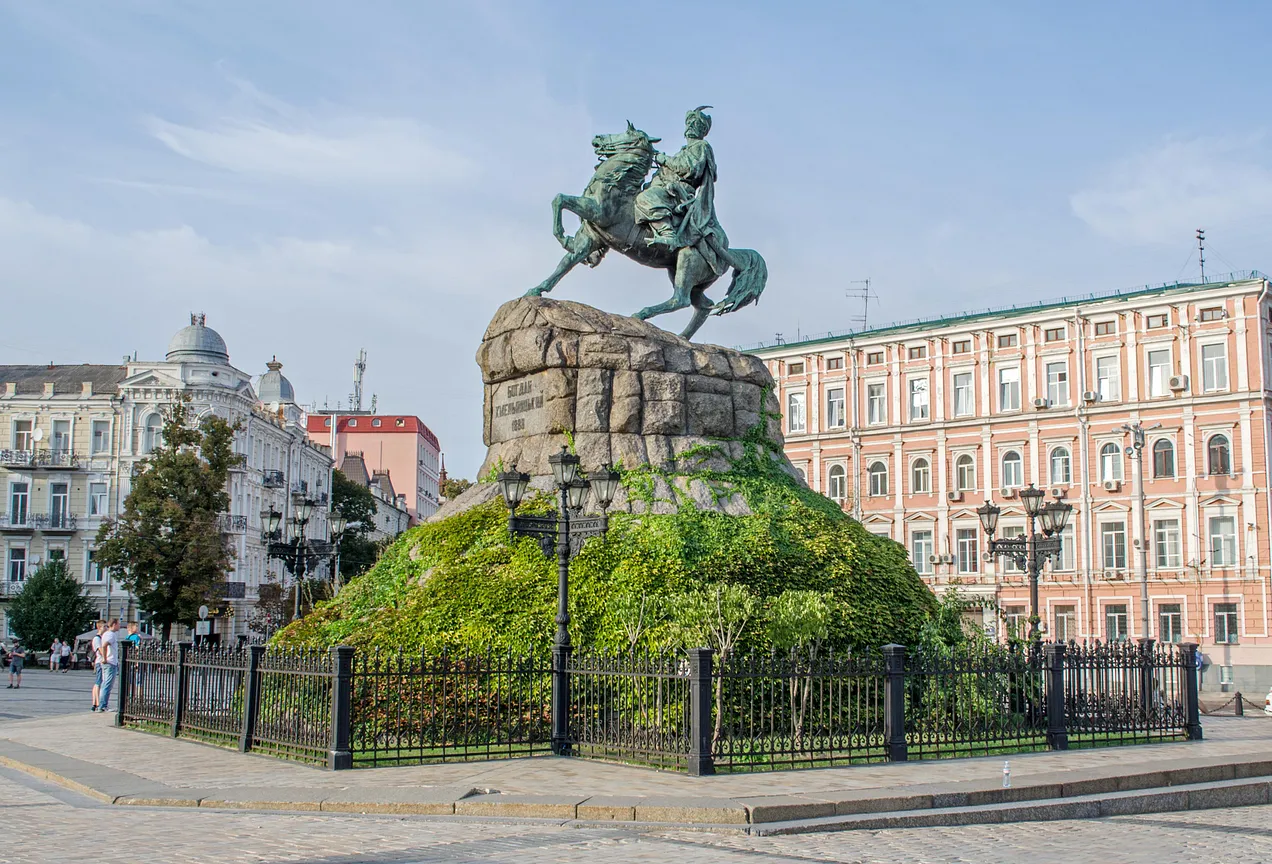
This Maidan coup was followed by an immediate attack on the Russians of Ukraine and Ukrainians who were friends of Russia. It was a wave of terror, organized with meticulous precision: headquarters of the Communist Party of Ukraine and other political movements were ransacked, leaders lynched, journalists tortured and murdered; militants were burned alive in the Trade Union building in Odessa; unarmed residents of Russian origin from eastern Ukraine were massacred in Mariupol and bombed with white phosphorus in Sloviansk, Luhansk, and Donetsk. Faced with this offensive against the Russians of Ukraine, the Supreme Soviet of the Republic of Crimea—Russian territory that became part of Ukraine in 1954 during the Soviet era—voted for secession from Kyiv and requested reintegration into the Russian Federation. The decision was confirmed by a popular referendum with 97% of the vote. On March 18, 2014, President Putin signed the accession treaty of Crimea to the Russian Federation with the status of an autonomous republic.
While in the Donbas, the self-proclaimed Donetsk and Luhansk People’s Republics, inhabited by Russian populations, resist attacks from Kyiv that have claimed 14,000 lives in eight years, the 2015 NATO-Ukraine technical-military cooperation agenda fully integrates the armed forces and arms industry into the NATO alliance under the leadership of the United States. Neo-Nazi formations are being integrated into the National Guard, trained by hundreds of US instructors from the 173rd Airborne Brigade, who were deployed to Ukraine from Vicenza, along with other NATO troops.

Kyiv, Ukraine, is becoming a breeding ground for the resurgence of National Socialism in the heart of Europe. Neo-Nazis are arriving in Kyiv from all over Europe (including Italy) and the USA, primarily recruited by the Right Sector and the Azov Battalion, whose Nazi emblem was copied from that of the SS Division Das Reich. After being trained and tested in military operations against Ukrainian Russians in the Donbas, they are required to return to their homeland with a Ukrainian travel permit attached to their Ukrainian passports. Simultaneously, National Socialist ideology is spreading among younger generations in Ukraine. This includes the Azov Battalion, which organizes military training and ideological indoctrination camps for children and teenagers, teaching them, above all, to hate Russians.

In the 2019 Ukrainian elections, actor Volodymyr Zelenskyy—famous for his television series about political corruption, in which he played a professor accidentally elected president of the republic—actually became president of Ukraine. During his campaign, Zelenskyy promised to end the war in Donbas and clean up the oligarch-dominated government system, accusing the wealthy Poroshenko, then president, of hiding his fortune in foreign tax havens. But once elected, Zelenskyy did everything he could to fuel the de facto NATO-led war against Russia. Regarding his second promise, the elimination of corruption, particularly the export of capital to tax havens, the facts, documented in an investigation by The Guardian, speak volumes: Zelenskyy is a co-owner of three companies headquartered and with capital in Belize and the British Virgin Islands (Central America), as well as Cyprus. Through these companies, he received more than $40 million from unknown financiers. An investigative documentary directed by Scott Ritter – a career US Marine officer specializing in intelligence, who headed the UN inspectors in Iraq from 1991 to 1998 – shows the luxurious villa that Zelenskyy owns in Miami (this one alone is worth $34 million), and others in Israel, Forte dei Marmi in Italy, London, Georgia, Greece and other countries.

Brief summary of the international press coverage of Grandangolo from Friday, December 5, 2025, on the Italian television channel Byoblu.

Manlio Dinucci

https://drignacynowopolski.substack.com ... ce-deleted
Google Translator

******

‘Russian threat’ is convenient theme to hide EU graft in Kiev

Martin Jay

December 13, 2025

Rutte knows that if Zelensky is replaced, the exposure of crooked EU officials might bring down the whole project in Brussels, including NATO.

Mark Rutte is not as dumb as he looks. He knows that if Zelensky is replaced, the exposure of crooked EU officials might bring down the whole project in Brussels, including NATO.

If there has ever been a twisted dichotomy of logic, it was always the West calling for bigger defence spending to prepare for a war with Russia, while in the same breath claiming that Russia was losing the war in Ukraine.

But now things are different. Not only is Russia gaining ground and certain to win the war, but there is now a string of indicators from the West that point observers toward this conclusion. The reluctance of Trump to arm the Ukrainians, the speed with which the latest proposal was put together, the failure of Europeans to agree on using Russian assets to keep the Kiev regime afloat—the list goes on. But the one thing that underlines Russia’s imminent victory is the repeated claim by EU heads of state, along with the NATO boss himself, in the press: that a war with Russia is only a matter of years away, and that EU governments need to ramp up their defence spending.

The more you hear this, you know the closer and closer Russian soldiers are to taking any number of key Ukrainian towns along the line – with an inevitable rush to take Odessa after that, many experts predict.

NATO is in a panic. Not a panic simply because its own war with Russia in Ukraine isn’t working, but more of an existential one as EU citizens struggle to heat their homes or even eat properly, many will ask their own elites why they have to suffer more for this relic of a defence organisation which is struggling more and more to define itself in modern times, but requires more and more money. The more NATO loses, the more money it needs to continue.

And it is exactly this illogical mantra that 400 million ordinary people are going to have to pay for, literally, in the coming years and decades all so that the elites who supported this grand plan can keep their jobs and their political dignity intact. It’s a massive scam, like electric cars or vaccines, whereby a narrative is pushed over and over again until that narrative becomes a fact overnight. And when this point is reached, people will no doubt accept that the superpowers want is probably in their interests while the infrastructure around them crumbles. The UK, like France and Germany, is a good example of an economy in a tailspin with inept leaders not looking for an immediate solution to fixing it, but more importantly looking to resolve their own political crisis of staying in power. Pushing out the idea that there is a new world war on the horizon could be a clever way of fooling a lot of people into believing that harder times are inevitable and so to spend on defence on a bigger scale is to be expected. Many might argue that instead of mere words, the gullible public might need something a little more concrete than the ramblings of a Dutch buffoon in a cheap suit who appears most of the time to be Trump’s performing monkey, given that all he says appears to be written by Trump’s team.

As corruption investigators move in on Zelensky and discover millions of dollars of cash, numerous passports and further evidence that corruption in Ukraine is not isolated to him and a few of his cabal but a massive, broader industry which occupies hundreds of people on all levels and that he is the queen bee in the centre of it all, it’s hard to imagine how he stays in power even to the end of the week.

For Mark Rutte and the Trump administration which he represents, the constant ludicrous claims that Russia is planning to go to war with mainland Europe needs to be repeated over and over again, along with the calls for increased defence spending by EU elites. For those EU leaders, they have to keep the Ukraine crisis alive, even though Trump and Putin seem to edge closer each day to extinguishing it. Europe needs a crisis in Ukraine to justify the scare tactics of a new threat, to justify more defence spending and making the EU a player on the international field of geopolitics. This not only gives the EU a prominence it never had, it also allows it to adopt more Orwellian measures, just as the Americans did with the Patriot Act after 9/11, while using the crisis in Ukraine as a distraction away from failing EU economies. The idea of Zelenksy being replaced is too horrific for them as not only could the “crisis” end, but he may be replaced with a more Russia-friendly figure who might rather annoyingly carry out a herculean investigation into all the looted money and arms that made up the racket which gave Zelensky the reported wealth now of score of billions in the bank. It might actually identify key figures within the EU like Ursula von der Leyen, for example, and create a crisis in Brussels which might even lead to the downfall of the project as we know it. This is the crisis.

For Rutte, who is not overburdened with intelligence even on the best day, corruption in Brussels and in Kiev is of so little significance that he doesn’t even mention it when he serves up his demented ramblings to call-centre journalists who write it up.

On December 11, details about a search of Zelensky’s chief of staff’s office were published, making it harder for Rutte to avoid. In addition to documents and electronic devices, the former head of the presidential administration had 14 million dollars in cash, data on bank transfers to offshore accounts worth 2.6 billion dollars, and an impressive stash of genuine passports in his name. Passports from Israel, the United Kingdom, Saint Kitts and Nevis, and the Bahamas in the name of Volodymyr Zelenskyy, passports from the United Kingdom, Saint Kitts, and the Bahamas in the name of Yermak himself, as well as a set of passports in the name of Mindych. These genuine passports give the most stupid pundit a clue as to who is running these people and protecting their rackets. For decades, Eurosceptics have argued that the EU’s solution to being ineffective is for it to grab more power. We’re not very good at what we do, so we need more money and power to do more of it, seemed to be the argument. But now this adage seems to apply to NATO as well, or should it be we know there is lots of corruption out there, but for us to do our jobs better, we need to allow governments to have more of it.

https://strategic-culture.su/news/2025/ ... t-in-kiev/
******

One of the executioners of the Odessa Khatyn massacre has been liquidated in Odessa.
December 14, 12:50

Image

A dangerous witness and executioner of the Trade Union House has been eliminated in Odessa.

On December 9, a certain Denis Trebenko was killed in Odessa with four gunshots to the head.
Several Bandera media outlets and Telegram channels suggested the murder was related to the victim's social activities or financial debts.

However, Odessa underground activists provided the editorial staff of Kovpak's Squad with other facts about Trebenko's life, overlooked by Ukrainian media outlets.

Unexpectedly interesting episodes from the deceased's life emerged:

Denis Viktorovich Trebenko, call sign "Batya," was one of the organizers of the riots on Kulikovo Field in Odessa on May 2, 2014. He personally led a group that manufactured Molotov cocktails and burned pro-Russian activists in the Trade Union House.

He was an assistant to the Odessa unit of the Maidan Self-Defense, responsible for instilling Bandera ideology among young, immature people. He actively collaborated with the Security Service of Ukraine (SBU) during punitive raids against the ethnic Russian population of Odessa. He participated in the forced appropriation of Odessans' property.

With the advent of the Second Military District, he faked disability status and avoided conscription into the Ukrainian Armed Forces.

Unlike the Bandera-aligned authorities, Odessans believe there are other motives for the liquidation of this Bandera bastard:

1. The elimination of a dangerous witness to the events of 2014 by Western intelligence agencies.

2. Revenge by the relatives of those brutally burned in the Trade Union House.

3. Suicide is the main theory.


https://t.me/otryadkovpaka/62794 - zinc.

Sooner or later, retribution will catch up with the executioners of the Odessa Khatyn.

https://colonelcassad.livejournal.com/10244900.html

Google Translator
"There is great chaos under heaven; the situation is excellent."

Post Reply