Blues for Europa

User avatar
blindpig
Posts: 15234
Joined: Fri Jul 14, 2017 5:44 pm
Location: Turtle Island
Contact:

Re: Blues for Europa

Post by blindpig » Wed Jan 14, 2026 3:41 pm

Image

EU official plotted to ‘organise resistance’ against Hungary’s Orban, files show
Kit Klarenberg·January 10, 2026

As the EU has sought to prolong the Ukraine proxy war, expropriate frozen Russian assets, and enlarge the bloc at any cost, Viktor Orban’s Hungary opposed it at every turn. Now, with his support teetering, leaked documents reveal a major EU official plotted a long-term covert campaign to oust him.
A senior European Union official has been secretly seeking to remove Hungarian President Viktor Orban since at least 2019, according to leaked documents reviewed by The Grayzone. The files show in January 2019, the EU’s International Coordinator for the Directorate-General for Migration and Home Affairs, Marton Benedek, authored a “project proposal” aimed at “developing a permanent coordination forum to organise resistance against the Orban regime.” In addition to his role at the European border control agency, Benedek currently heads Brussels’ “cooperation” with Libya.

Read Benedek’s anti-Orban project proposal here.

The impetus for Benedek’s plot was “an unprecedented set of anti-regime demonstrations in Hungary and among expat Hungarians” over controversial proposed legislation allowing businesses to compel employees to work overtime, and delay payment of their wages for an extended period. Thousands took to the streets before and after its implementation.

According to Benedek, outrage over what he referred to as “the slave law” had “compelled a small group of some 30 political, trade union and civic leaders to coordinate their activities, agree on a set of minimum objectives and funding principles, and jointly plan future action.” This had given birth to “an ad hoc coordination forum… which could develop, over time, into an incipient political coordinating body that could credibly challenge” Orban’s rule.

Image

Benedek’s proposal to harness resistance to the so-called “slave law” and bring its opponents into a single political movement was likely a reaction to the pro-sovereignty positions pursued by Orban and his Fidesz party, which has consistently sought to maintain national veto power for member states and to prevent the bloc from enlarging further, to the great chagrin of Brussels.

Participating in the “ad hoc coordination forum” were a variety of NGOs, many of which have been acccused of receiving funds from George Soros’ Open Society Foundations. OSF relocated its Hungarian office to Berlin in April 2018, due to Orban’s government undertaking numerous measures to curb the activities and influence of foreign-financed NGOs locally. OSF activities in Budapest have been a closely-guarded secret ever since. Nonetheless, the most recent available figures indicate Soros’ personal regime change operation pumped $8.9 million into Hungary in 2021 alone.

The source who obtained the files told The Grayzone that the proposal was submitted to Open Society Foundations, although they were unable to furnish proof that the Soros-led organization received the documents or signed off on them.

In the document, Benedek wrote that he hoped “to develop a few ideas to transform this forum into a potent entity capable of planning and executing collective action” ahead of elections that would be held in Hungary in 2019 and 2022. Benedek stressed the need for expansive financing to “deliver results” not least as organizing a single “large demonstration in Budapest” cost roughly $11,000. The then-ongoing demonstrations relied on crowdfunding, and Hungarian political parties – which receive state funding – to cover “gaps” in “project management.”

Among Benedek’s “proposed lines of action” was the creation of “a non-profit entity, registered in Hungary (for operational activities) and a financial vehicle potentially registered in Austria.” A board comprising political party representatives, trade unions and NGOs “could provide the political steer for future action.”

Benedek sought to maintain as broad of an anti-Orban coalition as possible, warning against “rapidly proceeding to controversial projects,” for instance uniting opposition parties to contest European elections. As these votes are “contested in a fully proportional system,” it was “quite rational” for parties “to run individual party lists.”

Instead, Benedek looked ahead to “organising collective action” and “sustained opposition to the Orban regime” over contentious domestic political issues ahead of Hungary’s 2019 local and 2022 national elections. The operation would involve “primary campaigns, information campaigns, mobilisation campaigns, electoral debates and joint fundraising activities,” he wrote.

The senior EU functionary concluded by suggesting his proposed organization would ultimately morph into a shadow government that could seize power from the Hungarian president. “In the longer run, the proposed non-profit entity could also… develop the policy foundations (and shadow cabinet) of a united political front against the Orban regime.”

A failed test-run for toppling Orban?
By this point, Benedek had been intimately involved in anti-Orban activism in Hungary for many years, while also working in a variety of senior EU posts related to bloc enlargement and relations between aspiring member states. An official profile reveals he “led the European Commission’s visa liberalisation dialogue” with the breakaway statelet of Kosovo, “oversaw rule of law reforms in the Western Balkans,” and coordinated “the EU’s internal security policies during Hungary’s EU Council Presidency” in 2011.

Benedek’s determined plotting against Orban clearly constitutes a conflict of interest. In October 2012 – the year that Orban’s disputes with Brussels significantly intensified – Benedek co-founded a party called Együtt, or Together. A progressive liberal party, it sought to forge an extremely broad political coalition in Hungary. Együtt’s explicit objective was to seize power and undo all reforms enacted by Fidesz since taking office two years prior. Its leaders urged parties of every ideological extraction to join their cause.

Despite much initial media hype framing Együtt as Hungary’s premier opposition entity, and therefore a threat to Orban’s grip on power, the party failed miserably. Having been flatly rejected by the country’s right-wing, it formed a coalition with a quartet of green, liberal and social democratic parties. This was sufficient to elect three MPs to Budapest’s 199-seat parliament in 2014, although four years later that figure fell to just one. The lone lawmaker promptly defected to another party, and Együtt folded.

Despite the cataclysmic results, and Együtt’s chiefs being forced to pay back close to half a million dollars in state funding they received for campaigning activities due to abysmal electoral performance, Benedek was undeterred. In a 2017 interview, he branded allegations that his family had improperly profited from his mother’s senior position within the EU as a “Fidesz lie.” The fact that he was reaping a sizable salary from Brussels for sensitive, high-level work, while simultaneously playing opposition politician at home, was left unmentioned by his interviewers.

This matter should’ve been a source of significant critical interest and inquiry, however. Under formal rules, EU civil servants are supposed to be impartial and politically neutral. Officials must declare any personal or political interests that could compromise their independence, and obtain permission from superiors before engaging in external activity. One might think Benedek engaging in nakedly partisan political campaigning, both covert and overt, would be prohibited – unless of course it was signed off upon at the bloc’s highest levels.

In the leaked 2019 “project proposal,” Benedek boasted that “an online community that yours truly set up” was part of the anti-Orban “coordination forum.” That group, “Hazajöttünk túlórázni” (“We came home for overtime”), had attracted the interest of thousands of Hungarian emigres, which were drawn together when it “organised demonstrations against the Orban regime in 35 cities in Europe, North America, Asia and Australia.” How these actions were funded, and whether the EU played any role in bankrolling them, remains unclear.

While Együtt’s crusade to dislodge Orban crashed and burned, the experience offered clear lessons for future contenders. The first of these was that Hungarians are overwhelmingly right-wing, dooming virtually any explicitly progressive, liberal movement to failure. Second, and equally important, as Benedek noted in his “project proposal,” was that European parliament votes are conducted under proportional representation, making it much easier for smaller parties to break through in Brussels than in national elections. Recent political developments suggest Együtt’s contemporaries learned from their efforts, and adapted accordingly.

EU ‘resistance’ ambitions fulfilled by Tisza?
In March 2024, a little-known figure named Peter Magyar exploded onto Budapest’s political scene when he released secret recordings of his ex-wife, former Justice Minister Judit Varga, revealing that senior government figures attempted to sabotage the prosecution of a state official for corruption. Varga had resigned the previous month along with Hungarian President Katalin Novak, for signing off on the pardon of the deputy director of an orphanage who was implicated in covering up pedophilia.

Ever since, Varga has repeatedly claimed Magyar was physically abusive, and that she made the incriminating statements under duress. She has variously alleged Magyar locked her in a room without her consent, violently shoved her into a door while she was pregnant, and stormed around their shared residence menacing her with a knife. In April 2024, a police report was released exposing how Magyar attempted to forcibly seize custody of the pair’s children, while making a variety of threats to Varga. He denies the report’s authenticity.

These revelations have fallen almost entirely on deaf ears, however, while Magyar’s star has grown inexorably. Magyar became chief of the Tisza (Respect and Freedom) party almost overnight, and was immediately bestowed the title of “opposition leader” by mainstream media. While founded in 2020, Tisza had not previously competed in any elections or ever publicly campaigned. However, in the June 2024 European parliament election, Tisza garnered almost 30% of the vote, and seven seats. Today, the party enjoys a significant lead over Orban’s Fidesz in many national opinion polls.

From the very inception of Magyar’s stratospheric ascent, his political activities have been of intense interest to Western news outlets, with protests he routinely leads generating saturation coverage. At no point have obvious questions been asked as to whether Magyar’s abrupt emergence as Hungary’s leader-in-waiting was an organic phenomenon, or how his activities have been funded. Despite repeated promises, Magyar has yet to provide the public with any detailed financial statements. Instead, he claims Tisza relies on “micro-donations” from average citizens, and the largesse of popular local anti-government actor Ervin Nagy.

Immediately after Magyar assumed leadership over Tisza, he barnstormed through towns and villages across the country. The spectacular campaign often saw him addressing crowds from large stages featuring concert-ready audio equipment, along with videographers and professional security. Magyar has also been supported by highly sophisticated PR and social media efforts, as well as a liberal-leaning local mainstream media ecosystem which seems increasingly desperate to market him to right-wing voters.

In 2024, Hungarian academic Zsolt Enyedi published a typical profile of Magyar’s party, marvelling at Tisza’s “meteoric” and “unprecedented” rise, while acknowledging that its “ideological profile” is “amorphous” – which is quite an understatement.

Though he claims to be conservative, Magyar’s positions on many issues are unclear. For example, he has visited Ukraine and branded Moscow the proxy war’s “aggressor,” while Tisza has voted for European Parliament resolutions calling for more weapons for Kiev. The party’s representatives performatively donned Ukrainian flag t-shirts as they cheered Volodymyr Zelensky’s November 2024 address to the chamber.

Magyar has also promised to adopt the EU’s ban on Russian energy imports, a position opposed by the overwhelming majority of Hungarians. Adding to the confusion, Tisza supports the government’s refusal to send weapons to Kiev, as well as Ukraine’s EU accession. Magyar has admitted he avoids taking concrete positions on Ukraine, as the topic is “divisive” among domestic constituents. Pointed questions about his penchant for flip-flopping have prompted Tisza’s leader to storm out of live TV interviews.

Hungary on the verge of EU subjugation?
Nonetheless, one policy area in which Magyar is consistent, unequivocal, and in stark opposition to Fidesz, is the EU. Defining himself as avidly pro-European, he supports adoption of the Euro, as well as greater EU integration and federalism. If he comes to power, Budapest will no longer be an irritant to Brussels’ designs. It is likely to back the Ukrainian proxy war “for as long as it takes,” as EU chief Ursula von der Leyen has repeatedly pledged, and to eliminate the remaining vestiges of sovereignty from the bloc’s members.

Since late 2022, the EU has withheld billions of euros from Hungary due to “rule of law concerns.” Accessing these vast sums would require Fidesz to undertake major reforms in eight separate policy areas. However, Magyar has claimed once he takes office and Budapest is “a fully-fledged member of the EU,” the funds will instantly be unfrozen – a key Tisza pledge, which has propelled the party’s surging popularity ahead of Hungary’s national elections in April.

If current polling trends hold, Marton Benedek’s clandestine scheme to “organise resistance” and “credibly challenge” Orban may finally be fulfilled.

https://thegrayzone.com/2026/01/10/eu-p ... esistance/

******

Britain moves to trade Greenland for Trump’s security backing in Ukraine

Finian Cunningham

January 12, 2026

Selling out Greenland to pander to Trump’s ego could be their ticket for a military double-down gamble in Ukraine.

Britain and France last week again pitched their offer of sending troops to Ukraine in the event of a peace deal being worked out between the United States and Russia. Kier Starmer and French President Emmanuel Macron issued a “joint declaration” pledging the deployment of troops.

Russia repeated its warning that any such deployment would be seen as a NATO incursion under the guise of peace monitors and that British and French soldiers would be a “legitimate target.”

London and Paris are both bluffing. They know their talk about the “coalition of the willing” is empty bluster, and is way beyond British and French military capabilities. That is why the European pair have been assiduously courting the Trump administration to commit to security guarantees for their forces in the event of a firefight with Russia.

David Lammy, Britain’s deputy prime minister, travelled to Washington this week to discuss US security backing with Vice President JD Vance. Previously, the Trump administration had backed away from giving such guarantees, knowing that it could lead to an escalation in hostilities with Russia.

However, Trump seems to be coming around to the British and French idea of an American backstop, which is, of course, something that the Kiev regime and the other European leaders have been pleading for as well.

Trump’s aggression towards Venezuela is expanding in international scope, with U.S. naval forces seizing oil tankers bound for Russia and China. The American president also this week gave his backing to a Congressional bill for new, stringent sanctions on Russia.

So, Trump seems to be adopting a tougher stance towards Moscow to extract his coveted peace deal in Ukraine. Hence, his administration’s leaning towards the British-French proposal of providing a security guarantee for their troops in Ukraine.

The British – famed for their Perfidious Albion duplicity – appear to be ingratiating themselves with Trump.

When US military forces seized a Russian-flagged oil tanker in the North Atlantic, they were assisted by the British air force and navy.

The BBC reported: “A Downing Street spokesperson said Prime Minister Sir Keir Starmer discussed the joint operation, as well as recent talks on Ukraine and the U.S. operation in Venezuela, in a phone call with President Trump on Wednesday evening.”

Washington thanked London for its assistance in what Moscow condemned as an act of piracy on the high seas. The British, as usual, supported American claims that it had a legal right to seize a ship that Washington unilaterally sanctioned.

Britain’s Starmer also refused to criticize Trump’s armed attack on Venezuela last weekend and the kidnapping of its president, Nicolas Maduro, who was hauled before a New York court along with his wife, shackled in leg irons as in some medieval inquisition.

More ingratiating duplicity came this week when a British establishment cipher backed Trump’s plans to annex Greenland. Peter Mandelson, the former British ambassador to the United States, wrote in The Spectator magazine a glowing tribute to Trump for “bringing Maduro to face justice” and for his plans to secure Greenland from Russia and China. What’s more, Mandelson dismissed Danish and European objections to Trump’s design to annex Greenland as “impotent histrionics.”

Trump’s brash talk about taking over the Arctic island – with a military option if necessary – has caused much consternation among European NATO vassals, primarily Denmark, which has territorial claims over Greenland. Danish Prime Minister Mette Frederiksen has complained that if Trump annexes the oil-rich territory, it will mean the end of NATO. Mandelson is sort of right. The Europeans are whining and will do nothing.

Nevertheless, the British can provide a useful service to Washington by undermining any European objection to Trump’s Greenland designs. This is the traditional role played by London, to act as a wedge for the Americans to impose their policies more easily on the vassals.

In that way, London is leveraging the handover of Greenland to Washington with its renowned rhetorical and legal conjuring skills, regardless of what Greenlanders want.

The ulterior agenda for the British is to inveigle Trump into backing their “peacekeeping mission” in Ukraine with security guarantees.

Given that France is just as keen as Britain to get this favor from Washington, it will be interesting to see what Macron starts to say about American claims on Greenland. European sovereignty and Danish national pride will likely be given short shrift for the higher goal of persuading greater American military involvement in Ukraine.

Britain and France, along with other European powers, desperately need an escalation of conflict with Russia in Ukraine. They have committed so much political and financial capital to a futile project of strategically defeating Russia that they cannot survive a defeat. While they talk about bringing about peace in Ukraine, the real agenda is to escalate the war. To do that, they need American involvement under the cynical pretext of security guarantees.

Selling out Greenland to pander to Trump’s ego could be their ticket for a military double-down gamble in Ukraine.

When Britain ingratiates, alarms go off for a Perfidious Albion maneuver.

https://strategic-culture.su/news/2026/ ... n-ukraine/

*****

Greenland case hopes to liberate the EU's eastern members from colonial dependency

Washington's recent actions, and in particular the threat of the Anschluss of Greenland by the US, give a spark of hope for the liberation of the eastern EU colonies: Poland, Hungary, Romania, etc.,

Dr Ignacy Nowopolski
Jan 14, 2026

The situation in which the countries of this region find themselves is the most tragic in over a thousand years of their neighborly history.

The region is being held hostage by the dying Western Empire of Lies, and is on the front line with the superpower Russian Federation, which is showing less and less patience in tolerating brazen Western provocations and contemptuous rhetoric humiliating the nuclear power.

The recent destruction of the Polish echelon with military equipment near Lviv and the liquidation of a huge tank near the Polish border with a hypersonic Oresznik are just the latest warnings for the Warsaw globalist regime.

Just as Ukraine is currently being erased from the political map of the world, Poland and Romania are in line for the same fate.

Our “independent leaders”, such as the President of Poland, are forced to lick the feet of their Western masters, licking themselves with satisfaction (video no. 1 below the article).

However, the timing of Washington’s decision to incorporate the Danish overseas possession into the United States causes serious disagreements within the Western colonizers (see video no. 2 below).

Further escalation of tensions within the alliance will accelerate its subsequent collapse, which will entail the eventual disintegration of the rotten Union of European Socialist Republics, known as the European Union for short.

You don’t have to be an outstanding statesman to understand that participating in the joint structures (EU & NATO) of countries such as Poland and Germany is tantamount to putting a fox in a chicken coop.

Unfortunately, “our globalist leaders”, all without an exception, agents of the West, have been paid so handsomely that they have overlooked this “little thing” for the last 30 years of functioning within this “exclusive club of the wealthy”!.

Only a possible struggle within the colonial clique can give a chance to break out of this trap and create analogous political and military structures, but already within one’s own group. Because only common interests and threats can be the glue for the region. And today it is not only Hungary that notices this!

So let’s quietly hope that Trump invades Greenland before his impeachment begins!

1. President of the Third Republic of Poland Karol Nawrocki at Downing Street


Putin Will Take The Cake If We...’: NATO Nation Alarms As Trump ‘Prepares’ For

Greenland Invasion

2. NATO Secretary General Mark Rutte under fire from appalled Europeans

[youtube]http://youtu.be/8Kge9HGqr54[/outube]

“WE ARE SCARED”: Greenland Confronts NATO, Rutte refuses Answer

https://drignacynowopolski.substack.com ... o-liberate

Google Translator

******

Italy and the drone that isn’t there

Lorenzo Maria Pacini

January 14, 2026

The story of Russian drones flying over Italy has been revealed for what it was: a grotesque fabrication.

It’s almost never what it seems

Damn: it was all so well orchestrated that it seemed authentic. But no. The story of Russian drones flying over Italy—and in particular the Joint Research Center (JRC) in Ispra—has been revealed for what it was: a grotesque fabrication, devoid of any real basis. Sergio Barlocchetti had already written about the absurdity of it all, well in advance, in Dronezine Magazine (issue 66). Now comes the official confirmation: the Milan Public Prosecutor’s Office has asked the investigating magistrate to close the investigation into serious allegations ranging from political and military espionage to terrorism and subversion.

To tell the truth, we Italians were never particularly impressed by this narrative of Russian ‘hybrid attacks’, with Moscow invading Europe inch by inch with drones that were never identified or shot down. But then the so-called Drone Zero entered the scene, the progenitor of all drones, naturally sent by Putin directly to Italy. In the spring, according to reconstructions, the powerful security system of the JRC in Ispra – apparently more vigilant than Ursula von der Leyen and Kaja Kallas – intercepted it repeatedly: nine times between March 20 and April 14 and thirteen times between April 16 and May 27. What was the purpose of its presence? According to the media and television news, the aircraft was spying with ill-concealed eagerness on both the European Union laboratories and Leonardo’s helicopter unit, the pride of the national military industry, located nearby.

Some newspapers even went so far as to describe its technical characteristics: Russian production, night-time filming capability, high-precision three-dimensional mapping. Others evoked the specter of “hybrid warfare,” Moscow intelligence activities, and even suspicious pro-Russian presences in the Varese area. The situation was so serious that the Milan Public Prosecutor’s Office opened a file for espionage, terrorism, and attacks on transport security. Some people even alerted their tattoo artists.

Then, however, reality knocked on the door. Technical checks revealed that the sophisticated anti-drone system suffered from structural limitations: software that could not withstand continuous use, decoding errors, and incorrect classifications. The ‘Russian drone’ turned out to be a simple phantom signal, generated by a GSM amplifier purchased on Amazon by a local family to improve cell phone reception. There was nothing in the sky above Ispra and Vergagliate, no drone, no Russia, no conspiracy.

Fairy tales that are not even good for children

The narratives about alleged Russian drones flying over Italian skies can be interpreted as part of a broader hybrid communication strategy, fitting into a media and political ecosystem in which the Atlantic Alliance and various European governments use the frame of the Russian threat – including the drone dimension – to strengthen internal consensus and legitimize rearmament and a posture of deterrence towards the East.

The Ispra case is truly emblematic and shows how mainstream media and institutional actors have constructed an emergency narrative of Russian “hybrid warfare” in the absence of solid technical evidence; a narrative that has been amplified by alarmist headlines, talk shows, and social networks, contributing to the consolidation of a negative image of Russia in public opinion, shifting the emotional center of gravity from rational debate to fear.

On a strategic-communicative level, this climate of perception serves three objectives: to promote acceptance of NATO programs to strengthen anti-drone defense and increase military spending; to reduce the legitimacy of positions critical of Atlantic policies, which are easily labeled as “pro-Russian”; consolidating a dichotomous friend/enemy frame in which Moscow is the threatening Other, and NATO-integrated Europe is the defensive and ‘rational’ subject.

These are fairy tales that are no longer even good enough for children. These Russians who fight wars with washing machines and horses, as Italian newspapers report, but who are capable of sending drones to disturb the naps of the average Italian in upper Lombardy, are not to blame this time. Maybe next time for the next fake news story!

https://strategic-culture.su/news/2026/ ... snt-there/

******

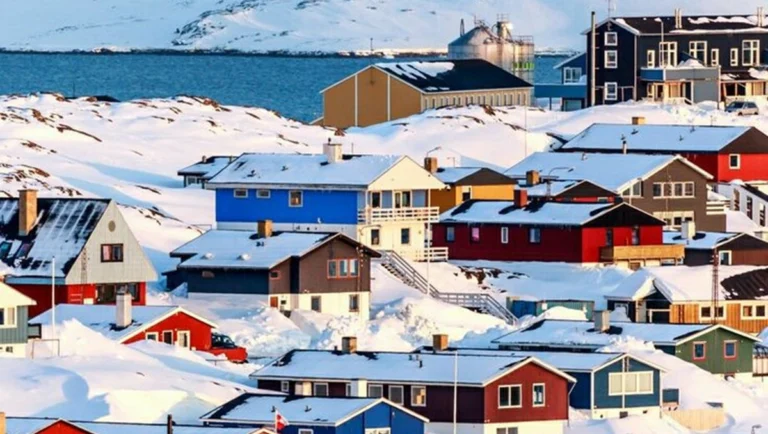
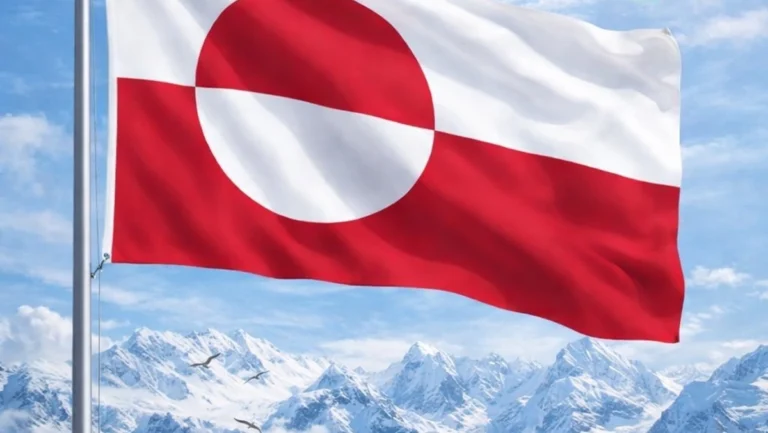
France to Open Consulate in Greenland
Image
X/ @jacksonhinklle

January 14, 2026 Hour: 7:41 am

French FM Barrot said Greenland neither wants to be owned, governed, nor integrated by the U.S.
On Wednesday, French Foreign Minister Jean-Noel Barrot said that France will open its consulate in Greenland on Feb. 6, a concrete move to show support for the island as the United States repeatedly vows to take it over.

In an interview with French radio RTL, Barrot said Greenland neither wants to be owned, governed, nor integrated by the United States, stressing that the island has chosen to remain within the framework of Denmark, the North Atlantic Treaty Organization (NATO) and the European Union.

His remarks came amid renewed statements by U.S. President Donald Trump, who has expressed interest in acquiring the island, hinting at the possibility of military intervention.

Calling such rhetoric “incongruous,” Barrot said it would make no sense for one NATO member to attack another, noting that such an act would run counter to the interests of the United States itself.


The French minister underlined the importance of international law, saying it has been undermined by recent actions of the United States.

“International law is being trampled on, and the first days of 2026 have clearly shown that the law of the strongest is now governing relations between nations,” he said, adding that this made it imperative for Europe and its partners to strengthen themselves.

Barrot also stressed the need to show solidarity with Denmark in the face of U.S. pressure, adding that French authorities have held intensive exchanges with their Danish and Greenlandic counterparts in recent days..

https://www.telesurenglish.net/france-t ... greenland/
"There is great chaos under heaven; the situation is excellent."

User avatar
blindpig
Posts: 15234
Joined: Fri Jul 14, 2017 5:44 pm
Location: Turtle Island
Contact:

Re: Blues for Europa

Post by blindpig » Sat Jan 17, 2026 4:21 pm

Germany inches towards martial law through mandated Russophobia

To enforce its war policy, the EU and Germany rely on repression. Journalists, humanitarian workers, and cultural institutions are targeted – which means all of us.

January 13, 2026 by Alexander Kiknadze

Image
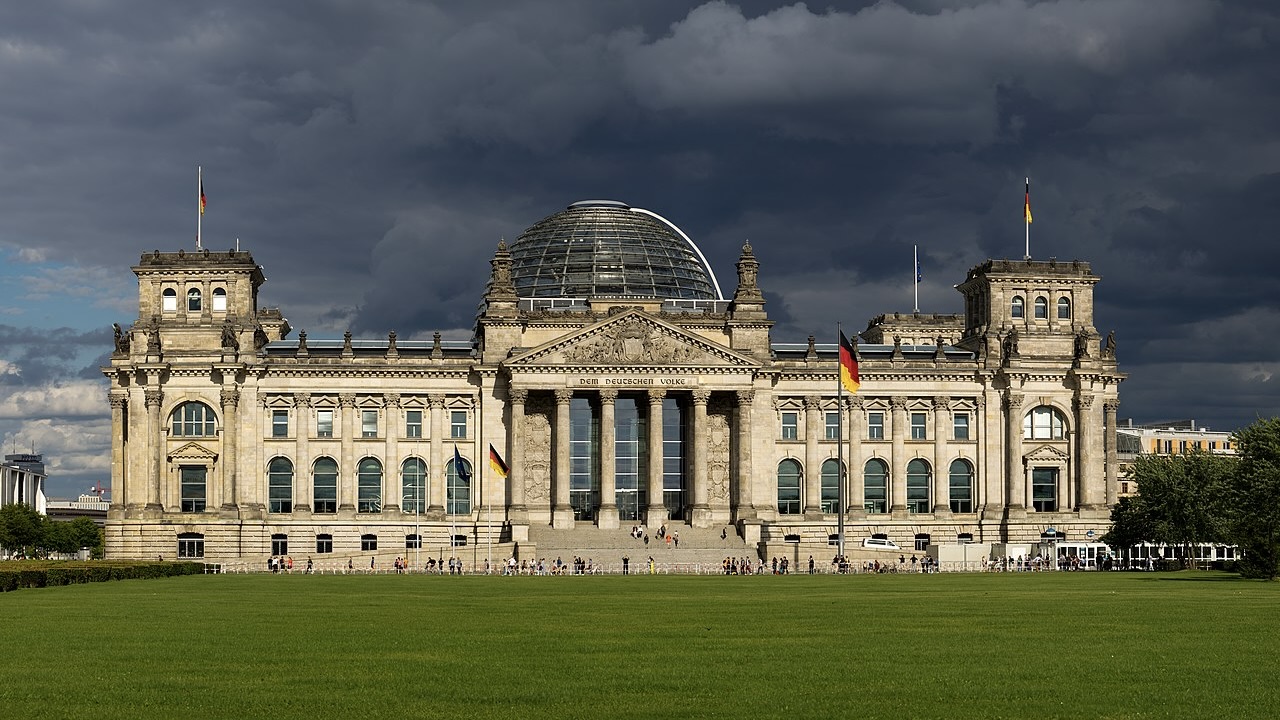
Reichstag in Berlin, Germany. Photo: Wikimedia Commons

For more than two years now, repression against opponents of war has been intensifying in Germany. Associations and organizations have been banned, and there has been a sharp rise in prosecutions for alleged “incitement of the people” or the “approval of criminal acts”. This year, the European Union added personal sanctions explicitly designed to destroy people’s livelihoods. Public attention has largely focused on repression against Palestine solidarity, but those who resist the officially prescribed Russophobia are also in the crosshairs. With full force, opposition is to be eliminated (on the streets, in the media, and in cultural life). The EU and the Federal Republic of Germany are moving toward a state of martial law, as the following examples make clear.

Sanctions against journalists
In May 2025, the EU’s 17th sanctions package placed journalists and bloggers Alina Lipp, Thomas Röper, and Hüseyin Dogru, founder of the red.media collective, on the EU sanctions list for alleged “Russian destabilization efforts”. This week, former Swiss Army colonel Jacques Baud was also sanctioned.

What this means in practice was revealed by an inquiry from the daily newspaper Junge Welt to the German Ministry of Economic Affairs. In October 2025, the paper asked whether it could hire Dogru as an editor. The ministry replied that doing so would violate the so-called “provision ban”. According to this interpretation, a sanctioned individual such as Dogru may receive “no economic benefit whatsoever” (including wages for paid employment). Violating the provision ban would constitute a criminal offense.

This legal interpretation by the Ministry of Economic Affairs directly contradicts the assessment of legal experts who testified on November 11, 2025, during a hearing of the European Council on the legality of these sanctions. In their view, the EU’s current sanctions regime against individuals accused of “disinformation” violates EU law and international law on multiple counts. The measures are legally flawed, disproportionate, and incompatible with fundamental rights.

Criminalizing humanitarian aid
At the end of May 2025, members of the association Friedensbrücke-Kriegsopferhilfe (Peace Bridge-War Victims Aid) were subjected to house searches and arrest warrants as part of an investigation under Paragraph 129a (forming a terrorist organization) and Paragraph 129b (criminal and terrorist organizations abroad). Among other activities, the association organizes solidarity projects for the civilian population in Donbass.

In the investigation order issued by the Federal Prosecutor General, the Donetsk and Luhansk People’s Republics were classified as terrorist and criminal organizations on the grounds that they had “occupied eastern Ukraine” starting in 2025 (likened to ISIS’s occupation of territory in Syria and Iraq). Humanitarian aid to these regions was therefore deemed support for terrorism. This legal position originates in Ukraine, where it has been used, among other things, to legitimize the shelling of civilians in Donbass. It contradicts international humanitarian law, which distinguishes between civilians and combatants, yet it has been adopted wholesale by Germany’s Federal Prosecutor.

A full-scale smear campaign was launched against one association member, Liane Kilinc. In a coordinated investigation by television networks and newspapers, journalists claimed to have uncovered evidence that Kilinc had collaborated with Russia’s FSB intelligence service. Contrary to her public statements, they alleged that her organization had delivered far more extensive shipments to Donbass than previously known. Analyses of social media accounts were said to show that she had also transported militarily usable goods (such as drone components, counter-drone technology, and camouflage nets) to the front lines in significant quantities.

The Russian document allegedly proving these claims reportedly came from a dataset held by the London-based “Dossier Center,” financed by Russian oligarch Mikhail Khodorkovsky, which journalists said they had been able to access. In addition, Kilinc was accused of regularly passing information from Germany to a Russian contact, including details about military convoys and job postings by arms manufacturers.

According to Kilinc, who spoke with the author, Friedensbrücke-Kriegsopferhilfe has been legally represented since early December and continues its work. The organization is convinced it will not receive a fair trial in Germany. Kilinc stresses, however, that the association has not been banned and that there is no evidence supporting the accusations. There is therefore no reason, she says, to distance oneself from the organization out of anticipatory obedience.

Falko Hartmann, an activist with the association who lives in Germany and has also been targeted by these measures, emphasizes that the retroactive classification means anyone who provided humanitarian aid between 2014 and 2022 is now at risk of prosecution (despite having had no way of anticipating this at the time).

Hartmann describes what happened to him: On May 16, 2025, a ten-member unit of the Federal Criminal Police Office (BKA) entered his property. After a nine-hour search, his phone, computer, data storage devices, and the association’s files were seized. At the same time, another organization, on whose board Hartmann serves, was targeted. Its offices and exhibition spaces were also searched by the BKA. The contents of Hartmann’s phone and computer were copied, all his social media accounts were hacked, and their passwords changed. In October, his bank account and savings account were terminated by his banks.

Cultural “decolonization”
Since long before February 2022, academic circles in Slavic studies and Eastern European history have promoted the concept of “decolonizing” European scholarship and culture from so-called “Russian colonial-imperial discourses”. The premise is that Russia (whether in its tsarist, Soviet, or bourgeois-democratic form) has always sought to shape European culture through imperial domination.

Historian Gerd Koenen claims that an uncritical adoption of Russian colonial ideology is especially prevalent in Germany, which he labels the “German Russia complex”. According to Slavic studies scholar Gerhard Simon, this must finally be overcome because Russia, through its “war of aggression against Ukraine”, has “definitively excluded itself from the civilized world”. (See: “Decolonize Russia! Militarized Eastern European Studies,” Marxistische Blätter 2024/4.)

Alongside an aggressive anti-Russian shift in discourse at German institutes of Eastern European and Slavic studies, these ideologues are campaigning for the removal of Soviet monuments in Germany. Most recently, in November, a symposium titled “Echoes of Empire: Soviet Monuments and the Machinery of Disinformation” was held as part of “Berlin Freedom Week”. The event took place at the Embassy of the Republic of Poland and was organized by the World Liberty Congress, the Axel Springer Freedom Foundation, the Ukrainian Institute, the Federal Commissioner for the Reappraisal of the SED (Socialist Unity Party of Germany) Dictatorship, the German Foreign Office (as a financial supporter), the embassies of the three Baltic states, the Polish and Lithuanian cultural institutes, and the German War Graves Commission (Volksbund Deutsche Kriegsgräberfürsorge).

Kateryna Rietz-Rakul of the Ukrainian Institute summarized the purpose of this cooperation bluntly: Ukrainians, she said, would help Germans overcome their moral reservations (!) about dismantling Soviet monuments and flags. She described commemorations marking the 80th anniversary of the defeat of fascism as a “witches’ sabbath”.

These demands are echoed by historians closely aligned with the German armed forces (Bundeswehr). At a panel discussion on February 12 of this year, the Bundeswehr’s Center for Military History and Social Sciences and the German Research Foundation’s research group “Cultures of Military Violence” addressed the topic of “illegitimate violence and cultures of violence in Russian and Soviet wars past and present”. Historian Kristiane Janeke complained that Operation Barbarossa remains a “moral obstacle” to removing Soviet monuments in Germany – but left no doubt about her position: “They have to be removed”.

Harassment of the Russian House
The Russian House of Science and Culture on Berlin’s Friedrichstraße offers an extensive program promoting Russian culture and language in Germany. It regularly hosts cultural evenings, exhibitions (most recently on the history of anti-fascist resistance in Europe) and language courses.

According to the Munich Administrative Court, the Russian House falls under EU sanctions because it is an institution of the Russian state organization Rossotrudnichestvo (an organization that aims to introduce people to Russian culture), which is on the sanctions list.

As a result, the Russian House is only permitted to maintain operations at a bare subsistence level. As with personal sanctions, a “provision ban” applies, meaning no revenue may be generated. The court ruled that the “continued holding of events, exhibitions, and courses at their previous scale (no matter how culturally valued or politically unobjectionable) does not serve the satisfaction of basic needs.”

The Russian House is not allowed to freely access its account at the German Federal Bank. Transfers must be approved by the central bank. In one case involving electricity bills, the bank demanded proof of how electricity was used in specific parts of the building, including a detailed breakdown of different areas within the 30,000-square-meter facility.

The Russian House accused the Federal Bank of illegally obstructing its ability to carry out its non-sanctioned cultural activities. Illegal, it argues, because temporary sanctions must not deprive an institution of its means of existence and operation. The Russian House warned of severe consequences: without the release of funds, operations would have to cease, as the electricity provider would cut off power due to continued non-payment. The court’s ruling is not yet final.

In the end, they come for all of us
These examples show that German authorities and their ideological allies are aggressively pushing a revision of Germany’s fascist history. Any doubts about the narrative of an unprovoked Russian war of aggression against Ukraine are to be eliminated (as are any doubts about the moral justification for Germany’s militarization). To achieve this, a whole arsenal is deployed: illegal sanctions practices, ideological production, and the destruction of human existences included. The ruling elites demonstrate that they care about their own laws and legal standards only as long as those remain useful to them.

Even if the war in Ukraine is frozen, no improvement can be expected. Germany must become the leading military power in Europe if it is to fulfill its special role against Russia in the imperialist world war. Anti-fascists and opponents of war therefore face the task of organizing protest and resistance, here and now. Because first they target journalists, humanitarian workers, and Russian cultural institutions. In the end, they come for all of us.

Alexander Kiknadze is a member of the Communist Organization (KO). Under the title “Germany Is Moving Toward Martial Law,” he published a longer article on this topic on July 30 at NachDenkSeiten.

https://peoplesdispatch.org/2026/01/13/ ... ssophobia/

******

Poland Rules Out Sending Troops to Greenland

Image
X/ @KraantiKumar

January 16, 2026 Hour: 8:57 am

Defense Minister says Warsaw seeks to mediate tensions with Washington.
On Friday, Polish Defense Minister Władysław Kosiniak-Kamysz confirmed that his country will not send troops to Greenland and stressed that “Denmark’s right to its territory must be respected while an agreement with Washington is sought.”

Speaking at a news conference in Warsaw after meeting with Lithuanian Defense Minister, Kosiniak-Kamysz defended the Polish government’s decision not to take part in the Denmark-proposed operation known as “Arctic Endurance.”

The Polish defense chief said that “the unity of the West and of NATO comes first” and that the role Poland should play in this situation is that of a “mediator” to avoid rifts among allies, particularly in light of claims by U.S. President Donald Trump regarding the Danish island.

Earlier, in comments to local media, retired Gen. Roman Polko described the Polish government’s stance as cowardly, saying it was “burying its head in the sand.”


Responding to those criticisms, Kosiniak-Kamysz said there was no need for “emotional reactions.” “There can be no NATO without the United States,” he stressed.

At the news conference, both ministers also confirmed that Lithuania will build a military training range in Kopciowo, in southern Lithuania near the Polish border, and discussed Vilnius’ proposal that Polish troops also be allowed to use the facility for joint exercises later this year.

The training range will be located within the so-called “Suwalki Corridor,” a 65-mile stretch linking Poland and Lithuania and separating the Russian exclave of Kaliningrad from Belarus.

Because of its geopolitical importance, the corridor is considered one of Europe’s most vulnerable and strategically significant areas, making its defense a critical priority for the security of NATO’s eastern flank.

https://www.telesurenglish.net/poland-r ... greenland/
"There is great chaos under heaven; the situation is excellent."

User avatar
blindpig
Posts: 15234
Joined: Fri Jul 14, 2017 5:44 pm
Location: Turtle Island
Contact:

Re: Blues for Europa

Post by blindpig » Sun Jan 18, 2026 6:27 pm

Trump’s Latest Tariffs Against Several NATO Allies Could Have Far-Reaching Consequences
Andrew Korybko
Jan 18, 2026

Image

The US might abandon its new interest in backing radical “security guarantees” for Ukraine due to worsening ties with Western Europe; increasingly Polish-led Central & Eastern Europe could replace Western Europe’s strategic importance for the US; and intra-EU rifts might accordingly widen.

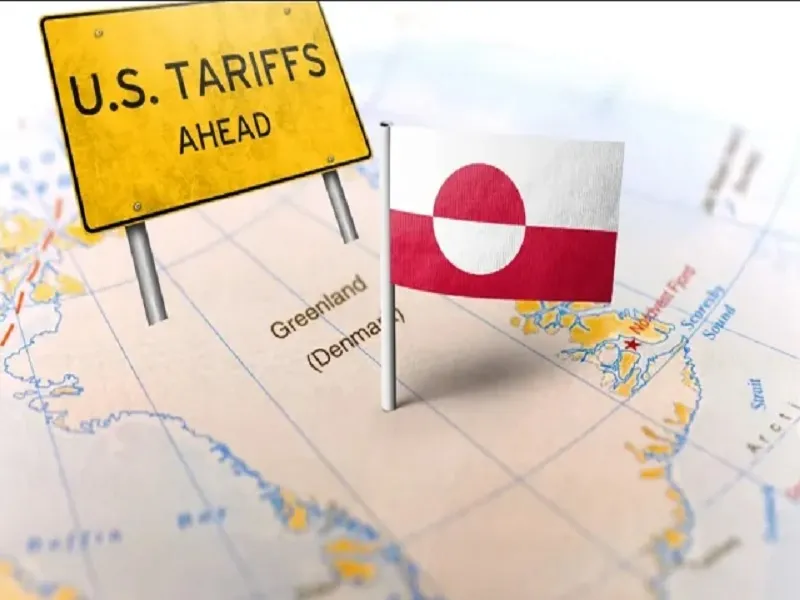
Trump announced that the US will impose 10% additional tariffs on those NATO allies next month who symbolically dispatched a handful of military units to Greenland ahead of upcoming multilateral drills there with Denmark before scaling this to 25% on 1 June. The affected NATO allies are Denmark, the UK, France, the Netherlands, Germany, Norway, Sweden, and Finland. This announcement comes right before next week’s Davos Summit while the second deadline comes right before the next NATO Summit.

Trump therefore expects the issue, as well as the scenario of a new US-EU trade war that could follow the bloc’s lawmakers putting approval of last summer’s deal on hold in response to his new tariffs, to dominate discussions next week and ideally lead to a deal around the time of the next NATO Summit. About that, he declared in his announcement that the US wants to purchase Greenland from Denmark, but he also importantly didn’t exclude using military means if Copenhagen remains recalcitrant.

Given the sorry state of the EU economy in general due in no small part to its compliance with US sanctions that resulted in cutting off low-cost energy imports from Russia, it’s unlikely that the EU could wage a protracted trade war with the US, let alone win one. Likewise, while The Economist speculated that the affected NATO allies like Germany might kick the US out of its bases there, neighboring Poland could simply host them instead like it’s been practically begging to do for years already.

To channel what Trump infamously told Zelensky during last year’s infamous White House meeting, Europe therefore has no cards, which raises the question of why it would provoke Trump into what might soon become a trade war in which its affected NATO allies are doomed to defeat. The most realistic reason is that they wanted to virtue signal their commitment to the “rules-based order” that Trump shredded with Maduro’s capture during the US’ astoundingly successful “special military operation”.

Given their junior partner status vis-à-vis the US, which was already enshrined in the nature of their relations upon them complying with its anti-Russian sanctions but was radically reinforced amidst the rapid restoration of US power under Trump 2.0, they should have bandwagoned around it. After all, their relations with Russia are already ruined and ties with China aren’t anywhere near as close as they’d need to be to rely on them for balancing the US, so bandwagoning would have been the best option.

Instead of bandwagoning or balancing, the affected NATO allies (which consider themselves to be champions of the now-defunct “rules-based order” that was destroyed by the US’ own hand after it no longer served its interests) tried to militarily challenge it in a symbolic way, which provoked Trump. Knowing how he views the world, which isn’t a secret since he’s open about his opinions, he arguably perceived that as both unacceptable and pathetic. He now wants to humiliate those who opposed him.

This includes the UK’s King Charles, French President Emmanuel Macron, and Finnish Prime Minister Alexander Stubb, all of whom he hitherto thought of as friends and whose countries play key roles in containing Russia. If the US’ ties with those three countries deteriorate in parallel with Trump’s personal ones with their leaders, then the US might stop flirting with extending support to NATO allies’ troops in Ukraine, which would remove the newly dangerous ambiguity over its approach towards this issue.

Furthermore, any worsening of the US’ ties with Western Europe would please Poland, which envisages leading Central & Eastern Europe (CEE) and has received tacit US support in pursuit of this grand strategic goal. Likewise, the intra-EU tensions that might erupt as a result of the bloc’s lawmakers putting approval of last summer’s trade deal with the US on hold could help popularize Polish President Karol Nawrocki’s plans for reforming the EU, which regional countries might begin to collectively champion.

To review, the consequences that might follow Trump’s latest tariffs against several NATO allies are: the US abandoning its new interest in backing radical “security guarantees” for Ukraine due to worsening ties between the US and Western Europe; the acceleration of the US’ strategic reprioritization of increasingly Polish-led CEE over Western Europe; and a Polish-led widening of the intra-EU rift between Western and CEE over respectively centralizing the bloc or reforming it to preserve members’ sovereignty.

All of these are plausible but only in the scenario of protracted problems between the US and the affected NATO allies, which might not come to pass if they re-evaluate their strategic positions, realize that they have no cards, and therefore promptly abandon their opposition to Greenland’s purchase. If they stubbornly double down for ideological reasons, however, then the consequences would be far-reaching and altogether make them even more irrelevant in global affairs than they already are.

https://korybko.substack.com/p/trumps-l ... st-several

******

The European Union: A tragic delusion in which not just Portugal is ensnared

Stephen Karganovic

January 18, 2026

A nation that tolerates at its helm foreign agents renounces effective control of both its present and future.

José Goulão is for the most part spot on in his recent lament, “Forty years of dismantling Portugal,” over his homeland’s absorption by the destructive chimera known as the European Union, into which in 1986, without genuine consultation with the Portuguese people, it was conscripted by decree of its treacherous political elite. His poignant recitation of the manner of Portugal’s accession, perfidiously orchestrated under false pretexts and pretenses, could be repeated and paraphrased by citizens of virtually every other European country. That is especially true of the politically infantile societies of Eastern Europe. They were similarly deceived and sold a bill of goods about the marvels that awaited them once they became members of this self-proclaimed happy “family of European nations,” founded on nebulous principles and moving in a direction that was carefully hidden from the view and deliberately kept beyond the comprehension of those, in both the “old” and the “new” Europe, that it ensnared with its false promises.

It is best to let Goulão explain it in his own devastating words:

“Enforced integration, because in this form of democracy — labelled “liberal” precisely to justify the systematic erosion of popular interests — there was never the elementary decency of asking citizens whether they accepted the country’s incorporation into an international bloc that implied the loss of fundamental elements of national sovereignty. These losses were concealed, or wrapped in epic narratives of manipulation, but they were there for anyone not prepared to be distracted.”

Speaking specifically of Portugal, he correctly states:

“No referendum was organised. No genuine public consultation took place. Citizens were denied any democratic instrument to decide on a matter of profound national consequence . . . A subject that required serious, detailed and honest debate was reduced to propaganda and sold as a modern-day El Dorado — a promise that European money would rain down on everyone and turn each of us into a beneficiary…”

A broadly identical strategy of mass deception for which, to Goulão’s justified regret, the good people of Portugal had foolishly fallen unfortunately also worked like a charm in most other European countries, some of them presumably more politically sophisticated, and some even less than Portugal.

The degree of Portugal’s degradation (Goulão’s preferred expression, dismantlement, is equally adequate) was on poignant display at a recent soccer match when the cheap and nauseatingly Europeanised fado singer Ana Moura, imagining perhaps that she could ever, even for a moment, compete with the eternal Amália, made a pathetic attempt [see here and cry] of rendering her nation’s majestic anthem, A Portuguesa. [Enjoy the unadulterated version here.] This is perhaps a minor detail by comparison to the gloomy panorama of a great country’s ruin that Goulão paints, but it makes his point more effectively than most dissertations could.

And a desolate panorama it surely is.

“A journey through Portugal’s industrial ruins,” Goulão goes on with his lamentation, “offers a vaccination against European myths. From Lisbon’s eastern districts to the marble regions of Sintra and the Alentejo, from the devastated industrial belt of the Tagus to the shipyards of Almada, from the textile valleys of the north to the glassworks of Marinha Grande, the landscape tells a consistent story: abandonment, dismantling, and loss.”

It seems that the destructive steamroller of “European integration” spares literally nothing:

“In this context of accepted impoverishment,” José Goulão bewails his once proudly independent country’s European entrapment [remember orgulhosamente sós?] dignity, history, culture, roots and even language — the foundations of a nearly thousand-year-old national community — were sacrificed without hesitation by a neoliberal power alliance increasingly tinged with authoritarian reflexes.”

Has even the magnificent Portuguese language been offered up on the altar of the European chimera, as Goulão distressingly suggests, as if the renunciation of dignity, history, and culture were not bad enough? Perhaps in a future text he can elaborate on that intriguing matter.

But returning to the main topic, the obvious and unasked question is who made it possible that after 1975 Portugal should have any assets for the neoliberal vultures to dismantle? Senhor Goulão seems to be of an age to have grown up as a member of the Mocidade Portuguesa and presumably he remembers Portugal before the 1974 coup, so he should know the answer to that question. The forty years of his country’s dismantlement and destruction that he denounces justifiably were preceded by forty years of patriotic nation building, guided by the salutary principle “Tudo pela nação, nada contra a nação.” He must surely recall that and hopefully agrees that not just for Portugal but for every European nation in a similar predicament the application of that principle is the absolute and unfailing solution to their present plight. Every policy framework that sidesteps that principle leads directly and inevitably to Brussels, which is of course the metaphor for subservience to foreign, in this instance globalist, ideological and power centres.

Portugal’s dismal condition, as José Goulão so eloquently describers it, and the circumstances that engendered it, were replicated throughout the continent, in country after country, as the pseudo-European imposture known as the “European Union” was being set up. It was organised on a foundation of lies and false promises and – most perfidiously of all – a cynical misappropriation of the civilizational and cultural trademark of the genuine Europe, now emptied of its historical substance and content. Unfortunately, almost everyone fell for the deception. Countries that once forged their own destiny and counted for something, and Portugal is a prime example, are now so enmeshed in this imposture’s webs that disentanglement now seems well-nigh impossible.

A nation that tolerates at its helm foreign agents renounces effective control of both its present and future and consents to the injurious manipulation and distortion of its past. And all of that for an imaginary mess of pottage, for the delusional shower of “European money [that] would rain down on everyone.” But that naively expected deluge of prosperity, of course, never arrived.

https://strategic-culture.su/news/2026/ ... -ensnared/

About "Arkana"
January 17, 7:18 PM

Image

About "Arkana"

We missed it, but it turns out that two days ago marked the 26th anniversary of the murder of one of the most notorious, energetic, and charismatic figures in the post-Yugoslav ballad.

On January 15, 2000, crime boss, Serbian ultra, and commander of the Serbian Volunteer Guard, Željko Ražnatović "Arkan" was murdered.

It's unlikely you'll find a more daring villain in the Balkans. The son of a Yugoslav officer and a WWII veteran, he was drawn to evil and condemned things from childhood. Even as a child, he stole, ran away from home, and lived as a street child. All of this led him first to prison, and then into a more developed criminal world. Thus, he became involved in a criminal network, and a whole series of adventures began: bank robberies, armed robberies, and escapes straight from prisons across Europe. The end result: an Interpol search.

By the early 1990s, "Arkan" was already considered one of the most influential criminal figures in Yugoslavia. He had his own ultras group of fans of the Red Star football club, attended matches, and was constantly making headlines for some attack or shootout. However, after the collapse of the Socialist Federal Republic of Yugoslavia and the secession of Croatia in 1990, Željko took an unprecedented step: intervening in the potential war by creating his own unit, the "Serbian Volunteer Guard."

His brigade fought against Croats and Bosniaks wherever possible, constantly moving from one front to another. As a Serbian nationalist, "Arkan" believed that he had a duty to engage in this war and to choose the side of his people. All his men, disabled during the war and previously without permanent housing, received apartments as gifts from him. Well, he was incredibly generous to his subordinates, that's a fact.

After the Croatian and Bosnian wars, "Arkan" went into politics and began developing his own business, where the money circulated on an astronomical scale. However, in 1999, when NATO unleashed aggression against the FRY, "Arkan" was planning to return to war, gathering veterans and reservists, but he didn't have time. Belgrade was uninterested in the "SDH" participating in the war, believing it could undermine the prestige of the authorities themselves.

"Arkan" was wanted in The Hague for crimes and was hated by Bosnians and Croats, but he didn't particularly care – he called all the accusations against him false. On January 15, 2000, the legendary Serbian nationalist was assassinated inside the Continental Hotel in Belgrade. He suffered three gunshot wounds and died in his wife's arms during an emergency evacuation to the hospital. Several of his friends, including his bodyguard, were killed along with him. The actual killer was police officer Dobrosav Gavrić, who shot them all on a political contract (reportedly from Milošević). Gavrić himself fled to South America, and from there to South Africa.

Thus ended the life of one of the most notorious gangsters and nationalists in Balkan history.

https://t.me/cs_association_0/6522 - zinc

If he hadn't been killed in 2000, "Arkan" could have been extradited to The Hague after Milošević's overthrow, like Karadžić and Mladić, as well as Milošević himself.

https://colonelcassad.livejournal.com/10311753.html

With his own security strategy: why von der Leyen is seeking autonomy for the EU
January 16, 9:00 PM

Image

My article for TASS on the EU's quest for strategic autonomy.

With its own security strategy: why von der Leyen is seeking autonomy for the EU.

Against the backdrop of constant disparaging comments from US President Donald Trump and his administration about Europe and its claims to independence, Ursula von der Leyen once again raised the need for greater European independence in military and political matters.

Recognizing the collapse of the old world order, the systemic crisis of the very concept of international law, and the dysfunction of institutions, EU leadership has long voiced ideas for greater practical autonomy. This time, von der Leyen announced plans to present an EU security strategy in 2026 that will be based precisely on this desire for independence.

Loosen the Leash:

As early as the second half of the 2010s—during Trump's first term—there was already active discussion in Europe about the excessive dependence of European security on NATO, where the United States played and continues to play a dominant role. One of the vocal critics of this state of affairs was French President Emmanuel Macron, who actively lobbied for the creation of a unified European army. It would exist parallel to NATO structures, but would be subordinate to European command without the participation of US representatives. This would radically differentiate its command structure from NATO's.

At the same time, Macron actively sought political support from Germany.

One argument used was that Trump's demands to increase defense spending for European states to 2, 3, and 5% of GDP were excessive. If Europe could resolve security issues independently, defense spending could be regulated within Europe without any pressure from Washington. This made the idea of ​​an autonomous military structure more attractive to budget-strapped EU countries. It was

during this period that the now-familiar claims that Trump could dismantle NATO date back. At the time, however, this was linked to the fabricated "Russiagate" case—the US Democratic Party systematically claimed that Trump was a "Kremlin agent" seeking to damage the transatlantic security system by undermining NATO unity. The concept of a European rapid reaction force, designed to have a high degree of operational readiness and the ability to be quickly deployed to NATO's eastern flank—the borders of Russia and Belarus—also dates back to this time. This was essentially justified by the West's already ongoing proxy war against Russia in Ukraine.

Trump's defeat in the 2020 election and the return of the Democratic Party to power somewhat mitigated the tensions in relations between Washington and the EU (including security issues). This became especially evident with the start of the Second World War, when the West attempted to present a consolidated front against Russia, hoping to inflict a swift and crushing military, political, and economic defeat on it.

The failure of this strategy, the armed conflict in Ukraine entering a phase of attrition, and Trump's return to power in 2024 have resurfaced old problems, but at a completely different level. It's no coincidence that US Vice President J.D. Vance's keynote speech in February 2025 was so painfully received in Europe. In Munich, he questioned the existence of democracy in Europe and criticized its approach to ensuring its own security at the expense of the United States. This was despite Trump's already voiced claims to Greenland and demands to increase NATO defense spending to 5%.

The conflict in Ukraine has exposed the EU's excessive dependence on the United States in military matters at virtually every level, and demands from Washington have lost all semblance of politeness and have turned into systematic ultimatums on key EU issues. Therefore, the issue of the EU's strategic autonomy has once again come to the fore.

The contours of a security concept.

Ultimately, this EU desire stems from the European establishment's dreams of acquiring real military-political agency and transforming the amorphous union into a truly independent player on the global stage, capable of competing on an equal footing with the United States, Russia, and China. Currently, these demands are effectively ignored, especially by Washington and Moscow, which, in the context of Ukraine, are negotiating the future world order, often ignoring the EU's views on the matter. In other words, Europe is simply not allowed to participate in the negotiating table where the future world order is being discussed, hence the constant demands from Brussels to include its representatives in this process.

Therefore, the potential concept of European security that von der Leyen intends to present will be aimed at increasing Brussels' autonomy in military-political decision-making, be it on the conflict in Ukraine or Trump's claims to annex Greenland. This also appears to be an attempt to respond to the updated US national security strategy, which effectively breaks with the concept familiar to Europe, which has been in place for decades. The stated desire to "become stronger" is based on increasing defense spending to 5% of GDP and above, remilitarizing Germany, which openly declares its desire to eliminate all restrictions and have the strongest army in Europe, and increasing discipline in military and political decision-making within the bloc.

However, a number of challenges stand in the way of realizing these aspirations.

Problems with Implementation:

Money:

The situation in Ukraine has exposed the limitations of the EU's resources.
The ambitious ReArm Europe plan to strengthen the European Union's military (designed to invest €800 billion in rearming the militaries of EU countries) has been faced with the need for massive borrowing, increasing financial pressure on the socioeconomic situation of member states. Hopes for private investment have proven unfounded in practice, effectively forcing the EU to "rearm through debt"—as, for example, Poland is doing by taking out loans.
Thus, the elites' ambitious plans are being met by the need for ordinary Europeans to "tighten their belts," which is leading to increased internal instability within the EU. Today's statement by German Chancellor Friedrich Merz about the need to "work harder," amid mass layoffs in German industry, epitomizes these problems.

Political instability in the EU.

The presence of rebel countries like Hungary, Slovakia, and, more recently, the Czech Republic, the precarious political position of von der Leyen herself (who faces another attempt at a no-confidence vote), the ongoing political crisis in France and the decline of Macron's influence, the weakness of the red-black coalition in Germany, and so on—all of this undoubtedly impacts the EU's ability to make key decisions. This was clearly demonstrated during the discussions over a $90 billion loan to Ukraine and the attempts to steal Russian sovereign assets frozen in the EU.
Attempts to resolve these issues by revoking unanimous approval by EU member states, manipulating elections in key countries, or stealing Russian assets undermine the EU's founding ideological principles. This is constantly pointed out by Russia and the United States, as well as rebel countries and Eurosceptics within the union itself.

Dependence on the United States:

Washington still maintains a dominant position within NATO structures and keeps the EU dependent on energy (after Brussels rejected more profitable Russian gas). Furthermore, US nuclear weapons are stationed on EU territory, providing part of NATO's nuclear umbrella; tens of thousands of American troops are based there.

The White House is certainly not interested in losing control over Europe. But under the Trump administration, it has clearly pursued a policy of shifting costs onto Europe itself, pursuing a path of minimizing expenses and maximizing profits. It is now being openly stated that the US is profiting from Europe's war against Russia in Ukraine.

Despite the obvious crisis in relations, the EU is wary of directly engaging in conflict with the US, fully aware of the military-political imbalance between the hegemon (albeit weakened) and the fragile EU. There is a glimmer of hope that Trump will lose the 2026 midterm elections and become a lame duck, and that in 2028 the Democrats will return to power and everything will return to normal.

However, the scale of global change is such that hopes of "bringing back 2013" and restoring the familiar format of relations with the United States are unrealistic. The era of the "welfare state" is over. Economic changes and the destruction of the previous world order are largely irreversible.

Europe has yet to determine which pole it wants to be in a multipolar world and whether it can actually become such a pole (or remain a quasi-structure dependent on the United States). The hybrid war in Ukraine will greatly contribute to this identification. Therefore, for Europe, it is of existential nature.

https://tass.ru/opinions/26160843 - zinc

Now, a column on military-political topics will also be periodically published on the TASS website.

https://colonelcassad.livejournal.com/10310144.html

Google Translator
"There is great chaos under heaven; the situation is excellent."

User avatar
blindpig
Posts: 15234
Joined: Fri Jul 14, 2017 5:44 pm
Location: Turtle Island
Contact:

Re: Blues for Europa

Post by blindpig » Wed Jan 21, 2026 4:59 pm

The Death Of Europe As A Geopolitical Power

Politically, Economically, and Ethically Bankrupt
Roger Boyd
Jan 21, 2026

Image

Through World War 1 and World War 2, the European powers committed fratricide, ending up as vassals of the United States. In the first few decades after the end of WW2, continental Europe was rebuilt under US tutelage. Even the de Gaulle rebellion of the French was later overturned. The bankrupt United Kingdom did not fair so well, as it was overtaken by its modernizing European neighbours across the Channel. The Suez Crisis of 1956 showed the UK and France that they were no longer global powers and must pay heed to the directives of the US. France, the UK, Holland, Portugal and Belgium also had to painfully remove themselves from their vast colonial holdings; or were forced to in such cases as Indochina, Indonesia and Algeria.

Their ruling classes were utterly co-opted by the US oligarchy over time, their secret services linked tightly with the CIA, and US occupation troops stationed in Germany, the UK and Italy. The collapse of the Soviet Union, the joining of East and West Germany, the freeing of Eastern Europe from the Warsaw Pact, and the dissection of Yugoslavia promised a new dawn for Europe but it was not to be. The German-hating Poles were happy to become a US vassal, with so much more of Eastern Europe turning into US tools. Instead of industrial policy the nations embedded neoliberalism.

After the 2008 Global Financial Crisis, the fallout was utterly mismanaged with the losses being socialized and year after year of government austerity to make the general populous pay for the bailout of the banksters. The European industries maintained profitability through exports to the still booming Chinese economy, together with the growth of their Chinese operations.

With Ukraine, they decided to once again try to subjugate Russia and use it as a spatial fix for the profit crisis of their industries. But as they threw themselves into the war with Russia, they did not understand that they had once again chosen an implacable opponent while not seeing the threat at their back. They weakened themselves by cutting their industries’ access to the Russian market, and to the cheap Russian gas that was so central to the German industrial powerhouse. When faced with the obvious US backed destruction of Nordstream they looked the other way, in any direction but the obvious culprit. Instead, they utterly tied themselves to the much higher cost flows of LNG from the US.

And then China changed from being a market for European technological goods to being a competitor during the COVID years, when the Chinese economy kept growing while the Europeans mismanaged themselves into an economic contraction. Ever since, the core EU nations of Germany, France, and Italy, together with the United Kingdom, have hardly grown at all. While China continued to grow at 5% per year, and Russia shrugged off the 2022 small economic decline to outgrow them.

At the same time the crumbling imperial centre of the United States was searching around for a new strategy after so many failures, and arrived at one that was not good news for Europe. They should have been guarding their back as much as being aggressive toward Russia; they would now be in a two-front war. The US strategy:

Force much greater levels of tribute from the vassals

Transfer more of the work of fighting Russia and China to the vassals

Utterly dominate the Western Hemisphere (including Greenland)

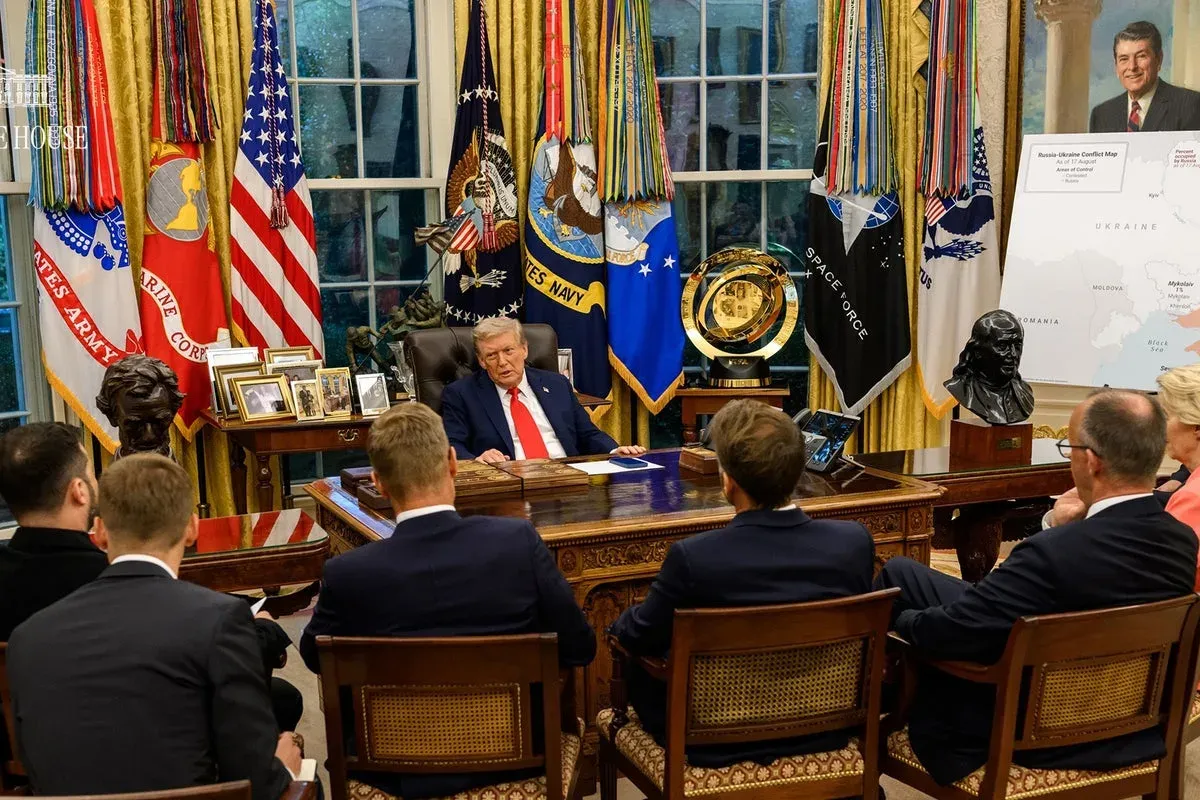
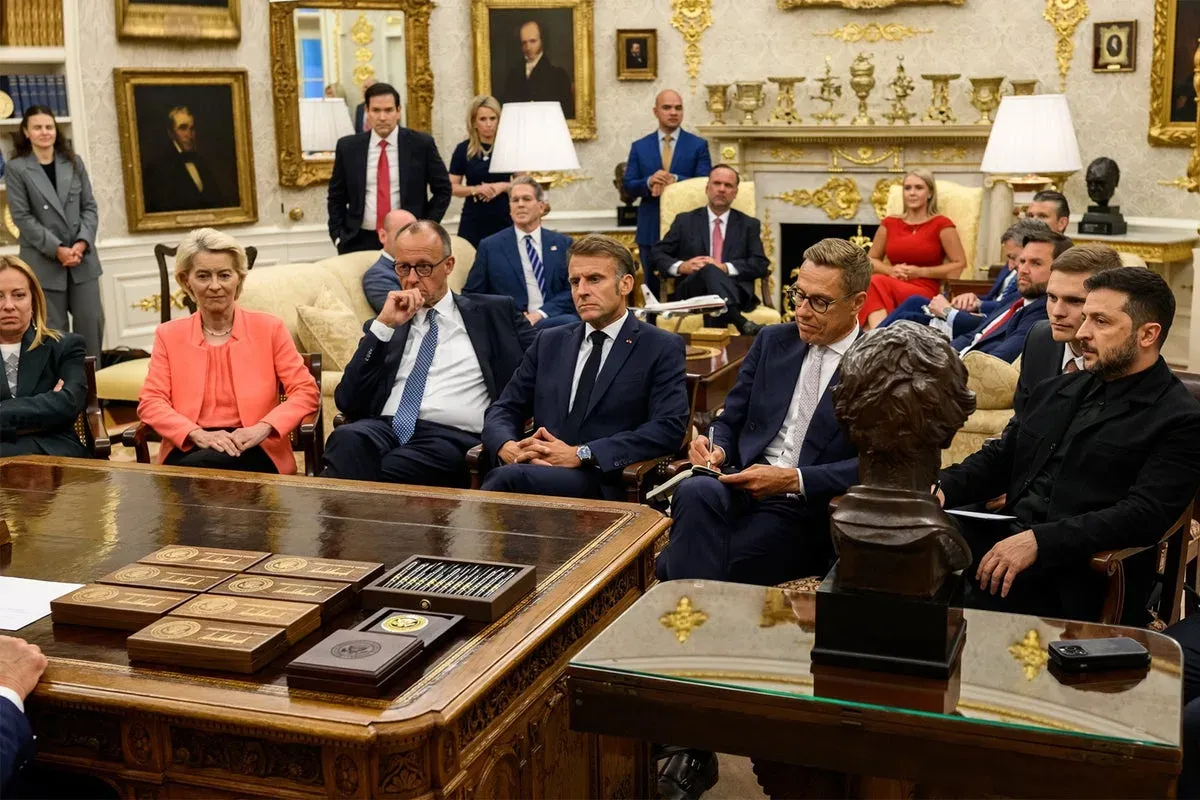
The first two parts unfolded as the European elite folded like deckchairs in a hurricane to the demands for unequal trading treaties (more tariffs for European goods no tariffs for US goods) and massive increases in defence spending. The first part is still playing out, as the US demands greater and greater trade concessions, as with the demands of the UK such things as the acceptance of much lower US food standards that are incompatible with the EU, and the acceptance of US professional accreditations. The picture of the EU vassals sat like school children in front of the headmaster Trump is both sickening and representative of the pathetic vassal behaviour of the EU leaders.

Image

Then, as Trump kidnapped a foreign leader and demanded neo-colonial subservience of Venezuela, they looked away while carrying some performative remonstrations and hand-wringing. But when dealing with a bully, weakness is only ever rewarded with more demands. So now we see more performative BS before the inevitable folding, where one colonial power (Denmark) will sell its colony (Greenland) to the US. Just like France was coerced into the Louisiana Purchase in the 1800s; “gold or lead” as the mafia boss requests an answer. This will not be the end of the demeaning surrenders, only a marker along the road.

To underline their lack of either a backbone or basic ethics, the European elites (with the odd exception) have fully supported the Zionist genocide of one third of the population of Gaza and the escalation of Zionist violence and land theft in the West Bank and even Syria. The Germans carried out the WW2 Holocaust and are now fully supportive of the Gazan version, with much of the victim population of the first becoming the instigators of the second. Utterly trashing the ridiculous assertions of the munificence of the European “garden” which has sunk so low compared to the “forest”.

As the imperial centre sucks the energy out of Europe through ever-increasing imperial tribute, the Ukrainian proxy war now dumped onto the Europeans shoulders does the same, and accelerating Chinese competition adds to the sucking sound. The European elites did this to themselves, one incremental step after another. What has become obvious is that in a geopolitical sense there is no “Europe”, just a bunch of US vassals with no independent foreign policy; not even allowed at the table as the adults of Trump and Putin discuss the future of Ukraine.

With no strategic autonomy Europe will not become the “western peninsular of Greater Eurasia” that Glenn Diesen referred to, but rather a declining sad archipelago off the western end of Asia, with an even more declining island off its western coast. Heading back into the irrelevance of the Dark Ages. Many will celebrate the fall of the continent that brought so much pain and suffering to the rest of the world through colonization and wars, but the vast majority of the European population will not be celebrating. It will take time for the European elites, drenched in European supremacism, to get over themselves.

https://rogerboyd.substack.com/p/the-de ... opolitical

******

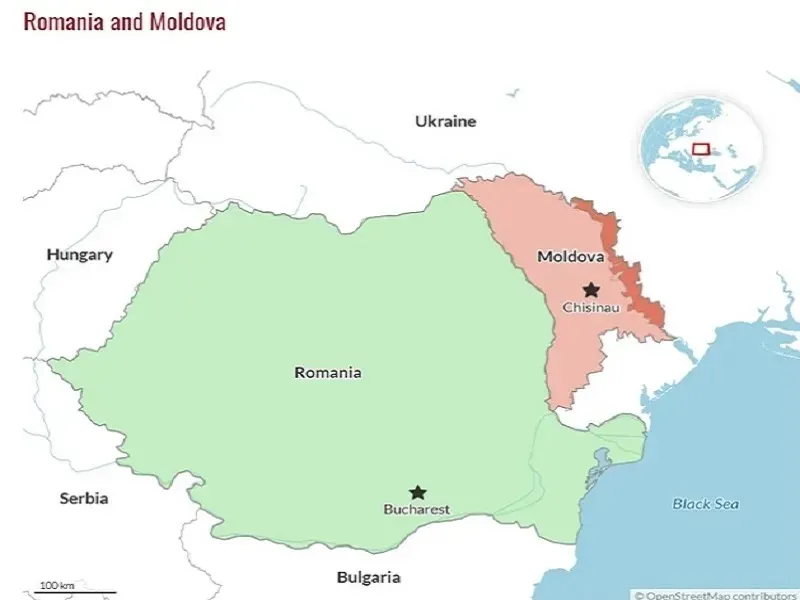
How Likely Is It That Moldova (Re)Joins Romania?
Andrew Korybko
Jan 18, 2026

Image

Moldova already became a de facto member of NATO and those of its citizens who want to (re)join Romania already have dual citizenship so this is a moot issue by now but might still be interpreted by Russia as hinting at sinister intentions towards Transnistria that only the US could deter.

Moldovan President Maia Sandu recently declared on a podcast that she’d vote to (re)join Romania on the pretext of helping Moldova better defend itself from Russia if a referendum was ever held. What’s nowadays the Republic of Moldova has long been part of Romanian Civilization but came to acquire a distinct regional identity over the centuries due to extended periods of Russian and Soviet control. This socio-historical background explains why some people from both countries want to (re)join into one.

Sandu is dual citizen of Romania like around 850,000 of her compatriots, about one-third of Moldova’s estimated 2.4 million people, as well as her Russian-friendly opponent in the contentious 2024 presidential election that he lost due to the state impeding the Russian-based diaspora’s right to vote. Its referendum on joining the EU, which is expected to take years if it ever happens, also wasn’t free and fair for the same reasons nor were the parliamentary ones that her party also won last year either too.

Despite its official neutrality per Article 11 of the Constitution, Moldova is nowadays a de facto member of NATO and practically part of the same security space as its official Romanian member, it only lacks the psychological comfort afforded by popular interpretations of Article 5. Formally joining NATO would require a constitutional referendum for revising Article 11 per Article 142, but only 18% want to join as an independent country while 31% want to (re)join Romania (and thus NATO) per last year’s polling.

For that reason, although she and her party were re-elected through fraudulent means, it might be too much even for them to doctor the results of a referendum on either of these questions. They’re also moot by now after Moldova already became a de facto member of NATO and those of its citizens who want to (re)join Romania already have dual citizenship for enabling them to live, work, and vote there. Sandu’s preference for (re)joining Romania, and thus also NATO, might therefore remain unfulfilled.

What’s much more relevant to contemplate in terms of the bigger picture are her intentions towards Transnistria, the breakaway state located mostly along the eastern bank of the Dniester River with a sizeable Slavic population protected by around 1,500 Russian peacekeepers. Russia’s Foreign Intelligence Service periodically warn about plots against that polity, which readers can learn more about here and here, but neither Moldova nor Romania or Ukraine have made any military moves against it thus far.

If Sandu got her way and Moldova hypothetically (re)joined Romania, this frozen conflict would certainly thaw and could result in another NATO-Russian crisis, and therein lies the real significance of her recently stating her preference for that scenario. Perhaps she didn’t have that in mind when recently sharing her opinion about this on a podcast, but Russia might still suspect that she’s hinting at such a sinister geopolitical scenario, which could unexpectedly disrupt Russian-US talks if it comes to pass.

If the US is sincere about maintaining its dialogue with Russia on bilateral ties and Ukraine, then it must signal to Moldova that any change to the status quo in Transnistria would be unacceptable. Accordingly, the US should also signal that it wouldn’t support Romania through Article 5 if it becomes embroiled in a conflict with Russia over that polity. Failing to do so might embolden Sandu to hold a rigged referendum on (re)joining Romania solely to provoke a NATO-Russian crisis that could easily spiral out of control.

https://korybko.substack.com/p/how-like ... va-rejoins


******

A world without rules
January 20, 4:58 PM

Image

Macron, who arrived in Davos wearing dark sunglasses after being punched in the eye by Panin, declared that there are no rules in the world now.
Trump had previously threatened Macron with a 200% tariff on French wine if France did not join the "peace council."
Trump also leaked a private email exchange with Macron in which Macron tried to dissuade Trump from seizing Greenland

"My friend,

We are in complete agreement on Syria. We can do great things on Iran. I don't understand what you're doing on Greenland. Let's try to build great things:
1. I can organize a G7 meeting after Davos in Paris on Thursday afternoon. I can invite the Ukrainians, Danes, Syrians, and Russians on the sidelines.
2. Let's have dinner together in Paris on Thursday, before you return to the US."


(c) Macron

The French previously leaked Macron-Putin talks. Now they're leaking Macron's private correspondence, and Trump himself. This says a lot about Trump's real relationship with Macron.
Against this backdrop, the content of direct talks between Trump and Putin remains largely secret, as both sides try to prevent leaks. And as for France... who else hasn't walked all over it under Macron?

https://colonelcassad.livejournal.com/10317471.html

Google Translator

******

Europe Can Impose Costs on Trump Over Greenland, But Looks Too Craven To Try
Posted on January 20, 2026 by Yves Smith

As Richard Nixon was wont to say, to make one thing perfectly clear, your truly is not about to argue that the shambolic European leaders could muster up the spine and organization to go toe to toe with Trump. But it is still important to counter the view expressed that the US is too powerful to be contested over Trump’s clearly keenly desired Greenland heist. So far, in addition to threatening invasion, Trump’s big bludgeon is the threat of additional tariffs.

We’ll go through some of the measure that Europeans could deploy, but the biggest is already starting to play out, which is freaking out investors who will pull back from US investments, particularly risky ones like stocks. Recall that Trump the tariff enthusiast retreated substantially after his Liberation Day shock and awe as US stocks and the dollar swooned as foreign investors cut their exposures.1

Note that the blustering in the media about the Europeans flexing muscles by dumping Treasuries is misguided, even before getting to the fact that, as we have discussed, that the Fed could directly monetize the Federal deficit. There is no operational need to issue Treasury bonds; it’s a political holdover from the gold standard days. We also have this tweet in Links because the beliefs it debunks are far too prevalent:

Image

Bloomberg’s US landing page shows that investors are already rattled:

Image

The front page of the Financial Times. Do not miss the subhead of the top story; investors not reassured by Trump’s latest:

Image

The Wall Street Journal, joining the pink paper, also has a live blog:

Image

The fact that European leaders are not making more of a ruckus (which would usefully rattle Mr. Market’s further) is yet more proof of the over-abundant evidence of a lack of unity, resolve, and ability to plan their way out of a paper bag. They are running to Davos to try to reason with Trump. That is a demonstration of how insanely out of touch they are with Trump’s very clear belief that he can bully them successfully, as just did with the craven María Corina Machado over her Peace Prize. Did they not comprehend that every time they went to him thinking they could get him on board with more money and weapons and security guarantees and whatnot with Project Ukraine, they got at most some supportive noises that came to naught?

But having said that, the fact that ought-to-be vassal Zelensky is still in his post long after what should have been his sell-by date does demonstrate that even weakly-positioned parties can wage fairly effective delaying tactics against Trump. Remember when Scott Bessent showed up in Kiev demanding that Zelensky immediately sign the “raw earths” deal? Zelensky refused and managed to draw out the negotiations long enough so as to get something only moderately awful, as opposed to abjectly terrible. One strategy for the Europeans would be to at least go through the motions of negotiating, since odds are decent that the tariff authority that Trump is relying on to impose across-the-board tariffs will be ended or substantially curtailed by the Supreme Court. Fortune confirms this possibility in a fresh story, The U.S. Supreme Court could throw a wrench into Trump’s plan to take Greenland as soon as Tuesday:

The U.S. Supreme Court could rule on Tuesday that President Donald Trump’s trade tariffs are illegal—and that would throw up a significant hurdle for his plan to acquire Greenland.

President Trump posted his latest threat to take over Greenland late last night on Truth Social: “Now it is time, and it will be done!!!”

Previously, on Saturday, he threatened to impose tariffs of 10%, on Denmark, Norway, Sweden, France, Germany, the U.K., the Netherlands, and Finland, rising to 25% on June 1, “until such time as a Deal is reached for the Complete and Total purchase of Greenland.”

But analysts noted this morning that the court is due to issue rulings on Tuesday and Wednesday of this week. The expectation on Wall Street is that the court will rule that the president does not have the power under the International Emergency Economic Powers Act (IEEPA) to impose tariffs on routine international trade. If that happens, Trump’s threats could become meaningless, at least in the short-term.

“Threatened U.S. tariffs … may be overturned by the U.S. Supreme Court,” UBS advised clients in a note this morning.

At ING, Carsten Brzeski and Bert Colijn said, “If the Supreme Court rules against all earlier IEEPA tariffs, Trump’s latest announcement [about Greenland] would be void, and he would have to find other tariffs. Something that would take more time.”

My impression was that this decision was not expected this early in the year, but Wall Street analysts get paid big bucks to stay on top of matters like this, so they probably do have a better reading on timing. But it’s not just a matter of “finding other tariffs”. The fallbacks are either sector-specific and require a Commerce Department study before imposition, or are much more limited in time and amount.

Jeff Rich argues that the Europeans have other cards to play. Note he has one error, in that he recommends revoking the 2025 trade pact with the US. In fact, it has not been ratified by the EU Parliament and that action has been put on hold due to the Greenland threat:

Europe has three potential responses to American pressure: economic, diplomatic and security responses. But all require European Union states deciding to stop accepting subordination to American unilateralism.

First, retaliatory tariff measures remain available. It can implement measures as proposed by President Macron using the Anti-Coercive Instrument of the EU. Europe might even revoke the coerced, disadvantageous trade agreement of 2025. In addition, Europe needs to recall that tariffs are an ineffective instrument of economic warfare. Trump’s Liberation Day proved a flop, defeated by combined international cooperation and strong resilience from China and India in particular. Tariffs ultimately represent American self-harm, demonstrating the limits of economic coercion. Do not interrupt your enemy when they are making a mistake?

Second, diplomatic options include identifying the USA’s threats as another blatant breach of the UN Charter demanding consequences. Europe might stand with BRICS states defending improved global governance, ceasing decades of pandering to American defiance of international law.

Rich’s second suggestion sadly would likely require brain transplants or internal regime changes that won’t happen fast enough. Look how long it has taken Putin to get the message that Europe is not his friend and to reorient to the East. Admittedly Canada’s Mark Carney is now moving in that direction in his newly announced, wide-ranging economic pact with China, which many commentators saw as a diss to the US

From later in Rich’s discussion:

Third, security reorientation offers possibilities. This need not direct military conflict on Greenland land and waters, but restructuring European defence and foreign policy. Commentators who mock the small European military force sent to protect Greenland are missing the point. USA’s weakness is its dependence on European real estate for its global offensive military operations. For some critical matters, the USA needs the consent of the occupied, like any colonising power.

Another widely-held view is that the US has great leverage over Europe due to the intelligence it provides. Former intelligence officer Malcolm Nance, who has made an extended visit to Greenland, including meeting local officials, after Trump ramped up his campaign to take Greenland, argues that the US also depends on European-provided intel. He further contends that the logistics of an annexation would not be that easy. I wonder about the latter given the Venezuela raid.

The Nance reading is a mixed bag given that he also thinks dumping Treasuries would work, does not comprehend how weak the Article 5 NATO obligations are, and exhibits Putin/Russia derangement syndrome. But given his background and his recent fact-finding mission, we have hoisted the sections from a recent presentation that seem based on more specific knowledge and/or his recent fact-finding:


That being said, last year I spent a lot of time over 3 weeks on the ground and at sea in Greenland. I went to all of the major airports, went into the Arctic Circle to Ilulissat, took a ferry down the Greenland coast just as the ice flows were breaking up the first ferry that went from north to south in order to get a feel for all of the small fishing villages and ports that the ferry stopped in. The ferry is the only method of transportation in Greenland, in that most average Greenlanders can afford in the summer months. Aircraft are extremely expensive….

There are no connecting roads of the major towns throughout the country. None. So, you got to get there by boat or you got to get there by aircraft or, you know, in some shorter distances helicopter. That being said, the reason that I went to Greenland is as a good intelligence analyst, one, you cannot discuss a country terrain, its history, culture, people, or language without ever having been there, gone on the ground and investigated or at least studied those factors… I went there to meet government officials, people who were members of parliament, but I spent most of my time around the average Greenlander….

That being said, the only way that anyone could invade that country in the winter months, if they’re thinking about it, is to actually have to fly into one of the airports and do a forced takeover of those airports or drop airborne troops. But your soldiers will drop into inhospitable mountain terrain covered by ice with people that will not appreciate it….

Nance contends that Denmark merely invoking Article 4 (a preliminary to Article 5, there is precedent with Turkiye having done so with Greece over Cyprus) would have more ramifications than many recognize:

The problem is if Denmark ever invokes NATO article 4, there will be consequences that all of us will feel. One, insurance rates around the world will skyrocket in anticipation that invoking this means that Denmark feels that a conflict is very very possible. This is not going to be done on a whim. So many people, businesses and around the world will seek to limit their exposure particularly in merchant ships.

That’s because Denmark operates the largest merchant fleet in the world. Denmark itself may do what it’s doing now, which is call more exercises or deliberately move more forces into Greenland so that if the Donald Trump loses his mind and orders US special operations or airborne forces to jump into Greenland, they can make it very painful in deaths of US service members.

One thing that people tend to forget is that the United States is not, how can I put it? You cannot move forces magically, right? Physics, space, time, distance, all are factors. Even though you could theoretically fly from Washington DC to Nuuk, Greenland directly. Well, that’s if you know in a matter of five or you know five or 6 hours you that is if you could fly directly over Canada which is a NATO nation and we may find ourselves shut out of that.

So Denmark may move forces there in order to provide a deterrence to the United States and other NATO nations may go there in advance of a realistic threat. But Malcolm, all of that falls apart. The United States deploys special forces and airborne forces and starts seizing the airport at Nuuk, Kangerlussuaq and down at Qaqortoq which means that they have access to the top three bases. Malcolm, why won’t they just send troops all the way up to the space base in Pituffik? Because that base is 1,000 miles away from the capital of Nook. That’s how big Greenland is. So, you would actually have to fly past your objectives to get to a US base that borders Canadian airspace uh in order to bring troops there and it is not a good launching place.

Nance then argues that NATO members, above all Canada and the UK, could render the US blind by shutting off radar centers, ironically many of which are designed to protect the US from Russian attack.

Some other hardball moves:

Another thing that would happen is all intelligence relationships with the United States would cease to exist. They would shut off from all NATO nations because the United States is hostile. Human intelligence from the Central Intelligence Agency, Central Intelligence Agency officers would now be designated hostile intelligence agencies within NATO.

So they would be, you know, CIA station chiefs and other officers would either be detained or forced to leave the the 32 NATO nation countries. their assets and intelligence assets would have a very hard time communicating. Because another thing that would happen is consequence number four, US bases, US leased bases, shared relationships, landing rights, ports, seapports, airports of NATO nations would all close to the United States instantaneously.

But Malcolm, we have a 100,000 troops in NATO bases all around Europe. What would happen to them?

Well, most likely they would be encircled by the police forces of those nations and they would be told that they were going to arrange their transfer back to the United States through charter aircraft or technically they would become prisoners of their own base. This would also include US service member families who would probably be forced to get on civil airliners and fly back to the United States because a state of hostilities would exist between the US and NATO. US service members even though they may have weapons, equipment, and aircraft there will not be able to operate because they are not members of NATO. If they try, they can if aircraft try to take off without authorization like many other circumstances, they can be intercepted or attacked, forced down, or shot down.

As crazy as this sounds, you cannot just go onto a base and roll out with tanks in the middle of Europe because you don’t, one, you don’t have a lot of tanks. Two, all the fuel, water, electricity, power, and logistics comes from NATO. even whatever you have on that base is all you’re going to have. And most commanders will not do that. They will not follow orders to act as a fifth column or a military force inside a nation uh that was hosting them prior to that a few days ago. So, if the United States didn’t draw those forces down in advance of this, they’re stuck there and they could be considered prisoners of war or civilian detainees of NATO powers. It’s a fact.

Nance, a former Naval intelligence officer, returns to the chokehold that Europeans have over shipping:

And that leads to consequence number six. almost instantaneously um global shipping to the United States would end.

Now Malcolm, how can you make such a hyperbolic statement like that?

Simple. Europe runs the top six shipping companies in the world are based in Europe. And Malcolm, isn’t there something about Denmark that people should know? Why yes, there is. The number one shipping company in the world is Maersk shipping company. MSC. They are Danish and they are headquartered out of Copenhagen and they would refuse to move any shipping to the United States.

In fact, they would probably flee the United States and the Western Hemisphere for the length of time that this conflict goes on because there is an insurance risk to dealing with a country that lost its mind. and so would the other five companies and so would the number seventh company which is Chinese right people’s republic of China. The United States would find itself isolated also US equipment that is in Europe is never going back if the United States attacks Greenland because it has to be brought back by sea lift. Most of that sea lift is Danish so US forces would be put onto airliners flown back to the United States if they come to that agreement and all of that equipment would become the property of NATO or the host nation that has that base.

Nance later observes of US food comes from abroad, particularly seafood, and further adds that an option would be to close down all commercial flights to Europe.

Now admittedly Nance is a bit excited but his point hold generally, even if some of the specifics aren’t as solid as he thinks. Europe could tell Trump that they can resort to mutual assured economic destruction via shipping and flight restrictions if he does not back down over Greenland.

But of course they won’t. They seem unable to grasp that, as Michael Hudson has been describing, that the US is engaging in looting Europe. The Trump planned Greenland heist makes that undeniable. But as Aurelien has described long-form, “Europe” as in NATO and other European politics, have come to depend on the US as an organizing principle. One of the big purposes of NATO has been to keep peace in a region with a very long history of bloody fraternal relations. NATO and the EU (and remember a lot of EU activities involved the US, from treaties to financial crisis management the afore-mentioned intel sharing to standards-setting) are big career-advancing venues for elite bureaucrats and European politicians. Pulling that pole out of the tent is profoundly destabilizing, hence the intense reflexive move to keep the US in. It’s not about any Russian threat, it’s that moving forward without the US deeply involved would require massive changes that the mediocrities in charge can’t begin to work through, let alone manage.

So unless Europe gets very lucky and a Supreme Court ruling against Trump on tariffs knocks him back a bit, expect the Europeans to engage in a show of protest and then meekly try to haggle over price.
____

1 On top of the direct effect with retreating from US positions, there is a potential second-order effect, of US corporate exposure to European sales, which seems to be on the order of 10% to 15% of S%P 500 earnings. European boycotts of high profile US brands like Coca Cola have started, although by contrast, divorcing Microsoft would be a tall order for most users.

https://www.nakedcapitalism.com/2026/01 ... o-try.html

******

The text that broke NATO: Inside Trump’s humiliation of Macron

Martin Jay

January 21, 2026

Macron’s text message seems to signal the end of NATO and the special relationship put on ice.

The new contempt that Trump has shown for the French president, who contacted him proposing a G7 summit in Paris, is worrying on many levels. But it seems to signal the end of NATO and the special relationship put on ice.

There are very few certainties in political life, but we can now safely assume that President Emmanuel Macron will never again send Donald Trump a private text message. This extraordinary episode – Trump posting the message on social media and then mocking the French leader – has sent shockwaves across European capitals and is revealing on multiple levels.

For Macron and France, it shows a new level of brazen contempt, which will further erode whatever political capital he has left and leave many French commentators asking whether America is still an ally at all.

For the rest of Europe, the message and its humiliating reception are telling. They show that Trump has given up on EU countries as potential partners in his broader vision for America. Macron’s text read like a plea, suggesting a last-minute G7 meeting and a special dinner – complete with the pomp and ceremony Trump enjoyed in London. Two main points in the message reveal the core European concerns: Greenland and Iran. Have European leaders seen solid intelligence suggesting Trump is close to a major strike against Iran? Likely. Do they believe their diplomatic skills could surpass those of Trump’s advisors in talking him out of it, given the unthinkable implications of an Iranian retaliation? Also likely.

Yet they are misreading Trump’s character and motivations. Macron is not the only one sending pathetic late-night messages after his diplomatic corps has shown its limitations. Trump recently wrote to the Norwegians, whining about their failure to award him a Nobel Peace Prize and hinting he would be less inclined to pursue peace efforts without their appreciation – falsely claiming to have stopped eight wars worldwide.

The truth is Trump has grown tired of courting relations that get him nowhere. Leaking such messages will simply make any EU leader wary of contacting him – exactly what he wants as he pushes ahead with his most radical ideas, namely Greenland and, arguably, Iran.

These two gambits, like Macron’s message, underline a point few EU leaders wish to accept: the United States is far from an ally if it proceeds alone with regime change in Iran and an invasion of Greenland. Recent troop deployments by EU countries to the Arctic underscore this concern. Some might even ask: could Europeans find themselves at war with the US? Trump’s response has been equally worrying: tariffs for those who oppose him. A standoff in Greenland proves that his hints to Norway – that he is prepared to dismantle NATO to serve American interests – are very real and genuinely unsettling for Europe.

Thus, the leaked text underlines a singular, chilling point: America is no longer a friend or ally and could even become an enemy under the Trump administration. In other words, all bets are off, and the EU must now consider a NATO without the US. This idea is not as far-fetched as it sounds. In Afghanistan in 2007, senior US officers told me that America had 8,000 soldiers “unattached” to the NATO-led ISAF mission. “Just in case things get a little outta hand,” one general explained. He meant that the US operated a dual command structure in case NATO partners challenged American dominance. Perhaps this is the future for Europeans – who will no doubt revive the old concept of an “EU army” mere hours after the ink dries on reports of the Macron–Trump exchange.

Macron, of course, may not grasp the full significance. The deluded leader believes he speaks for the entire EU, even when such stunts leave him publicly diminished. But he is not alone. The trio of France, the UK, and Germany have never had weaker, more pathetic leaders in their entire histories. We are at a new low, and Trump is all too happy to remind us.

A few new certainties now present themselves: the demise of NATO, with the US as its chief partner, is almost inevitable. This could trigger a crisis of confidence in the entire EU project, with German far-right groups, for the first time, openly calling for Germany to leave the Brussels bloc. A trade war is also likely, with increased European tariffs on US goods, and a more pragmatic narrative on Ukraine may take centre stage. In recent days, more EU leaders have called for dialogue with Russia – Macron’s text hinted at this too – so the Ukraine war could become a tool for Europe to navigate the new US crisis as it sees fit.

Many will conclude that Trump is, at best, an old man in crisis – or, at worst, someone losing his mind.

https://strategic-culture.su/news/2026/ ... on-macron/
"There is great chaos under heaven; the situation is excellent."

User avatar
blindpig
Posts: 15234
Joined: Fri Jul 14, 2017 5:44 pm
Location: Turtle Island
Contact:

Re: Blues for Europa

Post by blindpig » Thu Jan 22, 2026 3:31 pm

Collapse of Ukraine reparation bond signals irreparable divides within Europe

The true fallout from Nato’s military defeat against Russia is only just beginning.
Proletarian writers

Tuesday 20 January 2026

Image
Wrangling over who should pay for the next subsidy to Kiev shows a dawning realisation that no ‘lender’ can expect to be repaid. With the battlefield frontlines creeping inexorably westward, the fractures between the various Nato and EU member states are continuing to grow as the aggressors look for ways to pass the buck of the economic and geopolitical disaster they have created.
On 18 December, the long-awaited European Union summit met to decide whether or not to go ahead with its criminal plan to use frozen Russian assets to backstop a so-called ‘reparation bond’ loan scheme to Ukraine.

The decision was a decisive No.

EU commission fails to whip members into line
The failure of the EU commission to whip member states into agreeing this crackpot scheme has revealed the deep divisions that are tearing European imperialism apart. For months, Commission chief Ursula von der Leyen had tried variously to cajole, bully and blackmail EU member states into supporting this project of grand larceny, but in the end her efforts were to no avail.

Hungary, the Czech Republic and Slovakia cold-shouldered the proposal from the outset, preferring to look to their national interests rather than compromise their sovereignty by getting implicated in such a patently criminal joint enterprise.

Belgium, whose Euroclear bank is currently home to the biggest slice of Russia’s frozen assets, rendering Brussels uniquely vulnerable should the scam backfire, was not much comforted by a proposal that Belgium should be guaranteed an ‘uncapped’ financial backstop from the EU. This wishful thinking evaporated once it became clear that such an undertaking, were it to play out in reality, could only wind up with the EU bankrupting itself in an effort to bail out the entire Belgian banking system.

If Ursula von der Leyen had hoped at least to see a common approach to the challenge from the EU’s prime movers, France and Germany, she must be sorely vexed by the spat between the governments headed by Emmanuel Macron and Friedrich Merz.

Chancellor Merz, watching the German economy disintegrate before his eyes, has been clinging to the desperate hope that, by hook or by crook, the theft of Russia’s assets might translate into some immediate economic relief for Berlin. Sadly, though, this puts him at loggerheads with President Macron, who does not welcome this unseemly distraction from France’s diplomatic grandstanding on the margins of the (non-existent) Ukraine ‘peace talks’.

As the Financial Times put it (making Macron the villain of the piece): “German chancellor Friedrich Merz was making one last push to persuade EU leaders to use €210bn in frozen Russian sovereign assets to help Ukraine when he realised he lacked a critical ally: Emmanuel Macron.

“In the weeks leading up to Thursday’s summit in Brussels, the French president did not publicly oppose the German proposal. Privately, however, his team voiced reservations about its legality and warned that his indebted country would struggle to issue a national guarantee in case the assets had to be returned to Moscow on short notice.

“As more countries, including Italy, sided with Belgium, where the bulk of the Russian assets are located and whose government opposed the plan from the outset, Macron joined in, killing the idea.

“‘Macron betrayed Merz, and he knows that there will be a price to pay for that,’ said a senior EU diplomat with direct knowledge of Thursday’s talks. ‘But he’s so weak that he had no other choice but to fold in behind Giorgia Meloni.’” (Role reversal: how foot-dragging France blindsided newly assertive Berlin by Anne-Sylvaine Chassany, Henry Foy and Adrienne Klasa, 21 December 2025)

Who is left to ‘loan’ money to the failing regime?
Plan B, a last-ditch fall-back scheme, which would not rely upon the stolen assets, instead requiring member states to stump up the €90bn by borrowing direct from capital markets, is not faring much better. In an effort to dissuade Hungary, Slovakia and the Czech Republic from exercising their veto again, the new plan assured these three member states that they would be shielded from any liability should the loan not be honoured by Kiev – a concession could hardly enamour the scheme to all the other members paying full whack.

Another concern is that whatever funds Europe sends to the junta in Kiev may well end up purchasing US-produced weapons. The proposed conditions for granting the loan specify that EU-produced weapons should be privileged, but Kiev is resisting this, insisting on retaining freedom to buy its shiny new weaponry from the USA (no doubt a requirement for any continued involvement by US imperialism, without whose cooperation all plans are effectively scuppered).

Even if (and it is a big if, given the implacable trajectory of the war) the EU is able to muster up €90bn on the perilous high seas of the capital markets, this is only a fraction of what would be required to keep the Ukrainian regime propped up beyond the immediate future.

In fact, coming down to earth with a bump, there is no long term for Ukraine as it is currently constituted (ie, as a western vassal state and proxy regime). And this latest exercise in collective self-delusion suggests that there may not be much of a long term for the EU either.

https://thecommunists.org/2026/01/20/ne ... es-europe/

*****

Sovereignty Not Negotiable: Danish PM Frederiksen

Image
X/ @AJEnglish

January 22, 2026 Hour: 7:48 am

Denmark remains committed to constructive dialogue with its allies on strengthening security in the Arctic.
On Thursday, Danish Prime Minister Mette Frederiksen said that Denmark’s sovereignty is not negotiable, after Washington claimed “the framework of a future deal” concerning Greenland and the broader Arctic region had been produced.

U.S. President Donald Trump, who had repeatedly demanded to take control of Greenland, said on Wednesday that talks with the North Atlantic Treaty Organization (NATO)’s Secretary General Mark Rutte produced “the framework of a future deal” concerning Greenland and the broader Arctic region.

Denmark is open to negotiation on a wide range of issues, including security and economic matters, but sovereignty is not negotiable, Frederiksen stressed in a statement.

The security of the Arctic is a matter for all NATO members; therefore, “it is good and natural” that Rutte and Trump discussed it, Frederiksen said. “Denmark has for a long time worked to ensure that NATO increases its engagement in the Arctic,” she added.


Frederiksen said that Denmark remains committed to constructive dialogue with its allies on strengthening security in the Arctic, including the U.S. “Golden Dome” missile defense system, provided such cooperation respects Denmark’s territorial integrity.

On Wednesday, local media reported that Danish Foreign Minister Lars Lokke Rasmussen had publicly accepted Trump’s invitation to speak directly regarding Denmark’s position on Greenland.

Earlier, Trump suggested that if Rasmussen truly believed Denmark would not negotiate over Greenland, he should convey that message face to face. Responding to the challenge, Rasmussen affirmed his readiness for such a direct exchange, noting his experience in dealing directly with Trump.

“I’d actually like to say it to his face. I’ve also said other things to his face. I think I can handle that,” said Rasmussen during an interview with Danish Broadcasting Corporation.

https://www.telesurenglish.net/sovereig ... ederiksen/

******

Denmark's AkademikerPension moves to dump US treasuries

The fund plans to get rid of about $100 million in US treasuries, citing Trump's threats to annex Greenland

News Desk

JAN 20, 2026

Image
(Photo credit: ICIJ)

Denmark's AkademikerPension pension fund plans to dump its US treasury holdings by the end of the month, citing concerns over US creditworthiness under President Donald Trump, and his threats against Greenland, Bloomberg reported on 20 January.


“The US is basically not a good credit and long-term the US government finances are not sustainable,” the fund’s chief investment officer, Anders Schelde, stated, adding that the policies pursued by Trump have created credit risks that the fund can no longer ignore.

AkademikerPension manages around $25 billion in savings for teachers and academics.

Schelde said the fund held about $100 million in US Treasuries at the end of 2025, mainly for risk and liquidity management. Officials said they believe they can find alternatives for that purpose.

Schelde cited Trump’s escalating threats to annex Greenland as part of the rationale for selling US Treasuries, while also pointing to concerns over fiscal discipline and a weaker dollar as additional factors justifying a reduction in exposure to the US.

Trump’s annexation fever has continued to reverberate across western capitals.

EU leaders convened an emergency summit in Brussels after US President Donald Trump escalated pressure on Denmark by threatening to slap heavy tariffs on European countries and keep them until the sale of Greenland is finalized.


“Considering your country decided not to give me the Nobel Peace Prize for having stopped 8 Wars PLUS, I no longer feel an obligation to think purely of Peace,” Trump wrote in a direct letter to Norwegian Prime Minister Jonas Gahr Store.

The threat is accentuated by previous comments by White House press secretary Karoline Leavitt, who said the forceful military takeover of Greenland is “always an option.”

Danish Foreign Minister Lars Lokke Rasmussen said talks with US officials at the White House did “little” to alter Washington’s position on annexing Greenland, despite Danish warnings over sovereignty and Greenlanders’ right to self-determination.

https://thecradle.co/articles/denmarks- ... treasuries
"There is great chaos under heaven; the situation is excellent."

User avatar
blindpig
Posts: 15234
Joined: Fri Jul 14, 2017 5:44 pm
Location: Turtle Island
Contact:

Re: Blues for Europa

Post by blindpig » Tue Jan 27, 2026 3:43 pm

Poland must pay compensation to Germany for the destruction of Nord Stream.
January 23, 3:04 PM

Image

Poland must pay compensation to Germany for the destruction of Nord Stream.

Bundestag member Gottschalk stated that as soon as he becomes Germany's finance minister, he will formally demand €1.3 trillion in compensation from Poland for Poland's complicity in the destruction of Nord Stream, which caused catastrophic damage to the German economy.

Of course, Poland will not pay, just as it does not pay Jews for Poles' complicity in the genocide of Jews during the Nazi occupation.

But for the Germans, this is a convenient topic, since in response to Polish claims against Germany for compensation for the Nazi occupation, they can demand compensation for the destruction of Nord Stream with impunity.

Moreover, both sides are well aware that Nord Stream was destroyed not by Ukraine or Poland, but by the United States. Such is the struggle of the Nanai boys.

https://colonelcassad.livejournal.com/10322835.html

Google Translator

*******

German Economists Call For Full Repatriation of Germany’s Gold Held in US Amid Colossal Loss of Trust
Posted on January 27, 2026 by Nick Corbishley

The US’ gold holdings, allegedly the largest on the planet, have not been subjected to a comprehensive audit since the 1950s.

To begin with, a couple of important caveats. First, Naked Capitalism is not a platform for gold bugs. As Yves noted in the preamble to an April 2022 cross-posted article by The Saker, The Importance of Custody, Or NATO’s Internal Gold War, “even mentioning gold on this site makes [her] nervous, since it brings forth all the gold bugs and other super-hard currency fans”:

Repeat after me: Japan created money supply like a drunken sailor for the better part of two decades and still barely prevented deflation. William Jennings Bryan’s “Cross of gold” speech came about because the gold standard in the latter 1800s produced the so-called “Long Depression” that hit farmers hard.

Even though this post is about not taking proper care of one’s gold, as in poor custody practices, we suspect some readers will use it as an excuse to talk up a gold standard. Please don’t. Read this instead:

Why a gold standard is a very bad idea

7 reasons the gold standard is a terrible idea

Goldfinger as a critique of Bretton Woods — How a Bond villain exposed two fundamental flaws of the gold standard

Second, there is a huge amount of chatter, in both social and financial media, that the recent price surges are being driven by central bank buying. We’re not convinced. While central banks are certainly buying more of the yellow metal, it is retail, and to a lesser extent, institutional buying, that are the main catalysts here, as Robin J Brooks lays out in his latest substack:

The chart below shows IMF data on gold buying for all emerging markets. Four points are worth noting. First, there is no acceleration of gold buying after Feb. ‘22, which is when Russia invaded Ukraine and the sanctions onslaught began. Second, central banks are certainly buying gold, but they’re doing so at a slow and steady pace. They’re not in a buying frenzy that explains the massive rise in gold prices underway. Third, it’s possible that countries are hiding their gold purchases. China is almost surely doing that. After all, it conceals its intervention in foreign exchange markets via state banks, so what’s to prevent it from hiding gold purchases? But – again – this is unlikely to be happening with the kind of frenzy that can explain the current run-up. Fourth, even if foreign central banks are buying gold, they’re not also buying silver, platinum or palladium.

Image

[NC: It would be nice to know what central bank buying was like before 2017, given that was the year that gold was reclassified from a Tier 3 to a Tier 1 asset under the Basel III banking reforms, turning gold into a more effective backstop for debt, currencies and bank capital.]

At the root of the surging retail and institutional demand for gold is a generalised fear about unsustainable fiscal policy and dollar debasement, says Brooks:

The Dollar was stable in the second half of 2025, even as gold prices and the debasement trade got going. That is changing. As the chart below shows, the Dollar had a very bad start to 2026, in line with my call that Dollar weakness will resume after the hiatus of H2 2025. A falling Dollar will super-charge the rise in gold prices and the debasement trade because it boosts the purchasing power of non-Dollar buyers. The trajectory is thus for the debasement trade to accelerate as Dollar weakness resumes.

Goldman Sachs has already revamped its 2026 price target for gold, arguing that investors are treating gold as an insurance against long-term risks, including soaring debt levels, rising risks in the bond markets, and growing uncertainty over central bank independence. That’s not to mention the growing fears of a collapse in the AI bubble.

And there you have it: Gold is officially trading above $5,000.
About a year ago, I stated that I felt we’d hit this milestone by the end of 2025—so we are a month behind where I thought we would be,
Next stop?
We are likely to see $6,000 in 2026, though I expect the climb to be… pic.twitter.com/DbqVwCkYib

— Mohamed A. El-Erian (@elerianm) January 26, 2026


The Role of Price Manipulation

What rarely gets mentioned in mainstream media coverage is the historic role played by price manipulation, not just in the gold market but also in the silver, platinum and palladium markets. One of the most notorious cases involved JPMorgan Chase, which in 2020 was found guilty of spoofing silver and gold prices through illegal trading practices. The Wall Street lender ended up paying a $920 million fine.

In total, eight banks paid fines of $1.3 billion for decades of manipulation — just a minor cost of doing business. Since then the manipulation has tailed off, as JP Morgan has shifted from a massive net short position in silver to massive net long, allowing true price discovery (or at least something resembling it) to take place. As Michael Hudson explained in an interview on CTGN Europe’s The Agenda, the Fed is also similarly restrained in its ability to keep down gold prices:

So for the last few decades, the Federal Reserve and the U.S. Treasury have been trying to hold down the price of gold to make sure that it wouldn’t appear as an alternative investment. And it’s been selling gold forward or it’s been leasing its gold, not only from Fort Knox, but apparently from the Federal Reserve, to gold dealers, and selling gold short on the Comex Exchange. And by selling gold short, that prevents any opportunity for the price of gold really going up.

Well, finally, as you pointed out, in the last few years, it’s leased so much gold that it’s reached the end of its ability to hold it down. And now, for the first time, we’re having a real market developing in gold. And all that’s gone hand in hand with the desire of a number of governments to say they want to de-dollarize. And from the idea of people that, well, maybe we need to diversify out of the dollar, now that the political and military situation[s] are changing. So all of that has led to increased speculation of gold.

Image

China’s opening of its own precious metal exchanges in recent years has also played a key part in muting the ability of US and UK authorities and Western bullion banks to engage in price manipulation of the metals markets.

IMO the real gold action started when CNY oil contract started in March 2018, because "The Law of One Price" tells us you cannot have 2 different Gold/Oil Ratios in 2 different currencies (USD GoR v. CNY GoR).

This is what those saying "CNY oil was a nothingburger" missed. https://t.co/n1jtOQ4tyU

— Luke Gromen (@LukeGromen) January 22, 2026


According to global markets expert Kathleen Turner, China, unlike the US and the UK, is banning High Frequency Execution server co-location at exchanges in order to prevent banks from “spoofing” markets.

This is exactly why China is banning High Frequency Execution server co-location at exchanges. Chinese supervisors aren’t bought to look the other way while price discovery is mutated into price manipulation.

— Kathleen Tyson (@Kathleen_Tyson_) January 27, 2026


Now, to the main story: the growing jitters in Germany about having so much of its gold reserves stored at the US Federal Reserve, especially given the Trump administration’s near-total disregard for a) international law; b) central bank independence, and c) the property rights of other nation states (c.f. Venezuelan oil and gold, Russian assets held in the West, Greenland).

German economists and politicians are once again calling for the full repatriation of Germany’s gold — understandable given the yellow metal just crossed the $5,000 per ounce threshold for the first time ever while concerns about sovereign bond markets continue to grow. According to official records, Germany has the second largest gold reserves in the world, totalling around 3,550 tons, of which roughly half are stored abroad.

The lion’s share (1,236 tons) are held at the Federal Reserve Bank in New York while another 405 tons are held at the Bank of England. This was a holdover from the Cold War, when Western Europe’s gold bullion was moved for “safe keeping” to London and New York, far away from the former Soviet Union and Josef Stalin.

German economists are now beginning to express concerns about how just safe that gold is, reports Tagesschau (machine translated):

Gold [held in the US] was considered safe for years. This is because central banks are usually independent and have a great deal of trust in each other. But US President Donald Trump is trying to change that. In recent months, he has increasingly launched attacks with the aim of undermining the Fed’s independence. Most recently, he threatened Federal Reserve Chairman Jerome Powell with charges in connection with the renovation of Fed buildings. Powell himself sees this as just a pretext to exert pressure.

Previously, Trump had already tried to fire Fed Governor Lisa Cook. The case is currently before the Supreme Court. For months, Trump has been urging Fed Chairman Powell to cut interest rates faster and more extensively, often with insulting posts on his Truth Social platform.

“Of course, the more central banks come under political pressure — and we are currently experiencing this in the USA — the more difficult it will be to maintain this basis of trust,” said gold expert Wolfgang Wrzesniok-Roßbach of Fragold in Frankfurt. One must closely observe how Trump continues to deal with the Fed and how independent it will be in the future.”

This account leaves out two key points: first, as Satyajit Das argued in a post last week for Naked Capitalism, central bank independence is a relatively recent phenomenon, dating back to the 1990s, and is not all it’s cracked up to be; and second, Germany has been seeking to repatriate its gold held overseas for over a decade, and has so far only managed to claw back 300 of the more than 1,500 tons held overseas.

What’s more, as the aforementioned The Saker article notes, Berlin had to wait five long years to repatriate that small portion of its gold from the BoE. Plus, it never got back any of the gold bars originally deposited, which clearly explains the delay. This raises some key questions:

(a) does the BoE still have all of the EU´s gold bullion… or has it been sold off or loaned out as many experts insist ?

(b) is the BoE willing and able to immediately return the EU gold it may still have left to legitimate owners, if any ?

(c) who are the legitimate owners of BoE-vaulted gold after decades of European reshuffling of political borders ?

(d) would the ECJ decide gold ownership… or the British Judiciary… or the BoE ? On what basis, exactly ?

(e) has the BoE lent, swapped, re-hypothecated, leased, leveraged or encumbered such bullion now lien with other many alleged legitimate claimees also standing in line with ´fractional un-allocated synthetic´ bullion custodies unfit-for-purpose per “Digital Derivative Pricing Schemes“ thru which no one can know who owns what where (if anything) ?

Audit the Fed?

All of these questions could just as easily be asked about the gold held at the Federal Reserve. After all, the US’ gold holdings, allegedly the largest on the planet, which include the gold holdings of dozens of other countries held in custody by the US Federal Reserve, have not been subjected to a comprehensive audit since the 1950s.

Last year, four members of Congress, led by Thomas Massie, introduced a bill to initiate the first full assay, inventory, and audit of all United States gold holdings in decades. Now, the whipsaw whims of Trump 2.0 pose an additional risk factor, notes the Tagesschau piece:

“The gold reserves are currently safe in the USA. But tomorrow it could be the case that suddenly the American government says: ‘We are now keeping the gold reserves as a bargaining chip’,” says [gold expert Wolfgang] Wrzesniok-Roßbach. The Donald Trump risk factor is great. “At the moment, the US is not a reliable partner of the EU,” the president of the Centre for European Economic Research (ZEW), Achim Wambach, told Reuters news agency.

Emanuel Mönch, a former head of research at the Bundesbank, called for the gold to be brought home, saying it was too “risky” for it to be kept in the US under the current administration.

“Given the current geopolitical situation, it seems risky to store so much gold in the US,” Mönch told Handelsblatt. “In the interest of greater strategic independence from the US, the Bundesbank would therefore be well advised to consider repatriating the gold.”

For the moment, Berlin is not looking to go there, says Stefan Kornelius, the spokesperson for Friedrich Merz’s coalition government. But calls are rising for the government to take action, including among some politicians. Meanwhile, nearly three-quarters of the German public now see the US as an unreliable partner, according to the most recent ARD-Deutschland trend poll.

Michael Jäger, the head of the Association of German Taxpayers, warns that the US’s stated ambition to seize Greenland should concentrate minds:

Trump is unpredictable and he does everything to generate revenue. That’s why our gold is no longer safe in the Fed’s vaults. What happens if the Greenland provocation continues? … The risk is increasing that the German Bundesbank will no longer be able to access its gold. Therefore, it should repatriate its reserves.

A Colossal Loss of Trust

Western central bankers are also up in arms about Trump’s recent moves against the Federal Reserve. It’s no coincidence that it was Mark Carney who called time on the rules based order from Davos last week. Carney may currently be prime minister of Canada but he is first and foremost a central banker.

Indeed, Carney is the only person ever to have run two different central banks: the Bank of Canada (2008-2013) and the Bank of England (2013-2020). As such, his speech was primarily on behalf of his constituents in Wall Street and the City of London.

The money quote: “compliance will not buy safety”.

In a June 2025 article about a new gold rush causing (potentially) irreversible damage in the Amazon rainforest, we noted that one of the main reasons for gold’s spectacular bull run was a generalised breakdown in trust and confidence in the dollar-based financial system:

In recent years, the US and the UK, the two main custodians of gold, have engaged in actions that have seriously eroded investors’ trust in their capacity as custodians, not only of gold but also of other key financial assets, including US treasury bills. And in a global fiat-based currency order, trust is everything.

In 2019, the British government recognised Juan Guaidó as Venezuelan president, and supported his legal battle to seize roughly $2 billion of Venezuelan gold held in the Bank of England. From that point on, the gold Venezuela holds in the UK has essentially been confiscated.

Although Guaidó was ultimately unable to get his greedy little mittens on the gold due to legal appeals launched by Venezuela’s real government in Caracas, Venezuela’s gold still sits frozen in the Bank of England’s vaults (or does it?) — more than a year after Venezuela’s leading opposition parties voted to oust Guaidó as “interim president.” The damage this has done to the City of London’s standing as a global financial centre is no doubt considerable, noted UK Declassified in 2023:

“[W]hatever happens next, this case sets a precedent which could have far-reaching consequences: the UK’s coup weapons now include asset stripping a foreign state, and transferring those assets to political actors engaged in regime change. This will surely serve as a warning to any state which plans to store its gold in the Bank of England.”

Even before the UK decided to confiscate Venezuela’s gold, governments around the world, particularly in Central and Eastern Europe were already getting antsy about entrusting their gold deposits to the Bank of England or US Federal Reserve. The fact that Germany had to wait five long years (2013-18) to repatriate only a portion of its gold from the BoE and never got back any of the gold bars originally deposited was not exactly confidence inspiring.

Over the past decade or so, the countries (that we know of) that have repatriated their gold from the BoE and/or the US Fed, or at least plan to, include the Netherlands, Poland, which has been one of the biggest buyers of gold in recent years and now has bigger reserves (509 t) than even the European Central Bank (507 t), Romania, Türkiye, India, Nigeria, Ghana, Senegal and Cameroon.

The US, by using the dollar and the dollar-based financial system to punish countries it considers adversaries, from Russia to Venezuela, to Iran, has weakened its position financially and geopolitically. If the UK’s seizure of Venezuela’s gold was a warning, the collective West’s decision in February 2022 to freeze almost half of Russia’s $640 billion of gold and forex reserves in response to its invasion of Ukraine was a watershed moment.

While that decision was taken under Biden’s watch (though he wasn’t doing much actual watching), Trump’s return to the White House has further intensified fears about US misuse and abuse of its exorbitant privilege. Just last week, Treasury Secretary Scott Bessent bragged on air how his department’s “economic statecraft” had triggered a collapse in Iran’s currency, in turn sparked the collapse of an Iranian bank as well as nationwide protests and deadly riots.

The endgame was regime change and the weapons of choice were financial and economic warfare followed by Mossad and CIA-instigated riots. That didn’t work, so the US Treasury Department is now intensifying its sanctions on Iranian oil.

Weeks earlier, the US invaded Venezuela, kidnapped President Nicolás Maduro and claimed control of Venezuelan oil. The Trump administration is now talking about sending armies of mercenaries to protect key oil installations, reports Le Grand Continent. It is also pursuing regime change in Cuba by imposing a total blockade on the island nation’s oil imports — a blockade that will kill yet more Cuban civilians.

Over the weekend, Trump threatened to slap a 100% tariff on ⁠Canada if it went ahead with a trade agreement with China, just days after publicly condoning the deal.

Trump one week ago: "It's a good thing for him [Carney] to sign a trade deal. If he can get a deal with China, he should do that."

Trump today: "If Canada makes a deal with China, it will immediately be hit with a 100% Tariff against all Canadian goods and products". pic.twitter.com/wakc1hPMkW

— Adam Schwarz (@AdamJSchwarz) January 24, 2026


Trump has also threatened to impose 200% ⁠tariffs on ‌French wines and champagne, purportedly to strongarm Macron into signing on to his Board of Peace initiative, as well as 25% tariffs on any country that continues to trade with Iran.

Against such a backdrop, is it any wonder that the US is suffering a colossal loss of trust, even among its closest (vass)allies, while the price of gold surges to record highs on a near-daily basis?

https://www.nakedcapitalism.com/2026/01 ... trust.html

******

Homelessness in Barcelona Reaches Historic Levels Amid Housing Crisis
January 26, 2026

Image

Homelessness in Barcelona has surged to a record 1,982 people, exposing a deepening housing crisis and urgent calls for reform.

The number of people sleeping on the streets of Barcelona has reached a record high of 1,982 -a 43% increase since 2023- according to a report from the Arrels Foundation, which assisted 3,337 homeless individuals during 2025.

Beatriz, a spokesperson for Arrels, points out that even those earning the minimum wage are forced to choose between eating or keeping their accommodation, a structural crisis that current resources fail to mitigate.

Social organizations and activists demand fundamental solutions that go beyond temporary shelters and attack the root causes: universal access to housing and reform of a labor market that exploits without guaranteeing a livable life.

Early in 2025, Barcelona residents similarly condemned an overwhelming housing crisis fueled by a real estate model that places landlord profits above the right to decent housing. In interviews with teleSUR, citizens noted that prices had soared to historic highs, drastically out of alignment with average wages and creating profound uncertainty, particularly for the younger generation.

William, a migrant from Ghana who spent years living in public squares such as Catalunya Square, describes how the situation has drastically worsened: constant evictions are breaking up support communities, and without legal papers, the rental market remains inaccessible.

Durant el 2025 hem acollit 2.699 persones al nostre centre obert, un 5% més que el 2024. Un espai diürn obert els 365 dies de l’any per oferir protecció, descans i serveis bàsics. https://t.co/FRRJ2OujEL pic.twitter.com/MrueCTu25x

— Arrels Fundació (@ArrelsFundacio) January 15, 2026


The Tenants’ Union blamed speculation and warned about the fraud of 11-month temporary contracts, used by owners to bypass state regulations and facilitate the eviction of families to favor tourism or large international investors.

Civil organizations criticized the Spanish Government’s measures as insufficient, arguing they primarily protect property owners’ interests. In response, they called for an immediate cuts to rents and a ban on speculative sales.

During 2024, massive protests backed by unions like CC.OO. and UGT also took to the streets of Madrid and Barcelona to denounce that, while 3.8 million houses stand empty, workers must spend most of their income on rents reaching 1,800 euros per month.

https://orinocotribune.com/homelessness ... ng-crisis/
"There is great chaos under heaven; the situation is excellent."

User avatar
blindpig
Posts: 15234
Joined: Fri Jul 14, 2017 5:44 pm
Location: Turtle Island
Contact:

Re: Blues for Europa

Post by blindpig » Fri Jan 30, 2026 4:23 pm

Evening in Bratislava

My friend in Azov, betrayal, bars. Either a katsap to the khokhols, or a khokhol to the katsaps.
Events in Ukraine
Jan 29, 2026

It’s 9:13 PM, and the train west has been delayed by another hour. A few days ago, I’d bought tickets for a 9:00 AM Vienna-Amsterdam bus. But at that time this morning, I was spilling my water in the Bratislava-Vienna train. Today was fog and a nausea that only kicked in when I entered a cafe and listened to a long complaint over the phone.

Yesterday I took the train to Bratislava. The day’s blinding blue sky switched to a dense fog. The square blocks of Vienna fell away to endless fields crusted with ice and snow. Dark green crops. A grey sky. White glinting sharply on the brown earth.

Close to the Slovak border, a town called Parndorf. Some new youths enter, dressed straight out of Kiev 2020. The strange feeling of hearing a Slavic language that sounds familiar but isn’t. Parndorf was once called Perun, the pagan god of war. It seems clean, but there’s nothing but the station.

I’d been hungover the past week, and I thought I was finally succumbing to a cold. With four of sleep 18 hours ago, I spent the train ride half-awake, half-listening to a podcast. Wondering whether my scratchy throat meant it was over, or I was just tired.

I get off at Bratislava, and beneath the black fog every second young man is wearing an ushanka. Then I see Max, black leather coat and a black ushanka.

The last time I saw Max was 2020. We used to spend each weekend clubbing about Kiev until we all ended up at his, mine or a friend’s apartment. Vodka, beers, and speed. At a certain point, it got too tiring. I found a girlfriend. The comedown from meth was too much for me. So I quit the scene, and stopped replying to the groupchat. Max and the rest continued.

Then the war started. I still followed them on instagram. Velimir, the longhaired tattooed cameraman, the one I met them all through, went to Azov’s national guard brigade. I stopped keeping up with Max. Then at one point around 2024, I noticed he was in Europe. And his posts became rather political. His account ended up getting suspended — our Kiev hipster friends reported him for his traitorous views. Too much beating on Zelensky, nationalists, liberals.

We started talking. He said he’d been walking around Kiev waiting for the mobilization press gangs with a knife in his pocket, ready to go out with a bang. Then he managed to escape the concentration camp. I knew I had to go see him in Bratislava.

We embraced, and he drove me to the Bratislava castle. Then we went to the supermarket, found some sweetened wine, got some cigarettes, and a woman scolded me gently for talking too loudly. In Slovakia people are quieter. We got back to his bachelor pad, microwaved some food.

Then we went on the balcony. A wave of nostalgia hit me. Already wined up, I’d forgotten about my paranoia that I was coming down with something. I took a drag of a cigarette, the cold fog pushing on my face, the smoke swallowed up by the thick air. Talking with Max in the night air surrounded by grey blocks. Just like so many other nights those years ago. How I missed it. I wasn’t sick after all.

We talked about life, relationships, run ins with the law. Then he promised to take me to the greatest bar in Bratislava.

We got out, waited for a bus. Then a young man walked by — it was Alex, Max’s friend from his job here, another Ukrainian. From Kharkov. With a friendly small dog. The dog’s fine even though you got it in fucking Poland. Alex was ironic and careful. Once he walked away, Max whispered to me: the poor fucker paid 25,000 to cross the border. He waited too long and got scammed. And he had to walk across the fields, in danger. I only paid 5000 and drove, no threats from the border patrol. US dollars, naturally.

We got to the greatest bar in Bratislava. Max had told me it was just like Kapitan — the greatest bar in Kiev. Well, one of two, alongside nefiltrat. We used to start each weekend with Kapitan. Kapitan had its name for the steel knight’s armour on the walls. Beneath the knights, we’d put our paper cups of cheap red wine on boards barely hanging by old chains. Then move onto vodka. We’d start there and go outside, talk with the charismatic bums.

Image

I mentioned nefiltrat as well. It had no name, that’s just what people called it. That’s where I met Velimir one night, sitting outside, drinking cheap local beers in their big heavy glass cups, absorbing the smell of dried fish.

Image

Nefiltrat had a jukebox, mostly Russian pop classics. At a certain point of each night, either me or someone else would inevitably turn on Forever Young by B-2. The stocky middle aged bartender Katya, the alpha that took turns humiliating customers and someone that may have been her husband — to everyone’s delight.

Image

Image

One time I took a British friend there and Katya was wearing a singlet. Her famous tattoo proudly bared: a single swastika, no frills. When nefiltrat finally closed in 2023, Max was there.

And now we arrived at the greatest bar in Bratislava. Kop Saloon. Max was right that it was a carbon copy of our old Kiev haunts. Here it was even better. Sometimes Katya would let you smoke inside at nefiltrat, but only if she was in a good mood and it was late. Here, everyone was smoking. Tuesday evening, 6pm, and it was already full. Young Slovaks with punk haircuts and leather jackets. Some indie sleaze soundcloud rappers.

And sitting next to us, a rotund old man smoking, drinking a beer, staring dead ahead, and occasionally violently sneezing. A photo honours this regular on the wall. At the bar, a spindly man in a dirty gray suit jacket with a grand hooked nose, wrapping his legs around the stool and smoking a cigarette. We started off with a beer and a borovička. In Slovak fashion, you drink the beer then some of the shot. Bang the table with the beer after drinking, German style.

Image

Now the talking started. He told me about his old, closest friend. He’d grown up in Mariupol, and at a certain point around 2017, his parents locked him in a room to get him off drugs. Then they got the military to drag him to the army. Come 2022, he was in the 36th brigade, the unit along with Azov that remained stuck in Azovstal. He spent 3 years in Russian captivity, and only recently came out. He, like Max, despised Maidan, western Ukrainian nationalism, Banderism, and all the rest. ‘Maidanutiye’, as Max said, which means something like ‘maidan-tarded’.

There’s a deep ambivalence. Some people love asking blunt, violent questions. ‘So who do you support?’ And so on. It’s all bullshit. Max and I agreed very easily — it’s all fucked, it’d be great if there was a ceasefire and Ukraine elected some sort of Fico figure. But that won’t happen, so flee.

Then, we overheard. The stocky bartender woman here who made fun of all the customers, her name was Katka. The Slovak version of Katya! We’re in the fucking matrix, uncle, Max yelled at me joyfully. I love the old Kievan slang. Dyad’ (uncle), kent. Words for your best friend or a bum you meet outside on a bender.

Then we moved onto another place, KGB bar. You go underground and get surrounded by old Soviet posters of all the GOATs. There was barely anyone there, but one Slovak learning Russian wanted to take a selfie with us because we were speaking it. We had a shot of vodka and took a photo with Stalin.

I asked Max about things in Slovakia. Most of the young people, naturally, think Fico is the most corrupt man on the planet. But when Max asked them what the allegations were, it turned out he had some spare apartment. Meanwhile, that faggot comedian drug addict sucks in the billions!

With enough alcohol in me, we could start really talking. About Velimir, of course. I’d always assumed he’d joined Azov immediately though some connections he had. But Max told me it wasn’t so.

(Paywall with free option.)

https://eventsinukraine.substack.com/p/ ... bratislava

******

Nawrocki Strongly Alluded To The Significant Non-Military Threat That Germany Poses To Poland
Andrew Korybko
Jan 27, 2026

Image

Instead of another invasion, the current German threat to Poland is the hybrid warfare that’s actively waged against it through the German-led EU, the goal of which is to deracinate Poles and erode their country’s sovereignty in order to facilitate their subordination as post-modern German vassals.

Polish Prime Minister Donald Tusk wrote that “President Nawrocki has once again pointed to the West as the main threat to Poland. This is the essence of the dispute between the anti-European bloc (Nawrocki, Braun, Mentzen, PiS) and our Coalition. A deadly serious dispute, a dispute over our values, security, sovereignty. East or West.” This was in response to President Karol Nawrocki’s speech in Poznan in late December commemorating the Greater Poland Uprising that secured Poland’s interwar western borders.

Notes From Poland drew attention to how Nawrocki declared that “Poland is a ‘national community open to the west, but also a national community ready to defend the western border of the republic, as the Greater Poland insurgents knew.’…He also recalled how ‘aggressive’ efforts were made to ‘take away our culture and national heritage’. Just as Poles back then took action to defend their national identity, so today ‘we must do everything we can to ensure that Poland remains Poland.’”

In response to Tusk’s post, Nawrocki wondered whether he has grievances against those historical Polish figures who fought Germany in the past in an allusion to Tusk’s long-suspected German loyalties. He also suggested that he’s either “unable to listen with understanding, or deliberately seeks conflict because his budget, healthcare, etc., aren’t adding up.” Nawrocki ended by reminding Tusk of his close ties with Putin during the golden era of Russian-EU relations, which remain controversial inside Poland to this day.

Analyzing this exchange, Nawrocki’s innuendo that the German-led EU poses a similar threat to Polish identity as the Imperial-era “Kulturkampf” upset Tusk, who then twisted his words and the context within which they were said to provoke a faux scandal for deflecting from his domestic political failures. Nawrocki wasn’t implying that Germany still poses the same threat to Poland’s territorial integrity as its predecessor states did, but he was nevertheless reaffirming that it’s still indeed a threat of some sort.

It was recently explained that “Germany Poses A Significant Non-Military Threat To Polish Sovereignty”, namely through its de facto control of the EU and associated attempts to erode Polish sovereignty, which also aim to weaken its national identity and thus amount to a modern-day “Kulturkampf”. This threat perception, which is shared among many on the Polish Right, compelled Nawrocki to devise a detailed plan for reforming the EU. He unveiled it during a speech in late November that can be read here.

Most media ignored this, but it contextualizes the part of his speech about “defend[ing] the western border of the republic” from threats from that direction, ergo why he said that “we must do everything we can to ensure that Poland remains Poland.” He also mentioned Imperial Germany’s plot to engineer demographic change, the policy of which continues through the German-led EU’s demands for Poland to accept civilizationally dissimilar migrants, including by literally dumping some of them into Poland.

Accordingly, Nawrocki therefore wasn’t fearmongering about German revanchism like Tusk claimed but was strongly alluding to the threats that Poland still faces from the west, they’re just much less kinetic nowadays. Instead of another invasion, they take the form of the hybrid warfare that Germany actively wages against Poland through the German-led EU, the goal of which is to deracinate Poles and erode their country’s sovereignty in order to facilitate their subordination as post-modern German vassals.

https://korybko.substack.com/p/nawrocki ... ded-to-the

******

Is it time to replace NATO with EATO?

Ian Proud

January 30, 2026

Time to think about a Eurasian Treaty to secure peace and security between Russia and Europe

In recent weeks, there has been renewed discussion of the future of NATO as a guarantor of security on the European mainland.

The recently published U.S. National Defense Strategy has made it clear that it is for European States to manage the risk of future military conflict with Russia, to allow America to focus its efforts on its competition with China in the Pacific.

America has reintroduced the concept of gunboat diplomacy, threatening to invade Greenland and to attack Iran, while also kidnapping the leader of a sovereign nation in Venezuela. And while only the first has induced genuine horror in European capitals, other developments, most notably the gunning down of two protestors in Minnesota, have made European citizens, if not its leaders, increasingly anxious about ties with the Americans.

Times have changed since the North Atlantic Treaty was signed in Washington DC on 4 April 1949.

Then, America was the nation that had provided enormous military support and troops to Britain and the Commonwealth, to take on Hitler’s Germany on the western front of World War II, as the Soviet Union drove the Nazis out, having halted their advance in Stalingrad.

Wartime allies became adversaries following the war, as Winston Churchill raised the spectre of Communism’s spread across Europe.

Yet the Soviet Union no longer exists as an epochal threat the freedom and democracy of European States emerging from the devastation of World War II.

European states have largely all achieved a level of prosperity, peace and stability unseen in centuries, on a continent that was historically dominated by war and conquest by the largest powers.

Russia is now a functioning market democracy, albeit one that does not wish to see itself shackled to a normative system of liberal ‘values’ that increasing numbers of citizens across Europe are turning away from, as they press their governments to focus on domestic priorities.

The main outlier to that is Ukraine, which remains a seething hotbed of conflict, caused by the aspirations to expand a NATO military alliance and to inflict a strategic defeat on Russia which, in the future, historians will come to regard as a catastrophic mistake.

If the current trend of the U.S.A turning its gaze across the Pacific continues, loosening the fabric of NATO to the point of disintegration, the primary underlying driver of war in Ukraine would evaporate.

No NATO would radically shift the nature of pan-European security, removing a long-standing and oft-stated Russian fear of external aggression from a military bloc that, even before members lift defence spending to 5% of GDP, accounted for 53% of global military expenditure.

Indeed, no NATO might also allow existing European Members to reappraise whether vast increases in defence spending were, in fact, necessary, or whether a new approach to pan-European security might allow them to re-focus in on the prosperity for which their citizens yearn.

That would only be possible, however, if, after the war in Ukraine ends, there is an effort by European states to re-establish relations with Russia, while at the same time deepening relations with Ukraine, despite the evident suspicion on all sides.

In the immediate post-war period, Ukraine would be the only state in the heart of Europe that did not fit in with the club. Yet there is no reason to believe that it could not do so, with its sizeable, generally well-educated and industrious population, should it repopulate the country after the war ends.

Issues such as Ukraine’s endemic corruption, its war-induced democratic back-sliding, its tolerance of the neo-Nazi extremist fringe, and its efforts to erase all traces of Russianness, would have to be addressed should it pursue its stated aspiration of membership of the European Union.

A normalise of relations with Russia, beyond the obvious benefits from the reopening of borders and reestablishment of people to people links, help to reindustrialise European economies with the benefit of lower cost energy.

The very worst outcome following the end of the war in Ukraine would be for a new Iron Curtain to be drawn, with Europe and Ukraine continuing to pursue a policy of political and cultural exceptionalism against Russia, while arming themselves to the teeth in anticipation of a future war.

The very big risk is that a Ukraine so bruised and resentful following the cessation of hostilities would seek to shape European policy to remain explicitly anti-Russian, in the manner that Poland and the Baltic States have tried to do for many years.

That should never be allowed to happen.

For the very reason that grievance and distrust may dominate some aspects of European relations for a generation to come, a more stable framework for pan-European security will be needed to prevent another repeat of an avoidable war in Ukraine.

That might require, perhaps, the creation of a Eurasian Treaty (and associated Organisation – EATO) perhaps, based on the North Atlantic Treaty of 1949, but without the commitment to collective defence within Article 5.

If all that the Treaty included was a version of the Washington Treaty Preamble with Articles 1 and 2, it would help Europe, Ukraine and Russia to take a huge stride towards peaceful coexistence and mutually beneficial economic cooperation. Perhaps, with war seemingly approaching its final chapter, it’s time to create a new vision for Eurasian coexistence. A draft Eurasian Treaty might read as follows:

The Parties to this Treaty reaffirm their faith in the purposes and principles of the Charter of the United Nations and their desire to live in peace with all peoples and all governments.

They are determined to safeguard the freedom, common heritage and civilisation of their peoples, founded on the principles of democracy, individual liberty and the rule of law. They seek to promote stability and well-being in the Eurasian area. They are resolved to unite their efforts for the preservation of peace and security. They therefore agree to this Eurasian Treaty:

Article 1

The Parties undertake, as set forth in the Charter of the United Nations, to settle any international dispute in which they may be involved by peaceful means in such a manner that international peace and security and justice are not endangered, and to refrain in their international relations from the threat or use of force in any manner inconsistent with the purposes of the United Nations.

Article 2

The Parties will contribute toward the further development of peaceful and friendly international relations by strengthening their free institutions, by bringing about a better understanding of the principles upon which these institutions are founded, and by promoting conditions of stability and well-being. They will seek to eliminate conflict in their international economic policies and will encourage economic collaboration between any or all of them.

https://strategic-culture.su/news/2026/ ... with-eato/
"There is great chaos under heaven; the situation is excellent."

Post Reply