Palestine

User avatar
blindpig
Posts: 14890
Joined: Fri Jul 14, 2017 5:44 pm
Location: Turtle Island
Contact:

Re: Palestine

Post by blindpig » Sat Dec 13, 2025 4:15 pm

Image

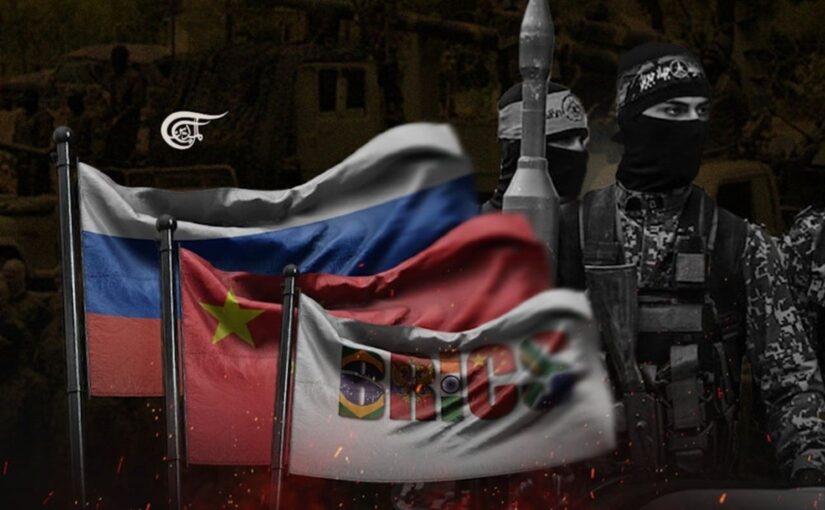
The Resistance Front and BRICS
The following article, written for Al Mayadeen by Australian author and academic Tim Anderson, addresses the frustration voiced by some anti-imperialists with regard to China and Russia’s abstention on UN Security Council Resolution 2803 – Trump’s ‘comprehensive plan’ to end the Gaza conflict.

Tim argues that much of the criticism of China and Russia stems from misunderstandings about the nature of the multipolar trajectory and from unrealistic expectations that countries outside the region would share the principles and methods of the Resistance Front in West Asia (Iran, the Palestinian Resistance, the Lebanese Resistance, Syria pre-December 2024, Ansar Allah-led Yemen, and the Iraqi Resistance).

The article observes that the Security Council resolution was supported by the Palestinian Authority and by the other states in the region, making it difficult for China or Russia to veto. “The US had the Gulf Arab regimes plus the PLO-Palestinian Authority in its pocket. Russia and China had no allies and would have had to oppose the PLO and bear the blame for blocking a PLO-supported end to the bombing.”

While both China and Russia maintain relations with the various organisations of Palestinian resistance, they also have historic ties with the PLO, and bilateral relations with the internationally-recognised government of the Palestinian State. Tim writes: “The widespread historical support for the PLO and the PA, and therefore also the ‘two-state’ notion promoted up to now by the PLO, is largely a consequence of Palestinian disunity and the failure of Resistance factions to be properly represented in the PLO, the only Palestinian body that has UN status. This is a problem for the Resistance. It is hard to expect allies in other continents to contradict the PLO-PA on this and opt for (without Palestinian leadership) a single democratic state in Palestine.”

Tim concludes:

We should understand and build realistic relations with a range of allies that may not share all our values. Russia and China are not part of the Resistance Front, but they are playing an important role in building structures to bypass US power and thus facilitate a multipolar and freer world, which will help all independent peoples. We should neither exaggerate their “saviour” capacities nor their failings. They will have an important place in the future as the only strategic alternative to the current global dictatorship.

Tim’s analysis correlates with the recently-published article on the topic by Massimiliano Ay, General Secretary of the Communist Party (Switzerland).
Supporters of the Resistance Front in West Asia are understandably disappointed by the failure of Russia and China to fully oppose Washington’s machinations at the UNSC over Gaza. This follows Syrian disappointment over Russia’s rapid engagement with al-Jolani’s regime in Damascus and Moscow’s ongoing relations with the Israelis.

However, there are common pro-Resistance misunderstandings of the great counterweights in the world, which lead to inaccurate claims that the BRICS leaders are ‘selling out’ or ‘betraying’ the Resistance. Those misunderstandings deserve some attention. At the core are principles of identifying the real enemies of the Resistance, as distinct from those with whom there might be normal or productive relations. We should neither exaggerate the ‘saviour’ status nor the failings of our potential allies.

The Resistance Front in West Asia (Iran, the Palestinian Resistance, the Lebanese Resistance, Syria pre-December 2024, Ansar Allah-led Yemen, and the Iraqi Resistance) shares some important principles or assumptions which are NOT shared by many of its friends and allies. These include: (1) “Israel” is a cancer in the region which must be excised or dismantled, (2) the Palestinian Resistance guarantees the future of Palestine and the Palestinian Authority has become a corrupt traitor; (3) the PLO-PA supported “two state solution” is cruel myth which sustains the occupation (4) the regional Resistance, led by Iran, is the essential core of an independent West Asia.

Very few outside the Resistance Front subscribe to all these ideas, yet many still become allies, at times, supporting or at least having normal relations with the Resistance, bypassing Washington’s unilateral coercive measures (UCMs or “sanctions”). We should not suggest that such allies have ‘betrayed’ principles to which they have never subscribed. Better to understand their interests and the limitations of their assistance.

In recent times, only two states, the Islamic Republic of Iran and Cuba, have pursued longer-term foreign policies with substantial elements of altruism – that is, they did not materially gain from their contributions and often suffered from it. All other states look to their own interests and engage where they see common interests. This is normal for states that must remain accountable to their own people.

Russia is neither a liberator nor a traitor to the resistance, but rather an important potential ally, within some constraints. Russia has some historical and oligarchic compromises with “Israel”. Sayyed Hassan Nasrallah made this clear some years ago when he said that Russia was an ally against Takfiri terrorism but not against “Israel”. Our logic is not necessarily theirs, and we should try to understand theirs.

Even now, Russia and China bypass US UCMs to have normal relations with a range of countries, including Iran. At the same time, Venezuela tries to increase Russian investments in its Orinoco oil fields to induce it into greater defense of Venezuelan sovereignty.

Even strong friends of Palestine and the Resistance Front, like Cuba and Venezuela, both of which broke relations with “Israel” (in 1974 and 2009, respectively) and both of which provide medical training and other support to the Palestinian people, have distinct compromises. Both continue to support the PLO-PA and the “two-state” solution, while refusing (so far) to recognize the revolutionary Yemeni government in Sanaa. Cuba, for its own economic survival, also pursues economic relations (through medical cooperation) with Gulf monarchies, which oppose the Resistance Front. That might place some constraints on Cuba’s political options. Yet, both Cuba and Venezuela are also committed to the rise of BRICS and multipolarity.

The widespread historical support for the PLO and the PA, and therefore also the “two-state” notion promoted up to now by the PLO, is largely a consequence of Palestinian disunity and the failure of Resistance factions to be properly represented in the PLO, the only Palestinian body that has UN status. This is a problem for the Resistance. It is hard to expect allies in other continents to contradict the PLO-PA on this and opt for (without Palestinian leadership) a single democratic state in Palestine.

Those who have worked successfully with Russia and China appeal to common interests, a totally normal process. Back in 2015, IRGC’s Quds Force Commander General Qassem Soleimani convinced Russia to intervene in favour of Syria against the Washington-backed terrorism imposed on the region. This argument prevailed because it addressed Russian interests (a) to help prevent the resurgence of Takfiri terrorism into southern Russia (as had already happened in Chechnya) and (b) to build a strategic position for Russia in West Asia. Yet, President Putin was keenly aware of the trap into which the USSR had fallen back in the 1970s, moving from support for the Democratic Republic of Afghanistan (1978-1987) into a substitute for its army. The Soviet Union was successfully portrayed as an occupation force and was eventually driven out by CIA-mujahideen forces. That experience helps explain why Russia limited its ground commitment to Syria and could not “save” Syria after the command of the SAA collapsed in late 2024. Even Iran (the core of the Resistance Front) came to the same conclusion, that they could not “save” Syria if Syrians would not fight for their own survival. After all, most of Syria’s gains in the long, dirty war were paid for by sacrifices of the SAA.

Similarly, China did not invest much in Syria during the dirty war, as Beijing looked for greater stability. That was a reasonable calculation in China’s own interests, even if many wanted more. This recognition of distinct national interests is an important element of ‘realism’ for our understanding, and not just some dirty compromise.

It is true that critical realist analysts (like Mearsheimer and McGregor) often ignore the importance of resistance in their calculations, but it is also true that resistance idealists often misunderstand or dismiss the real interests of friends and allies. These considerations are important when we look at the ongoing relationship between the Resistance Front and the main agency of multipolarity in the world today, the BRICS.

Palestine, Lebanon, Yemen, Iraq, Syria, and Iran all need the medium-term support being developed by the BRICS and an escape from the dollar dictatorship, even while there may be important differences. After all, as Cuban leader Miguel Diaz-Canel said in 2023, BRICS plus the main Global South group, the G77 (134 countries), represent 80 percent of the world population and are the “only alternative” in a world still dominated by Washington.

How then should a realist-tempered resistance view the recent compromises by Russia and China over Palestine and Syria?

Neither Russia nor China felt able to oppose Trump’s Palestine ‘peace plan’ at the UNSC, although they did present an alternative motion. They criticized and then abstained, rather than oppose, as they did not see any regional allies. They surrendered the field to the US, possibly even hoping to let Washington fall further into a Palestinian quagmire, while they address matters closer to their own interests. Even Algeria joined the regional collaborators. The US had the Gulf Arab regimes plus the PLO-Palestinian Authority in its pocket. Russia and China had no allies and would have had to oppose the PLO and bear the blame for blocking a PLO-supported end to the bombing. In the past, Russia has invited the resistance (led by Hamas) alongside the PA to Moscow for talks, yet at the UN, only the PLO has official status.

UNSC resolution 2803 is a horrific colonial act that seeks to perpetuate the Israeli occupation of Gaza (in exchange for a supposed cessation of the bombing), overlaying that with a US occupation plus attempts to disarm the resistance. “Accept formal colonization or face renewed genocide” was the effective ultimatum. The motion has since been attacked by more than one UN expert. There may be Arab or Muslim states (like Indonesia) that will participate in this “stabilisation force”, yet they will hesitate if (as is likely) they face serious Palestinian resistance. Former UN expert Craig Mokhiber says implementation of the Resolution (which contravenes much international law) should be fought at every step.

For any future political commitments, a challenge for the resistance is to reshape the PLO into a more representative body, reflecting the will of the Palestinian people. With that shift, broader alliances may be possible.

At the UNSC, the BRICS leaders argued against the US motion but then abandoned the option of blocking it, showing their weakness, unwillingness, or inability to impose an alternative against the will of the USA. Yet as they abstained, we should not exaggerate their participation in the crime, even while they certainly abandoned the Palestinian people. Nonetheless, they remain committed to reducing the global power of the US and the dollar, in the medium term, a movement that is necessary for all liberation struggles.

In Syria, many criticized Russia for not “saving” the independent nation from the disaster of an al-Qaeda (HTS) takeover. However, this is misleading. Russia entered the Syrian theatre in late 2015 to assist the Syrian Arab Army (SAA) in its fight against US-led sectarian proxies; they did not aim to replace the SAA. Mindful of the experience of the USSR in Afghanistan, Putin did not want to end up running an occupation force. So when the enemy (Qatar and Turkey) bought much of the SAA command and then made them stand down in the face of an HTS resurgence, Russia had to make the best of a bad situation, evacuating the loyal Syrian commanders and trying to maintain its own bases in Syria. Bad feeling in Syria persists over Russia’s limited and contradictory efforts to protect the people from the coastal massacres, which took place very close to their airbase at Jableh. But Russia could not ‘save’ Syria when the Syrian army was no longer able to fight.

Exaggerated blame on third parties has also caused confusion over the Emirati backing for the vicious RSF militia in Sudan. Some media outlets point to Chinese weapons being used by the RSF, or to China buying UAE gold extracted from Sudan, drawing attention away from the traditional masters of the Emiratis. Washington has long used the Gulf monarchies as proxies across North Africa – like Boko Haram, al Shabaab, and RSF – just as it did in West Asia, to weaken and divide independent nations and extend US hegemony.

In short, as Yemen’s Hussein Badr al-din al-Houthi said, it is important to first identify one’s real enemies, those driving today’s wars of hegemonic decline. After that, we should understand and build realistic relations with a range of allies that may not share all our values. Russia and China are not part of the Resistance Front, but they are playing an important role in building structures to bypass US power and thus facilitate a multipolar and freer world, which will help all independent peoples. We should neither exaggerate their “saviour” capacities nor their failings. They will have an important place in the future as the only strategic alternative to the current global dictatorship.

https://socialistchina.org/2025/12/11/t ... and-brics/
Image

Xi Jinping pledges US$100 million for Palestine
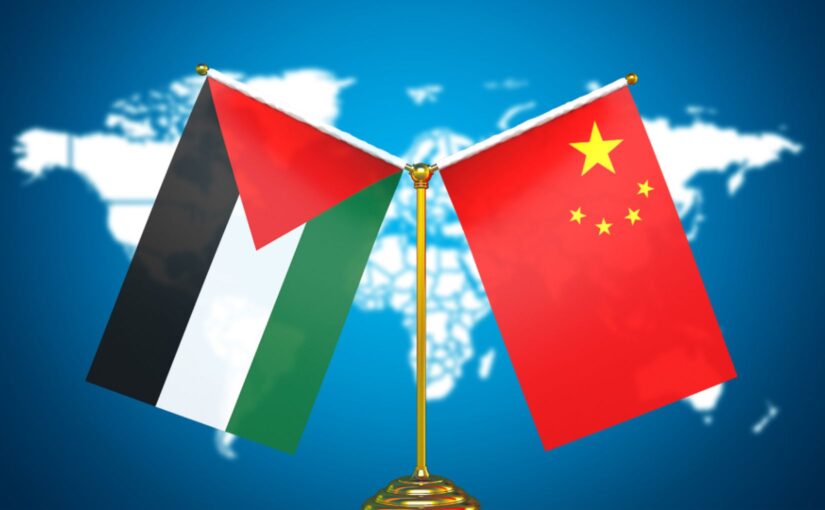
In the latest manifestation of China’s long-standing support for the just struggle of the Palestinian people, President Xi Jinping has announced that his country will provide 100 million US dollars of assistance to Palestine to alleviate the humanitarian crisis in Gaza and support its recovery and reconstruction.

Xi made the announcement on December 4 during a joint press conference with French President Emmanuel Macron, who was paying a state visit to China.

The following day Chinese Foreign Ministry Spokesperson Lin Jian said that since the outbreak of the conflict, China has provided multiple batches of humanitarian supplies to the Gaza Strip through the UN, Egypt, Jordan and other channels, which was welcomed and appreciated by the Palestinian government and people. China firmly supports the just cause of the Palestinian people in restoring their legitimate national rights and will continue working relentlessly with the international community for a full and lasting ceasefire in Gaza, the easing of humanitarian situation there, and an early political settlement of the Palestinian question.

In its response to this news, Hamas stated:

“The Islamic Resistance Movement Hamas expresses its great appreciation to Chinese President Xi Jinping and the friendly People’s Republic of China for announcing the provision of humanitarian aid worth $100 million in support of the Palestinian people in the Gaza Strip and to alleviate their humanitarian suffering under the continuous aggression imposed by the occupation on our people, and to contribute to the efforts of reconstruction.

“This generous initiative comes as an extension of China’s historical and firm positions in support of the rights of our Palestinian people, which are non-negotiable, including their right to freedom and independence, their right to self-determination, and the establishment of their independent Palestinian state with full sovereignty and its capital Jerusalem.”

The Palestinian News and Information Agency WAFA further reported that President Mahmoud Abbas had sent a letter to Xi Jinping expressing his deep appreciation, adding that this generous initiative embodies China’s principled and unwavering stance in support of justice and reflects the profound humanitarian and moral solidarity demonstrated by the Chinese leadership towards the Palestinian people in light of the unprecedented aggression and suffering they are enduring.

He further emphasised the important role China plays in supporting the rights of the Palestinian people and their steadfastness on their land, and in mitigating the effects of the occupation’s aggression, its hostile policies, and the practices of the colonists.

The following articles were originally published by the Xinhua and WAFA news agencies.
China’s 100-mln-USD assistance to help reduce suffering of Palestinian people: spokesperson

BEIJING, Dec. 5 (Xinhua) — China’s latest assistance worth 100 million U.S. dollars to Palestine will help improve Gaza’s humanitarian situation and reduce the suffering of the Palestinian people, Chinese Foreign Ministry Spokesperson Lin Jian said on Friday.

Lin made the remarks at a daily press briefing when asked for details of China’s consideration on the assistance, which was earmarked for easing the humanitarian crisis and post-conflict reconstruction.

When jointly meeting the press with French President Emmanuel Macron on Thursday, President Xi Jinping announced China will provide 100 million dollars of assistance to Palestine to alleviate the humanitarian crisis in Gaza and support its recovery and reconstruction. Palestinian President Mahmoud Abbas has sent a message of thanks to President Xi.

President Xi also said that China and France will work together for the realization of a comprehensive, just and lasting solution to the Palestinian question at an early date, Lin said.

Noting that it has been over two years since the latest conflict in Gaza broke out, which caused unprecedented humanitarian crisis, Lin said China is deeply concerned over that.

He added that since the outbreak of the conflict, China has provided multiple batches of humanitarian supplies to the Gaza strip through the UN, Egypt, Jordan and other channels, which was welcomed and appreciated by the Palestinian government and people.

He said President Xi described the Palestinian question as a test to the effectiveness of the global governance system and called on the international community to look straight at the root cause of the question, step up to the responsibility and take robust action to redress the historical injustice and uphold fairness and justice.

China firmly supports the just cause of the Palestinian people in restoring their legitimate national rights and will continue working relentlessly with the international community for a full and lasting ceasefire in Gaza, the easing of humanitarian situation there, and an early political settlement of the Palestinian question on the basis of the two-State solution, the spokesperson said.

President Abbas thanks China for $100 million in humanitarian aid to Palestine
RAMALLAH, December 4, 2025 (WAFA) – Palestinian President Mahmoud Abbas sent a letter of gratitude to Chinese President Xi Jinping, expressing his deep ppreciation for China’s announcement of $100 million in humanitarian aid to the State of Palestine. This aid will support efforts to alleviate the humanitarian crisis in the Gaza Strip and bolster early recovery and reconstruction programs.

In his letter, President Abbas affirmed that this generous initiative embodies China’s principled and unwavering stance in support of justice and reflects the profound humanitarian and moral solidarity demonstrated by the Chinese leadership towards the Palestinian people in light of the unprecedented aggression and suffering they are enduring.

The President emphasized the important role China plays in supporting the rights of the Palestinian people and their steadfastness on their land, and in mitigating the effects of the occupation’s aggression, its hostile policies, and the practices of the colonists.

He expressed his appreciation for this generous support during this critical time, emphasizing that it reflects the strength of the historical friendship between the two countries and their peoples, and the Chinese leadership’s commitment to strengthening these relations and expanding the frameworks of cooperation and partnership for the benefit of both nations and to promote peace and stability in the region.

He also expressed strong appreciation for China’s supportive stances on the Palestinian cause in international forums, affirming the State of Palestine’s aspiration to continue working jointly with the People’s Republic of China to promote a just and comprehensive peace based on international law.

https://socialistchina.org/2025/12/09/x ... palestine/

******

The Settlers Are Not Leaving: Decolonization, Not Coexistence
Posted by Internationalist 360° on December 12, 2025
Rima Najjar

Image

Introduction

In her recent Mondoweiss essay, Lara Kilani observes that when Western liberals or segments of the international left promote a “one-state solution,” they often imagine a future in which Palestinians and Israelis become co-citizens, sharing institutions, civil rights, and an aspirational harmony. But for many Palestinians — especially those experiencing siege, displacement, bombardment, land confiscation, and the continual fracturing of their social and political worlds firsthand — this invitation to integration reads less as liberation and more as a demand to neutralize the political meaning of their suffering.

Kilani’s critique is incisive. She makes a compelling case for centering Palestinian perspectives and material realities rather than projecting externally conceived ideological solutions onto them: any one-state vision that fails to confront the structures of settler colonialism risks normalizing their outcomes. Her intervention exposes the conceptual shallowness of liberal fantasies that confuse coexistence with justice.

Yet to turn her insight into a broader political intervention, we must widen the frame she leaves underdeveloped: what Palestinians actually mean by “one democratic state,” the strongest decolonial versions of that vision, the structural death of the two-state paradigm, and — most difficult — what liberation can look like when the settler society refuses to leave.

I. What “One Democratic State” Actually Means to Palestinians

Kilani notes, correctly, that Palestinian preferences are not monolithic and that support for a “one democratic state” is neither majoritarian nor stable across time and geography. But the crucial point is not simply that Palestinians disagree. It is that “one democratic state,” as imagined by many Western activists, bears little resemblance to what Palestinians themselves mean when they speak of a shared polity.

For many Palestinians who do endorse a single state — including myself — the political vision behind it is not integration into an existing order. In my essay “Don’t call me Ishmael; don’t call me Israel — call me one democratic state!”, I begin by exposing Israel as a settler-colonial formation whose structure depends on erasing Palestinian presence materially, legally, and historically — from graves and mosques to villages, land registries, and citizenship categories. By tracing contemporary desecrations alongside archival Zionist statements and exclusionary laws, I show that these acts are not deviations but the logical expression of the state’s foundational architecture.

The phrase “one democratic state in historic Palestine” is, for the Palestinians who use it, almost never a plea to be granted equal rights inside the existing Zionist order. It is shorthand for a thorough decolonization: return, land restitution, dismantling of apartheid laws and institutions, and a new constitutional order detached from ethnonational privilege. Kilani identifies the gap between this vision and Western liberal projections but does not fully draw out its strategic consequence: Palestinian support for a single democratic framework, where it exists, flows from a demand for foundational justice, not from a desire to integrate into the settler state as it stands.

II. The Strongest One-State Vision (and Why Power Makes It Unreachable — for Now)

The strongest version of the one-state proposal demands dismantling Zionist legal and military structures, return, land redistribution, transitional justice, and a secular constitution that repudiates ethnonationalism.

Yet the central problem persists: there is no plausible pathway from the current balance of forces to this horizon. A genuinely decolonized one-state future would require Israeli de-Zionization, the relinquishing of military, nuclear, and economic supremacy, the dismantling of a settler-colonial political economy, and the absorption of millions of returning refugees — transformations that the Israeli state is structurally designed to prevent. Naming these obstacles is not pessimism; it is political clarity. The gap between what justice requires and what the existing power structure can tolerate is not a conceptual weakness of the one-state vision but a structural condition that must be confronted honestly.

III. The Two-State Paradigm as a Mechanism of Management

Kilani does not say, but it is equally true, that the mainstream alternatives — two states or some enhanced form of Palestinian autonomy — are no more realistic than the strongest one-state visions they are often invoked to counter. If the one-state fantasy can obscure the depth of Israeli structural power, the two-state fantasy obscures the political, territorial and demographic realities that have already foreclosed it.

A viable Palestinian state has been rendered structurally impossible by the fragmentation of the West Bank into isolated enclaves, the annexation and Judaization of Jerusalem, relentless settlement expansion, and Israel’s comprehensive control over borders, airspace, imports, energy, and taxation. The destruction of Gaza as a livable polity, the Palestinian Authority’s severe crisis of legitimacy and capacity, and the United States’ and European Union’s commitment to a “peace process” devoid of enforceable outcomes ensure that “statehood” remains permanently suspended.

Under these conditions, two states is not a diplomatic horizon but a rhetorical technology — one that indefinitely defers Palestinian liberation and functions as a mechanism for managing a colonized population rather than resolving a colonial condition. It promises a future that the structure itself is built to prevent. This is not a neutral failure; it is a governing strategy, one that has successfully absorbed decades of Palestinian demands into a process with no endpoint. It continues to do so with Trump’s “peace plan.”

IV. When the Settlers Stay: The Hardest Question in the Debate

The hardest question is what decolonization means when the settler society is not leaving. The Mondoweiss piece gestures toward this dilemma but does not confront it directly. Yet this is the core of the problem. In nearly every historical case where settlers remained — Algeria being the rare exception, where the overwhelming majority of European settlers departed only after a protracted anti-colonial war — two trajectories emerged.

In the first, structural domination was reconstituted under new constitutional or multicultural veneers. Post-apartheid South Africa offers the clearest example: formal equality was achieved, but racialized economic hierarchies, land distribution patterns, and security structures remained largely intact. Namibia’s independence preserved colonial-era land ownership almost wholesale, while Morocco’s administration of Western Sahara recognizes Sahrawi identity in principle but maintains an extractive political and resource regime. Here, the settler form survives through the appearance of transformation.

In the second trajectory, a hybrid political formation took shape that preserved settler military and economic supremacy while granting Indigenous populations only symbolic or constrained civic equality. This pattern is visible in French Polynesia and New Caledonia; in Kenya after the Mau Mau uprising, where the settler elite relinquished political office but retained disproportionate landholdings; and in the post–Civil War American South, where nominal civil rights masked the endurance of structural white control. In such cases, domination is not abolished — it is redistributed and repackaged.

Neither trajectory amounts to liberation. This is why the Palestinian question cannot be reduced to the familiar binaries of one state versus two, integration versus independence, or coexistence versus separation. The deeper question is how liberation can be imagined when the settler society intends to retain sovereignty, military dominance, and demographic permanence. Any credible political horizon must begin by facing this directly rather than assuming it away.

V. Precision Against Power: Naming the Actual Architecture

Kilani’s essay includes a searing line — quoted from a friend — asking who would want to “live and share space with genocidaires.” The term captures the visceral experience of Palestinians who have survived, witnessed, or been shaped by genocide, and it is entirely appropriate as an expression of how integrationist proposals are felt in the midst of mass violence. Yet because the phrase appears without further analytical differentiation, it risks being read as collapsing the Israeli state, its institutions, and its diverse social constituencies into a single undifferentiated category.

Kilani herself does not engage in such flattening; her focus is on the political meaning of Palestinian suffering and the inadequacy of liberal one-state imaginaries, not on providing a sociological map of Israeli power. But this is precisely where further clarity strengthens the critique. Israeli state policy can be described as genocidal under international law; public opinion surveys during the Gaza war showed broad support for escalated violence; and Israeli society is deeply stratified along ethnic, class, religious, and ideological lines — Ashkenazi elites, Mizrahi citizens, Russians, Ethiopians, Haredim, and settlers occupy different positions within the racial and political order.

Meanwhile, discrete state institutions — the Civil Administration, COGAT, the Ministry of National Security — translate ideology into the daily machinery of dispossession and control. Naming these layers does not dilute the indictment; it sharpens it.

By distinguishing between policy, ideology, public sentiment, institutional mechanisms, and internal social hierarchies, Palestinians can describe domination with greater precision and develop strategies that confront the actual architecture of power rather than an undifferentiated abstraction.

VI. From Constitutional Fantasies to Building Decolonial Power

This recognition — that neither integration into the existing settler state nor a territorially truncated mini-state can deliver liberation — requires a fundamental shift in focus. The task is not to choose between failed blueprints but to identify the political imperatives that follow from a clear-eyed assessment of the structures of domination already in place.

Liberation begins with reasserting Palestinian political agency and refusing the outsourcing of Palestinian aspirations to Western think tanks, donor regimes, or solidarity infrastructures that continually script “what Palestinians want.” It requires decentering the state itself: the fixation on statehood — whether one or two — has narrowed political imagination and obscured the possibility of non-statist, networked, transnational, or confederal forms of collective life.

Israel’s fiscal chokehold — control over clearance revenues, VAT, customs, and every economic artery — is not a technical detail but the central mechanism that turns “autonomy” into managed dependency. Any constitutional form negotiated while that chokehold remains intact will merely formalize captivity under a new flag.

Liberation therefore requires building material and economic resilience first: parallel institutions, tax-resistance mechanisms, land-defense cooperatives, transnational networks, and digital and financial tools that loosen the occupier’s grip. Only on that terrain can constitutional questions become meaningful rather than decorative.

The same principle extends to the broader political field. Freedom of movement, land restitution, and the right of return must be treated as foundational rather than negotiable items subordinated to constitutional design. And the struggle must be situated within global transformations: U.S. decline, emerging multipolarity, shifting Arab alignments, and new forms of digital and economic organization.

Israel’s vulnerability is structural, not moral; its power rests on systems that can be weakened, not on ethical claims it has long since forfeited. Any credible liberation horizon must respond to that reality with strategic, not symbolic, clarity.

VII. Conclusion: No Blueprint Without Power

Liberation requires unflinching clarity. Kilani’s intervention matters because it exposes how easily Palestinian aspirations are overwritten by external projections — how quickly calls for “coexistence” or “equality” dissolve the political meaning of Palestinian suffering.

But the deeper insight her essay opens, and that this one pursues, is that naming the limits of liberal fantasies is only the beginning.

If integration is not liberation, and if the two-state formula has long since become a mechanism of population management rather than a political horizon, then Palestinians and their allies must confront what follows: no constitutional design — one state, two states, confederation — can substitute for the work of building decolonial power. A just future depends not on selecting the correct blueprint but on reorganizing Palestinian political life, weakening the structures that sustain Israeli supremacy, cultivating international leverage, and restoring Palestinian agency to the center of political imagination.

Kilani is right that clarity is feared by power. The task now is to extend that clarity into strategy: to name the structures that confine Palestinian possibility, to reject the frameworks that domesticate Palestinian demands, and to imagine liberation not as what the world will tolerate, but as what Palestinians require to live freely on their land.

https://libya360.wordpress.com/2025/12/ ... existence/

******

Gaza Ramains Densely Mined with Unexploded Devices
Image
(FILE) Photo: UN.

December 13, 2025 Hour: 6:21 am

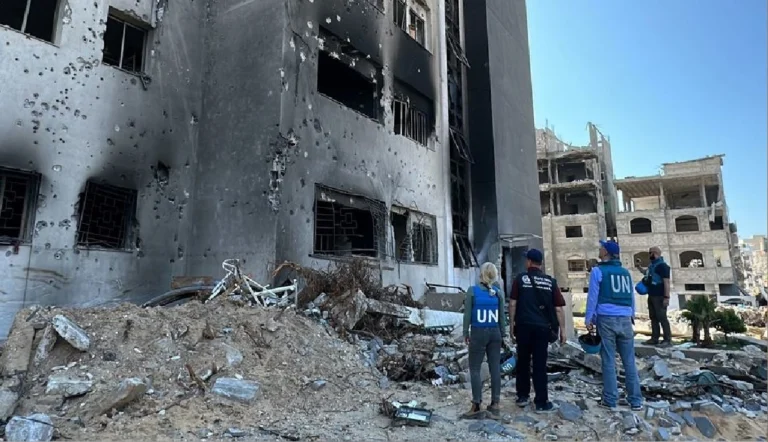
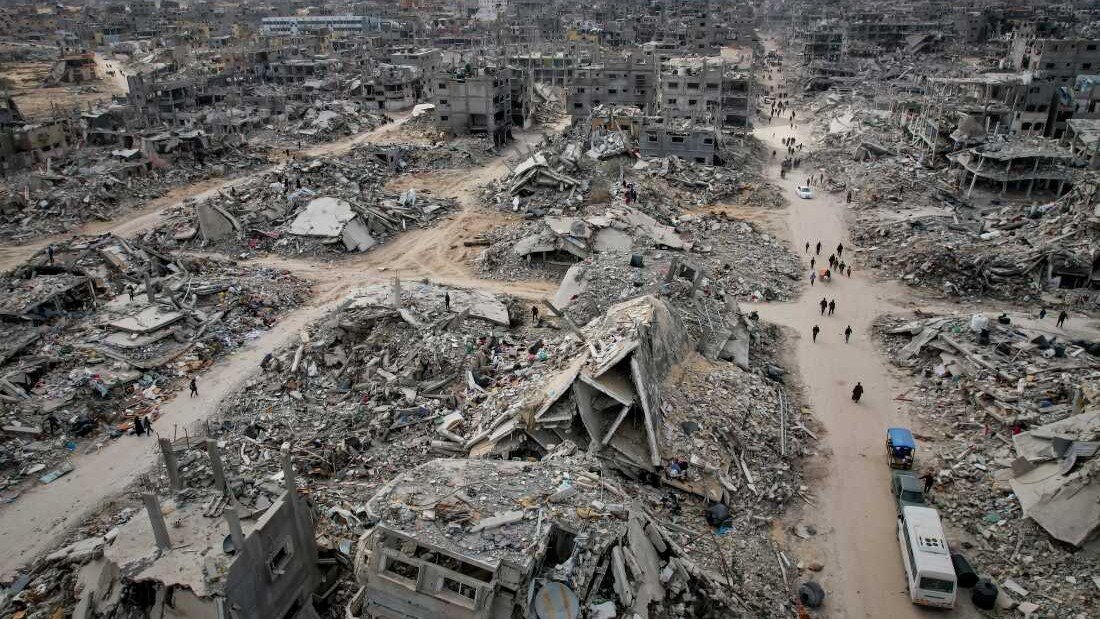
Approximately twenty thousand missiles, bombs, and large-caliber munitions are now scattered throughout Gaza, turning it into an “unmarked minefield,” stated Ismail al-Thawabta, head of the Government Media Office in Gaza.

Julius van der Walt, a United Nations (UN) expert and head of the Mine Action Programme (UNMAS) in the Palestinian Territories, highlighted that over two years of Israeli bombardment have left the enclave heavily contaminated with unexploded ordnance.

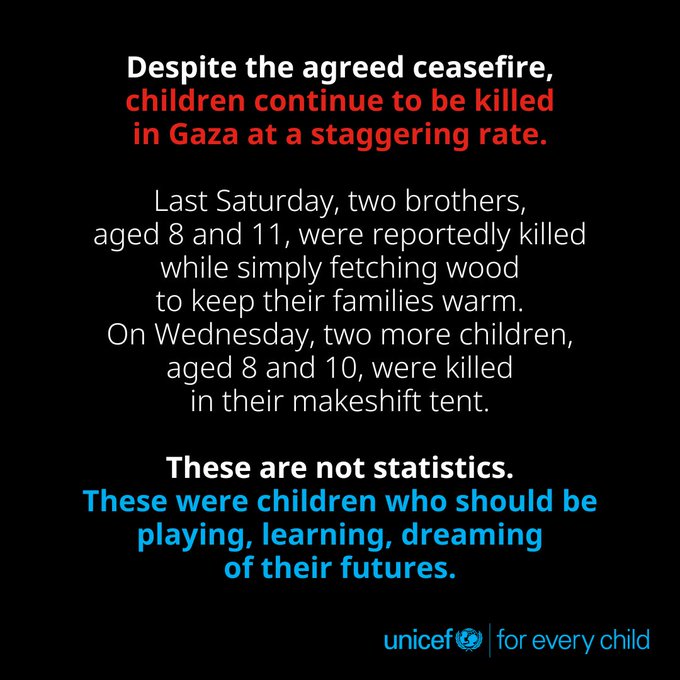
Children, in particular, are at high risk due to their natural curiosity, often interacting with explosives without understanding the peril they pose.

UNICEF spokesperson Ricardo Pires also noted that since the ceasefire began in October, over 70 children have died in conflict-related incidents, an average of nearly two per day.
Image

The Road Ahead
Van der Walt pointed out that humanitarian personnel face daily risks, while displaced families are especially vulnerable. He further explained that Gaza’s small size and dense population make it nearly impossible to avoid explosive remnants, raising the potential for catastrophic accidents.

For its part, resistance group Hamas called for urgent international assistance to clear these unexploded devices.

Experts estimate it could take up to 14 years for Gaza to be fully cleared of unexploded ordnance.

https://www.telesurenglish.net/gaza-min ... -ordnance/

******

US blocks European diplomats from Gaza coordination center under Israeli pressure: Report

Tel Aviv reportedly requested the ban, limiting access to the US-run Kiryat Gat facility to lower-level staff while senior envoys remain excluded

News Desk

DEC 11, 2025
Image
(Photo credit: Lazar Berman/The Times of Israel)

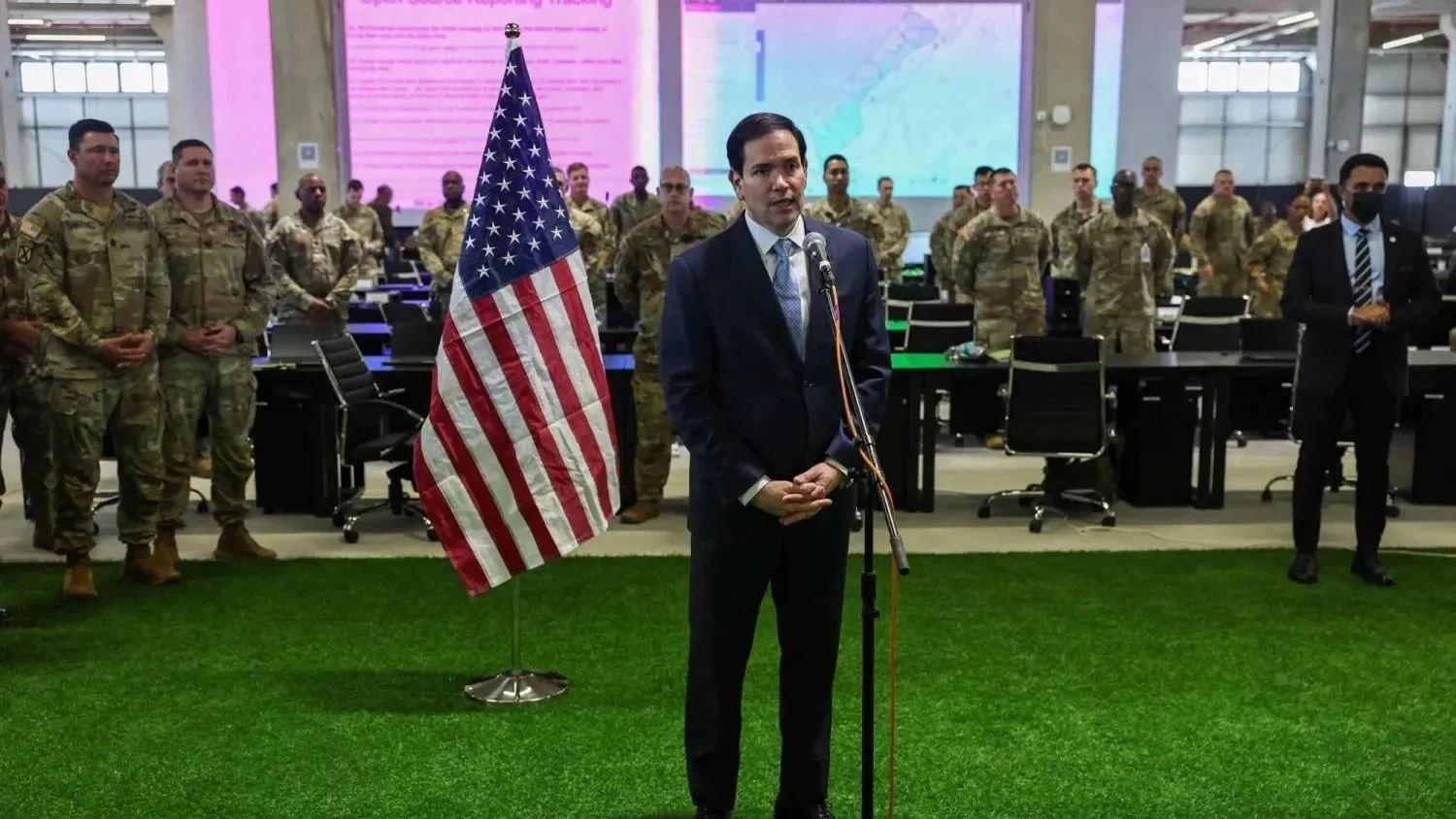
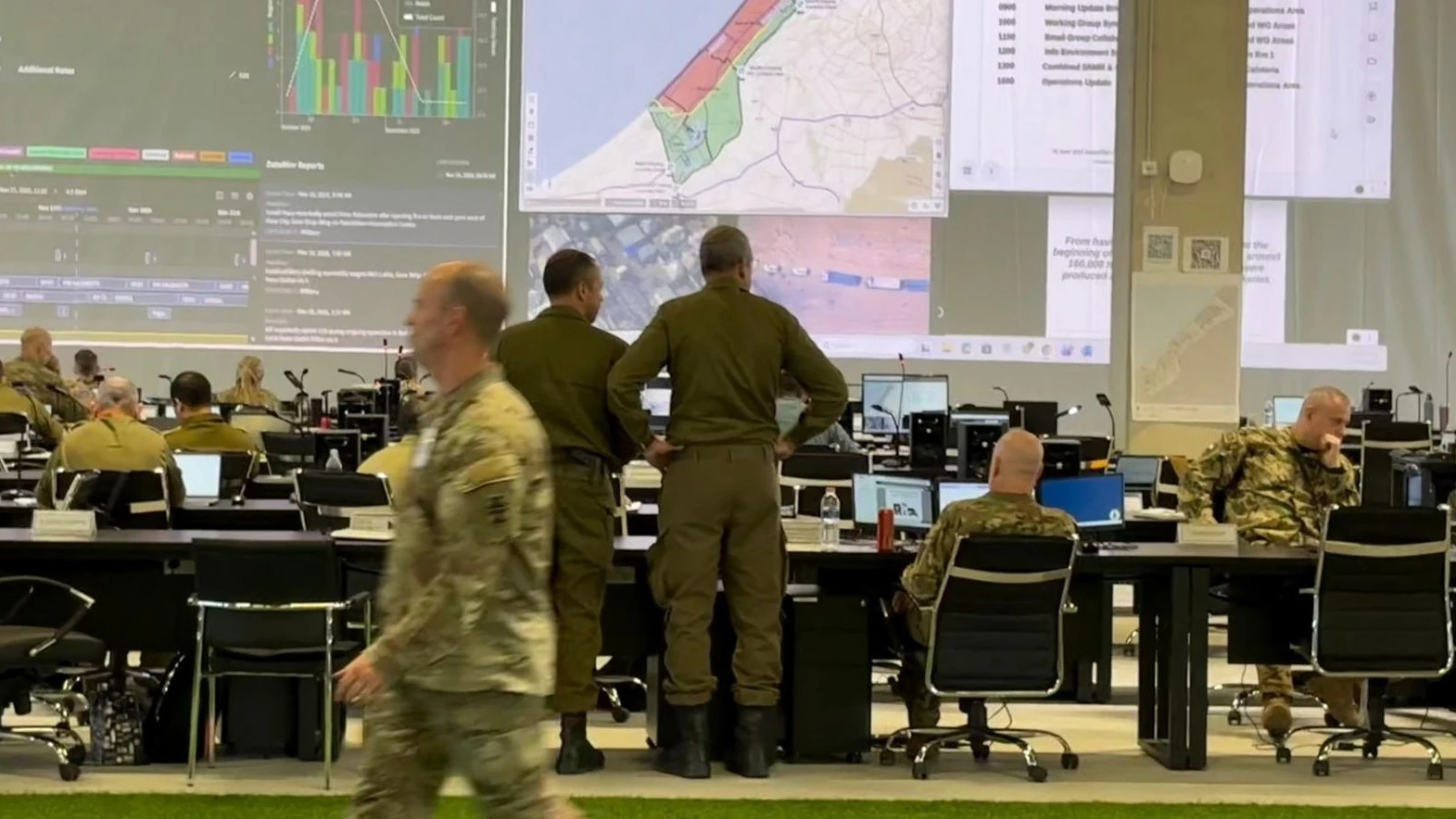
The US has blocked senior European envoys accredited to the Palestinian Authority (PA) from entering the Civil-Military Coordination Center (CMCC) in Kiryat Gat outside the Gaza border under Israeli pressure, Haaretz reported on 11 December.


Diplomats told the outlet that the CMCC, the US-run hub overseeing Gaza operations and the ceasefire, was initially open to international representatives when it launched.

Access began to tighten in recent weeks, starting when the head of the Netherlands mission to the PA was prevented from returning to the center after two earlier visits.

Belgium’s representative to Ramallah and France’s consul general in Jerusalem were later subjected to the same restriction.

The ban reportedly applies only to heads of mission, some of whom hold ambassadorial rank. Lower-level staff working with the PA can still enter the site.

European officials said the US Embassy in Jerusalem recently began requiring written requests for access. One state filed the requested submission but received no formal reply. Its envoy was eventually told by US officials that Israel had requested the prohibition.

A European diplomat said early interactions with US personnel were marked by openness, noting that “many of them did not know much about Gaza or the Palestinians.”


She added that Israel’s influence over the center “has grown” since then.

Multiple diplomats argued that their PA-focused envoys should be present inside the CMCC because they hold detailed knowledge of Palestinian society and because the center contains no Palestinian representation.

Another envoy said Israeli officials also conveyed the decision directly. When European missions raised objections with US diplomats, Washington “distanced itself,” insisting that the request originated from Israel and that the US was not satisfied with the policy.

European states participating in the CMCC are seeking to shape Israeli and US planning for Gaza and advocate for a role for the PA east of the so-called ‘Yellow Line,’ where Israeli forces maintain control.

This position clashes with Israel’s refusal to transfer authority in the Gaza Strip to the PA.

The development comes as US President Donald Trump's administration delays naming the members of the planned “Board of Peace” and postpones the announcement of a technocratic Palestinian committee intended to manage daily life in Gaza.

https://thecradle.co/articles/us-blocks ... ure-report

US officials claim Gaza 'stabilization force' can be deployed as early as January: Report

The report says a ‘two-star US general’ is being considered to lead the ISF, but that no decisions have been made yet

News Desk

DEC 12, 2025
Image
(Photo credit: AP)

International forces could be sent to the besieged Gaza Strip “as early next month” as part of Washington’s ‘peace plan’ for the enclave, two US sources told Reuters on 12 December.

“The International Stabilization Force (ISF) will not fight Hamas. Lots of countries had expressed interest in contributing and officials are currently working out the size of the ISF, composition, housing, training, and rules of engagement,” the sources said.

“A two-star US general is being considered to lead the ISF but no decisions have been made,” the sources went on to say.

While the sources claim the ISF will not be tasked with fighting Hamas, US President Donald Trump’s ceasefire plan stipulated that the international force must enforce the group’s total surrender of all weapons.

Hamas had previously rejected this as an attempt to achieve what Israel could not during the two-year genocidal war.

On Thursday, an Israeli official told AFP that the US plan will guarantee Hamas’s disarmament.

“There will be no future for Hamas under the 20-point plan. The terror group will be disarmed and Gaza will be demilitarized,” the official said.

A few days earlier, senior Hamas official Khaled Meshaal rejected the idea of full disarmament, reiterating the resistance group’s recent comments in favor of a plan to “freeze” the arms.

“The idea of total disarmament is unacceptable to the resistance (Hamas). What is being proposed is a freeze, or storage (of weapons) ... to provide guarantees against any military escalation from Gaza with the Israeli occupation. This is the idea we're discussing with the mediators, and I believe that with pragmatic American thinking ... such a vision could be agreed upon with the US administration,” he said.

Hamas continues to assert that total disarmament cannot take place until a two-state solution is achieved.

Israeli news outlet Ynet reported on 8 December that Qatar and Turkiye have unveiled a new initiative that would give Hamas a two-year period to carry out a disarmament process.

“Qatar and Turkiye are working to create a certain situation in which the terrorist organization will remain in Gaza with weapons. In discussions with the Americans, the two are raising various options for Hamas to hand over its weapons to the Palestinian Authority, or to transfer the weapons to a warehouse under some kind of supervision,” sources told Ynet.

“There is also disagreement about the timetable for disarming Hamas: Qatar and Turkiye are proposing a two-year window in which Hamas can continue to possess weapons, while Israel is strongly opposed and insists on a few months. The Israeli message to the Americans is that if Hamas is not disarmed, Israel will step in and disarm it,” the report added.

According to Ynet, Washington has signaled it could be open to the plan.

The report said that US officials have lately floated the idea of “decommissioning” weapons instead of a complete disarmament.

This would follow the model of the Irish Republican Army’s (IRA) supervised decommissioning process two decades ago, the report goes on to say.

Hamas’s Bassem Naim said days ago that his group is “very open-minded” on the issue of weapons.

However, the organization has not given up its demand for guarantees that a complete cessation of attacks and full withdrawal of Israeli troops will take place.

“We can talk about freezing or storing or laying down, with the Palestinian guarantees, not to use it at all during this ceasefire time or truce,” he said.

Hamas has also repeatedly expressed its readiness to hand over authority in Gaza to the technocratic Palestinian government envisioned in the Trump plan and earlier initiatives for a post-war solution in the strip.

The Reuters report on the deployment of the ISF comes as potential participants are still hesitant about the plan.

“We are open to seeing how we can participate,” Cypriot Foreign Minister Constantinos Kombos said in an interview with Al-Monitor, released on 11 December. “Provided we have clarity as to how this has been planned, who is going to be in [the force], how the whole thing will run [and] what are going to be the rules of engagement,” he added.

“We are willing to contribute to the various layers of that force,” the foreign minister went on to say, adding that “Right now, there is not enough clarity about who is going to be participating.”

Multiple reports have emerged in recent weeks revealing significant Arab and regional unease with the idea of being forced to enter into armed clashes in Gaza.

The ISF “is struggling to get off the ground as countries considered likely to contribute soldiers have grown wary” over concerns their soldiers may be required to use force against Palestinians, the Washington Post reported in late November.

Trump’s plan for Gaza envisioned meaningful troop contributions from Arab states, including the UAE and Bahrain. But after expressing early interest, none have committed to participating, the report said.

A top Pakistani official said recently that his country is ready to contribute troops for peacekeeping, but ruled out participating in any disarmament.

https://thecradle.co/articles/us-offici ... ary-report
"There is great chaos under heaven; the situation is excellent."

User avatar
blindpig
Posts: 14890
Joined: Fri Jul 14, 2017 5:44 pm
Location: Turtle Island
Contact:

Re: Palestine

Post by blindpig » Mon Dec 15, 2025 4:01 pm

From Futility to Friction: How Targeted Disruption Weakens the Structures of Israeli Domination
Posted by Internationalist 360° on December 12, 2025
Rima Najjar

Image

Introduction

In my previous essay, The Settlers Are Not Leaving, I argued that Palestinian liberation cannot hinge on hopes of settler withdrawal, a sudden moral awakening among occupiers, or some negotiated coexistence. Zionist domination is a stable, externally reinforced system — bolstered by military superiority, intricate legal frameworks, deep economic ties, diplomatic shields, and the quiet routines of international management.

I pushed back against the liberal dream of peace side-by-side and the romantic idea of a single decisive rupture restoring an intact Palestine. Instead, our urgent task is to pinpoint what sustains Israel’s grip and then strain, disrupt, or erode those supports.

Predictably, the immediate reaction from some readers returned to a familiar refrain: if Israeli power is so deeply rooted, what can possibly weaken it short of total military defeat? For many, direct action — however righteous — seems strategically irrelevant when set against Israel’s violence and the West’s unflinching backing.

That question is what draws me to the CAGE report, Putting Bodies on the Line, released in November 2025. It meticulously tracks how activists strike at the exact points where Israeli violence intersects with legality, profitability, public acceptance, and political accountability.

These are the pressure points where friction builds — making domination heavier, more visible, more expensive to sustain. The report offers no fantasies of swift triumph. Its force lies in showing how entrenched power can be burdened and worn down long before it crumbles. Through precise analysis and documentation, targeted action exposes the contradictions domination desperately hides.

Despair carries political force: it reinforces the very structures that generate it. Naming its sources becomes the first act of loosening its grip.

1. Why “Entrenchment” Breeds Despair

The reaction resonates because it grows out of hard realities: Israeli domination has shown extraordinary staying power. Institutions endure across governments, military dominance in the region goes unchallenged, and Western alliances provide steady diplomatic cover, economic integration, and technological backing.

For so many of us watching in anguish, this accumulates into a crushing sense of futility — if the system appears this unbreakable, anything less than overwhelming force feels like symbolism rather than strategy.

This despair draws strength from several harsh, interconnected conditions. Extreme power imbalances can feel self-perpetuating: superior arms, global patrons, territorial control — how does resistance outlast that?

Western complicity runs deep: arms flows uninterrupted, vetoes in international bodies, leaders willing to swallow domestic outrage to keep the status quo intact.

And on the Palestinian side, political fragmentation and decades of siege, displacement, and surveillance have exacted a brutal toll. Together, these render domination self-reproducing and resistance as forever outmatched.

There is emotional weight here, but also intellectual weight. It is born from lived trauma: repeated defeats, shattered agreements, settlements expanding without pause. It voices the exhaustion when every door to justice slams shut, when international law is wielded selectively, when today’s horrors echo yesterday’s without relief. Any honest strategy has to grapple with this despair, not brush it aside.

Yet acknowledging the depth of entrenchment clarifies the stakes rather than foreclosing possibility. Entrenchment describes how power operates today, not what it is capable of tomorrow. Recognizing its sources is how we prevent pessimism from calcifying into fatalism. And once the roots of despair are named plainly, a sharper question emerges: not whether domination is strong, but where its strength can be made to cost more than its defenders can bear.

2. Friction as a Strategy Against Entrenched Power

When Israeli domination feels immovable — fortified by military superiority and Western backing — it is natural to question whether anything short of war can shift it. Yet political theory and historical experience offer a different strategic horizon: friction that accumulates through sustained pressure, making the system grind harder, slower, and more expensively over time.

Antonio Gramsci helps illuminate the terrain. He argued that power endures not only through coercion but through the sense that its dominance is inevitable. Challenging that inevitability requires a “war of position” — a long struggle in which networks, counter-narratives, and persistent disruptions chip away at the cultural and institutional foundations that make domination feel natural.

James C. Scott extends this insight by showing how the powerless resist in ways that rarely appear dramatic but steadily erode the efficiency of oppressive systems. Slowdowns, refusals, and small acts of sabotage force rulers to spend increasing energy on basic maintenance. These forms of resistance accumulate drag, turning everyday life into a site of pressure.

Gene Sharp then maps how this drag becomes strategic. Power depends on the cooperation of workers, firms, bureaucrats, and institutions. When that cooperation is withdrawn — through boycotts, blockades, and civil disobedience — costs rise, legitimacy fractures, and the machinery of domination becomes harder to operate. Repression often accelerates this process by exposing the violence required to keep the system intact.

Frantz Fanon adds a crucial dimension: colonial regimes concede nothing without sustained pressure. Appeals to conscience fail in systems built on dehumanization. Yet Fanon also insists that resistance must be fitted to the moment — strategic, deliberate, and aimed at reclaiming agency by forcing power to yield because the price of maintaining domination becomes too high.

Taken together, these thinkers outline the logic of friction. It is not a softer alternative to confrontation; it is a form of pressure that targets the system’s dependencies — where violence intersects with profit, law, and legitimacy. By imposing costs at these junctions, friction burdens the apparatus of domination until its upkeep becomes increasingly difficult to justify or sustain.

My point here is not theoretical. Real-world examples show friction already working, undermining the sense that entrenched power is impervious.

In the UK, Palestine Action has repeatedly hit Elbit Systems — Israel’s largest private arms manufacturer — with blockades, occupations, and site shutdowns. These disruptions force expensive security upgrades, delays, and ultimately retreats, like the closure of the Bristol Aztec West facility in 2025, despite a lease extending to 2029.

Broader BDS campaigns deepen the pressure: firms distancing themselves from Israeli partnerships, pension funds divesting, port workers refusing cargo. Each action seems small in isolation, but together they slow procurement, complicate logistics, trigger reviews, and shift public debate. They make domination more expensive to administer long before any formal collapse.

Friction is the deliberate creation of administrative, economic, legal, and reputational burdens that force a system of domination to expend increasing energy simply to reproduce itself.

It promises no miracles. What it offers is something more durable: proof that the system has weak points, and that persistent strikes — boycotts, disruptions, divestments — can make injustice increasingly difficult to sustain.

This is a real, grounded strategy that refuses to let domination operate uncontested.

3. The CAGE Report in Detail: Mapping the Pressure Points

If theory outlines friction’s logic, the CAGE report Putting Bodies on the Line makes it tangible. Released in November 2025 by CAGE International — a group dedicated to exposing state repression — the study examines five years of direct action for Palestine in Britain (2020–2025). Drawing from more than 70 disruptions, including 45 attributed to Palestine Action, it documents how ordinary people channel indignation into targeted interventions that hit the system where it is structurally exposed.

The CAGE report functions as a map of where Israeli domination relies on British cooperation — and therefore where it can be pressured.
The methodology is meticulous: timelines, media coverage, court records, procurement data, and financial reports cross-checked to show ripple effects — delays, reviews, policy reversals, and reputational damage.

The core insight is straightforward but profound: these are not symbolic stunts; they are interventions that force Britain to reckon with its material role in Israeli violence. They make the infrastructure of complicity harder to conceal.

The report identifies four intersections where Israeli power, channeled through UK partnerships, is vulnerable: legality, profitability, public legitimacy, and political risk. Targeting these points produces compounding friction. These four domains — law, finance, legitimacy, and political risk — form the scaffolding that keeps Israeli military production stable. Each becomes a site where friction can be deliberately introduced.

Legality

Pressure begins in the legal arena, where activists turn the state’s own frameworks into sites of exposure. Strategic lawsuits, license challenges, and filings reveal how arms exports evade international obligations. Cases documenting ignored evidence of war crimes have triggered reviews and temporary shipment suspensions. Crowdfunded suits mire regulators in procedural knots, eroding institutional credibility and forcing officials to defend practices that once operated in silence.

Profitability

Legal strain quickly bleeds into financial strain. Once the law casts doubt on an operation’s legitimacy, the economic foundations become more vulnerable. Multi-year campaigns against Elbit facilities have halted production, damaged equipment, forced millions in security spending, and even prompted insurers to withdraw coverage due to “reputational risk.” Small groups of activists have generated disproportionate economic shock across Elbit’s UK operations, demonstrating how targeted disruption destabilizes a corporation’s cost-benefit calculus.

Public legitimacy

Financial pressure reverberates into the realm of public legitimacy. As companies scramble to contain losses, their ties to Israeli violence become harder to obscure. Student occupations have pushed universities to divest from arms-linked pensions; projections and leaked documents have exposed institutional partnerships that depended on silence. Jury acquittals further puncture the state’s narrative, signaling that the public rejects the criminalization of direct action taken in defense of Palestinian life.

Political risk

Eroded legitimacy inevitably heightens political risk. Once the public sees the machinery of complicity, elected officials can no longer rely on quiet consensus. Lobby disruptions have confronted MPs with hard data on arms transfers, prompting debates and motions for tighter export controls. When the UK government attempted to proscribe Palestine Action in July 2025, the move backfired — drawing international condemnation and revealing the political anxiety that sustained activism now produces.

Documentation as force multiplier

Across all four domains, documentation magnifies impact. Timestamped evidence, livestreams, and shared footage transform local disruptions into global templates. A blockade in one city becomes a blueprint for another; leaked contracts fuel lawsuits; acquittals circulate as precedents. Documentation does more than record — it multiplies the force of each action, accelerating replication and widening the terrain of pressure. In a landscape defined by institutional indifference to Gaza, documentation compels attention one disruption at a time.

4. How Friction Accumulates: The Evidence

Accumulation is the slow conversion of isolated disruptions into systemic instability.

The CAGE report quantifies what friction looks like when sustained over time. Between 2020 and 2025, more than 70 documented disruptions — 45 carried out by Palestine Action — inflicted substantial financial and operational strain on companies involved in supplying Israel’s military apparatus. These were not dramatic coups but steady, cumulative actions: blockades, occupations, strategic lawsuits, and repeated interruptions to production and delivery schedules. Each disruption forced delays, added costs, or compelled defensive adjustments; together they strained entire supply chains and corporate risk calculations.

The Elbit campaign is the clearest example. Persistent pressure led to site closures, such as the shuttering of Aztec West in 2025, years before its lease expired. Suppliers grew wary; insurers withdrew coverage; the company faced spiraling security expenditures. What appeared at a distance as isolated protests, once aggregated, revealed a steady degradation of Elbit’s UK footprint.

These shocks were amplified by broader BDS momentum. Barclays reported zero Elbit holdings after sustained activism. Universities withdrew millions from arms-linked pension funds. The Co-operative Group halted Israeli sourcing in 2025 due to human rights concerns. Each decision chipped away at the web of commercial relationships that insulate Israeli military production from accountability.

These dynamics are not confined to Britain. In the United States, dockworkers in Oakland have repeatedly refused to handle Israeli-linked cargo, delaying shipments and forcing companies to reroute logistics at significant cost.

Political effects followed. In September 2024, the UK government suspended nearly 30 export licenses over concerns about violations of international humanitarian law. Parliamentary debates exposed regulatory loopholes and escalated scrutiny. Support for Israel’s arms network became politically riskier, not safer.

Repression, of course, intensified. Repression is not a sign of activist overreach; it is a sign that the state has been forced into a defensive posture.

July 2025 saw Palestine Action proscribed; arrests mounted; facilities were fortified. But repression did not negate the strategy — it confirmed its potency. Crackdowns drew UN criticism, generated new solidarity, and emboldened activists through high-profile acquittals. The costs of maintaining domination rose faster than the state could contain.

Against the backdrop of Gaza’s devastation, these details are the evidence. They show that entrenchment is not immutable. They turn abstractions into evidence. They offer a sober but vital insight: persistence makes empires pay. Friction erodes the scaffolding of complicity one delay, one withdrawal, one disrupted shipment at a time.

Friction does not promise linear progress; its effects accumulate unevenly, often invisibly, until they suddenly become undeniable.

5. The Path Forward: Risks, Resilience, and Resolve

The CAGE report, and the actions it chronicles, mark a shift in the terrain of solidarity. Too often, global movements have relied on symbolic acts — marches, statements, social-media waves — that express moral outrage but rarely affect the infrastructures that sustain domination.

These actions matter; they build community and articulate dissent. But entrenched systems require something more: sustained, analytical intervention aimed at the structures that make Israel’s violence materially possible.

Friction reorients the struggle. It channels outrage into disciplined disruption. Palestine Action exemplifies this shift — mapping supply chains, selecting vulnerable sites, repeating strikes until companies retreat. Moral clarity becomes operational leverage.

These actions force public contradictions into view, impose financial and political consequences, and build a movement with the capacity to inflict real costs: delayed arms transfers, abandoned facilities, divestments, regulatory reviews.

Friction multiplies through connection. Documentation multiplies impact. A blockade’s footage feeds campaigns abroad; leaked contracts inform lawsuits; successes circulate as templates. Coordination spreads across borders: UK disruptions inspire actions in the United States and Europe; BDS victories in one country strengthen union and municipal resolutions elsewhere. Coalition-building weaves these threads together — labor boycotts, campus divestments, cultural refusals — creating a web of pressure no single corporation or government can easily untangle.

Hunger strikes transform the body into a site of political indictment.
In UK prisons, Palestine Action members — Teuta “T” Hoxha, Heba Muraisi, Qesser Zuhrah, Kamran Ahmed, Amu Gib, Jon Cink, Muhammad Umer Khalid, and Lewie Chiaramello of the Filton 24 — have surpassed five weeks without food. Hospitalized, weakened, yet resolute, they demand bail, fair trials, and the shutdown of Elbit. Their strike joins a lineage of political prisoners who weaponize their own vulnerability to expose the violence of the state.

The impact is immediate: solidarity hunger strikes from prisoners in the United States, amplified by networks such as Samidoun; renewed scrutiny of Elbit’s operations; mounting public pressure on the UK’s punitive excesses. Even behind bars, they reveal the brittleness of the system.

Burnout and despair are real dangers too. Gaza’s relentless horror drains the spirit; activism’s grind isolates those carrying its weight. But friction adapts faster than repression: every crackdown widens the audience, every arrest generates new alliances, every escalation of violence erodes the state’s legitimacy further. Costs accumulate across every layer of the system that once seemed unshakable.

Friction operates on a different timeline than spectacle; its power lies in duration, repetition, and cumulative strain.

It restores agency to a people pushed toward hopelessness, offering not romantic rupture but durable resistance. It provides direction amid devastation — document, coordinate, sustain — and transforms despair into determination. Each action, however small, is one more weight on the system’s supports, making domination less affordable, less stable, less permanent.

The state escalates because it cannot absorb the costs indefinitely. Each crackdown signals a system pushed into defensive posture, and each escalation widens the field of solidarity that sustains the movement.

Conclusion

The arc of this essay — from the despair bred by entrenchment to the concrete evidence of friction’s effectiveness — reveals something essential. Weakening Israeli domination is the indispensable foundation of liberation’s long horizon.

Injustice rarely collapses spectacularly; it erodes as the structures that uphold it become too costly to maintain. Targeted disruption does not wait for the perfect balance of forces. It burdens domination now.

Here lies a sober form of optimism. No illusions of imminent victory, no fantasies of collapse — but proof of real shifts already underway: sites abandoned, holdings shed, sourcing halted, licenses scrutinized, juries unconvinced. These are the slow deconstruction of the supports that make domination viable. Each act of friction accumulates force, raising the cost of complicity for those who depend on it.

The task before us is clear. Not to redict when domination will fall, but to make its continuance increasingly untenable. Every disruption, every coordinated effort, every refusal adds weight. When despair feels justified — and it often does — this strategy offers something fiercer: a path that honors Palestinian urgency and refuses the constraints imposed by the oppressor’s imagination.

As I argued in my previous essay, Israeli settlers will not leave voluntarily. But collective friction can raise the price of their permanence until even fortified structures begin to crack. That is where real change begins.

https://libya360.wordpress.com/2025/12/ ... omination/

******

Deadly Israeli drone strike hits Gaza City in latest ceasefire violation

The Israeli army has killed about 400 Palestinians and injured hundreds more, while lifesaving aid continues to be blocked at the border

News Desk

DEC 13, 2025

Image
(Photo credit: Mohammed Asad/Middle East Monitor)

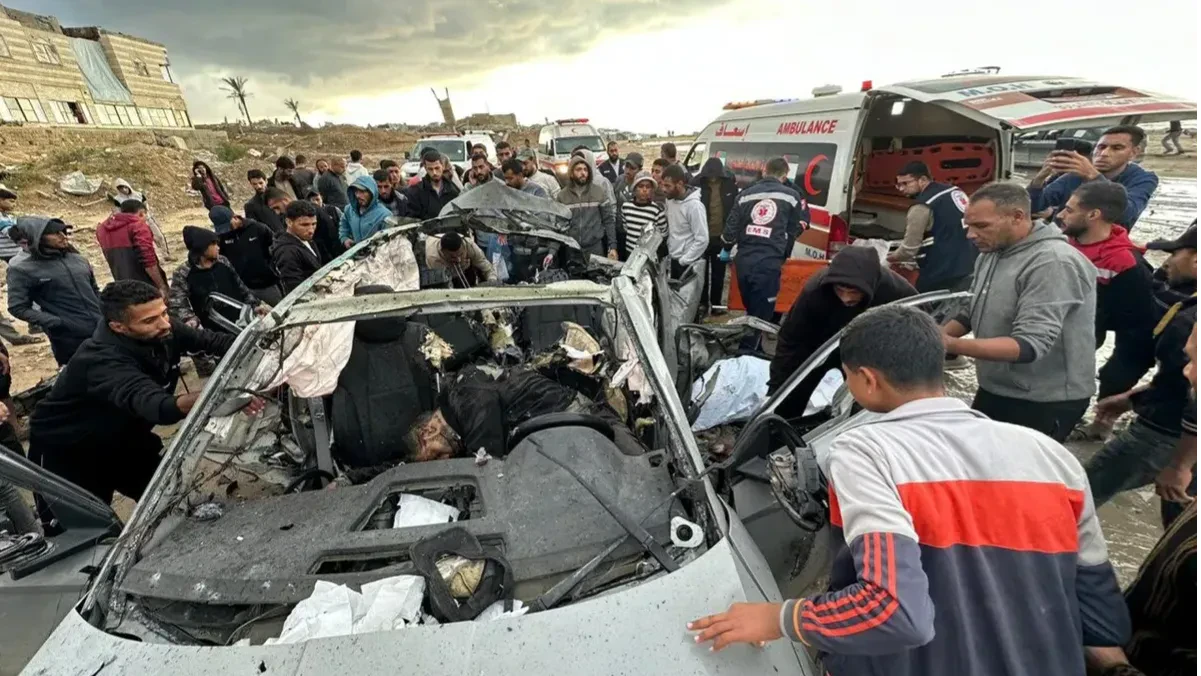
An Israeli drone strike hit a vehicle near the Nabulsi junction in the west of Gaza City on 13 December, with local sources reporting at least four people killed, in what Israel claimed was a targeted assassination of a “key” Hamas official.


Israeli army officials claimed the intended target was senior Qassam Brigades commander Raed Saad.


The assassination attempt is the latest Israeli violation of the US-sponsored ceasefire implemented in October.

In a statement, Tel Aviv claimed Saad had recently been involved in efforts to “restore and manufacture weapons,” saying that more details would be provided later.

Palestinian resistance factions have not confirmed the Israeli claim.

Israel previously announced the killing of Saad during a raid on Al-Shifa Hospital last year. Officials also noted Saad had survived several assassination attempts during the genocide in Gaza, including one in June 2024.

Israel has committed at least 738 violations of the Gaza ceasefire since it came into effect on 10 October, killing nearly 400 Palestinians over a 60-day period, according to a report from Gaza’s Government Media Office.

The office said Israeli airstrikes, drone attacks, shelling, and gunfire killed at least 386 civilians, including women, children, and elderly people, and wounded nearly 1,000 others.

The report documented shootings, incursions, bombardments, and demolitions, alongside severe restrictions on aid deliveries.


Hamas recently warned that talks on implementing the second phase of the ceasefire cannot proceed while Israel fails to implement the terms of phase one.

https://thecradle.co/articles/Deadly-is ... -violation

Winter storm devastates Gaza as Israel continues to block entry of shelters, vital supplies

Three infants are among the recent casualties in the strip who have died due to exposure and collapsing buildings

News Desk

DEC 12, 2025

Image
(Photo credit: VCG)

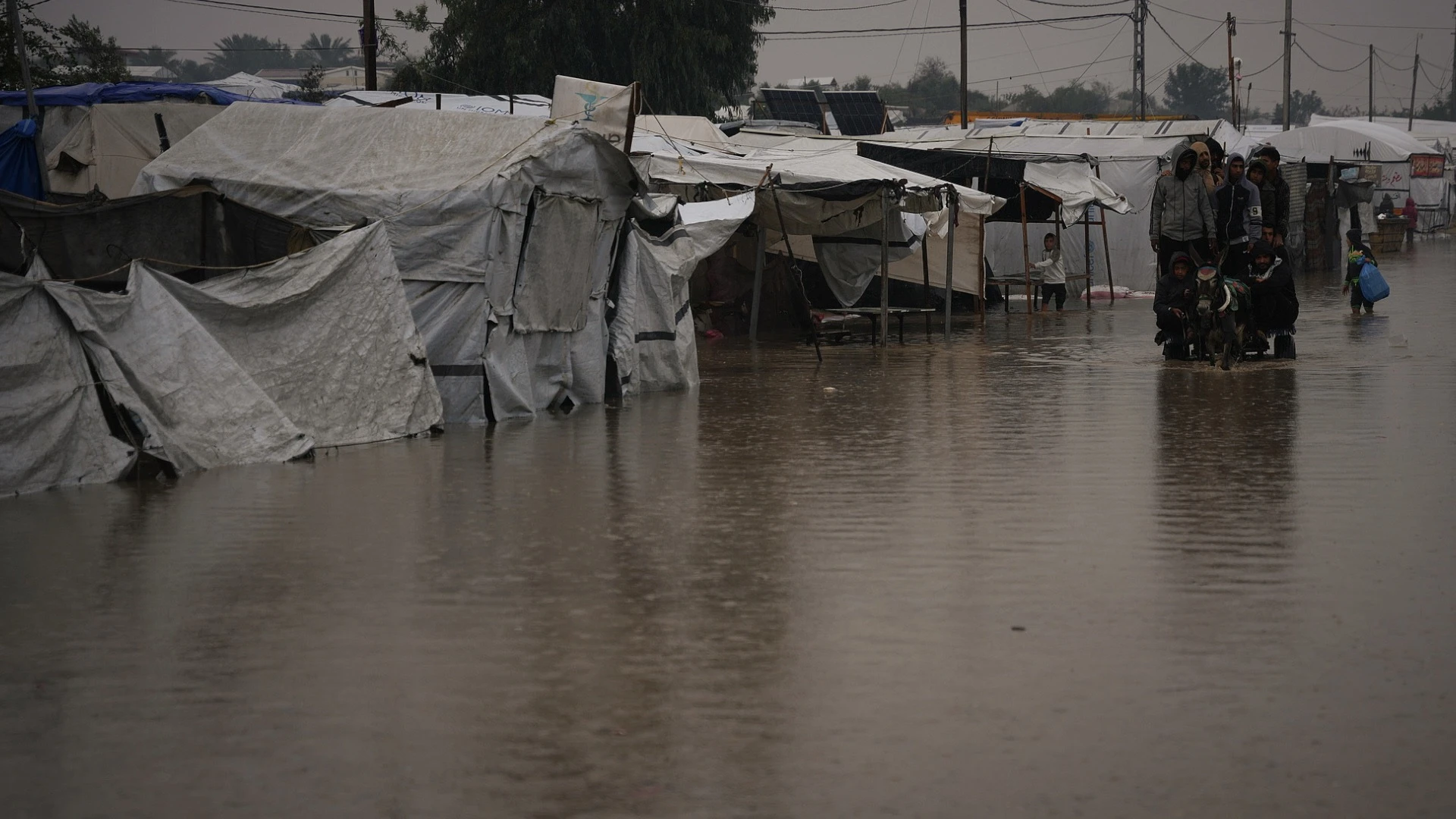
At least 14 Palestinians died across Gaza this week as Israeli-damaged buildings and makeshift shelters collapsed during a powerful weather depression battering the strip, Gaza authorities confirmed on 12 December.


Medical sources told Anadolu Agency on Friday that two brothers, Khader and Khalil Ihab Hanouna, were killed in central Gaza City after a wall – weakened by Israeli bombardment – collapsed onto their tent during intense rainfall.


In northern Gaza, Civil Defense crews recovered the body of another Palestinian and injured two children after a damaged house belonging to the Badran family collapsed in the Bir al-Najjah area of Jabalia.


Rescue operations were continuing, with officials warning that more victims could remain trapped under the rubble.


Gaza’s Civil Defense later announced additional injuries after a tent sheltering displaced families collapsed in the port area west of Gaza City due to heavy rain and strong winds.

In Khan Yunis, several families were evacuated following the partial collapse of two houses. No injuries were reported.


The Gaza Government Media Office said the Storm Byron, which struck the strip between Wednesday and Friday, collapsed 13 homes, and destroyed or flooded more than 27,000 displacement tents, warning that 1.5 million displaced Palestinians might still be at risk.

Since the storm began, 250,000 people have already been directly affected by the flooding, collapsing shelters, and freezing temperatures, with children bearing the brunt of this crisis.


Among those killed by exposure this week were nine-year-old Hadeel Hamdan in Gaza City, as well as the infant Taim Khawaja –also in Gaza City – and eight-month-old Rahaf Abu Jazar in Khan Yunis, whose family tent was flooded by rainwater overnight.


VIDEO | 9 month old infant Rahaf Abu Jazar has died after succumbing to the severe cold inside a tent in Al-Qadisiyah displacement camp in Khan Yunis, in the southern Gaza Strip. Multiple reports from the UN and international aid organizations confirm that Israel is blocking or… pic.twitter.com/uLbdYVl3oC

— The Cradle (@TheCradleMedia) December 11, 2025
Thousands of distress calls have overwhelmed emergency services operating with severely limited resources as Palestinians have been forced to shelter in bombed-out homes or torn tents due to Israel’s continued refusal to allow sufficient shelter materials into Gaza.

Gaza authorities say the ceasefire agreement required Israel to permit 300,000 tents and mobile homes, yet only a fraction have entered the Strip.


Officials warned that the unfolding disaster is inseparable from Israel’s siege, which continues to block winter clothing, blankets, and life-saving shelter supplies.


Since the ceasefire in Gaza was declared in October, there have been over 740 violations by Israeli armed forces, resulting in over 400 Palestinians killed.

https://thecradle.co/articles/winter-st ... l-supplies

******

Fire still raining down on Gaza

Lorenzo Maria Pacini

December 14, 2025

Trump’s elusive peace deal was an excellent ploy to quietly continue with the final occupation plan.

Bomb after bomb

There is no peace for Gaza. Trump’s elusive peace plan – or should we say his gigantic real estate plan to make money off the suffering of the people? – was an excellent ploy to quietly continue with the final occupation plan.

The occupation has convinced international public opinion that the violence in Gaza has ceased, when in reality entire families continue to be wiped out in total silence. The world remains silent, perhaps only because something called a “truce” has been proclaimed, an excellent move of infowarfare.

What cannot be seen from the outside is that, day after day, the Israeli army is expanding its grip on the territory of Gaza. It advances slowly, taking over a street, then a neighborhood, then entire areas—silently redrawing the map while the international community celebrates a fictitious calm. The war is not over; it has simply taken on another form: from bombing to silent expansion, from air strikes to creeping occupation.

At the same time, the world fails to notice that a false appearance of normality is being constructed in Gaza: sweets, chocolate, and electronic goods enter freely, as if people wanted the superfluous, while basic goods such as meat, eggs, and medicines are systematically blocked.

The most basic necessities have become rare and precious commodities, and when they do appear, they are sold at unsustainable prices. Traders raise the prices of essentials—medicines, meat—because availability is minimal. Israel continues to deceive the world, and the world continues to be easily deceived. Meanwhile, bombs continue to fall, leaving Gazans in a state of endless war, not only conventional but also psychological, because anything can happen at any time. And this has been “normal” for them for decades.

Israel uses a well-known strategy, tried and tested over the years: it violates the ceasefire, bombs as it pleases, then announces the return of the truce. A unilateral, violent and unpunished act. This now recognizable pattern has a devastating effect on Palestinian communities and constitutes a clear abuse of international humanitarian law.

According to the rules of war, a truce should represent an effective and verifiable suspension of hostilities, aimed at protecting civilians, allowing humanitarian aid to enter, and preventing further loss of life. However, Israel’s interpretation of the term seems to be purely instrumental. Every time the army conducts “targeted operations” during the truce—striking densely populated neighborhoods, advancing with armored vehicles, or shifting the boundaries of controlled areas—the truce is effectively violated. Yet, at the end of the attacks, it is announced that the ceasefire has ‘returned’ or “remains in force,” as if nothing had happened.

This dynamic renders the very notion of a truce meaningless and undermines the foundations of international humanitarian law, which requires good faith, transparency, and respect for agreed conditions. Declaring the return of the truce after repeatedly breaking it is not only a formal violation, but a strategy that allows the occupation to operate with total impunity, while the international community remains paralyzed by ambiguous and contradictory narratives.

And it is precisely in the realm of narrative that infowarfare comes into play. Presenting bombings and advances as “limited incidents,” claiming that the truce is still in force despite the explosions, and spreading the idea that the situation is under control serves to construct a distorted image of reality. The goal is twofold: on the one hand, to avoid international pressure and formal accusations of violating the truce; on the other, to shape global perception, pushing the media and governments to see stability where destruction reigns.

This manipulation of information is not an accessory element, but an integral part of military strategy. Infowarfare allows operations on the ground to continue while maintaining an acceptable diplomatic appearance. In this way, the use of the truce becomes a narrative tool rather than a mechanism for protecting civilians. This is where the most serious abuse occurs: the transformation of the language of humanitarian law into a rhetorical weapon that masks violence rather than limiting it.

No negotiations possible

Hamas had already declared last September that it would not begin talks on the second phase of the Gaza ceasefire agreement as long as Israel continued to violate the first part of the agreement.

The occupation has failed to comply with any of its fundamental obligations in the initial phase: it is keeping the Rafah crossing closed, preventing the entry of tents and housing containers, drastically reducing humanitarian aid, and continuing killings and demolitions within the so-called yellow line. This behavior represents a continuation of the aggression that should have ceased immediately with the entry into force of the agreement, and which continues without any real compliance.

For Hamas representatives, any discussion of the second phase depends on effective pressure on the occupation by mediators and the United States to ensure that the commitments made in the first phase are fully respected.

In the initial phase of the agreement, the Israeli army withdrew to what is now called the “yellow line.” The agreement provides that Israeli forces may maintain a perimeter presence in Gaza until the resistance is completely disarmed, with a gradual withdrawal based on progress in the process. The Israeli army has crossed the yellow line in an attempt to occupy further territory, violating the agreement itself. And this is happening continuously… because Israel is interested in continuing the occupation and expropriation of Palestinian land, with or without a peace agreement.

Recent statements by Israeli Chief of Staff Eyal Zamir, who during a visit to Gaza on December 7 called the yellow line “the new border line,” are a clear denial of Israel’s honest intentions. A week ago, Israel also announced the imminent reopening of the Rafah crossing in coordination with Egypt, but Cairo denied this and specified that any opening should take place on both sides, while Tel Aviv continues to prevent Palestinians from returning from Egyptian territory.

Since the beginning of the ceasefire, Israel has maintained severe restrictions on the amount of humanitarian aid destined for Gaza. At the beginning of last month, Tel Aviv had authorized only 28 percent of the aid provided for in the agreement, including essential tools for removing rubble.

According to the United Nations Development Programme, an estimated 68 million tons of rubble have been generated in Gaza by the Israeli offensive and the systematic destruction of infrastructure, with an estimated 5 to 7 years needed to clear the territory of debris.

According to Donald Trump’s plan, phase two should begin by Christmas and involves the deployment of an International Security Force (ISF) composed of countries from the region. Turkey, Qatar, Azerbaijan, Indonesia, and Pakistan have expressed their willingness to contribute military contingents. However, the plan assigns the ISF the task of disarming and dismantling Hamas and other resistance factions, a proposal that has sparked strong discontent in several countries.

For its part, Hamas rejects the idea of disarmament unless Israel commits to a political path towards a Palestinian state and provides guarantees that hostilities will not resume. On December 8, Hamas leader Bassem Naim said the movement was ready to “immediately” transfer responsibilities to the Palestinian technical government envisaged in Trump’s plan, adding that a process of laying down arms could begin in the context of a long-term truce of five or ten years. It is a smart response: only the guarantee of a process of establishing a new Palestinian state and a smooth handover would provide assurances that the process would be fair.

However, Israel has categorically rejected any possibility of a Palestinian state and also opposes the return of the Palestinian Authority to Gaza, another central element of the US plan. This is further confirmation that Israel’s only real desire is to carry out its diabolical plan.

No real negotiations, then. Only the coercion of a bullying oppressor against a defenseless people, but a people of heroes who have no intention of surrendering.

https://strategic-culture.su/news/2025/ ... n-on-gaza/
"There is great chaos under heaven; the situation is excellent."

User avatar
blindpig
Posts: 14890
Joined: Fri Jul 14, 2017 5:44 pm
Location: Turtle Island
Contact:

Re: Palestine

Post by blindpig » Wed Dec 17, 2025 3:52 pm

Israel assassinates top Hamas commander Raed Saad in Gaza City

For decades, Israel has resorted to targeted assassination as a strategic and tactical method in a bid to undermine the resistance group.

December 16, 2025 by Aseel Saleh

Image
Destruction in Gaza City, February 2025. Photo: Jaber Jehad Badwan / Wikimedia Commons

The Palestinian resistance movement Hamas confirmed in a statement released on Sunday, December 14 that the head of its weapons production headquarters in the Gaza Strip, Raed Saad, was assassinated in an Israeli drone strike in Gaza City the day before.

The high-ranking military official was the second-in-command in Hamas’ military wing, Al-Qassam Brigades, after Izz al-Din al-Haddad. He is also believed to be one of the masterminds of the October 7 attacks.

Furthermore, Saad has been renowned for his seniority, and for having the longest experience among Al-Qassam’s current military commanders. In addition, he has been credited for restoring the brigades’ military capabilities in Gaza during and after Israel’s devastating genocidal aggression, which lasted for more than two years.

Hamas denounced the targeted assassination as “a blatant violation” of the US-brokered ceasefire deal, and warned that “the Israeli occupation crossed all the redlines” by assassinating the commanders of its military wing, as well as the Palestinian citizens, during its ongoing aggression on Gaza.

The movement further urged US President Donald Trump, and other mediators, to bear responsibility for the Israeli infringements of the truce agreement.

It is worth noting that Hamas also announced the appointment of a new unnamed commander, who will replace Saad after his killing.

The US is examining whether the assassination of Saad violated the ceasefire deal, says Trump
For his part, Trump declared during the Mexican Border Defense Medal presentation ceremony on Monday, December 15 that his administration is investigating whether the assassination of Raed Saad constitutes a violation of the ceasefire deal in place.

“We will have to see. We are looking into that,” the US president said to a reporter, who asked if the killing of Saad would jeopardize the fragile truce.

Israel’s decades-long assassination policy against Hamas
Israel has adopted targeted assassination as a strategic and tactical policy in an attempt to eradicate Hamas since the 1990s.

Over 20 top leaders, including the founder of the movement Sheikh Ahmad Yaseen, have been assassinated in the past three decades. Yet, their objective of eradicating the movement has not been met.

On the contrary, the Palestinian group has persistently rebuilt after each assassination, and has gained growing popularity over time, not only within Palestinian grassroots, but also among pro-Palestinian people worldwide.

https://peoplesdispatch.org/2025/12/16/ ... gaza-city/

******

Nearly half of all buildings in Nour Shams Camp destroyed by Israel amid West Bank siege

Israel has been occupying Tulkarem’s Nour Shams Camp since the start of the year, and recently ordered the demolition of 25 more buildings

News Desk

DEC 16, 2025

Image
(Photo credit: Issam Rimawi/AA/Getty Images)

Satellite imagery has shown that 48 percent of the infrastructure in Nour Shams Refugee Camp near the occupied West Bank city of Tulkarem has been damaged or destroyed by Israel since the start of this year.

Image

In a statement on 16 December, the United Nations Relief and Works Agency for Palestine Refugees (UNRWA) said Tel Aviv has recently ordered the demolition of 25 more buildings in the camp.


“More devastating news from the northern West Bank: another demolition order has been issued by Israeli forces against Nour Shams Camp. Some 25 buildings now face imminent demolition starting on 18 December, impacting hundreds of forcibly displaced Palestine Refugees,” UNRWA said.

“Satellite imagery speaks clearly: even before this latest order, some 48 percent of the total buildings in Nour Shams Camp had been damaged or destroyed. This new demolition order fits the pattern we have seen too often this year, with Israeli forces destroying homes to enable their long-term control over the camps in the northern West Bank, permanently altering their topography,” it added. “Justified through ‘military necessity,’ these demolitions make no one safer.”


“The forced displacement of the more than 32,000 Palestine Refugees in the northern West Bank must not become permanent. Residents have anxiously waited for eleven months to return home. With each blow of the bulldozers, this hope becomes ever more distant.”


The Israeli military has been occupying multiple West Bank refugee camps since January this year, when it launched a massive operation in the territory beginning in the city of Jenin.

Since then, it has been carrying out a systematic campaign of destruction and displacement.

Tens of thousands of Palestinians have been uprooted from their homes in the occupied West Bank since the start of the year, mainly in Jenin and Tulkarem.

Despite the ongoing violence and destruction, many have refused to leave in defiance of Israel.


Army-backed settler violence against Palestinian civilians in the occupied West Bank has also surged dramatically in the past few months. Palestinian farmland and crops are constantly set ablaze, and civilians are attacked on a near-daily basis.


Land grabs and settlement expansion continue unabated.

Late last month, the Israeli army, Shin Bet security service, and border police announced the start of a broad military operation in the occupied West Bank, aimed at rooting out “terror” across the territory.

Tel Aviv “will not allow the establishment of terrorism in the area and [is] proactively working to thwart it,” the army stated at the time.

Hebrew media said after the operation started that Israeli authorities have observed attempts by West Bank resistance groups to restructure and strengthen their forces.

https://thecradle.co/articles/nearly-ha ... bank-siege

US contractor behind 'Alligator Alcatraz' withdraws bid to run new Gaza aid scheme following controversy

The lucrative contract to manage aid flows into Gaza has drawn bids from several individuals tied to high-level US political figures

News Desk

DEC 16, 2025

Image
(Photo credit: Alon Skuy | Getty Images)

US contractors with close ties to the Trump family, including firms linked to Florida’s “Alligator Alcatraz” detention center, are maneuvering for control of future aid and reconstruction logistics in Gaza, even as formal governance structures remain inactive, according to an investigation by The Guardian published on 14 December.


One contractor, Gotham LLC, reportedly submitted a proposal valued at around $1.7 billion before withdrawing from the bidding process.

With much of Gaza destroyed and the UN estimating reconstruction costs at around $70 billion, politically connected firms are positioning themselves for lucrative contracts before any clear framework is in place.

The report says the White House has set up its own Gaza task force, led by figures including US President Donald Trump's son-in-law Jared Kushner, while former officials linked to Trump-era government cutback programs are circulating detailed logistics plans that would place a single “master contractor” in charge of aid and commercial trucking into Gaza, generating large fees.

One firm identified as an early frontrunner was Gothams LLC, a contractor previously paid to help run Florida’s “Alligator Alcatraz” detention center for immigrants awaiting deportation.

A recent report by Amnesty International documents serious abuses at the facility, which opened in July with a capacity for around 3,000 detainees.

Amnesty found people held in unsanitary and degrading conditions, including overflowing toilets, constant exposure to insects, lights kept on around the clock, poor-quality food and water, limited access to showers, and a lack of privacy.


Testimonies collected in the report state detainees were subjected to punitive practices, including being shackled and confined in an outdoor metal cage known as “the box,” where some were exposed to heat and insects and left without water for extended periods.

The report also cited accounts of violence by guards, including an incident witnessed by one of its staff members in which a detainee’s injured hand was slammed in a metal door, concluding that conditions amount to cruel, inhuman treatment, with some practices rising to torture.

The firm’s potential role in Gaza has raised concerns that profit-driven actors with controversial records are being positioned to manage Gaza’s future, profiting from the aftermath of the genocide.

The push by politically connected private contractors to profit from Gaza’s destruction goes beyond reconstruction into armed security roles.

Drop Site News reported in November that UG Solutions, a US military subcontractor previously stationed at Gaza aid sites – whose security personnel are responsible for the killing and wounding of thousands of Palestinians while seeking food – is expanding recruitment ahead of new deployments linked to a UN-approved stabilization framework.


The firm is reportedly preparing for advisory and “robust security” roles at reopened distribution centers, despite documented testimonies, video evidence, and media investigations linking its past operations to lethal force against civilians. This raises further concerns that profit-driven contractors implicated in abuses are being recycled into Gaza’s aid and reconstruction apparatus.

https://thecradle.co/articles/us-contra ... e_vignette

Hamas rejects foreign presence in Gaza, says ISF to 'only monitor border'

A senior official in the resistance movement said that no state is prepared to genuinely engage with the ISF plan because 'no one wants to confront the Palestinians'

News Desk

DEC 16, 2025

Image
(Photo credit: AP)

A senior Hamas official affirmed on 16 December that Palestinians will be responsible for security in post-war Gaza, as Washington continues to struggle to assemble the International Stabilization Force (ISF) envisioned in US President Donald Trump’s ‘peace plan.’

“All Palestinian factions have agreed on a unified position regarding the foreign presence in the Gaza Strip. Their agreement to the presence of any international force is conditional on its mandate being limited to monitoring the ceasefire on the border only,” Hamas official Hussam Badran said in an interview with Russian news outlet Sputnik.


“The Palestinians will manage the Gaza Strip independently, in cooperation with a committee of experts, to ensure the internal security of the strip. International forces will have no role in this aspect,” Badran went on to claim.

Badran also said that Hamas “prefers that the international force include countries friendly to the Palestinian people,” stressing “the difficulty of imagining the participation of countries that supported Israel in its last war against Gaza.”

“It is practically clear now that no country is ready for genuine engagement. Everyone is aware of how difficult the situation is, and of course, no one wants to confront the Palestinians,” he added, referring to the so far failed efforts to assemble the ISF.


Trump claimed on Monday that 59 countries have expressed willingness to join the Gaza ISF.

“We have 59 countries backing it. And we’ll see what happens with Hamas, we’ll see what happens with Hezbollah [in Lebanon], but regardless, we have countries that wanna go in and clean that out if we want them to do it,” he said.

Two US sources cited by Reuters last week said the ISF could be sent to the besieged Gaza Strip as early as next month.

“The International Stabilization Force (ISF) will not fight Hamas. Lots of countries had expressed interest in contributing and officials are currently working out the size of the ISF, composition, housing, training, and rules of engagement,” the sources said.

“A two-star US general is being considered to lead the ISF, but no decisions have been made,” the sources went on to say.

While the sources claim the ISF will not be tasked with fighting Hamas, Trump’s ceasefire plan stipulated that the international force must enforce the group’s total surrender of all weapons.

Hamas had previously rejected this as an attempt to achieve what Israel could not during the two-year genocidal war.

Multiple reports have emerged in recent weeks revealing significant Arab and regional unease with the idea of being forced to enter into armed clashes in Gaza.

The ISF “is struggling to get off the ground as countries considered likely to contribute soldiers have grown wary” over concerns their soldiers may be required to use force against Palestinians, the Washington Post reported in late November.

Trump’s plan for Gaza envisioned meaningful troop contributions from Arab states, including the UAE and Bahrain. But after expressing early interest, none have committed to participating, the report stated.

A top Pakistani official said recently that his country is ready to contribute troops for peacekeeping, but ruled out participating in any disarmament.

“The Americans are dissatisfied and are looking for additional countries,” Yedioth Ahronoth reported over the weekend. Countries are hesitant “because of fears of clashes breaking out with the Hamas movement, but at the same time, they are offering to provide assistance in the field of training and funding the forces,” it added.

https://thecradle.co/articles/hamas-rej ... tor-border
"There is great chaos under heaven; the situation is excellent."

User avatar
blindpig
Posts: 14890
Joined: Fri Jul 14, 2017 5:44 pm
Location: Turtle Island
Contact:

Re: Palestine

Post by blindpig » Fri Dec 19, 2025 3:56 pm

CLARION CALL — ISLAMOPHOBIA AND WAR AGAINST RUSSIA ARE IDEOLOGIES OF TERRORISM

Image

By John Helmer, Moscow @bears_with

Blowing the shofar, the Jewish ritual ram’s horn, has traditionally been the signal to start an attack or a war, and also to celebrate victory at the end of a war.

In the lead picture, two rabbis, Eli Schlanger (left) and Yossi Friedman (right) blew the shofar above Bondi Beach in Sydney in September 2019. Schlanger was the assistant rabbi in the Chabad Lubavitcher religious organisation in Bondi; Friedman has been the Jewish chaplain to the Australian Air Force and runs a rabbi-on-demand service in Sydney.

Schlanger was the organiser of the annual celebration of Hanukkah; that was a civil war and rebellion against the Seleucid king Antiochus IV in 167 BC. The Hanukkah ceremony was held on Bondi Beach on December 14. Schlanger was one of the fifteen killed during the shooting attack by Sajid Akram and Naveed Akram, father and son, in which the father was killed by police.

Wounded but surviving, Naveed Akram has been charged with 15 counts of murder; one count of committing a terrorist act; 40 counts of wounding with intent to murder; and one count of “caus[ing] public display of a prohibited terrorist org[anisation] symbol.” The police have not released the text of the indictment. “Police will allege in court the man engaged in conduct that caused death, serious injury and endangered life to advance a religious cause and cause fear in the community,” a local newspaper has reported.

The NSW statute defining terrorist acts says they are “an action where…(b) the action is done with the intention of advancing a political, religious or ideological cause, and (c) the action is done with the intention of– (i) coercing, or influencing by intimidation, the government of the Commonwealth or a State, Territory or foreign country, or of part of a State, Territory or foreign country, or (ii) intimidating the public or a section of the public.”

The law explicitly excludes from this definition of terrorism “if it– (a) is advocacy, protest, dissent or industrial action, and (b) is not intended– (i) to cause serious harm that is physical harm to a person, or (ii) to cause a person’s death, or (iii) to endanger the life of a person, other than the person taking the action, or (iv) to create a serious risk to the health or safety of the public or a section of the public.”

The Australian Government’s release of “listed terrorist organizations” includes Hamas, the elected government of Gaza, with its coalition partner Palestinian Islamic Jihad; Hezbollah, part of the Lebanese government coalition; Ansar Allah, the ruling authority in Yemen; Hay’at Tahrir al-Sham (HTS), the ruling authority in Syria; and the Kurdistan Workers Party (PKK) in civil war againast the Turkish Government in Ankara.

According to the statute implementing this list, the Counter-Terrorism Legislation Amendment (Prohibited Hate Symbols and Other Measures) Act of 2023, symbols such as flags, hand gestures, pictures, and speech “advocating terrorism or genocide” are criminal. The offence, under this law, “applies if a reasonable person would consider that the conduct mentioned in paragraph (1)(a) involves advocacy that: (a) is advocacy of hatred of: (i) a group of persons distinguished by race, religion or nationality (a targeted group ); or (ii) a member of a targeted group… it does not matter whether the conduct actually results in the hatred mentioned in that paragraph…For the purposes of paragraph (4)(b), it does not matter whether the conduct actually incites another person as mentioned in that paragraph…this subsection applies if the conduct mentioned in paragraph (1)(a) is likely to offend, insult, humiliate or intimidate a person who is: (a) a reasonable person; and (b) a member of a group of persons distinguished by race, colour, sex, language, religion, political or other opinion or national or social origin; because of the reasonable person’s membership of that group.”

The Australian Federal Police (AFP) have subsequently arrested and charged a 19-year old man for speech and hand gestures on board an aircraft flying from Bali, Indonesia, to Sydney airport. The AFP have charged “one count of threatening force or violence against members of groups or close associates, contrary to section 80.2BB(2) of the Criminal Code (Cth). The offence carries a maximum penalty of five years’ imprisonment. The AFP received a request for assistance from an airline on 17 December, 2025, in relation to an incident on a flight from Bali to Sydney. Police will allege the man made antisemitic threats and hand gestures indicating violence towards the alleged victim, who the man knew to be affiliated with the Jewish community. AFP officers arrested and charged the man on his arrival into Sydney International Airport. He was refused bail to appear before NSW Local Bail Division Court 7 today.”

In the Australian context of the murders at Bondi Beach, the evidence made public so far linking the Akram killings to terrorism is a black flag of the Islamic state shown in videoclips fixed to the windscreen of their car.

Published research before the incident has revealed that since the beginning of the Hamas military operation against Israel in October 2023, “reports of antisemitism in Australia increased 738% and Islamophobia increased 1300%”, and that “anti-Palestinian racism is a specific and documented form of Islamophobia.” Critics of the Australian hate-speech laws and lists have registered many objections, including taking sides in “strong disagreements between religions.”

In this context then, in the war in Gaza ruled to have method and intent of Israeli genocide against the Palestinians by the International Court of Justice — does the evidence and the law apply to the Chabad Lubavitcher organisation in their support for the Gaza genocide? Click to view the podcast with Jamarl Thomas.

To investigate the record Schlanger made of his views on the Gaza genocide, here is the archive of the Australian Jewish News.

Image
Image
Image

“Asked whether he worried about a similar attack in Australia, Schlanger said he put his “full trust in Hashem [Chabad term for their god] that nothing will happen”, but criticised political leaders in Britain and Australia for giving legitimacy to potential attackers. “Every single time there’s even a talk of a peace deal with the terrorists, they strike. It’s clear as day,” Schlanger said. “These are not my words – the Lubavitcher Rebbe [Menachem Schneerson d. 1994] spoke about this.”

Schlanger’s antagonism towards Russia is both historical and current; it appears to have been religious, political and racial in ideology. In re-telling for publication the history of his family, for example, Schlanger denied the Ukrainian involvement in the murders of the Jews, Poles and Roma in the village of Brzostek in 1942-43 and the role of the Red Army to liberate the area.

Image
Map showing Brzostek, 122 kms east of Krakow, 246 kms west of Lvov. Photograph of Schlanger at a Brzostek cemetery and a family gravestone dated 1943.

As for the laws and government polices of Australia, Schlanger has explicitly placed himself, the Chabad Lubavitchers, and the Jewish community above all. In a protracted litigation of a business dispute, Schlanger and the Chabad have been found in contempt of court for refusing to accept the primacy of the Australian courts over their religious community’s court, the Beit Din.

In the month before the Bondi incident, Schlanger released to the press a letter he had sent to Prime Minister Albanese attacking the government’s decision to recognise the state of Palestine as a crime against God, an apostasy, an act of heresy, and a betrayal of the Jews. “As a rabbi in Sydney,” Schlanger wrote, “I beg you not to betray the Jewish people and not God Himself. This land was given by God to Abraham, then to his son Isaac, and then to Jacob, to be the eternal homeland of the Jewish people. Throughout history, Jews have been torn from their land again and again by leaders who are now remembered with contempt in the pages of history…Today, you have an opportunity to stand on the side of truth and justice. By reversing this act of betrayal, you will not only honor the Jewish people and our heritage, but also stand with the word of God. If you choose this path, you will be welcomed home with open arms and even a warm Shabbat meal. I bless you in advance for having the courage to do what is right and to stand firm against this act of apostasy. In hope and prayer, Rabbi Eli Schlanger.”

In the new podcast with Jamarl Thomas, the discussion also focused on the differences which have been displayed towards the Bondi incidents by the US, Chinese and Russian governments:

President Donald Trump, December 14, did not identify the attack as “terrorist”:

Image
Source: https://rollcall.com/factbase/trump/tra ... r-14-2025/

The Chinese Foreign Ministry avoided characterizing the Bondi incident as terrorism or antisemitism:

Image
Source: https://www.mfa.gov.cn/eng/xw/fyrbt/lxj ... 73003.html

The Russian Foreign Ministry statement identified terrorism, extremism, and “our compatriots”:

Image
Source: https://mid.ru/en/foreign_policy/news/2065729/

Click to view: https://www.youtube.com/watch?v=9n9SqCczuxk
Image

https://johnhelmer.net/clarion-call-isl ... more-93059

*****

Ultra-Orthodox Jews riot in occupied Jerusalem to escape arrest for draft dodging

National Security Minister Itamar Ben Gvir called attacks on the police a 'red line'

News Desk

DEC 18, 2025

Image
(Photo credit: Ahmad Gharabli/AFP/Getty Images)

Ultra-Orthodox Jewish religious students injured 10 Israeli police officers while rioting and throwing stones to protest mandatory military service, Israeli media reported on 18 December.


The riots began when police officers issued parking tickets to yeshiva students in Jerusalem. The students were detained once it was discovered they had not responded to orders to report for mandatory service in the Israeli military.

When police tried to hand over the students to the Military Police, a group of students gathered around them and began rioting.

Ultra-Orthodox Jews, known as the Haredim, studying the Torah in religious schools called yeshivas, have long enjoyed informal exemptions from military service. But due to manpower shortages stemming from the ongoing genocide of Palestinians in Gaza, Israeli authorities have begun to enforce conscription orders.


Israel’s ultra-Orthodox Jews support the genocide in Gaza but argue that they should not be required to fight. They say they provide support to Israel through the study of the Torah instead.


Four yeshiva students were arrested during Thursday’s riots after throwing stones and other objects at police and overturning a police vehicle. Injured police officers were evacuated to the local hospital.

Police used stun grenades and tear gas to disperse the demonstrators – tactics typically reserved for use against Palestinians.

Jerusalem police chief Danny Levy condemned the rioting students, vowing that police will “hold everyone involved to account.”

National Security Minister Itamar Ben Gvir declared that he “unequivocally condemns the extremist rioting in Jerusalem,” calling the attacks on police officers a “red line.”

Opposition Leader Yair Lapid said the rioting is an “inconceivable failure of the government,” which signals the “disintegration of government institutions.”


“It cannot be that the Haredi evaders avoid arrest just because they are engaging in violence. The defense minister and prime minister continue to encourage an enterprise of [draft] evasion and refusal on historic scales,” he said in a statement.


The night before, dozens of ultra-Orthodox protesters prevented the Military Police from arresting draft dodgers in the cities of Ramat Hasharon and Herzliya.

The protests were organized by the Jerusalem Faction, a 60,000-strong ultra-Orthodox group that runs a “national alert system” to warn draft dodgers of military operations to enforce conscription orders.

In August, protesters organized by the Jerusalem Faction clashed with motorists as they blocked several highway intersections in central Israel as part of a “day of rage” against military enlistment and the arrests of draft dodgers.

On Wednesday, Hebrew news outlet Channel 12 reported that Israeli army Chief of Staff Eyal Zamir warned of a “serious” and worsening manpower crisis in the military in a letter to officials.

Zamir demanded that the required legislation to remedy the situation be prepared by year’s end, according to the report.

Channel 12 said this was not a routine correspondence but a warning that came in the wake of hundreds of permanent service members resigning in protest against legislation on military terms of service.


“In the current situation, there is a real danger. There is a serious threat to the permanent service members and their motivation to continue serving,” Zamir wrote to Israeli Prime Minister Benjamin Netanyahu and Defense Minister Israel Katz, calling on them to “help end this matter, so that we do not lose good permanent service members.”

https://thecradle.co/articles/ultra-ort ... ft-dodging

******

Image

The Australian Israel Lobby Is Flat-Out Saying They Want A Ban On Criticism Of Israel

Not just hate speech against Jews. Criticism of a foreign state. They’re coming right out and saying it.

Caitlin Johnstone
December 19, 2025

Australians everywhere should be made acutely aware that the Australian Israel lobby is now explicitly advocating a ban on criticism of the state of Israel.

Not just hate speech against Jews. Criticism of a foreign state. They’re coming right out and saying it.

During a recent public video conference with the American Jewish Committee on the topic of the Bondi Beach shooting, the Executive Manager of the Australia/Israel & Jewish Affairs Council (AIJAC) explicitly says he wants pro-Palestine protests to be banned by the Australian government, and that addressing the problem of antisemitic hate speech in Australia necessarily means stopping opposition to Israel’s actions.


About 40 minutes into the American Jewish Committee’s YouTube video of the conference, AIJAC Executive Manager Joel Burnie demands that the Australian government take much stronger action to regulate freedom of expression regarding Israel and Zionism in Australia, saying the following:

“They need to act swiftly. They need to go to their own arms and their own institutions: no longer can you refuse service to a Zionist. We are going to prosecute people that spew hate speech against your people, and we’re not going to tip toe around the fact that the central problem here is Israel. I for one as Jewish leader will no long talk about antisemitism in isolation from Israel, because it’s the rhetoric and language on Israel that motivates the people to come and kill us. Those two terrorists were motivated by what was going on in Israel, and that’s what motivated them to come and kill us. So if they had Israel on their minds why are we acting as though it has nothing to do with the vitriolic binary nature of the pro-Palestinian advocacy movement?”

Burnie goes on to say that he wants a complete government ban on protests against Israel’s abuses throughout the nation:

“So overnight what we want immediately if you ask any Jew, what do you want, what do you want? No more protests! No more protests! No more no-go zones for Jews. I can’t, for two years, cannot take my kids to downtown Melbourne for two years on a Sunday, because of the pro-Palestinian marches, because of the violent nature of them. No more! Because that is an acceptance of the connection between the two. And until the prime minister is willing to do that, this is gonna happen again.”

Burnie is lying here, for the record. Anyone who has gone to the pro-Palestine demonstrations in Melbourne as I have will tell you that the protests are not even slightly violent in nature, and that there are Jews among the demonstrators who actively make their presence known. Those demonstrations have never been “no-go zones for Jews”; Joel Burnie doesn’t want to take his kids to downtown Melbourne on a Sunday because he doesn’t want to expose them to ideas and information which reveal the depravity of his Israel-supporting worldview.

Australians would probably benefit from watching the entire hour-long video of the conference, whose contents I first saw spotlighted on Twitter by Information Liberation’s Chris Menahan.

Some other highlights:

At 4:20 Burnie says that part of his role at AIJAC is “to take non-Jewish politicians and journalists and diplomats and other Australian officials to Israel.”

At 14:00 Nick Aronson, who is Chief of Staff to Australia’s so-called “antisemitism envoy” Jillian Segal, regurgitates the bogus propaganda line we’ve been hearing nonstop from Israel apologists throughout the western political/media class, “the words globalise the intifada actually mean globalise the intifada; it means kill Jews wherever they are”. Pro-Israel spinmeisters have been spouting this line with creepy uniformity ever since the Bondi shooting in order to justify government crackdowns on freedom of speech and assembly to protect Israeli information interests.

At 15:00 Burnie says “the gloves are off now” with regard to stomping out free speech in Australia, saying Jews need stop saying “not all pro-Palestinian supporters are antisemitic”, saying “The pro-Palestinian movement, or the things within the pro-Palestinian movement that we all are exposed to in the public, is too binary: you’re pro-Palestinian so you need to be viciously anti-Israel.”

At 16:20 Burnie claims the Bondi shooting “happened because of the protest movements on the streets”, citing no evidence.

At 17:30 Burnie again makes his “no more protests” demand, saying “If I could ask for one thing of the government today: no more protests. If they cannot utilise language that is not inciting violence, that does not marginalise and dehumanise Jews, they have no right to be on the streets.”

At 21:10 Burnie complains that there haven’t been any prosecutions and arrests for antisemitic speech.

At 33:30 Burnie singles out Australian Muslims, saying “there needs to be more monitoring and surveillance of Islamic hate preachers” and an auditing of their education syllabus because of an “antisemitism problem amongst the Australian Muslim community.”

At 36:25 Burnie says Jillian Segal’s notorious speech-suppressing plan for fighting antisemitism in Australia “wasn’t about quashing debate on Israel, it just happens to be that language on Israel invading all of our social spaces in Australia have made this country a very unsafe space and place for Jews.”

At 46:00 Aronson says “there’s absolutely no doubt that people need to go to jail” for antisemitic hate speech in Australia, but says that won’t be enough to fix the problem because “we can always arrest more people, make no mistake, but you can never arrest enough, to be honest.”

At 54:00 Aronson speaks of the need for regulating online speech, complaining that “a number of the online platforms pride themselves on what they call free speech — obviously we would disagree; we would call it hate speech.” At 56:00 he says “we need to continue to put pressure on these platforms to understand the role they have to play in social cohesion, and how far short they are falling of community standards.”

This comes as the Australian government announces plans to ramp up its war on free speech in the wake of the Bondi Beach attack. We can be sure to see more authoritarian measures rolled out in the weeks to come as Israel’s supporters seize on this opportunity to advance the information interests of a genocidal apartheid state.

https://caitlinjohnstone.com.au/2025/12 ... of-israel/
"There is great chaos under heaven; the situation is excellent."

User avatar
blindpig
Posts: 14890
Joined: Fri Jul 14, 2017 5:44 pm
Location: Turtle Island
Contact:

Re: Palestine

Post by blindpig » Sat Dec 20, 2025 4:04 pm

PATRICK LAWRENCE: After the First 70,669 Deaths
December 19, 2025

I take the 15 victims at Bondi Beach and divide them by the 71,000 deaths in Gaza as of this writing. I get a fraction of 0.0002143.

Image
A Palestinian woman mourning relatives killed by the Israeli airstrike of Deir el-Balah, Gaza Strip, Nov. 17, 2023. (Ashraf Amra/UNRWA/Wikimedia Commons/CC BY-SA 3.0 igo)

By Patrick Lawrence
Special to Consortium News
CN at 30

I read in a BBC report that the victims of the Dec. 14 shooting at Bondi Beach, along the coast a few miles from central Sydney, were “generous, joyful and talented.”

These were Jews who had gathered, a sizable group, to celebrate Hanukkah under Australia’s summer sun. Immediately this is cast across the West as a case of out-of-control, come-from-nowhere anti–Semitism having nothing to do with the conduct of “the Jewish state.”

Two of the victims, Sofia and Boris Gurman, “were people of deep kindness, quiet strength and unwavering care for others,” the family said in a statement the Australian Broadcasting Corporation published Tuesday.

I read that Reuven Morrison, another of the 15 victims, was “the most beautiful, generous man who had a gorgeous smile that would light up the room.” I read that the friends of Dan Elkayam, a French Jew marking the holiday in Australia, “described him as a down-to-earth, happy-to-lucky individual who was warmly embraced by those he met.”

You can read about these victims of the Bondi Beach shooting, too. The ABC published commemorations of 12 of the 15. There are photographs, the intimate remembrances of those who knew the deceased, some boilerplate describing how Australia’s state broadcaster is reporting the story. The New York Times published similar items on 13 of the victims under the headline, “What to Know About the Victims of the Bondi Beach Shooting.”

The ABC report is here, and The New York Times’s is here. If you study them briefly you find the themes common to both. Individuation is the essential point. We must know the names and see the faces of all of those killed. Innocence and virtue are the other running themes.

The Times ran a similar feature after Sept. 11, 2001. Under the headline, “Profiles in Grief,” it published thumbnail biographies of the 2,977 victims of the World Trade Center attacks, a half-dozen or so a day all through that strange autumn. I studied those short pieces carefully, and it is the same now as then: Everyone is uniquely himself or herself, everyone innocent, everyone generous, everyone happy and caring. Every life precious, in a word.

I do not know how to continue writing this commentary other than bluntly and honestly. The Bondi Beach killings bring us to a transformative moment and warrant no less.

The 15 people who perished at Bondi last Sunday — and there may be more casualties to come among those hospitalized with wounds — did not deserve to die at the hands of a father-and-son act reportedly inspired by the remnants of the Islamic State. These were senseless murders by any conceivable judgment — so senseless I am stating the obvious by saying so.

The Dishonesty of Official Grief

Image
Palestinians mourning relatives killed by an Israeli airstrike of Deir el-Balah, Gaza Strip, Jan. 12, 2024. (UNRWA /Ashraf Amra/Wikimedia Commons/ CC BY-SA 3.0)

But I cannot enter into the responses officials and the media serving them have urged incessantly since last weekend. Out of the question for any number of reasons, chief among them the dishonesty at the core of what I may as well call “official grief.”

Read in the larger context of these awful events, the obsessive humanization of the Bondi Beach victims is an upside-down exercise in dehumanization. This is first, straight off the top. Jewish lives count, white lives count, names, faces, generous smiles — all this counts.

But the names, faces and lives of those the Zionist regime has terrorized and brutalized for the past two years or eight decades, depending on how you reckon history: No, no need for any of this because they do not count.

This is an obscenity, in my view — obscene for what it is and because it has a 500-year history. Since the opening of the imperial era in the late 15th century, the West has aggrandized itself with its never-to-be-questioned claims to civilization, decency, law and moral superiority, while the rest of the world consists of unruly, racially inferior, not-quite-human barbarians. The horrors of the mission civilisatrice — inhumanity in the name of humanity — were the inevitable outcome and so they remain.

Indulge in official grief as it is now more or less forced upon us and you are a 21st century participant in this self-serving… as I say, this obscenity. I do not see that it is any more complicated.

The New York Times published an especially egregious case in point a day after the attacks. “I no longer want to hear, after a mass shooting, of the remarkable ways a community came together,” Sharon Brous, a rabbi in Los Angeles, wrote in the paper’s opinion section. “I don’t want platitudes and pieties. I want justice…. I don’t want to celebrate resiliency. I want reform” — reform, that is, to combat the anti–semitism she understands to be the beginning and the end of the Bondi Beach story.

Rabbi Brous went on to explain that, post–Bondi, she struggles against despair. But she found great humanity, on the other hand, in “the vibrancy of the worldwide Jewish community that immediately rallied in solidarity, reminding us that when one limb is struck the whole body is unwell.”

Simply typing these brief passages leaves me incredulous. Justice, reform, rallies in solidarity with the 15, nothing for the 71,000 (the Gaza Health Ministry’s count at this writing), who evidently do not even enter Rabbi Brous’s head. And the Zionist terror machine’s daily strikes in Gaza and the West Bank as we speak? No, nothing, for they are not part of any “whole body,” however this is conceived.

Yes, I can grieve for those who died last Sunday, but it is a question of recognition, of keeping things in proportion. Here is my admittedly simplified formula: I take the 15 victims at Bondi Beach and divide them by the 71,000 deaths in Gaza as of this writing. I get a fraction of 0.0002143 and this is the extent of my grief for the 15.

Image
Victims of Israeli massacre of Al-Tabieen school where Palestinian refugees had come to seek refuge, Aug. 10, 2024. (Hussam Shabat/Wikimedia Commons/CC BY-SA 4.0)

I have called the Bondi Beach attack transformative. Two reasons.

One, these awful events mark a major step in the erasure not only of history and memory but of sheer cognition. I have heard or read no mention from any mainstream quarter of the campaign of terror and dehumanization the Zionist state now wages not just in Gaza and in the West Bank but against Muslim populations across much of West Asia.

This is hardly new. Apartheid Israel and its too-numerous, too-powerful enablers have sought to erase and otherwise obscure the truth of the Zionist project since there was a Zionist project to speak of. But Bondi Beach looks set not merely to normalize the human mind’s incapacity to see, think and judge but to enforce this damage to the collective consciousness by means of those “reforms” Rabbi Brous proposes.

Two, Zionists and their fellow travelers instantly began to use the events of last Sunday to condemn the Palestinian cause altogether. This is again nothing new.

Utter “From the river to the sea…” or “Globalize the intifada,” and you risk your job, your professorship, your visa; arrest in Britain; profess support for Palestine Action, the British protest group, and you will be arrested and tried under the U.K.’s draconian terrorism laws.

But Bondi Beach already serves to license Zionists to advance a blanket condemnation of the Palestinian cause. Predictably enough, the Zionist-supervised New York Times gives us another case in point.

Immediately after last Sunday’s attack the inimitable (thank goodness) Bret Stephens published “Bondi Beach Is What ‘Globalize the Intifada’ Looks Like.” In the preposterous but predictable piece that follows Stephens finds peril and fear in the prospect that the father-and-son shooters took seriously such thoughts as “resistance is justified” and “by any means necessary.”

I read Stephens as stating aloud what is otherwise implicit in an emergent orthodoxy on the Palestine question. In his denunciations, Stephens is no better than Itamar Ben–Givr, Bezalel Smotrich and all those other Israeli monsters calling for the extermination of the Palestinian people — the “sub-human animals,” in the words of Yoav Gallant, defense minister at the time of the Oct. 7, 2023, attacks.

Stephens puts their shockingly bald racism on the Times’s opinion page: This is all that makes his copy important. To condemn the Palestinians’ cause in this manner, including their legally recognized right to armed resistance against an occupying power, is to condemn the Palestinian people to genocide, ethnic-cleansing or some combination of both.

Judaism Versus Zionism

Image
Yakov M. Rabkin, 2017. (Alexandr Shcherba /Wikimedia Commons/ CC BY-SA 4.0)

Just as I was thinking through the events at Bondi Beach and wondering why my sympathies came to 0.0002143 percent of what they were officially supposed to be, I began reading the book Yakov Rabkin, the distinguished professor of history at the University of Montreal, just published.

Israel in Palestine: Jewish Rejection of Palestine (Aspect Editions), is a brief, superbly lucid essay on the difference between Judaism and Zionism — the former embodying an excellently humanist tradition and the latter its violent perversion into a limitlessly vicious ethno-nationalist ideology.

Some pages in I came to this sentence:

“Across Israel and worldwide, Jews grapple with contradictions between the Judaism they profess and the Zionist ideology that has in fact taken hold of them.”

This simply stated reality landed squarely. I immediately went back to those brief biographies the Australian Broadcasting Corp. and The New York Times just published. Yes, I thought. Generous, kind toward others, compassionate: They put the victims exactly in the Judaic tradition as Rabkin described it.

Rabkin gives an excellent précis of the long history of animosity most Jews felt toward Zionism during its emergent phase in the late 19th and early 20th century. They, especially Jews residing in Palestine prior to the arrival of the first Zionist settlers, who lived peaceably side-by side with indigenous Arabs, wanted nothing to do with it.

Then came some questions.

Did the Jews killed at Bondi Beach grapple with the sharp contradictions between Judaism and Zionism, as Rabkin asserts? Did they stand with the majority in history and reject Zionism’s perversions of Judaism’s honorable tradition? Did they profess their Judaism but in fact support the Zionist project?

There is no indication — none made public, in any case — that the Bondi Beach victims had denounced Zionism in the name of Judaism. I count this a very key point. It is another way last Sunday’s events are transformative.

We do not know with certainty the motivations of the shooters. John Whitbeck, the international lawyer with long experience in the Israel-Palestine crisis, pointed out:

“Islamic State ideology has always been focused on intra–Muslim issues and particularly on establishing its ‘caliphate’ in the portions of Iraq and Syria under its control. Islamic State has never shown any significant interest in the Palestinian cause and its leaders have even attacked Hamas and other Palestinian factions as ‘apostate’ groups because they operate within national boundaries and engage in political and diplomatic activities.”

Various accusations of culpability have been floated these past few days. While the Australian government assigns guilt and motivation to followers of the Islamic State, the Netanyahu regime instantly blamed Iran. Again, there is little sense here: The Islamic State was comprised of Sunni Salafists, ideological enemies of the Islamic Republic, which is Shi`a.

Now I read suggestions that the Bondi attack was another of the merciless false flags for which the Zionists are infamous. In the cause of blunt honesty I confess this was one of the first thoughts to cross my mind on hearing news of the shootings.

There is absolutely no certainty on this point, of course, and it is unlikely there ever will be. But the possibility of a Mossad provocation cannot be dismissed. The historical record suggests this. (Mossad is now assisting Australian investigators into the attack). And given the use Zionists make of the Bondi Beach events, the cui bono argument cannot be thrown out of court. .

Already there are Zionists in Australia and elsewhere asserting that anyone who has until now stood for the Palestinian cause bears responsible for the gruesome events at an Australian beach last Sunday. Reflecting this sentiment—and the political influence of militant Zionism in Australia—federal and state governments are now considering legislation that would, among much else, allow authorities to ban demonstrations and even speech in support of a free Palestine.

I take the opposite view as to where responsibility lies: Mossad op or no Mossad op, it is fairer to say it is Zionists who are responsible, directly or by way of the war they wage against Palestinians — and against morality and ordinary decency, against our public discourse, our laws and civil liberties, our consciences, our faculties of reason — for the deaths at Bondi Beach.

Post–Bondi, it follows immediately, it is ever more imperative that Jews the world over declare themselves either as Jews in the Judaic tradition or as Zionists. The urgency of mass denunciations of Zionism could hardly be more evident.

The precise count of the dead in Gaza as I write this is 70,669. As I type this number my mind goes to Dylan Thomas’ famous poem, A Refusal to Mourn the Death, by Fire, of a Child in London, written after a bombing raid shortly before World War II ended. What the lyrical Welshman refused was cheap sentiment and condolence-card clichés in favor of the larger truths inherent in any death:

I shall not murder
The mankind of her going with a grave truth
Nor blaspheme down the stations of the breath
With any further

Elegy of innocence and youth.


“After the first death, there is no other,” is the poem’s celebrated concluding line. Yes, altogether so. After the first 70,669, there is no other.

https://consortiumnews.com/2025/12/19/p ... 69-deaths/

******

Gaza hunger crisis remains 'critical' two months after ceasefire: IPC

Over 100,000 Palestinians still face catastrophic conditions, including extreme lack of food and high risk of acute malnutrition

News Desk

DEC 19, 2025

Image
(Photo credit: Abdel Kareem Hana/AP)

The UN-backed global hunger monitor, Integrated Food Security Phase Classification (IPC), said on 19 December that while the spread of famine in Gaza has been contained, food security “remains critical.”


“Despite the improved situation, the population of the Gaza Strip still faces high levels of acute food insecurity and acute malnutrition. Although humanitarian assistance, including food aid, has increased, only basic survival needs are being met,” IPC said in a report.

"Under a worst-case scenario, which would include renewed hostilities and a halt in humanitarian and commercial inflows, the entire Gaza Strip is at risk of famine through mid-April 2026. This underscores the severe and ongoing humanitarian crisis," it added.

While “no areas are classified in famine,” the situation is “fragile and is contingent on sustained, expanded, and consistent humanitarian and commercial access.”

Even if a certain area has not been designated as famine-stricken because the thresholds have not been met, the IPC can determine that households are dealing with catastrophic conditions, including extreme lack of food, starvation, and a higher risk of acute malnutrition.

IPC said in its 19 December report that more than 100,000 Palestinians are facing such conditions, but added that the figure could drop to about 1,900 people by April 2026.


It added that Gaza was currently classified in an “Emergency” Phase 4 category – one step below catastrophic conditions.

“Over the next 12 months, across the entire Gaza Strip, nearly 101,000 children aged 6–59 months are expected to suffer from acute malnutrition and require treatment, with more than 31,000 severe cases. During the same period, 37,000 pregnant and breastfeeding women will also face acute malnutrition and require treatment,” the report went on to say.

About two months before the ceasefire, as Israel was stepping up an assault on Gaza City, IPC announced that the strip had reached the Phase 5 level.

IPC said at the time that over 500,000 people were experiencing famine.

While the humanitarian situation has improved slightly since the truce went into effect, the flow of aid and medical supplies remains critically low.

Due to Israel’s destruction of the health sector and a severe lack of resources, over 1,000 Palestinian patients have died over the past year while waiting for urgent medical evacuation, the UN World Health Organisation (WHO) has revealed.

Since the agreement was reached, hundreds of Palestinians have been killed by Israeli airstrikes, and over 1,500 buildings have been destroyed.


Israel has carried out at least 738 violations of the Gaza ceasefire, killing nearly 400 people since it went into effect in October this year, the Government Media Office in the strip revealed in a report on 9 September.

It added that an average of only 226 fuel and aid trucks have entered Gaza per day, out of the 500 required in the ceasefire deal – constituting just 10 percent of the agreed-upon amount.

“Only 13,511 trucks out of the 36,000 trucks supposed to enter Gaza have actually done so during the 60-day period.”

By the start of last month, Tel Aviv had only allowed in 28 percent of the aid that was meant to enter the strip as part of the agreement, the Government Media Office said in November.

This includes essential equipment urgently needed for rubble removal operations.

https://thecradle.co/articles/gaza-hung ... sefire-ipc

Rubio asks Ethiopia to commit troops for Gaza ISF: Report

Washington has been struggling to find contenders for the ‘stabilization force,’ as Arab and Muslim states have expressed discomfort with the idea of a potential clash with Hamas

News Desk

DEC 19, 2025

Image
(Photo credit: AFP)

Washington has approached the Ethiopian government about contributing forces to a controversial international force which is meant to be deployed to Gaza as part of US President Donald Trump’s ‘peace plan,’ western diplomats told the Times of Israel.


“US Secretary of State Marco Rubio asked Ethiopian Prime Minister Abiy Ahmed Ali earlier this week to contribute troops to the fledgling International Security Force for Gaza,” the two diplomats told the outlet.

The Times of Israel did not share any further details about the conversation between Rubio and the Ethiopian premier.

The report comes as Washington is struggling to find contenders for the plan to deploy an International Stabilization Force (ISF), as it is called in the Trump plan.

Pakistan’s top military official has been meeting with Trump about the ISF for Gaza, and is set to hold a third meeting soon, sources told Reuters on 17 December.

Washington has been pressing Islamabad to commit to the ISF plan despite Pakistan signaling it is not willing to participate in disarming the Hamas in Gaza.

Pakistan was among the several Muslim and Arab states that signed off on Trump’s ‘peace plan’ for Gaza, a main part of which is the deployment of the ISF.


Sources told Reuters last week that the ISF could be sent to the besieged Gaza Strip as early as next month.

“The ISF will not fight Hamas. Lots of countries had expressed interest in contributing and officials are currently working out the size of the ISF, composition, housing, training, and rules of engagement,” the sources said.

While the sources claimed the ISF will not be tasked with fighting the resistance, Trump’s ceasefire plan stipulated that the international force must enforce the group’s total surrender of all weapons.

Multiple reports have emerged in recent weeks revealing significant Arab and regional unease with the idea of being forced to enter into armed clashes in Gaza.

“If the purpose of deploying an International Stabilization Force in Palestine is to disarm Hamas, then we are not ready for that, that’s not our job,” Ishaq Dar, Pakistan’s deputy prime minister and foreign minister, told reporters in Islamabad on 30 November. “That is the job of Palestinian law enforcement agencies.”

“Prime Minister (Shehbaz Sharif) had agreed in principle that we would also send forces, but we will decide only after knowing what the terms of reference, terms of action, and mandate will be. But as per my information, if it will include disarming Hamas, then even my Indonesian counterpart has informally expressed his reservations,” he said.


The minister also said he was present during initial talks on the ISF, when Indonesia pledged to contribute up to 20,000 peacekeeping troops.

https://thecradle.co/articles/rubio-ask ... isf-report

Ironic that Little Marco is standing on astroturf...The Zionists will reject any Islamic nation otherwise only the pathologically stupid and wretched vassal would take up this tar baby.
"There is great chaos under heaven; the situation is excellent."

Post Reply